
15 Montessori Bedroom Ideas That Help Your Child Grow Independent
A Montessori bedroom is not just a pretty room — it is a space designed around your child. Everything sits at their height, everything has a place, and everything invites them to do things for themselves. The Montessori bedroom trend is rising fast on Pinterest, and it is easy to see why: parents love a room that is calm, beautiful and genuinely useful. These 15 Montessori bedroom ideas will help you build a space where your little one can sleep, play, read and get dressed all on their own.
1. A Floor Bed They Can Climb Into Alone
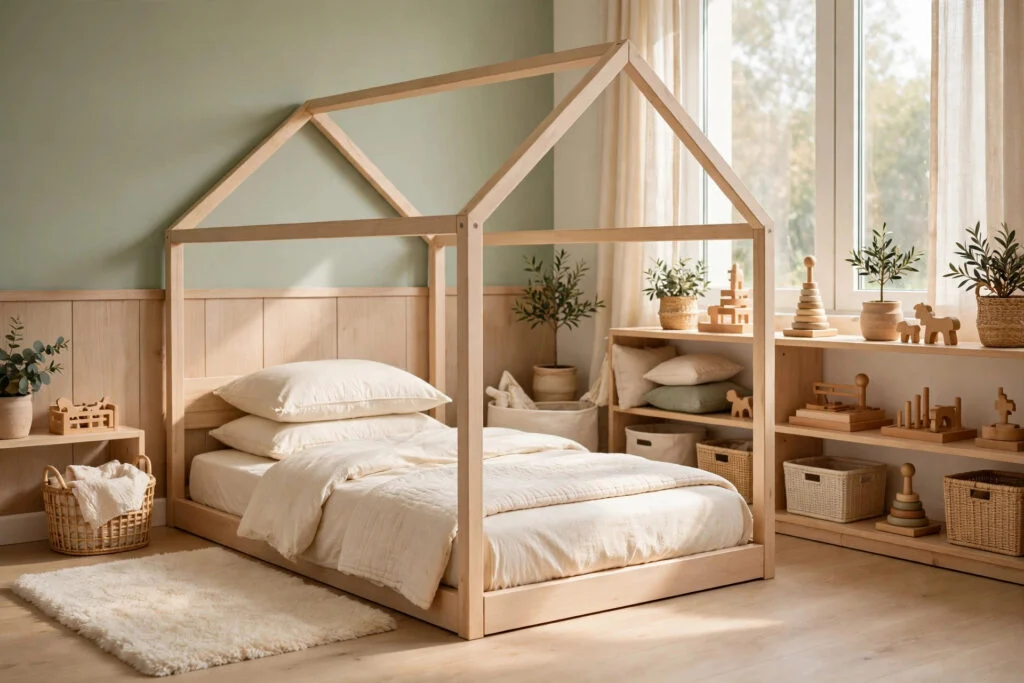
The floor bed is the heart of every Montessori bedroom. A low mattress on a simple frame — or even just on the floor — lets your child get in and out of bed without calling for help. It builds independence from the very first morning, and it removes the risk of falls from a high bed. Add a soft rug beside it for a gentle landing.

2. Low Open Shelving for Toy Rotation
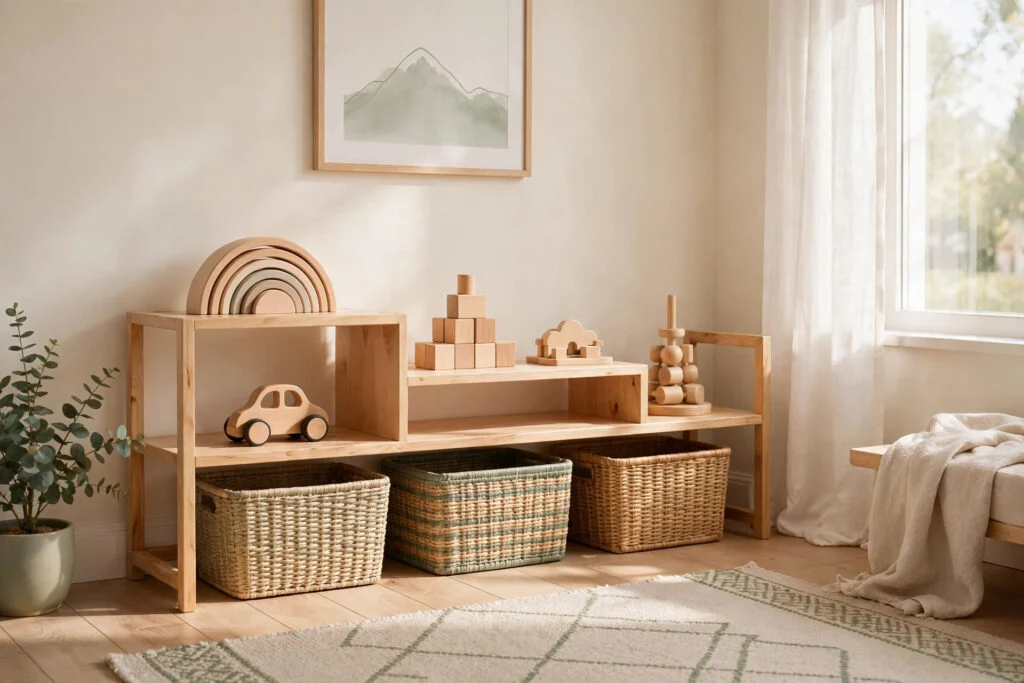
Swap the toy box for low, open shelves with just a handful of toys on display. When everything is visible and reachable, your child can choose what to play with — and put it back when they are done. Rotate the toys every week or two to keep things fresh without buying anything new.
3. A Child-Sized Wardrobe at Their Height
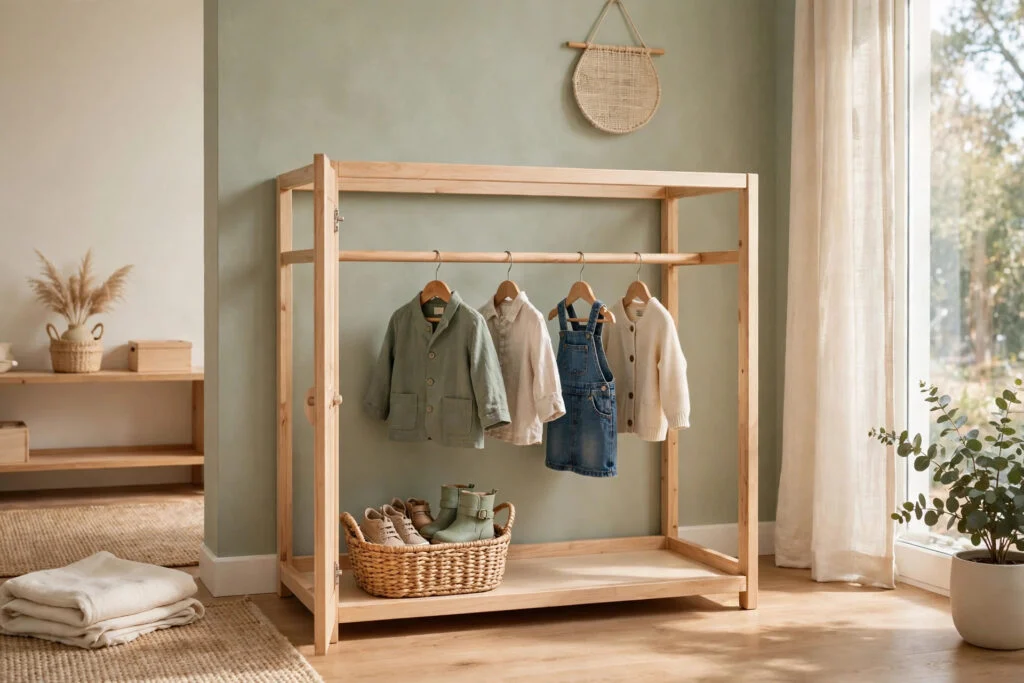
A low wardrobe rail with a few outfits lets your child pick their own clothes each morning. Keep the choices limited — three or four outfits is plenty — so deciding feels fun rather than overwhelming. A small basket underneath holds shoes and socks within easy reach.
4. A Reading Nook With Forward-Facing Books
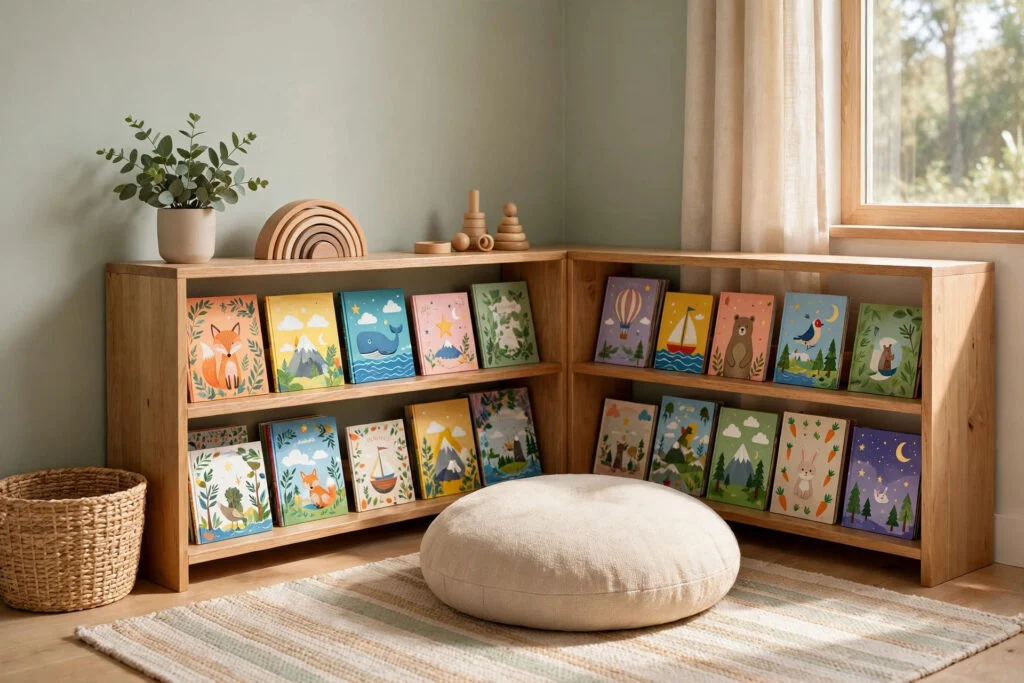
A low bookshelf that shows book covers facing out turns reading into an invitation. Add a floor cushion or a small beanbag and your child will reach for a book on their own. Keep just eight to ten books out at a time and swap them regularly to keep the nook exciting.
5. Natural Wood and a Calm Neutral Palette
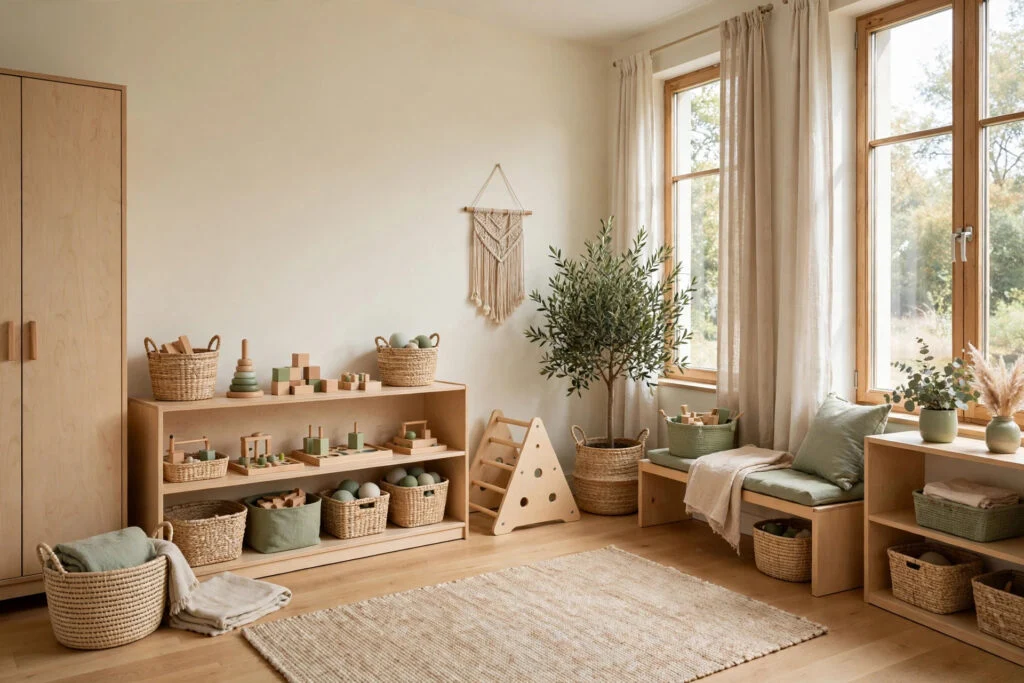
Montessori bedrooms favour natural materials and soft, calm colours. Light wood furniture, cream walls and touches of sage or warm beige create a room that feels peaceful rather than overstimulating. A calm room helps a child settle for sleep and focus during play.
6. A Low Mirror at Your Child’s Height
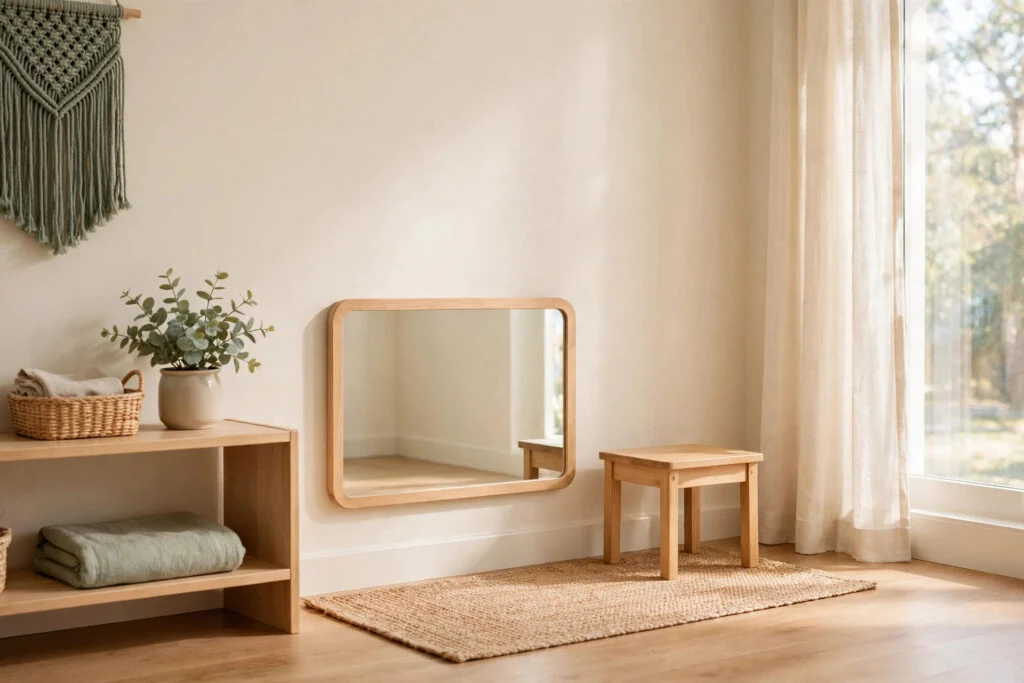
Hang a sturdy, shatterproof mirror low on the wall so your child can see themselves. Babies love watching their own expressions, and older children use the mirror to practise dressing and brushing their hair. It is one of the simplest Montessori bedroom ideas — and one of the most loved.
7. A Practical Life Station for Daily Routines
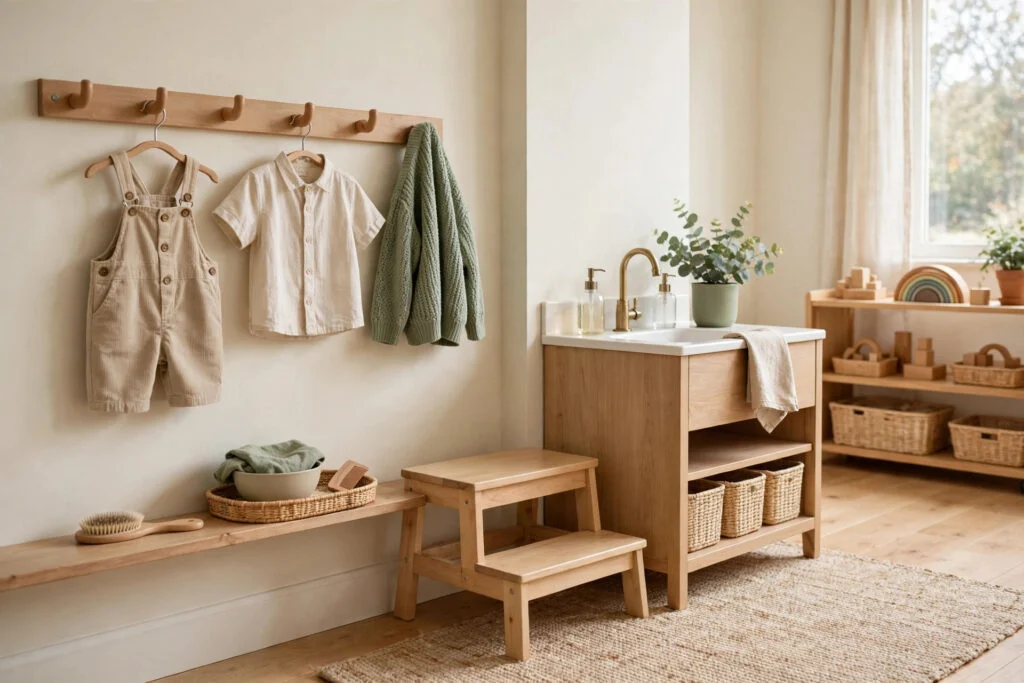
Set up a small dressing area with a low hook for tomorrow’s outfit, a child-sized hairbrush and a step stool near the sink. When brushing teeth and getting dressed are set up for small hands, your child learns to manage their own routine — and mornings get noticeably easier.
8. A Soft Rug That Defines the Play Area
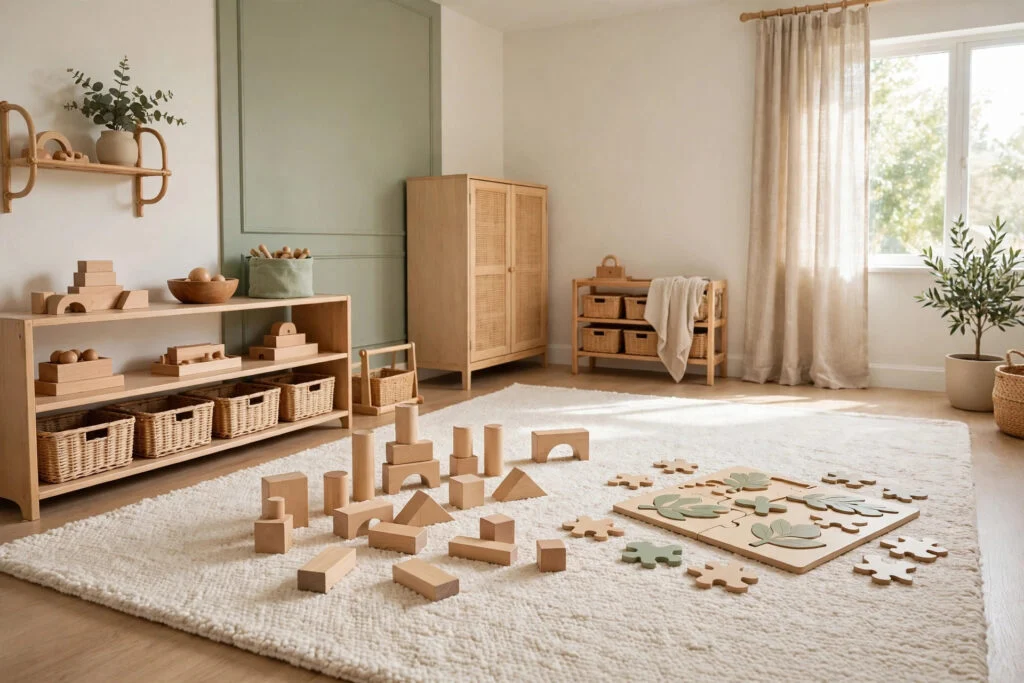
A large, soft rug marks out where play happens and gives your child a comfortable surface for floor play. Choose a washable cotton or wool rug in a neutral tone, big enough for building blocks and puzzles. It also softens the room acoustically, keeping the space calm.
9. Wall Art Hung at Your Child’s Eye Level
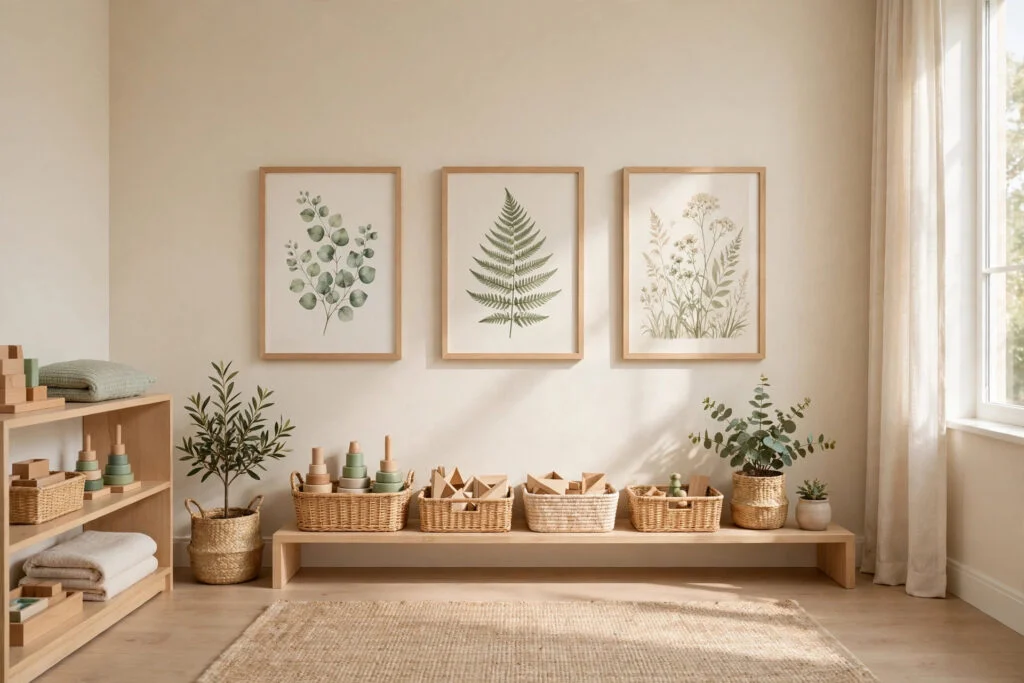
Most rooms hang art for adults. In a Montessori bedroom, hang a few beautiful prints low on the wall, where your child can actually see them. Real photographs, nature prints or simple art cards all work — the point is that the art belongs to the child, not just to the room.
10. Woven Baskets for Easy Tidy-Ups
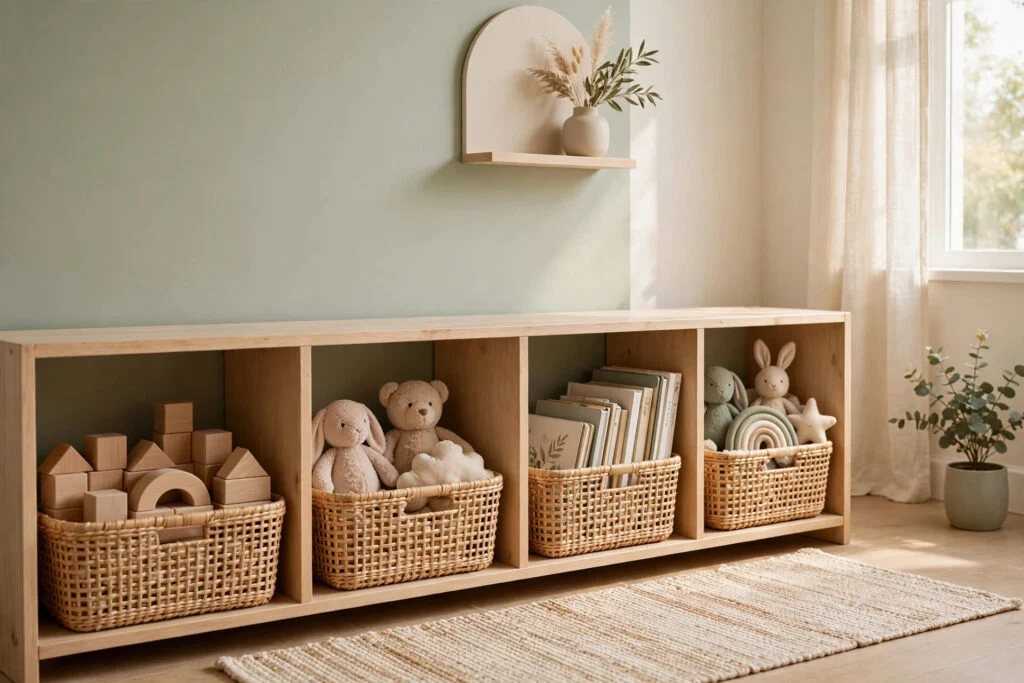
Open baskets on low shelves make tidying up a game your child can actually win. One basket for blocks, one for soft toys, one for books — each with a clear home. When everything has a place, children learn to put things away without being asked twice.
11. A Cosy Canopy Corner for Quiet Time
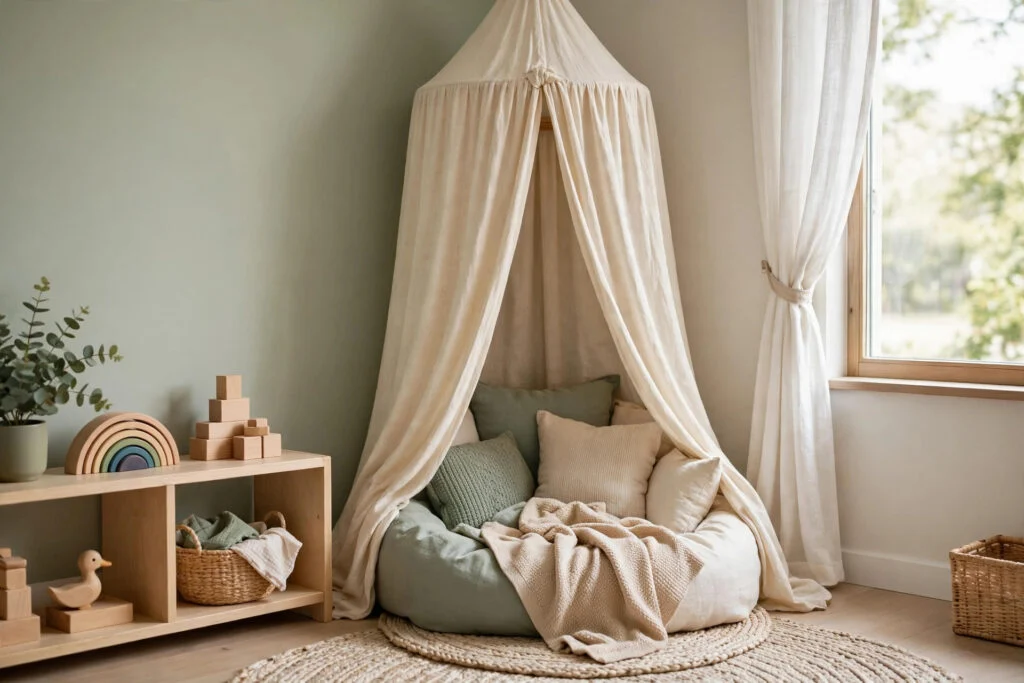
A simple fabric canopy or a small play tent in the corner creates a den for quiet play and reading. Drape it over a low frame or hang it from the ceiling, add a cushion and a soft blanket, and your child gains a private retreat for when the world feels too big.
12. A Low Table and Chair for Activities
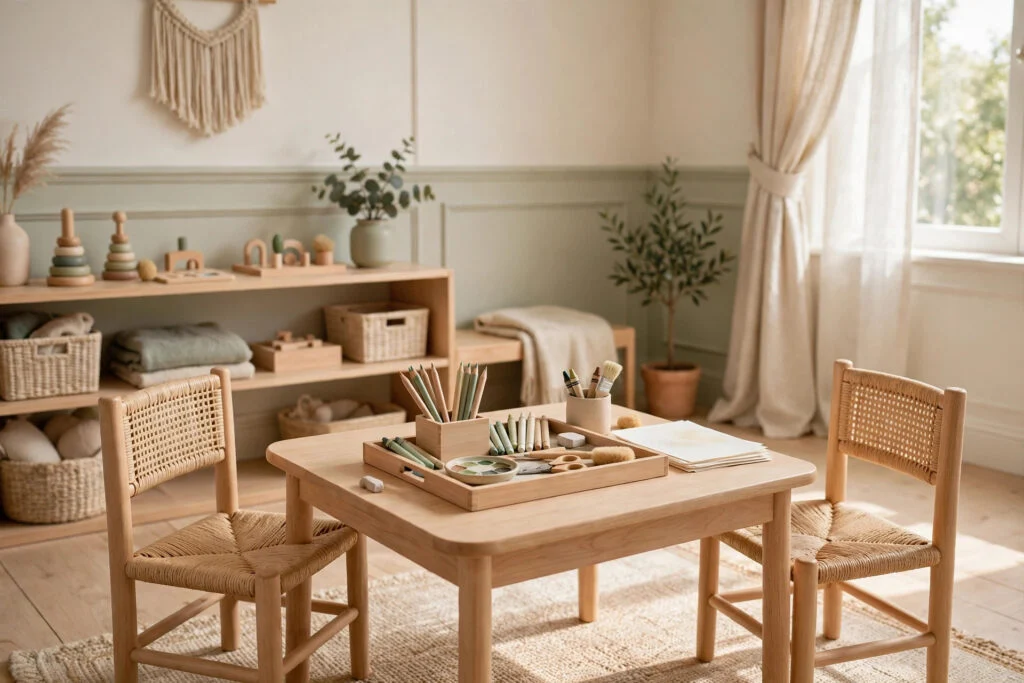
A child-sized table with one or two chairs gives your little one a proper place to draw, do puzzles and eat a snack. Keep art supplies in a small tray on top so creativity is always within reach. It is their own workspace — sized for them, not borrowed from yours.
13. Nature Touches: Plants and Wooden Toys
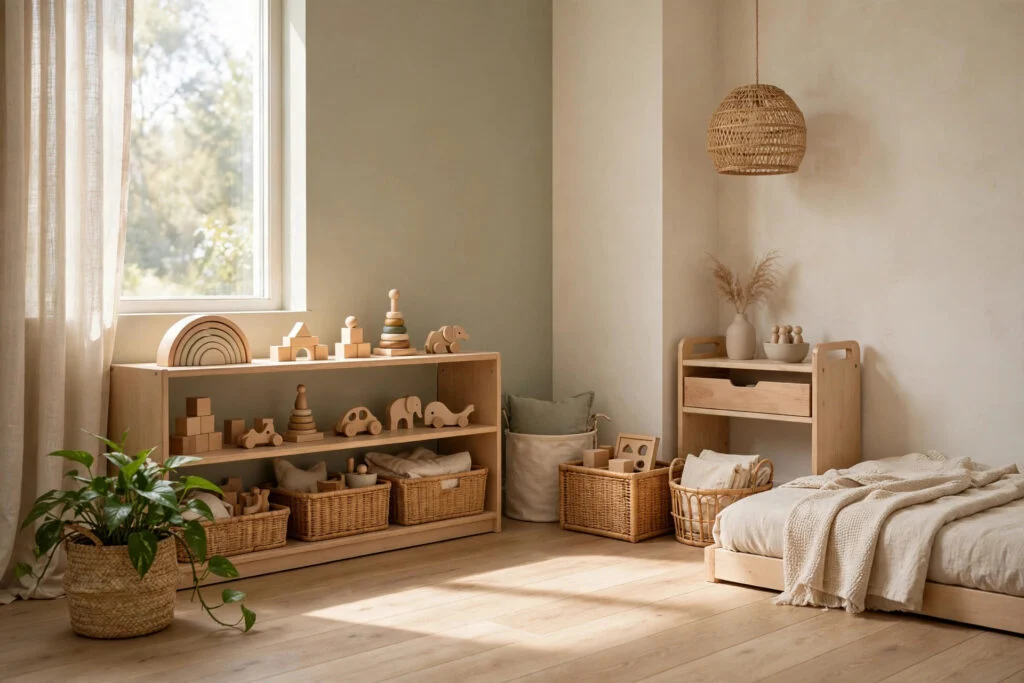
Bring the outdoors in with a sturdy houseplant your child can help water, wooden toys instead of plastic, and natural textures like cotton, wool and rattan. Montessori design connects children with the real world, and natural materials are a big part of that calm, grounded feeling.
14. An Accessible Art Supplies Station
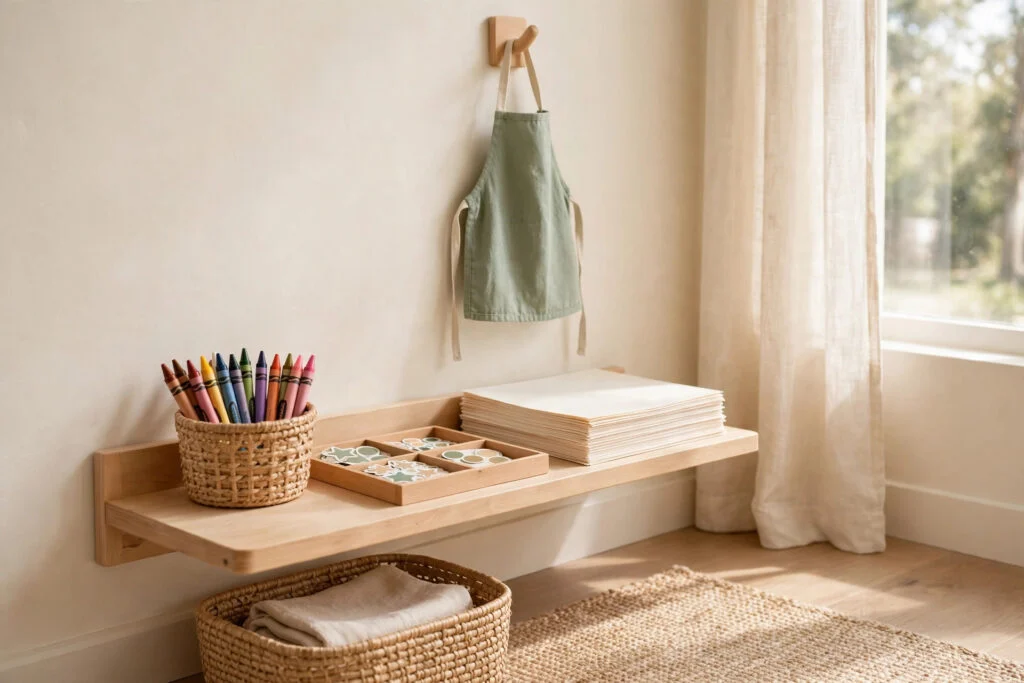
Set up a low shelf with a few crayons, paper and stickers your child can reach whenever inspiration strikes. Keep the supplies limited so the station stays tidy, and add a small apron on a hook for messy masterpieces. When art is always available, children create far more often.
15. A Calm Sleep Zone With Soft Lighting
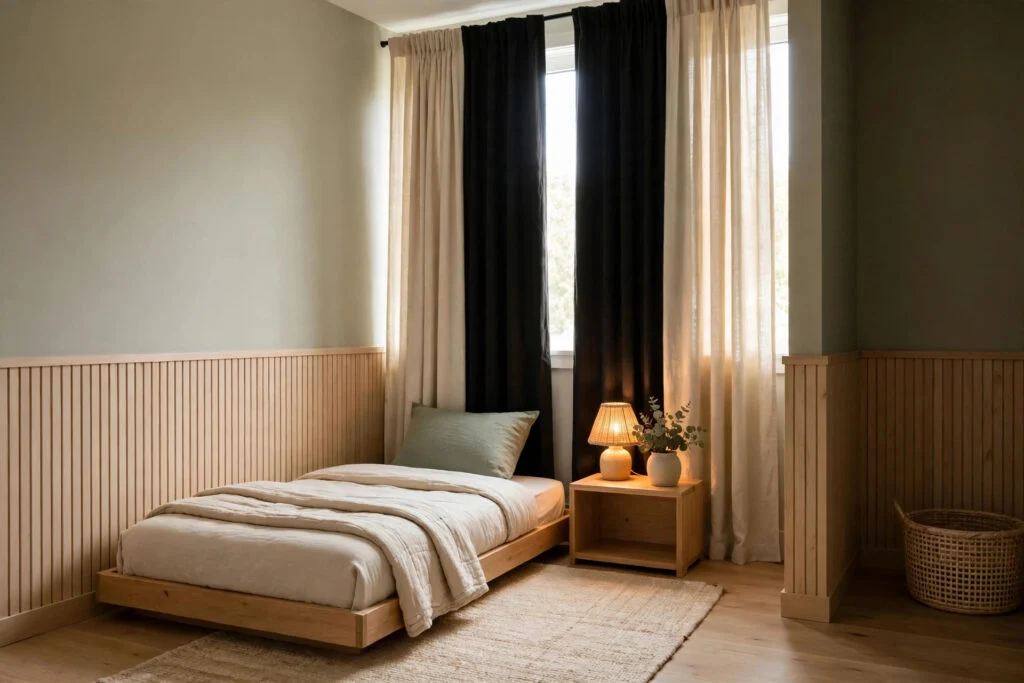
Finish the room with a sleep zone designed for rest: blackout curtains, a warm low lamp or a soft night light, and nothing too exciting within reach of the bed. A calm, dark corner signals to your child’s body that it is time to sleep — and a well-rested child is a happy one.
Start With the Floor Bed
You do not need to rebuild the whole room in a weekend. Start with the floor bed and one low shelf, then add the reading nook and the wardrobe as your child grows. A Montessori bedroom works best when it grows with your child — calm, accessible and full of quiet invitations to do things for themselves. Save these ideas, pick your favourites, and watch your little one thrive in a room made just for them.


