
A small living room with a TV can be one of the hardest spaces to get right. The screen often becomes the default focal point, and if the furniture is not scaled properly, the room can start to feel crowded very quickly.
The good news is that a compact living room can still feel warm, stylish, and comfortable. With better TV placement, smarter furniture choices, and a few visual tricks, you can make the room feel balanced instead of cramped. These ideas are all about helping the TV fit into the space without letting it take over.

Whether you are working with an apartment living room, a narrow family room, or a small open-plan layout, these ideas can help you create a room that feels easier to use and much more inviting.
TV Placement and Space-Saving Ideas
1. Mount the TV to Keep the Floor Clear
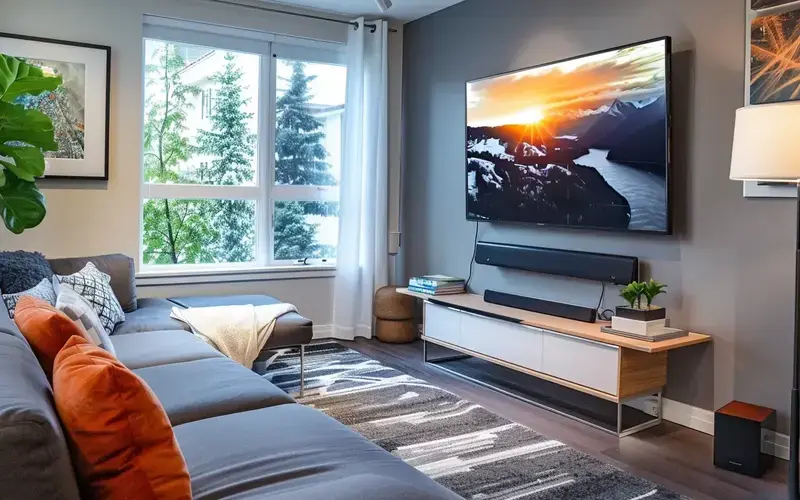
Wall-mounting the TV is one of the easiest ways to make a small living room feel more open. It removes the need for a bulky media stand, keeps the floor more visible, and gives the room a cleaner overall look.
This works especially well in narrow spaces where every inch matters. It also helps the viewing angle feel more intentional when the screen is installed at the right height.
2. Use a Corner TV Stand to Take Advantage of Unused Space
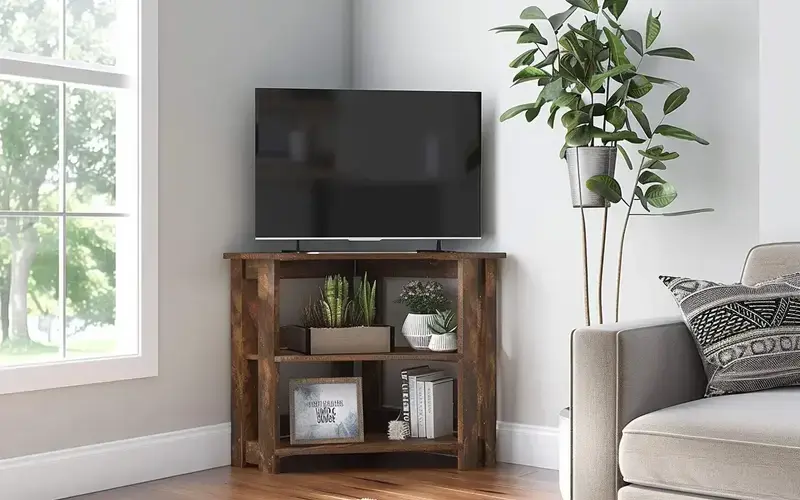
Corners are often overlooked, but in a small living room they can be one of the smartest places for a TV. A corner unit frees up the main walls and keeps more of the room available for seating and storage.
This layout works particularly well if your larger walls are interrupted by windows, doorways, or shelving.
3. Choose Multi-Functional Furniture That Earns Its Place
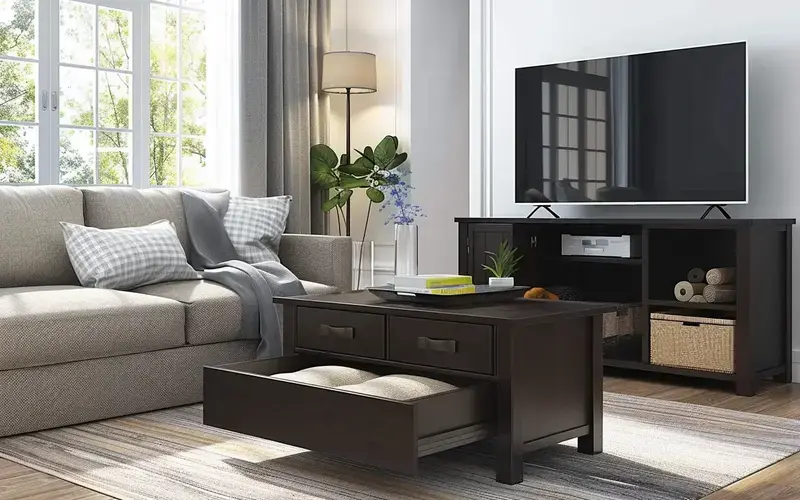
In a small room, every piece of furniture should do more than one job if possible. Storage ottomans, lift-top coffee tables, and benches with hidden compartments help keep clutter out of sight while still serving the room day to day.
This matters even more in TV rooms, where remotes, chargers, throws, and everyday items can build up fast. Built-in storage keeps the room calmer and easier to maintain.
4. Add Wall-Mounted Shelves Instead of Heavy Storage Units
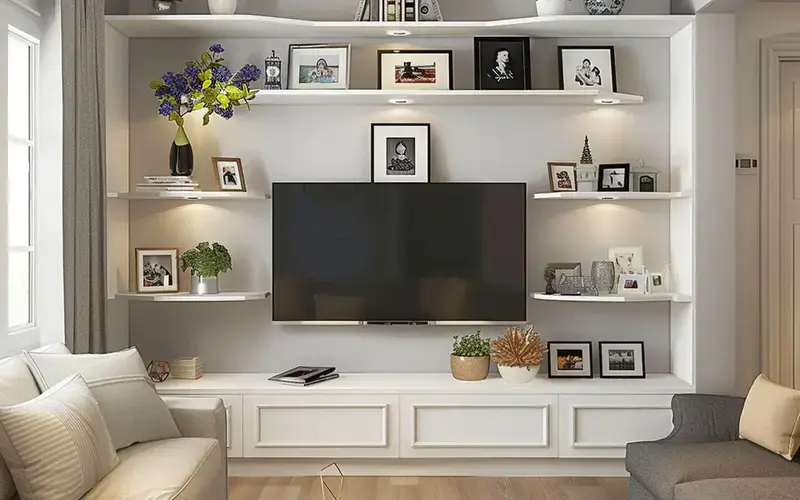
Wall-mounted shelves make better use of vertical space without taking up any floor area. They are useful for books, framed art, baskets, or smaller decorative objects that help the room feel styled and personal.
Placed around the TV, they can also help the screen blend into a larger arrangement instead of sitting on an empty wall by itself.
5. Use a Floating TV Console for a Lighter Look
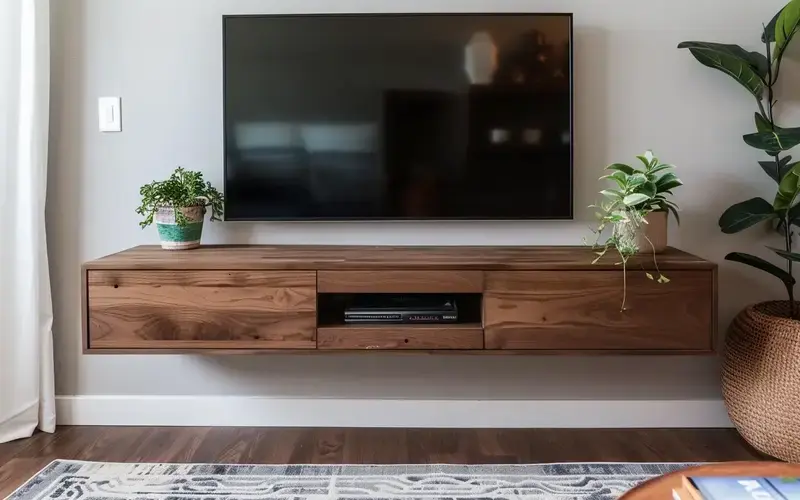
A floating console gives you the practicality of a media unit without the heaviness of a full cabinet resting on the floor. Because the floor remains visible underneath, the room feels a little more spacious and less boxed in.
This style works especially well in modern and minimalist spaces where visual lightness is part of the appeal.
Seating and Layout Ideas for a Cozy Small Living Room
6. Try a Compact Sectional for a Defined Seating Zone
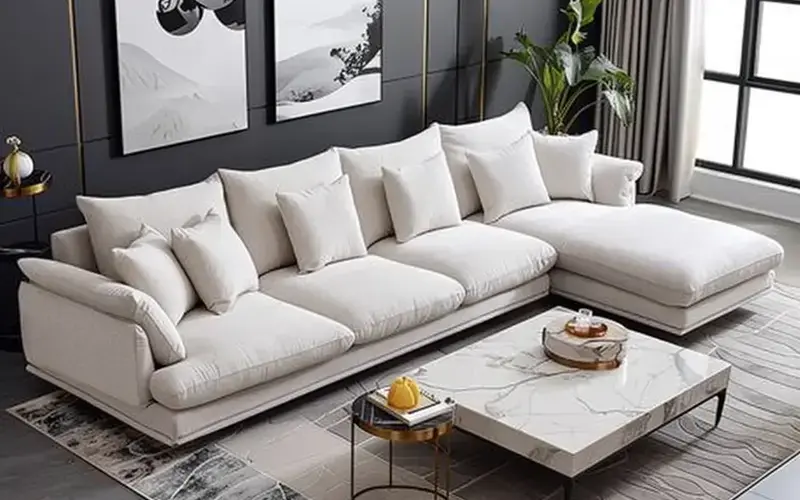
A small-scale sectional can work very well in a compact room because it clearly defines the seating area and often removes the need for extra chairs. It can also make the layout feel more intentional, especially in open-plan spaces.
The key is choosing a version with slimmer arms and a lighter profile rather than something deep and oversized.
7. Use a Loveseat and Armchairs for a More Flexible Arrangement
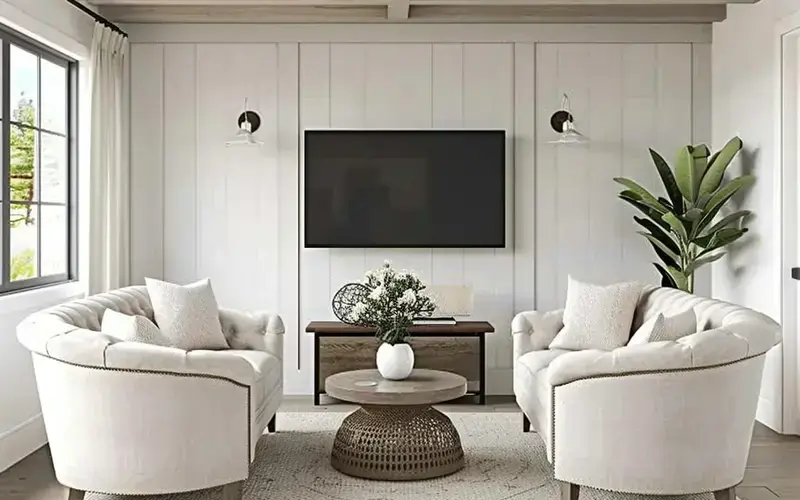
A loveseat paired with one or two compact chairs often feels more balanced than squeezing in a full sofa. It creates a cozier, more conversational layout while still keeping the TV easy to watch.
This option is especially useful when you want better circulation around the furniture or need more flexibility in how the room is arranged.
8. Add Floor Seating for a Relaxed Layer
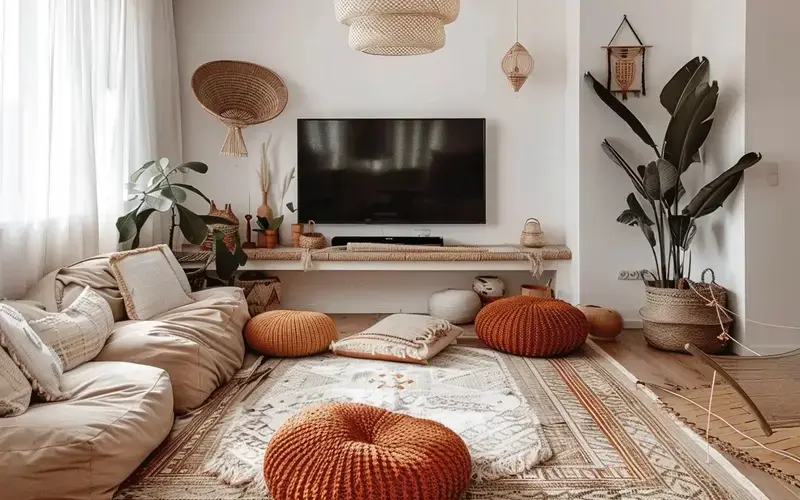
Floor cushions, poufs, and bean bags can be useful in small living rooms because they offer occasional seating without permanently filling the room. They also soften the space and make it feel more casual and welcoming.
This idea works especially well for family rooms, movie nights, and spaces that need to stay flexible.
9. Replace a Large Coffee Table With Nesting Tables
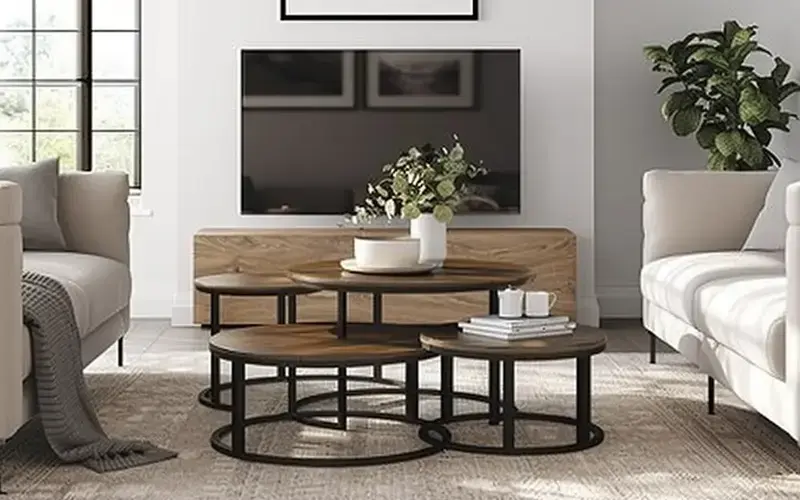
Nesting tables are often a better choice than one oversized coffee table because they can be spread out when needed and tucked away when the room needs more floor space.
They make the room easier to adapt for everyday use without sacrificing convenience.
10. Pick Small-Scale Furniture That Fits the Room Properly
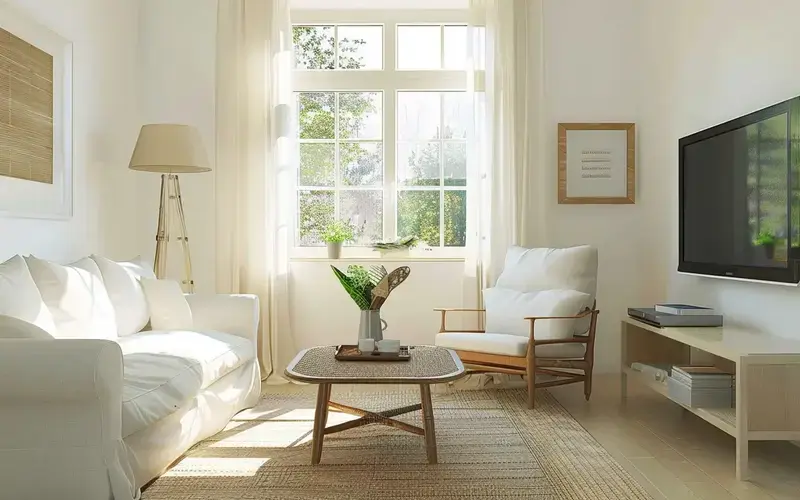
Oversized furniture is one of the fastest ways to make a small living room feel cramped. Instead, look for sofas, chairs, and tables with lighter frames, slimmer arms, and proportions that leave enough breathing room around them.
When furniture fits the room properly, the entire space feels calmer and more comfortable to move through.
Visual Tricks That Make a Small TV Room Feel Bigger
11. Use Light and Bright Colors to Open Up the Room
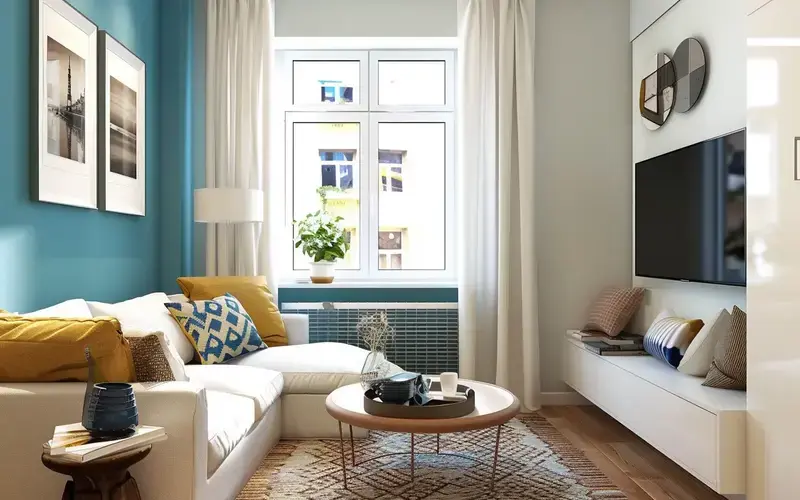
Lighter wall colors reflect more light, which helps a small living room feel larger and less enclosed. Soft white, pale gray, warm cream, and muted beige are all strong choices if you want the room to feel airy.
You can still add depth through texture, artwork, and a few darker accents, but keeping the overall palette light usually makes the biggest difference.
12. Add Mirrors to Reflect Light and Depth
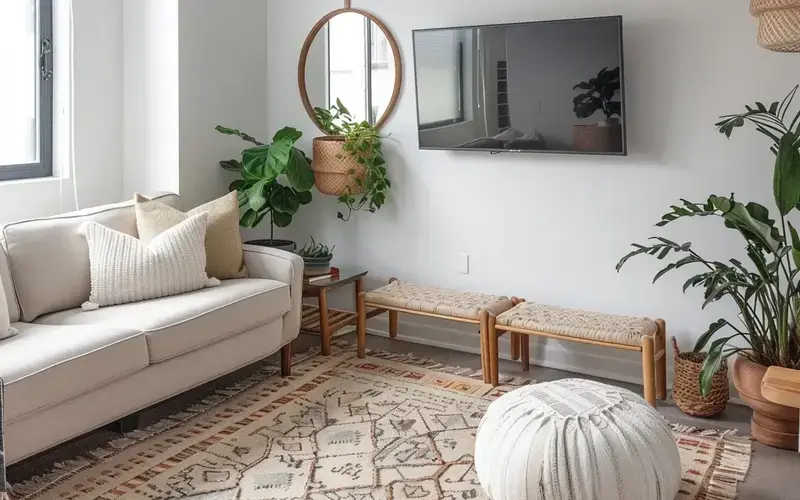
Mirrors remain one of the most effective ways to visually expand a small room. They reflect light, create a sense of depth, and help balance the visual weight of the TV.
Placed opposite a window or near a light source, they can brighten the room considerably without adding any bulk.
13. Use Curtains and Rugs to Add Warmth and Definition
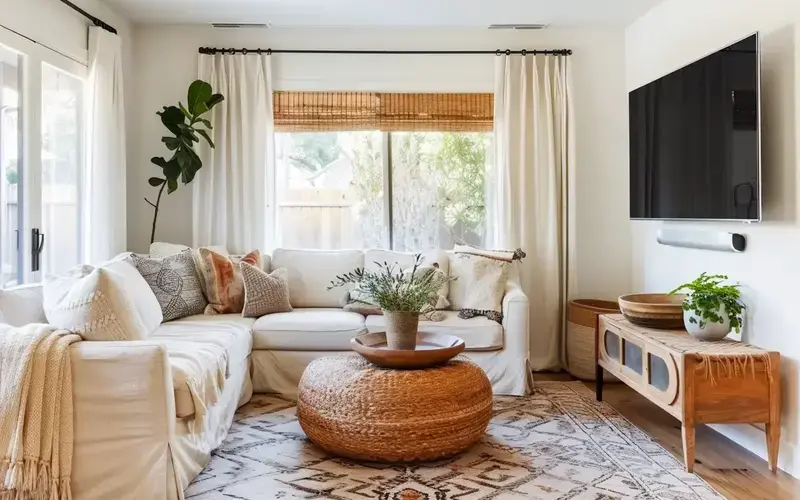
Soft furnishings help a small living room feel more finished and inviting. Lightweight curtains keep the room bright while adding softness, and a properly sized rug helps anchor the seating arrangement so the room feels intentional.
A rug that is too small can make the furniture feel disconnected, so it is usually better to choose one that comfortably reaches beneath the main seating pieces.
14. Use Art to Balance the Focus Away From the TV
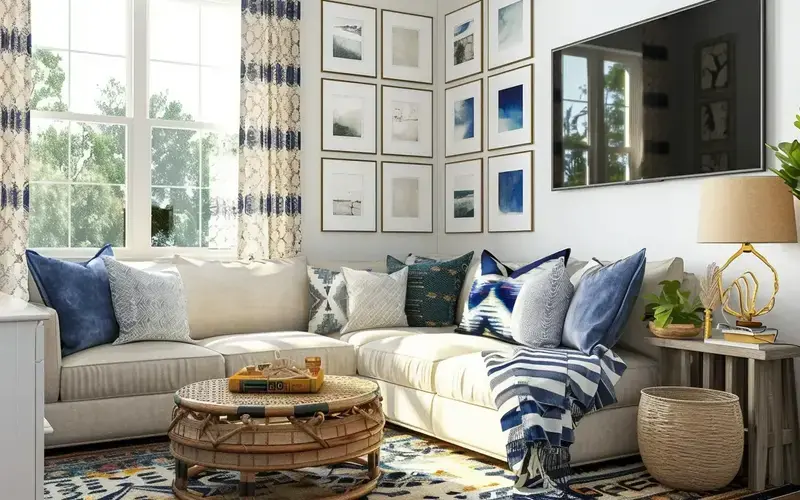
If the TV is the only focal point in the room, it tends to dominate the entire space. Adding a gallery wall, a large art piece, or a styled shelving arrangement helps distribute attention and makes the room feel more layered.
This is one of the easiest ways to make a TV room feel more like a living room and less like a media box.
15. Add Statement Lighting for Height and Character
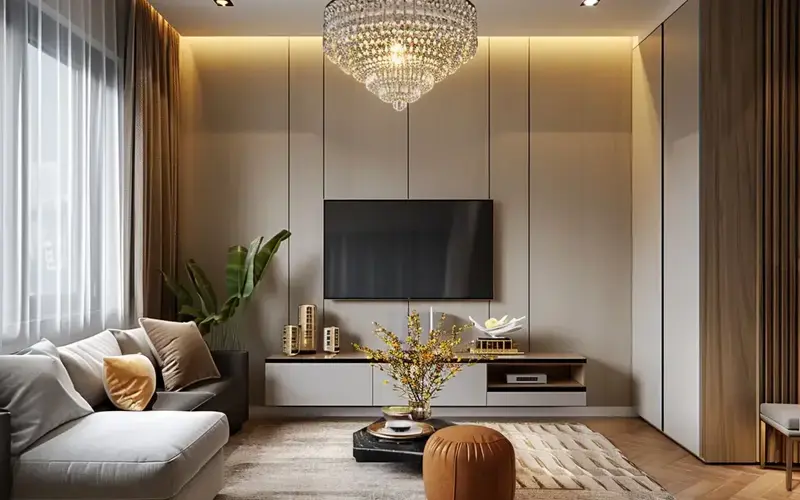
A bold light fixture can help lift the entire room visually. Whether it is a sculptural pendant, a flush-mount fixture, or a standout floor lamp, lighting adds personality while also drawing the eye upward.
That upward emphasis can make a small room feel taller and more thoughtfully designed.
Tech and Entertainment Upgrades for Small Spaces
16. Add a Soundbar Instead of Bulky Speakers
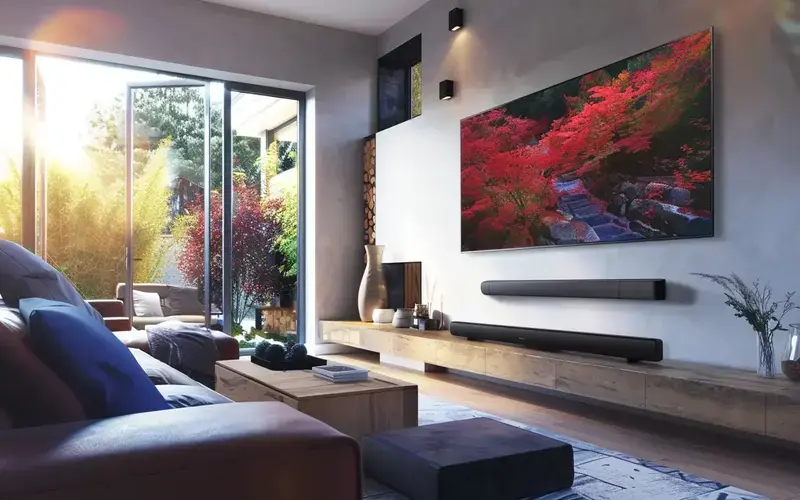
A soundbar is one of the easiest ways to improve the viewing experience in a small living room without sacrificing too much space. It gives better audio quality than built-in TV speakers while keeping the setup streamlined.
For rooms centered around movies, shows, or gaming, it makes a noticeable difference without adding visual clutter.
17. Use Smart Home Features to Simplify the Room
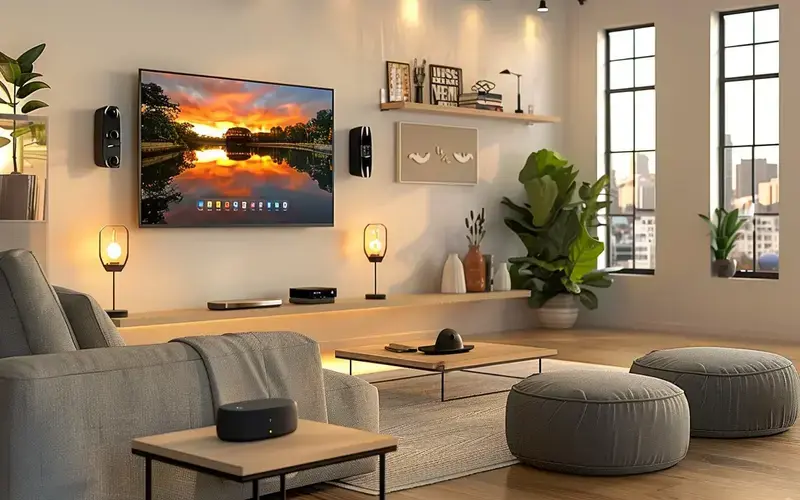
Smart plugs, connected lighting, and voice controls can help reduce the number of remotes, visible switches, and unnecessary accessories in a small living room. That keeps the room feeling more streamlined and easier to use.
It also makes the space more comfortable day to day, especially when you want to adjust the lights or TV without getting up.
Frequently Asked Questions
Where should a TV go in a small living room?
Wall-mounting, corner placement, and floating consoles are usually the most space-efficient options. The best choice depends on your room layout, windows, and seating arrangement.
What kind of sofa works best in a small TV room?
A loveseat, apartment-size sofa, or compact sectional usually works best. The important thing is keeping enough room for circulation and making sure the furniture is scaled to the space.
How do I make a small living room with a TV feel cozier?
Use layered lighting, soft textiles, a properly sized rug, and a layout that supports both conversation and viewing. The room should feel like a living space first, with the TV fitting naturally into it.
Should the TV always be the focal point?
No. In many small rooms it becomes the focal point by default, but art, mirrors, shelving, and lighting can help balance the room so the screen does not take over visually.
What helps a small living room feel bigger?
Light colors, mirrors, raised furniture, wall-mounted storage, and clear walkways all help create a more open feeling. Good furniture scale also makes a major difference.
Final Thoughts
A small living room with a TV does not have to feel crowded or compromised. The most successful spaces are the ones where the screen fits into a thoughtful layout instead of controlling the entire room.
Start with the changes that have the biggest impact, such as TV placement, furniture scale, and storage. Once those decisions are right, the rest of the room becomes much easier to style in a way that feels both cozy and functional.
Written by the Zeeshe Home Editorial Team, a blog focused on practical home décor ideas and inspiration.


