
An earthy bathroom is not about filling the room with rustic accessories and hoping it feels serene. The most inviting spaces rely on a careful mix of natural materials, useful storage, soft texture, and a palette that feels settled rather than busy. When those elements come together, even a compact bathroom can feel closer to a boutique hotel spa than a purely functional washroom.
The ideas below keep that balance in mind. Each one is visually strong enough to inspire a save on Pinterest, but practical enough to hold up in a real home. If you are refreshing your bathroom a little at a time, this list will help you decide what is worth bringing in first.

Earthy Bathroom Ideas That Instantly Make the Room Feel More Relaxed
Start with the pieces that change how the room feels underfoot, at eye level, and on the vanity. Those are usually the details that make the biggest visual difference.
1. Bamboo Bath Mat Ideas for a Cleaner, Warmer Entry Point
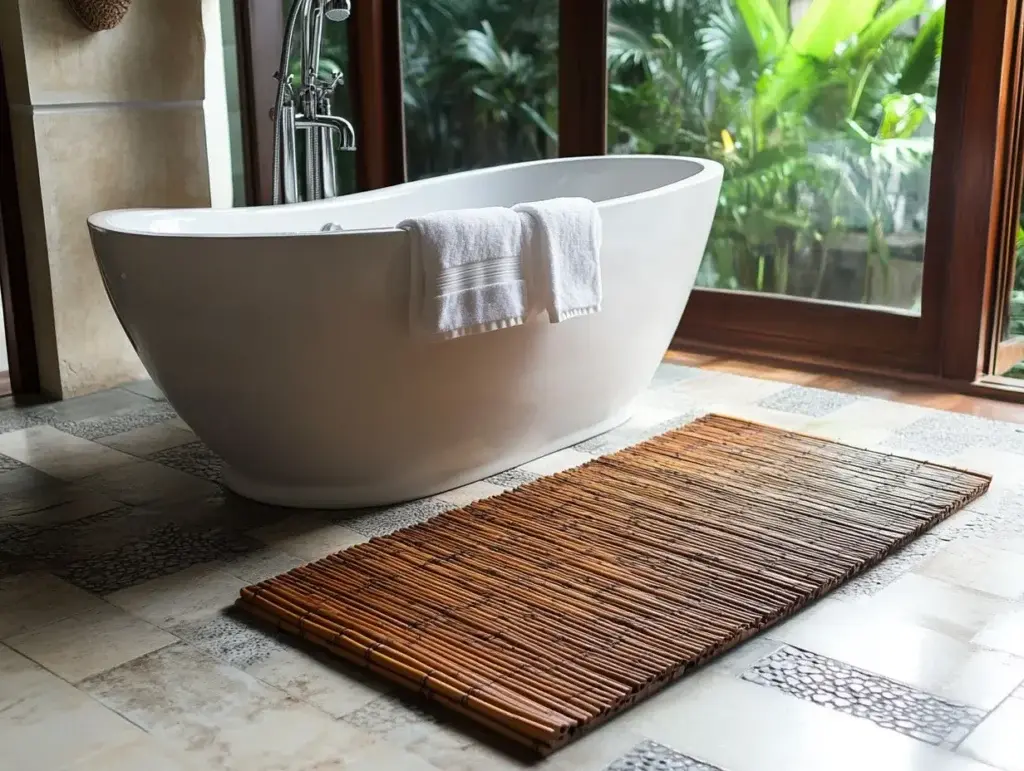
A bamboo bath mat brings an immediate sense of order to the room. Unlike thick fabric mats that can stay damp for hours, bamboo dries quickly and keeps the floor area looking crisp and uncluttered. That matters in bathrooms where too much soft material can start to feel heavy or untidy.
This style works especially well in smaller bathrooms, minimalist spaces, and bathrooms with stone-look tile. Look for a mat with a slatted design so water drains easily, and choose a size that leaves a visible border of flooring around it. When a mat runs wall to wall, it tends to feel more like utility than design.
- Use it beside a walk-in shower or tub where moisture builds up fast.
- Pair it with linen, clay, or matte black accents for a grounded look.
- Wipe it dry occasionally to prevent water spotting and keep the finish looking fresh.
2. Wooden Stool Styling for Bathrooms That Need Warmth and Function
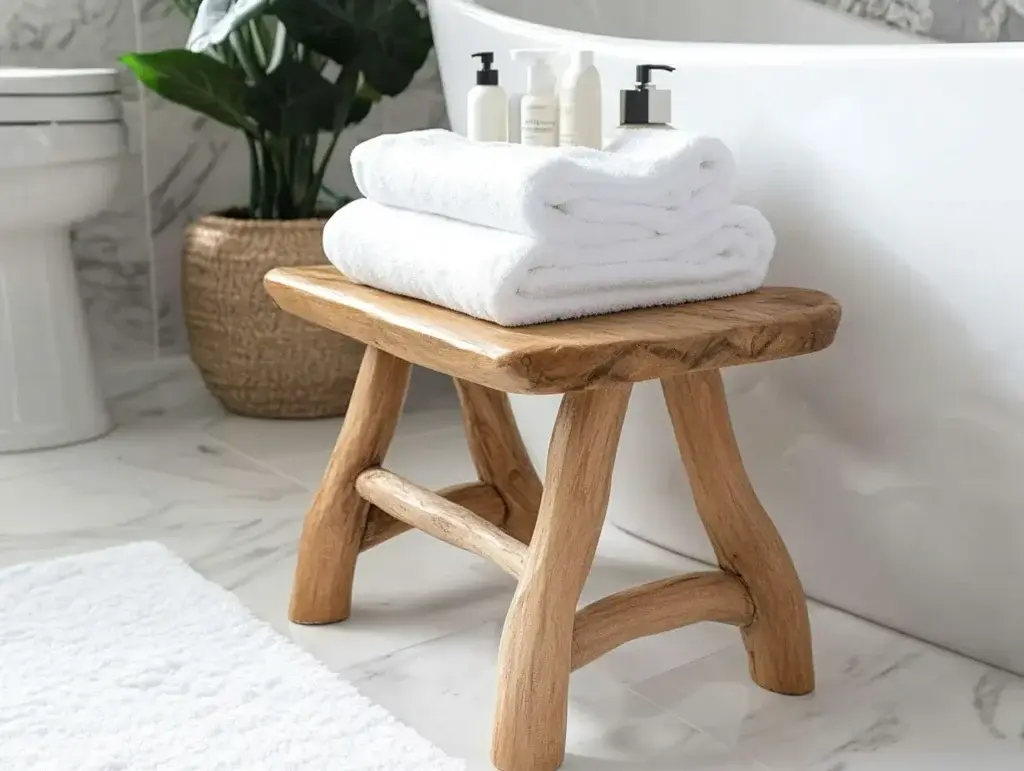
A simple wooden stool can soften the hard edges that most bathrooms naturally have. Tile, glass, porcelain, and mirrors all reflect light and feel cool. A stool introduces shape and grain, which makes the room feel more layered and less clinical.
It also earns its footprint. In a primary bathroom, it can hold folded towels or a robe. In a guest bath, it becomes a landing spot for extra hand towels, a candle, or a small bowl for daily essentials. Teak is a smart choice in humid rooms because it handles moisture better than many other woods.
Keep the styling restrained. One stool with two or three thoughtfully chosen items looks composed; a crowded stool quickly turns into countertop overflow on a lower level.
3. Stone Soap Dispensers That Make the Vanity Look More Considered
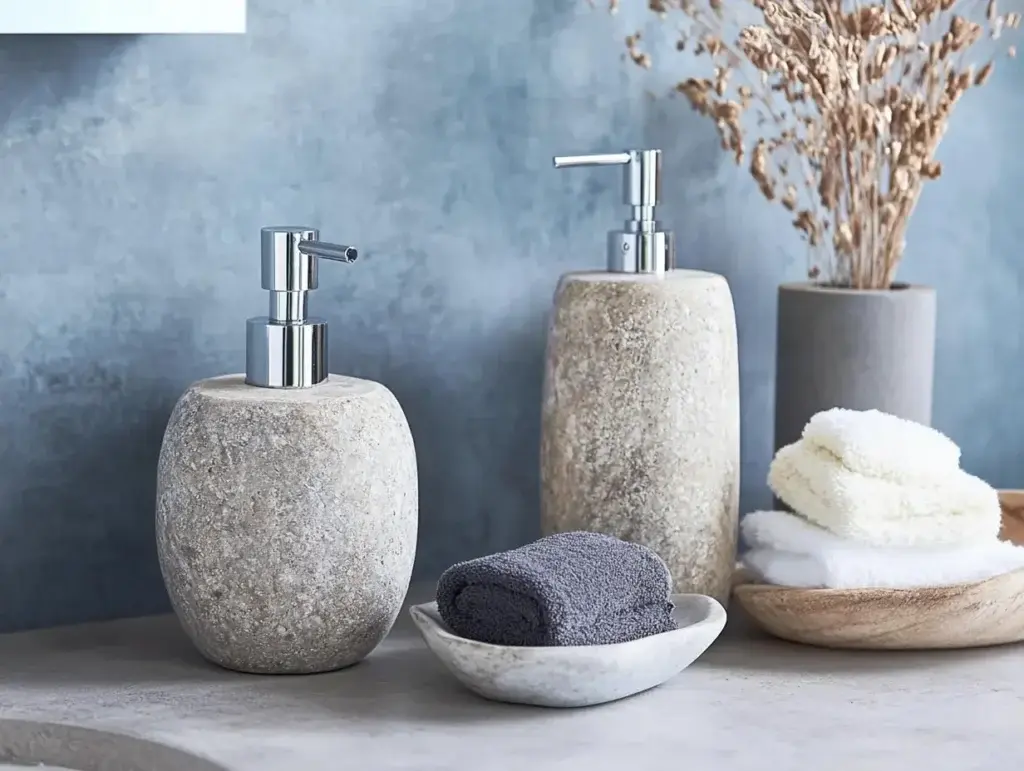
Small upgrades often do more for a bathroom than a major shopping haul. A stone soap dispenser is a good example. It replaces disposable packaging with something permanent, tactile, and visually quiet, which helps the vanity read as styled instead of cluttered.
Marble feels polished and refined, while travertine or concrete leans more relaxed and organic. Choose a finish that echoes the room’s other materials rather than introducing a new one that competes for attention. If your bathroom already has dramatic stone counters, a matte dispenser can keep the surface from looking overly glossy.
On a shared vanity, matching the soap dispenser with a small tray or toothbrush holder creates cohesion without forcing a full accessory set.
4. Woven Basket Storage Ideas That Keep Everyday Essentials Out of Sight
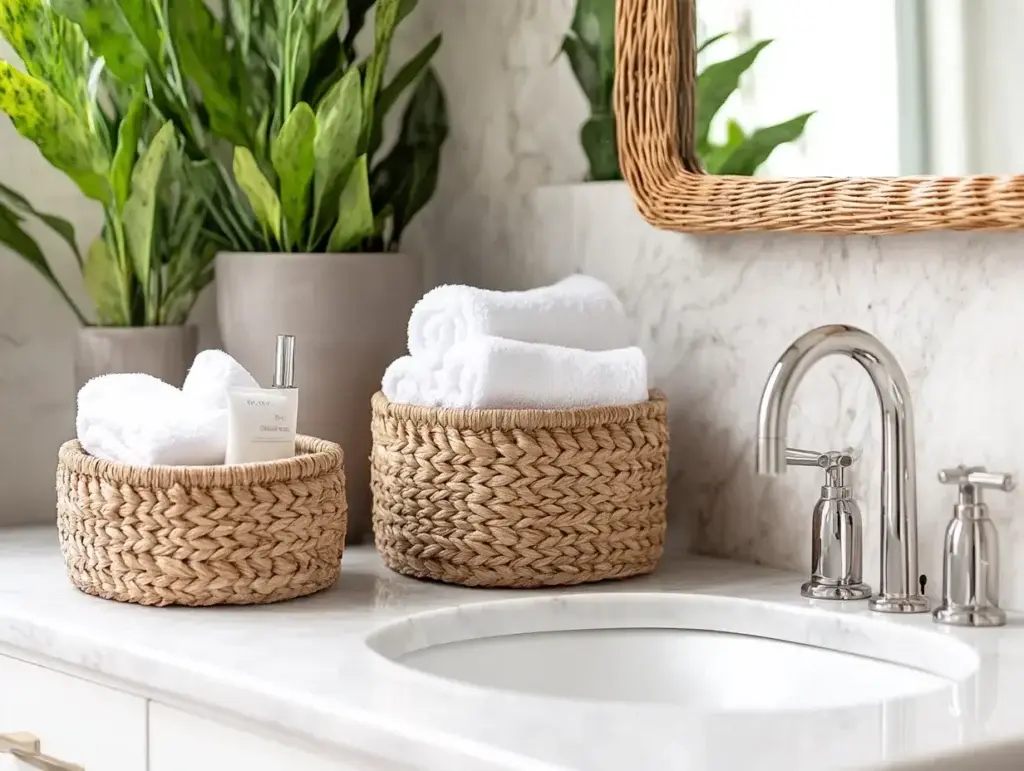
Bathrooms need storage, but closed cabinetry is not always enough. Woven baskets bring in the texture many bathrooms are missing while handling the less glamorous parts of daily life, from spare toilet paper to hair tools and rolled washcloths.
Use larger baskets on the floor beneath a console vanity or open shelving, and keep smaller ones on counters only if they contain frequently used items. In humid bathrooms, natural fibers such as seagrass and water hyacinth tend to feel lighter visually than bulky fabric bins.
- Tall baskets work well beside a tub for bath towels.
- Low, wide baskets suit under-sink shelves and bench storage.
- Lined baskets are useful for corralling personal care items that could leak or spill.
When baskets match in tone but vary slightly in size, the room feels collected rather than overly coordinated.
5. Terracotta Planter Ideas for Bathrooms That Need Life and Color
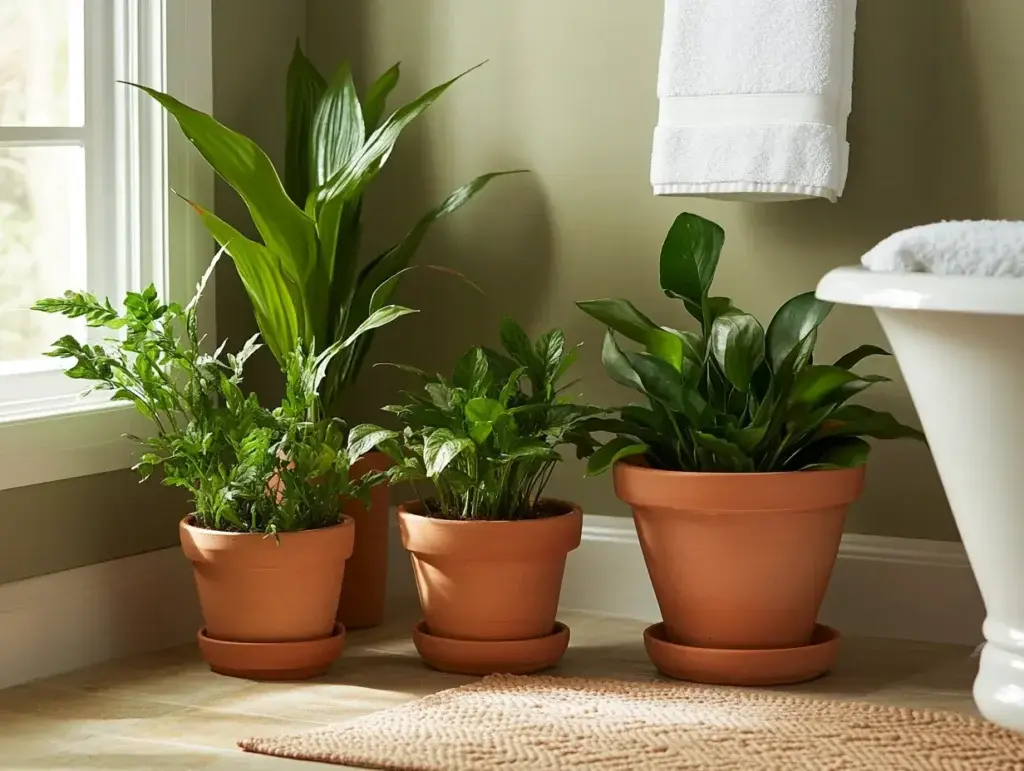
Plants instantly change the emotional temperature of a bathroom. They break up hard surfaces, bring movement into still spaces, and make the room feel more cared for. Terracotta planters deepen that effect because their muted clay tone sits beautifully with wood, cream textiles, and stone finishes.
Bathrooms with natural light can support ferns, pothos, orchids, and some varieties of snake plant. In lower-light rooms, use one or two hardy plants rather than filling every corner with greenery that will struggle. Small planters are often more convincing than oversized ones in a bathroom because they feel intentional and are easier to maintain.
Place them where they will not interfere with daily routines: a windowsill, open shelf, vanity corner, or stool. Avoid crowding the sink area if counter space is already limited.
6. Linen Shower Curtain Ideas for a Softer, More Elevated Look
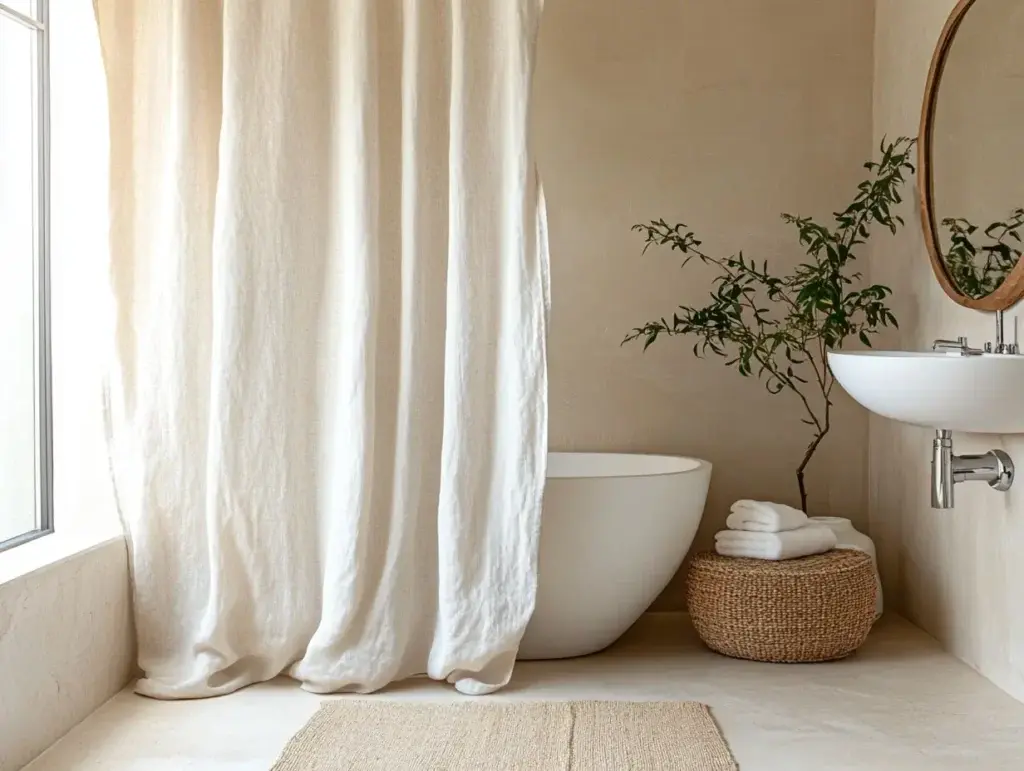
A linen shower curtain changes the feel of a bathroom in a way plastic or shiny polyester never can. It hangs with more ease, diffuses light more gently, and introduces a relaxed texture that suits earthy interiors particularly well.
Choose a curtain in a soft neutral such as flax, warm white, sand, or taupe. Those shades let the texture stand out while keeping the room bright. In bathrooms with standard ceiling heights, hanging the curtain slightly higher can make the room feel taller, provided the hem still falls neatly above the floor.
A washable linen blend is often the most realistic option for family bathrooms. It gives you the visual softness of linen with easier upkeep over time.
7. Jute Rug Ideas for Bathrooms With More Floor Space to Dress
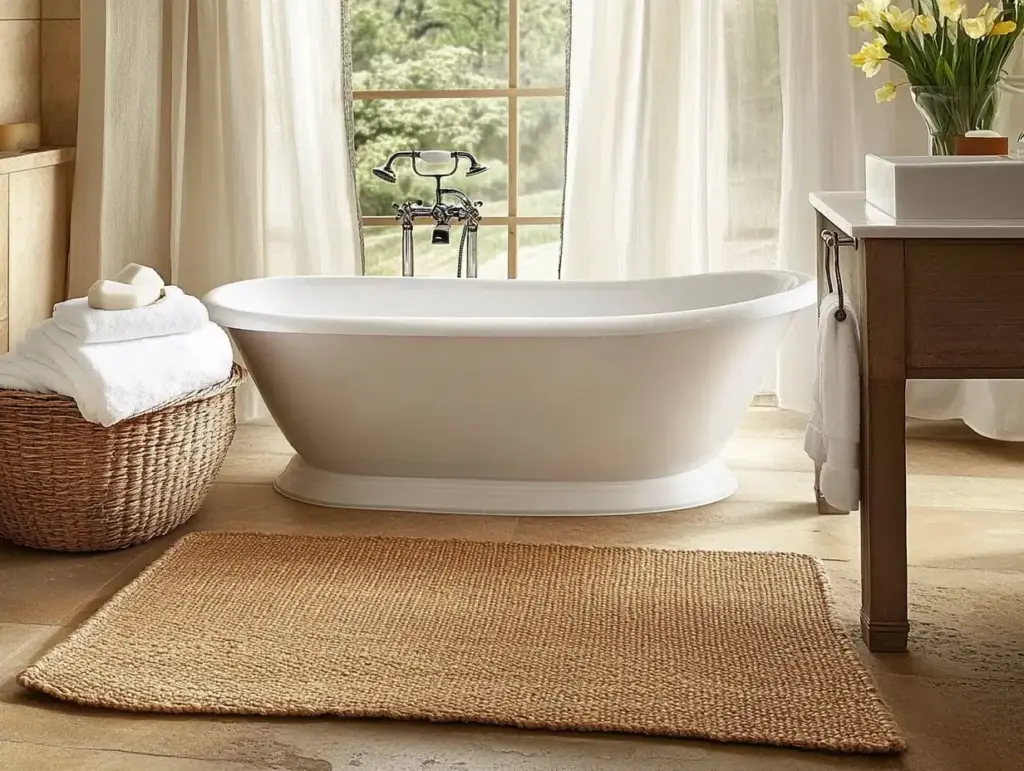
In a bathroom with enough ventilation and dry floor areas, a jute rug can make the room feel more like part of the home and less like a strictly utilitarian zone. It is especially effective in larger bathrooms where a tiny bath mat looks visually lost.
Jute’s appeal is in its irregular weave and natural color variation. It brings depth without relying on pattern. Place it in a dry area near a vanity, in front of a freestanding tub, or in a dressing area connected to the bathroom. It is less suited to spots that stay wet after every shower.
For everyday practicality, consider the texture under bare feet and the backing underneath. A rug pad or non-slip layer matters in bathrooms where floors can become slick.
8. Wooden Bath Tray Ideas That Make a Soaking Tub Feel Intentional
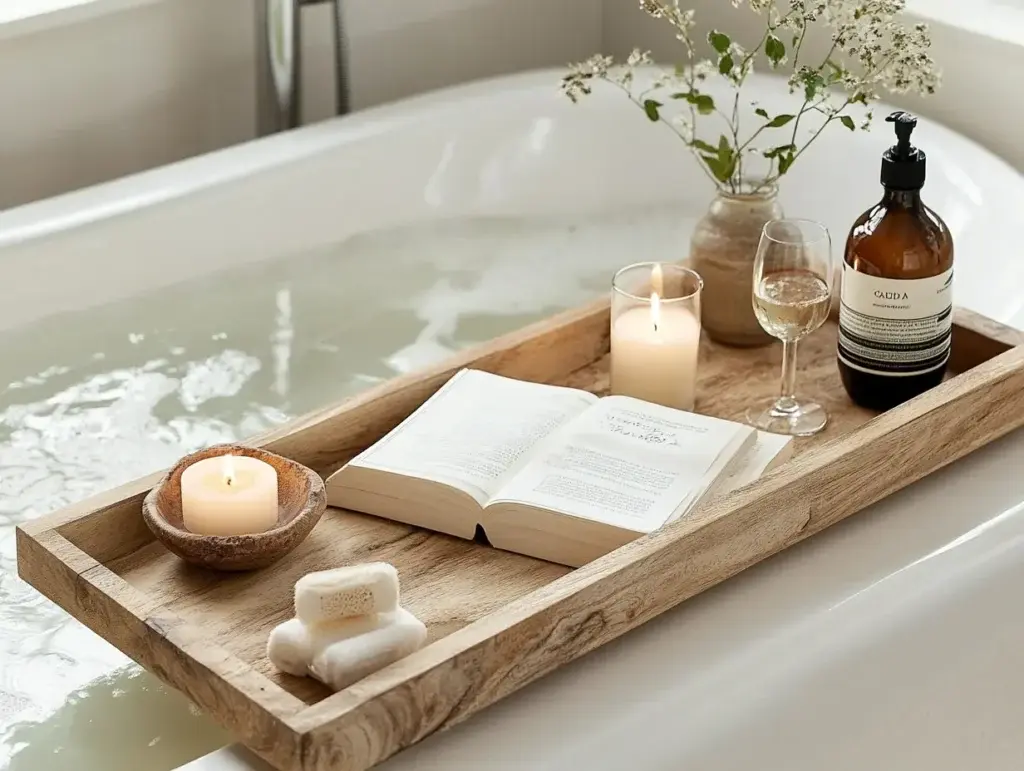
A bath tray is one of those details that can seem indulgent until you use one. In a bathroom with a soaking tub, it creates a sense of ritual. Candles, a book, a cup of tea, or a small folded cloth all look more composed when they have a dedicated place instead of balancing on the tub edge.
Wood tones work particularly well here because they soften glossy porcelain and keep the setup from feeling overly staged. Adjustable trays are worth considering if your tub width is not standard. Look for one that feels sturdy and leaves enough room to get in and out comfortably.
Keep the tray styling spare. One practical item and one atmospheric detail usually look more refined than filling every compartment.
9. Pebble Shower Floor Ideas for a More Natural, Tactile Finish
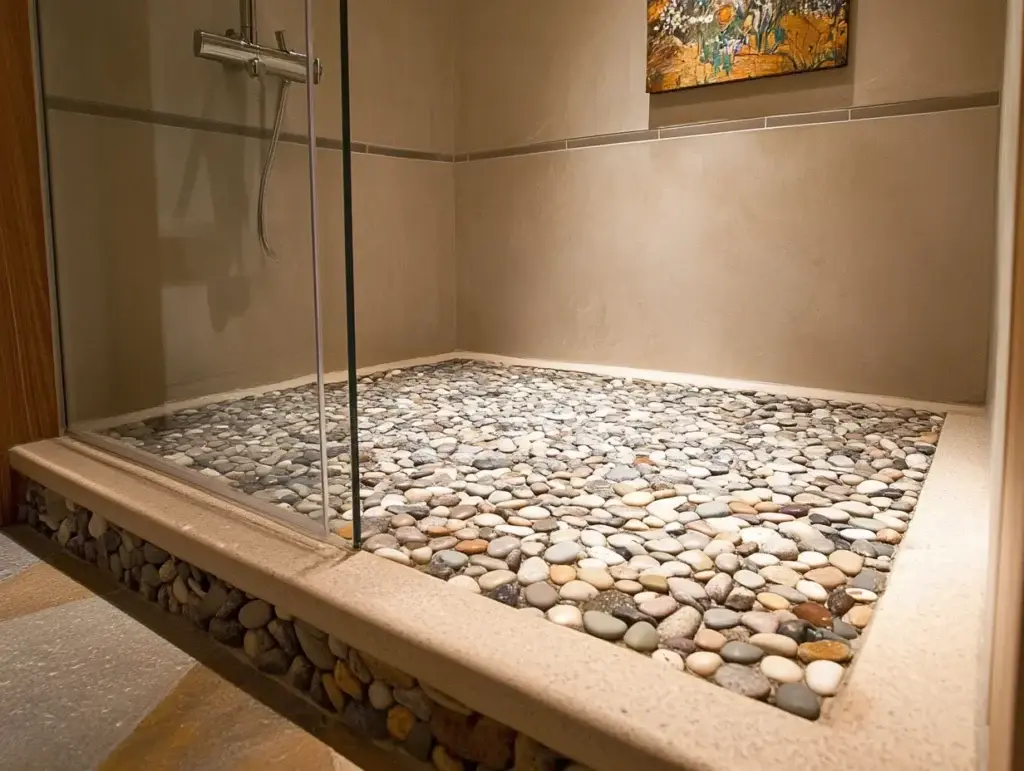
A pebble shower floor introduces movement and texture in a place that is usually flat and predictable. It has an unmistakably spa-like feel, but it also changes the sensory experience of the shower by giving the floor a more natural surface underfoot.
This look works best when the rest of the shower is relatively restrained. Pair pebbles with simple wall tile, muted grout, and a calm color palette so the floor remains the feature rather than one more competing texture. Smaller bathrooms especially benefit from that restraint.
Maintenance matters here. Choose well-mounted pebble tile with quality grout and seal it properly to make cleaning easier. A flatter pebble profile is often more comfortable for daily use than highly rounded stones.
10. Wall-Mounted Wooden Shelves for Display-Ready Bathroom Storage
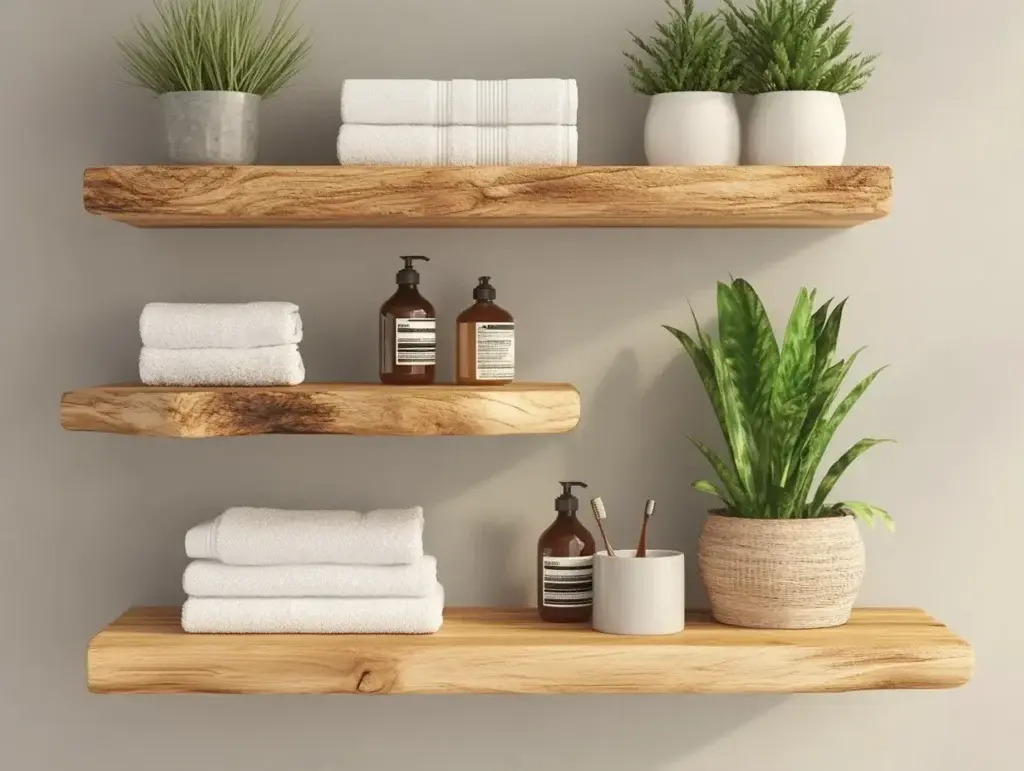
Open shelving can easily go wrong in a bathroom if it becomes a holding zone for every spare product. Wooden shelves work best when they are treated as edited storage. Think neatly stacked towels, a basket or two, a small plant, and perhaps one attractive daily-use item decanted into a better container.
Install shelves where they solve a real problem: above the toilet, beside the vanity, or on an empty wall near the bath. Depth matters. Shelves that are too shallow limit function, but shelves that are too deep can make a narrow bathroom feel more cramped.
If the bathroom already has a lot of warm wood, choose a shelf finish that complements the undertone rather than matching it exactly. Slight variation keeps the room from feeling flat.
11. Cork Bathroom Accessories With a Softer, More Organic Finish

Cork has a quieter presence than metal, ceramic, or glass, which is exactly why it works in an earthy bathroom. It introduces warmth without looking glossy, and its natural texture sits comfortably alongside linen, stone, and wood.
Use cork in small doses: a soap dish, tray, lidded container, or toothbrush holder. It is most effective when it breaks up colder surfaces such as stone countertops or tile ledges. Because bathrooms already contain many different finishes, repeating cork in two or three spots is usually enough to make it feel intentional.
Choose sealed or well-finished pieces where possible so they hold up better around water splashes and frequent handling.
12. River Rock Soap Dish Ideas That Feel Small but Memorable
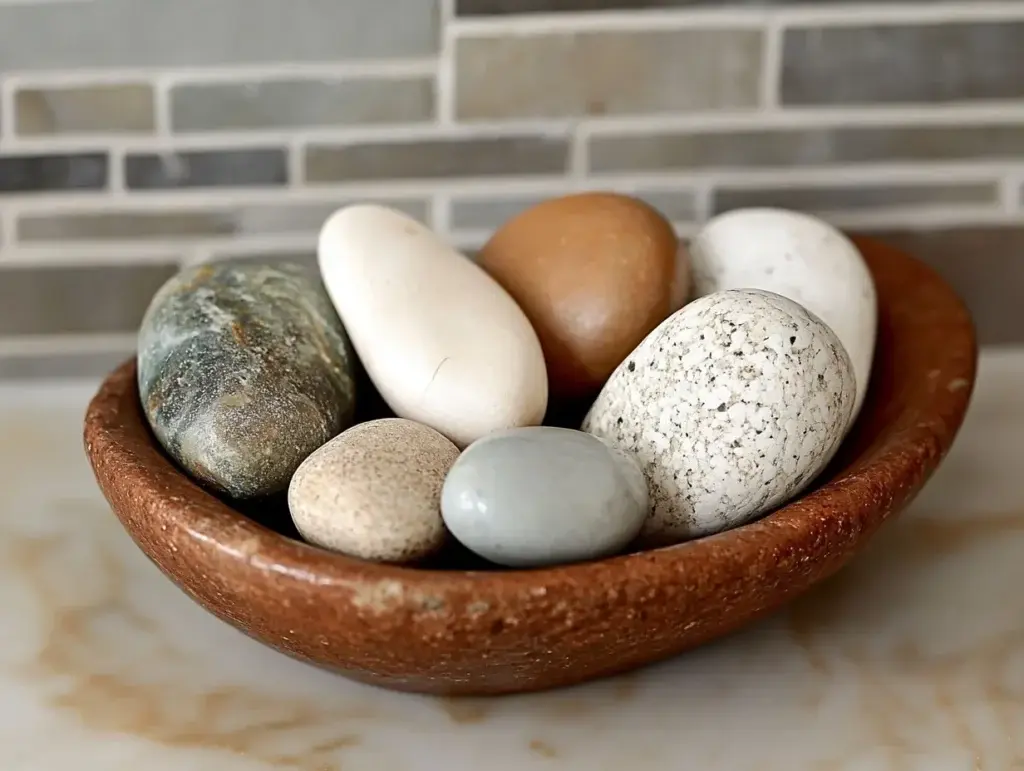
Not every update in a bathroom needs to be large to be noticeable. A river rock soap dish is a subtle detail, but it introduces shape, variation, and a sense of the outdoors in a place where accessories are often overly polished.
It works best in bathrooms that lean natural rather than ornate. Think stone counters, clay planters, brushed finishes, and muted colors. Because the form is already interesting, pair it with a simple bar soap and avoid surrounding it with too many decorative items.
Look for one with enough drainage or elevation to keep soap from turning soft too quickly. A beautiful piece still needs to function well on a wet vanity.
13. Natural Fiber Towel Ideas in Earthy Tones
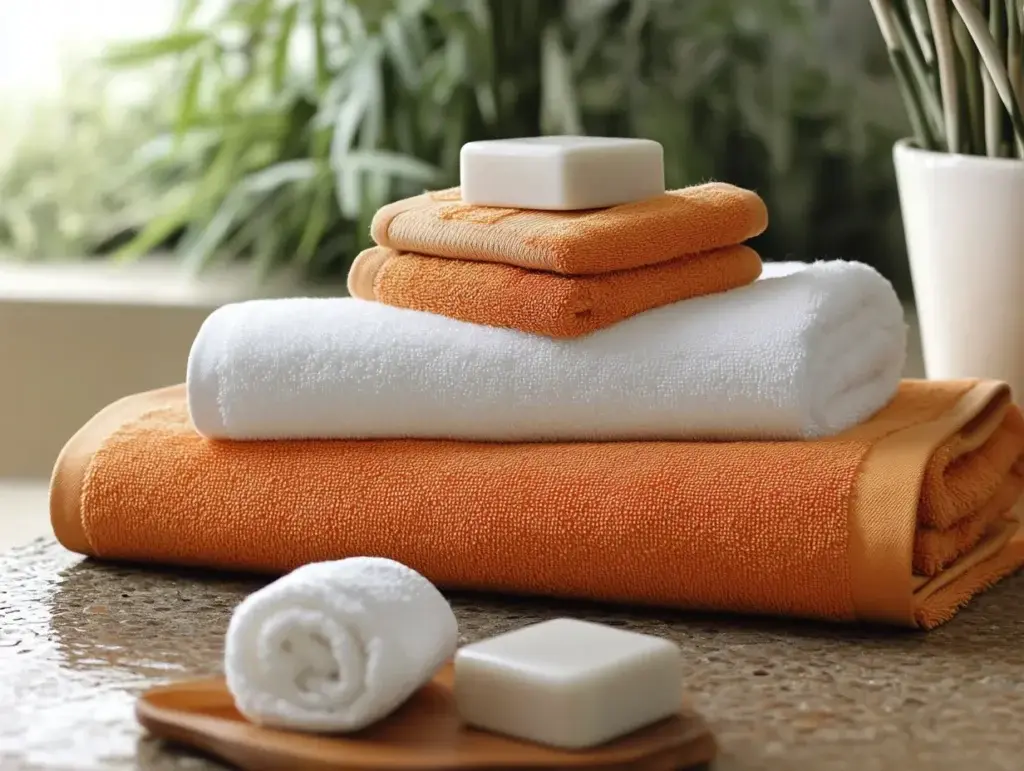
Towels take up a surprising amount of visual space in a bathroom, which means they can either support the overall palette or interrupt it. Natural fiber towels in shades such as oat, sand, clay, olive, or warm white feel calmer than bright whites or overly saturated colors.
Material matters too. Organic cotton is a dependable everyday option, while bamboo blends are often chosen for softness and drape. The best choice depends on whether you want a plush hotel-style feel or a lighter towel that dries faster between uses.
- For guest bathrooms, keep the stack tonal and neatly folded.
- For family bathrooms, choose washable mid-tone colors that hide wear better than stark white.
- Mix hand towels and bath towels within the same color family for a more considered look.
14. Earthy Candle Styling for a Bathroom That Feels Genuinely Restful
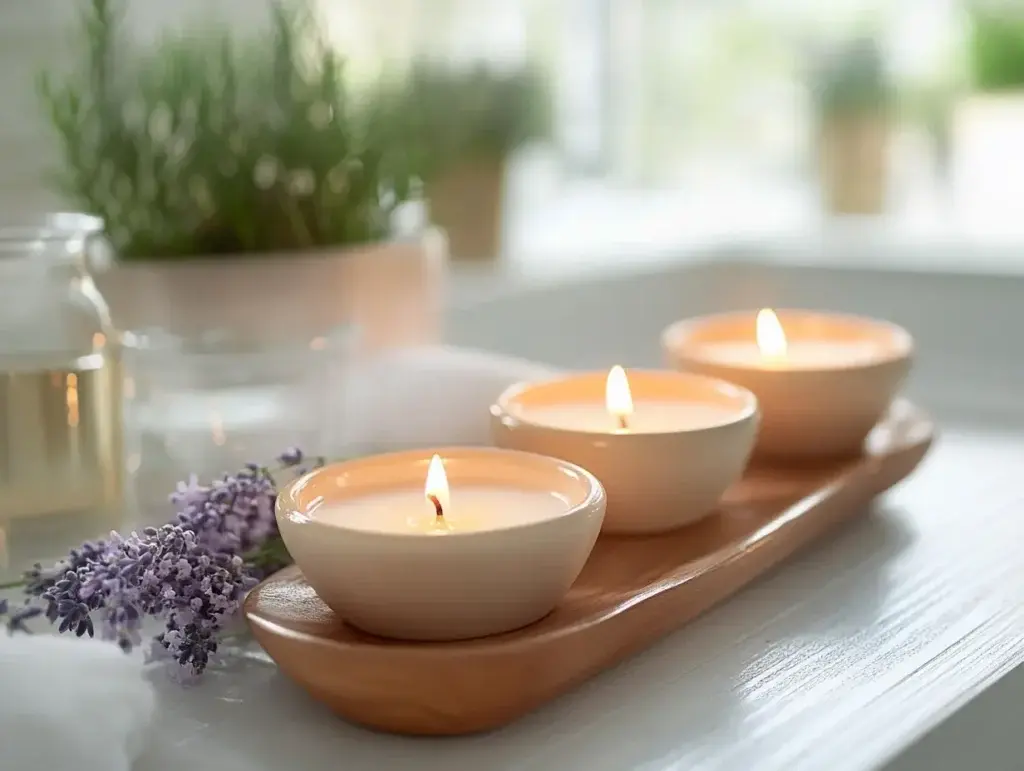
Scent is one of the fastest ways to shift the mood of a room, and bathrooms respond particularly well to fragrances that feel clean, wooded, herbal, or softly floral. Cedarwood, sandalwood, eucalyptus, lavender, and vetiver all suit earthy interiors better than anything overly sweet.
The candle vessel matters almost as much as the scent. Amber glass, stone, matte ceramic, and smoked finishes feel more in tune with an organic bathroom than bright labels or reflective metallic packaging. Place candles where they contribute to the room visually even when unlit, such as beside the tub, on a shelf, or on a tray near the vanity.
In smaller bathrooms, one good candle is usually enough. Too many competing scents can make the room feel less restful rather than more.
15. Live-Edge Wood Mirror Ideas With More Character Than Standard Frames
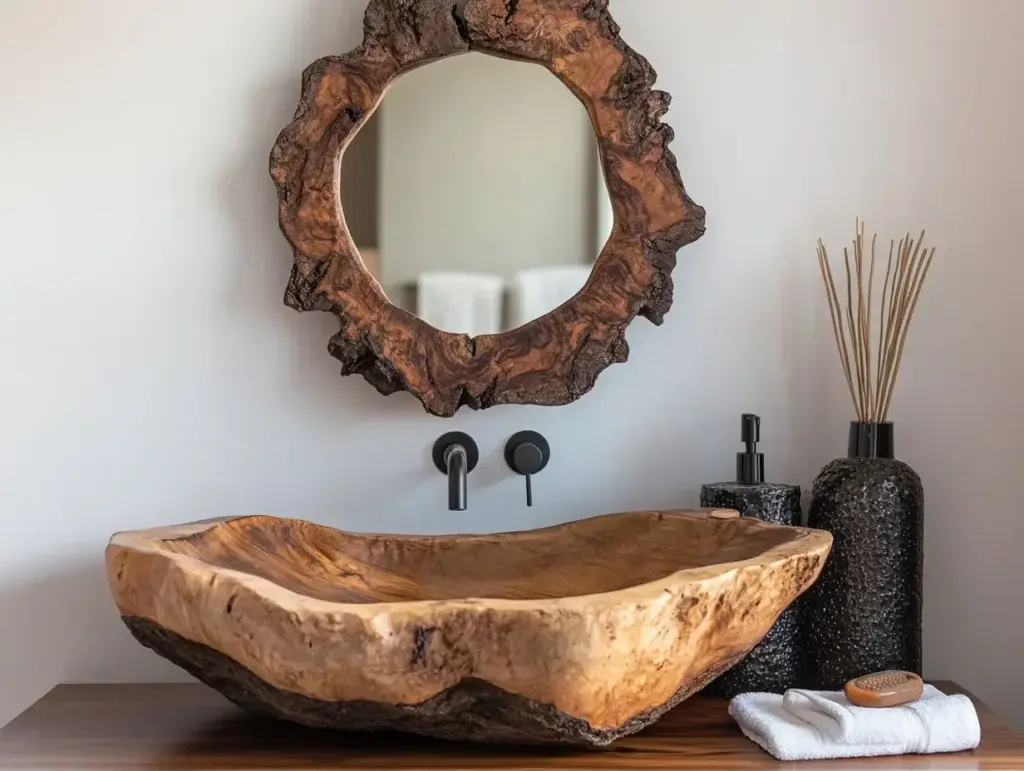
A live-edge wood mirror introduces sculptural interest in a bathroom where many lines are straight and predictable. The organic outline softens the room and gives the vanity wall a focal point that feels distinctive without relying on bold color or heavy ornament.
This look suits powder rooms especially well, where a single memorable piece can carry the design. In a larger bathroom, it works best when other surrounding elements are kept simple so the mirror remains the star. Be mindful of scale. A frame with strong visual presence needs enough wall space around it to breathe.
Because bathrooms are humid environments, a properly sealed wood frame is worth prioritizing over a purely decorative one.
16. Clay Diffuser Ideas for Subtle, Low-Visual-Clutter Fragrance
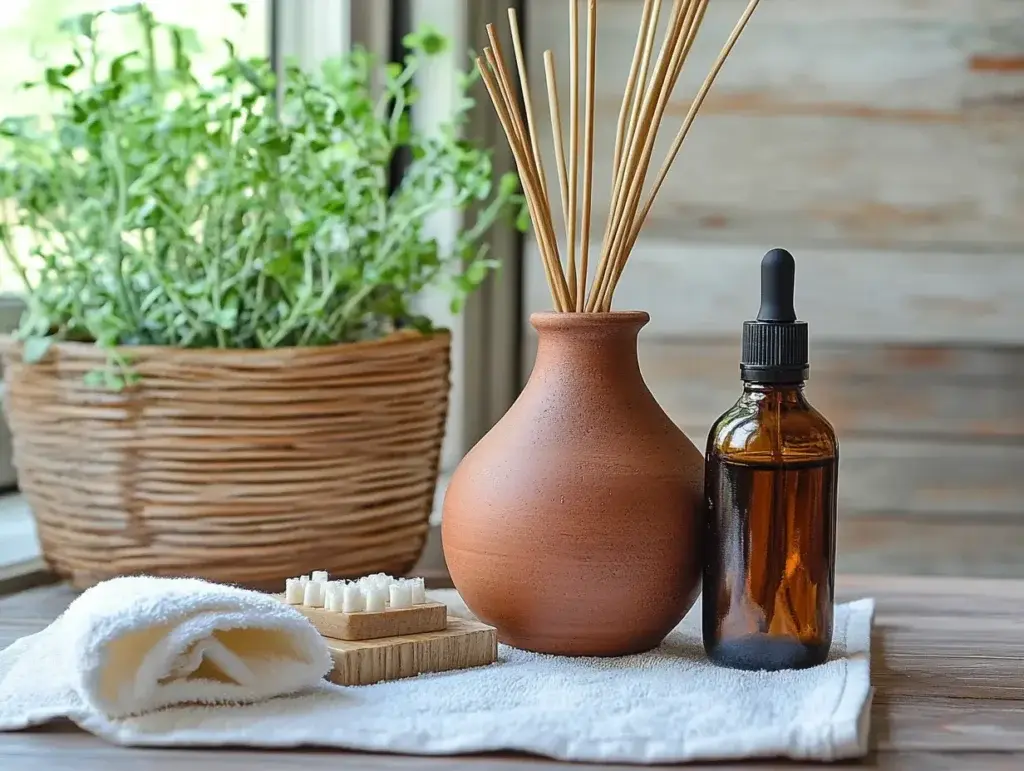
For readers who want fragrance without the look of a plug-in or the maintenance of a larger diffuser, clay is an elegant middle ground. Its porous surface allows scent to release slowly, and the material itself feels right at home in a bathroom built around natural finishes.
Place a clay diffuser on an open shelf, windowsill, or vanity corner where it stays out of the splash zone. Earthy scents tend to feel most convincing here: eucalyptus for freshness, lavender for calm, or cedarwood for something deeper and moodier.
Because the diffuser is visually understated, it is a good option in bathrooms that already have enough decorative moments and do not need another prominent object.
17. Himalayan Salt Lamp Ideas for a Warmer Evening Glow
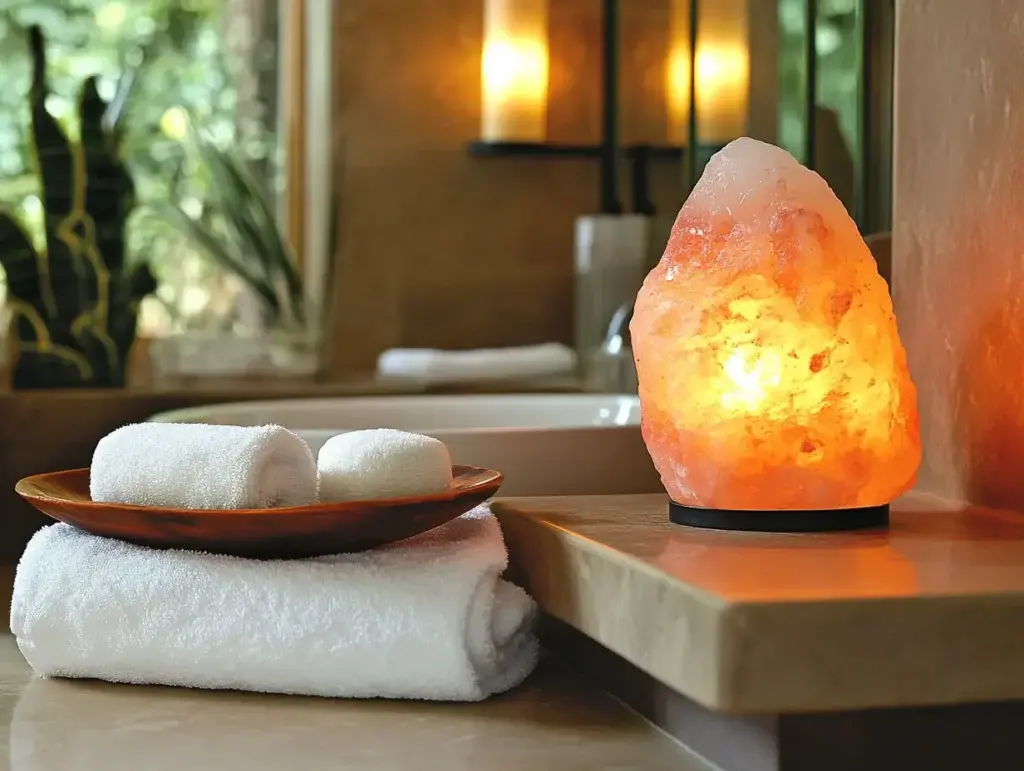
Bathrooms often rely on bright overhead lighting that works in the morning but feels harsh at night. A Himalayan salt lamp introduces a softer, amber-toned glow that can make evening baths and wind-down routines feel far more calming.
Use it as accent lighting rather than task lighting. It belongs on a shelf, counter corner, or stool away from direct splashes, where it can create atmosphere without competing with the room’s practical light sources. It tends to look best in bathrooms with warm neutrals, natural wood, and matte finishes.
Because salt lamps can attract moisture, placement is important. Keep the base dry and avoid putting one in a spot that stays damp all day.
How to Pull an Earthy Bathroom Together Without Overdecorating
The strongest bathrooms in this style do not use every natural material at once. They usually rely on a few recurring elements and let those repeat quietly throughout the room.
- Choose two or three main materials. Wood, stone, and linen make a reliable combination.
- Keep the palette grounded. Warm white, sand, taupe, clay, olive, and soft brown are easier to live with than trend-driven shades.
- Use texture where color is minimal. Woven storage, slubbed fabric, raw clay, and grained timber keep the room from feeling flat.
- Edit the countertop. Fewer visible products instantly make the bathroom feel calmer and more expensive.
- Think about moisture. Materials should suit real bathroom conditions, not just look good in a photo.
Frequently Asked Questions
What colors work best in an earthy bathroom?
Warm neutrals usually feel the most natural and timeless. Soft white, beige, mushroom, taupe, clay, muted green, and brown all work well. A restrained palette helps natural materials stand out without making the room feel busy.
Can an earthy bathroom still work in a small space?
Yes, and small bathrooms often benefit the most from this approach. Focus on a few high-impact changes such as a linen shower curtain, a better bath mat, a stone dispenser, and one plant. Too many accessories can quickly crowd a compact room.
Which natural materials hold up best in a humid bathroom?
Teak, bamboo, sealed stone, quality ceramic, and washable linen blends tend to perform well. Jute, raw wood, and some woven fibers are better suited to drier zones of the bathroom rather than areas that stay wet.
How do you make a bathroom feel spa-like without renovating?
Start with what you see and touch most often: towels, scent, lighting, and storage. A calmer color palette, better containers, softer lighting, and fewer visible products can change the feel of the room without replacing tile or fixtures.
Final Thoughts
An earthy bathroom does not need to be elaborate to feel transporting. A few well-chosen materials, a quieter palette, and smarter styling can shift the room from purely practical to genuinely restorative. Start with the details you use every day, then build from there.
Written by the Zeeshe Home Editorial Team, a blog focused on practical home décor ideas and inspiration.


