
Bathroom pocket doors earn their keep in one very practical way: they give floor space back. In a small bathroom, that matters more than almost any decorative upgrade. A swinging door can interfere with a vanity, crowd a narrow entry, or make the room feel tighter than it is. A pocket door removes that arc entirely, which is why it is often the smarter choice in compact layouts, en suites, and powder rooms.
But function is only part of the story. The best bathroom pocket doors also shape the mood of the room, whether that means softening the space with frosted glass, sharpening it with black metal, or making it feel warmer through painted wood and richer textures. The styles below are arranged to help readers think beyond trend names and focus on what each option does well in a real bathroom.

Frosted Glass Pocket Door Ideas for Bright, Private Bathrooms
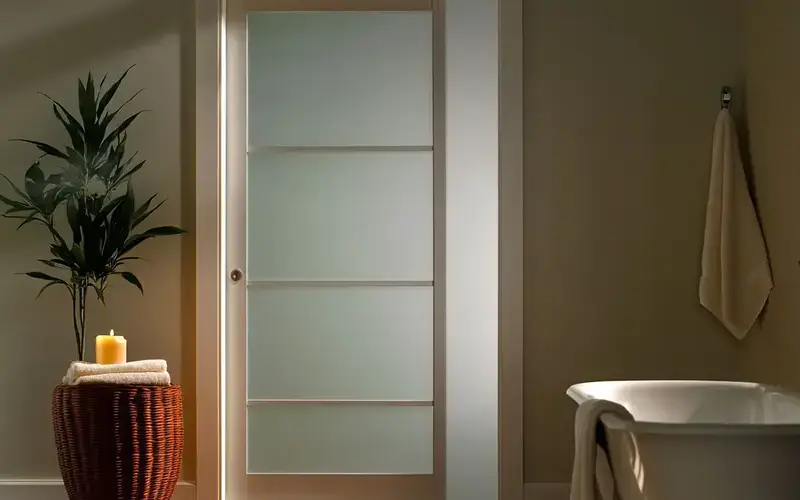
Frosted glass is one of the most useful pocket door finishes for bathrooms because it solves two common problems at once: privacy and light. In rooms that do not have generous natural light, a solid slab door can make the space feel more enclosed. Frosted glass keeps the bathroom visually lighter without making it feel exposed.
This style suits modern, transitional, and spa-inspired interiors especially well. It also works nicely between a bathroom and dressing area, where some borrowed light is a real advantage.
- Best for bathrooms that feel dark or closed in.
- Choose tempered safety glass for durability.
- Pair with simple hardware so the glass remains the focus.
Metal-Framed Pocket Doors for a Clean Modern Look
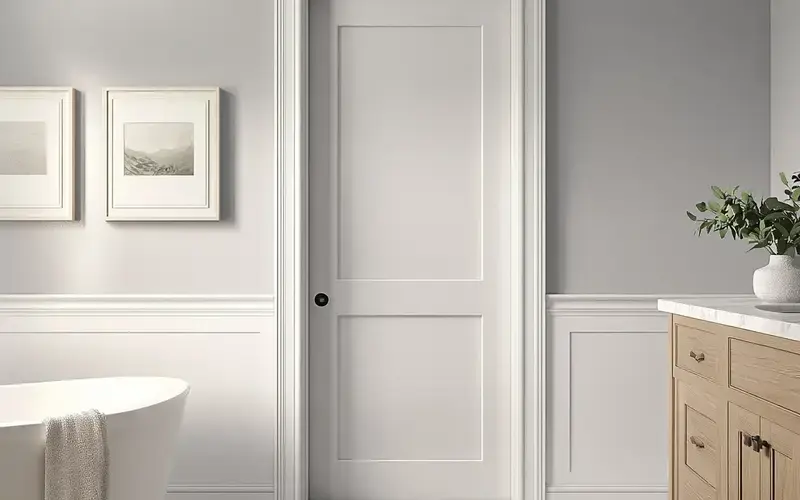
A metal-framed pocket door gives a bathroom sharper definition. The frame adds structure, while the overall profile still feels streamlined, which is why this style works so well in modern and industrial-leaning spaces.
It is especially effective when the bathroom already includes black fixtures, slim-profile mirrors, or polished concrete, stone, or large-format tile. The key is balance. A strong frame looks most convincing when echoed elsewhere in the room rather than introduced as a one-off detail.
Rustic Pocket Door Ideas with Barn-Inspired Warmth
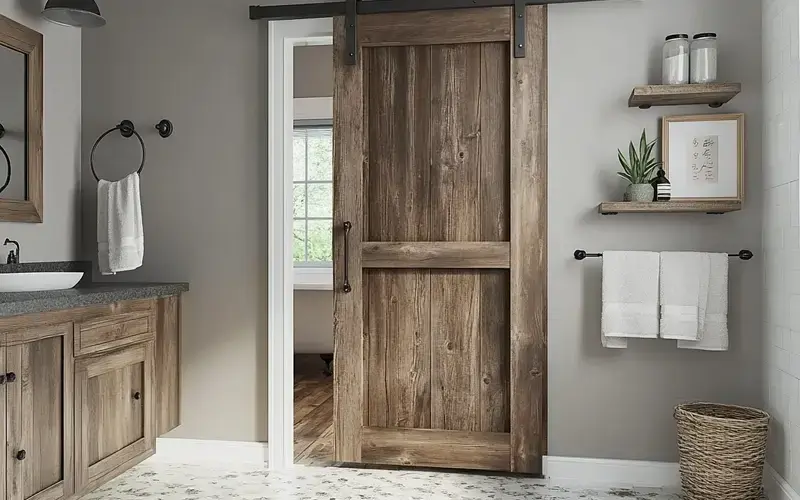
A barn-inspired pocket door brings warmth that many small bathrooms lack. Because pocket doors already save space, using one in a rustic wood finish lets the room feel more inviting without giving up function.
This look is best when the wood tone feels intentional and not overly themed. In other words, it should complement the vanity, shelving, or mirror frame rather than making the bathroom feel like a set piece. In a farmhouse or cottage-style home, it can be especially effective.
- Works well with warm white walls, natural stone, and aged brass.
- Choose sealed wood finishes for better moisture resistance.
- Avoid overly bulky detailing in very tight bathrooms.
Classic White Paneled Pocket Doors for Timeless Bathrooms
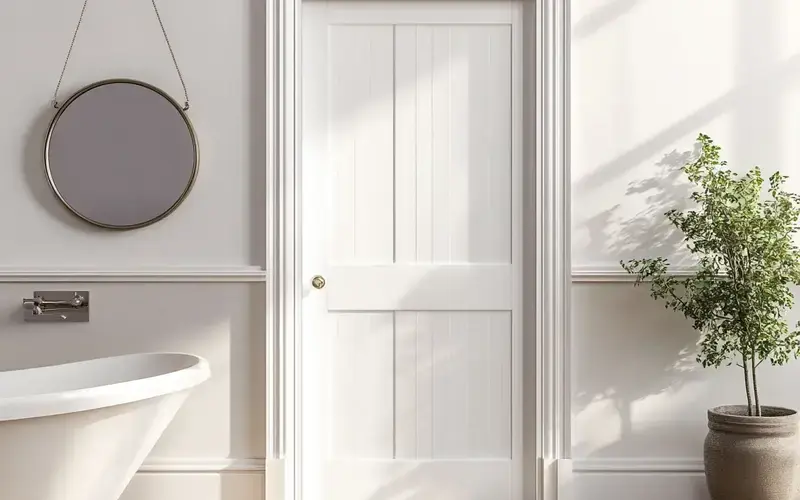
A white paneled pocket door is the most adaptable option on the list. It works with almost every bathroom style, from traditional to coastal to updated classic, and it rarely dates a room.
Its strength is restraint. Instead of competing with tile, wallpaper, or a statement vanity, it lets those elements do more of the decorative work. That makes it a particularly good choice if the bathroom already has a lot going on visually.
Geometric Pocket Door Designs for Statement Bathrooms
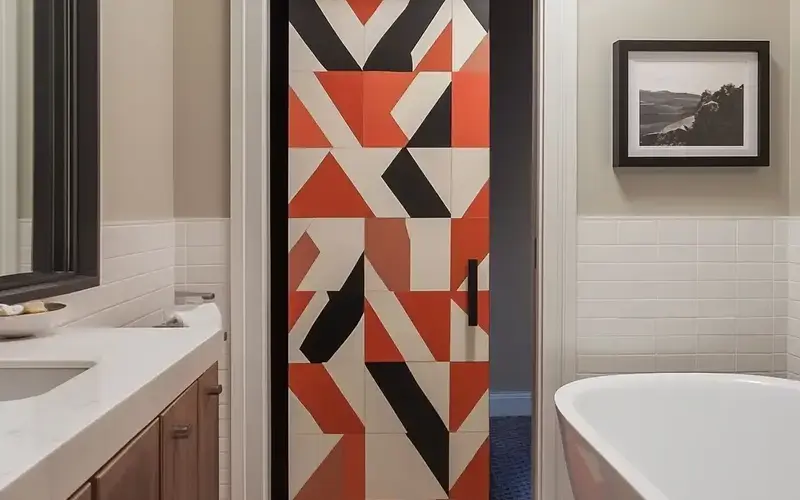
A pocket door with geometric detailing can shift from practical feature to focal point very quickly. That is useful in a small bathroom where there may not be room for much extra ornamentation elsewhere.
This style tends to work best when the rest of the room is edited carefully. Strong pattern on the door usually pairs better with quieter tile and simpler accessories than with multiple competing motifs.
If the bathroom already contains strong geometry in flooring or wall tile, repeat the shape family subtly rather than introducing a completely unrelated pattern.
Mirrored Pocket Door Ideas for Small Bathroom Layouts
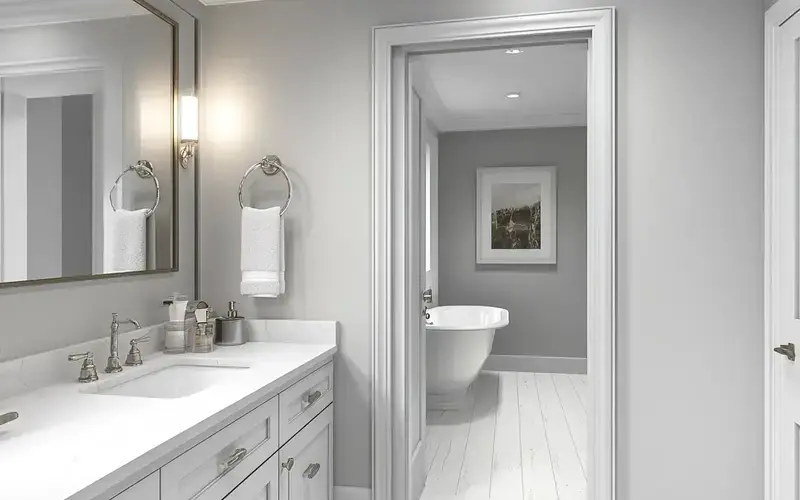
Mirrored pocket doors are particularly useful in tight bathrooms because they do more than save swing clearance. They also reflect light and visually double the sense of depth, which can make a narrow room feel less boxed in.
This is one of the most practical options for a small ensuite, dressing-room bath, or compact city apartment. The mirror can also reduce the need for an additional full-length mirror elsewhere nearby.
- Especially useful in bathrooms with minimal natural light.
- Keep surrounding finishes simple so the reflection does not feel cluttered.
- Use quality installation hardware to support the extra door weight.
Reclaimed Wood Pocket Doors for Character and Texture
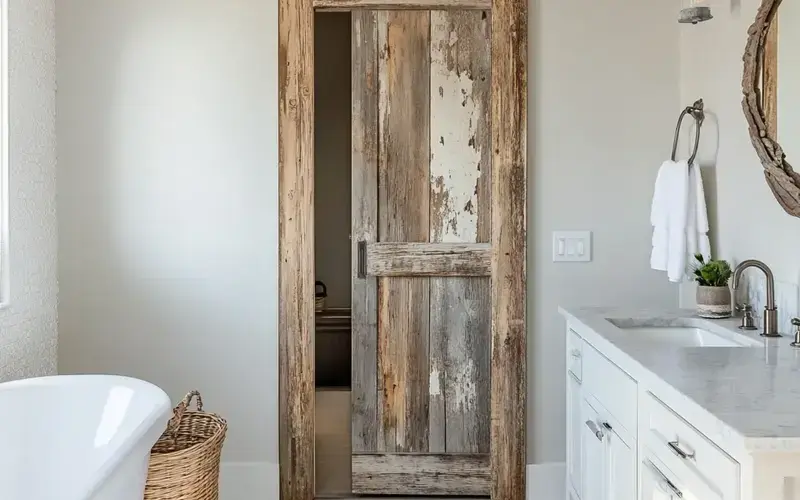
Reclaimed wood gives a bathroom a sense of age and texture that newer materials often cannot imitate convincingly. Each board brings variation in tone and grain, which means the door reads as part architectural feature, part design statement.
In practical terms, this style suits powder rooms, guest baths, and homes that already use natural materials elsewhere. In a sleek, high-gloss bathroom it can feel out of place, but in a softer, more tactile interior it brings real depth.
Textured Glass Pocket Doors for Soft Privacy
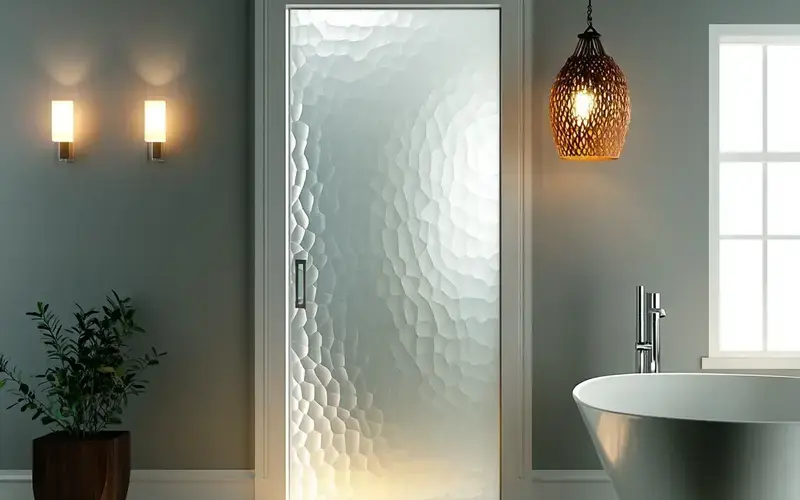
Textured glass offers a softer alternative to frosted panels. It still obscures the view, but with more movement and visual interest. Depending on the pattern, it can feel vintage, artisanal, or quietly modern.
This style works especially well when the bathroom needs privacy without feeling sealed off from the rest of the home. It also catches light beautifully, which can help a plain wall feel more layered.
Stained Glass Pocket Door Ideas for Decorative Bathrooms
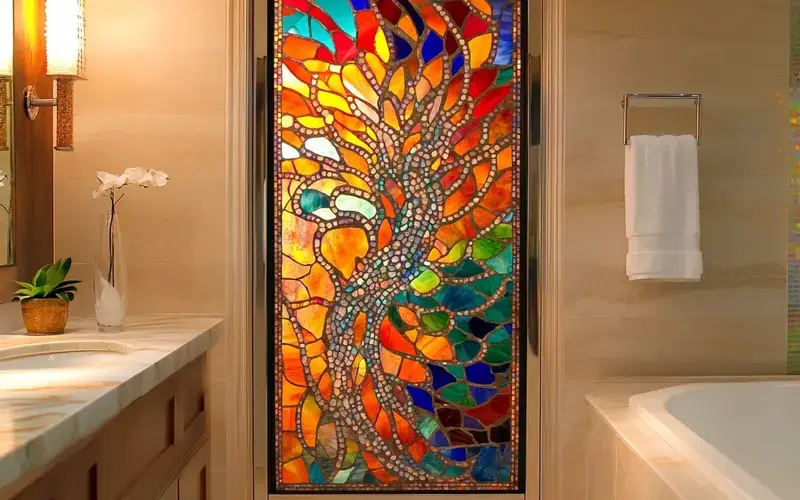
Stained glass is a far more decorative choice, and because of that it needs the right setting. In the right bathroom, though, it becomes a memorable feature that adds color, pattern, and a sense of craftsmanship that ordinary doors never deliver.
This style works best in period homes, eclectic interiors, or bathrooms that already lean into character. It is less about minimalism and more about atmosphere. The surrounding finishes should support that mood rather than fight it.
Double Pocket Doors for Wider Bathroom Openings
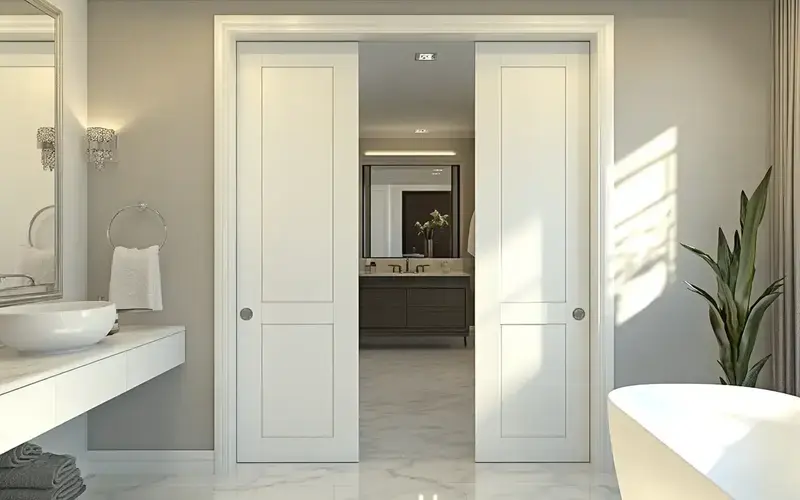
Double pocket doors are not just a larger version of the same idea. They change how the bathroom is entered and perceived. A wider opening can make a primary bath or dressing area feel more generous, especially when connected to a bedroom suite.
They are best reserved for layouts that genuinely benefit from a broader passage. In a modest bathroom, a single pocket door is usually enough. In a larger room, though, doubles can feel architectural rather than merely practical.
- Useful for primary suites and wider vanity zones.
- Require more wall space than a single pocket door.
- Look best when the door design is symmetrical and clean.
Painted or Wallpapered Pocket Doors for Personality
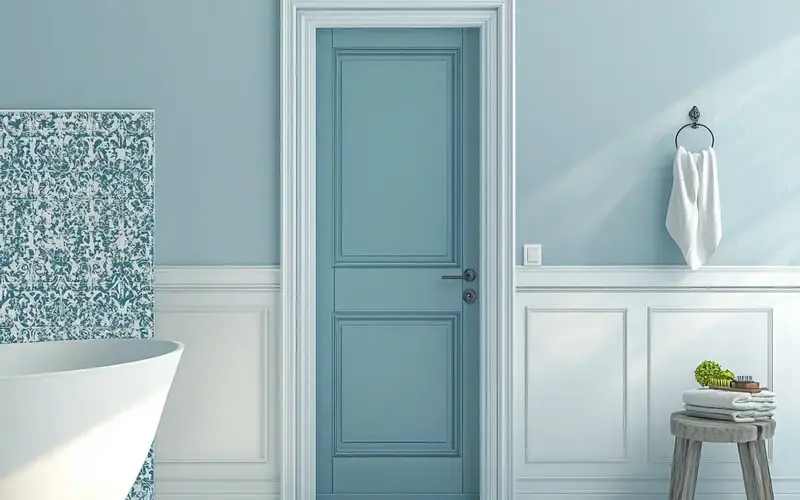
A pocket door can do more than disappear. It can also act like a design surface. Painting it in a strong accent color or finishing it with wallpaper turns a purely functional element into part of the room’s styling story.
This is particularly effective in powder rooms, where bold choices feel easier to carry off. In a main bathroom, it can still work beautifully, but the finish should relate clearly to the wall color, vanity tone, or textile palette.
Black-Framed Pocket Doors for High Contrast Bathrooms
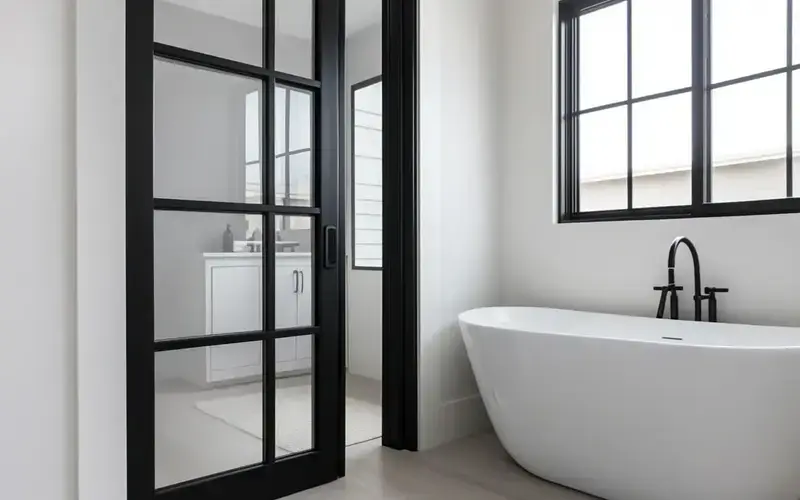
A black-framed pocket door introduces contrast fast. Against white walls, pale stone, or soft neutral tile, it becomes a crisp outline that gives the room definition and a more tailored edge.
This style suits bathrooms that already lean contemporary. It also works well in spaces that need one strong graphic moment to keep them from feeling too plain. The effect is strongest when black appears elsewhere in measured doses, such as in tapware, sconces, or mirror frames.
Louvered Pocket Door Ideas for Ventilation and Texture
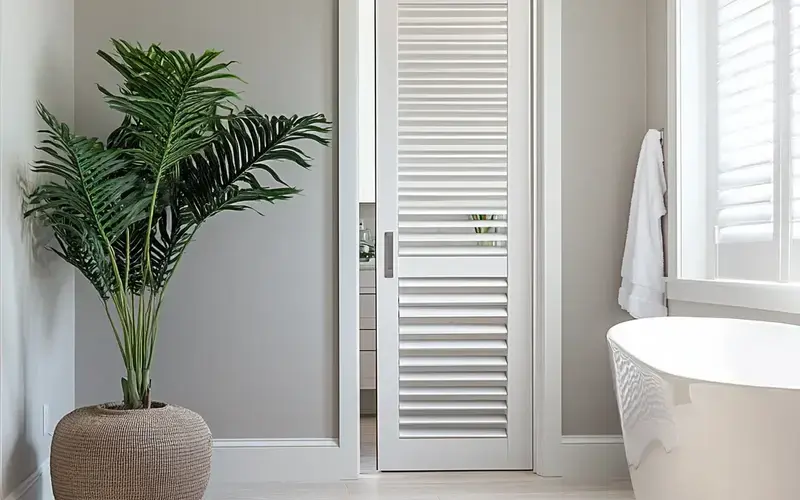
Louvered pocket doors bring both texture and airflow, which makes them useful in bathrooms where humidity is a recurring concern. They are not right for every layout, particularly if maximum sound privacy matters, but they can be practical in warm climates and secondary bathrooms.
Visually, they add a slightly relaxed, architectural feel that suits coastal, tropical, and casual traditional interiors.
- Useful where extra ventilation is genuinely helpful.
- Best in guest baths, cabana baths, or warm-climate homes.
- Less ideal where full acoustic privacy is a priority.
Half-Glass Pocket Doors for Balanced Privacy
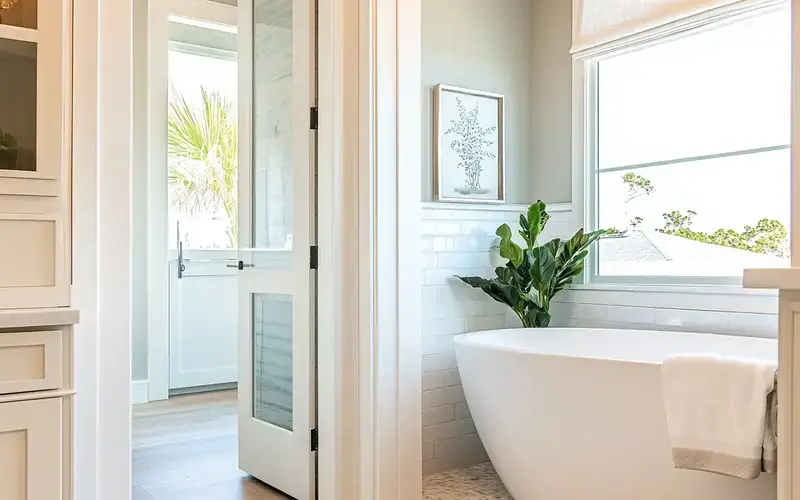
A half-glass, half-solid pocket door sits neatly between fully solid and fully glazed options. It lets some light move through while keeping the lower, more private portion of the door opaque.
This style is especially helpful when the bathroom opens off a hallway or bedroom and you want a compromise between brightness and privacy. It also blends easily into both classic and contemporary schemes.
Art Deco Pocket Door Ideas for Vintage Glamour
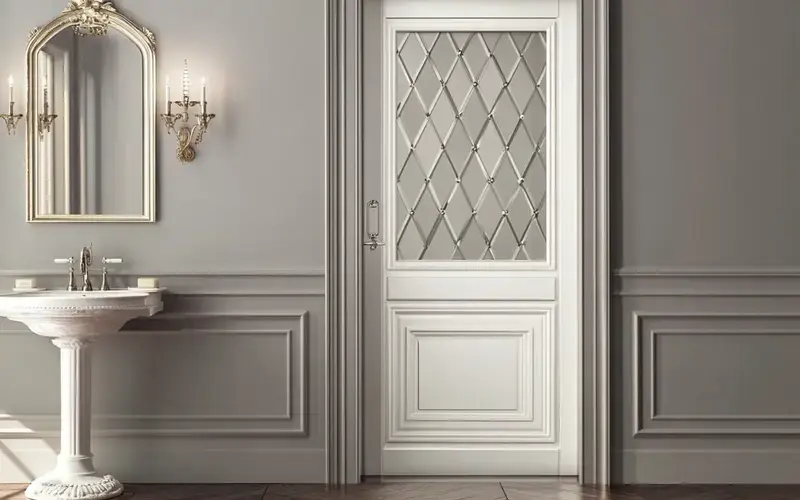
An Art Deco-inspired pocket door brings shape, symmetry, and a little drama. In a bathroom, that can translate into a more glamorous atmosphere without needing a full period renovation.
This look works particularly well with marble-effect surfaces, brass accents, and strong geometric motifs. The trick is editing the rest of the room carefully so it feels intentional rather than theatrical.
Two-Tone Pocket Door Ideas for Modern Contrast
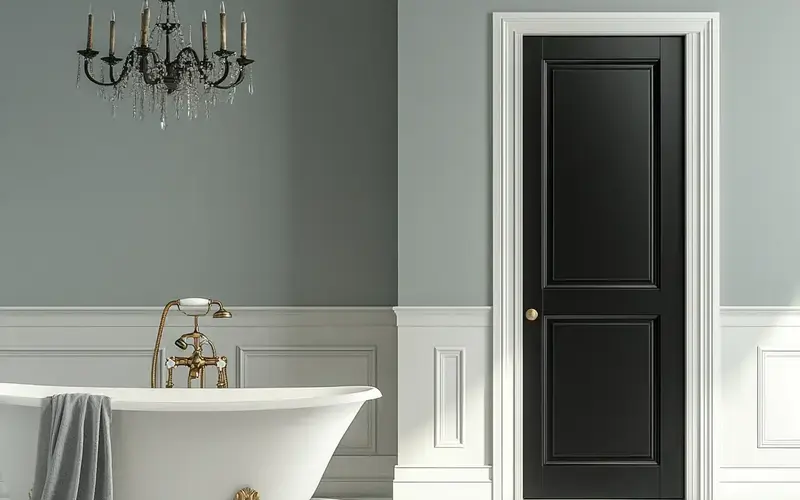
A two-tone pocket door introduces contrast in a more playful way than a standard painted finish. It can highlight trim details, connect the door to the vanity color, or simply stop the room from feeling too one-note.
This works especially well in bathrooms that are mostly neutral and need one stronger design gesture. The cleanest results usually come from pairing one deep tone with one quieter shade rather than trying to make several bold colors work at once.
Hidden Pocket Doors with Flush Handles for Minimalist Bathrooms
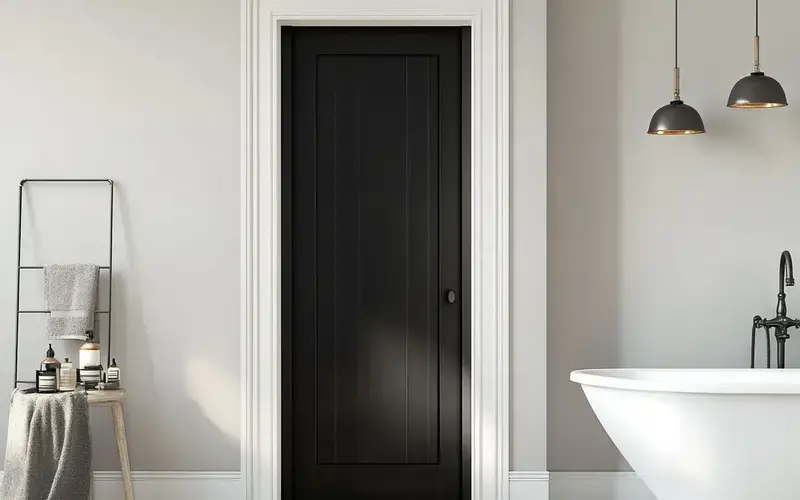
A hidden pocket door is the most pared-back option of all. When closed, it can blend almost seamlessly into the wall, and when open, it disappears completely. In a minimalist bathroom, that helps the room feel uninterrupted and calm.
It is best suited to highly streamlined interiors where every detail is being kept quiet, from the vanity profile to the mirror shape and hardware finish. The flush handle is part of what makes the look convincing, so the hardware choice matters more than it first appears.
Pocket Door Hardware Tips for Bathrooms
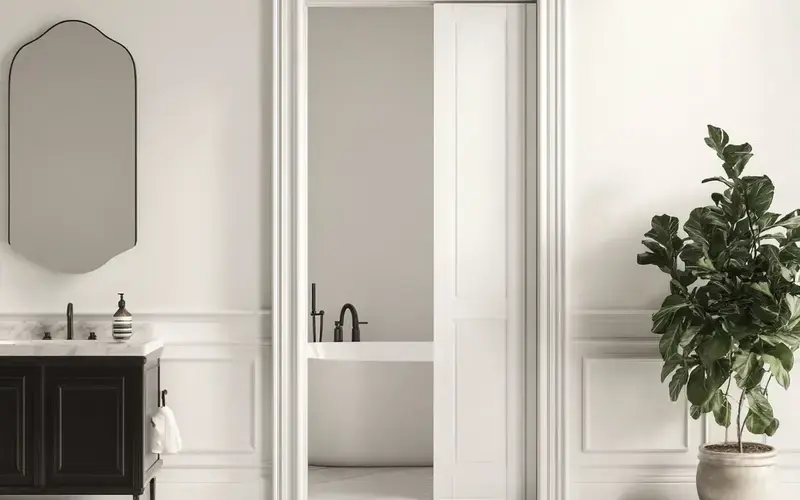
Even a beautiful pocket door will disappoint if the hardware is poorly chosen. The track system needs to suit the door’s weight, especially for mirrored, glass, or solid wood designs. A bathroom door also needs hardware that feels smooth and solid in daily use, not flimsy or difficult to grip with damp hands.
- Heavier doors need stronger track systems and better rollers.
- Choose flush pulls that are easy to use, not just visually discreet.
- Bathroom privacy locks should be simple, reliable, and moisture-resistant.
It is worth getting this part right. Hardware affects how the door feels every single day, not just how it photographs.
DIY vs. Professional Installation for Pocket Doors
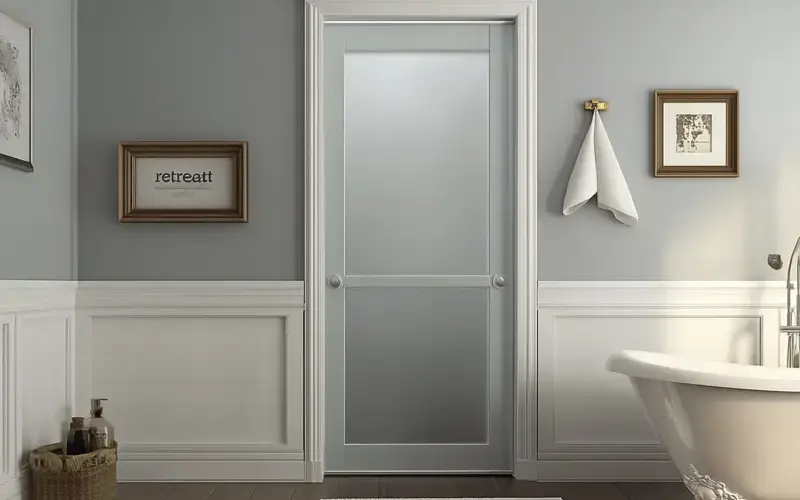
Pocket doors look simple once finished, but installation is more demanding than a standard hinged door. The wall cavity has to be prepared correctly, the frame must stay true, and the track system needs precise alignment for smooth operation.
For experienced renovators, it can be a manageable project. For many homeowners, though, professional installation is the better route, especially in bathrooms where plumbing, electrical lines, tile alignment, and moisture-resistant finishes all need to be considered.
Pocket Door Maintenance and Care
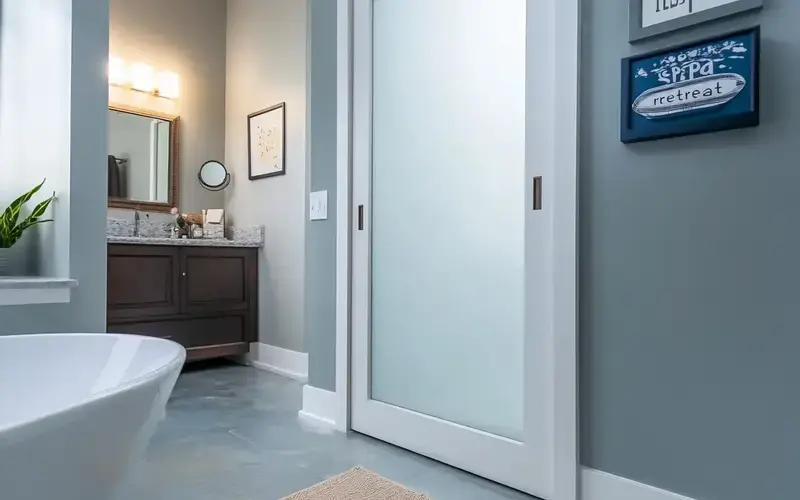
Pocket doors are relatively low-maintenance, but they do benefit from occasional care. Dust and debris can build up in the track area, and wood finishes in bathrooms should be protected from repeated moisture exposure.
- Wipe down tracks and exposed edges regularly.
- Use a suitable lubricant on rollers if the manufacturer recommends it.
- Keep painted or wood finishes sealed and clean in humid rooms.
If the door starts dragging, sticking, or rattling, it is usually easier to correct the problem early than wait for the wear to worsen.
Frequently Asked Questions
Are pocket doors a good idea for small bathrooms?
Yes. They save the swing space a hinged door would need, which can make a compact bathroom layout feel easier to use and less cramped.
Do bathroom pocket doors provide enough privacy?
They can, especially when fitted with the right privacy lock and good-quality hardware. Solid-core doors generally offer more sound separation than glass or louvered styles.
What is the best material for a bathroom pocket door?
That depends on the look and function you want. Frosted glass is useful for light, solid painted doors are versatile, and sealed wood or moisture-resistant finishes are better where humidity is high.
Are pocket doors hard to maintain?
Not usually. Regular cleaning of the track area and occasional checks on the rollers and hardware are often enough to keep them operating smoothly.
Final Thoughts
The best bathroom pocket door is not necessarily the boldest one. It is the one that suits the room’s scale, solves the layout cleanly, and feels consistent with the rest of the design. In a small bathroom, that combination can make the space feel more open, more polished, and far easier to use every day.
Written by the Zeeshe Home Editorial Team, a blog focused on practical home décor ideas and inspiration.


