
If you love vintage interiors but want a room that still feels comfortable to live in, 1930s style is one of the easiest eras to borrow from. It balances polish with warmth—glamorous finishes sit alongside practical layouts, curved furniture, layered lighting, and details that make a living room feel established rather than overly styled.
For many U.S. homes, this look works especially well because it can be interpreted in different ways. You can lean into Art Deco drama, keep things streamlined and modern, or take a softer traditional route with wood tones, floral textiles, and collected pieces. The goal is not to build a period set, but to create a living room with the character, elegance, and comfort associated with the 1930s.

The 1930s brought together elegance, innovation, and a strong sense of visual order. Living rooms from the era often felt polished, but never cold. Furniture had presence, lighting mattered, and even decorative details were chosen with intention.
These 17 ideas show how to bring that atmosphere into a modern home without making the room feel dated. Some focus on architecture and layout, while others are easy decorative updates that instantly shift the mood.
1. Embrace Art Deco Glamour
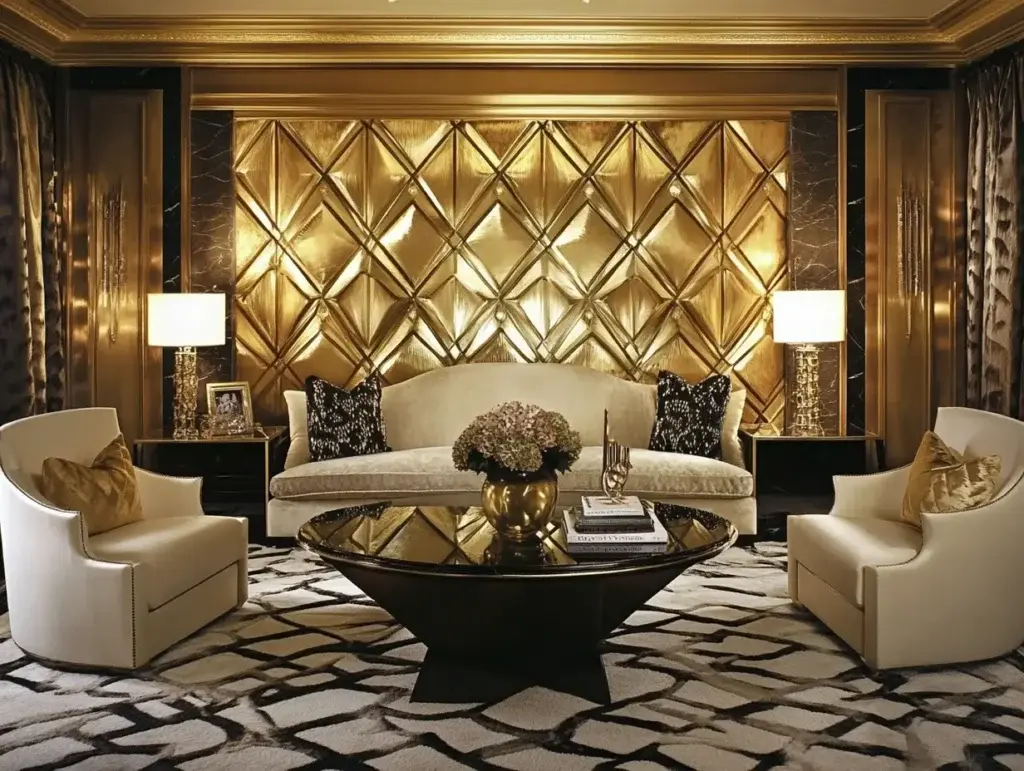
Art Deco is one of the most recognizable design languages of the 1930s, and it still feels striking today. Geometric motifs, reflective finishes, and symmetrical styling give a room structure and presence without relying on excess.
This look works best when used with restraint. A geometric rug, mirrored or metallic accents, and a few sculptural accessories usually make more impact than filling the room with pattern. If your living room already has simple walls and straightforward furniture, Art Deco details can do a lot of the heavy lifting.
Try using this style in rooms that need a stronger focal point or a slightly dressier mood. It pairs especially well with deep jewel tones, black lacquer, walnut finishes, and warm brass.
2. Use Streamlined Modernism for a Cleaner 1930s Look
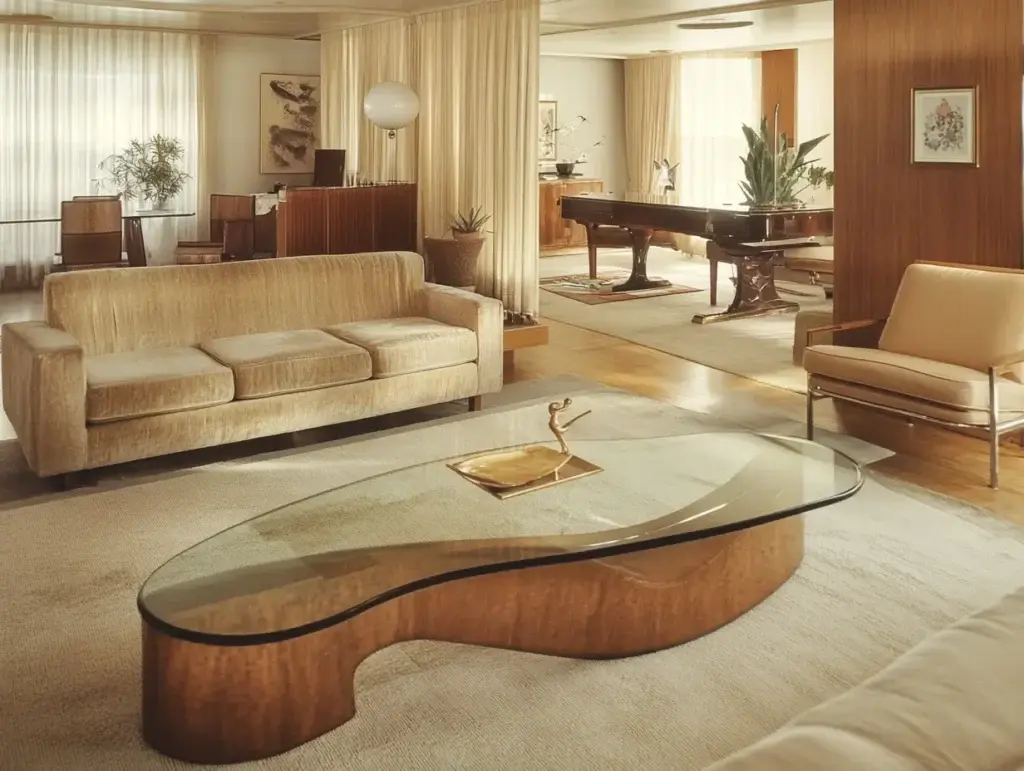
Not every 1930s room was ornate. Streamlined modernism brought a quieter, more functional side to the decade, with furniture that favored smooth surfaces, rounded corners, and practical forms.
This approach suits smaller living rooms or homes that already lean minimalist. A chrome-and-glass coffee table, a sofa with a simple silhouette, and a restrained palette of ivory, charcoal, taupe, or black can nod to the period without making the room feel formal.
If you want a 1930s-inspired room that still feels current, this is often the most adaptable direction. It leaves room for vintage accents while keeping the overall layout light and uncluttered.
3. Bring in Cozy Traditionalism for a Softer Feel
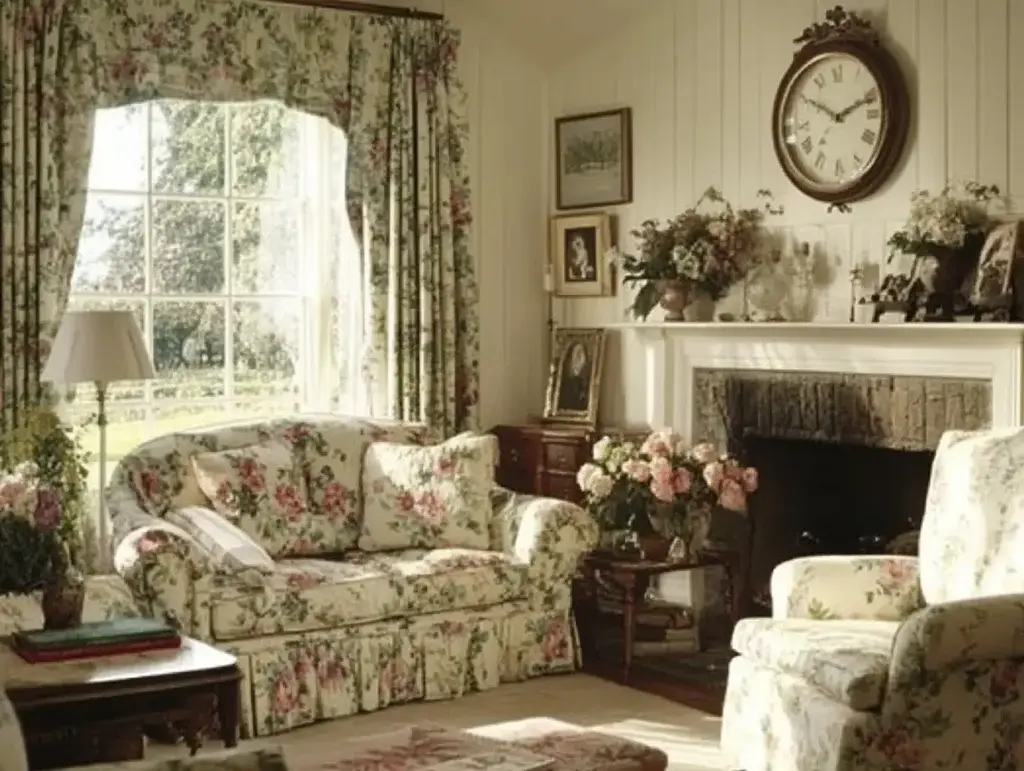
If Art Deco feels too polished and streamlined modernism too spare, a traditional 1930s living room offers a more welcoming middle ground. Floral prints, classic upholstery, wood furniture, and layered textiles make the room feel settled and lived in.
This style works well in older homes, family rooms, and spaces where comfort matters as much as appearance. Curtains, cushions, and upholstered occasional chairs are easy ways to introduce pattern without overwhelming the room.
Pieces with age or character—such as a side table, cabinet, or clock—help the room feel collected rather than staged. The effect is softer than Deco glamour, but still very much in keeping with the decade.
4. Use Warm Wood Tones to Ground the Room
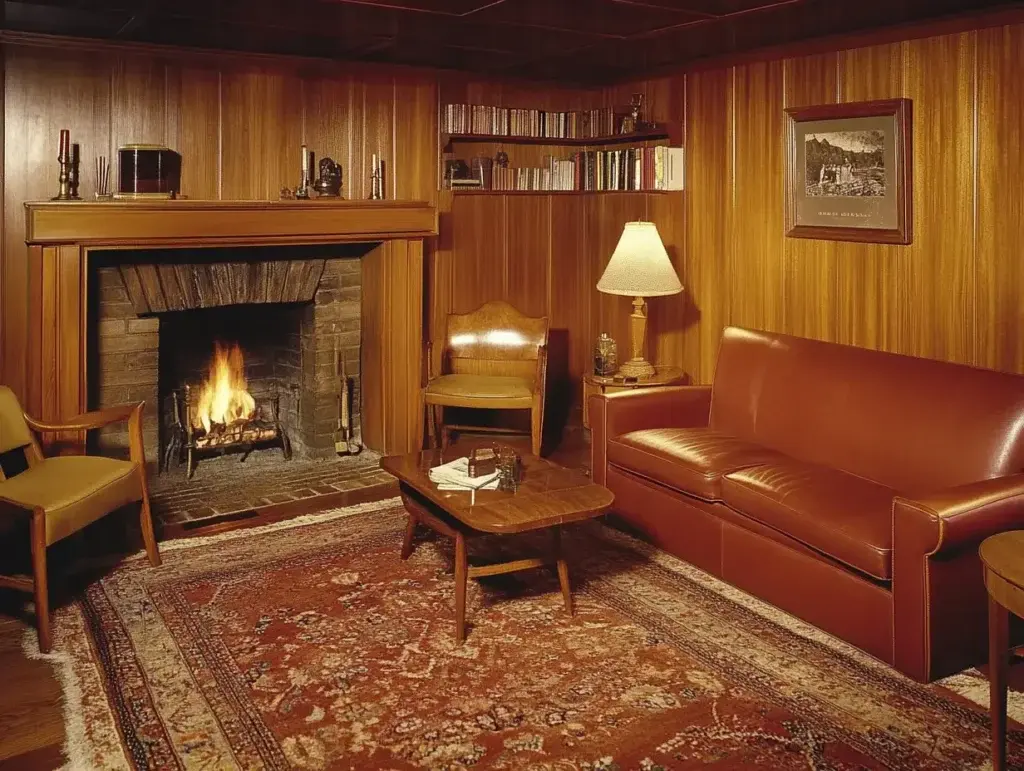
Wood was central to many 1930s interiors, and it remains one of the easiest ways to make a living room feel richer and more substantial. Mahogany, walnut, and cherry finishes add depth that painted furniture often cannot match.
Even one or two wood pieces can shift the atmosphere of a room. A bookcase, sideboard, or coffee table with a warm finish helps anchor upholstery, rugs, and lighting. If your room feels flat, wood introduces natural variation without clutter.
Wall paneling, if used at all, works best as a selective feature rather than a full-room treatment. In modern homes, a single paneled section can give the space period character without making it too dark.
5. Choose Curved Silhouettes Instead of Boxy Furniture
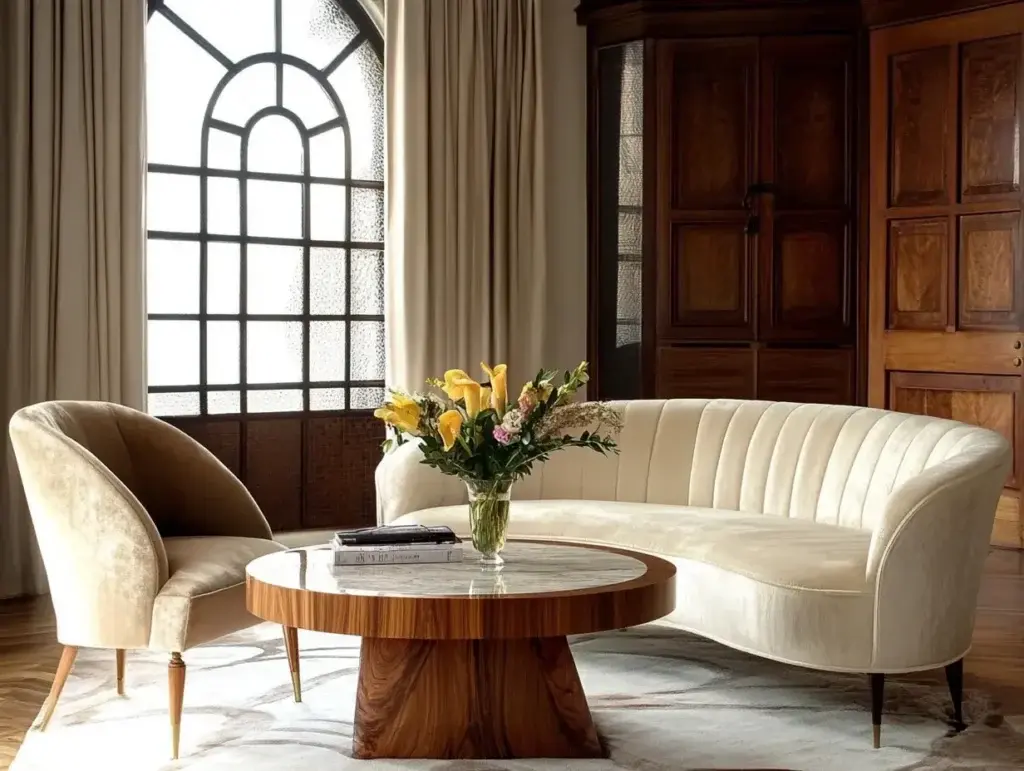
Curved seating was a defining feature of the period, and it helps a room feel more graceful immediately. Sofas with rounded backs, barrel chairs, curved arms, and circular tables introduce movement into a space that might otherwise feel rigid.
This idea is especially useful if your living room has straight architectural lines, such as standard windows, square rugs, or a boxy sectional. Curves soften the room and make it feel more layered.
One or two curved pieces are usually enough. A round coffee table or a single sculptural armchair can reference the decade without forcing the whole room into a strict theme.
6. Layer in Vintage-Style Lighting
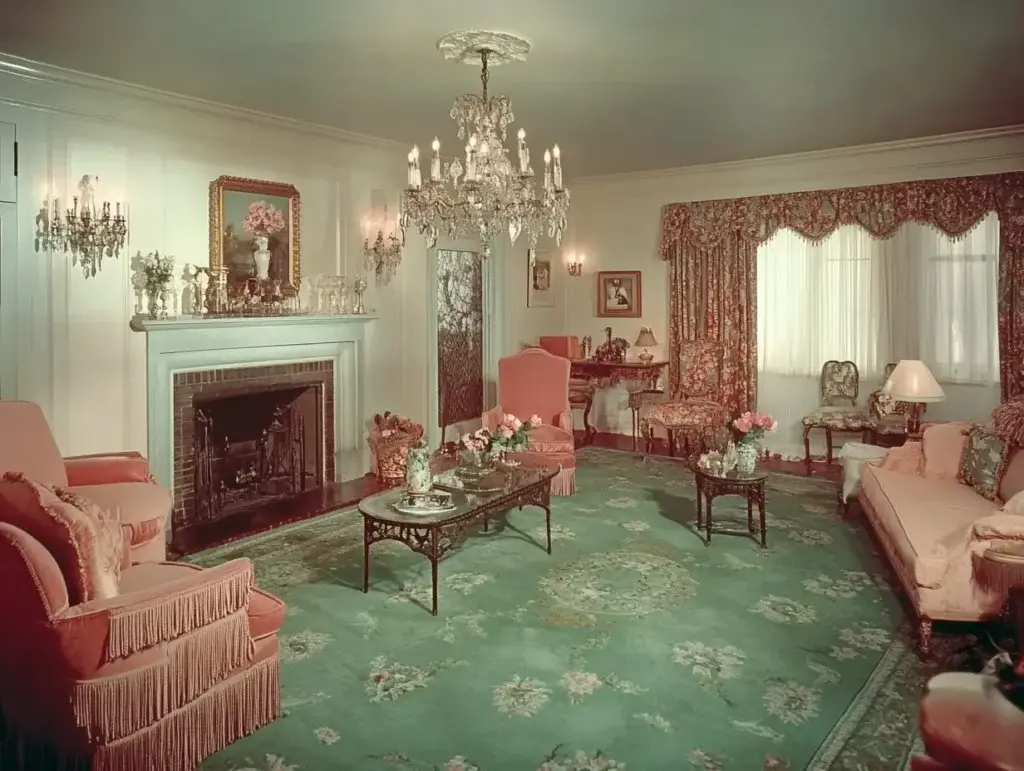
Lighting carried a decorative role in 1930s living rooms, not just a practical one. Sconces, chandeliers, table lamps, and shaded fixtures helped create a softer atmosphere and made the room feel more complete after dark.
Instead of relying on a single overhead source, use a mix of lighting at different heights. A pair of lamps on side tables, a ceiling fixture with period-inspired lines, or sconces flanking a focal point all help create that layered look.
Warm bulbs matter here. The goal is a room that glows rather than one that feels brightly lit from every angle.
7. Anchor the Space With a Statement Rug
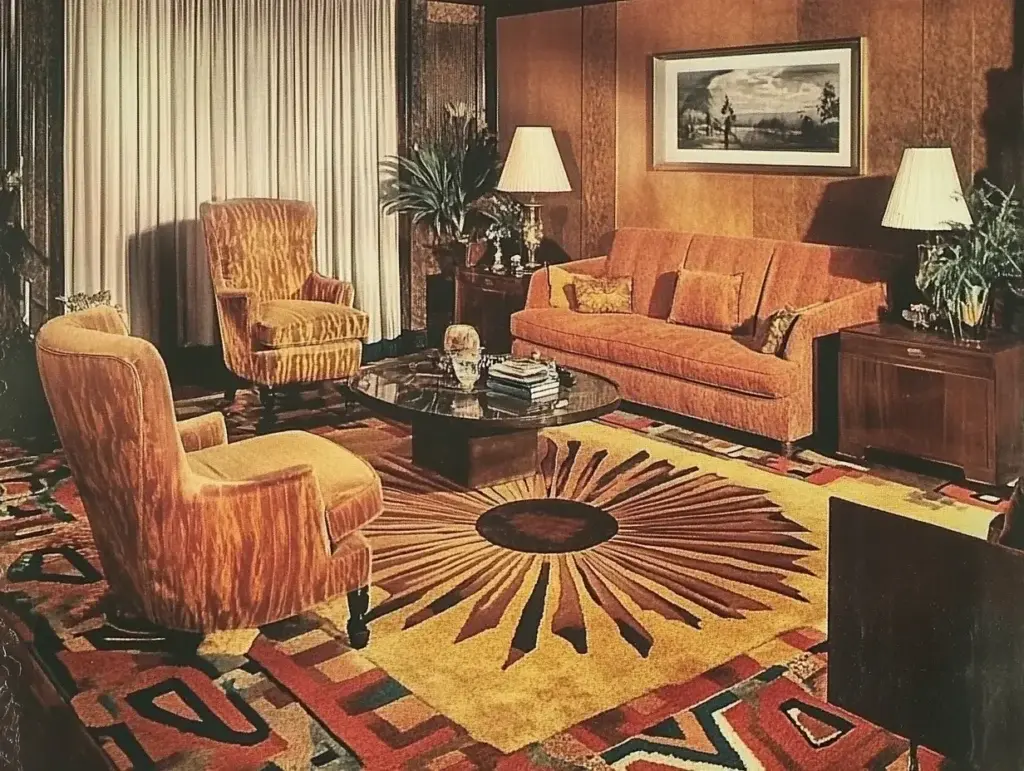
A rug does more than finish the floor. In a 1930s-inspired living room, it helps define the seating area, brings in pattern, and introduces the kind of visual richness that was common in interiors of the time.
Oriental rugs create a traditional, layered look, while geometric rugs feel closer to Art Deco styling. The right choice depends on the mood you want: softer and classic, or bolder and more graphic.
Scale matters. The rug should sit comfortably under the main furniture pieces rather than float in the middle of the room. A generous rug makes the layout feel intentional and prevents the room from looking pieced together.
8. Hang Dramatic Draperies for Height and Softness

Window treatments were far more substantial in 1930s interiors than they often are now. Full draperies in velvet, silk-look fabrics, or heavy weaves gave rooms softness, privacy, and a sense of occasion.
If your living room feels visually flat, curtains can change that quickly. Hanging them high and letting them fall close to the floor adds height and makes the room feel more finished.
Choose fabrics with enough body to hold a fold. Even in a more modern interpretation of 1930s style, draperies should feel substantial rather than skimpy.
9. Use Decorative Screens to Add Shape and Function
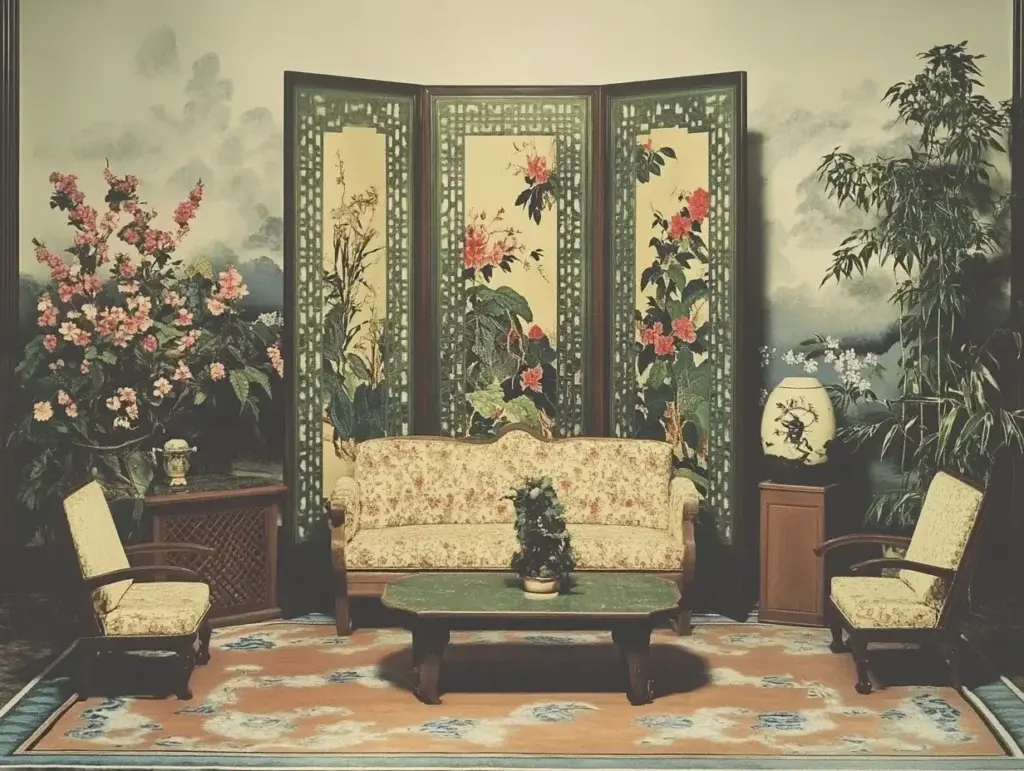
Decorative screens were both useful and beautiful in 1930s interiors. They helped divide large rooms, soften empty corners, and add a layer of pattern or texture without the permanence of built-in architecture.
In today’s living rooms, a folding screen can hide a work nook, create a dressing corner, or simply add height behind a chair or console. Chinoiserie styles feel classic, while geometric versions lean Deco.
This is one of the easiest ways to introduce period character if you rent or do not want to make structural changes.
10. Make the Fireplace the Room’s Main Focal Point
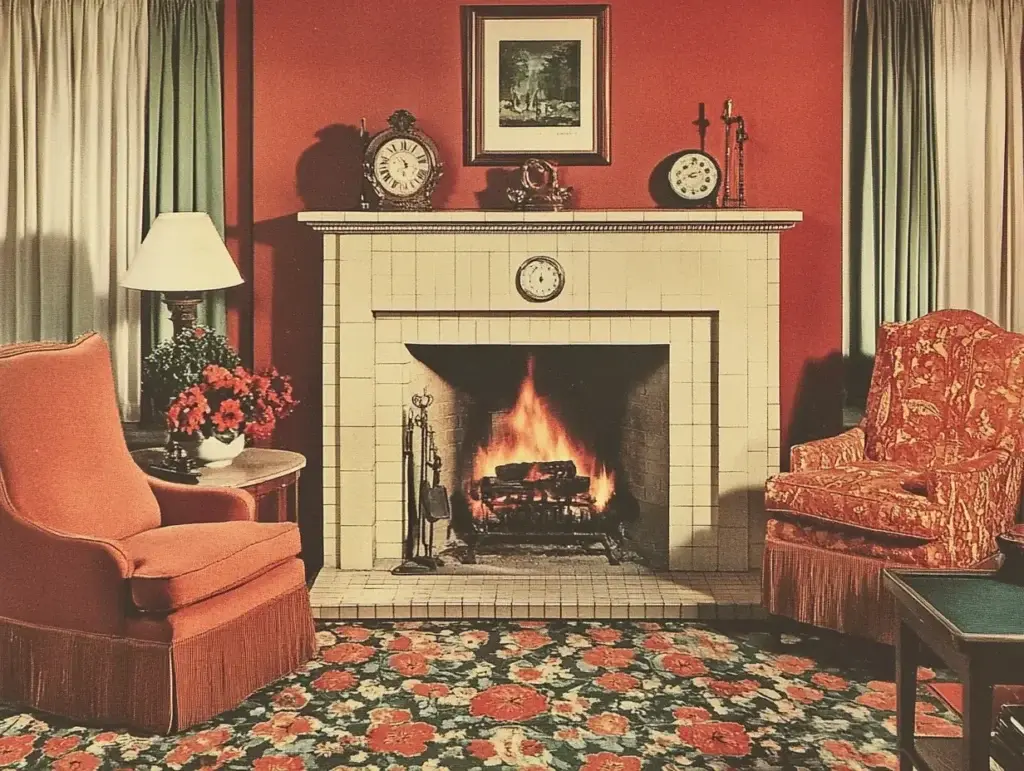
In many 1930s living rooms, the fireplace was the visual and social center of the space. It grounded the seating layout and gave the room a natural gathering point.
If your home has a fireplace, lean into it. Decorative tile, a well-proportioned mantel arrangement, and lighting or mirrors above the surround can make it feel more in keeping with the era.
If you do not have a functioning fireplace, you can still borrow the idea by creating a strong focal wall with a console, mirror, artwork, and symmetrical styling.
11. Add a Sunburst Mirror for Classic Deco Drama
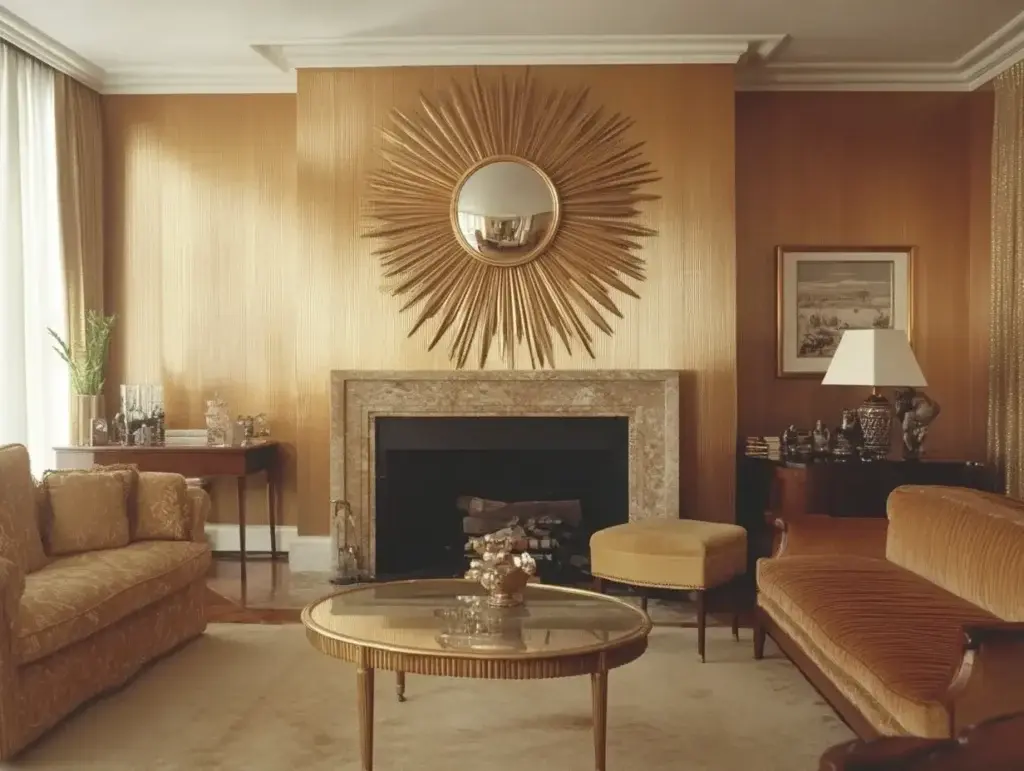
Few accessories say 1930s quite as clearly as a sunburst mirror. It brings shine, shape, and a bit of theatricality to the room, which makes it especially effective above a mantel, console, or sideboard.
It also serves a practical purpose. In darker rooms, a mirror helps reflect light and keeps heavier furniture or wood tones from feeling too dense.
Choose a size that suits the wall. A mirror that is too small will look decorative but disconnected, while the right scale becomes part of the room’s architecture.
12. Bring in Houseplants for Softness and Life
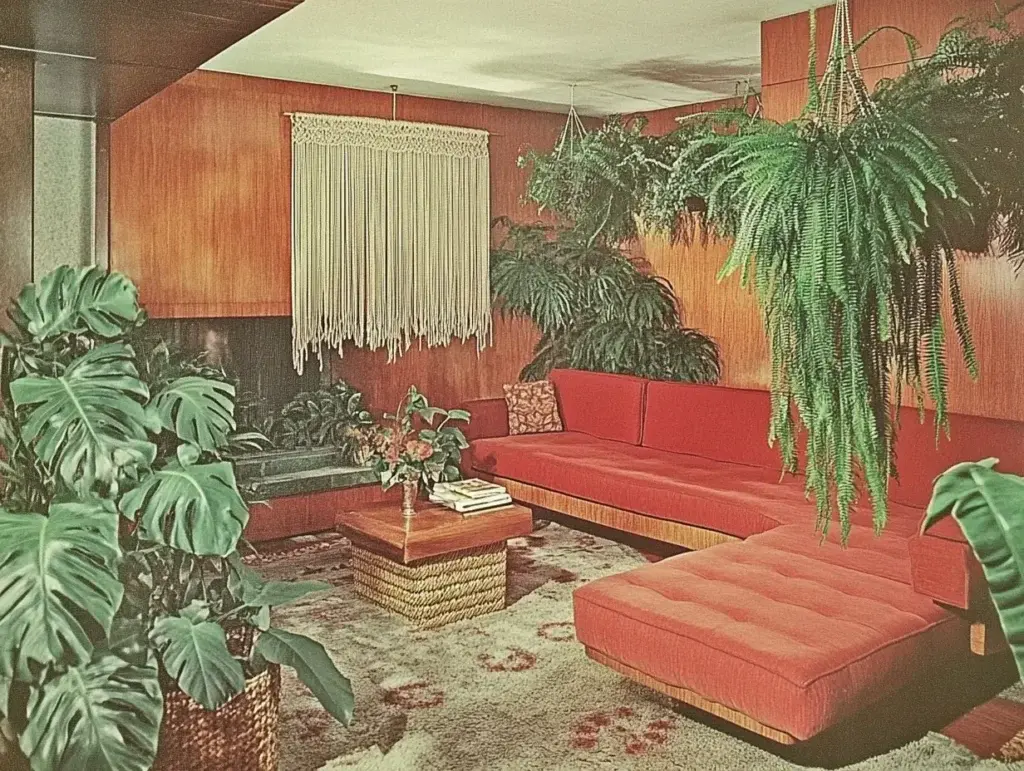
Houseplants were a familiar part of domestic interiors in the 1930s, and they remain one of the easiest ways to keep a vintage-inspired room from feeling static. Ferns, palms, and leafy plants bring softness to more structured furniture and decorative pieces.
Use plants where the room needs relief—next to a fireplace, beside a chair, or in an empty corner that feels too hard. Woven baskets, ceramic planters, and classic stands all suit the look.
The point is not to turn the living room into a jungle. One or two well-placed plants are often enough to make the room feel fresher and more layered.
13. Add Bookshelves for Substance and Character
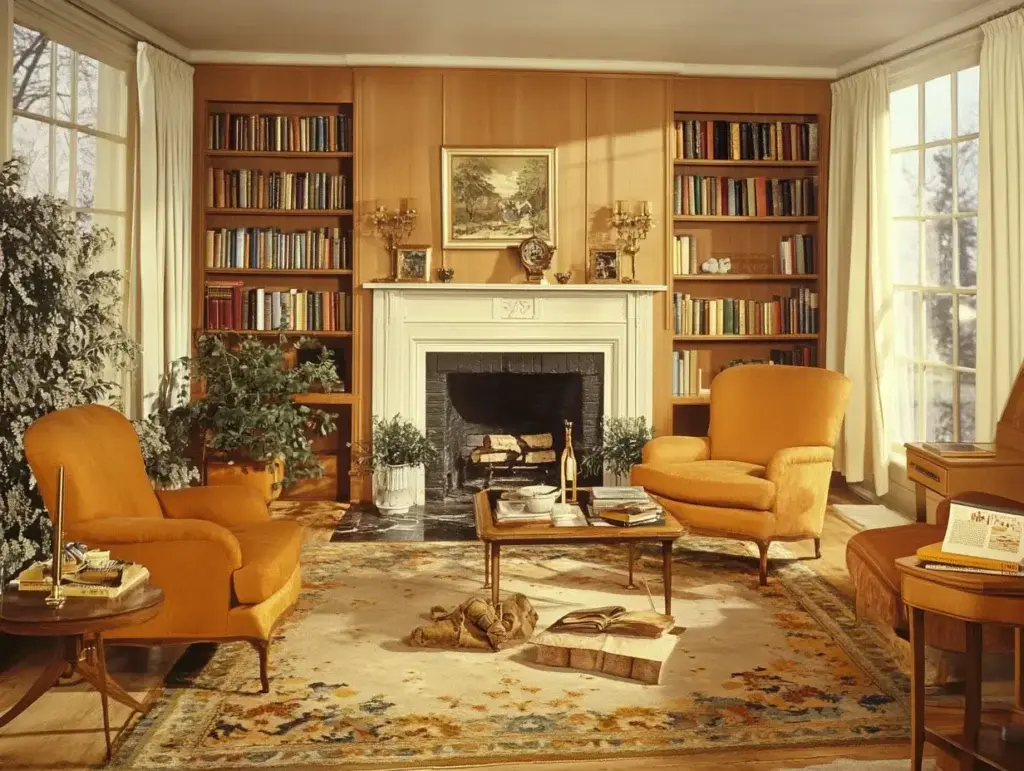
Bookshelves instantly make a living room feel more established. In a 1930s-inspired space, they add height, visual weight, and an opportunity to display books and objects in a way that feels personal rather than purely decorative.
Built-ins around a fireplace create a classic arrangement, but freestanding cases work just as well if they are well proportioned. Darker wood finishes tend to feel especially appropriate for the era.
Style the shelves with restraint. Books, framed photographs, small sculptures, and a few collected objects are enough. Overfilling them can make the room feel crowded instead of cultivated.
14. Choose Artwork That Supports the Period Mood
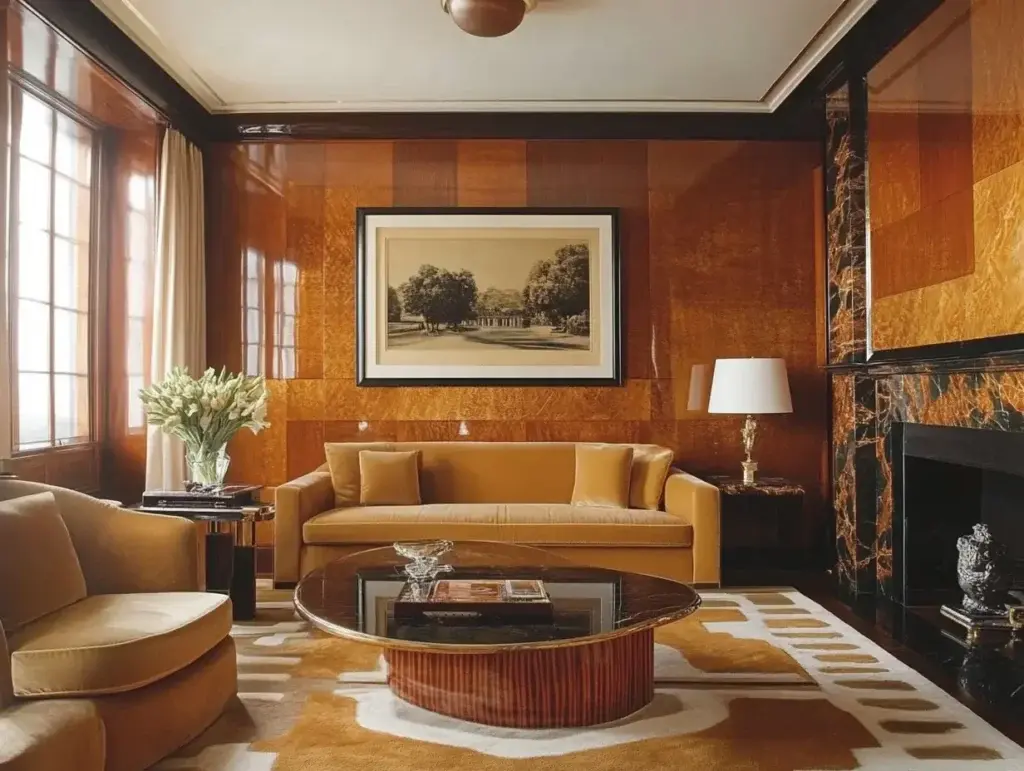
Artwork helps decide whether a 1930s living room feels glamorous, traditional, or understated. Art Deco posters, vintage prints, landscapes, portrait studies, and travel imagery all suit the period when framed thoughtfully.
Rather than scattering too many small pieces around the room, choose a few works with enough scale to matter. A large framed poster or painting can do more for the room than a collection of fillers.
Frames count here. Metallic, dark wood, or subtly detailed frames help the art feel connected to the rest of the room rather than added at the last minute.
15. Display Collections in a More Intentional Way
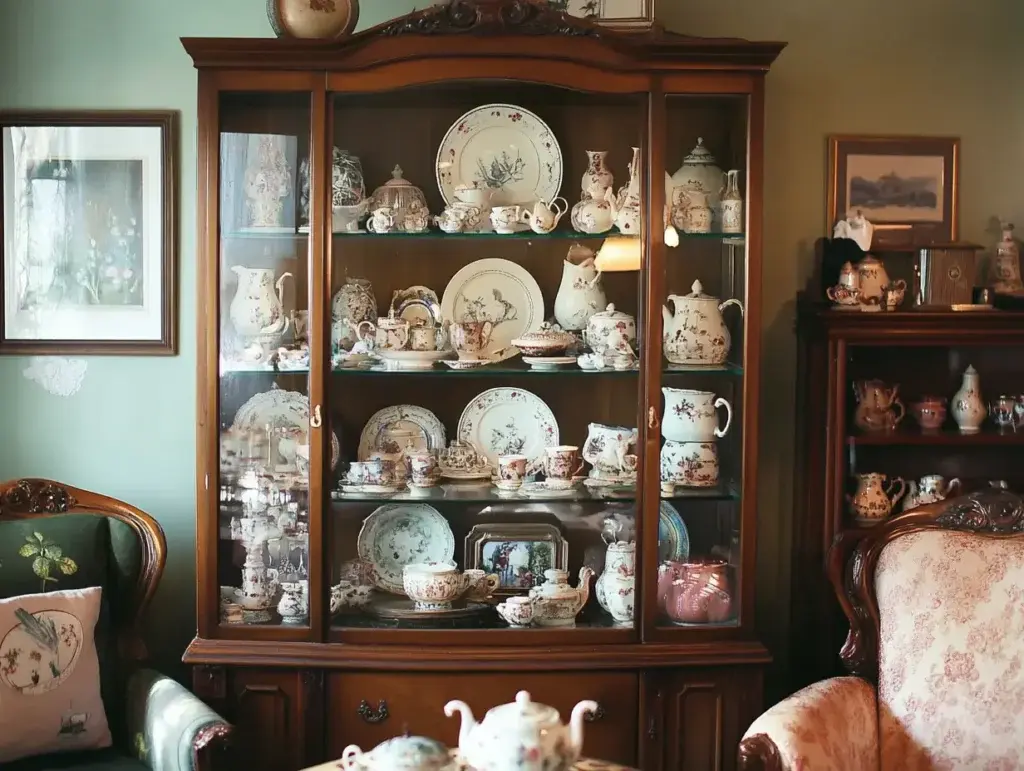
Collected objects suit 1930s interiors well, but the key is how they are displayed. China, glassware, ceramics, books, and small antiques feel more convincing when grouped thoughtfully instead of scattered throughout the room.
A cabinet, open shelf, or console vignette works better than filling every surface. Repetition also helps. A small set of similar objects usually looks stronger than a random assortment of unrelated items.
This is one of the best ways to make a vintage-inspired room feel personal. The display should reflect the home and the people living in it, not just the decade.
16. Introduce a Radio or Gramophone-Inspired Accent
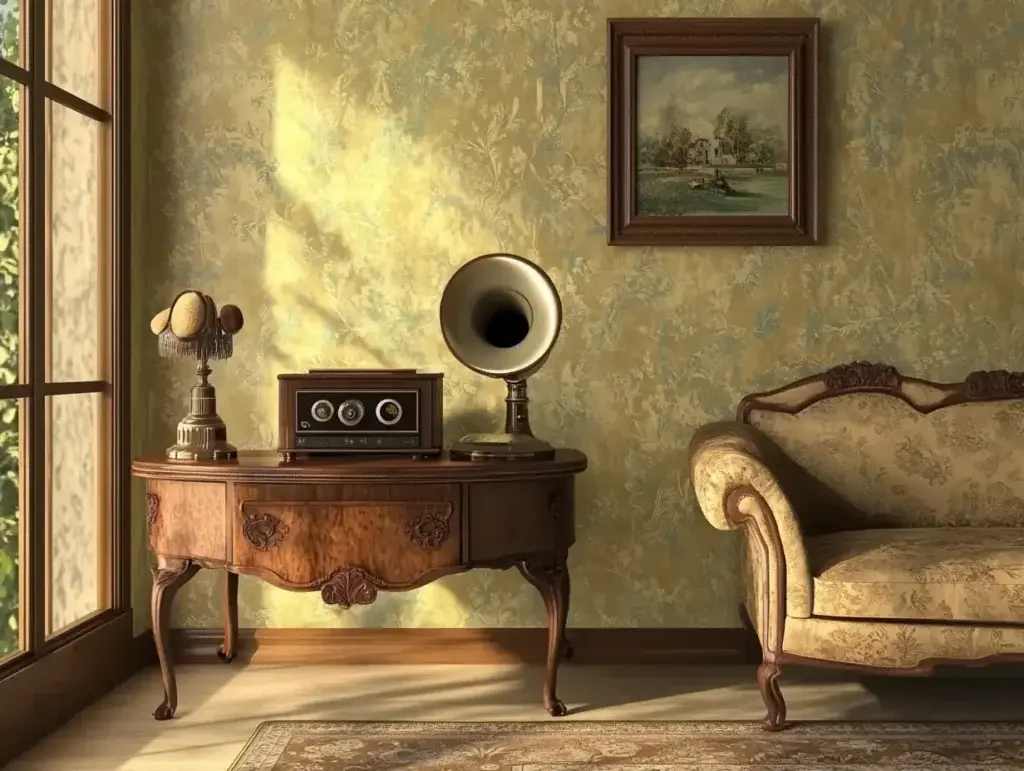
Music and radio were central to home life in the 1930s, so a period-inspired audio piece makes sense in a living room from both a decorative and functional point of view. A vintage radio cabinet, a gramophone, or a modern speaker disguised in a retro form can all work.
This kind of accent is especially useful on consoles, shelves, or corners that need a signature piece. It adds personality without requiring a full furniture change.
Used well, it becomes more than a novelty. It reinforces the room’s story and helps the space feel complete.
17. Prioritize Comfortable Seating With Period Character
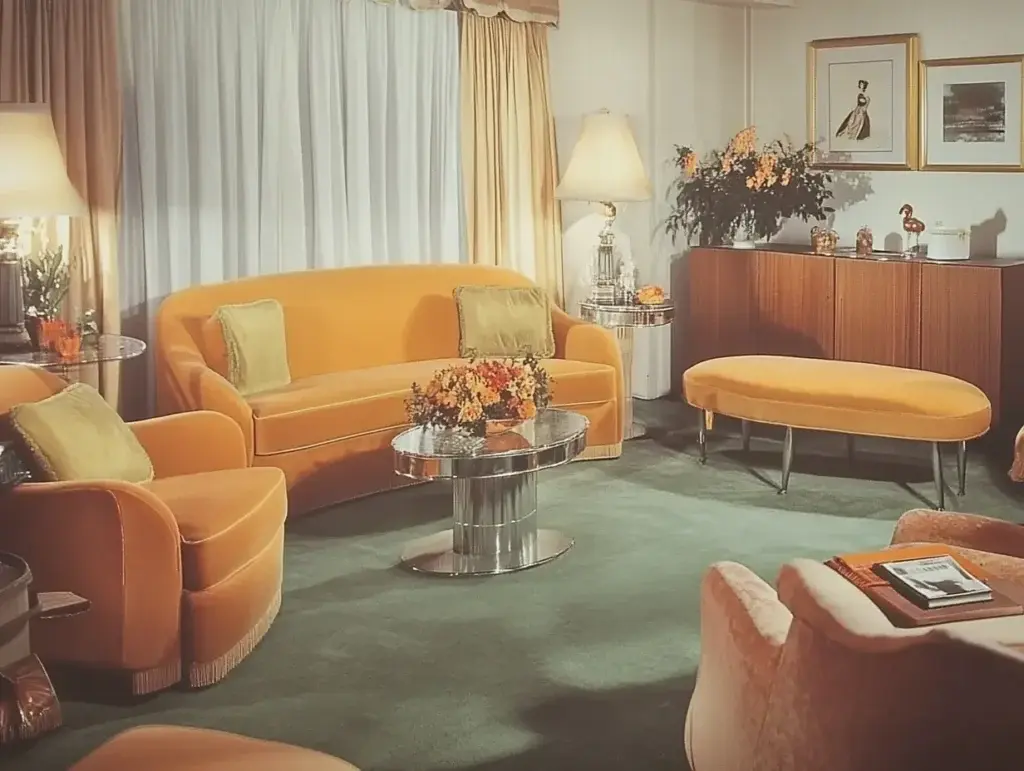
No living room works if it only looks good in photos. Comfortable seating is essential, and in a 1930s-inspired room that usually means upholstered chairs, supportive sofas, rounded forms, and fabrics that feel substantial.
Arrange seating to encourage conversation rather than pushing every piece to the wall. A sofa paired with two armchairs, or a chair-and-chaise combination, often feels more balanced than a single oversized sectional.
Velvet, textured weaves, and tailored upholstery all suit the period well. The room should feel elegant, but also like somewhere people genuinely want to sit.
How to Make 1930s Style Feel Authentic Instead of Overdone
The best 1930s-inspired living rooms rarely rely on one-note styling. Instead of filling the room with obvious vintage references, focus on a few strong ideas and let them repeat quietly throughout the space.
- Choose one main direction: Art Deco, streamlined modern, or traditional warmth
- Repeat materials: wood, brass, chrome, glass, velvet, or patterned textiles
- Keep the palette controlled: too many colors can weaken the period feel
- Mix statement pieces with plain ones: every item does not need to be decorative
- Use symmetry where it helps: especially around fireplaces, mirrors, and lighting
Frequently Asked Questions
What colors suit a 1930s living room best?
That depends on the direction you take. Art Deco rooms often suit black, gold, cream, emerald, burgundy, or navy, while more traditional 1930s spaces work well with floral tones, warm neutrals, and rich wood finishes.
Can you mix 1930s style with modern furniture?
Yes. The easiest way is to keep the main furniture simple and bring in 1930s character through lighting, mirrors, rugs, wood tones, and accent chairs. That usually feels more natural than trying to make every piece look period-specific.
What is the easiest 1930s decorating idea to try first?
Lighting, a statement rug, and one Art Deco or vintage-style mirror are often the fastest changes with the biggest visual payoff. They shift the mood of the room without requiring a full redesign.
How do you stop vintage decor from feeling cluttered?
Use fewer, better pieces. Let furniture have room around it, limit small accessories, and repeat shapes or finishes so the room feels edited rather than crowded.
Is 1930s decor only for older homes?
No. It can work beautifully in newer homes when introduced through furniture shape, lighting, textiles, and materials. The style is often more about proportion and atmosphere than architecture alone.
Final Thoughts
1930s living room style endures because it combines beauty with livability. It knows how to make a room feel polished, but it also understands comfort, warmth, and the importance of details that hold a space together.
Start with the elements that will have the most impact in your home—perhaps lighting, wood furniture, a better rug, or a stronger focal point—and build from there. When the room feels layered, balanced, and intentional, you’ll have captured the spirit of the decade without making it feel like a museum display.
Written by the Zeeshe Home Editorial Team, a blog focused on practical home décor ideas and inspiration.


