
A living room rug does far more than cover the floor. It sets the proportions of the room, softens acoustics, introduces color or texture, and often becomes the link between furniture that would otherwise feel disconnected. When the rug is right, the room feels settled. When it is too small, too busy, or too thin for the space, everything around it can feel slightly off.
The most successful living room rugs balance style with real-life practicality. They need to suit traffic, pets, spills, sunlight, and the way people actually use the room. Below, you’ll find stylish rug ideas that go beyond surface-level inspiration, with notes on sizing, placement, texture, and pairing so the room feels as good as it looks.

1. Oversized Neutral Rug Ideas for a Collected Living Room
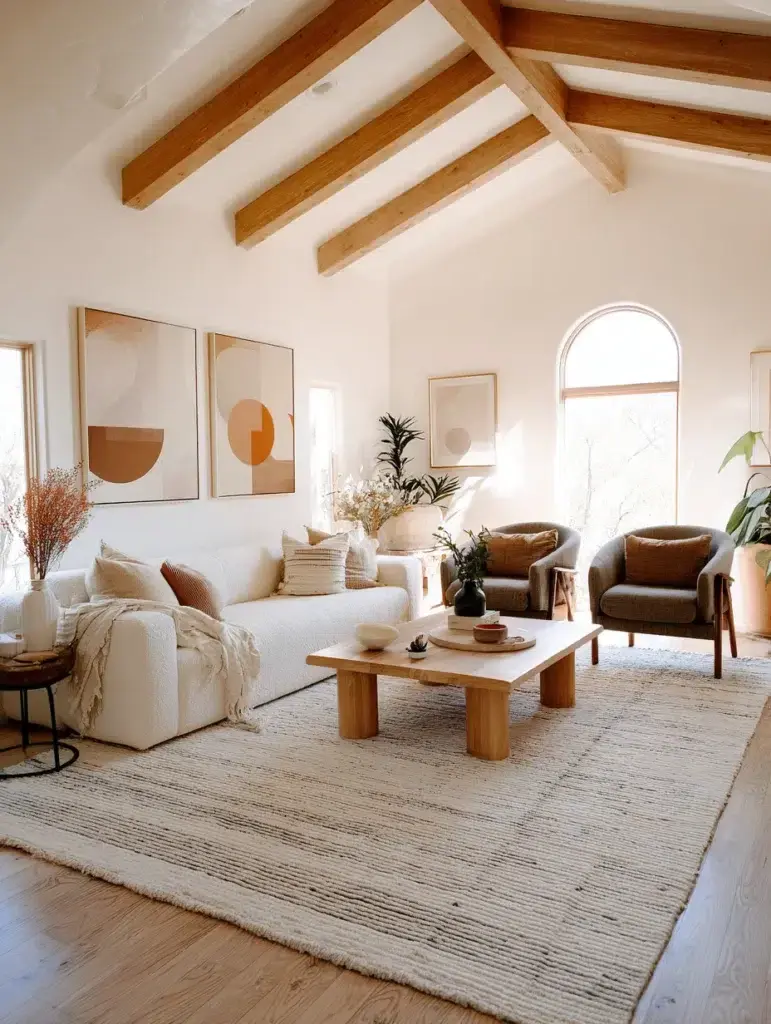
The fastest way to make a living room feel more pulled together is often to go bigger with the rug. A generously sized neutral rug connects the sofa, chairs, and coffee table into one complete arrangement rather than leaving the seating area floating.
Neutrals are especially useful when the room already has strong artwork, patterned upholstery, or architectural details. Beige, greige, oatmeal, and soft taupe give the space a calm base without looking flat, especially when the rug has a subtle pattern or tonal variation.
- Best placement: Large enough for at least the front legs of all major seating to sit on the rug
- Works well with: Layered pillows, wood furniture, black accents, and textured throws
- Good for: Homes that want longevity over trend-driven color
2. High-Pile Rug Ideas That Make a Living Room Feel Softer
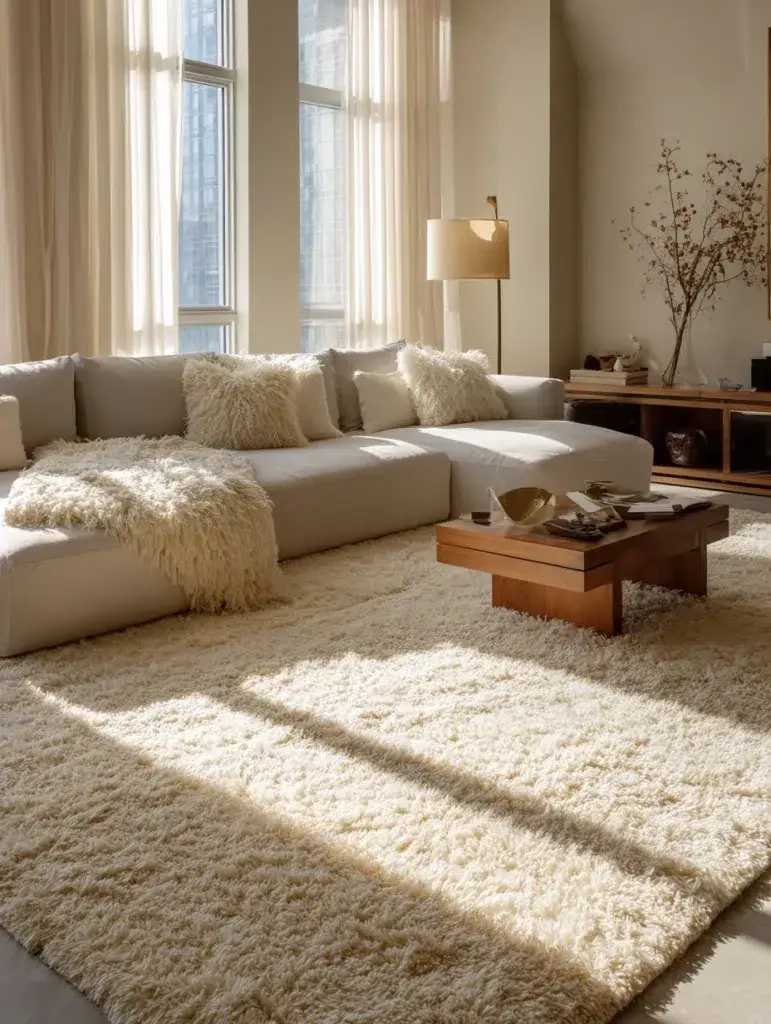
A plush, high-pile rug changes the mood of a room immediately. It makes the seating area feel warmer, softens hard flooring, and gives the room a more relaxed, cocooning quality. In minimalist spaces, that extra texture can do the work that color or pattern would otherwise need to do.
These rugs suit low-traffic living rooms, reading corners, and family spaces where comfort matters more than crisp formality. They are especially effective in rooms with clean-lined sofas or modern furniture that needs something tactile beneath it.
Keep in mind that deeper piles can trap dust more easily and may not be the best fit under furniture with very slim legs, where the rug can visually overwhelm the frame.
3. Earth-Tone Rug Ideas in Terracotta and Rust
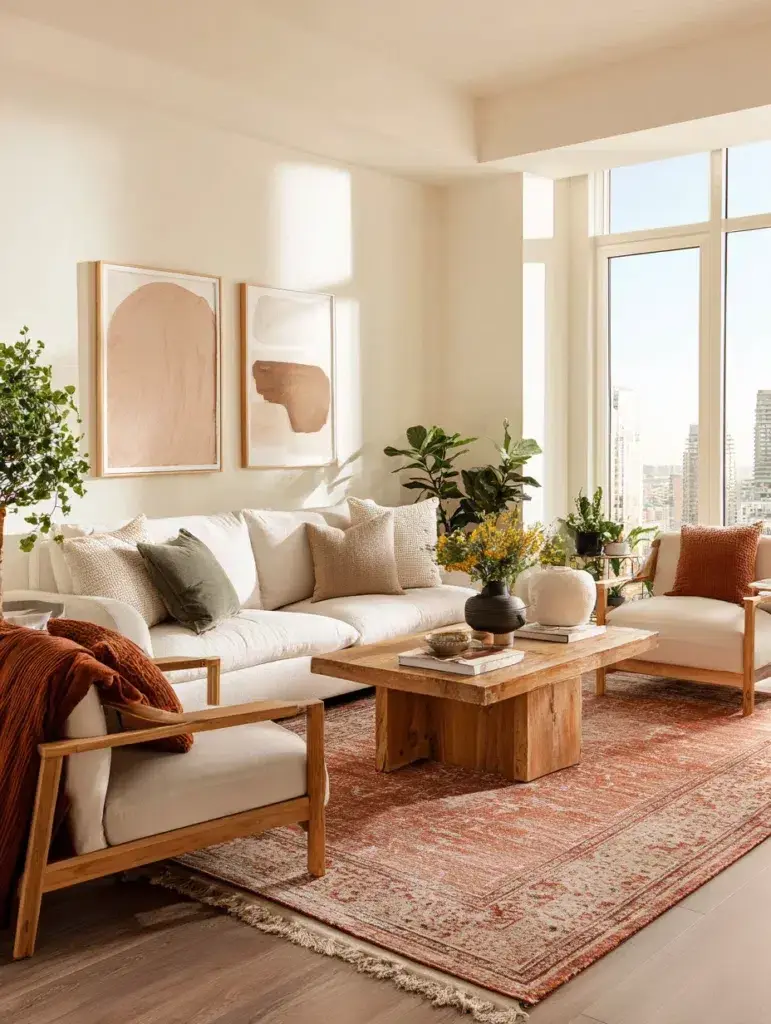
Terracotta and rust rugs bring warmth without the brightness of red or orange. They feel grounded, slightly sunbaked, and especially good in living rooms that lean organic, Mediterranean, bohemian, or modern rustic.
These tones pair beautifully with cream upholstery, walnut woods, matte black details, and olive or sage accents. In rooms that feel cool or a little flat, a rug in this family can do more to warm the atmosphere than a dozen smaller accessories.
For balance, keep surrounding décor quieter. Let the rug carry the color story, then repeat it lightly in a cushion, ceramic piece, or artwork.
4. Bold Geometric Rug Ideas for Modern Living Rooms
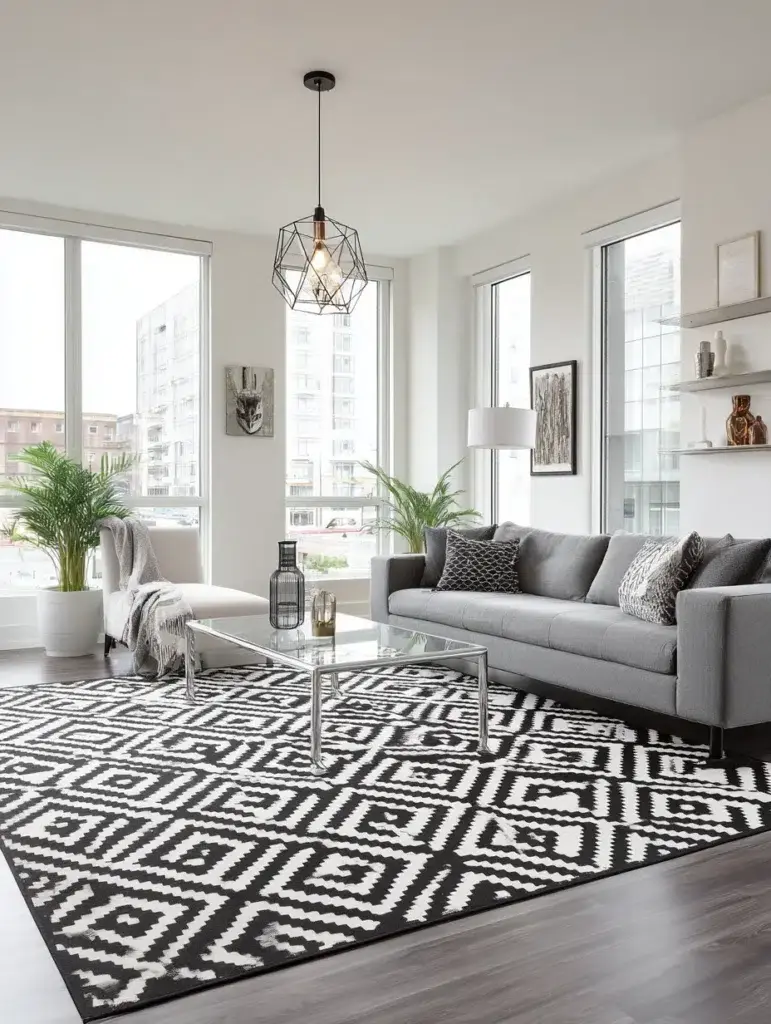
Geometric rugs bring order and structure, which is why they work so well in modern interiors. A strong diamond, chevron, grid, or angular motif gives the room a clear rhythm and can make even simple furniture feel more intentional.
They are most effective when the rest of the room has some visual restraint. If the sofa is streamlined and the walls are calm, a graphic rug can carry the room without making it feel chaotic. In more layered or eclectic spaces, choose a geometric design with a softened palette so the pattern still reads clearly but does not fight with everything else.
This style also helps tie together black, white, gray, and wood-heavy rooms that need one strong anchor on the floor.
5. Soft Sage Green Rug Ideas for a Calm, Airy Look
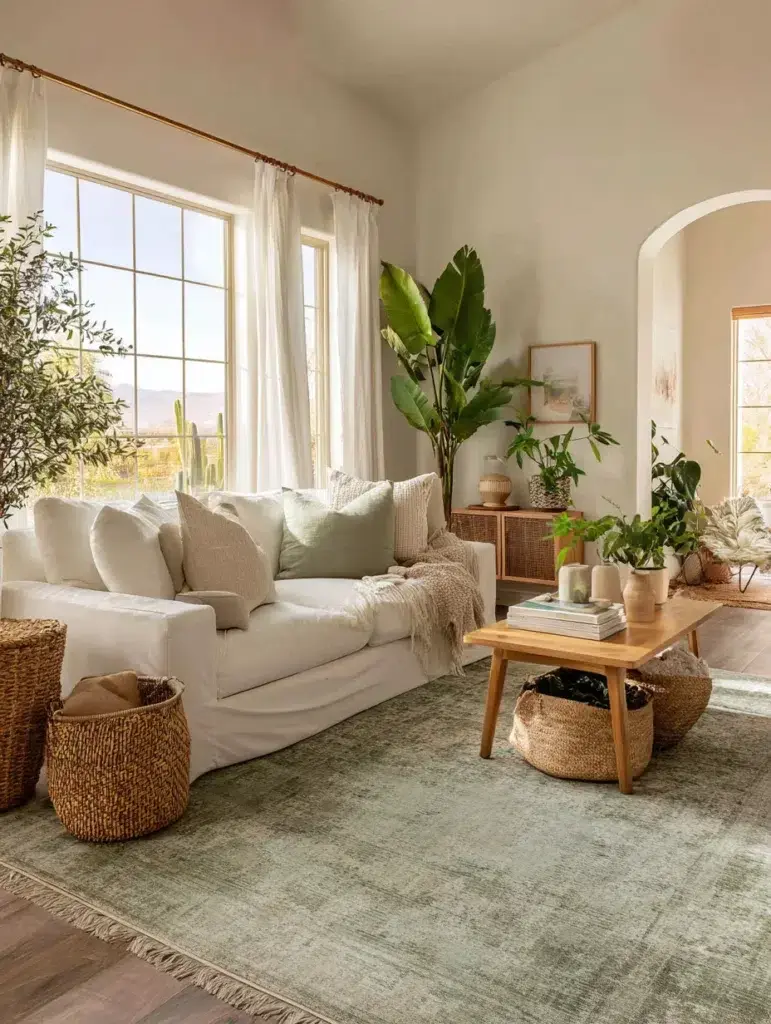
Sage green works almost like a neutral, but with more life. It brings a quiet freshness that suits living rooms with natural wood, linen textures, woven accents, and creamy upholstery.
Unlike brighter greens, sage does not dominate the room. It settles into the palette and tends to shift gently with the light, appearing fresher during the day and moodier in the evening. That makes it a smart choice for readers who want color without committing to something loud.
It looks especially considered when paired with:
- Warm whites and beige
- Oak and light walnut wood
- Muted brass or aged bronze finishes
6. Vintage Persian-Style Rug Ideas With More Character
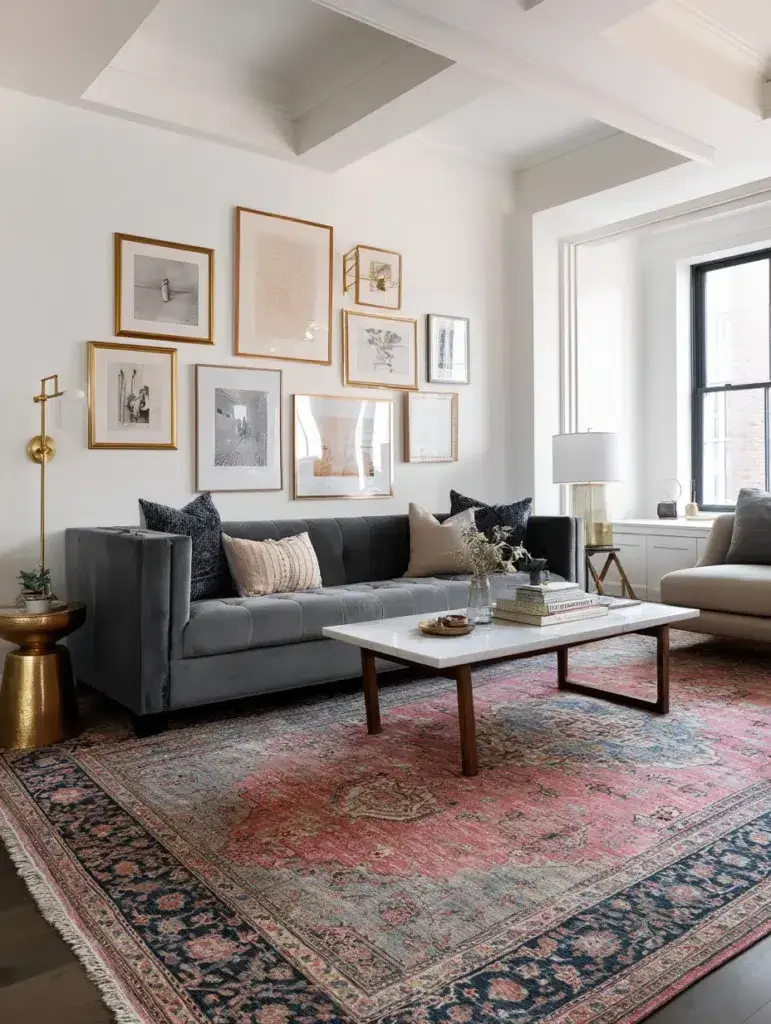
Few rugs bring as much built-in character as a Persian-style design. The appeal lies in the pattern density, the sense of history, and the way faded color can make a room feel collected rather than newly assembled.
These rugs are especially effective in living rooms that mix older and newer pieces. A traditional-style rug under a modern sofa creates contrast in a way that feels layered rather than theme-driven. They also hide daily wear surprisingly well, which makes them practical in homes where the living room sees constant use.
Choose one with softened tones rather than highly saturated color if you want the effect to feel editorial and adaptable.
7. Black and White Graphic Rug Ideas With Strong Contrast
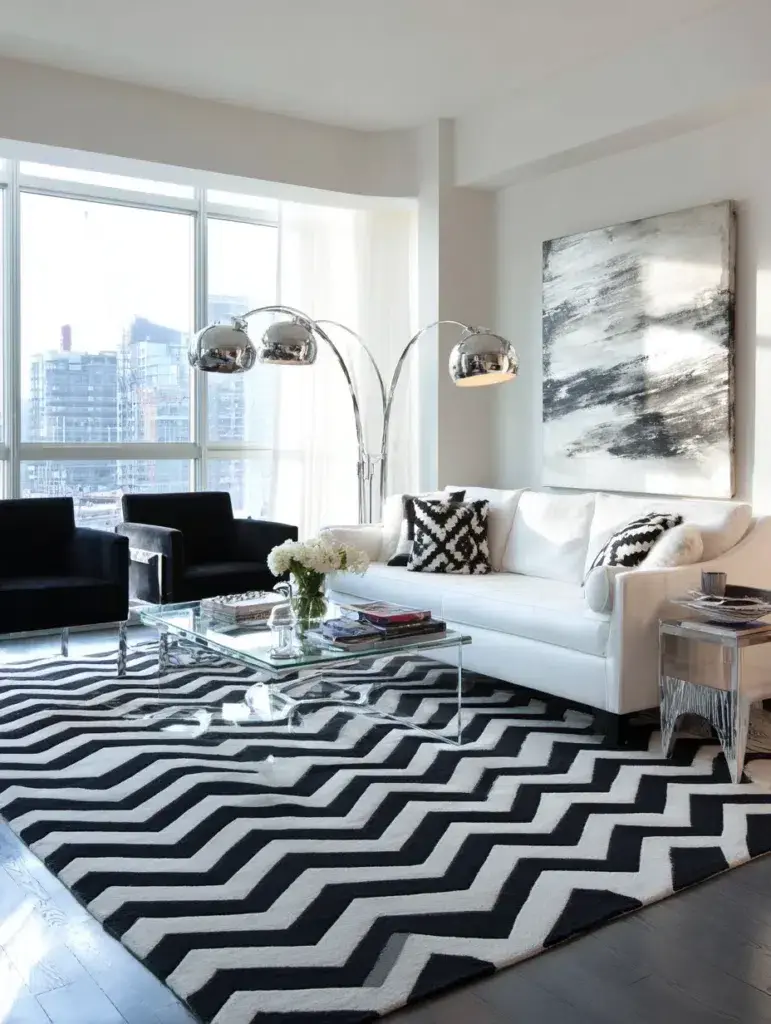
A black and white rug brings sharpness and definition, especially in living rooms that need more contrast. It is one of the easiest ways to make a neutral room feel more graphic and intentional without bringing in extra color.
This style works particularly well if you like the freedom to change accent colors seasonally. Because the rug is monochrome, it can support almost anything layered on top of it, from camel and olive to rust, cobalt, or blush.
In smaller rooms, keep the pattern scale in mind. Large, bold motifs can feel dramatic, while finer black-and-white patterns tend to read more quietly.
8. Natural Jute Rug Ideas for Texture-First Living Rooms
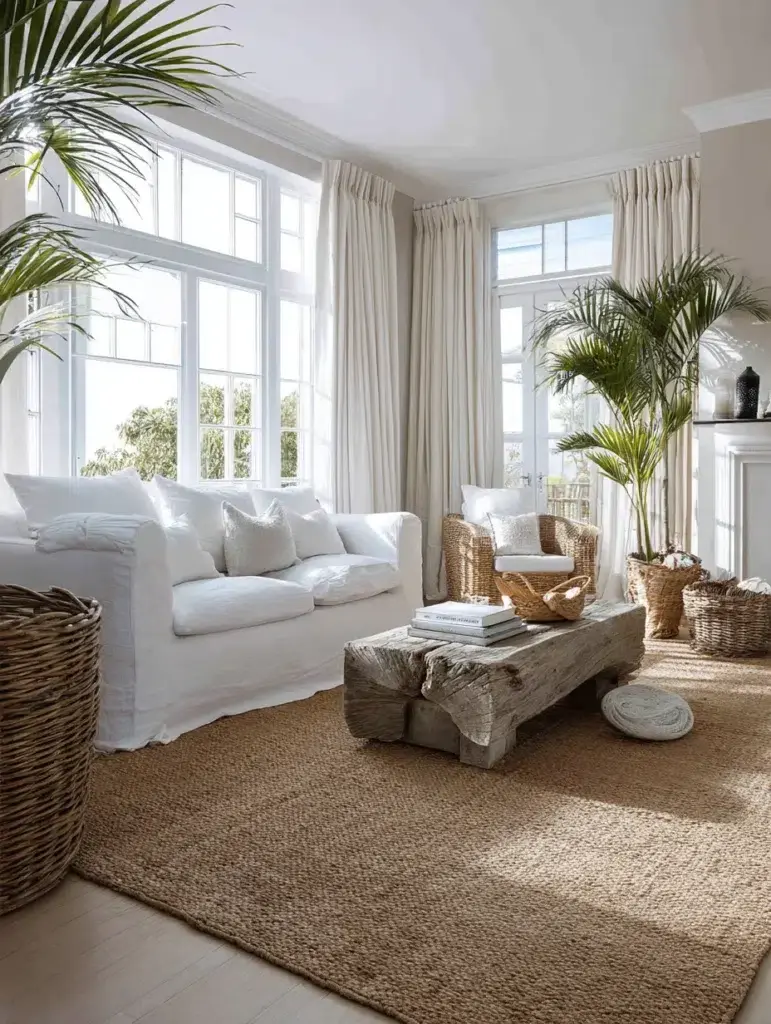
Jute rugs are less about color and more about surface. They bring an easy, natural texture that works across coastal, farmhouse, Scandinavian, organic modern, and even transitional rooms.
They are an excellent choice when the room already has visual interest elsewhere and needs something grounded on the floor. In a monochromatic space, they keep the design from feeling too smooth. In a colorful room, they offer relief.
The trade-off is feel. Some jute rugs can be rougher underfoot than wool or synthetic options, so they are often better in seating areas than in places where you lounge directly on the floor.
9. Layered Rug Ideas That Feel Styled, Not Overdone
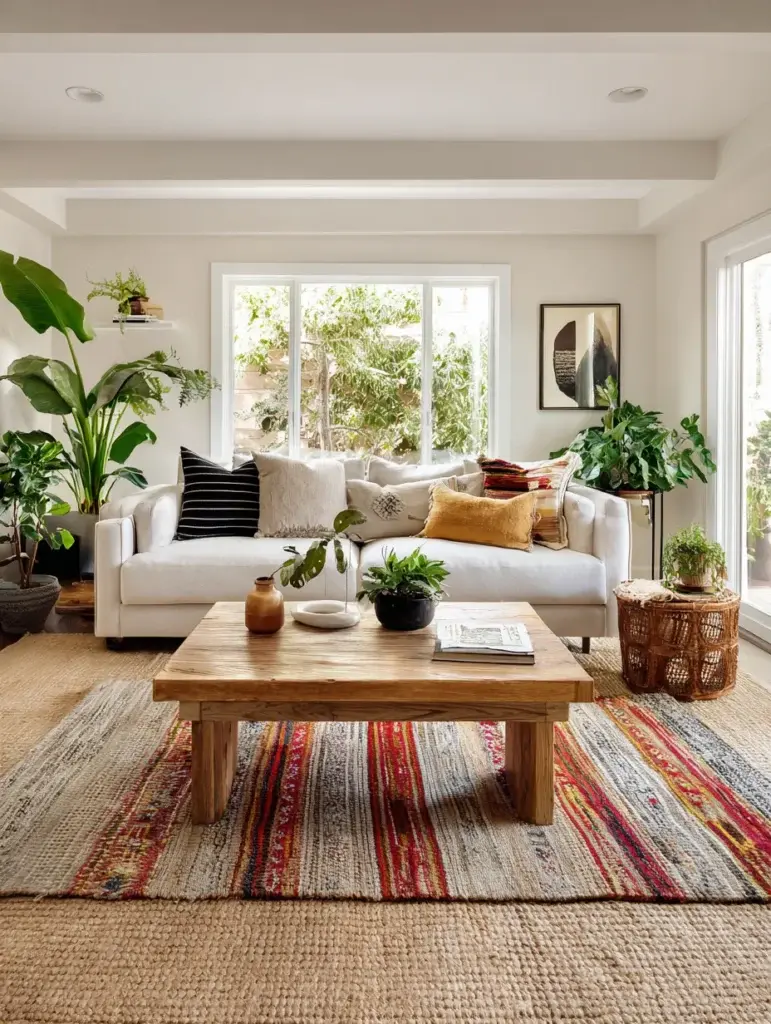
Layering rugs gives a room a more finished, designer-led look when done with restraint. The usual formula is a large, simple base rug with a smaller, more decorative rug placed on top. That creates depth, breaks up large floor areas, and can help define a coffee-table zone within a bigger open-plan room.
The strongest combinations rely on contrast. A woven natural-fiber base under a faded vintage rug works because the textures are clearly different. A plush top rug over a flat base creates the same effect.
- Keep it believable: Let both rugs remain visible
- Use it where needed: Especially helpful in large or open-plan living rooms
- Avoid bulk: Too many thick layers can become awkward under furniture
10. Monochrome Rug Ideas With Tonal Depth
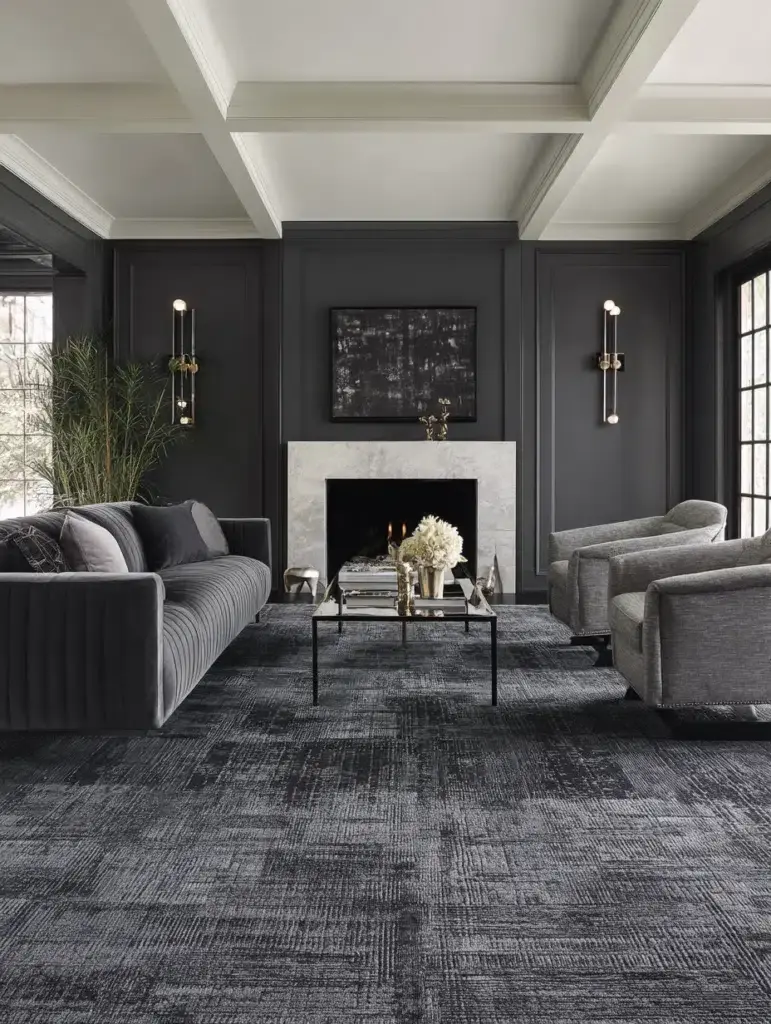
A tonal rug proves that one color can still hold a room. The interest comes from shifts in shade, carved details, heathered yarns, or high-low construction rather than from obvious pattern.
This is a strong choice for living rooms that need calm rather than contrast. If the room already includes architectural detail, statement lighting, or sculptural furniture, a tonal rug supports the space without stealing focus.
Charcoal, stone, taupe, ivory, and clay all work beautifully in this category. The key is texture. Without it, monochrome can look flat. With it, the rug feels quietly luxurious.
11. Round Rug Ideas to Break Up a Boxy Layout
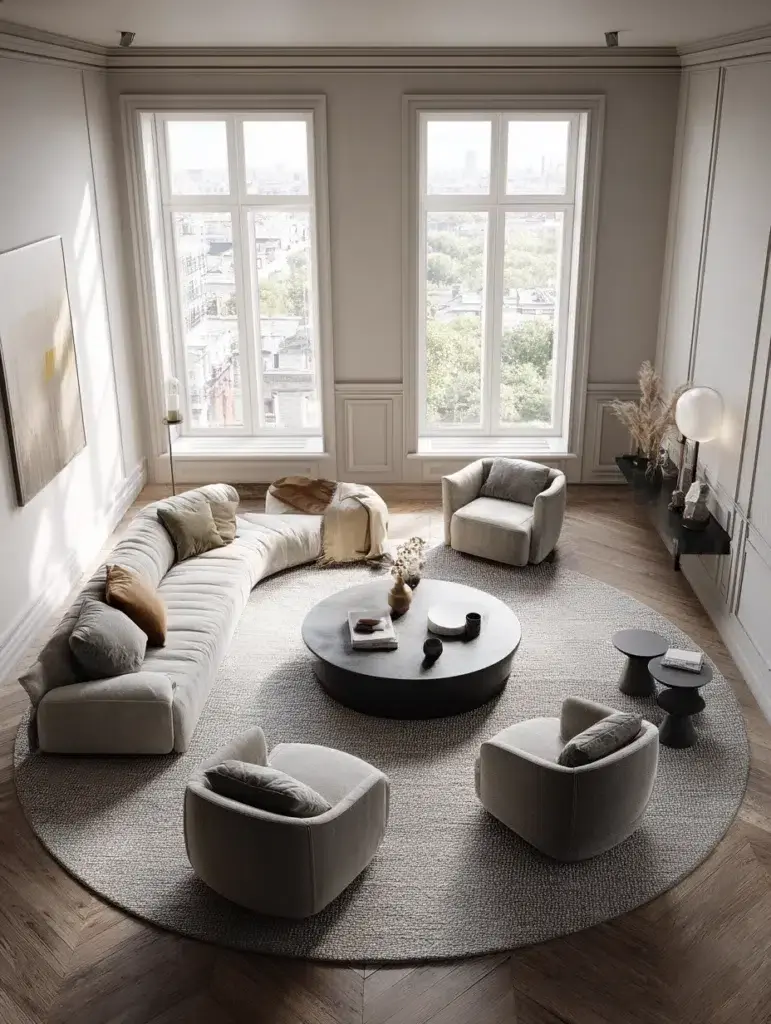
Round rugs bring a softness that rectangular rooms often need. They are especially useful when the furniture arrangement feels too rigid or when the room is full of straight lines from shelving, sofas, media units, and square coffee tables.
A circular rug can define a smaller seating zone, soften a reading corner, or sit beautifully beneath a round coffee table. It works best when the shape feels clearly intentional rather than squeezed into a layout designed for a rectangle.
Scale matters here. A round rug that is too small can look decorative instead of grounding. Make sure it relates properly to the furniture grouping around it.
12. Distressed and Overdyed Rug Ideas for Modern Vintage Style
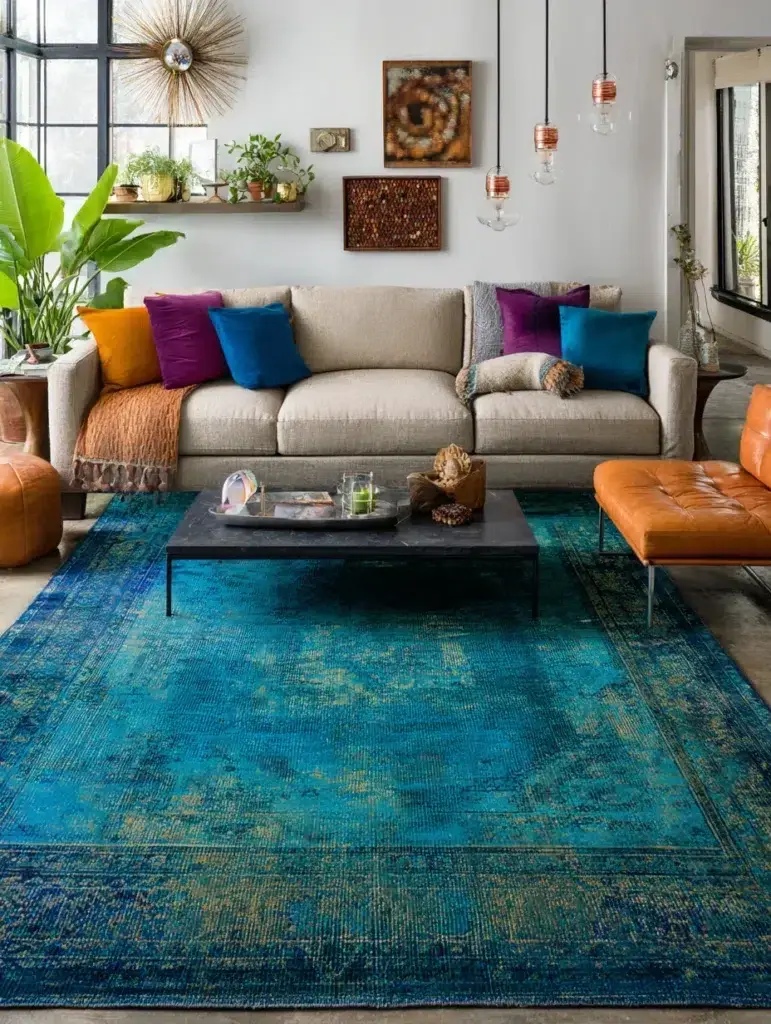
Distressed rugs give you the charm of age without requiring a room that feels traditionally decorated. The faded effect softens formal patterns and makes them easier to use in contemporary interiors.
Overdyed or color-washed styles are particularly good for readers who want a rug with personality but not something that looks pristine or precious. They help disguise wear, suit busy households, and often photograph beautifully because the color variation adds depth.
These rugs are at their best when the room includes a mix of finishes rather than everything matching perfectly. They introduce a little tension, which often makes the whole space more interesting.
13. Cowhide-Inspired Rug Ideas for an Eclectic Living Room
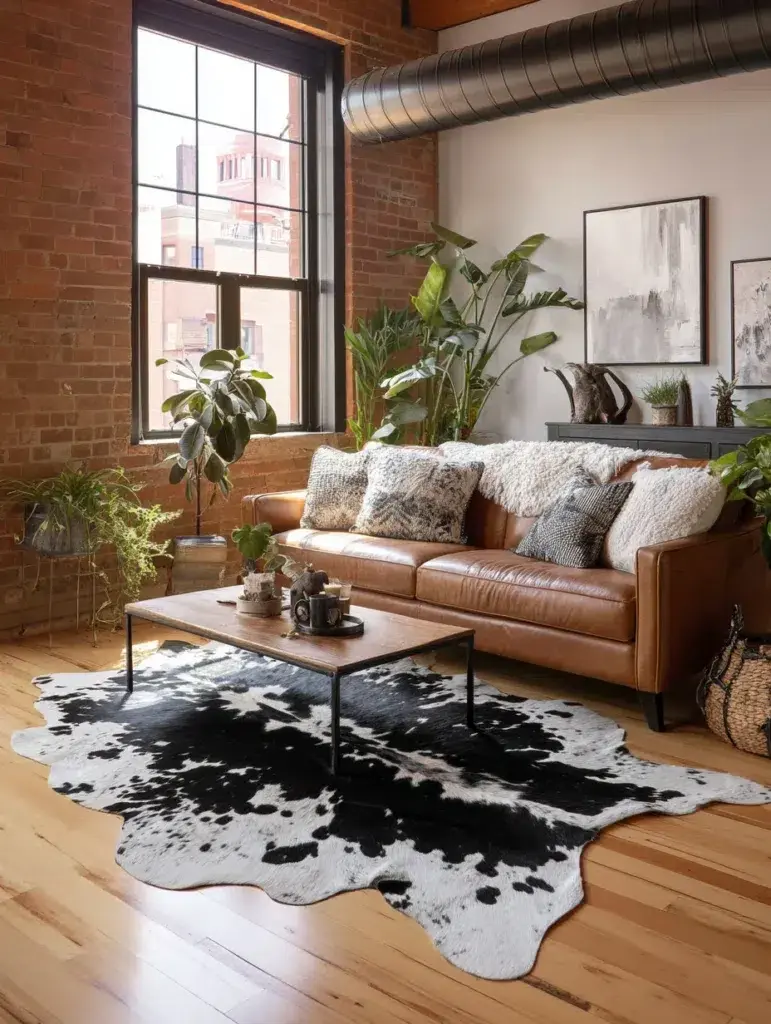
Cowhide-style rugs bring shape variation and natural patterning that standard rectangular rugs do not. They work well in eclectic, rustic, industrial, western-inspired, and even modern spaces because the silhouette itself adds interest.
They are often used as accent rugs layered over a larger base or placed in smaller sitting areas where a full-size rug would feel too conventional. The irregular outline makes a room feel looser and less formal.
For readers who like the look but want easier care or a lower commitment, faux versions can offer the same visual effect with less maintenance concern.
14. Abstract Watercolor Rug Ideas for a More Artistic Room
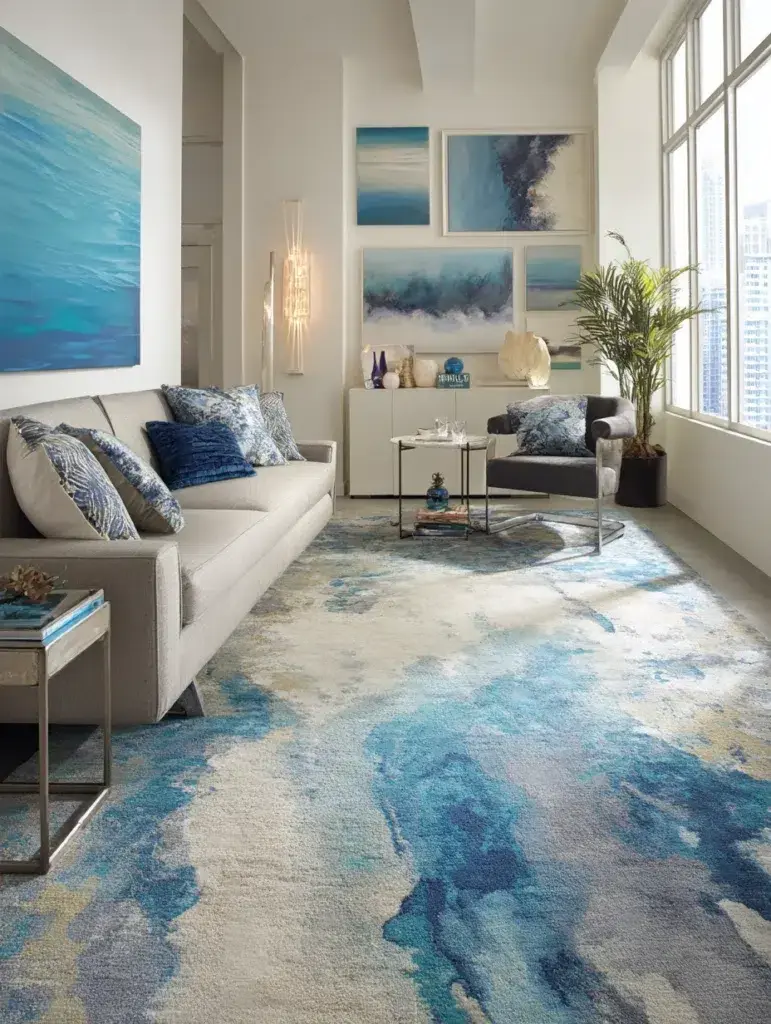
An abstract rug can function almost like a piece of art on the floor. Watercolor-style designs feel fluid and expressive, which makes them especially effective in living rooms with simple furniture and clean walls.
Because these rugs often include several blended shades, they can help connect different accent colors within the room. One rug might pull together blue cushions, gray upholstery, cream walls, and brass lighting without feeling overly coordinated.
Choose a design with enough negative space to let the eye rest. The painterly effect is most successful when it looks intentional and airy rather than crowded.
15. Navy Rug Ideas That Add Depth Without Harshness
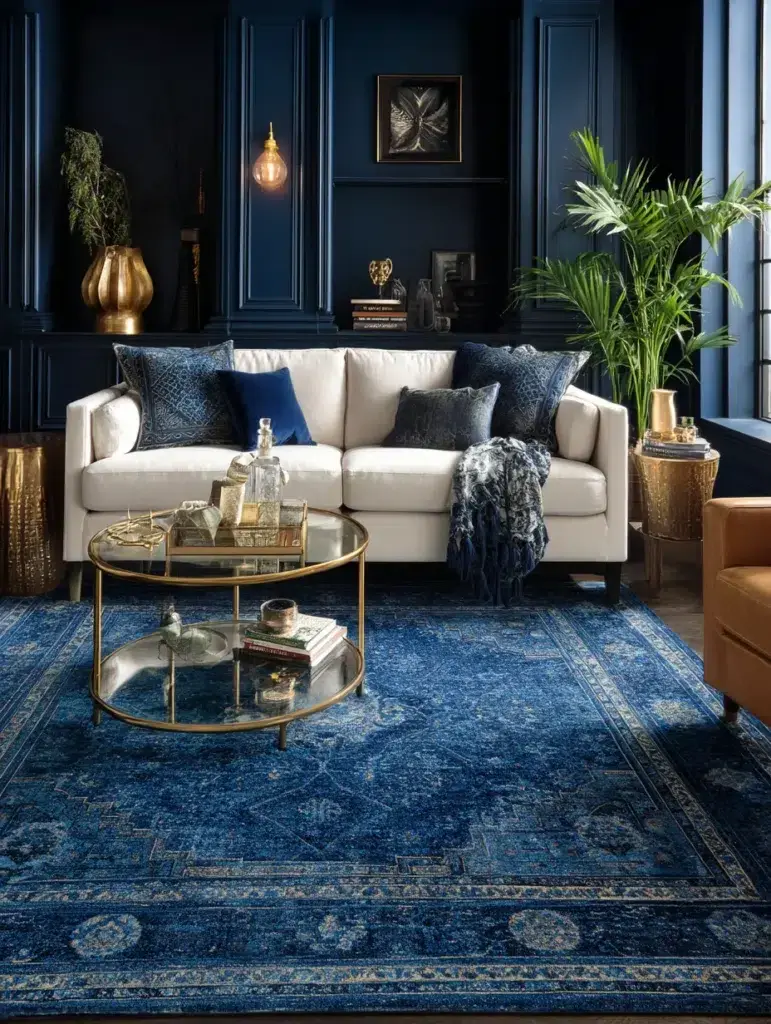
Navy is one of the most useful darker rug colors because it brings weight to a room without the severity of black. It grounds lighter furniture, suits both warm and cool palettes, and tends to age well stylistically.
In bright rooms, navy reads rich and classic. In lower light, it turns moodier and more dramatic. That flexibility makes it a strong option for living rooms that need more contrast but still want a sophisticated, livable palette.
It pairs beautifully with cream, camel, rust, brass, soft gray, and natural wood, which gives it impressive range across different interiors.
16. Low-Profile Flatweave Rug Ideas for Practical Living Rooms
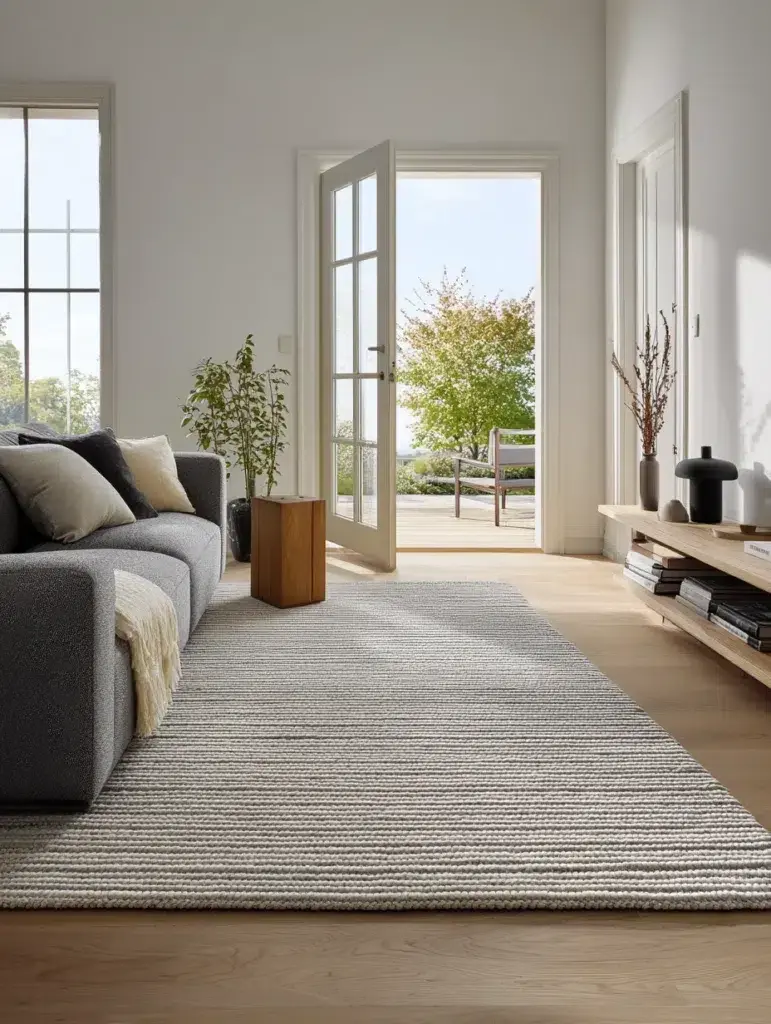
Flatweave rugs are often the smartest option when the living room sees hard daily use. They sit closer to the floor, which makes them easier for chairs to move across and less likely to catch under doors or become a tripping issue.
They also suit homes with children, pets, or frequent entertaining because they are generally easier to vacuum and maintain. Visually, they work well in modern, Scandinavian, and casual spaces where you want coverage without bulk.
Many flatweaves have enough woven detail to keep them interesting, even if the profile is slim. Stripe, grid, and subtle tribal motifs all tend to work especially well in this format.
17. Carved Rug Ideas With Subtle 3D Texture
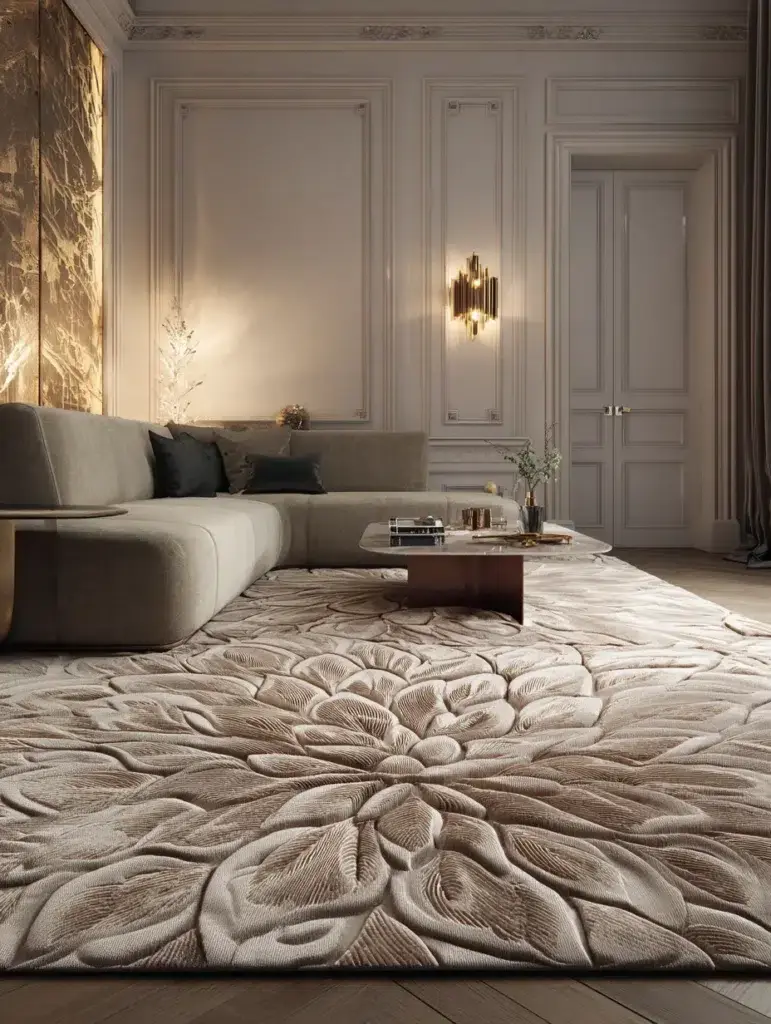
Carved rugs rely on pile variation to create pattern, which gives them a more sculptural feel than printed or woven designs. The look is refined, tactile, and especially strong in living rooms that use a restrained palette.
This approach allows the rug to hold visual interest without introducing another bold color or busy motif. As light moves through the room, the raised and recessed areas shift subtly, which keeps the floor from feeling static.
If you prefer a calm room but still want detail, this is often a better direction than choosing a louder pattern.
18. Organic-Shaped Rug Ideas for a More Relaxed Layout
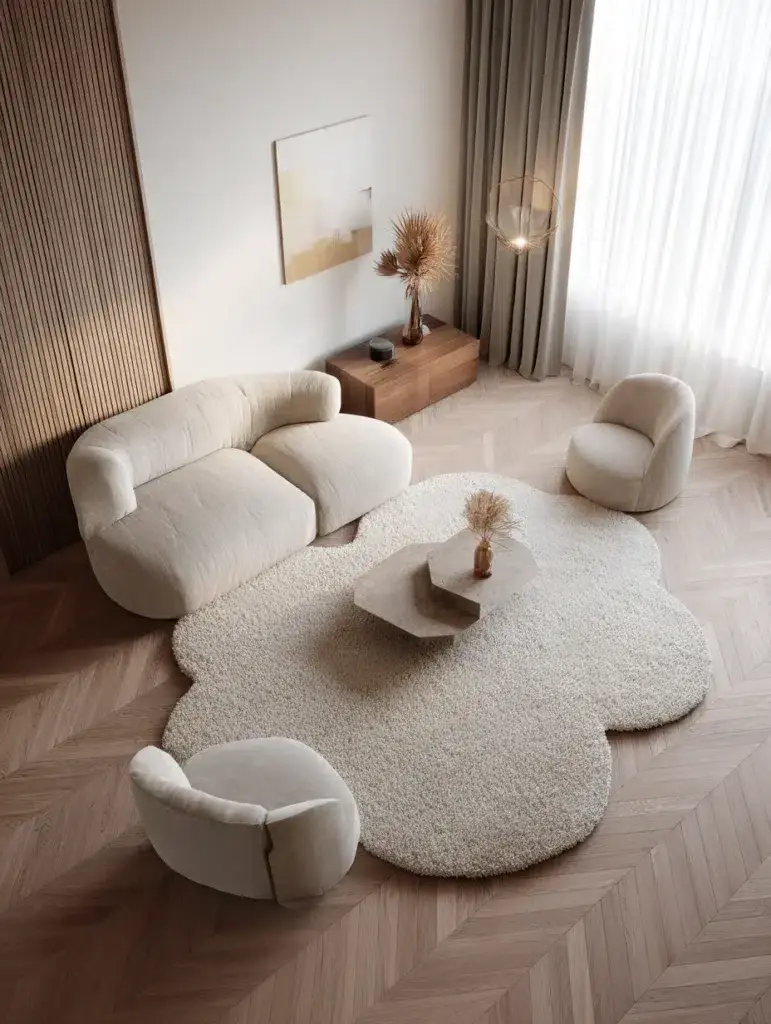
Organic-shaped rugs move away from the standard rectangle and introduce a softer, more contemporary energy. Their asymmetrical outlines can make a room feel more designed, especially if the furniture is very linear.
These rugs work well in eclectic and modern interiors, but they can also lighten rooms that feel too formal. Because the shape itself becomes part of the visual story, it is usually best to keep the pattern or color more restrained.
Use one where you want the seating area to feel slightly more relaxed and less boxed in, especially in a room with strong architecture or hard-edged furniture.
19. Striped Rug Ideas That Change How a Room Reads
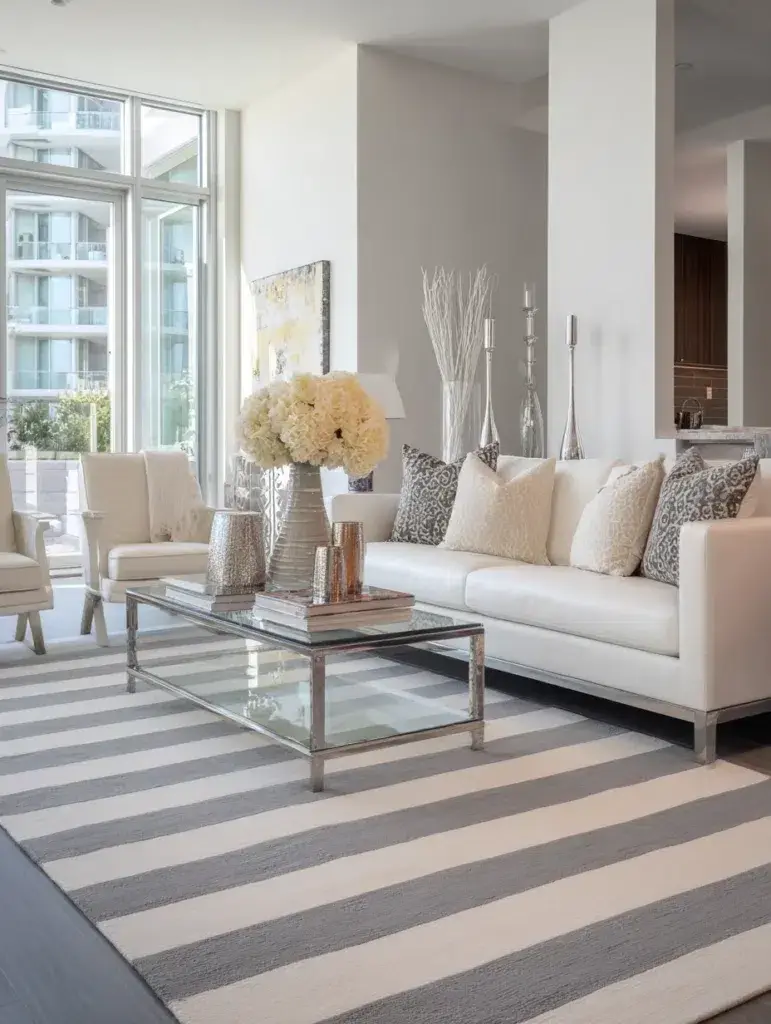
Stripes are one of the most useful patterns in interior design because they can subtly influence how a room feels. A striped rug can make a narrow room appear wider or guide the eye along the length of the seating area.
They are also easier to live with than many busier patterns. Stripes bring rhythm and movement but still look orderly, which makes them a good match for layered rooms that already include art, patterned cushions, or textured upholstery.
For a cleaner look, choose wide tonal stripes. For a more playful or coastal feel, a narrower stripe can work beautifully.
20. Mustard and Golden Rug Ideas for a Warmer Palette
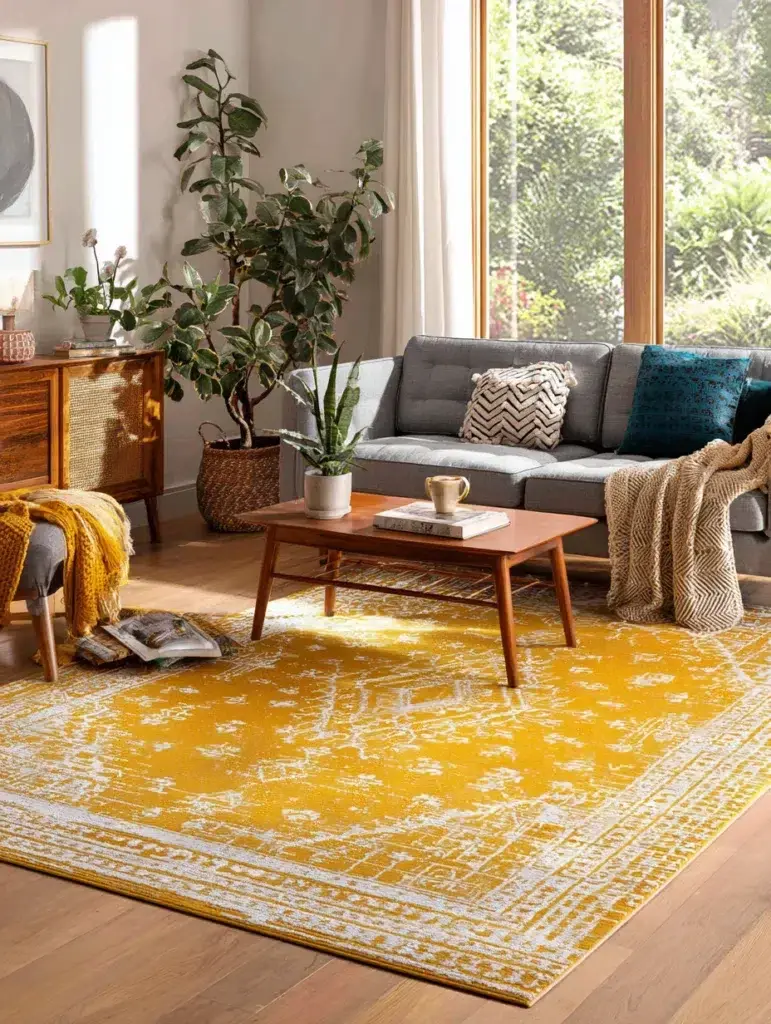
Mustard rugs bring color in a way that still feels grown-up. They have a vintage quality, a little depth, and a warmth that can lift a room that feels muted or underlit.
This is a particularly strong choice in mid-century-inspired living rooms, eclectic spaces, or interiors that already include walnut, cognac leather, black accents, or olive tones. A golden rug can make the room feel sunnier without veering into anything overly bright.
Because mustard already has presence, keep the rest of the palette edited. Let it be the warm note that carries the floor.
21. Moroccan-Inspired Rug Ideas With Pattern and Softness
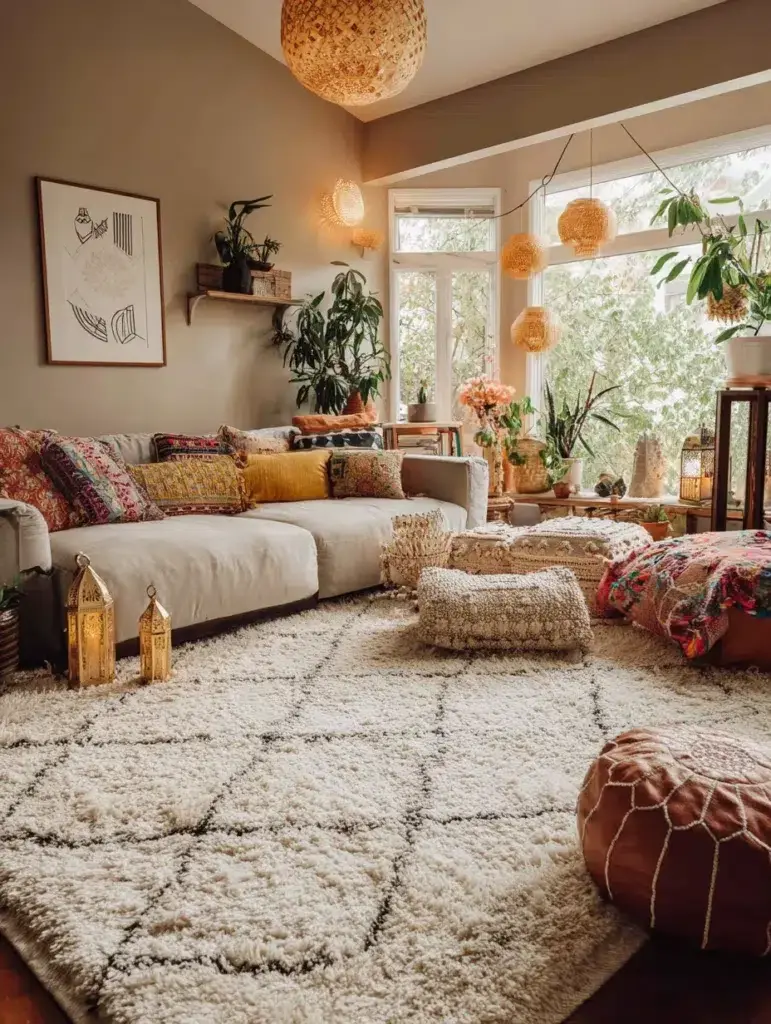
Moroccan-inspired rugs remain popular because they strike a rare balance: pattern, texture, and comfort all in one piece. Diamond trellis motifs, softly irregular lines, and plush piles give the room energy without making it feel stiff.
They work especially well in living rooms that want warmth and informality. A Moroccan-style rug can soften modern furniture, bring movement into a neutral space, and make the seating area feel more inviting.
Cream-and-charcoal versions are the most versatile, but warmer beige-based patterns can feel even softer in rooms with wood, linen, and earthy tones.
Frequently Asked Questions
What size rug should I use in a living room?
In most living rooms, the rug should be large enough for at least the front legs of the sofa and chairs to sit on it. In larger rooms, fitting all furniture legs on the rug often looks even better. A rug that is too small is one of the most common reasons a room feels unfinished.
Which rug material is best for a busy living room?
That depends on how the room is used. Wool is durable and naturally resilient, flatweave cotton is practical and easy to handle, and many modern synthetic rugs are useful in homes with pets or children because they are easier to clean and less precious.
Should a living room rug be darker or lighter than the sofa?
Either can work. A darker rug can ground pale seating and add contrast, while a lighter rug can soften a room with heavier furniture. What matters more is that there is enough difference between the sofa, floor, and rug for each element to feel distinct.
Are patterned rugs better than solid rugs?
Patterned rugs are often better at disguising everyday wear, crumbs, and minor stains, which makes them practical in busy households. Solid or tonal rugs tend to feel calmer and more minimal. The right choice depends on how much visual activity the room already has.
Can I layer a smaller rug over wall-to-wall carpet?
Yes, especially if the carpet is neutral and low profile. Layering a rug over carpet can define the seating area, add color or texture, and make the room feel more finished. Flatweaves and vintage-style rugs usually work especially well for this.
Final Thoughts
The best living room rug is not just the one that looks good in a photo. It is the one that suits the scale of your room, supports the way you live, and makes the whole space feel more complete. Start with size, think carefully about texture and maintenance, and then choose the color or pattern that gives the room its point of view.
Written by the Zeeshe Home Editorial Team, a blog focused on practical home décor ideas and inspiration.


