
Beige has range. In the right bedroom, it can read soft and airy, tailored and classic, or earthy and relaxed. What makes it so enduring is its flexibility: it settles into the background when you want a room to feel calm, yet it also gives texture, wood, metals, and fabric a chance to stand out.
The difference between a beige bedroom that feels polished and one that falls flat usually comes down to contrast, materials, and restraint. A room built entirely from one flat tone can feel lifeless. A room shaped with tonal shifts, natural surfaces, and a few well-chosen accents feels considered.

Below, you’ll find beige bedroom ideas that keep the look warm and livable, with practical notes on scale, placement, and materials so the space feels as good as it looks.
1. Layer Beige in More Than One Shade
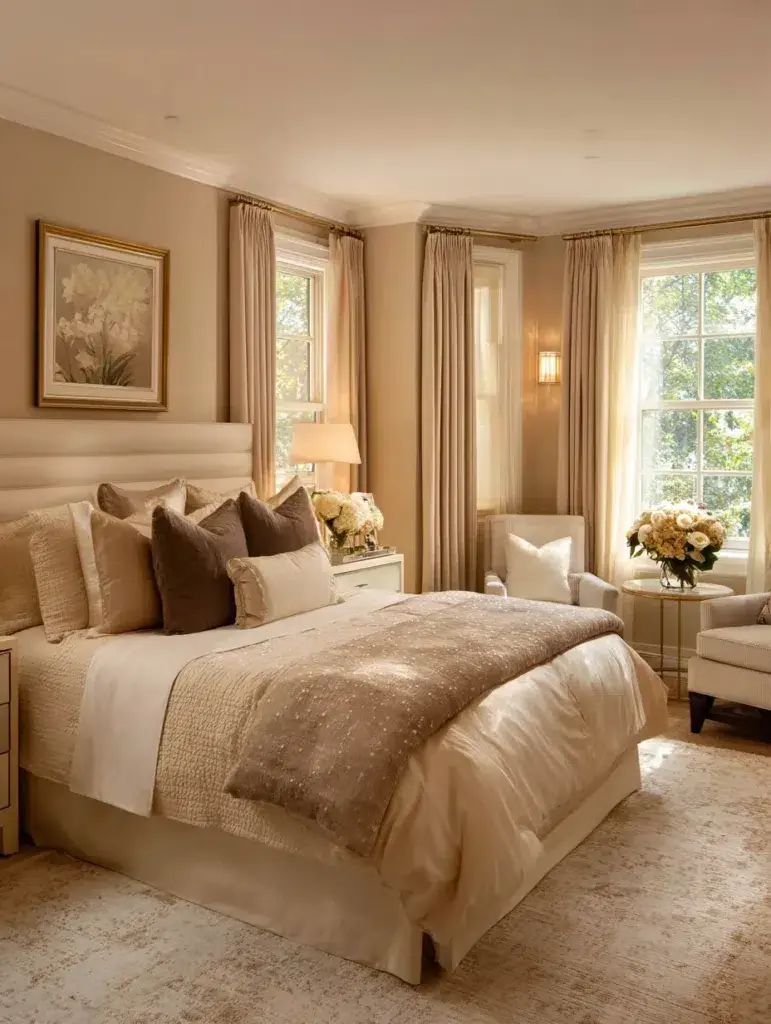
A beige bedroom feels richer when the palette moves from light to medium to deep rather than sitting in one note. Pale walls, oatmeal bedding, sand-colored pillows, and a taupe throw create separation without breaking the calm mood.
Keep at least two or three tones visible around the bed, since that is where the eye lands first. If the walls, headboard, and bedding are too similar, the room can blur together.
- Best for: Bedrooms that feel plain or washed out
- Helpful tip: Pull undertones in the same direction, whether warm, creamy, or mushroom-toned
- Watch for: Beige that turns pink or yellow under artificial light
2. Bring in Warm Wood for Structure

Wood gives beige a backbone. Without it, a neutral room can drift into softness without definition. Oak, walnut, ash, and teak all sit comfortably beside beige, but the effect changes depending on tone. Honey wood feels sunny and easygoing. Walnut reads deeper and more tailored.
A wood bed frame, bench, dresser, or floating shelf is often enough to anchor the room. Repeat the finish in two or three places so it looks intentional rather than accidental.
In smaller bedrooms, lighter woods tend to keep the room open. In larger rooms, darker wood can add needed weight.
3. Use Cream Bedding to Lighten the Palette
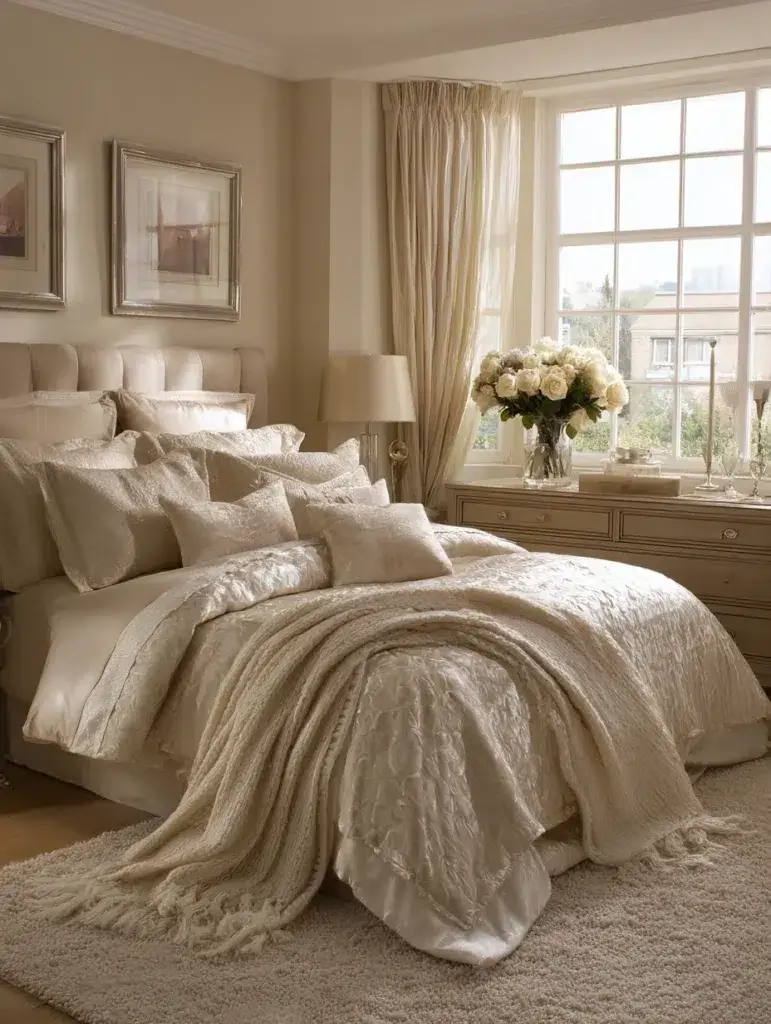
Cream bedding lifts a beige room without introducing a sharp contrast. It feels softer than bright white and usually blends more naturally with warm wall colors, woven rugs, and wood furniture.
This is especially useful in bedrooms with limited natural light. A cream duvet or quilt can brighten the center of the room and keep the palette from reading heavy.
Choose breathable fabrics for the main layers you use most often. Cotton percale feels crisp, linen has a relaxed drape, and a cotton-linen blend offers an easier, lower-maintenance middle ground.
4. Hang Textile Art for a Softer Wall Treatment
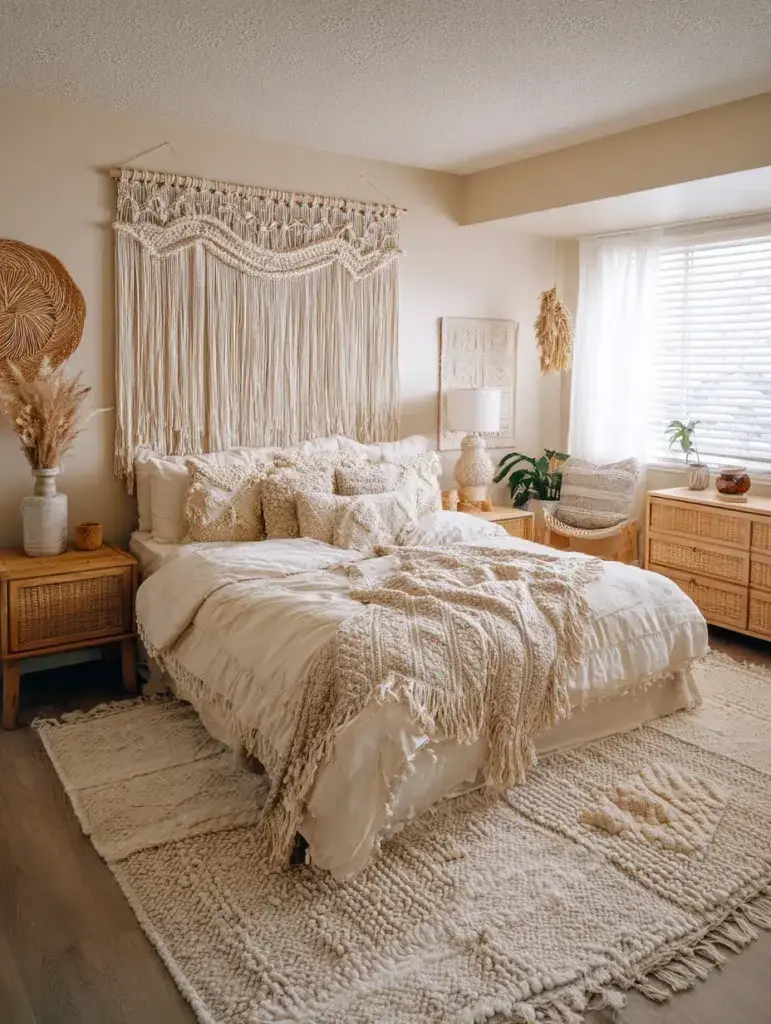
Textile wall pieces work beautifully in beige bedrooms because they bring depth without the visual sharpness of framed prints. Woven hangings, fiber art, and subtle macramé introduce movement and shadow, which keeps large neutral walls from feeling blank.
They work especially well above a bed with a simple headboard, over a dresser, or on a wall where framed art would feel too formal. Go larger than you think. A small piece can look lost against a wide beige wall.
If your room already includes strong texture in the bedding and rug, choose a simpler wall hanging so the room stays balanced.
5. Swap in Brass or Soft Gold Hardware
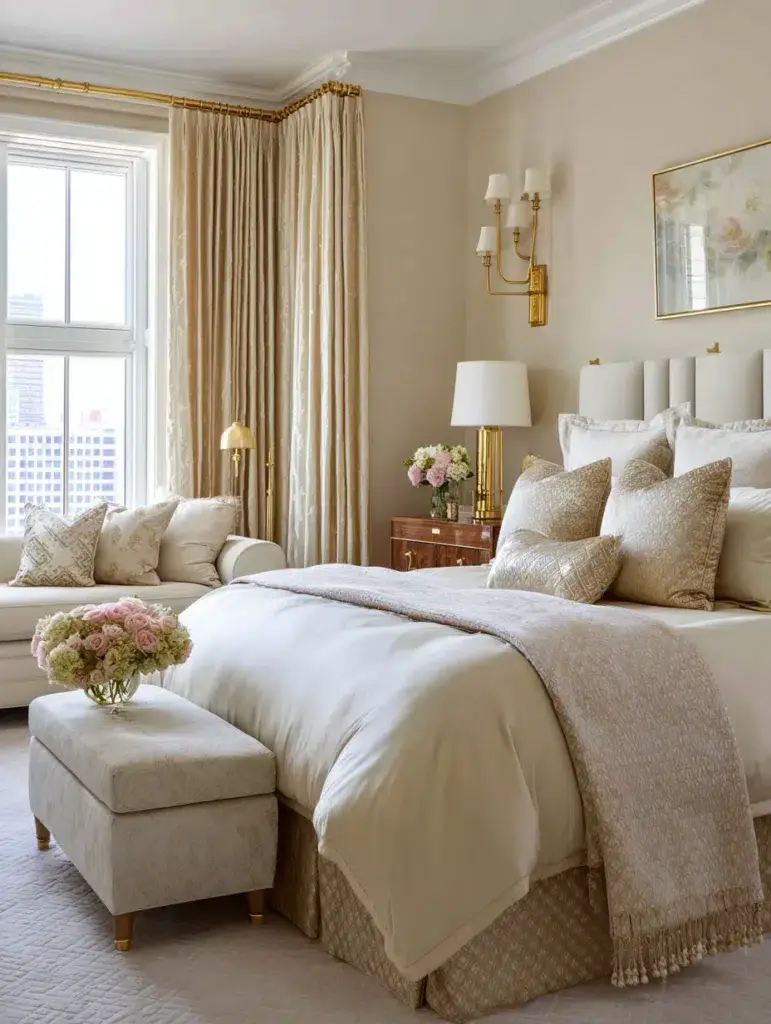
Metal finishes have a surprising amount of influence in a neutral room. Brass and muted gold bring a glow that flatters beige, while polished chrome can push the palette cooler and make the room feel more clinical.
You do not need a full overhaul. Lamp bases, drawer pulls, mirror frames, and curtain rods can shift the mood quickly. If your bedroom already contains warm woods, brass almost always feels at home.
For a quieter look, choose aged or brushed finishes rather than anything overly shiny.
6. Choose Sheer Beige Curtains for a Light-Filled Look
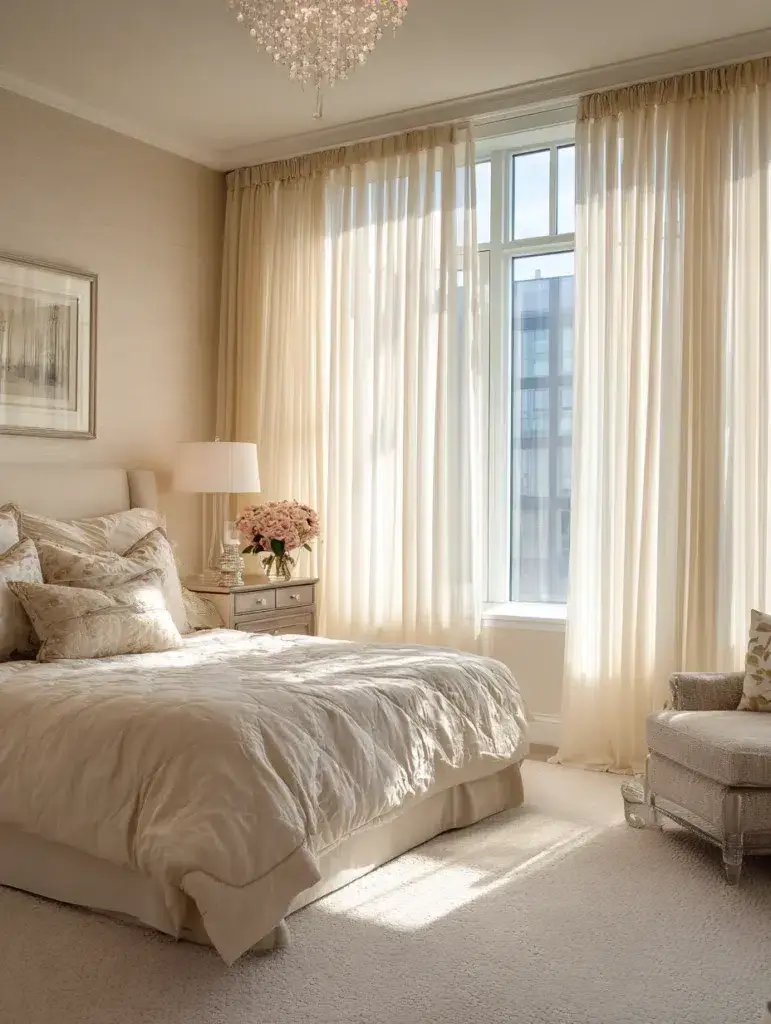
Sheer curtains soften daylight in a way paint cannot. In a beige bedroom, that filtered light makes walls, bedding, and wood finishes look gentler and more dimensional.
Mount curtains higher and wider than the window frame so the room feels taller and the glass looks more generous. Floor-length panels are usually worth it, even in a simple room, because they make the whole space feel more composed.
If privacy or early-morning light is a concern, pair sheers with lined drapes or a woven shade behind them.
7. Ground the Room With a Jute or Sisal Rug
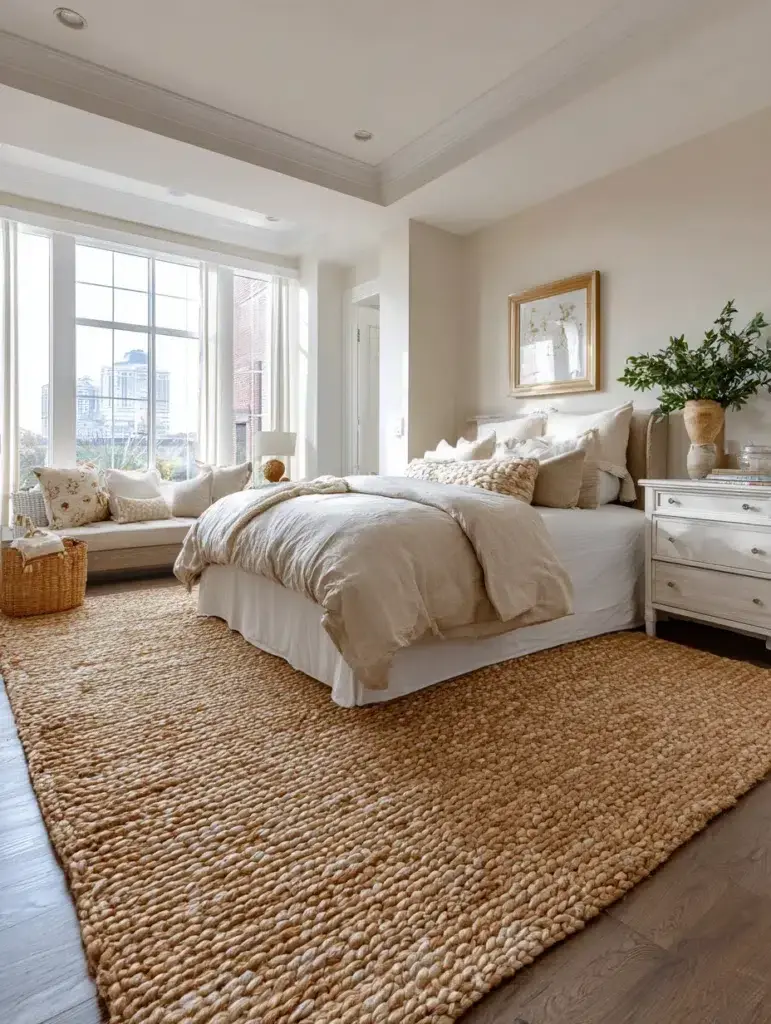
Natural-fiber rugs bring a dry, tactile contrast that keeps beige bedrooms from feeling too smooth. Jute tends to feel softer and more relaxed. Sisal is tighter and a bit more structured, but often rougher underfoot.
Size matters here. A rug that is too small makes the room feel disconnected. In most bedrooms, the rug should extend beyond both sides of the bed and remain visible at the foot.
- Queen bed: An 8×10 rug often gives the most balanced look
- King bed: A 9×12 usually feels more generous
- Small room: Runners on both sides can work when a full rug is not practical
8. Style With Dried Pampas Grass or Other Soft Botanicals
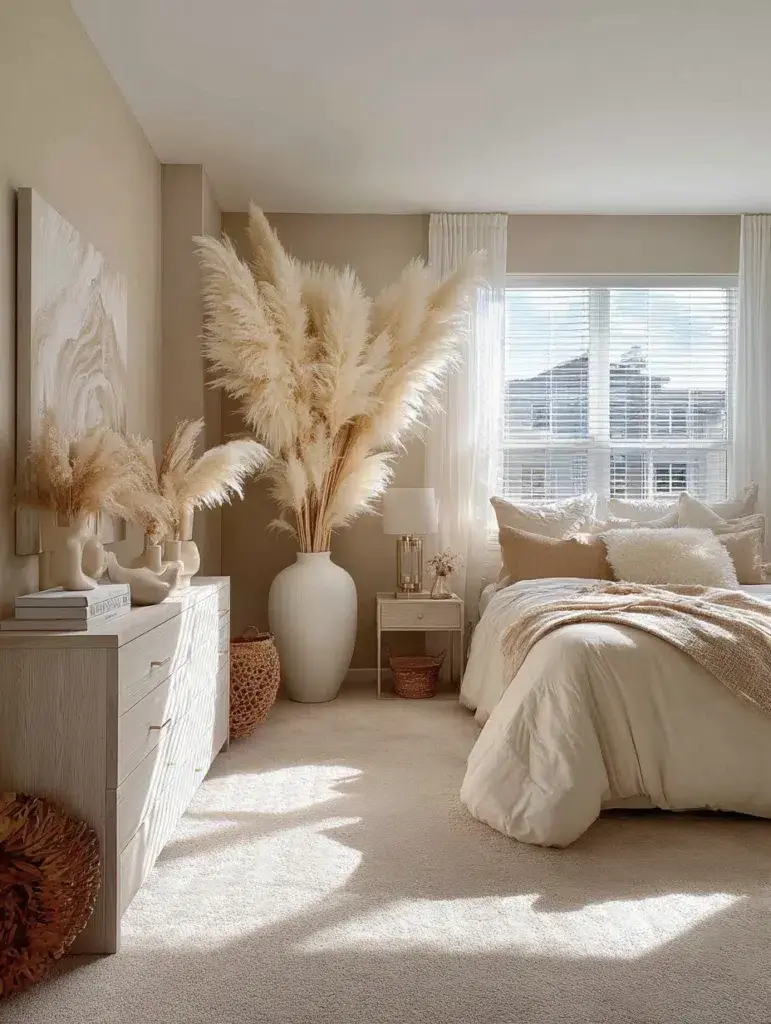
Dried arrangements suit beige bedrooms because they echo the palette rather than interrupting it. Pampas grass, bunny tails, dried palm leaves, and bleached branches all bring shape and height without demanding attention.
A floor vase works well in an empty corner, especially one near a dresser or beside a reading chair. Smaller stems can be used on a nightstand or shelf, but keep the arrangement airy rather than overfilled.
If you prefer less shedding and less maintenance, dried palm or preserved stems can be easier to live with than pampas.
9. Paint One Wall a Deeper Beige
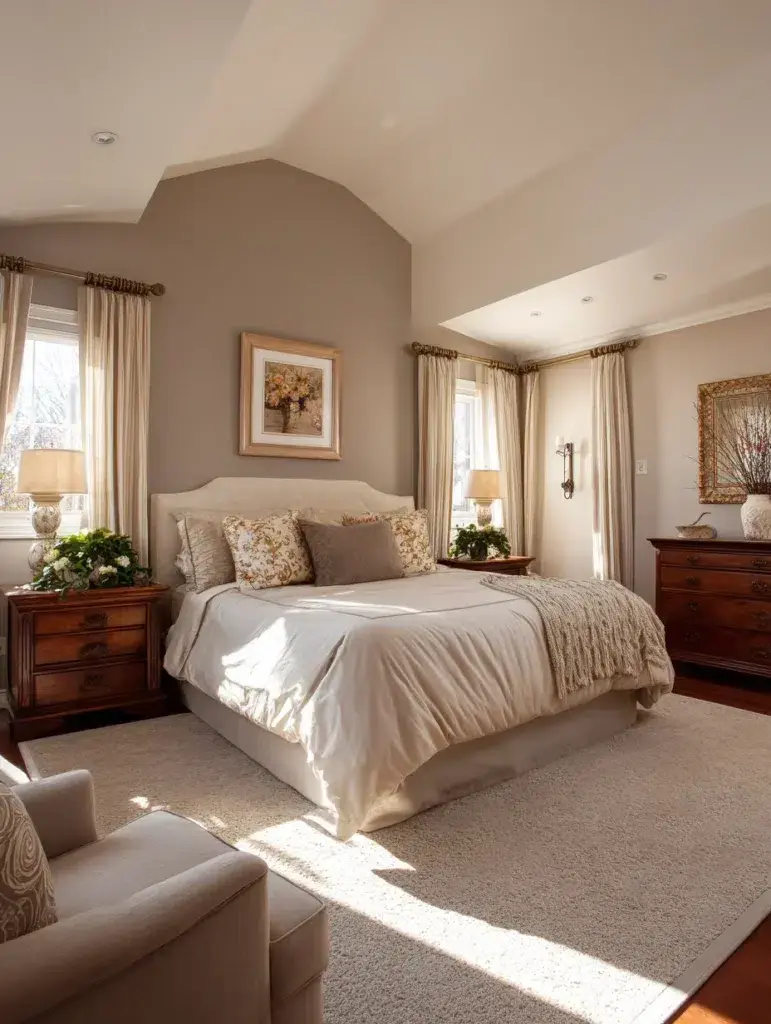
A tonal accent wall gives the room shape without breaking the calm. It is especially effective behind the bed, where it frames the headboard and gives the eye a clear focal point.
Choose a shade that is noticeably deeper than the surrounding walls, but still in the same family. Too close, and the difference disappears. Too far apart, and the room can feel chopped up.
Always test paint in morning light and lamplight. Beige is one of the most light-sensitive colors in a home, and the wrong undertone can shift quickly once the sun goes down.
10. Work in Rattan for an Easy, Collected Feel

Rattan has a looseness that keeps beige from feeling overly formal. A rattan headboard, side chair, pendant, or basket introduces pattern through weaving rather than color, which suits a quiet bedroom well.
Use it where you want texture without visual heaviness. A solid upholstered headboard can feel dense in a small room, while rattan keeps more air in the design.
Too much can push the room toward a themed look, so treat it as one note in the mix rather than the whole story.
11. Choose Linen Bedding for a Relaxed Finish
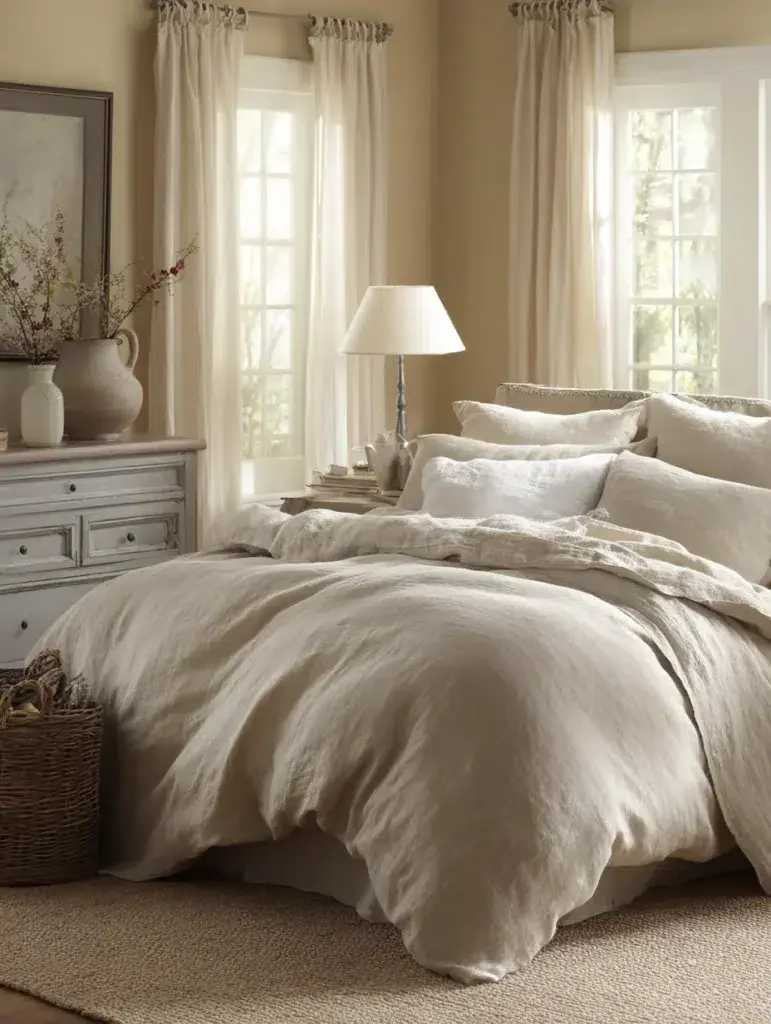
Linen gives beige depth in a very quiet way. Its natural slub, matte finish, and easy drape make the bed feel less staged and more inviting. That slight rumple is part of the appeal.
It works particularly well in bedrooms that lean organic, minimal, coastal, or softly rustic. If you prefer a sharper hotel-style bed, mix linen with smoother cotton layers so the room still feels crisp.
Linen is usually an investment, but it wears beautifully. For everyday use, pre-washed linen or a linen blend tends to feel gentler from the start.
12. Introduce Greenery in Neutral Pots
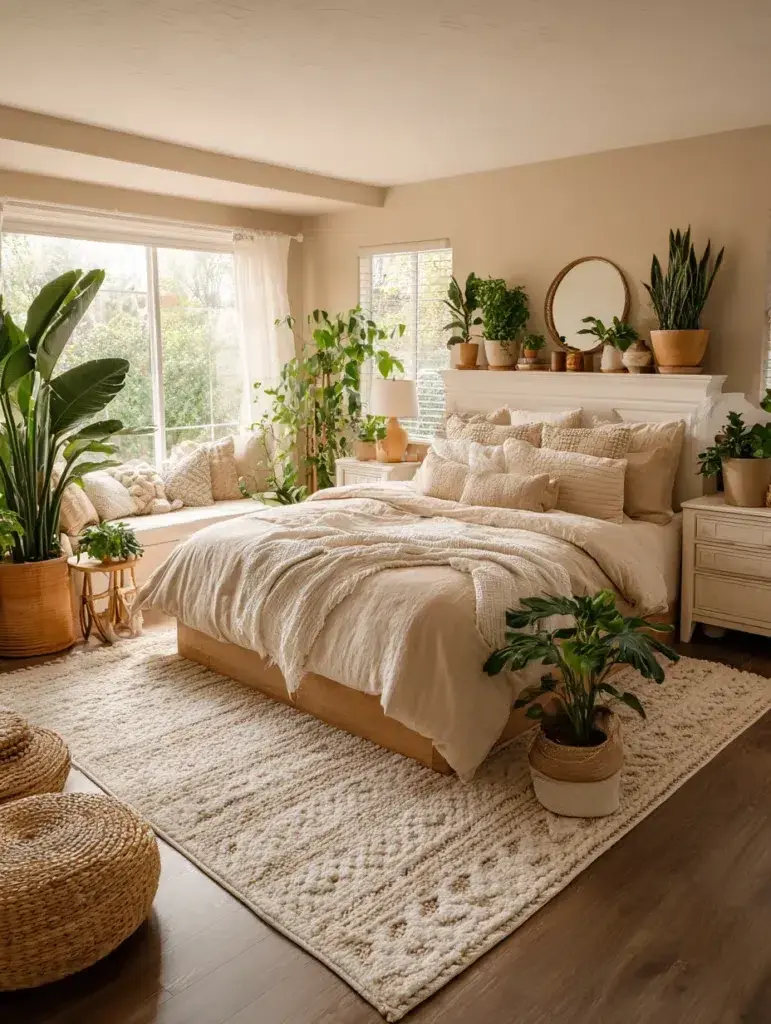
Even a quiet neutral bedroom benefits from something living. Green leaves sharpen the palette just enough, and beige, cream, stone, or terracotta planters keep the look settled.
Snake plants, pothos, ZZ plants, and rubber plants are all dependable choices for bedrooms. Pick one large plant rather than several small, scattered ones if you want the room to feel calmer and less busy.
Place taller plants in corners that need height, and smaller ones on dressers or shelves where they can break up hard lines.
13. Mix Pillow Fabrics Instead of Buying a Matching Set
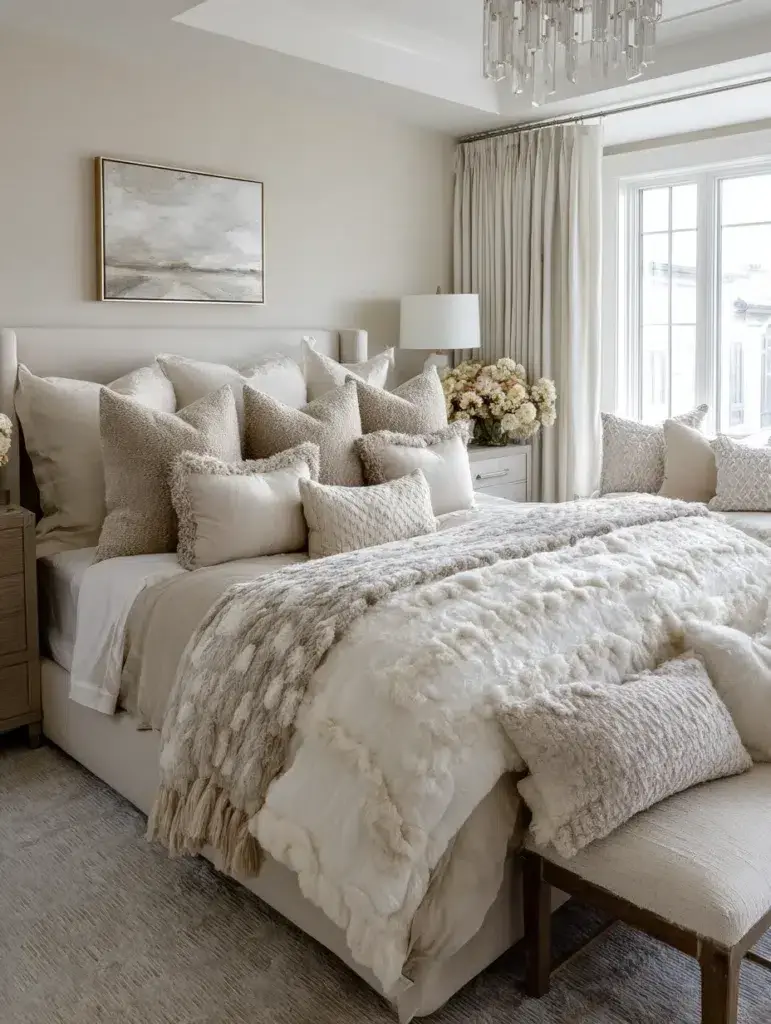
The easiest way to make a beige bed look styled rather than generic is to vary the materials. Think linen, velvet, brushed cotton, boucle, or a knit accent pillow rather than one matching collection.
Texture reads more clearly than color in a neutral room, so this is where the bed starts to feel layered and personal. Keep the palette restrained, then let shape and finish do the work.
- For a fuller look: Use Euro shams behind standard pillows
- For a simpler look: Limit decorative pillows to two or three pieces
- For small beds: Avoid overstacking so the room does not feel crowded
14. Use Warm White Lighting Instead of Cool Bulbs
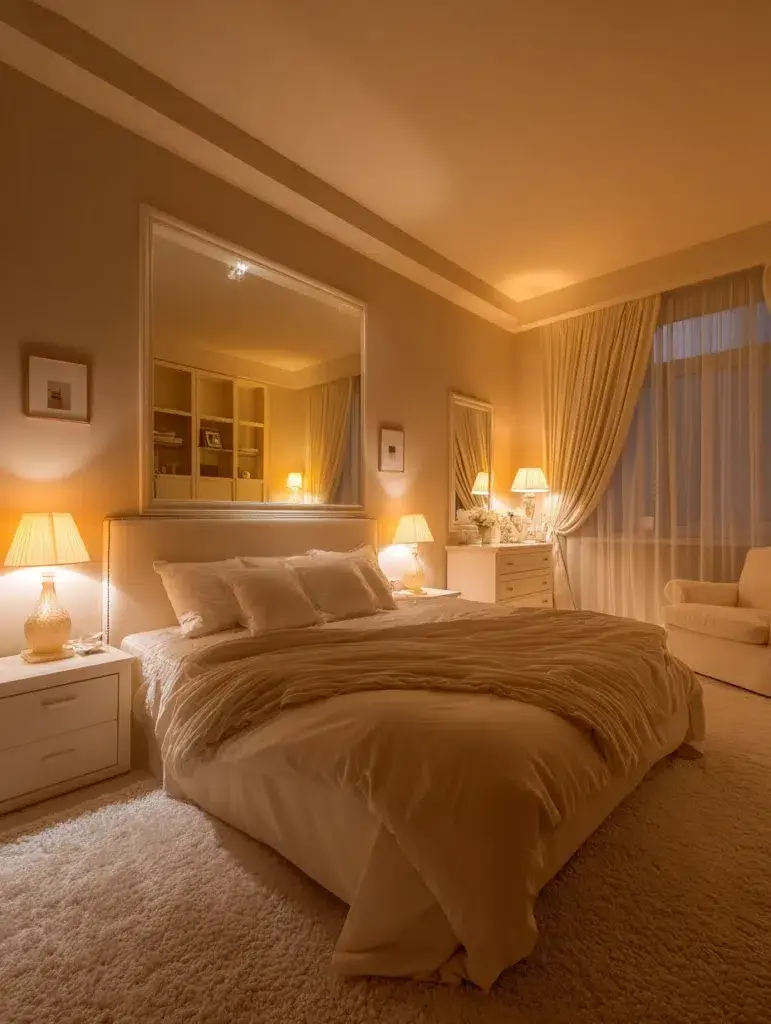
Lighting can make beige look creamy and flattering or dull and slightly muddy. Warm white bulbs usually suit this palette best, especially in the evening when the bedroom should feel gentle rather than stark.
Aim for layered lighting rather than relying on a single ceiling fixture. Bedside lamps, a floor lamp near a chair, and dimmable overhead lighting give you options throughout the day.
If you can choose bulb temperature, a warm range often feels best for bedrooms. It keeps beige comfortable and helps brass, wood, and woven materials look their best.
15. Place an Upholstered Bench at the Foot of the Bed
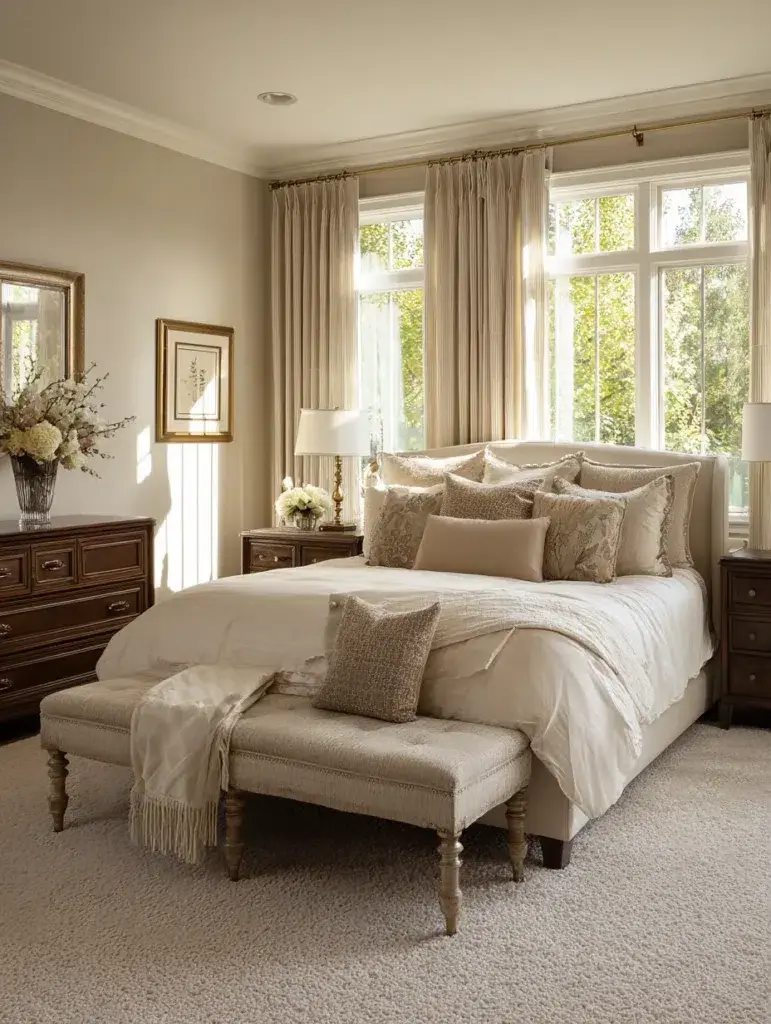
A bench makes the bed area feel finished. It also gives you a place for a folded quilt, tomorrow’s clothes, or the everyday act of sitting down to put on shoes.
For proportion, the bench should generally be narrower than the width of the bed. Leave breathing room on both sides so it does not look wedged in. Upholstery in beige, flax, or oatmeal keeps the piece integrated into the room.
Storage benches earn their keep in smaller bedrooms where extra linens need a home but bulky furniture is not an option.
16. Build a Gallery Wall With Quiet, Neutral Art

A beige bedroom does not need loud artwork to feel interesting. Black-and-white photography, sketch-style prints, abstract studies, and tonal landscapes can all add personality without breaking the room’s mood.
The trick is consistency. Similar frame finishes, repeated matting, or a restrained color story help a gallery wall feel edited. If you prefer flexibility, lean smaller pieces on a picture ledge rather than committing to a fixed arrangement.
Above a dresser, keep the grouping proportional to the furniture below it. Art that is too small can make the wall feel unfinished.
17. Layer Bamboo Shades With Fabric Panels

Bamboo shades bring pattern and texture to the window without adding visual clutter. Their linear weave offers a useful contrast to the softness of bedding, curtains, and upholstered pieces.
They are especially effective in bedrooms that lean organic, coastal, or modern rustic. Pair them with drapery panels if the room needs softness or better light control.
Inside-mount shades look tailored, while outside-mount shades can make a small window appear larger. Choose based on the architecture and how much visual presence you want the window treatment to have.
18. Use Faux Fur in Small, Intentional Doses

A little faux fur changes the temperature of a room instantly. It makes beige feel more cocooning, especially in winter or in bedrooms that otherwise lean minimal.
One throw over a chair, folded at the foot of the bed, or a single accent pillow is usually enough. More than that can start to feel overdone and compete with the cleaner textures elsewhere in the room.
Choose a tone that sits close to the bedding palette so the texture stands out, not the color contrast.
19. Keep Frames Soft and Cohesive

Frame choice can quietly shape the whole room. Light wood, antique brass, muted black, and painted cream frames all work in beige bedrooms, but the key is repetition. When frames share a finish or at least a similar mood, the room feels more resolved.
This matters even more if you are displaying family photos, prints, and mirrors together. A mixed collection can still feel calm when the framing language stays consistent.
In smaller rooms, thinner frames usually keep walls from feeling visually heavy.
20. Bring in a Vintage-Style Mirror for Patina and Light
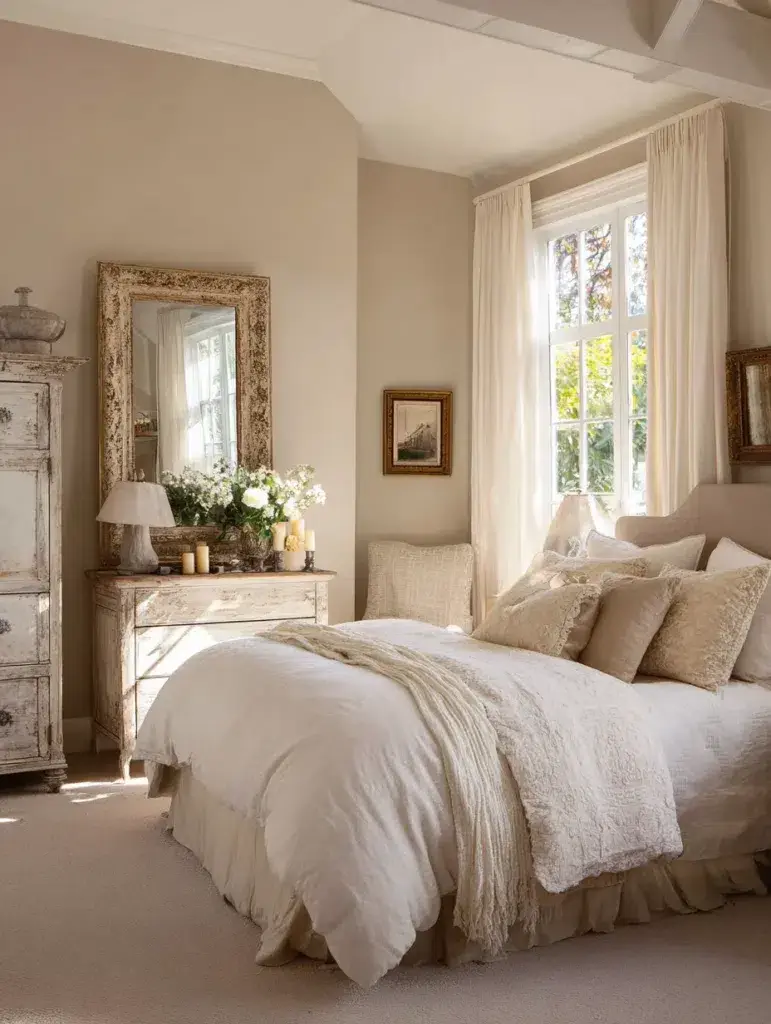
Mirrors do more than reflect light in a beige bedroom. A vintage or vintage-look frame brings age, softness, and a slightly collected quality that keeps the room from feeling too newly decorated.
Ornate frames can suit traditional and romantic rooms, while simpler distressed styles sit comfortably in modern rustic or relaxed European-inspired interiors. A full-length mirror leaning against the wall can also make a small room feel taller and less boxed in.
Position mirrors where they catch daylight or reflect a pleasing part of the room rather than facing clutter or a blank corner.
21. Style Shelves and Nightstands With Neutral Books
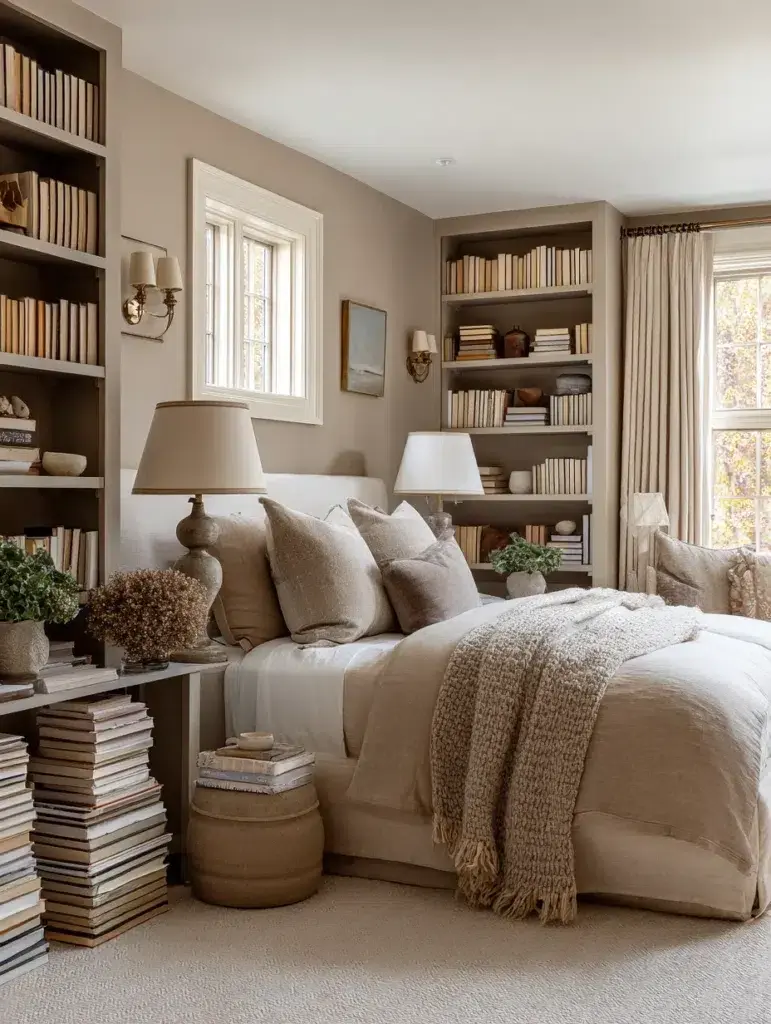
Books bring instant texture, shape, and a lived-in quality. In beige bedrooms, neutral or lightly toned spines blend more easily into the palette, especially when stacked with a candle, a small bowl, or a ceramic vase.
They also help solve the problem of flat surfaces that feel empty but do not need more decorative clutter. A short stack on a nightstand or dresser can lift smaller objects and create variation in height.
Keep it believable. The styling looks best when the books still feel like books you might actually reach for.
Frequently Asked Questions
How do I keep a beige bedroom from looking bland?
Focus on contrast through tone and material rather than introducing lots of color. Mix lighter and deeper beiges, then bring in wood, woven textures, linen, metal, and a few darker accents so the room has shape.
What colors pair best with beige in a bedroom?
Cream, ivory, taupe, camel, walnut, terracotta, soft black, olive, and muted brass all pair naturally with beige. The best companion shades depend on whether your beige reads creamy, sandy, greige, or mushroom-toned.
Is beige better than white for a bedroom?
Beige usually feels softer and more forgiving than bright white, especially in bedrooms where warmth matters. It can also be easier to live with in spaces that get limited light or where you want the room to feel restful rather than crisp.
What rug works best in a beige bedroom?
Jute, sisal, wool, and low-pile patterned rugs all work well. Choose based on how you want the room to feel underfoot and how much texture already exists elsewhere. Natural fiber rugs look especially strong in rooms with wood and linen.
Should beige walls and beige bedding match exactly?
No. A slight shift in tone usually looks better. When walls and bedding match too closely, the room can feel flat. A bit of difference helps the bed stand out and gives the room more depth.
Final Thoughts
A beautiful beige bedroom is rarely about one statement piece. It comes together through small decisions that support one another: the right undertone, a rug with texture, a curtain that softens the light, a lamp that makes the room glow at night. When those details are handled well, beige feels anything but basic.
Written by the Zeeshe Home Editorial Team, a blog focused on practical home décor ideas and inspiration.


