
Brown and cream is one of those color pairings that rarely feels forced. It has the depth of darker wood and leather, the softness of light upholstery and textiles, and a natural warmth that makes a living room feel settled from the start. Done well, it can lean classic, modern, rustic, organic, or quietly luxurious.
The success of this palette usually comes down to balance. Too much brown can make a room feel heavy. Too much cream can leave it looking flat or overly delicate. The most inviting rooms use contrast, texture, and a mix of finishes so the palette feels layered rather than one-note.

These brown and cream living room ideas focus on practical styling decisions you can actually use, whether you are reworking a few details or building the room from the floor up.
1. Layer Several Cream Tones Instead of One Flat Neutral
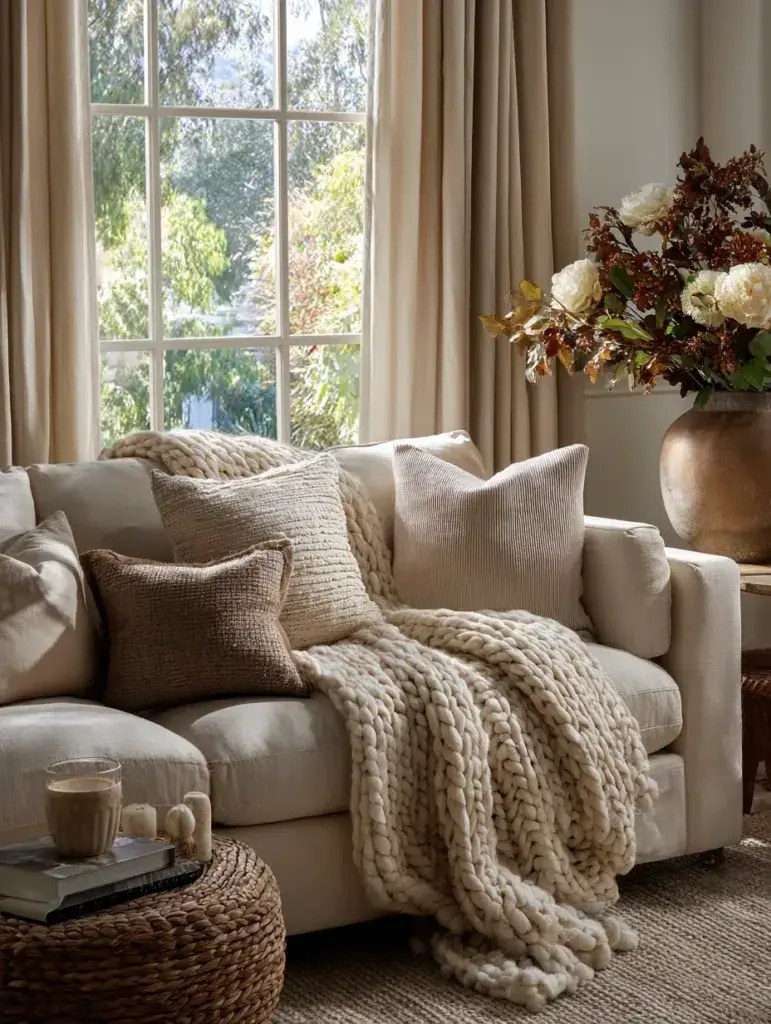
Cream works best when it moves through a few shades rather than staying exactly the same everywhere. A room feels more nuanced when the curtains are a soft ivory, the sofa leans oatmeal, and the pillows bring in warmer buttercream or ecru tones.
Texture matters just as much as shade. Linen, knit, boucle, wool, and cotton all reflect light differently, which keeps a neutral room from looking flat. This is especially useful if your walls, upholstery, and rug live in a similar family.
- Best for: Living rooms that feel too plain or washed out
- Try mixing: Smooth upholstery, nubby accent pillows, and a heavier throw
- Watch for: Creams with undertones that clash under warm lighting
2. Ground the Room With a Deep Brown Sofa
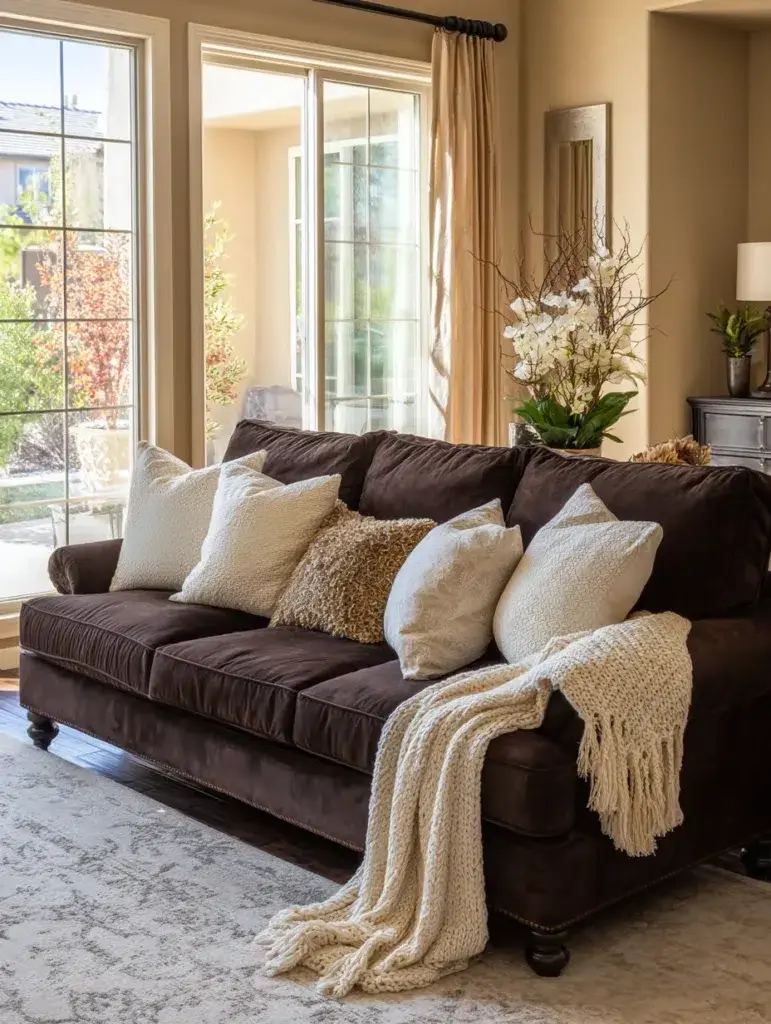
A chocolate brown sofa gives the room structure immediately. It has visual weight, hides everyday wear better than very light upholstery, and creates a strong counterpoint to cream walls, curtains, or rugs.
This works especially well in family rooms and everyday living spaces where comfort matters as much as appearance. A darker sofa can make the room feel finished even before the styling details are added.
Balance it with lighter pillows and a throw so it does not dominate the room. If the sofa is large, keep nearby tables or rugs lighter to stop the palette from tipping too dark.
3. Start With Warm Brown Flooring or Bring It in Through a Rug

Warm brown floors give this palette a natural foundation. Medium walnut, oak, or hickory tones tend to work particularly well because they add warmth without feeling too red or too cold.
If replacing flooring is not realistic, you can still capture the same effect by layering a cream rug over existing floors and repeating brown through wood tables, leather seating, and baskets. The room only needs enough brown to feel rooted.
In homes with darker flooring, use more cream at eye level to keep the room from feeling heavy. In rooms with lighter flooring, brown furniture can supply the contrast instead.
4. Add a Cream Rug to Soften the Palette
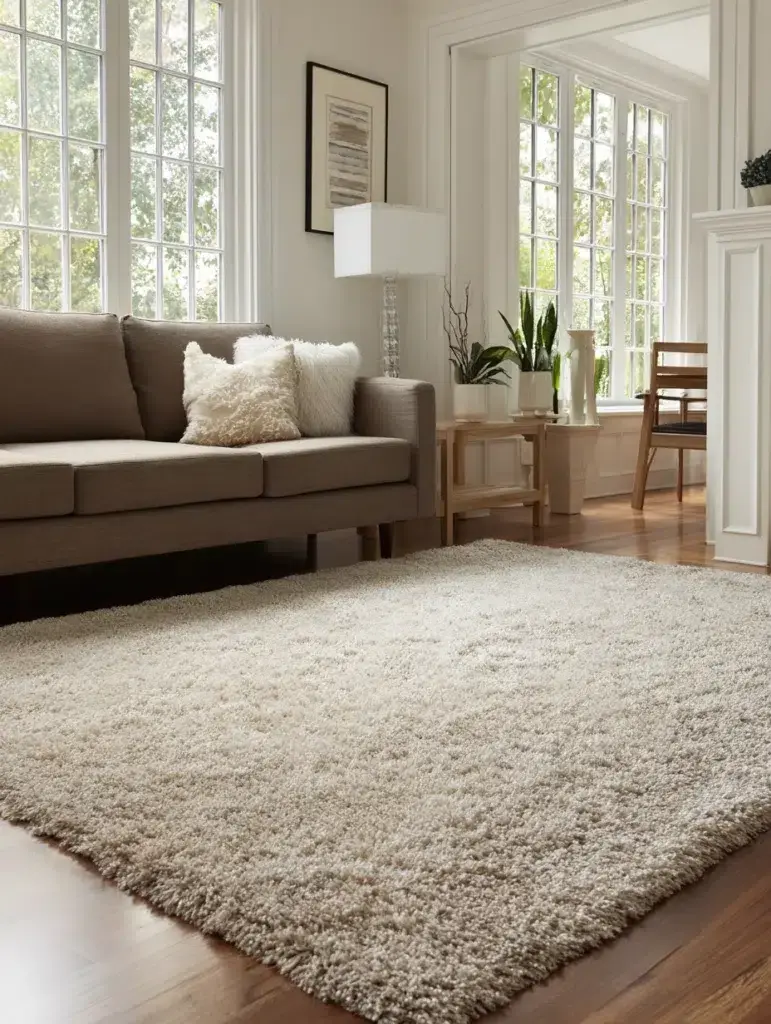
A cream rug lightens the middle of the room and gives brown furniture something softer to sit against. It can make a darker coffee table, leather chair, or walnut media unit stand out more clearly.
Rug size matters here. In most living rooms, the rug should be large enough for at least the front legs of the sofa and chairs to sit on it. A rug that is too small can make the whole room feel pieced together.
If you like the plush look of shag, choose a pile height that suits the way you live. High pile feels cozy, but medium pile is usually easier to clean in busy homes.
5. Bring in Rattan or Cane for a Lighter Brown Accent
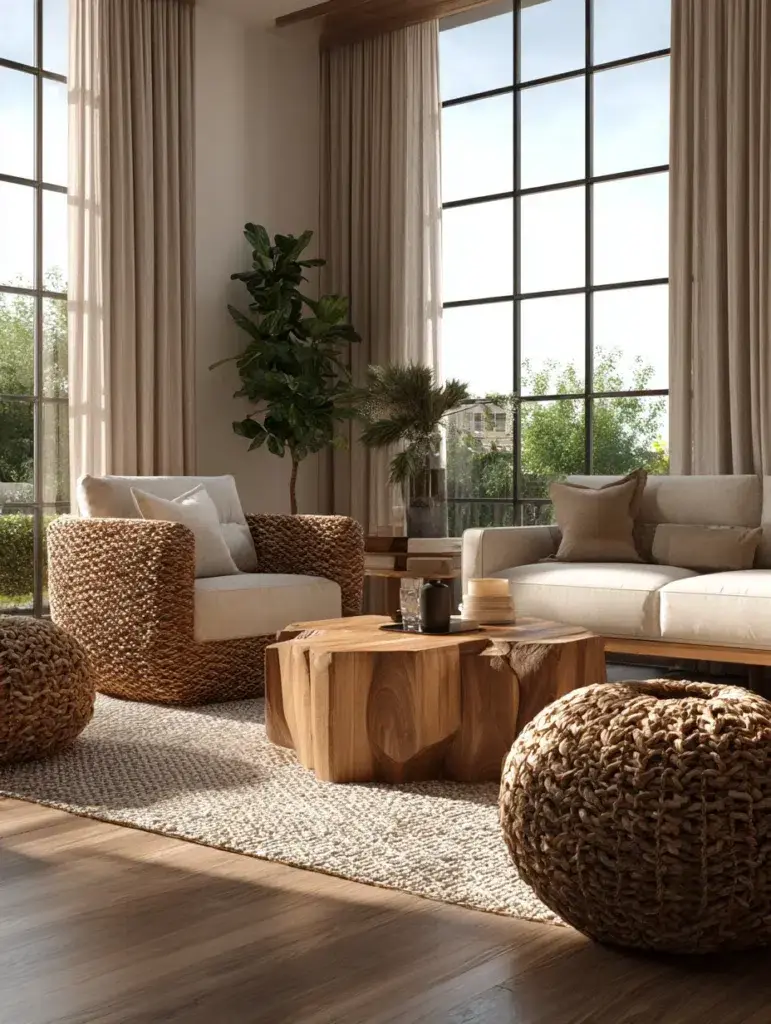
Not every brown element needs to be dark. Rattan, cane, and woven wood tones bring a lighter, airier kind of brown that keeps the room from feeling too formal.
A rattan side table, accent chair, or storage piece adds texture and a relaxed note that pairs especially well with cream upholstery and linen curtains. It is a smart way to warm up a modern room that might otherwise feel too polished.
The contrast between woven materials and smoother fabrics is what makes this look feel rich. Use one or two pieces rather than trying to make every item natural and woven.
6. Hang Cream Linen Curtains for Softness and Height
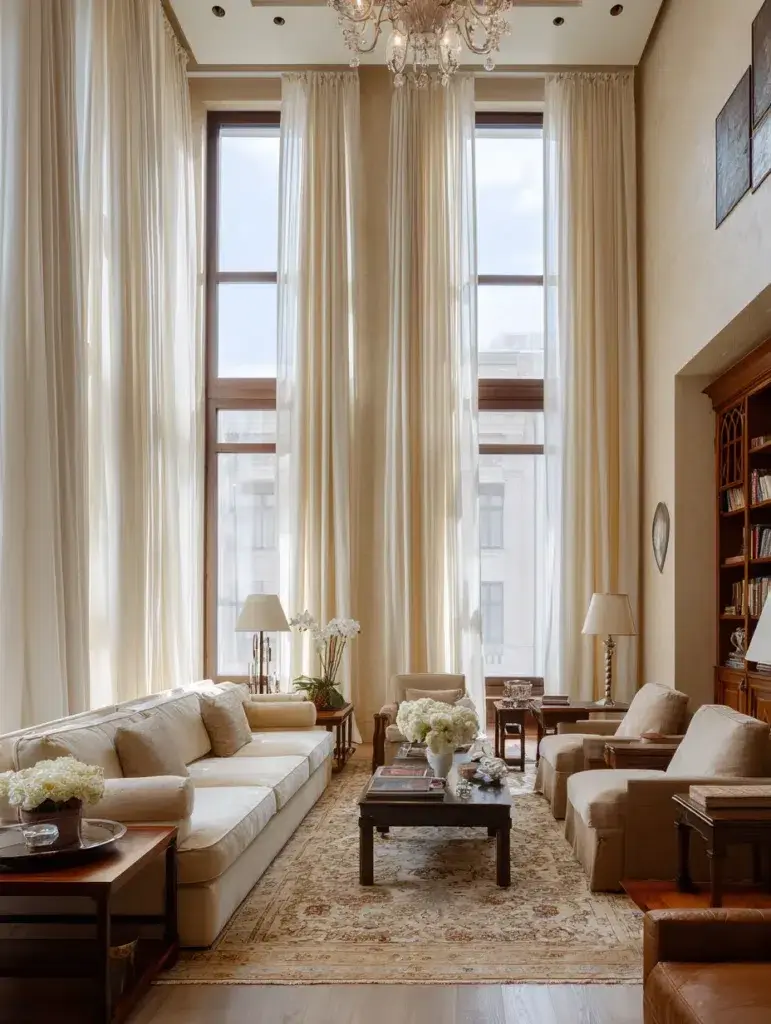
Cream linen curtains soften the room in a way that painted walls cannot. They filter light gently, make darker brown furniture feel less dense, and add a quiet texture that suits this palette beautifully.
Mount them close to the ceiling and let them fall to the floor so the room feels taller and more refined. In living rooms with limited daylight, lighter curtains help bounce what little light is available.
If privacy is important, use lined panels or layer linen-look curtains over a simple shade. The goal is softness, not a fussy window treatment.
7. Create a Gallery Wall With Brown Frames
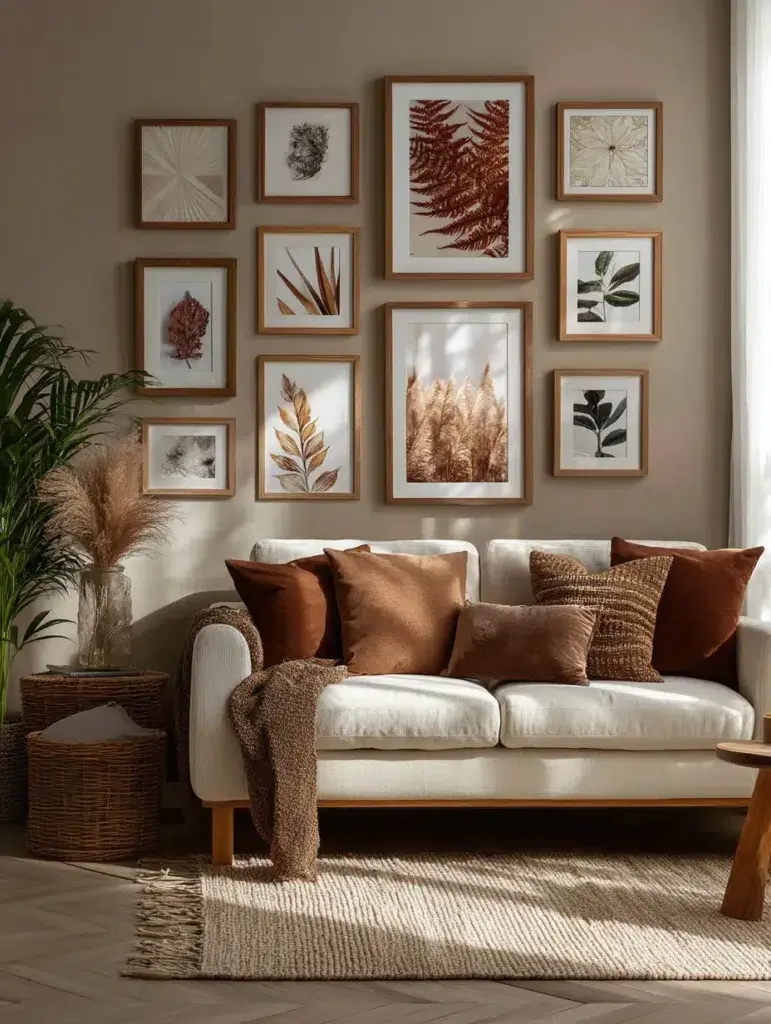
Brown frames help artwork feel integrated into the palette rather than dropped into it. They can pick up wood flooring, leather upholstery, or darker furniture and make the room feel more cohesive.
For a calmer look, stick to similar wood tones throughout the grouping. For a more collected effect, mix walnut, oak, and espresso finishes but keep the art itself restrained with sketches, photography, botanicals, or tonal abstracts.
Lay out the arrangement on the floor first so the spacing feels intentional. In a brown and cream room, the frame finish can be just as important as the art inside it.
8. Style Open Shelves With Cream Ceramics
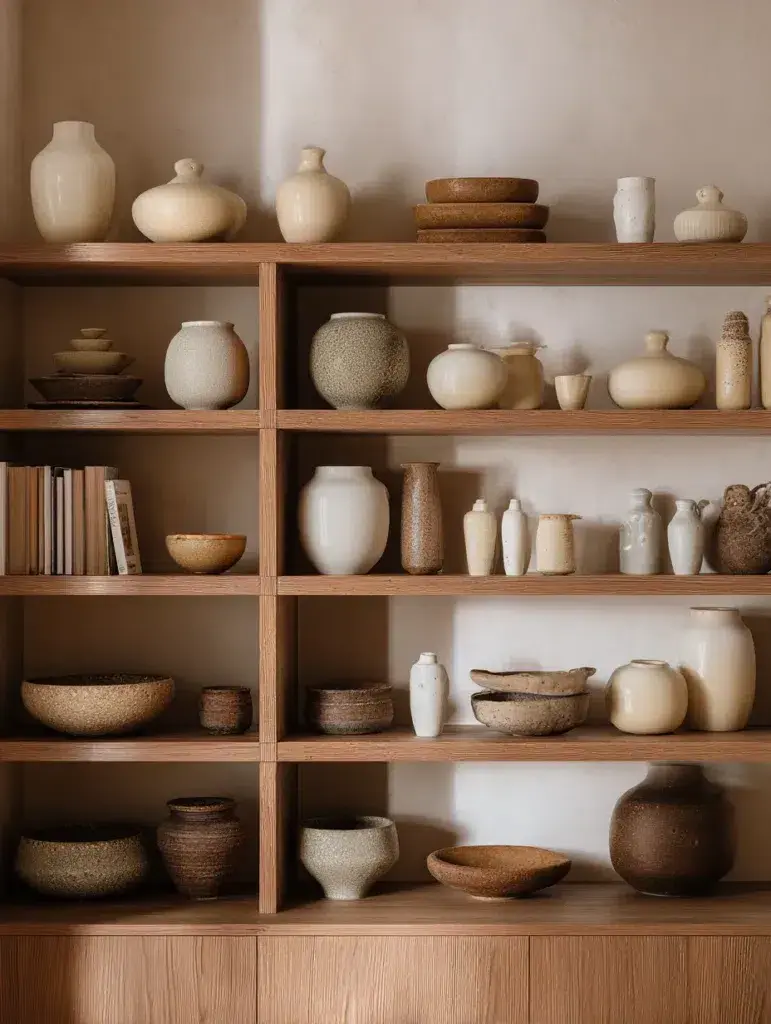
Cream ceramics give shelves shape without adding visual noise. Vases, bowls, urns, and matte stoneware pieces work particularly well because they add volume and softness against darker shelving or wall colors.
Keep the grouping edited. A few sculptural pieces with different heights will always look better than a shelf packed edge to edge. This palette benefits from negative space.
If the room already has plenty of brown wood, cream ceramics can help lighten the composition and keep the styling from feeling too dense.
9. Add a Camel or Cognac Accent Chair
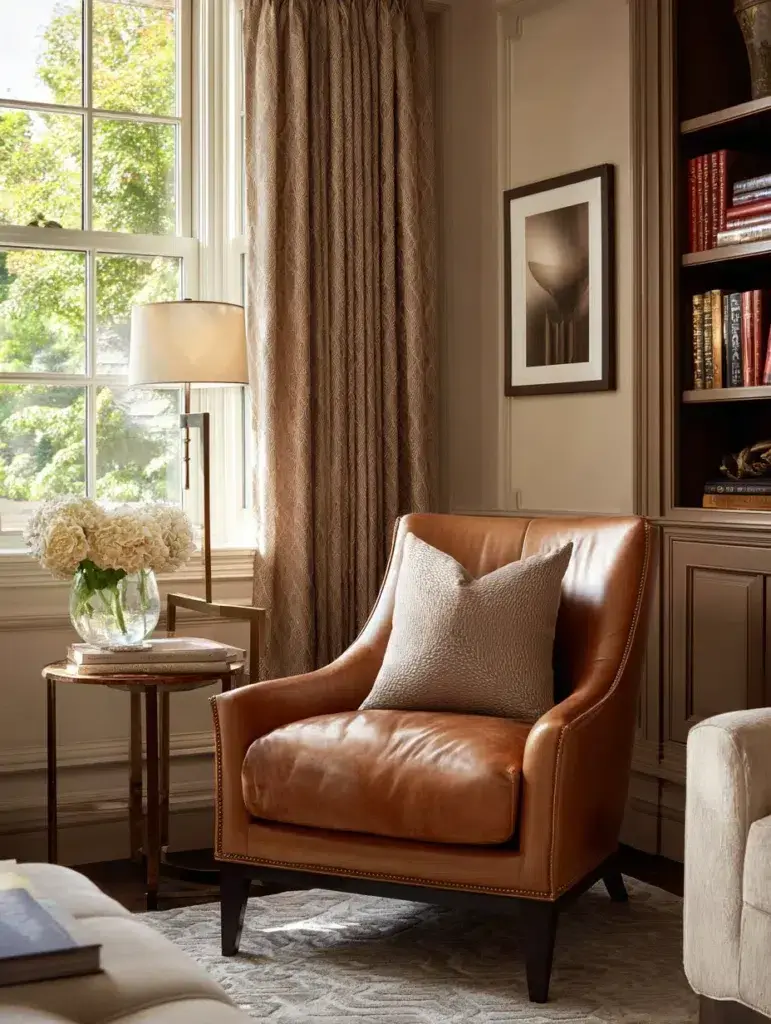
A camel leather chair sits beautifully between deep brown and cream. It introduces another brown tone without repeating the exact shade of a darker sofa or coffee table, which gives the room more range.
This is an especially strong move in living rooms that need one standout piece without relying on bright color. A leather chair also brings practical durability and tends to age well when used daily.
Place it near a floor lamp, by a window, or angled toward the sofa to create a conversation area. A small side table beside it is usually enough to turn it into a useful reading corner.
10. Layer Throw Pillows in Brown and Cream Patterns
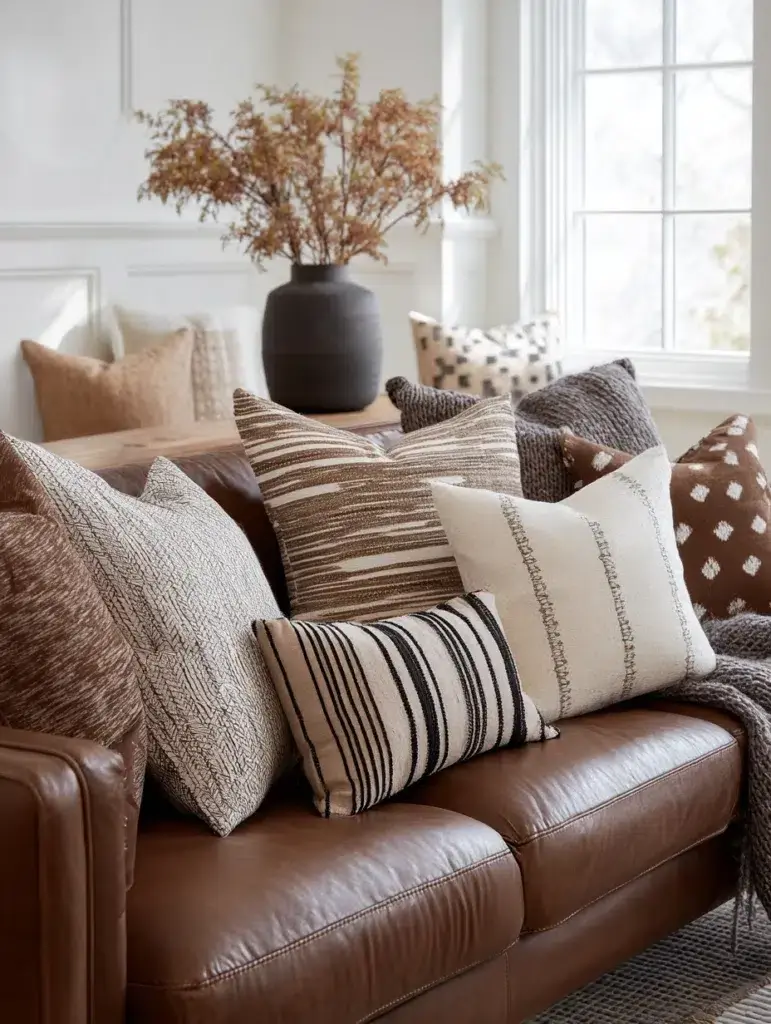
Throw pillows are one of the easiest ways to make this palette feel styled rather than basic. The trick is not matching everything perfectly. Mix solids with stripes, checks, subtle prints, or woven patterns in the same color family.
Use different scales so the arrangement feels intentional. One larger pattern, one smaller print, and one or two solids usually looks more balanced than several competing patterns at the same intensity.
Texture helps here too. Linen, velvet, wool, and boucle all bring something different to the sofa without changing the palette.
11. Install Floating Shelves in a Rich Walnut Finish

Dark floating shelves bring horizontal structure to a wall and add storage without the visual bulk of a full bookcase. Walnut or espresso finishes are especially effective in cream rooms because they create contrast while still feeling warm.
These shelves work best when they hold a mix of practical and decorative items. Books, a small plant, a ceramic piece, and one personal object usually feel enough. Overloading them can make the room feel busy very quickly.
Use them where you want function with a cleaner footprint, especially in smaller living rooms.
12. Introduce Cream Boucle for a More Tactile Look
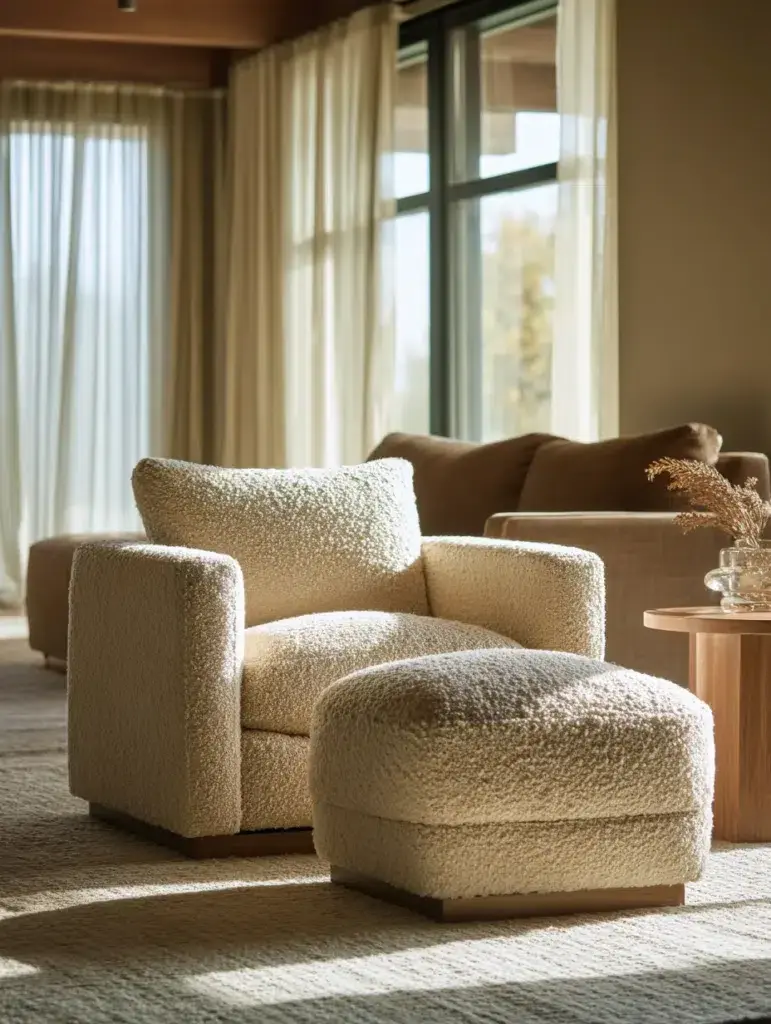
Boucle brings a soft, nubby texture that instantly makes a brown and cream living room feel more current. It is especially effective on ottomans, accent chairs, benches, or even a few smaller cushions.
Because boucle is visually substantial, it can stand in for pattern in a room that is intentionally quiet. That makes it useful if you want interest without introducing bold prints or extra colors.
It also pairs well with leather, wood, and linen, which are already natural companions to this palette.
13. Use Brown Woven Baskets as Functional Texture

Storage always looks better when it contributes to the room instead of interrupting it. Woven baskets in warm brown tones bring useful texture while hiding blankets, toys, magazines, or extra cushions.
They work especially well beside a sofa, beneath a console, or on the lower shelf of a coffee table. In a brown and cream room, they help bridge the gap between darker wood and lighter upholstery.
Choose baskets with enough structure to hold their shape. Soft-sided options can slump over time and make the room look less tidy than intended.
14. Add a Cream Textile Wall Hanging for Soft Contrast
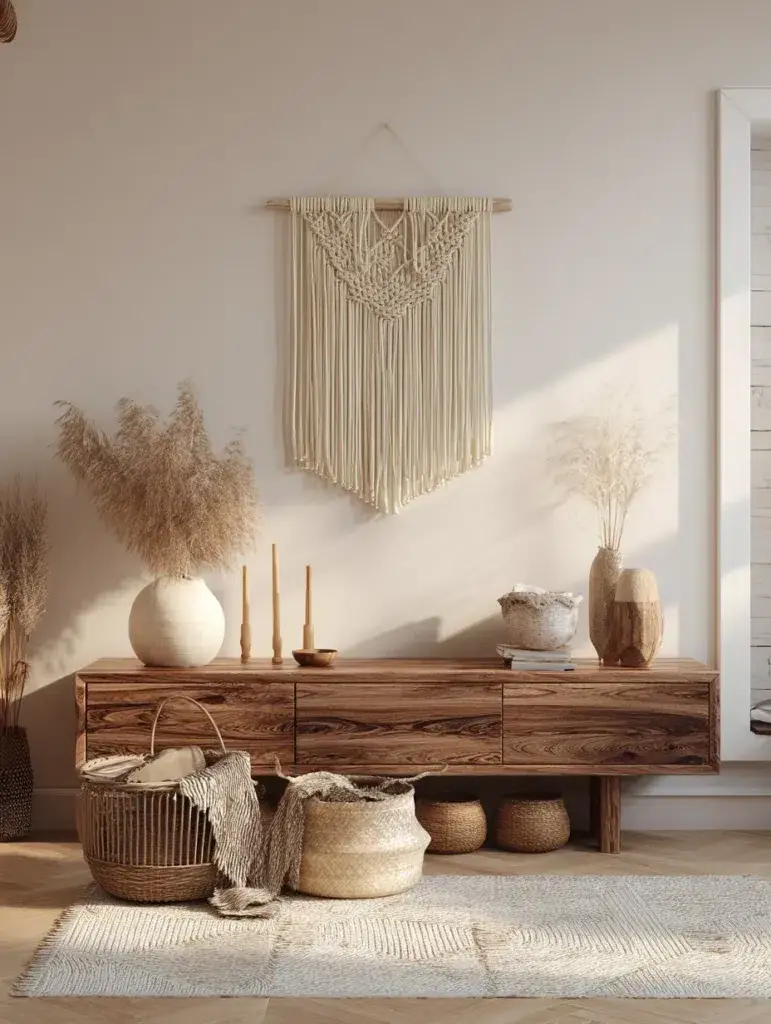
A cream wall hanging introduces softness where framed art can sometimes feel too rigid. In a room with darker furniture, it also helps balance the visual weight higher up on the wall.
This idea works best when the rest of the room is fairly edited. Textile art already brings plenty of texture, so it does not need to compete with overly busy wallpaper or lots of surrounding décor.
Choose one that suits the scale of the wall. Too small and it gets lost. Too large and it can overwhelm the furniture beneath it.
15. Choose a Brown Wooden Coffee Table With Simple Lines
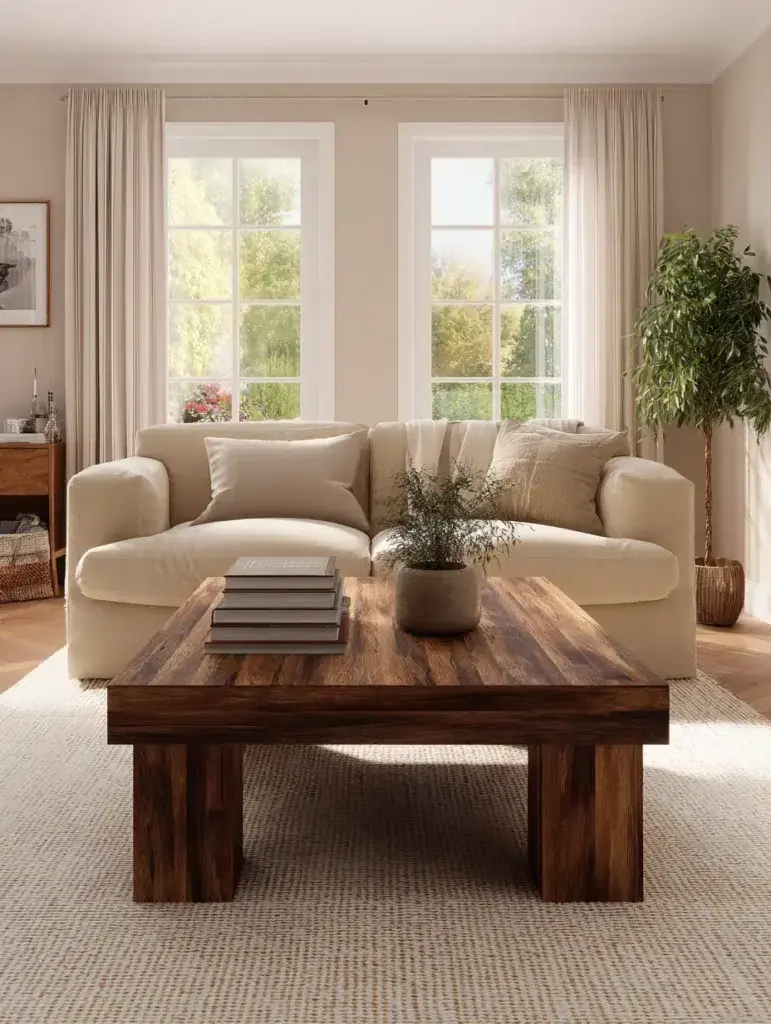
A brown wood coffee table anchors the center of the room and ties many of the other brown elements together. It gives the room a practical surface and often becomes one of the strongest visual pieces in the layout.
Keep the proportions right. The table should feel comfortably reachable from the sofa, and it should not be so large that it interrupts circulation. In tighter living rooms, round or oval shapes can soften the layout and improve movement.
Style it with restraint. A tray, a stack of books, and one natural element are usually enough.
16. Add Cream Knit Poufs for Flexible Seating
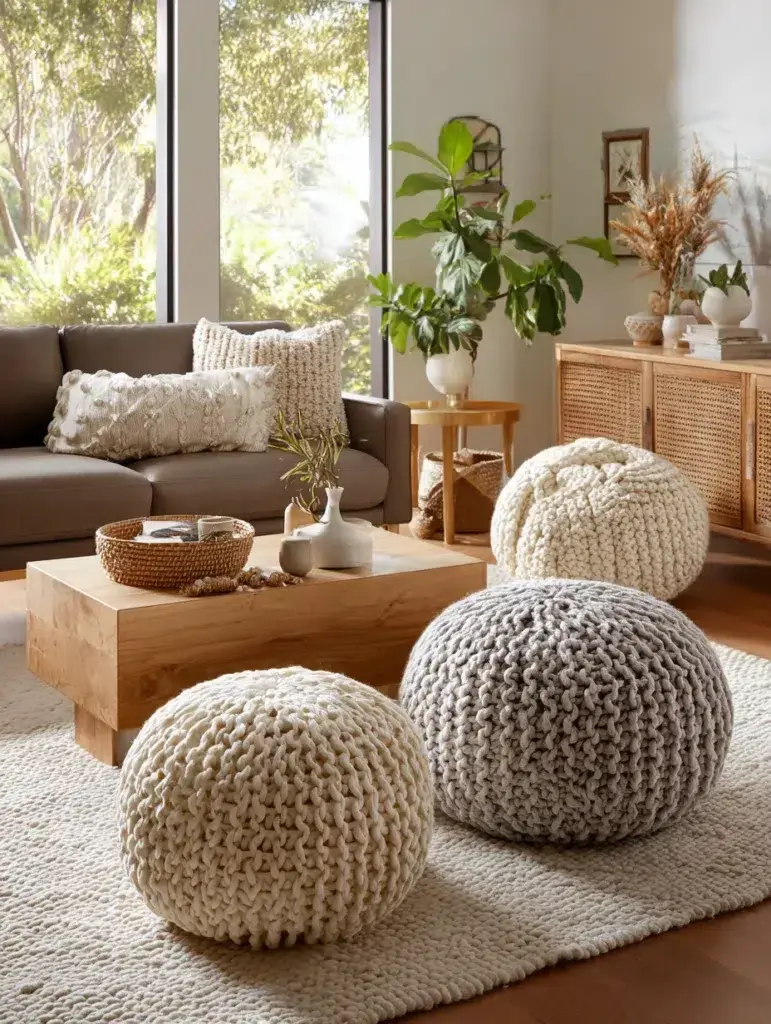
Knit poufs bring softness and an easy, casual look that suits this palette well. They are useful in living rooms where you want flexible seating that can move around easily without introducing another large upholstered piece.
The rounded shape also helps offset the straight lines of sofas, shelves, and coffee tables. In a room with several heavier brown elements, a cream pouf can lighten the composition while still feeling cozy.
They work best when used sparingly. One or two is usually enough to add function and texture without cluttering the room.
17. Add Brown Wood Ceiling Beams or Beam-Look Accents

Ceiling beams bring architectural character and help distribute brown throughout the room instead of keeping all the darker tones low to the ground. This can make the whole space feel more balanced.
They work best in rooms with some ceiling height, where the added visual weight feels intentional rather than heavy. In cream-painted rooms, warm brown beams stand out in a way that feels rustic, tailored, or European depending on the rest of the décor.
If real beams are not an option, well-scaled faux versions can still create that same grounded look.
18. Layer in Cream Faux Fur or Sheepskin for Softness
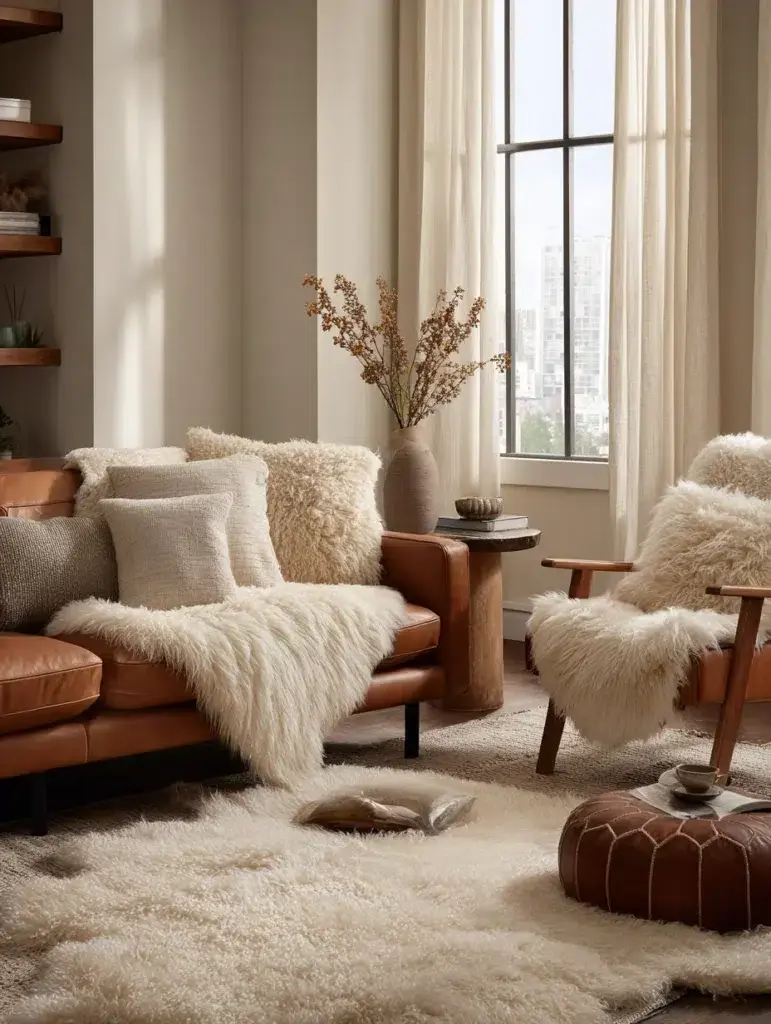
A cream sheepskin-style throw or faux fur accent introduces instant softness. It is one of the easiest ways to warm up a leather chair, dark sofa, or wooden bench without adding another dominant color.
This works especially well in cooler months or in rooms that feel visually crisp and need one element that invites touch. The texture also helps the cream side of the palette feel more substantial.
Use it lightly. One draped accent is usually more effective than several fluffy pieces competing for attention.
19. Style With Brown Leather-Bound or Neutral-Toned Books
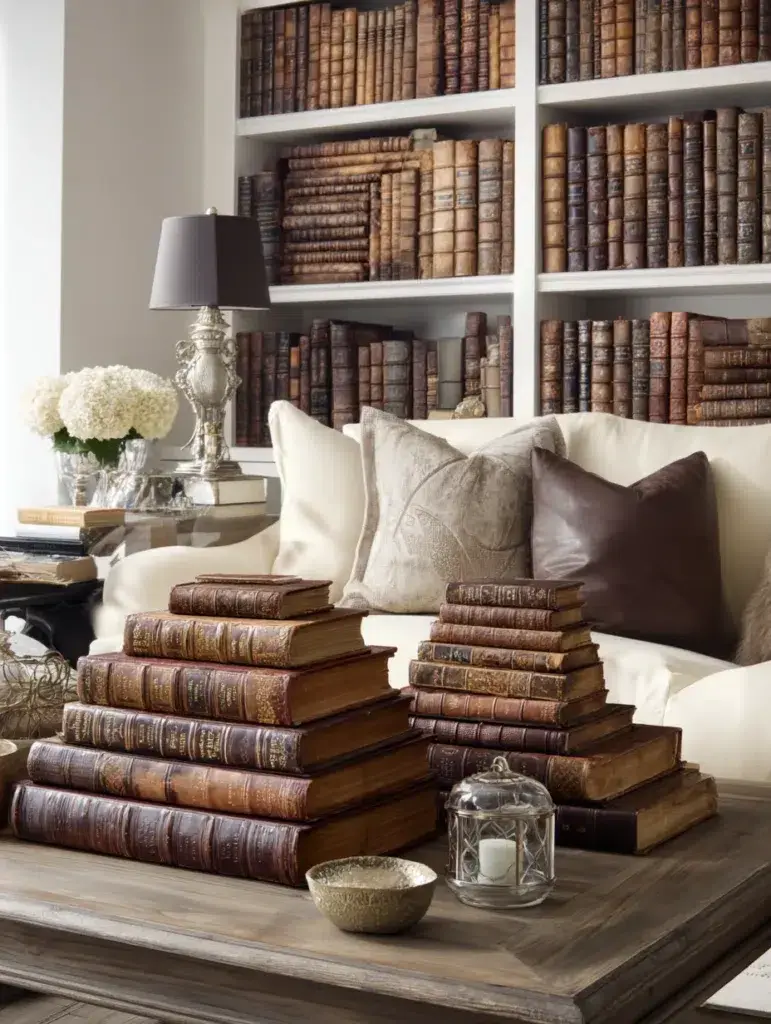
Books add warmth, scale, and a lived-in quality that purely decorative objects often lack. Brown leather-bound or neutral-spined books fit naturally into this palette and help make shelves or coffee tables feel more grounded.
They are especially useful on open shelving where you need some visual weight to balance lighter ceramics or small decorative objects. Stacked horizontally, they can also elevate a candle, bowl, or sculptural piece.
The best styling is believable. Use books that feel collected, not overly staged.
20. Use Cream Pendant or Fabric-Shaded Lighting
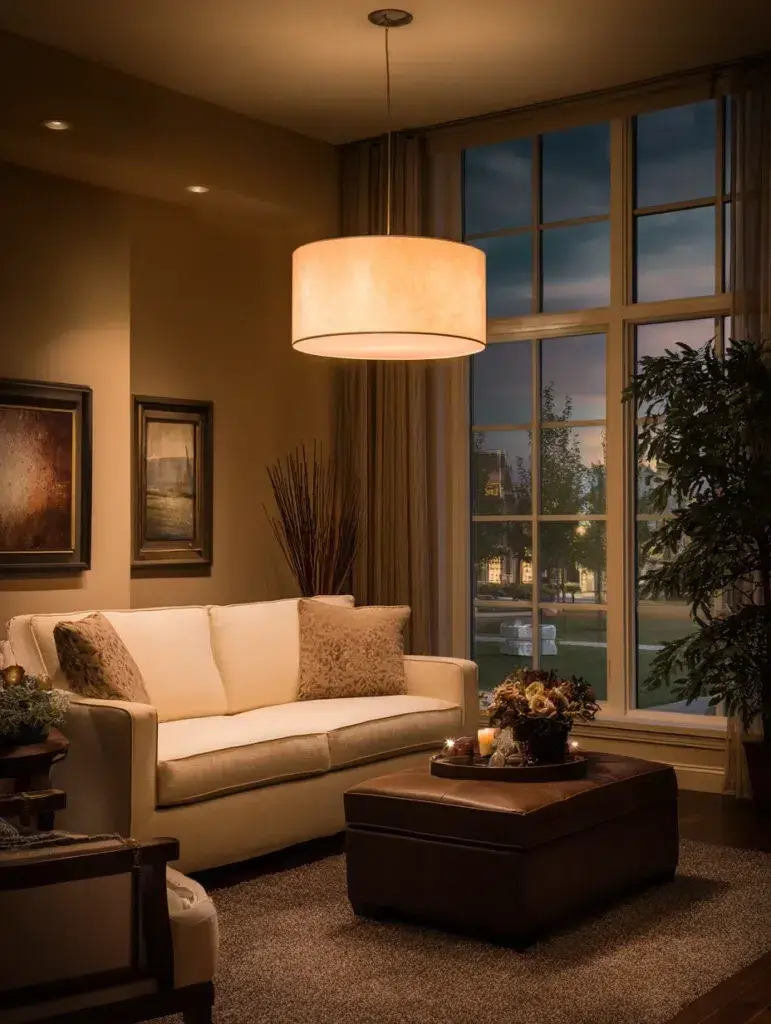
Lighting has a major effect on brown and cream interiors because this palette depends so much on warmth. Cream pendant shades or fabric-covered fixtures diffuse light more gently than exposed bulbs and help the room glow rather than glare.
This type of lighting is especially helpful in the evening, when brown tones can otherwise start to feel too dark. Soft ambient light keeps the room comfortable and flattering.
If the fixture includes brass or bronze hardware, even better. Those warmer metals sit naturally between brown and cream and help the whole palette feel richer.
21. Finish the Room With a Cream Upholstered Ottoman
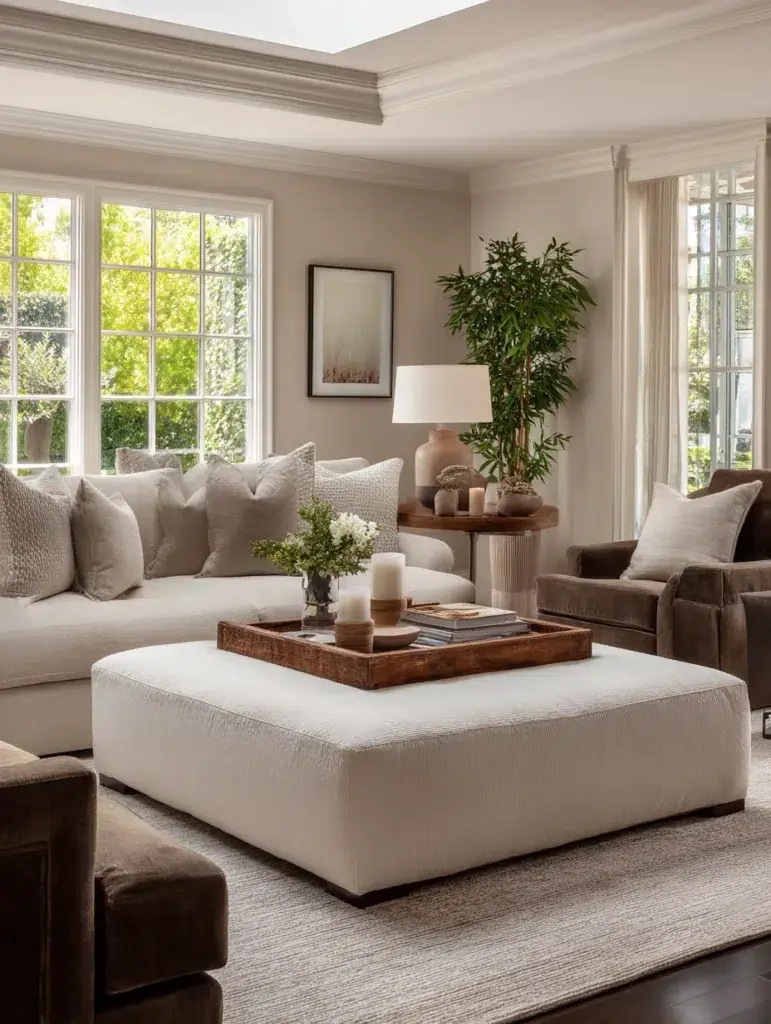
A cream ottoman can brighten the center of the room while adding function. It works as a footrest, extra seating, or a coffee table when topped with a tray, which makes it especially useful in living rooms where every piece needs to earn its place.
It also helps distribute cream lower in the room so the palette feels balanced from top to bottom. That matters when you already have brown floors, tables, or a darker sofa carrying much of the visual weight.
Performance fabrics are worth considering here, especially if the ottoman will be used heavily. They make a lighter piece much easier to live with day to day.
Frequently Asked Questions
How do I keep a brown and cream living room from looking too dark?
Use cream on larger light-reflecting surfaces such as curtains, rugs, and upholstery, then bring brown in through wood, leather, baskets, and smaller furniture pieces. Good lighting also matters, especially warm ambient lighting in the evening.
What accent colors work with brown and cream?
Muted green, soft black, terracotta, brass, dusty blue, and even small touches of charcoal can work well. The best accents are usually earthy or slightly subdued so they do not overpower the warmth of the base palette.
Is brown and cream a modern color scheme?
Yes, it can be. The palette itself is timeless, and the final look depends on the shapes and materials you choose. Clean lines, boucle, simple lighting, and edited styling make it feel modern. Traditional wood furniture and classic prints can make it feel more classic.
What wood tones work best in a brown and cream living room?
Walnut, medium oak, chestnut, and warm espresso tones usually work best. The key is keeping the undertones compatible so the woods look layered rather than mismatched.
Can I mix leather, linen, and boucle in the same room?
Absolutely. In fact, that mix often makes brown and cream rooms feel more complete. Leather adds depth, linen brings softness, and boucle adds tactile interest. Together, they keep a neutral palette from feeling flat.
Final Thoughts
A brown and cream living room works because it feels familiar in the best way: warm, grounded, and easy to live with. The most beautiful versions are rarely overdone. They rely on contrast, natural texture, and a few carefully chosen pieces that make the room feel layered without feeling crowded.
Written by the Zeeshe Home Editorial Team, a blog focused on practical home décor ideas and inspiration.


