
A well-planted shrub border can do a lot of heavy lifting in a garden. It softens edges, hides awkward foundations, adds structure through the seasons, and makes the whole yard feel more finished. The challenge is choosing shrubs that look good without turning into a constant cycle of pruning, watering, and replacing underperforming plants.
The easiest borders usually rely on plants that naturally hold their shape, tolerate ordinary soil, and suit the light and moisture conditions you already have. That matters more than chasing the most dramatic bloom. A low-maintenance border is not just about fewer chores. It is about planting once, then letting the garden settle into a rhythm that feels manageable.

These shrub border ideas are visually appealing, practical, and easier to live with long-term, especially if you want a garden that stays tidy without demanding every weekend.
1. Boxwood for Clean, Formal Edges
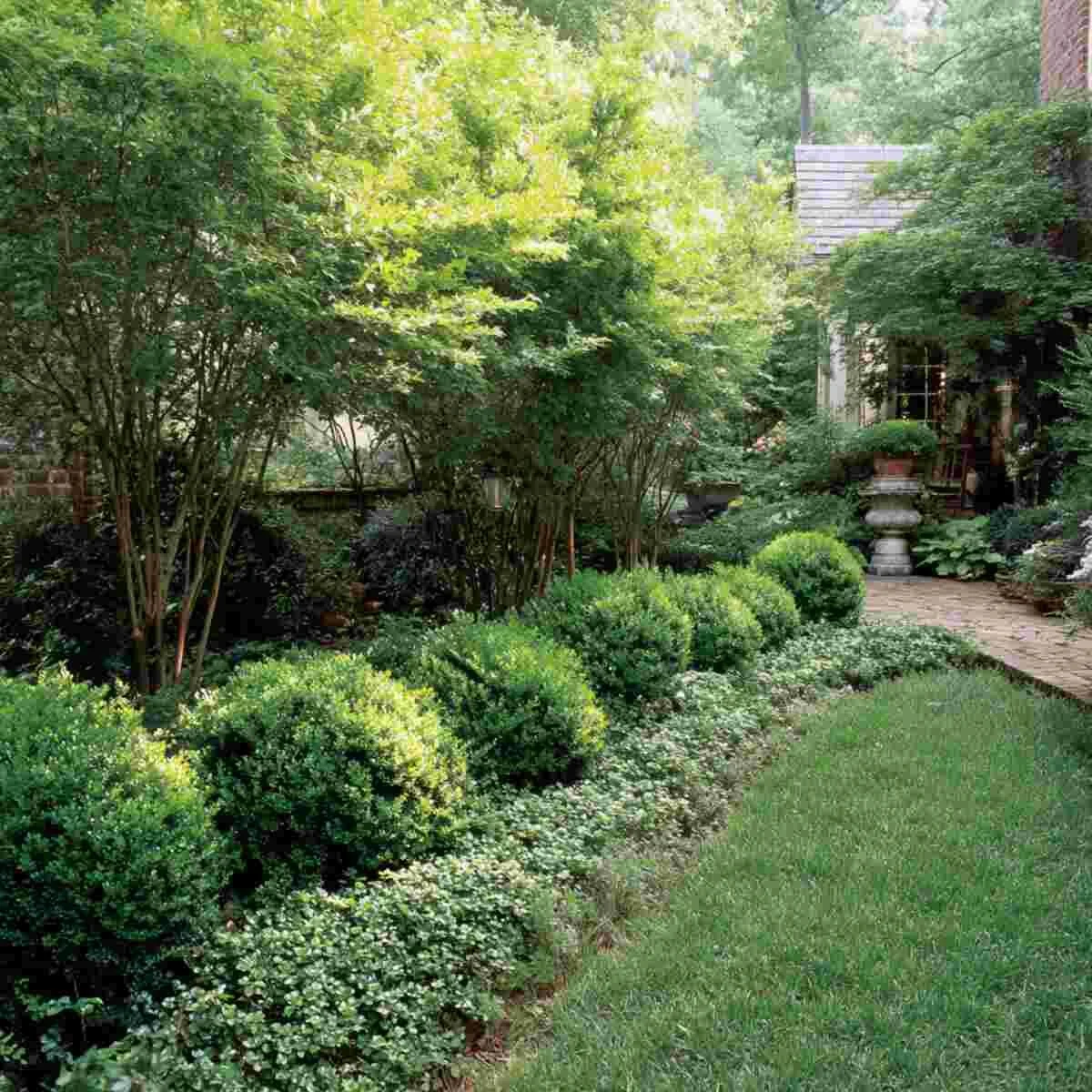
Boxwood is a classic choice when you want a border to look orderly in every season. Its dense evergreen growth creates a strong outline along paths, patios, and front garden beds, which is why it appears so often in traditional landscapes.
It also suits lower-maintenance gardens because it grows slowly compared with many hedge plants. That means less shaping overall, especially if you choose naturally compact varieties instead of faster-growing types.
- Best for: Formal borders, entry gardens, and clipped edging
- Light: Full sun to part shade
- Maintenance note: Trim lightly rather than shearing hard and often
2. Lavender for a Fragrant, Drought-Friendly Border
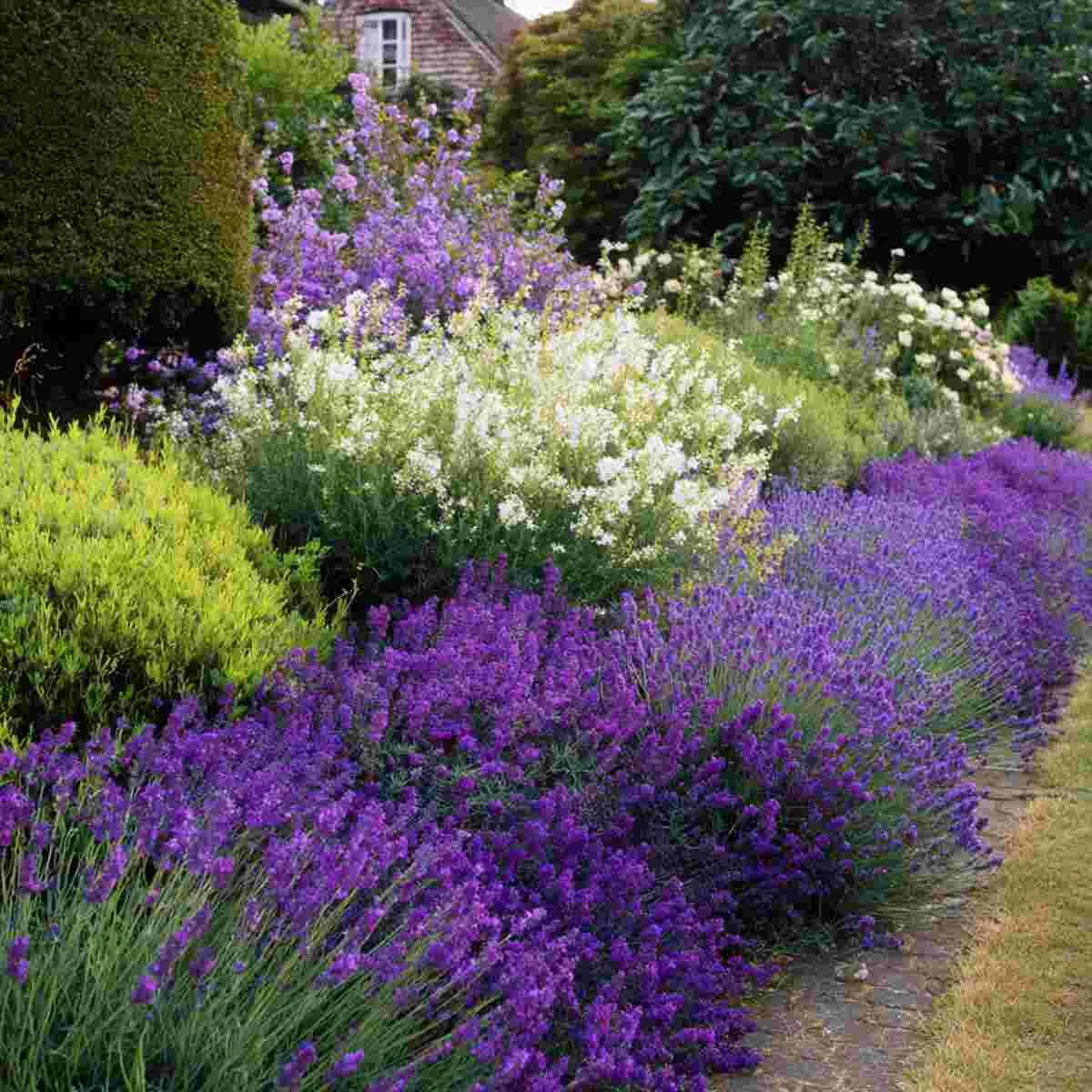
Lavender gives a border color, movement, and scent without asking for rich soil or frequent watering. In sunny spots with good drainage, it often becomes one of the easiest plants in the garden.
It works especially well along walkways, beside gravel paths, or in front of warm-toned stone where the silver foliage and purple flowers can really stand out. Once established, it is far happier in lean soil than in a heavily fed border.
Do not crowd it. Good airflow is one of the main reasons lavender stays healthier and more manageable over time.
3. Hydrangea for Big Summer Presence With Minimal Fuss
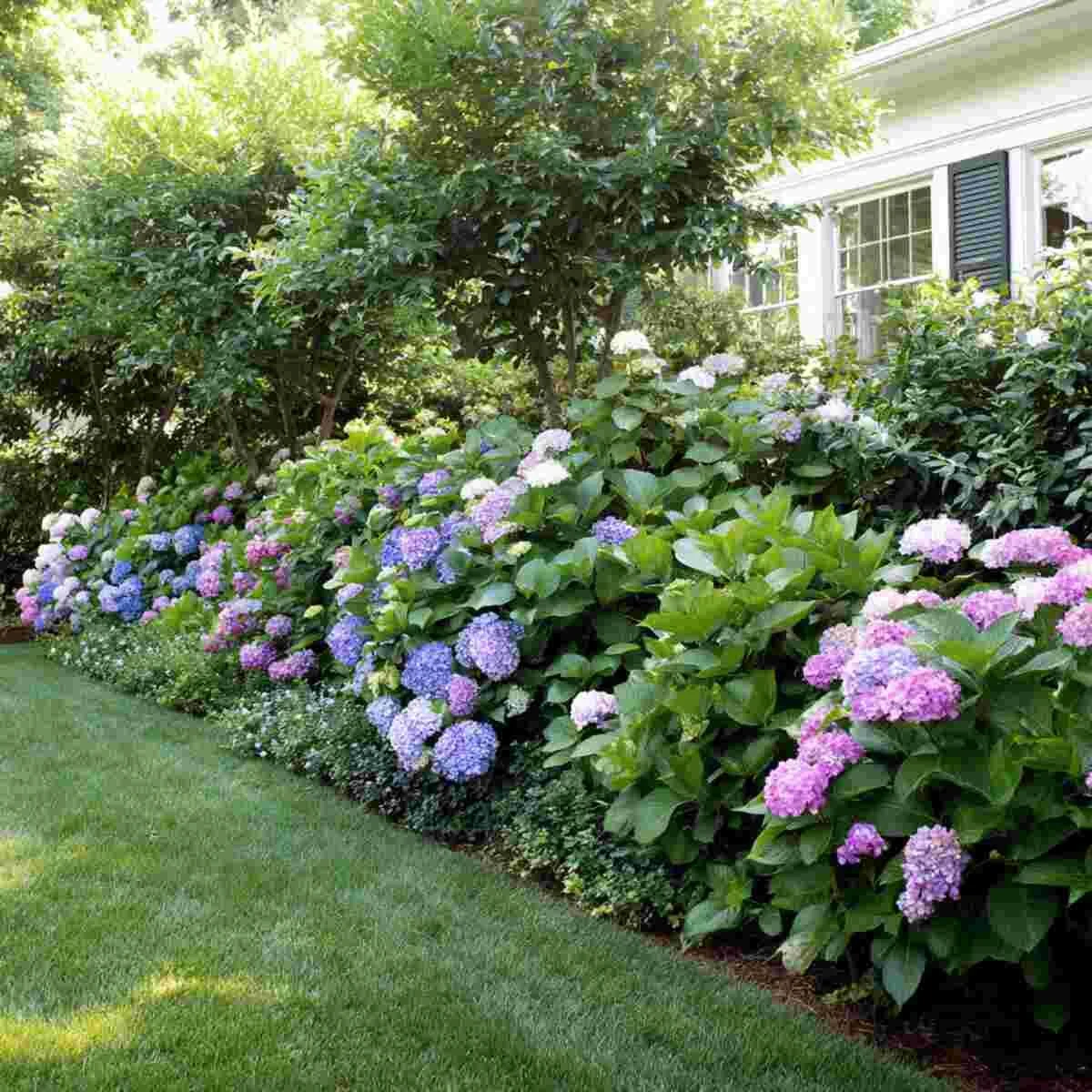
Hydrangeas are useful when you want a shrub border to feel lush and generous without planting dozens of smaller plants. Their large flower heads fill space quickly and carry the border from summer into early fall.
They are not as drought-tolerant as some of the shrubs on this list, but they earn their place by offering a lot of impact for relatively modest care. Once established, many varieties need little more than seasonal cleanup and occasional pruning, depending on the type.
For easier upkeep, choose varieties suited to your climate and pay attention to mature size so the shrubs do not outgrow the space.
4. Dwarf Alberta Spruce for Compact Evergreen Structure
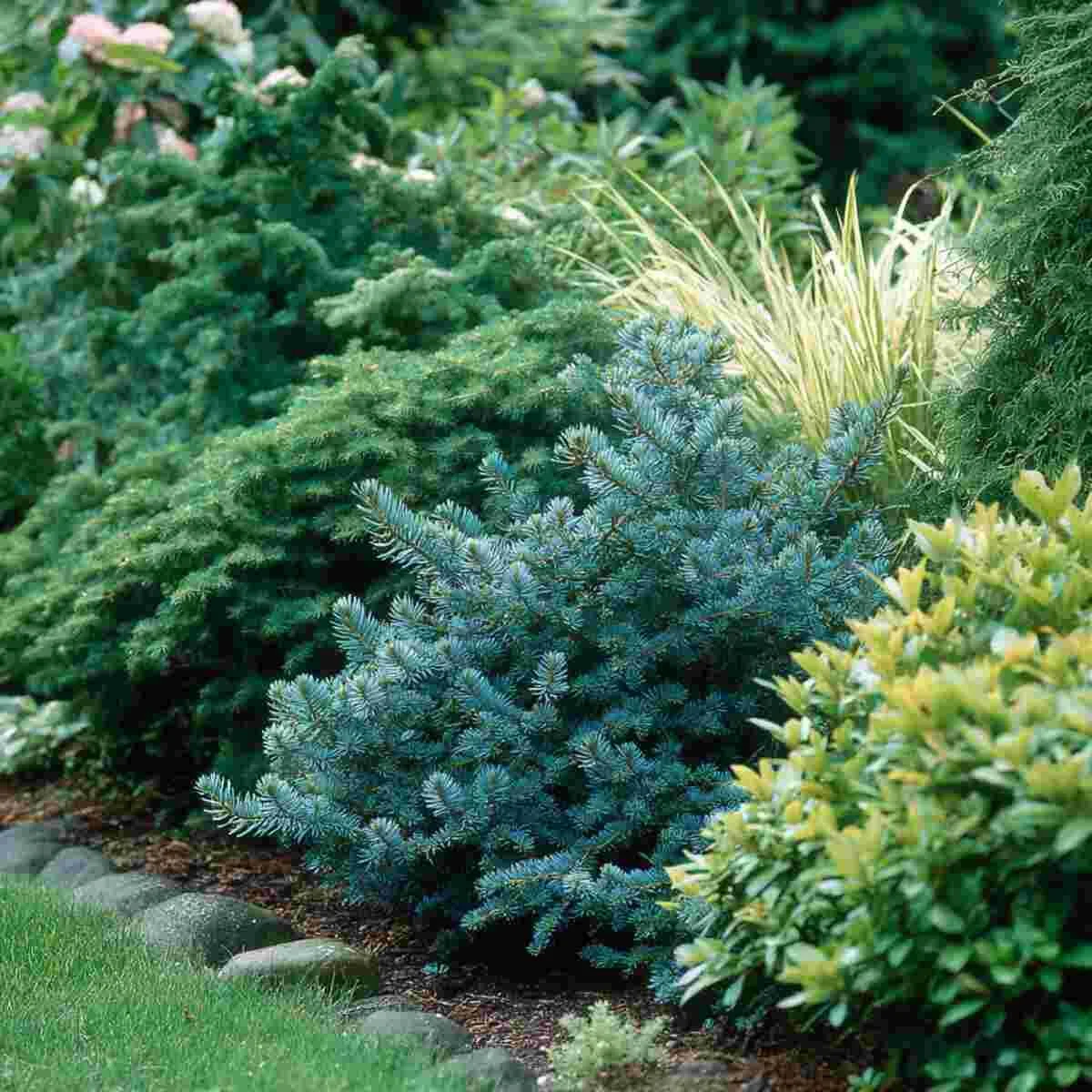
If your border needs year-round definition, Dwarf Alberta Spruce brings that neat, conical form without much intervention. It is especially useful in formal or symmetrical layouts where you want the planting to stay compact and composed.
Because it grows slowly, it holds its shape naturally for a long time. That makes it a practical option for gardeners who like a tidy look but do not want to trim constantly.
It looks best when spaced properly and not packed too tightly into mixed borders. Give it enough room to keep its silhouette clear.
5. Spirea for Reliable Color and Easy Seasonal Pruning
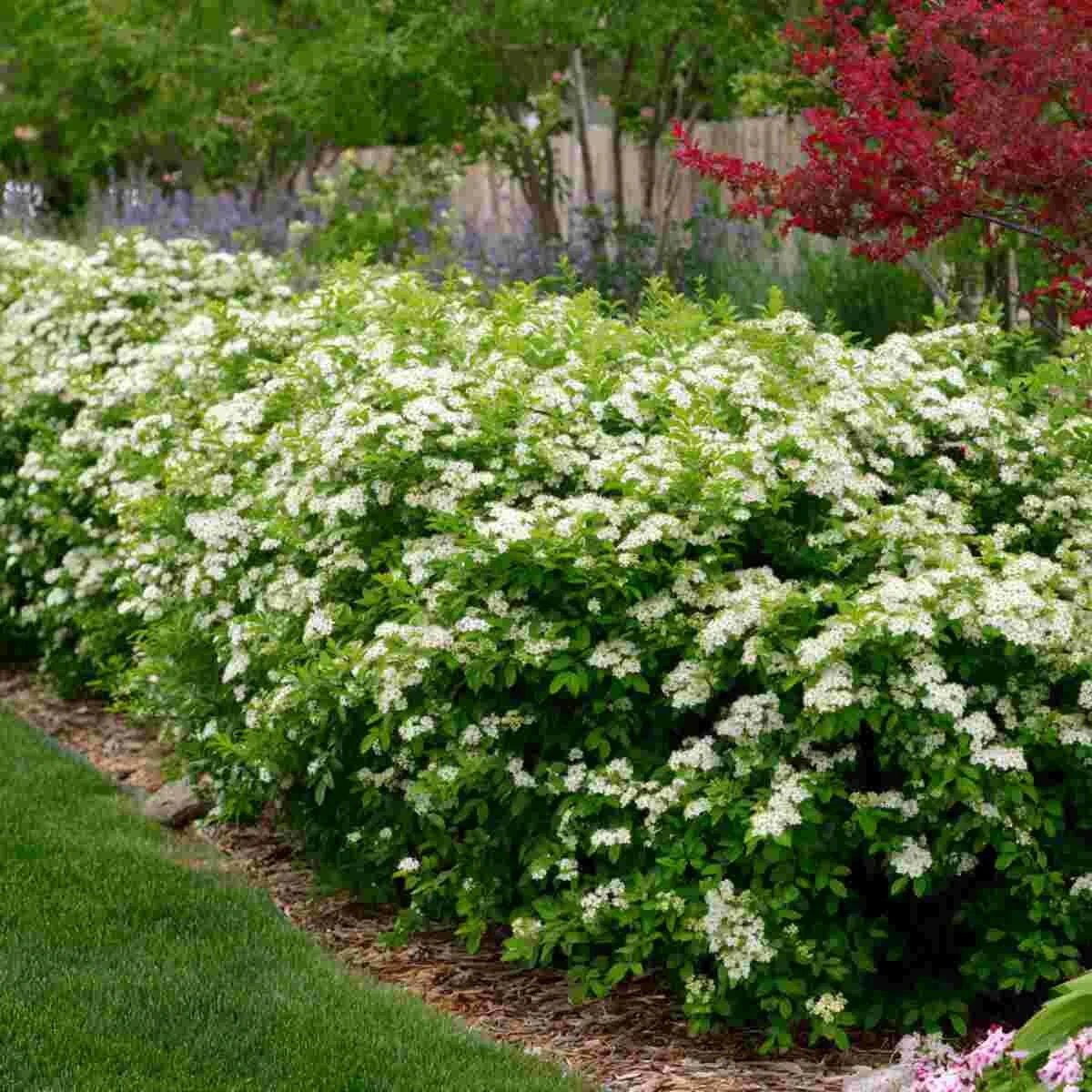
Spirea is one of those shrubs that quietly earns its keep. It flowers generously, adapts well to ordinary conditions, and usually asks for little more than a light trim after blooming or a simple cutback at the right time of year.
In borders, it works well as a filler shrub between evergreens and stronger structural plants. The mounded habit softens harder edges and helps a mixed shrub border look fuller more quickly.
Choose varieties based on mature size, because some stay compact while others spread wider than gardeners expect.
6. Barberry for Foliage Contrast and Tough Conditions
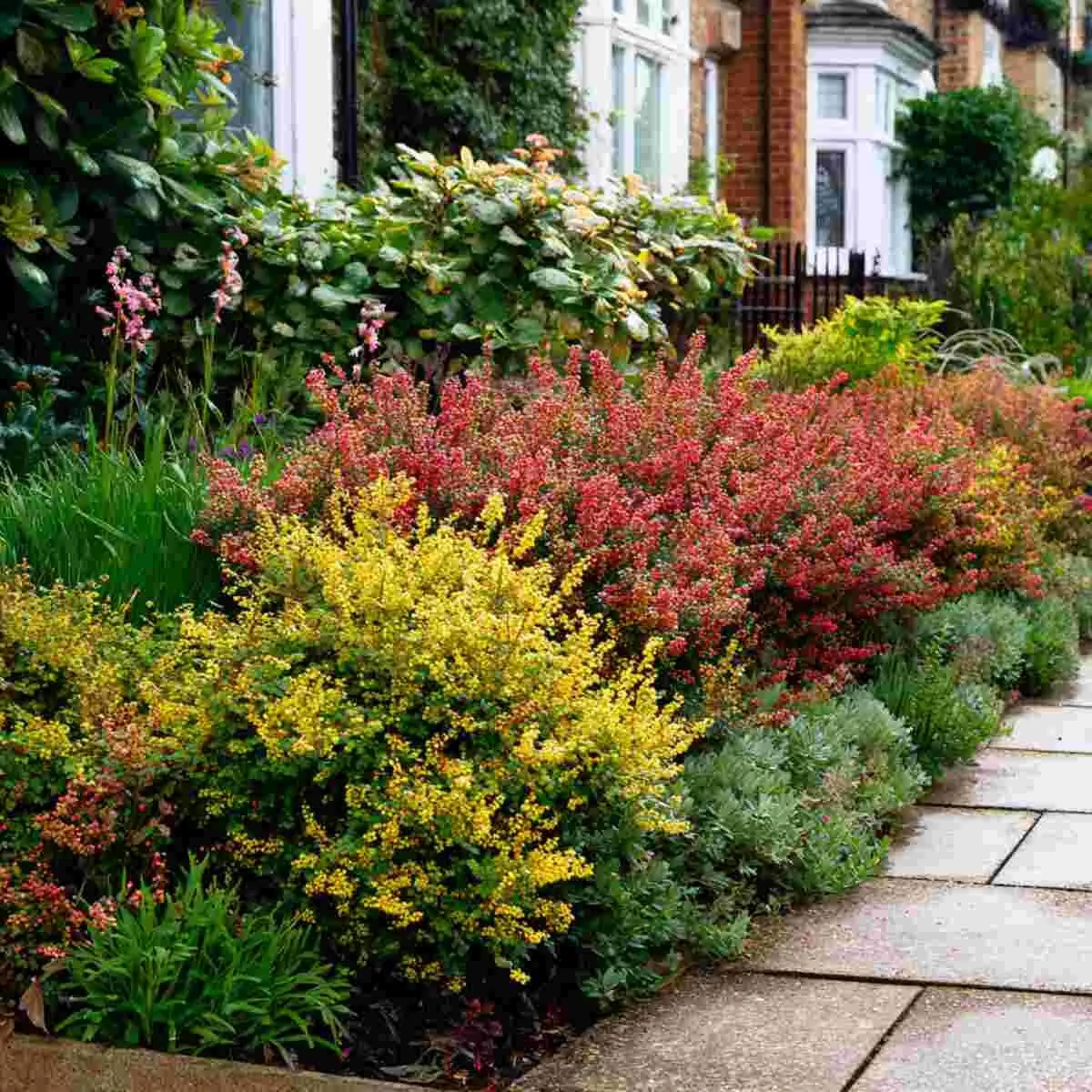
Barberry is valued for resilience. It handles poor soil, dry spells, and strong sun far better than many more delicate shrubs, which makes it useful in tougher border conditions.
The foliage is often the main attraction here, ranging from chartreuse to burgundy depending on variety. That can help break up a border that otherwise leans too green or too uniform.
One practical consideration is its thorny growth. It is best used where you want definition and toughness, but not right beside narrow paths where people brush past it regularly.
7. Ninebark for Multi-Season Interest
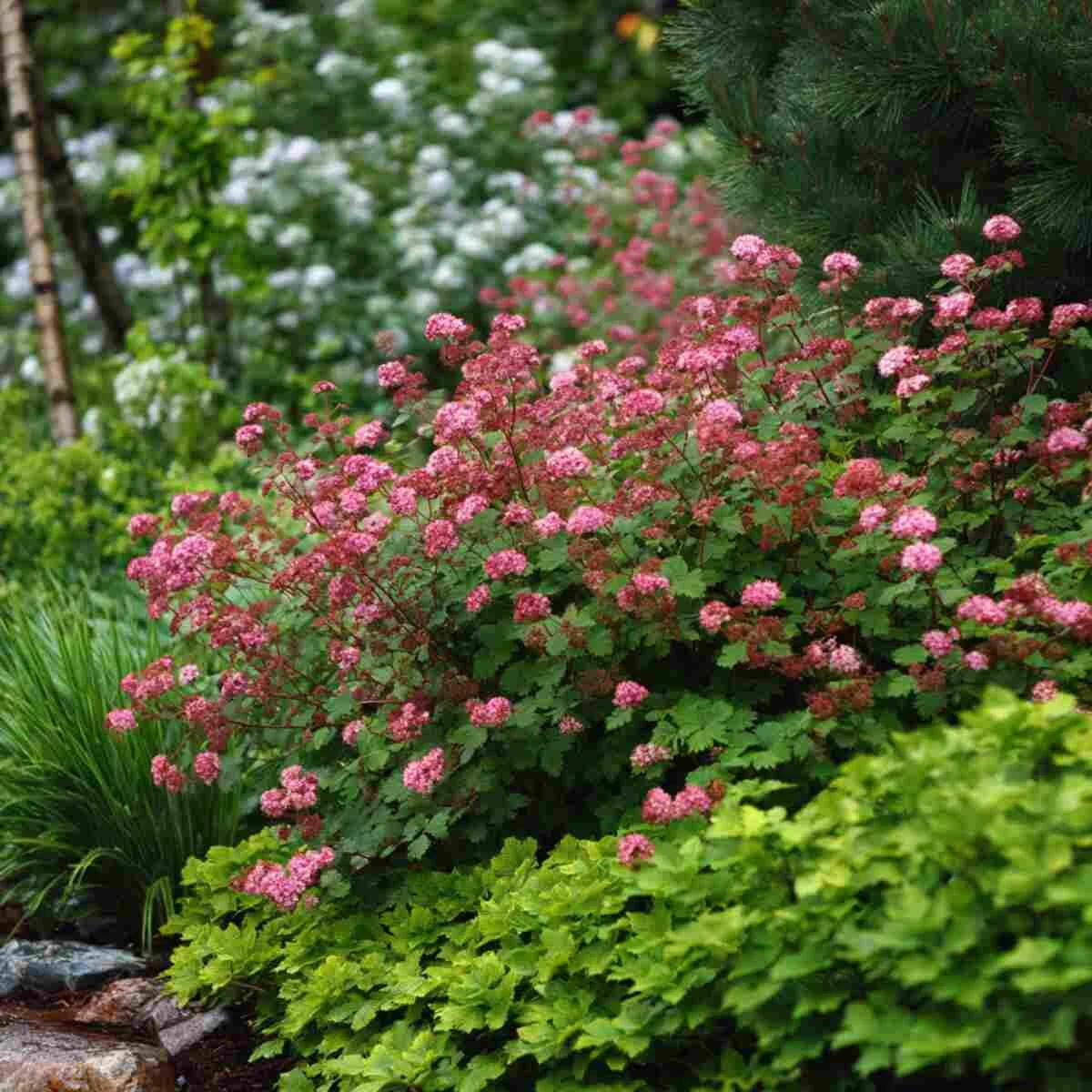
Ninebark offers more than one season of appeal, which is exactly what makes a low-maintenance border feel rewarding. Depending on the variety, you get colored foliage, clusters of flowers, and attractive peeling bark once the leaves drop.
It is also adaptable, tolerating a wide range of conditions once established. That makes it useful in mixed borders where the light or soil is not perfectly consistent throughout.
If it gets larger than you want, selective thinning usually looks better than aggressive shearing. The plant tends to keep a better natural shape that way.
8. Juniper for Tough Evergreen Grounding
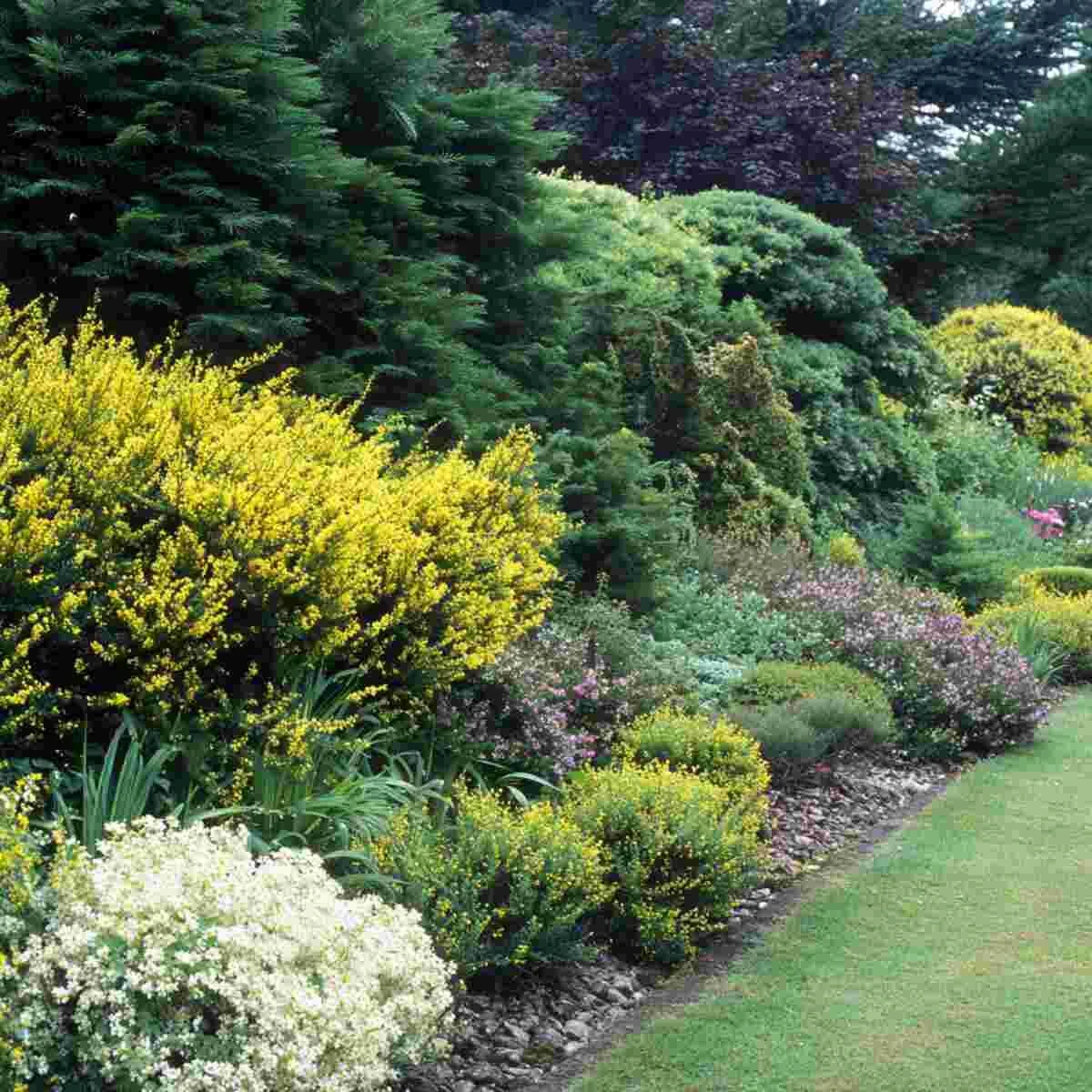
Juniper is one of the hardest-working shrubs for low-effort borders. It stays evergreen, tolerates drought once established, and can handle difficult sites where more delicate plants struggle.
In border design, juniper is especially useful for anchoring sunny areas or sloped spaces that dry out quickly. Upright types add structure, while spreading forms can soften edges and suppress weeds by covering bare soil.
Because the texture is stronger and more needle-like, it often looks best balanced with softer shrubs nearby.
9. Burning Bush for Strong Fall Color
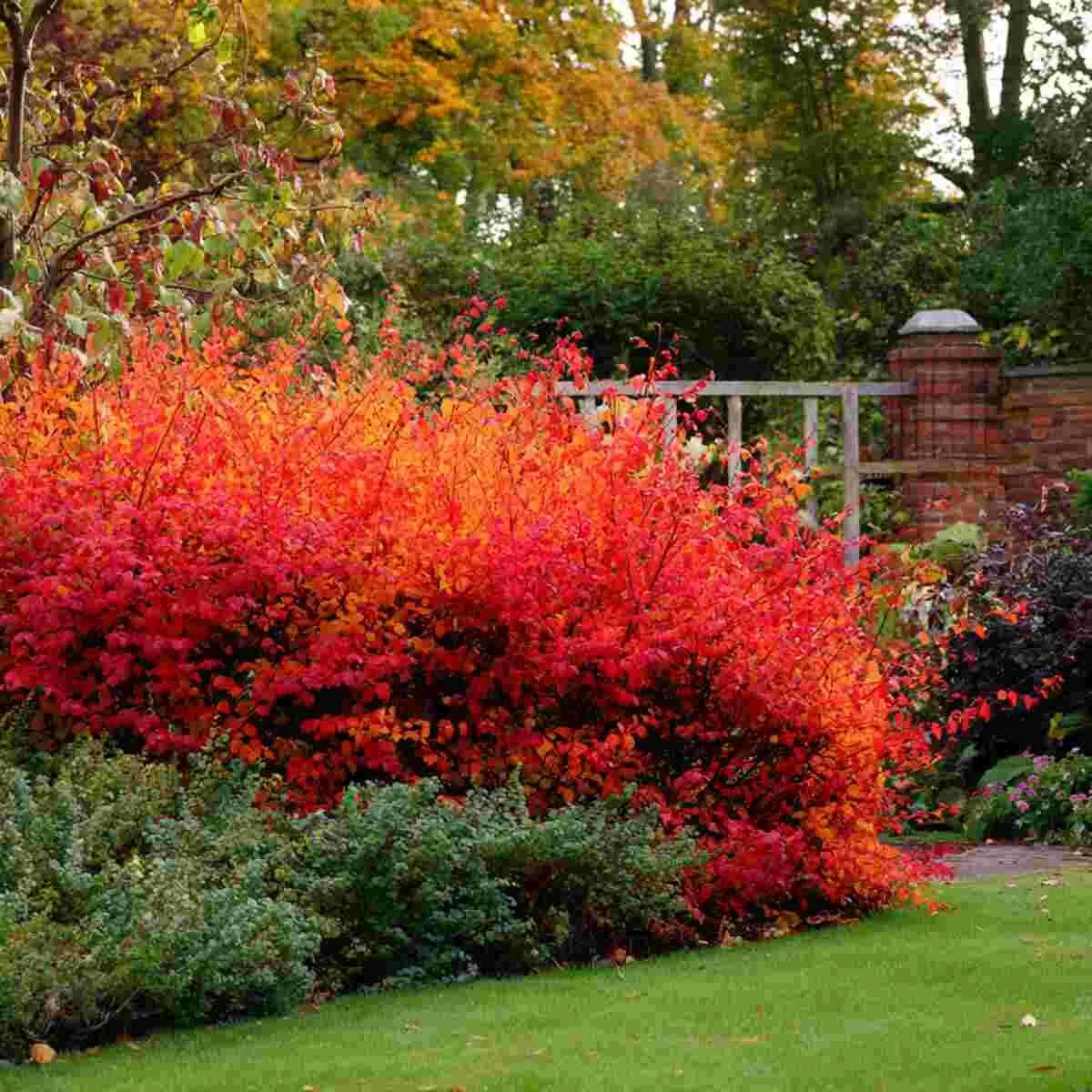
Burning Bush earns attention in autumn, when the foliage shifts to an intense red that can transform an otherwise quiet border. For gardeners who want seasonal drama without adding complicated planting combinations, it is an easy way to build in a highlight.
Through the rest of the year, it stays fairly neat and dependable, which is part of its appeal in lower-maintenance gardens. It does not need elaborate pruning to look presentable.
It is a stronger visual choice, so it often works best mixed with simpler green shrubs rather than several other high-color plants competing alongside it.
10. Weigela for Easy Flowers and a Softer Shape
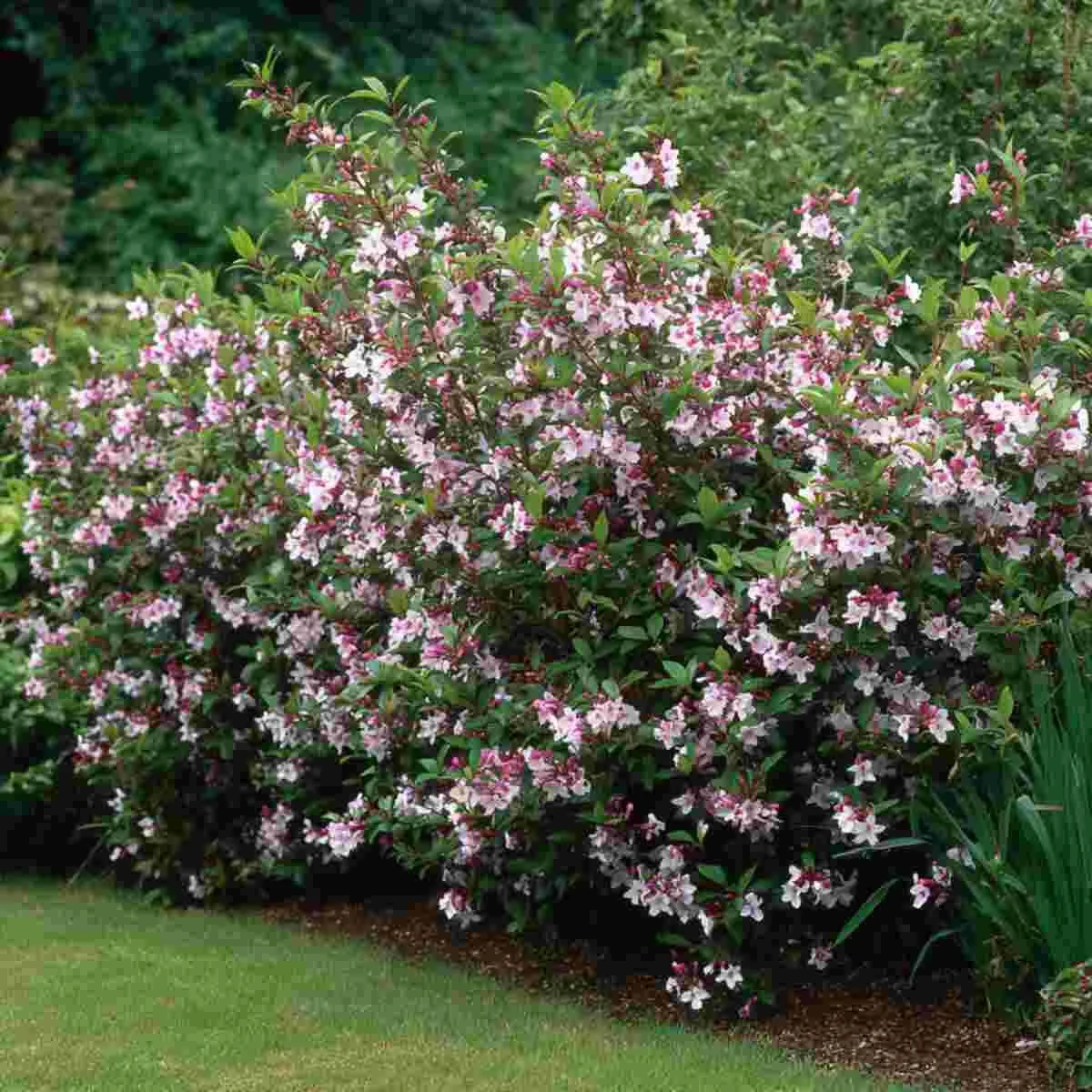
Weigela brings a looser, more relaxed shape to a shrub border, which can be useful if the planting feels too stiff or overly formal. The tubular flowers are attractive to pollinators, and many modern varieties stay more compact than older types.
It generally needs only light maintenance, mostly removing older wood or tidying the plant after flowering. That makes it a good fit for gardeners who still want seasonal bloom without adopting a high-care routine.
Pair it with evergreens or mounded shrubs if you want the border to hold its shape even when weigela is not in flower.
11. Potentilla for Long Bloom in Sunny Borders
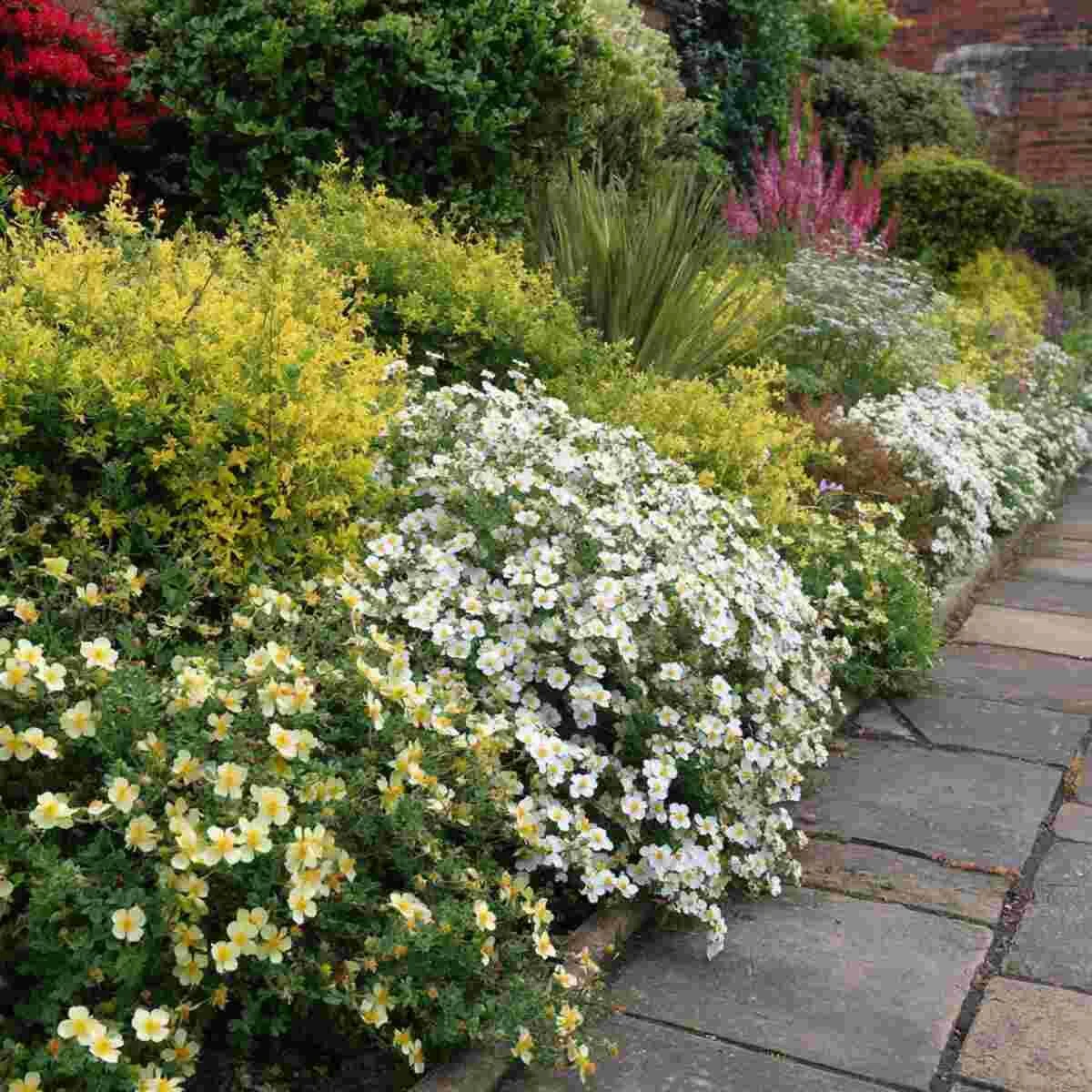
Potentilla is dependable in the kind of hot, bright locations that can make other flowering shrubs struggle. It blooms over a long stretch of the season, often with very little attention once rooted in.
Its compact habit makes it useful near the front of borders, along paths, or in places where you want steady color without a shrub that takes over. Because it is relatively modest in size, it also works well in smaller gardens where every plant needs to stay in bounds.
For low-maintenance design, it is one of the easier ways to keep color in the border without relying on annual flowers.
12. Butterfly Bush for Pollinator-Friendly Height
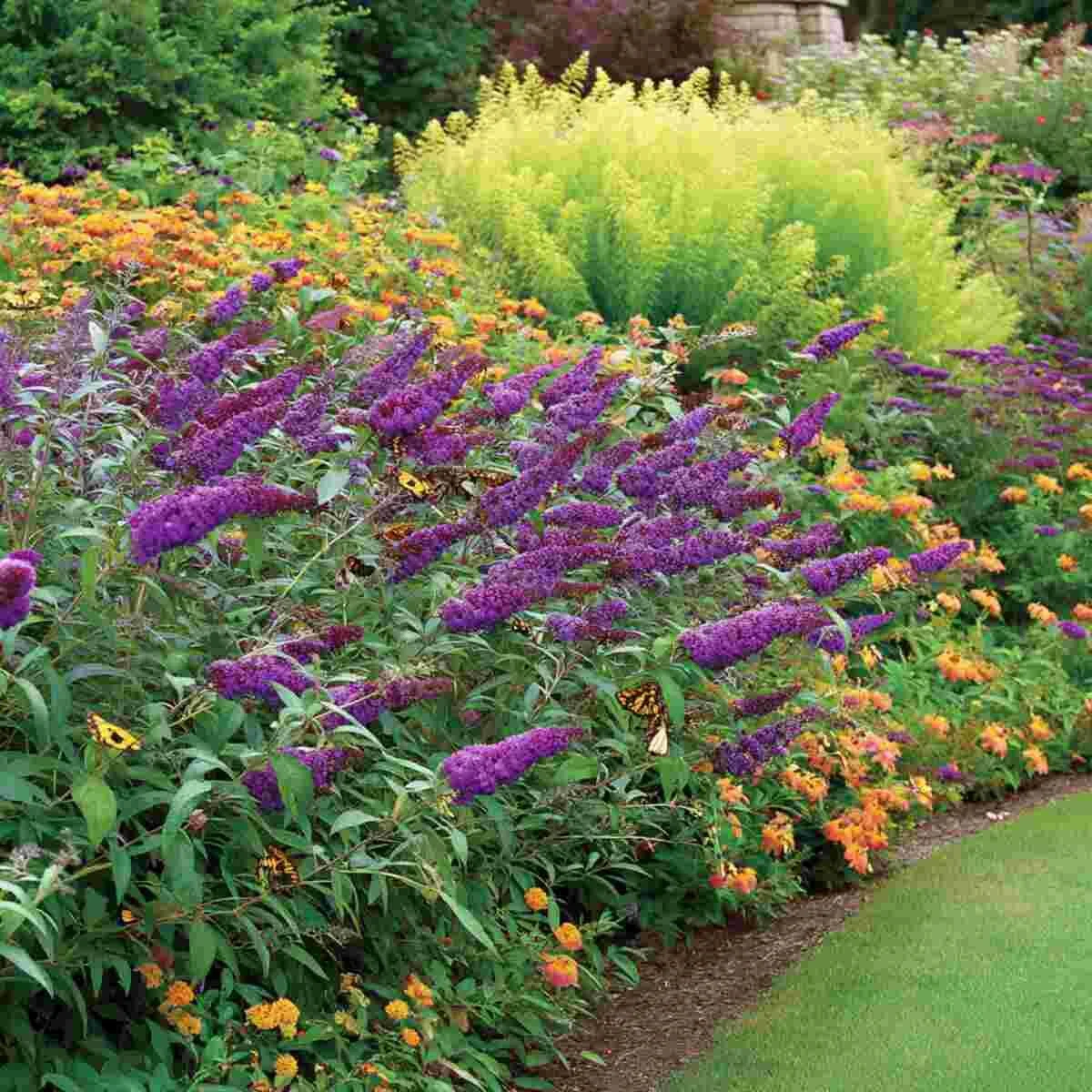
Butterfly Bush brings a taller, looser flowering element to shrub borders and is often chosen for the way it draws butterflies and other pollinators into the garden. In sunny, free-draining spots, it can be vigorous without needing constant attention.
It usually asks for one main pruning session rather than repeated clipping, which keeps upkeep fairly simple. The long flower spikes also make it useful for adding vertical movement to a border that is otherwise too rounded or low.
Leave enough room around it. This is not usually the shrub to wedge into the tightest spaces.
13. Viburnum for a Full, Dependable Border Planting
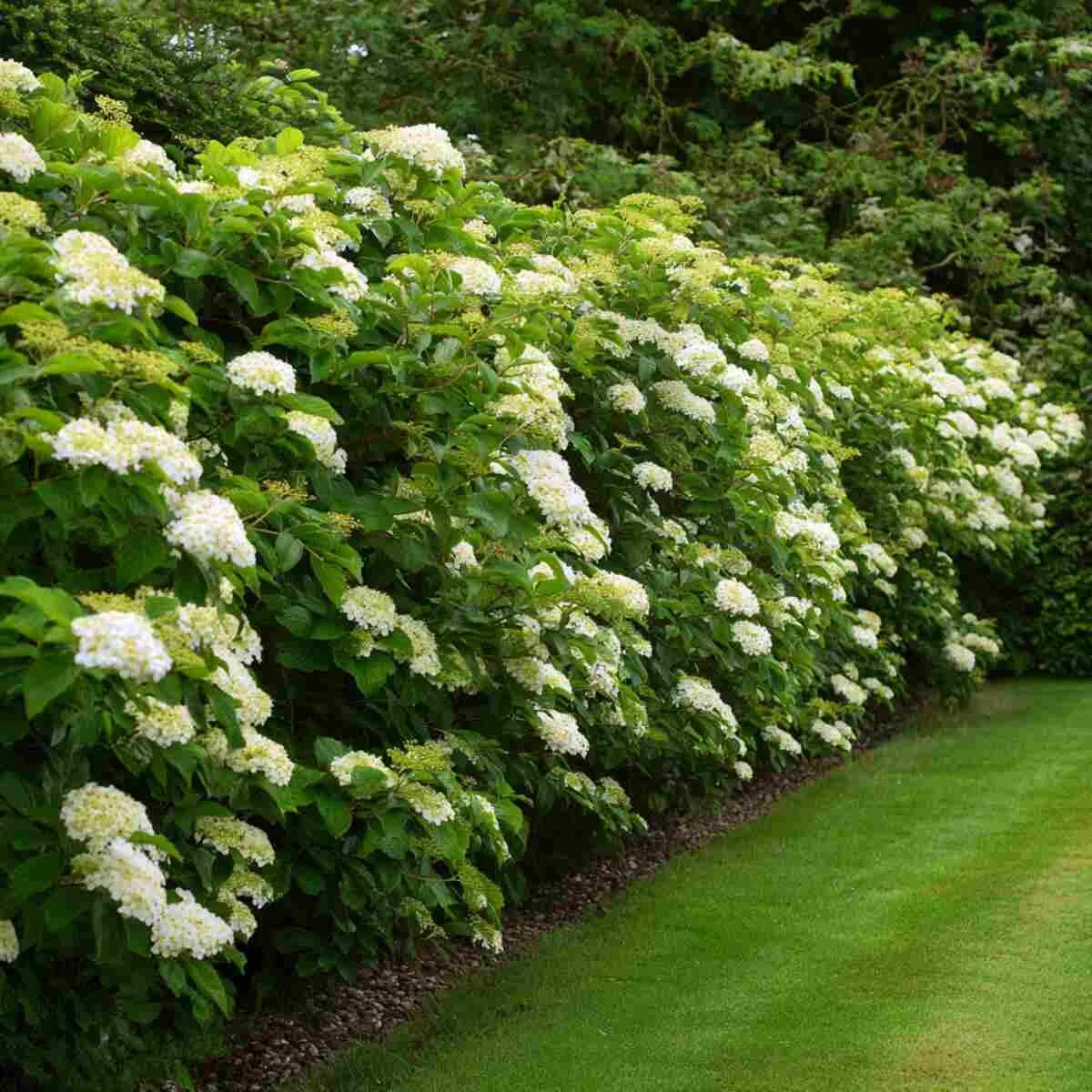
Viburnum is one of the most versatile shrubs for borders because it can offer flowers, berries, fragrance, and a strong leafy presence depending on the variety. It often fills space beautifully, which is useful if you want a border to look mature more quickly.
Many types are accommodating about soil and light, making them easier to work into existing gardens without heavy preparation. Once established, they tend to need only occasional shaping or removal of older stems.
Choose carefully by mature size, because viburnums vary widely and the wrong one can outgrow a smaller border.
14. Japanese Holly for a Neat Evergreen Alternative
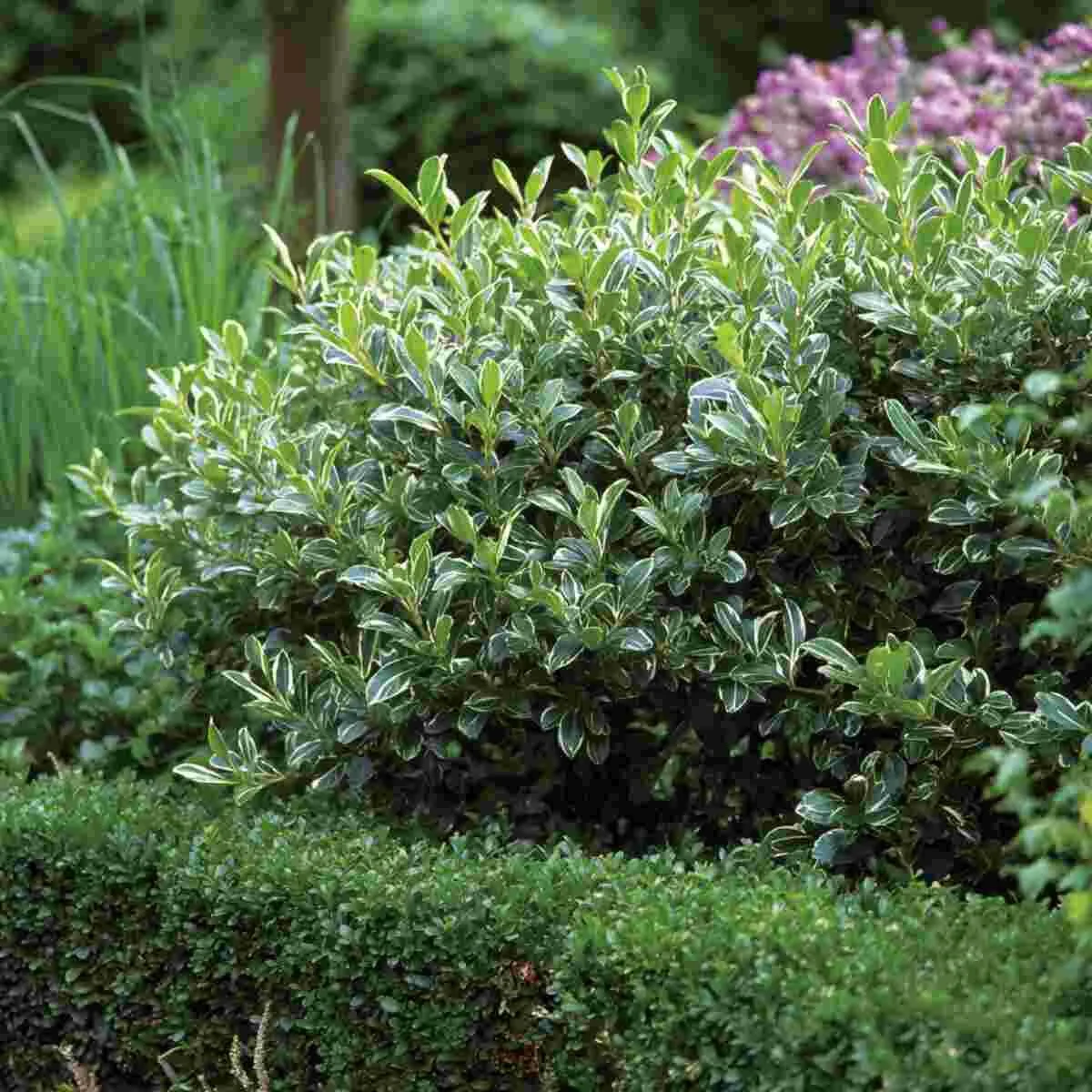
Japanese Holly is useful when you want the clean evergreen look of a clipped border but prefer a softer, smaller-leaved texture. It stays tidy with relatively little intervention and suits both formal and more understated planting schemes.
It is often used where a year-round outline matters, such as front-yard borders, path edges, or foundation beds that need to look settled in every season.
Because the growth is dense and naturally neat, even light shaping can go a long way. You usually do not need to prune it heavily to keep it looking polished.
15. Winterberry for Berries and Winter Interest
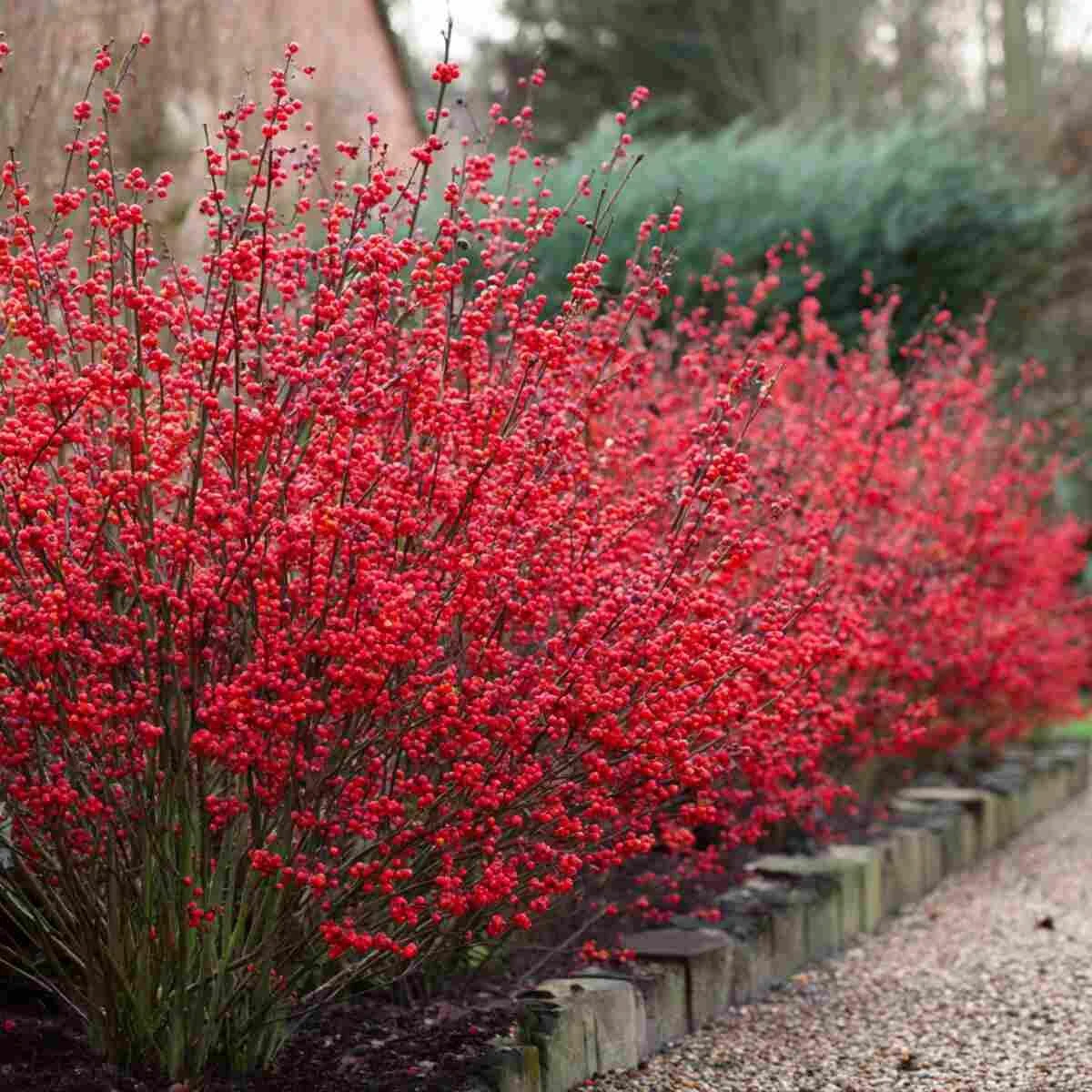
Winterberry earns its place after the growing season, when many borders start to fade. The bright berries hold into the colder months and keep the planting from looking empty once flowers and foliage have passed.
That seasonal interest is especially valuable in mixed borders where you want something worth noticing in late fall and winter. It also pairs well with evergreens, which help the berries stand out more clearly.
Use it where the garden could use a seasonal lift after summer. It is not the loudest plant all year, but it has a very specific moment when it becomes invaluable.
16. Smoke Bush for Bold Foliage and Dramatic Texture
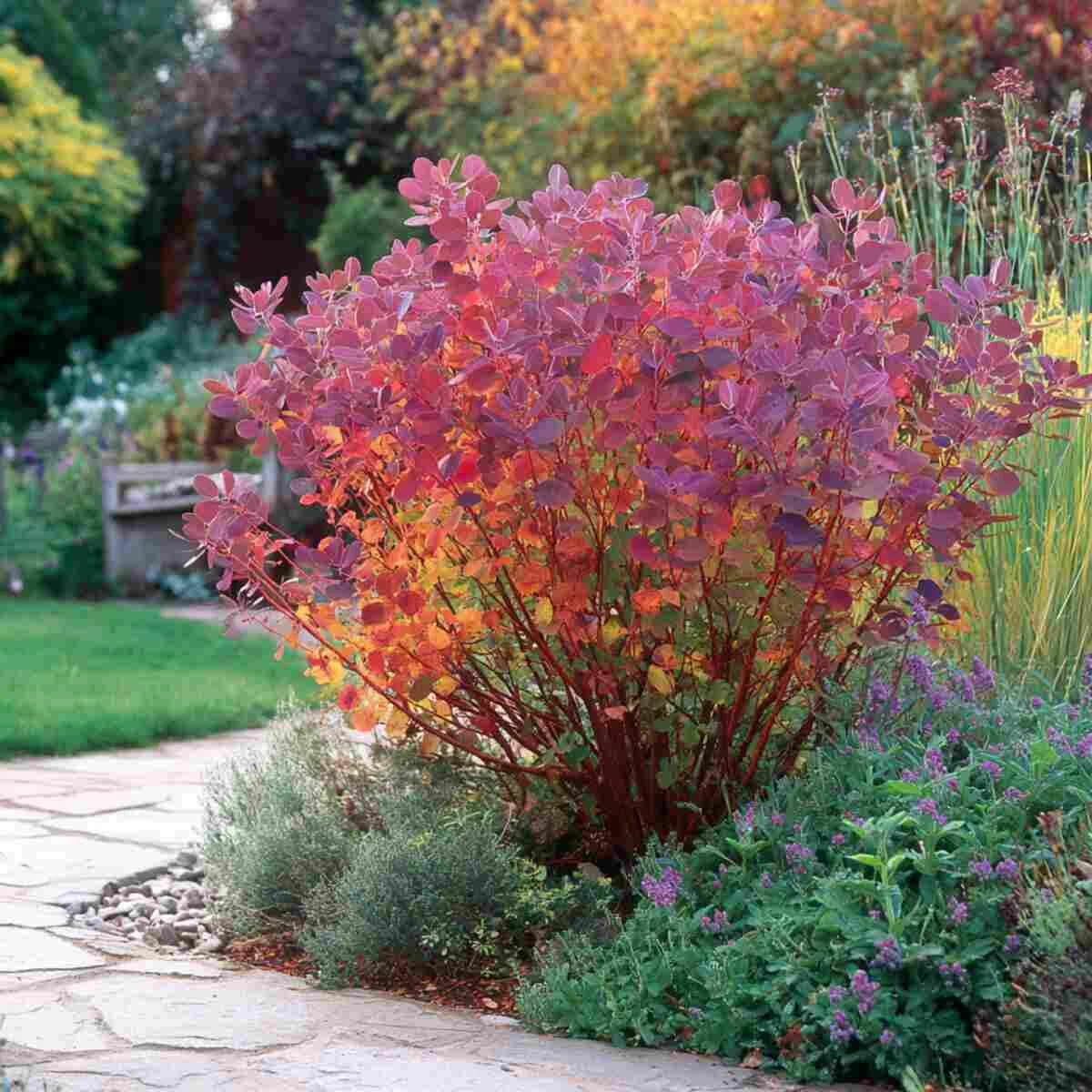
Smoke Bush gives a border something bolder than the usual green mound. The foliage, often rich purple or dusky green depending on the cultivar, adds contrast, and the airy flower plumes create that smoky effect the plant is known for.
It suits sunny borders where you want one shrub to act almost like a focal point. Because it already has a strong presence, the rest of the planting around it can stay simpler.
Maintenance is usually straightforward, particularly if you are happy with a natural, slightly looser shape rather than constant sculpting.
17. Yew for Shade Tolerance and Lasting Structure
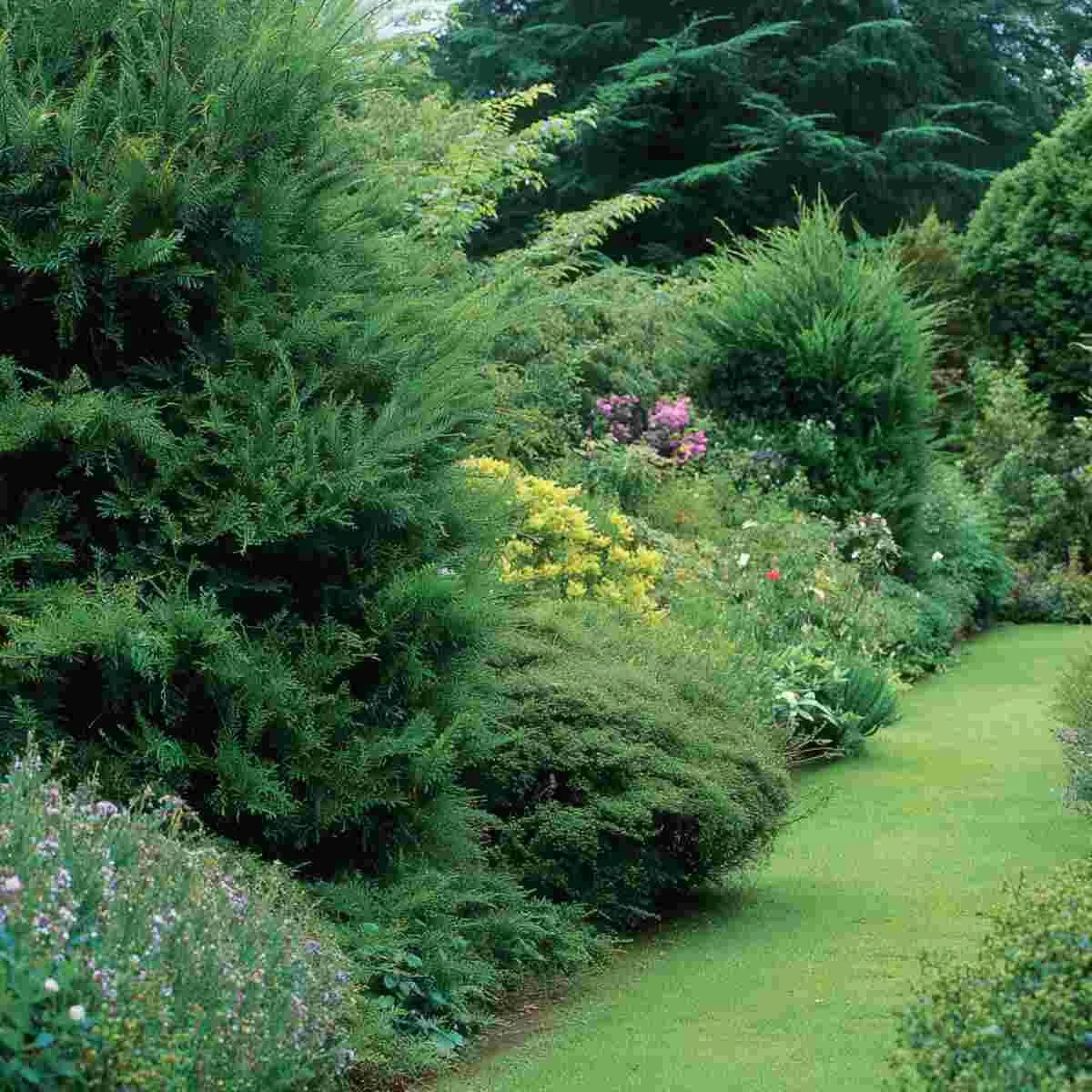
Yew is one of the more useful evergreens for borders that do not get full sun all day. It tolerates shade well, keeps a dense structure, and responds neatly to light pruning if you want a more tailored edge.
That flexibility makes it valuable in older gardens where trees, fences, or buildings create mixed light conditions. It can read traditional or contemporary depending on how formally it is shaped.
Because it is long-lived, it is worth thinking about placement carefully from the beginning. A well-sited yew border can anchor a garden for years.
18. Shrub Rosemary for a Border That Looks Good and Smells Better
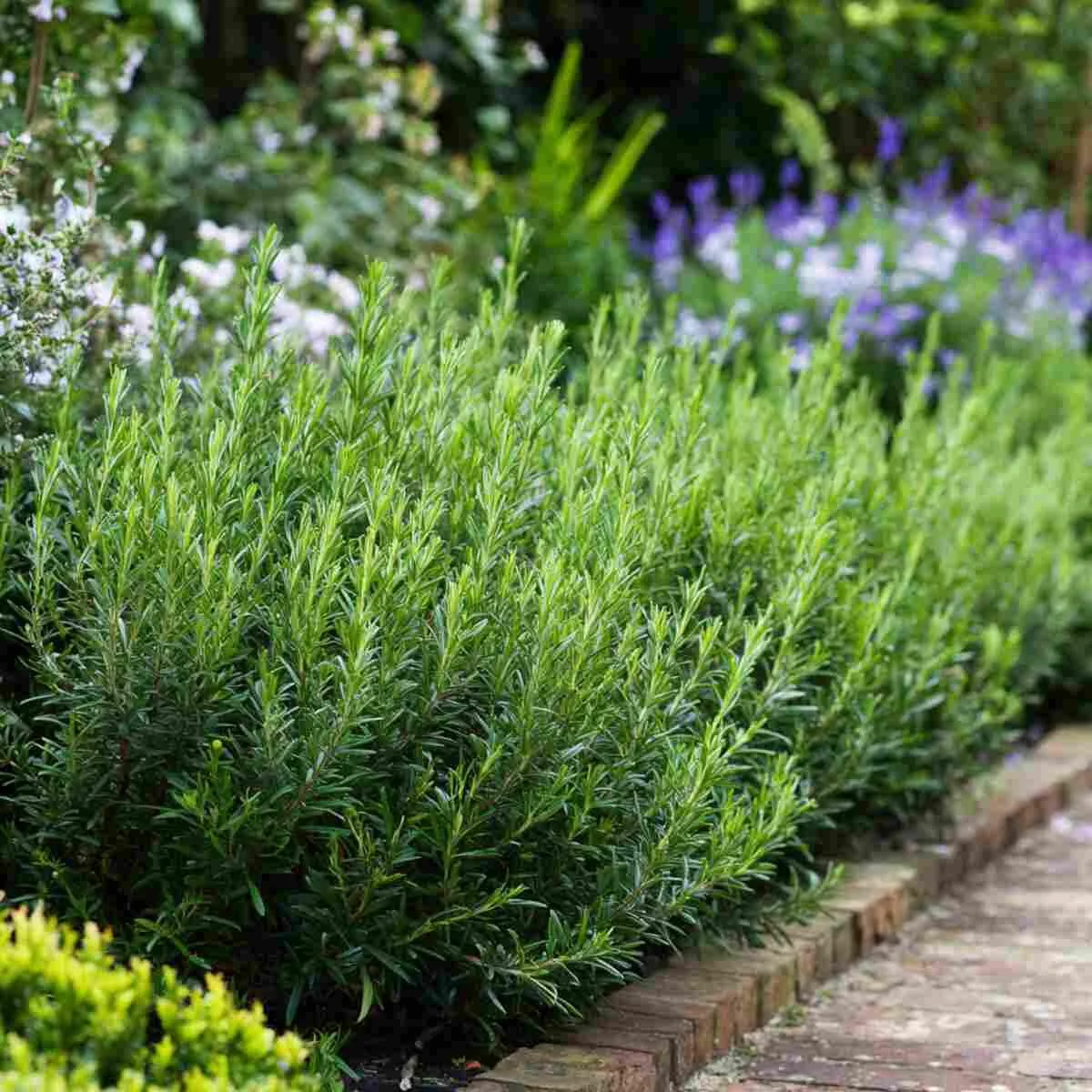
Shrub-form rosemary is ideal for sunny, dry borders where you want a plant that is ornamental but still useful. It brings evergreen texture, small flowers, and a fragrant foliage that makes paths and seating areas feel more sensory and inviting.
It is happiest in sharply drained soil and does not enjoy being overwatered, which is exactly why it can be such a good low-maintenance choice in the right climate.
Placed along a path or near a terrace, it offers both structure and easy harvesting for the kitchen.
19. Abelia for Long-Season Softness
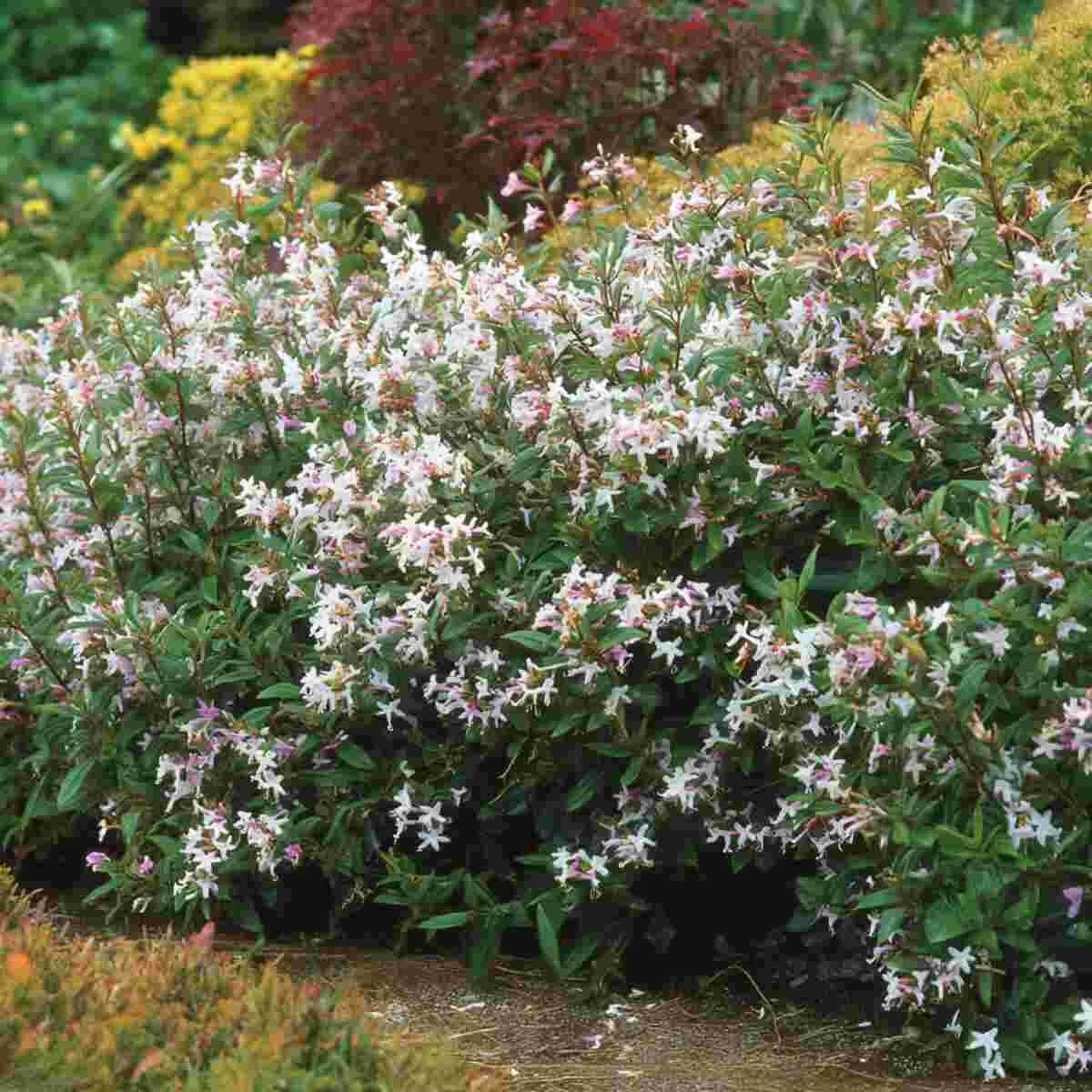
Abelia has a lighter, airier quality than many shrubs, which can help a border feel less dense and more layered. It flowers over a long period and generally holds an attractive shape without much intervention.
That long season of bloom makes it useful if you want the border to stay active without depending on lots of short-lived color moments. It also blends well with both evergreens and flowering shrubs.
Because the branches often arch gently, it works best where the border has enough room to soften rather than being clipped into something overly rigid.
20. Indian Hawthorn for Heat-Tolerant Compact Borders
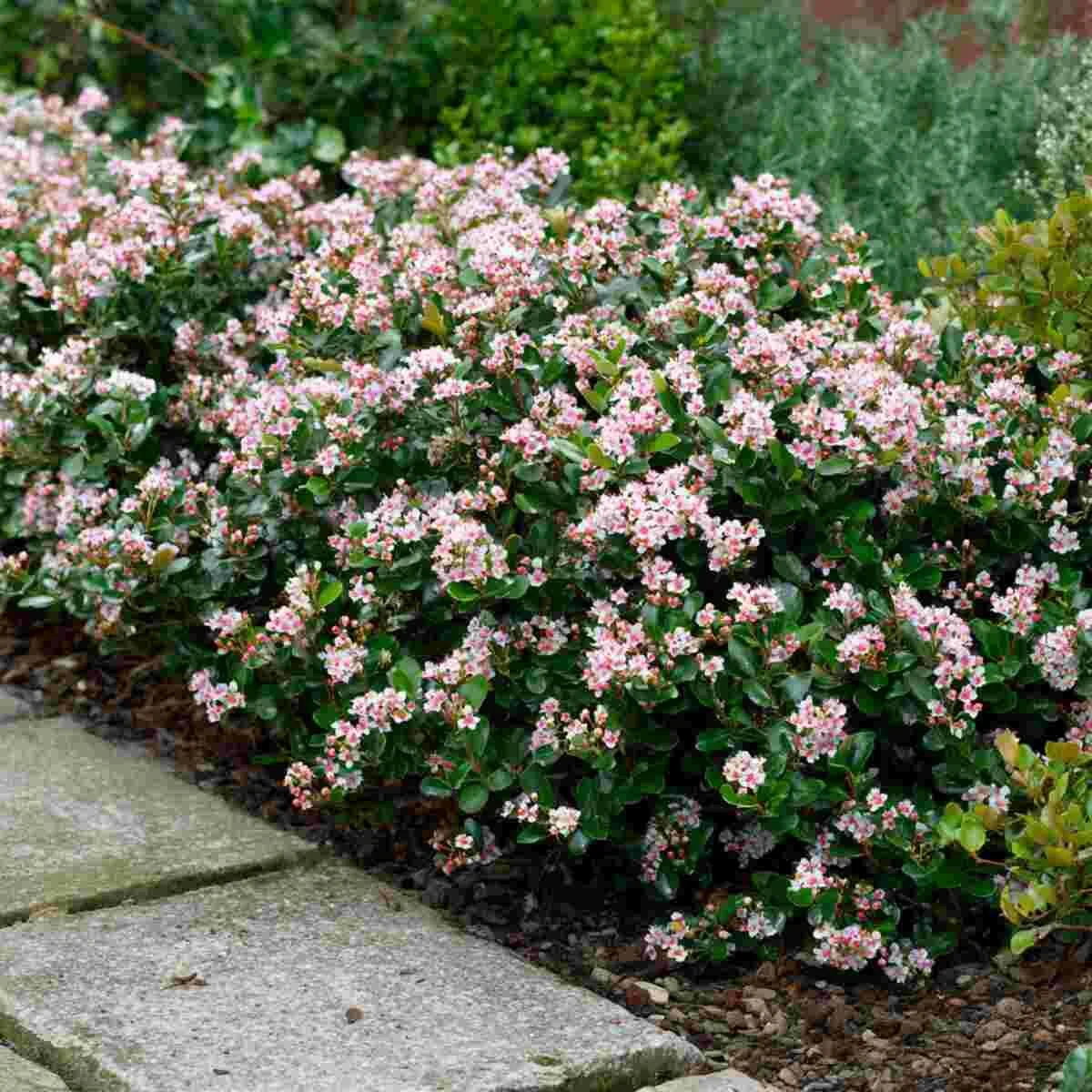
Indian Hawthorn is a practical shrub for warm climates where heat, drought, or even salt exposure can make planting more difficult. It tends to stay compact, which reduces the need for frequent pruning and makes it easier to place along driveways, front walks, and smaller borders.
The spring bloom gives it ornamental appeal, but the real advantage is how well it holds itself together through the rest of the year. In the right location, it can look tidy for long stretches with little interference.
It is especially useful where you want a lower border that still feels substantial.
21. Dwarf Nandina for Color Without Constant Cutting Back
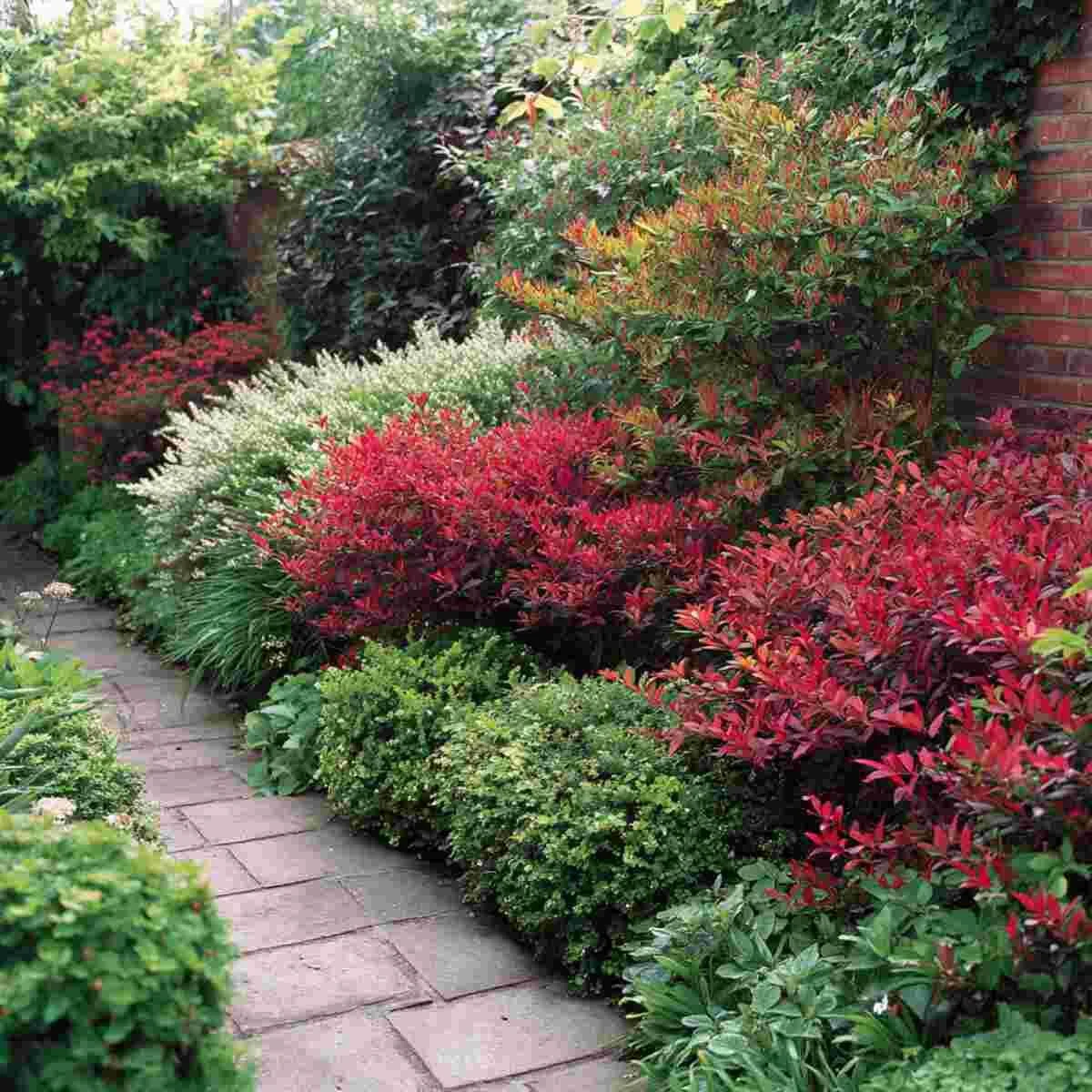
Dwarf Nandina is often chosen for its foliage rather than flowers, and that is part of what makes it easy to use. The leaves shift with the seasons, giving the border more color interest without depending on a brief bloom period.
Its compact habit makes it a helpful front-of-border or mid-border plant, especially in gardens where you want a polished look without repeated pruning. It also blends well with evergreens, ornamental grasses, and other lower-care shrubs.
Use it where the border needs a little color variation but not another sprawling plant to manage.
How to Make a Shrub Border Easier to Maintain
The shrubs matter, but the layout matters too. Even easy plants become high-maintenance when they are crammed into the wrong spot or mixed without regard for mature size.
- Match the shrub to the site: Sun-loving plants in shade or moisture-loving plants in dry soil create extra work fast
- Space for mature growth: Borders stay neater when shrubs are not constantly competing
- Repeat a few reliable plants: A simpler planting plan is usually easier to care for than a collector-style border
- Mulch generously: It cuts down watering needs and suppresses weeds
- Use evergreens and seasonal shrubs together: That keeps the border interesting without relying on nonstop bloom
Frequently Asked Questions
What makes a shrub border low maintenance?
A low-maintenance shrub border uses plants that suit the site, hold a good natural shape, and do not need frequent pruning, watering, or feeding to look healthy. The planting layout also matters, especially proper spacing and simple repetition.
Which shrubs are best for evergreen structure?
Boxwood, Dwarf Alberta Spruce, Juniper, Japanese Holly, Yew, and shrub rosemary all help a border hold its shape through the year. They are especially useful when you want the garden to look finished even in winter.
Which shrubs add the most color with the least effort?
Lavender, Hydrangea, Spirea, Potentilla, Weigela, Abelia, and Indian Hawthorn are all strong choices for easy color. Burning Bush and Dwarf Nandina are also useful when foliage color matters as much as flowering.
How far apart should shrubs be planted in a border?
That depends on the mature width of each shrub, not the pot size at planting time. Crowding is one of the main reasons borders become harder to maintain, so it is better to leave room and let the plants grow in properly.
Can a low-maintenance shrub border still look full and layered?
Yes. The best low-maintenance borders usually combine a few structural evergreens with flowering or foliage shrubs in repeating groups. That keeps the look full and intentional without creating an overcomplicated planting plan.
Final Thoughts
A successful low-maintenance shrub border is not about settling for less. It is about choosing plants that give your garden shape, softness, and seasonal interest without demanding constant attention. When the right shrubs are planted in the right place, the border begins to carry itself, and that is what makes a garden truly enjoyable to live with.
Written by the Zeeshe Home Editorial Team, a blog focused on practical home, garden, and outdoor inspiration.


