
If you enjoy growing herbs but don’t have a large garden, a herb spiral is one of the smartest solutions you can try. It uses vertical space instead of spreading out horizontally, making it perfect for small yards, patios, and even balconies.
The real advantage of a herb spiral is how it creates different growing conditions in one structure. The top of the spiral is usually dry and sunny, which works well for herbs like rosemary and thyme. As you move downward, the soil becomes slightly cooler and more moist, which suits herbs like mint, parsley, and cilantro.

If you’re designing your outdoor space, you may also like these Mediterranean garden ideas for a warm and practical garden style.
My Experience with Herb Spirals
One of the biggest benefits of herb spirals is how efficient they are. Instead of spreading herbs across multiple beds or containers, everything is organized in one easy-to-manage structure.
I’ve found that herbs grow better when placed in the right position on the spiral. Mediterranean herbs like rosemary and oregano thrive at the top where drainage is excellent. Meanwhile, herbs like basil and mint do better lower down where moisture stays longer.
Another advantage is convenience. Having herbs in one place makes harvesting faster and more enjoyable, especially if your spiral is placed close to your kitchen or outdoor seating area.
How to Build a Simple Herb Spiral
- Choose a sunny location (at least 5–6 hours of sunlight)
- Mark a circular base (around 1–2 meters wide)
- Build the spiral upward using stones, bricks, or wood
- Fill with well-draining soil and compost
- Plant herbs based on their water and sunlight needs
- Water gently and allow the soil to settle
Quick Comparison: Best Herb Spiral Materials
| Material | Best For | Benefits |
|---|---|---|
| Stone | Natural gardens | Durable, holds heat well |
| Brick | Budget projects | Easy to stack and shape |
| Wood | Rustic look | Blends naturally into garden |
| Concrete | Permanent structure | Strong and long-lasting |
| Pots | Small spaces | Flexible and movable |
1. Rustic Stone Herb Spiral
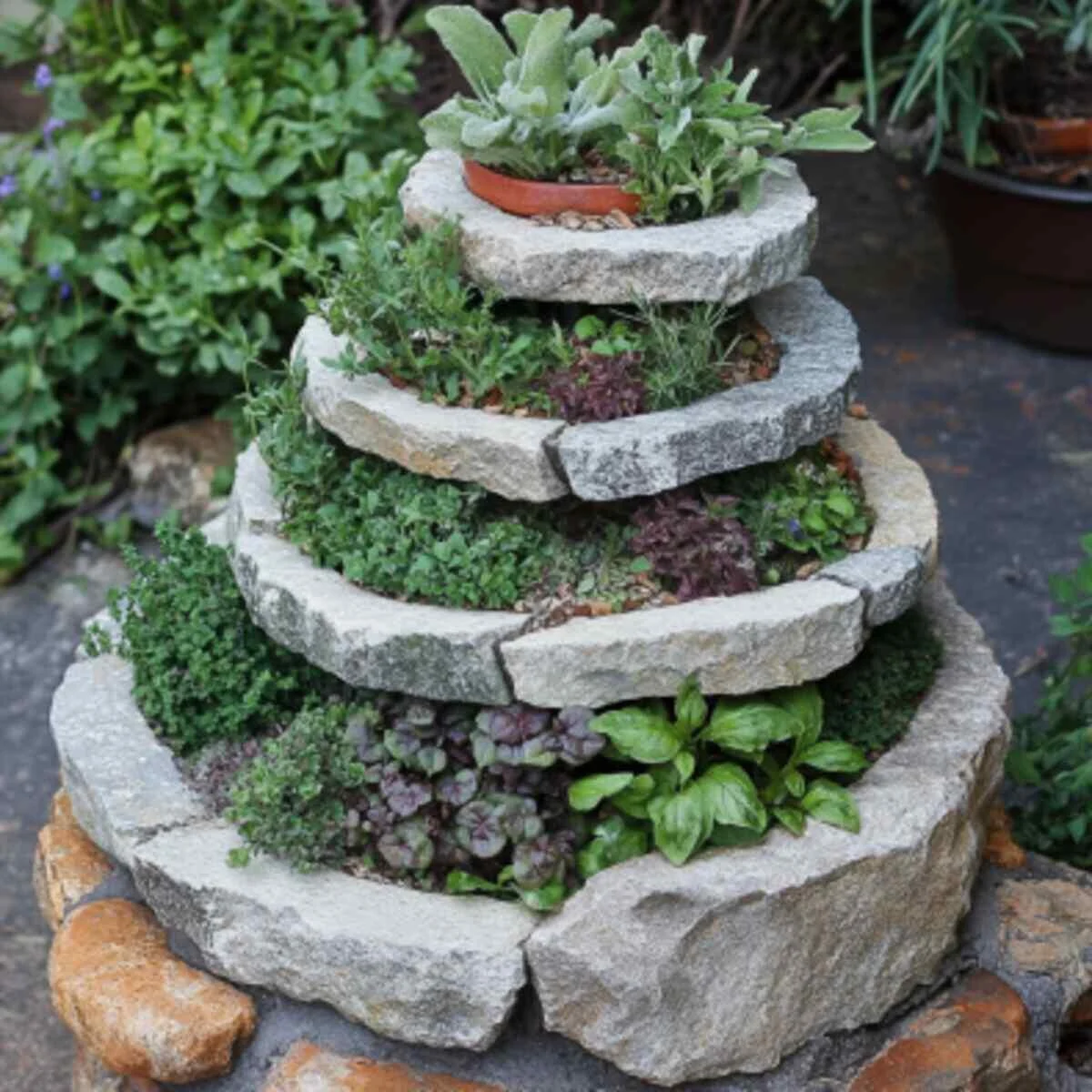
A stone herb spiral has a timeless look that blends naturally into most gardens. The stones absorb heat during the day and release it slowly, creating a warm environment that many herbs love.
This design works especially well if you want something durable and low maintenance. It fits perfectly into natural, cottage-style, or Mediterranean gardens.
2. Wooden Log Herb Spiral

Using logs creates a softer, more natural appearance. This style works well in rustic or woodland gardens where you want everything to feel organic.
Wood also helps retain moisture slightly, making it useful for herbs that need more hydration. However, it may require replacement over time as it naturally breaks down.
3. Recycled Brick Herb Spiral
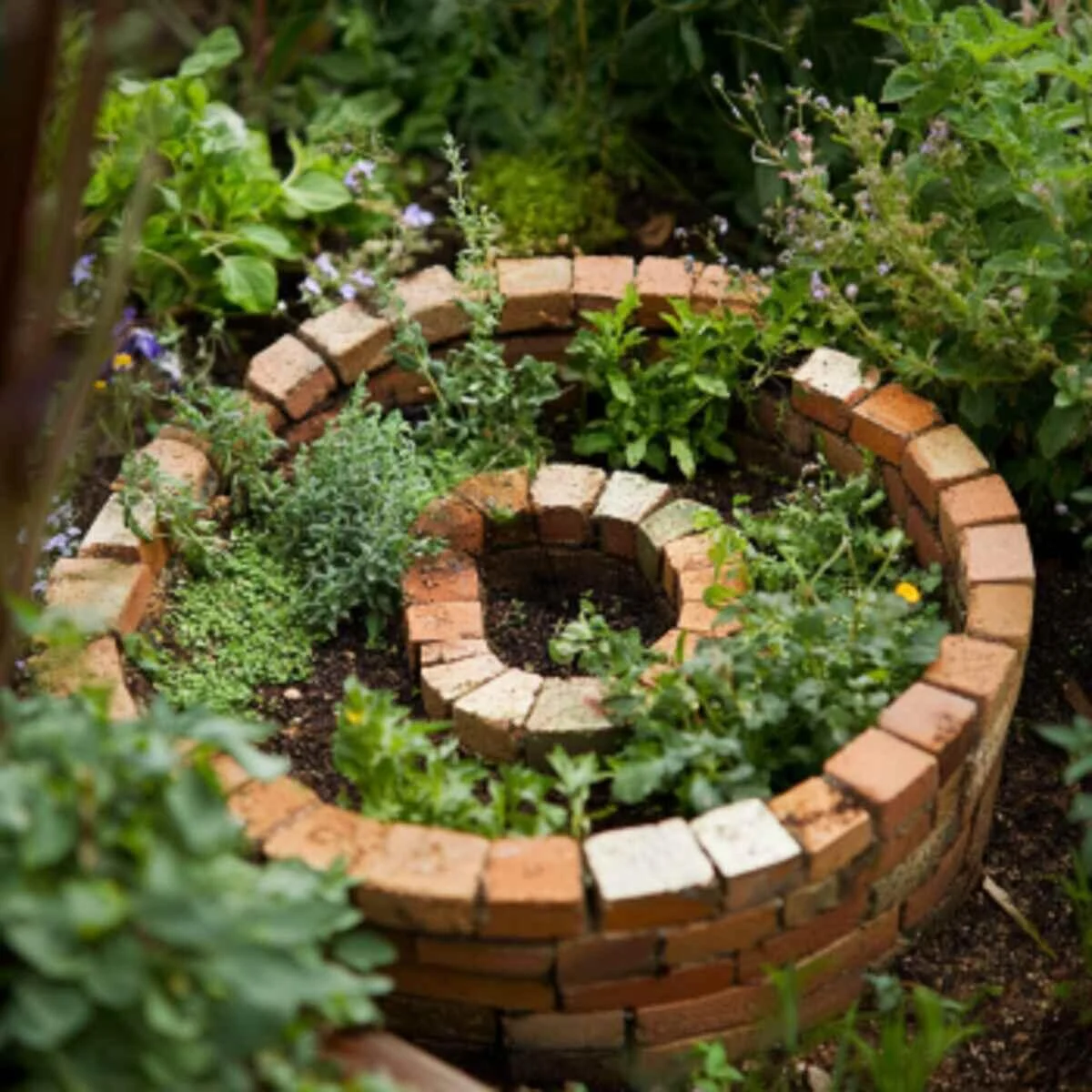
Recycled bricks are a budget-friendly and sustainable option. They are easy to stack and shape into a spiral, and they bring a slightly vintage look to the garden.
This is one of the most popular DIY options because it combines durability with affordability.
4. Vertical PVC Pipe Herb Spiral
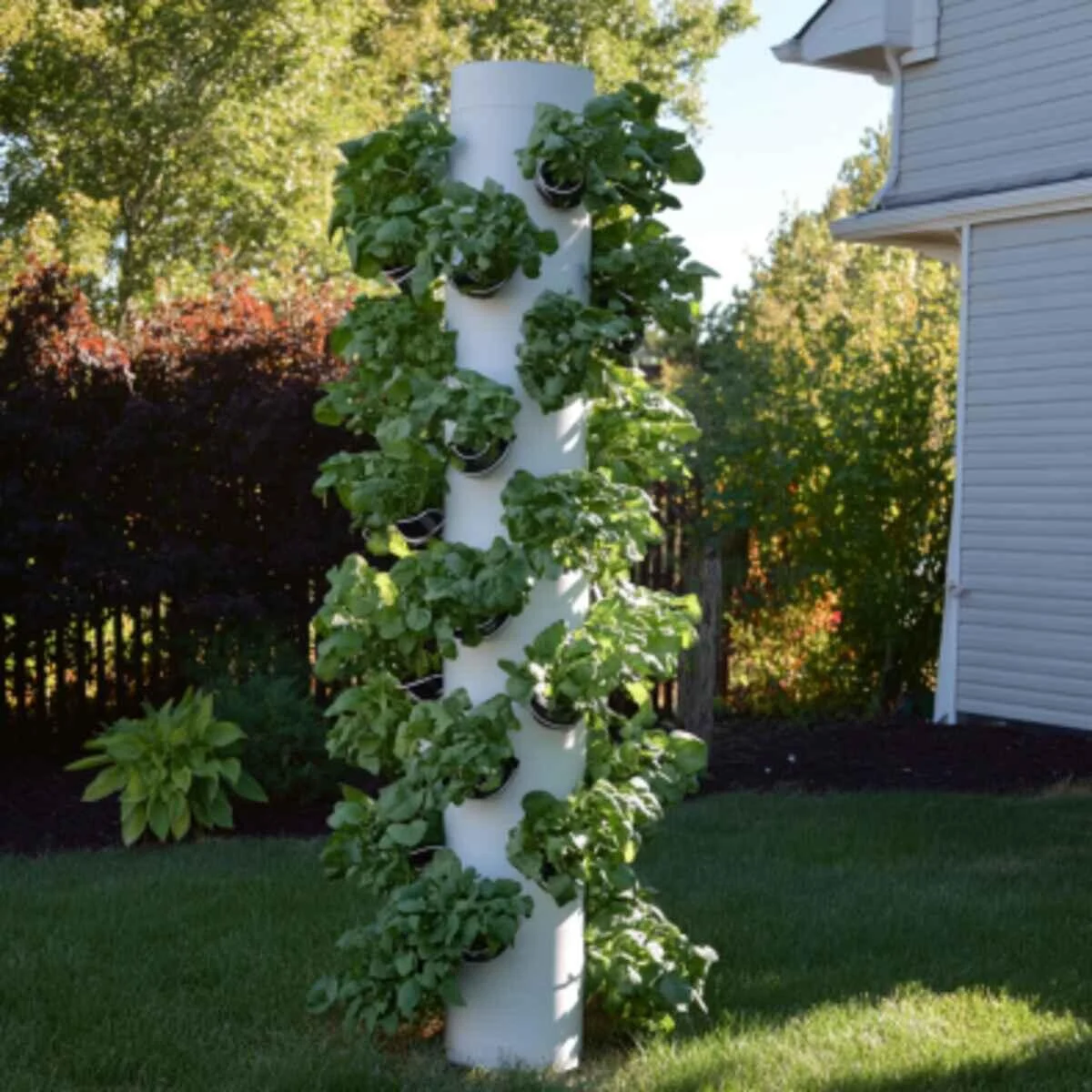
This idea is perfect for balconies or extremely small spaces. Instead of spreading across the ground, the spiral grows upward using vertical pipes.
It is lightweight, easy to move, and works well for urban gardening setups.
5. Mini Clay Pot Herb Spiral
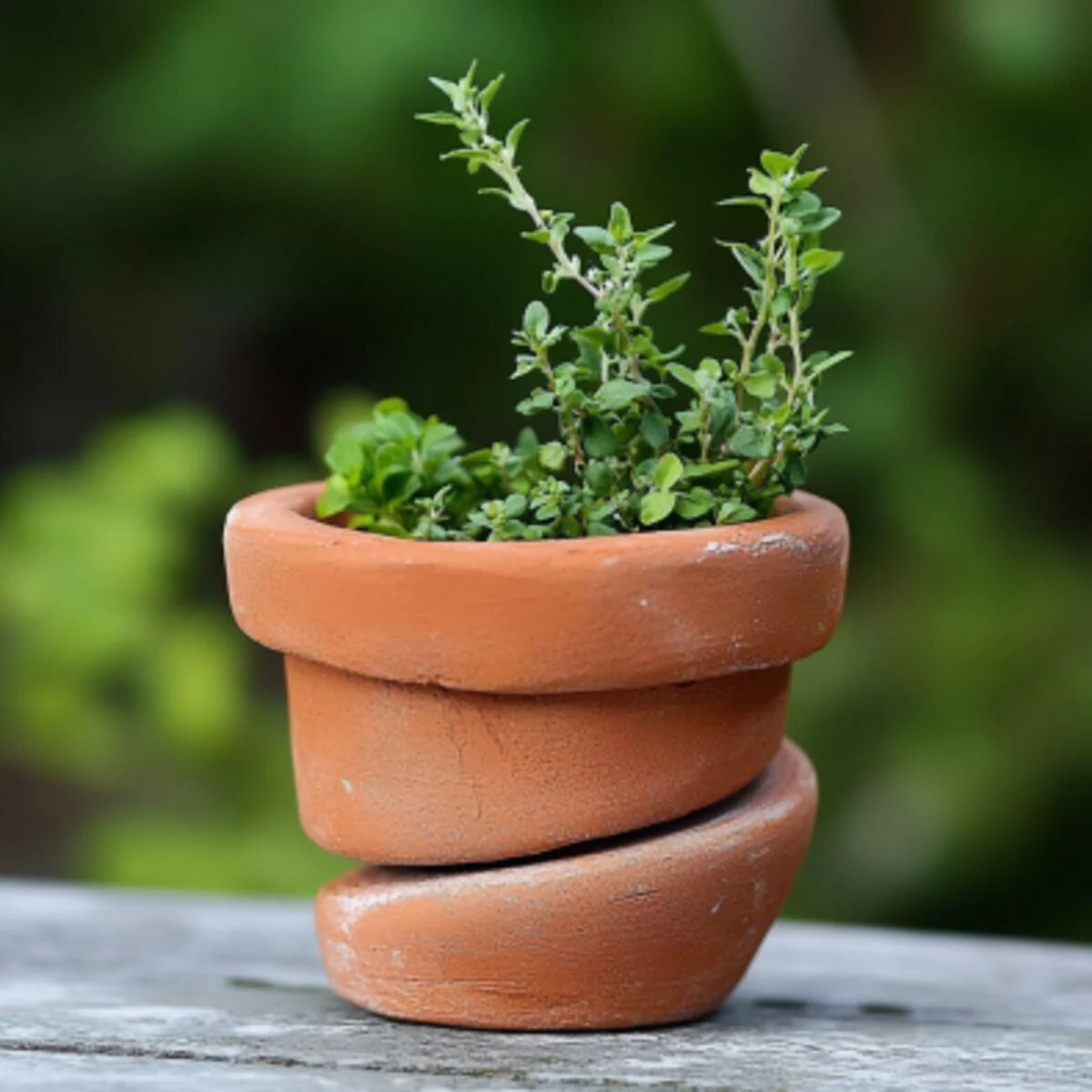
Clay pots arranged in a spiral shape create a charming and compact design. This works well on patios, balconies, and small garden corners.
You can also rearrange pots easily if you want to experiment with layout or plant placement.
6. Terracotta Spiral
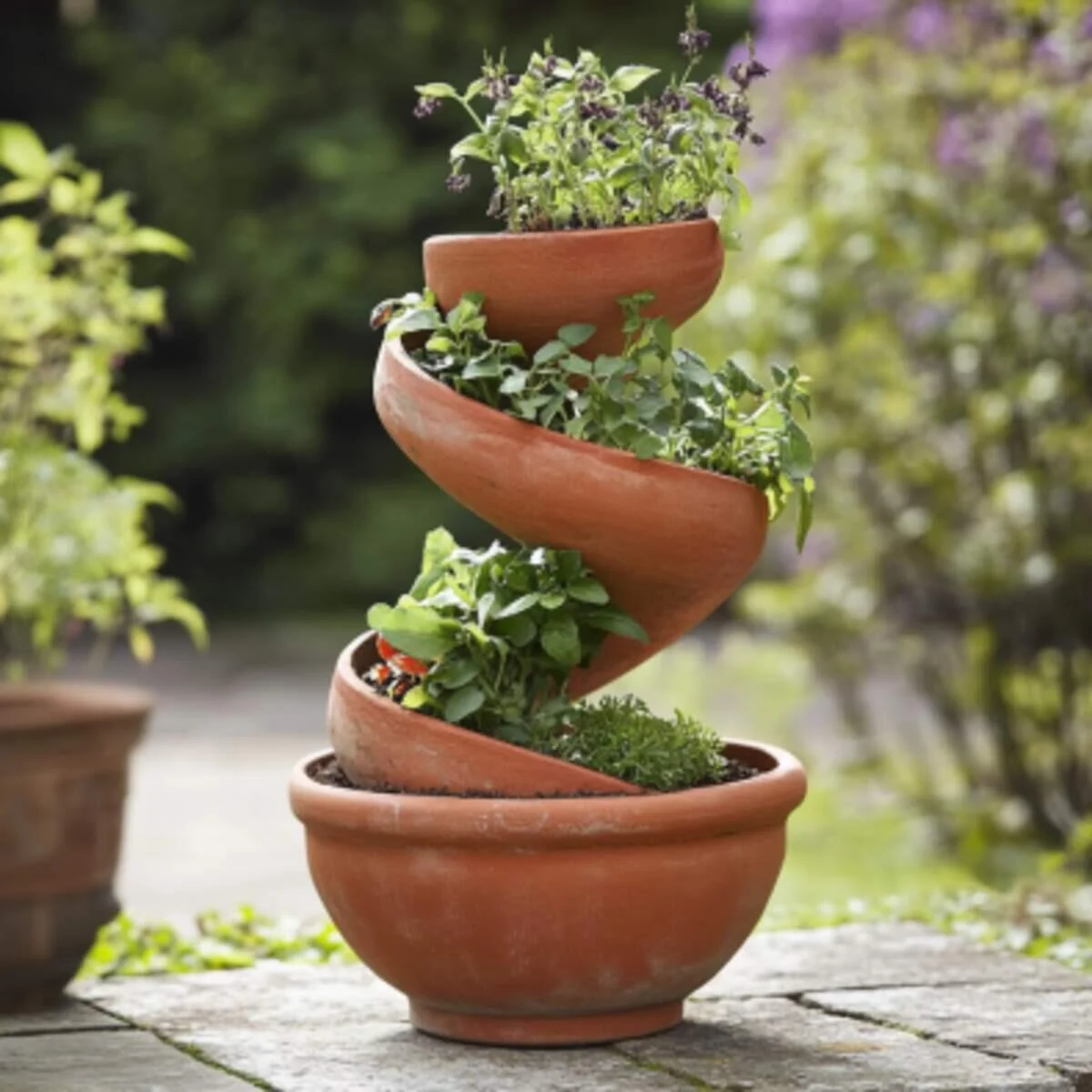
Terracotta creates a warm Mediterranean look. It drains well, making it ideal for herbs that prefer dry soil.
7. Cinder Block Spiral
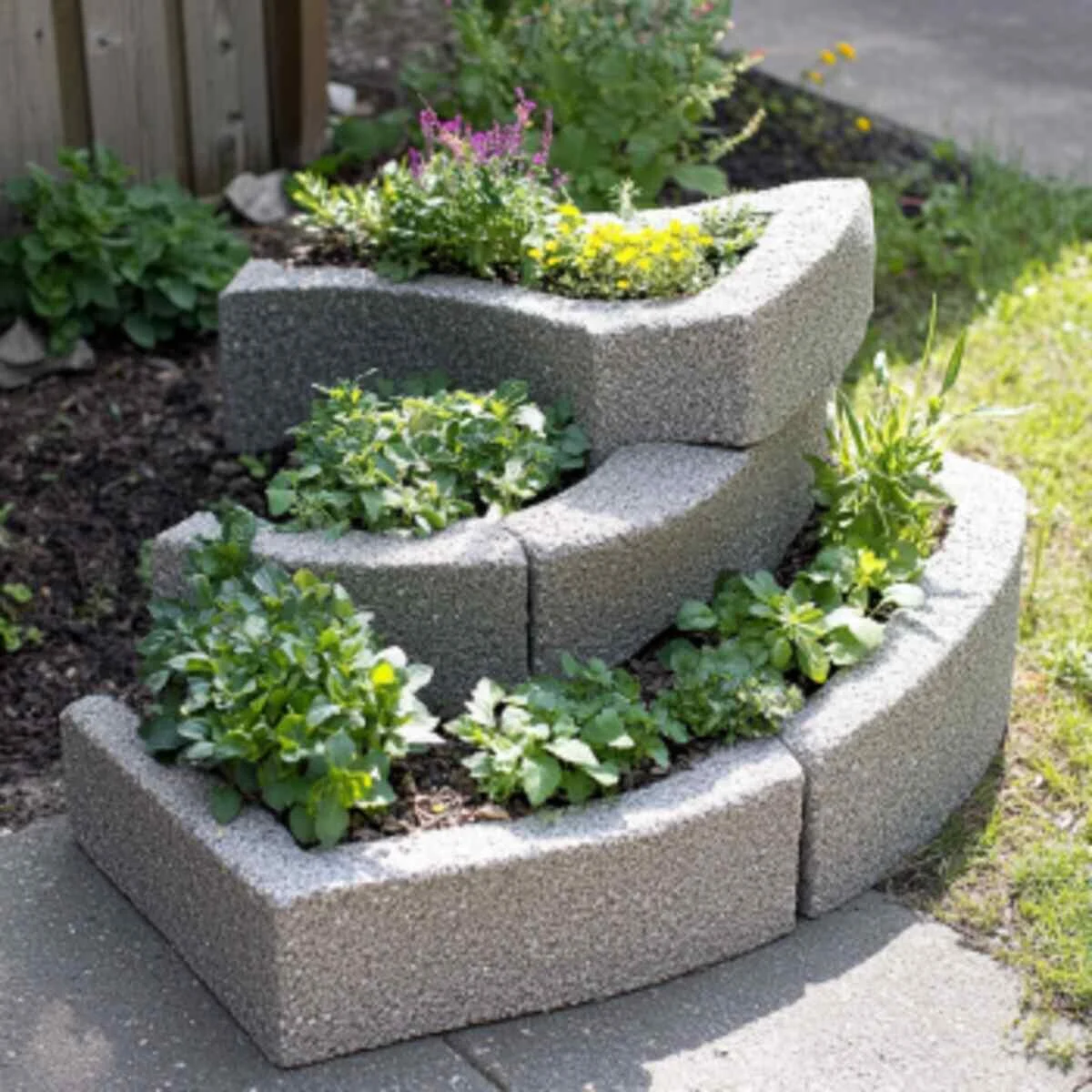
Cinder blocks are strong and practical. Their hollow sections can even be used as extra planting pockets.
8. Recycled Bottle Spiral
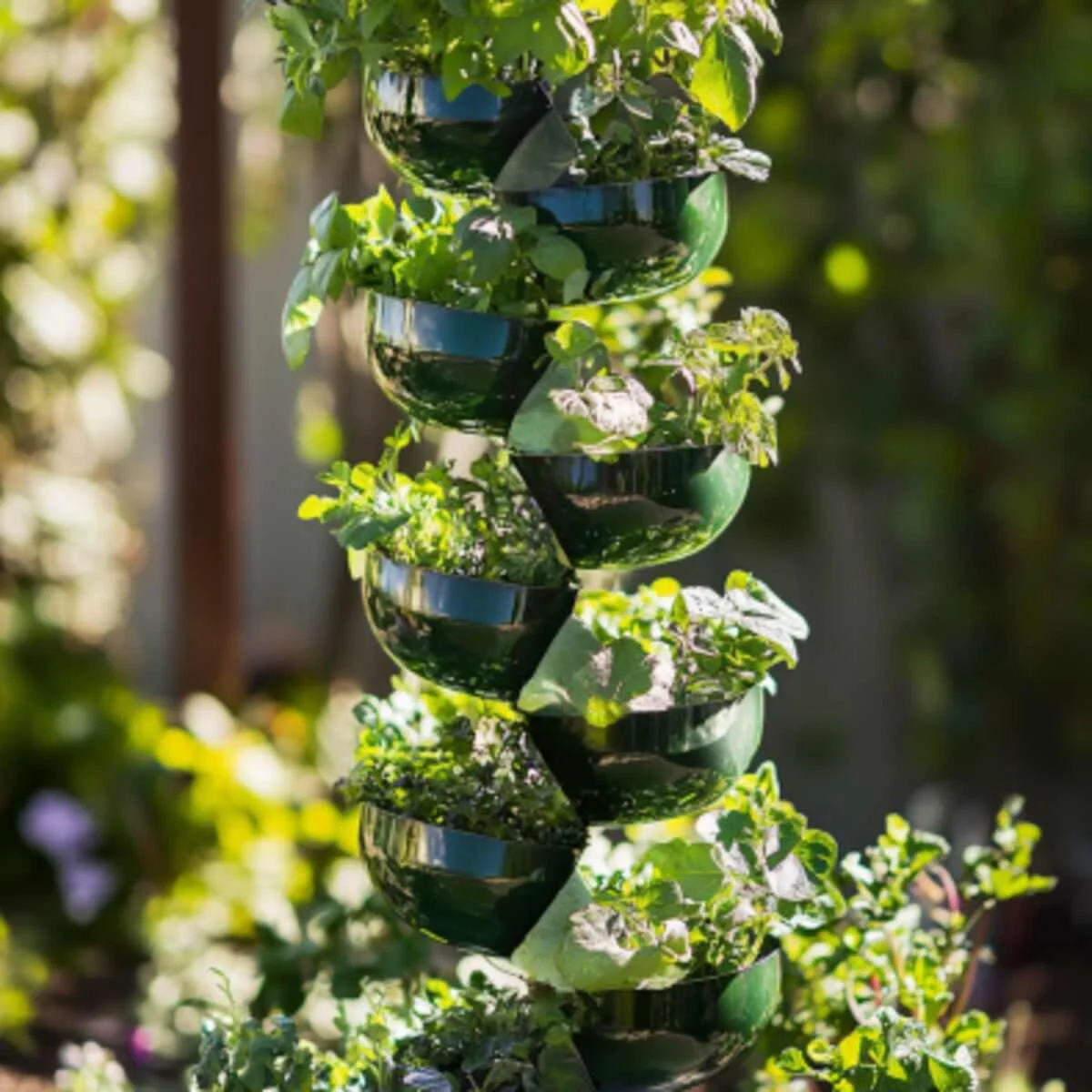
This eco-friendly design uses recycled bottles to form the spiral. It adds creativity and sustainability to your garden.
9. Bamboo Spiral

Bamboo gives a light, tropical feel and works well in relaxed garden styles.
10. Woven Willow Spiral
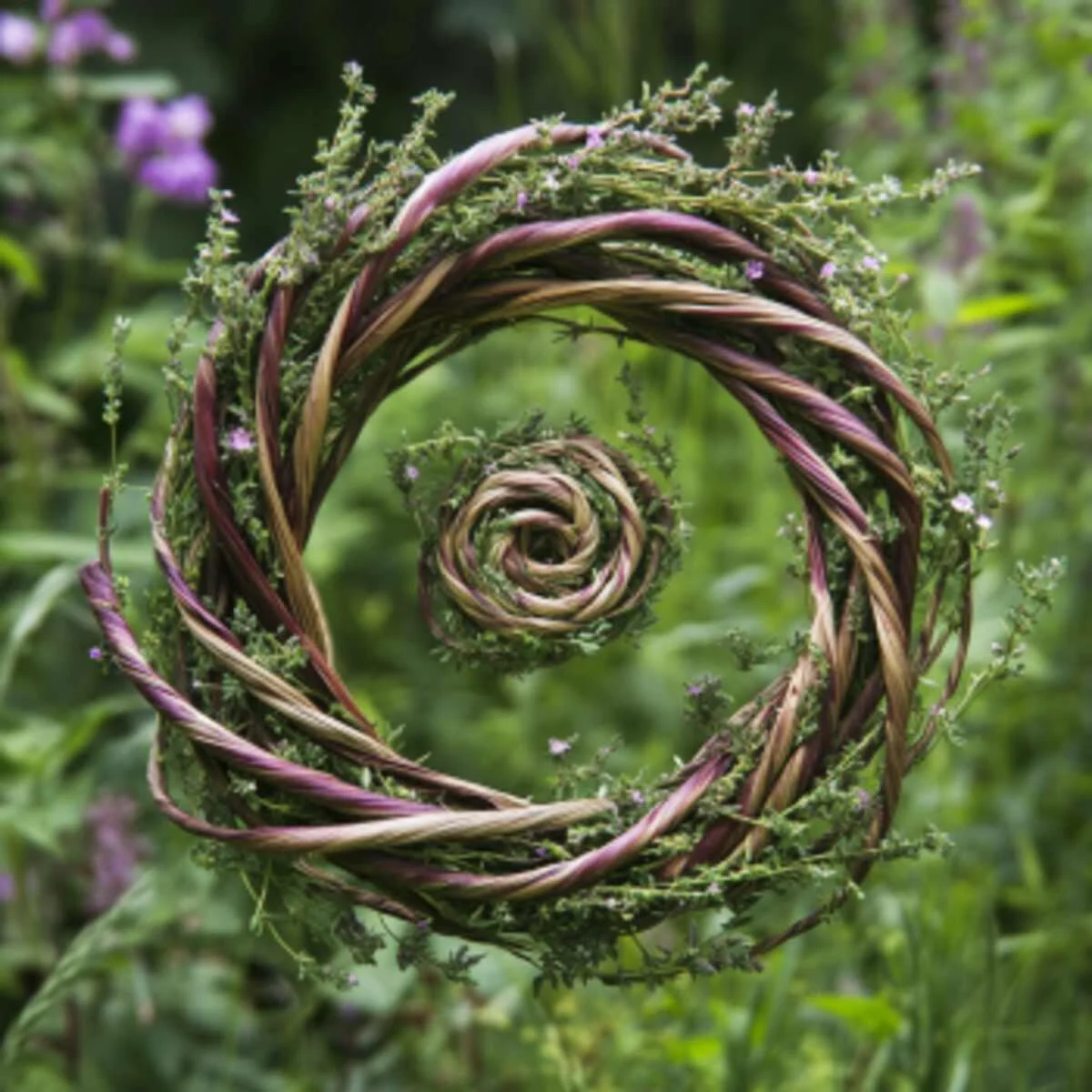
This design adds texture and a handmade charm to your space.
Best Herbs for a Spiral Garden
- Top: Rosemary, thyme, oregano
- Middle: Basil, dill, chives
- Bottom: Mint, parsley, cilantro
If you want more planting inspiration, these low-maintenance garden plants can help you expand your garden easily.
Common Mistakes to Avoid
- Planting all herbs in the same soil condition
- Not considering sunlight direction
- Overwatering the top section
- Using weak structure materials
Final Thoughts
A herb spiral is one of the most practical and rewarding garden features you can build. It saves space, improves plant health, and adds visual interest to your outdoor area.
Whether you use stone, wood, brick, or recycled materials, the key is to match the design with your space and climate.
If you are planning a full outdoor transformation, these front yard landscaping ideas can help you take your garden to the next level.


