
Wind can undo a lot of good garden design. It stresses plants, dries soil faster, rattles seating areas, damages lightweight structures, and makes exposed gardens feel harder to use. The answer is not always a taller fence or a heavier wall. In many cases, the most effective structures are the ones that reduce and redirect airflow rather than trying to stop it completely.
A well-designed wind-resistant garden uses a mix of hardscape, filtered screening, and planted structure to create calmer zones. That could mean a slatted screen beside a patio, a pergola that softens gusts overhead, or a gabion wall that protects a lower planting area. The best solutions depend on how exposed the site is, how permanent the structure needs to be, and whether you want the barrier to feel architectural, natural, or somewhere in between.

These wind-resistant garden structures offer practical protection while still helping your outdoor space feel intentional and attractive.
1. Gabion Walls for Heavy-Duty Wind Protection
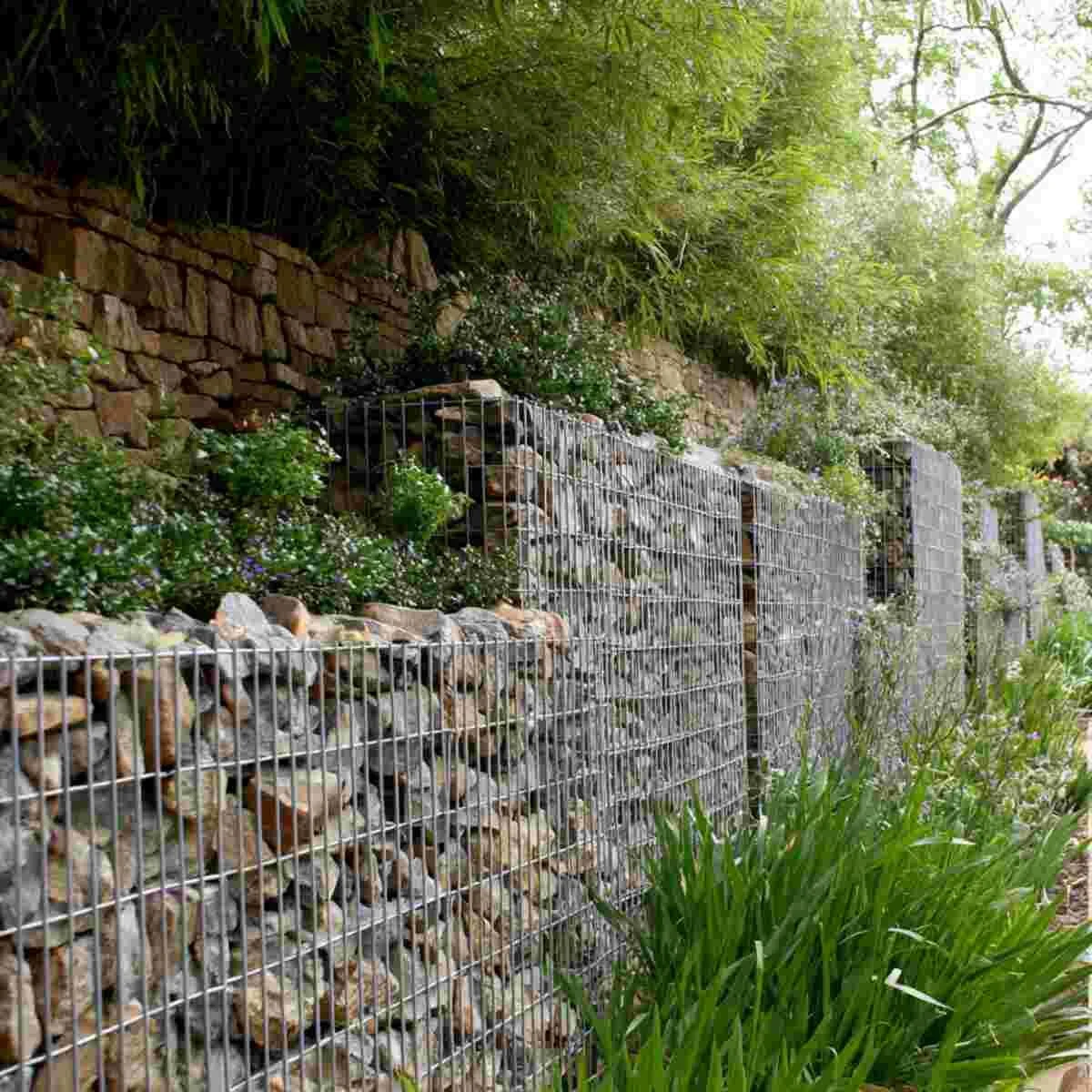
Gabion walls are one of the most robust options for windy gardens. Because they are built from wire cages filled with stone, they have the weight and stability to stand up to exposed conditions while still looking architectural and grounded.
They work especially well where the site also has sloping ground, erosion issues, or the need for retaining and screening at the same time. In modern gardens, they can look sculptural. In more natural settings, they read as rugged and practical.
- Best for: exposed boundaries, terraced sites, and contemporary landscapes
- Extra benefit: can double as raised beds, retaining edges, or seating walls
- Keep in mind: their visual weight suits larger gardens best
2. Living Hedges for a Softer, Filtered Windbreak

A hedge is technically a living structure, and in many gardens it is one of the most effective ways to reduce wind. Dense hedges filter air rather than forcing it to crash and swirl, which usually creates a calmer area behind them than a fully solid barrier would.
Boxwood, privet, yew, and other dense hedging plants are especially useful where you want year-round form as well as protection. They also bring privacy and a sense of enclosure, which helps a windy garden feel more settled.
This is a particularly good choice if you want the barrier to feel integrated into the planting rather than separate from it.
3. Trellised Vine Walls for Decorative Screening
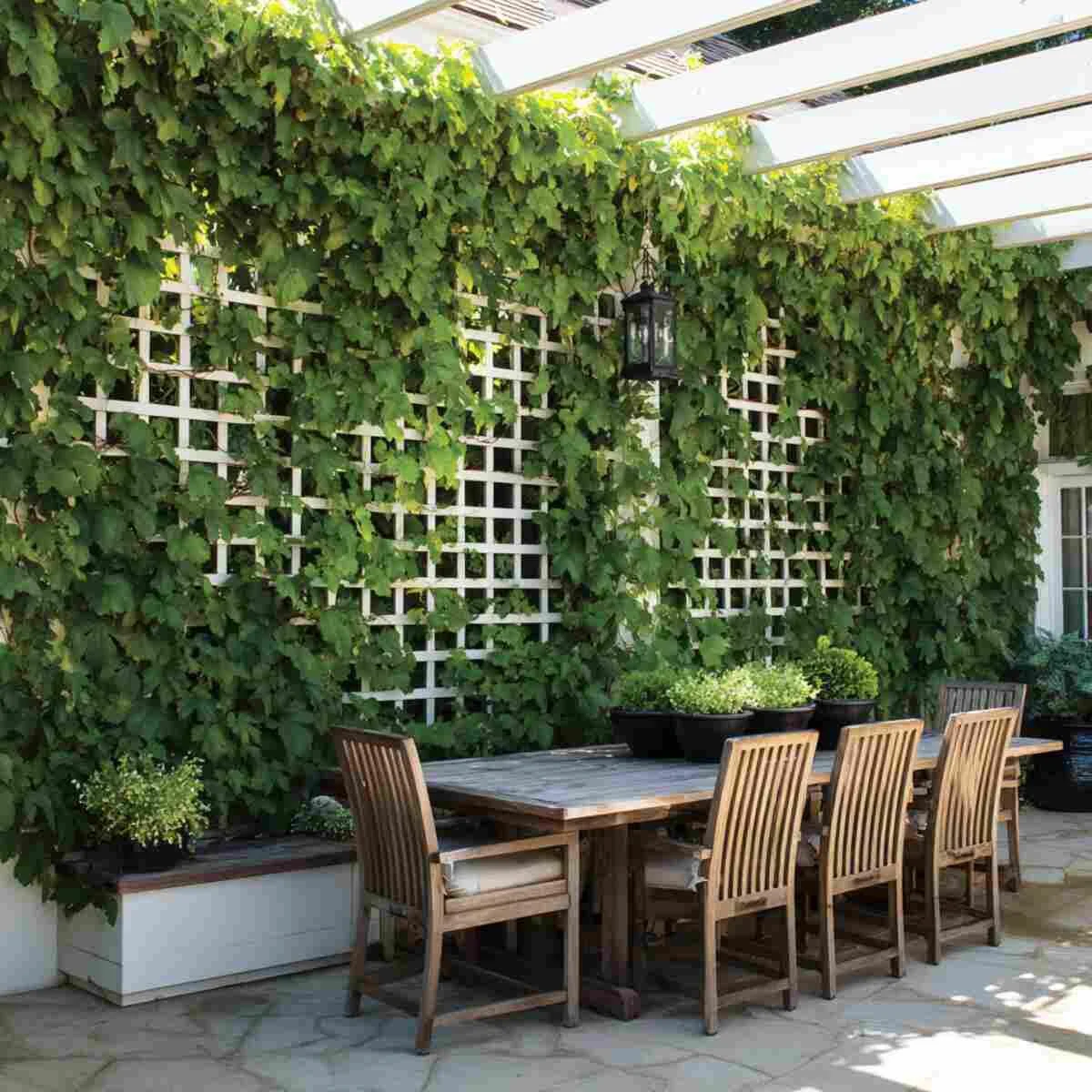
Trellises planted with climbers are a smart solution where you need wind reduction without making the space feel closed in. The framework gives structure, while the foliage breaks up airflow and softens the look.
This works particularly well in smaller gardens, courtyards, and side yards where a full wall would feel too heavy. Because the planting is vertical, it also saves floor space.
Choose sturdy supports and climbers suited to your conditions. In very exposed spots, lighter and more flexible climbers often perform better than brittle or overly heavy ones.
4. Bamboo Windbreaks for Flexible Height

Bamboo makes an effective windbreak because it bends with movement rather than resisting it rigidly. That flexibility is part of what allows it to cope so well in breezy conditions.
Used as screening or planted in contained groves, bamboo creates privacy and overhead movement while still filtering wind. It also works well in gardens that want a lush or modern feel rather than a heavily built one.
Clumping varieties are usually easier to manage in residential gardens. If planted directly in the ground, think carefully about containment before committing.
5. Pergolas With Slatted Roofs for Sheltered Outdoor Rooms
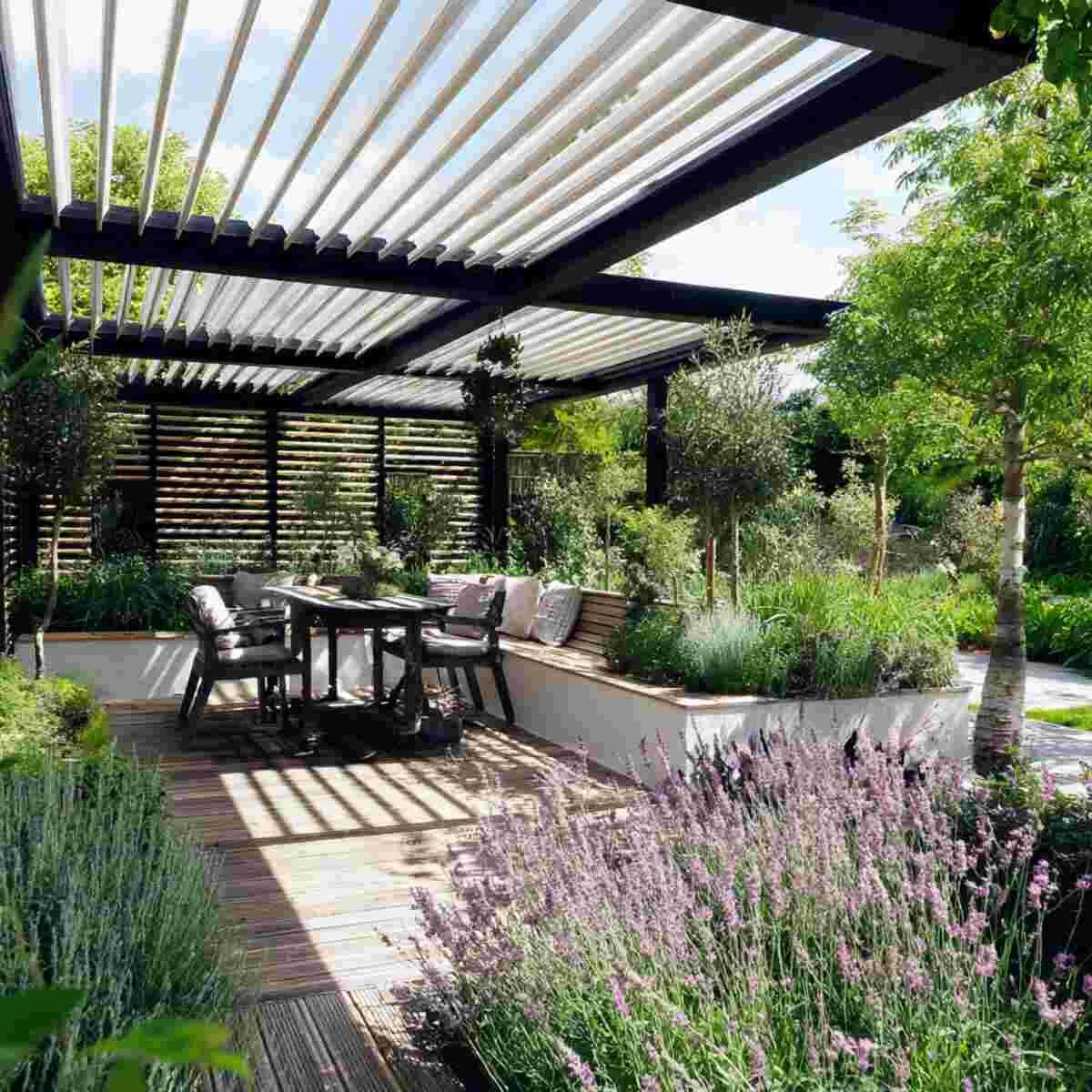
A pergola will not act as a full windbreak, but it can make a patio or sitting area feel calmer by interrupting gusts from above and helping define a more sheltered zone. Slatted roofs are especially useful because they let some air pass through instead of catching it like a solid sail.
This is often the right move when the garden needs a usable seating area more than a fully enclosed screen. It also creates a framework for climbing plants, lighting, or curtains if you want to soften the space further.
Strong anchoring matters here. In windy gardens, the stability of the posts and footings is just as important as the pergola design itself.
6. Louvered Garden Screens for Adjustable Airflow
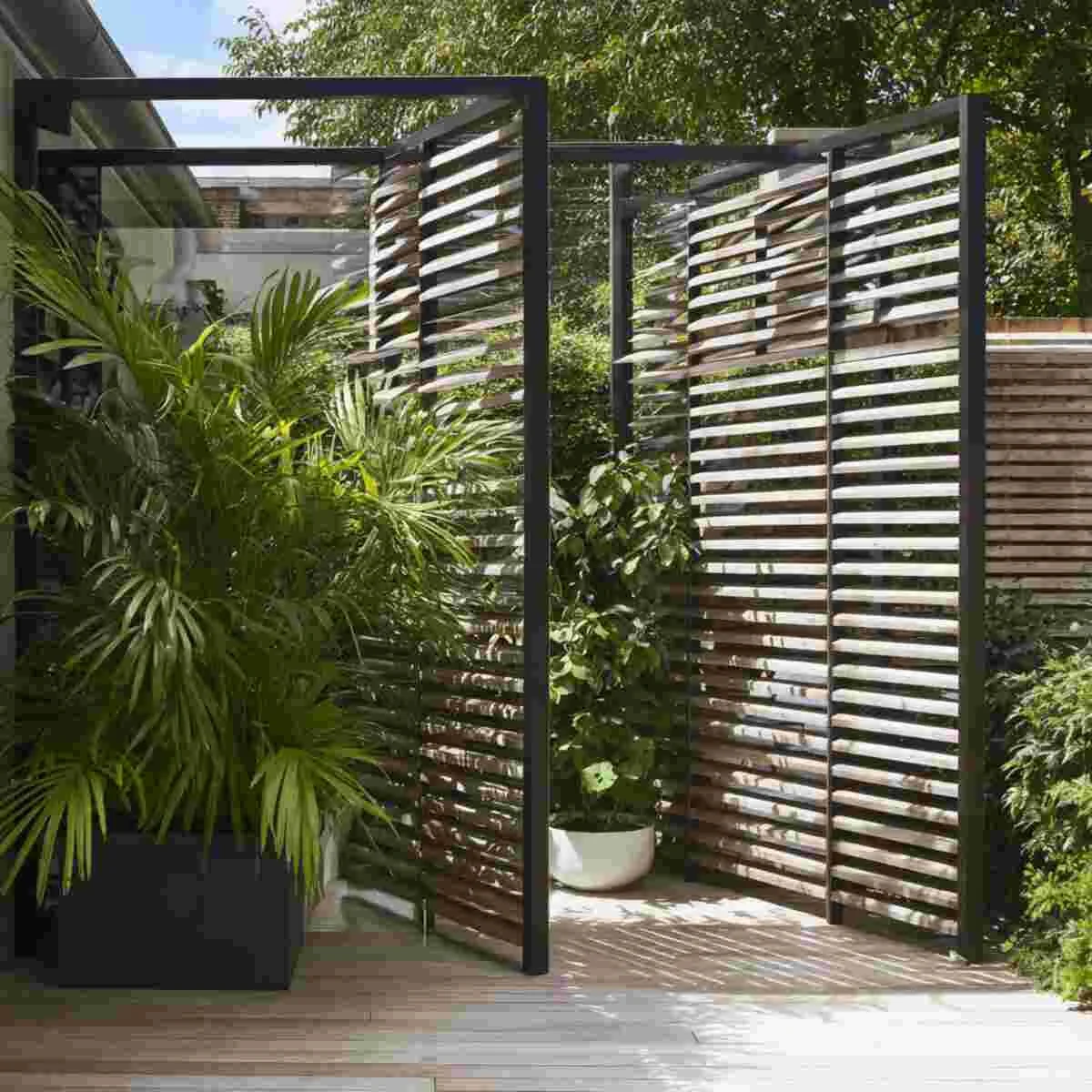
Louvered screens are a smart option when the wind direction changes or when you want more control over privacy and airflow. Their angled slats reduce wind force while still letting some air and light through.
They work especially well in urban gardens, patios, and contemporary spaces where a clean-lined structure suits the design. Because they feel more architectural than a planted screen, they can be a useful contrast against softer borders.
Use them beside seating areas, outdoor dining zones, or as part of a layered approach with shrubs planted nearby.
7. Wattle Fencing for Rustic, Permeable Protection
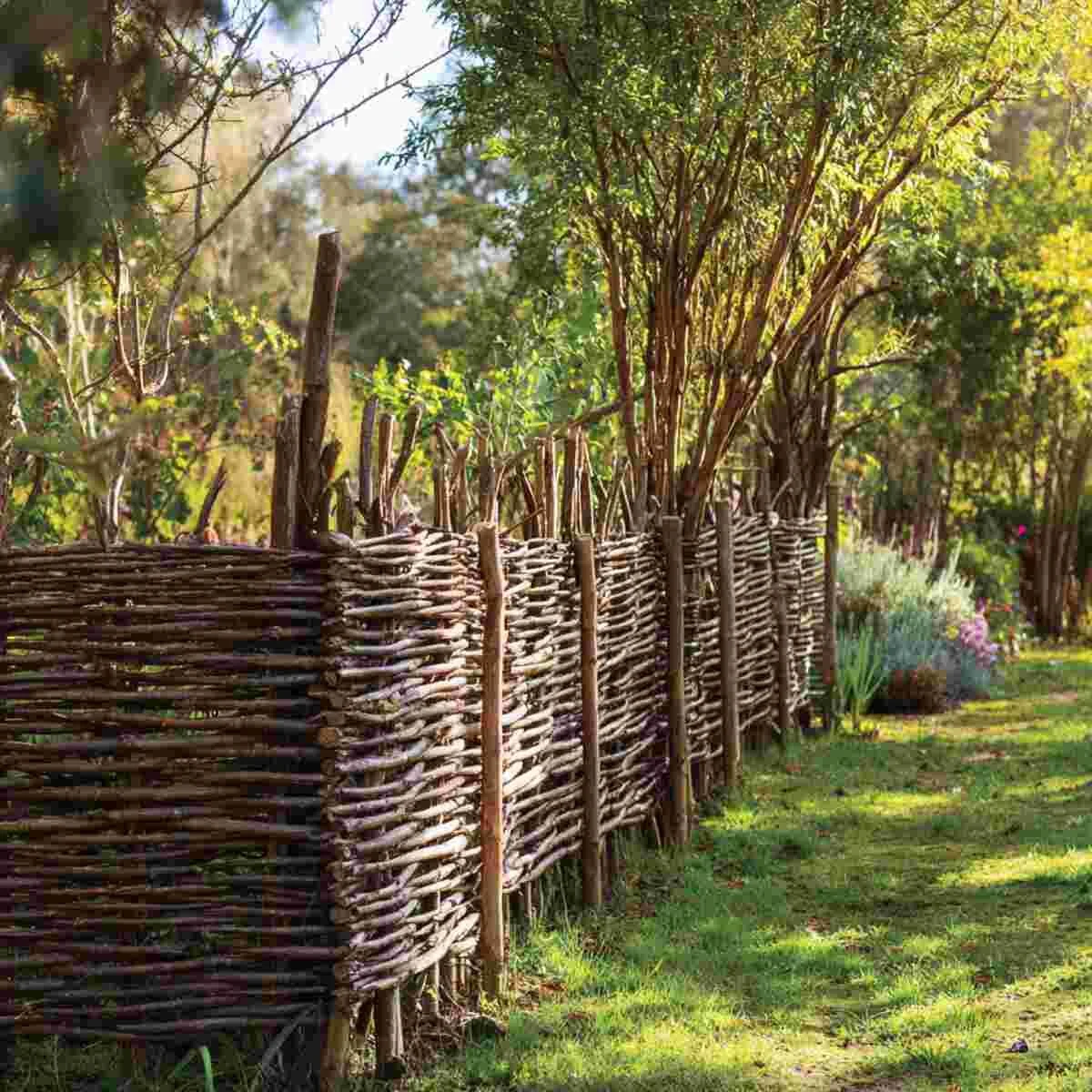
Wattle fencing is made by weaving branches or rods between upright stakes, creating a barrier that is both attractive and surprisingly practical in windy gardens. Because it is not fully solid, it helps reduce wind speed without producing harsh turbulence on the sheltered side.
It suits cottage gardens, wildlife gardens, and naturalistic spaces particularly well. The woven texture also adds warmth and a handmade feel that hard fencing often lacks.
This is better for gentle to moderate screening than for the harshest boundary exposure, but it can be extremely effective in the right setting.
8. Earth Berms for Subtle, Landscape-Led Shelter

Earth berms are raised mounds of soil that redirect wind upward and away from more vulnerable parts of the garden. They are often overlooked, but they can be highly effective on open sites where a structural barrier would feel too abrupt.
Because they are part of the landform, berms can look more natural than fencing or walls. They are especially useful on larger plots or in gardens where you want shelter without creating a hard visual boundary.
Planting the berm with grasses, shrubs, or groundcovers helps stabilise it and makes it feel fully integrated into the landscape.
9. Stone Retaining Walls for Lower-Level Protection
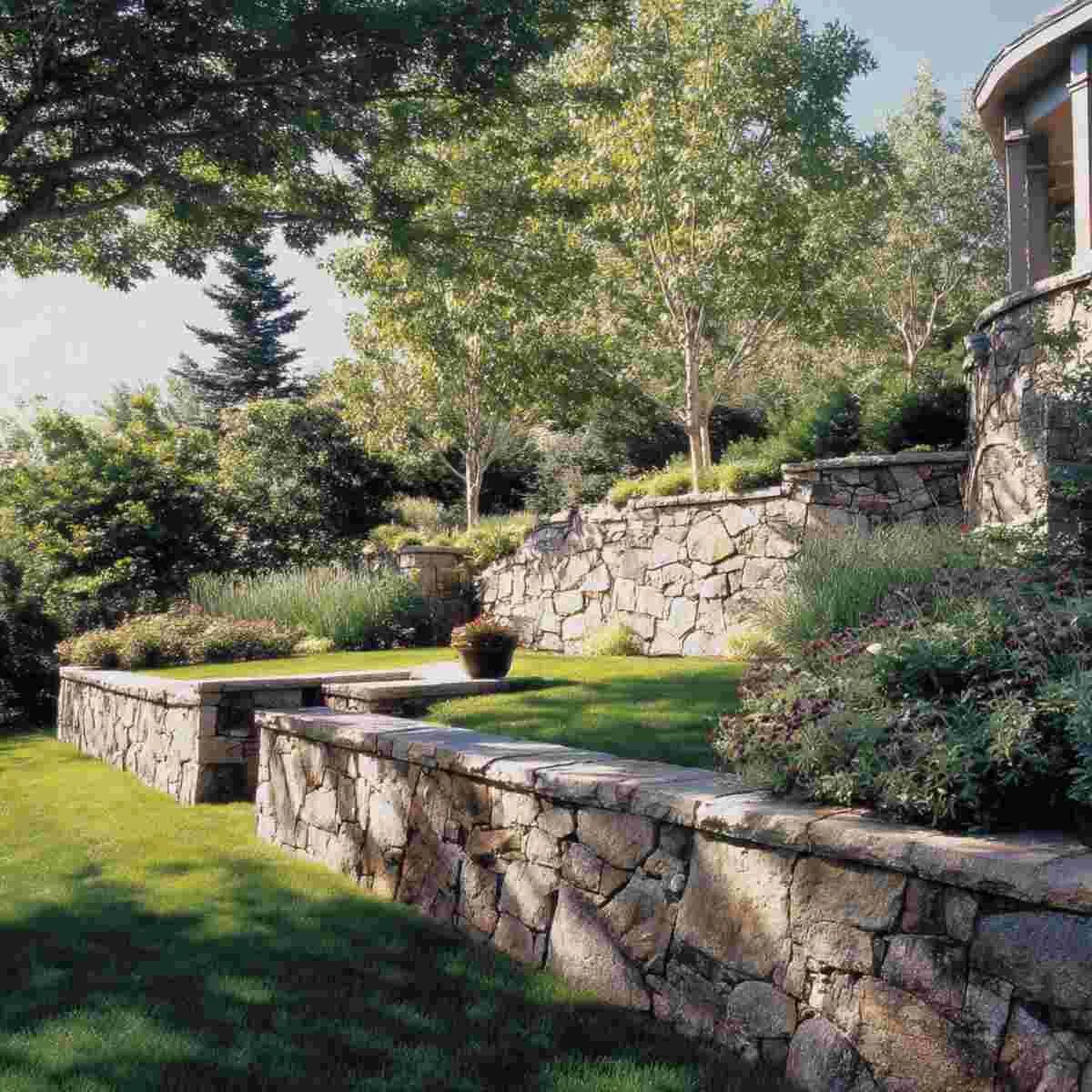
Retaining walls can provide useful wind protection where the garden has different levels. A seating area, path, or planting bed set behind a well-placed stone wall often feels markedly calmer than the space above it.
They are especially effective when combined with raised borders or terraces, since they help solve structural and wind-related problems at the same time. Stone also adds permanence and visual weight, which can help a windy garden feel more grounded.
Use them where you need shelter low to the ground rather than trying to block wind at full height.
10. Raised Planter Boxes With Trellises for Compact Gardens
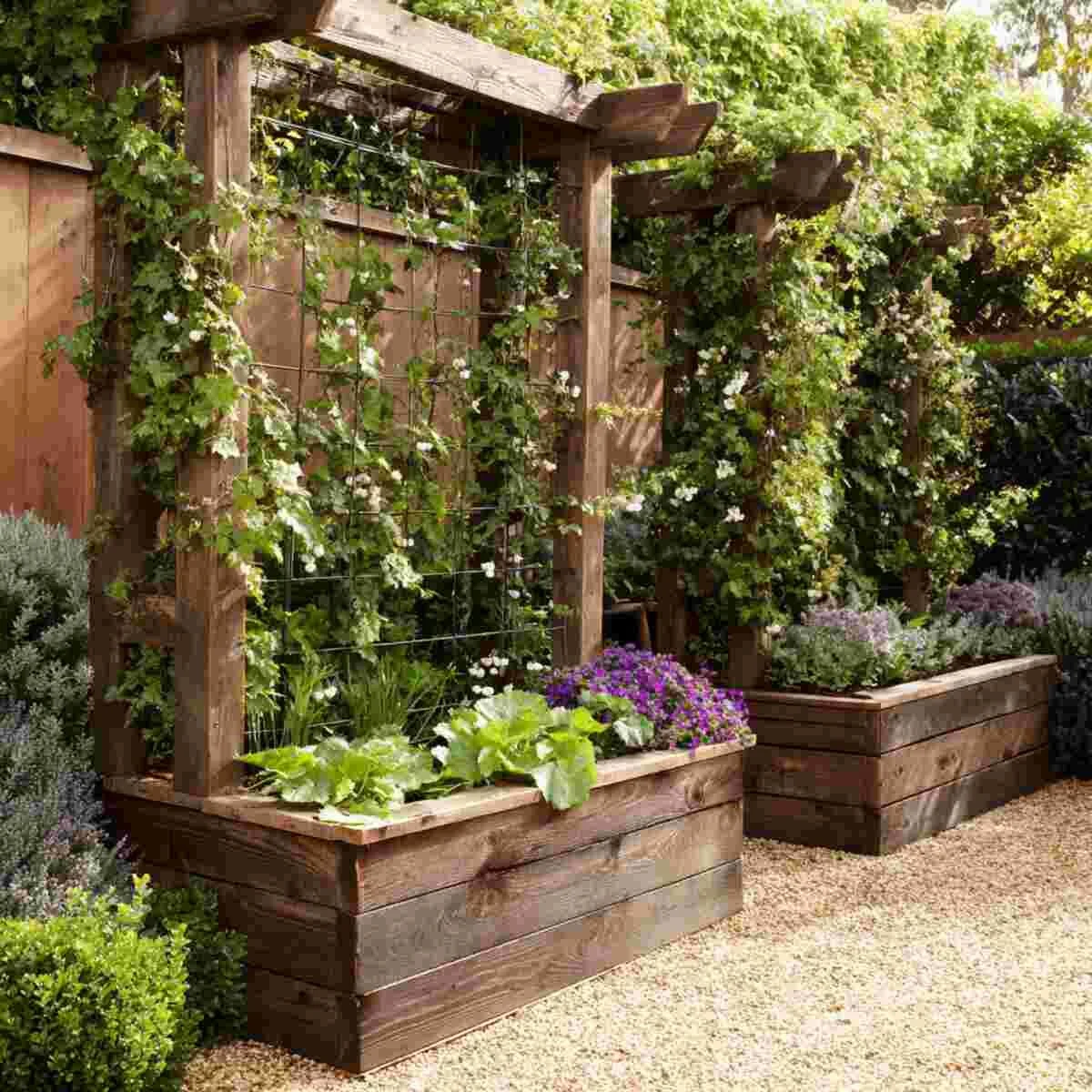
This is a useful structure when space is limited but you still want vertical screening and planting in one footprint. The raised planter gives you better soil control, while the trellis above provides wind filtering and a support for climbers.
It works well on patios, balconies, and side yards where a full hedge is not practical. Used in pairs or rows, these units can define a sheltered growing area without making the space feel boxed in.
Choose materials with enough weight and stability to cope with exposed conditions, especially if the planters will sit on hard surfaces.
11. Steel Panel Fencing for a Crisp, Durable Edge
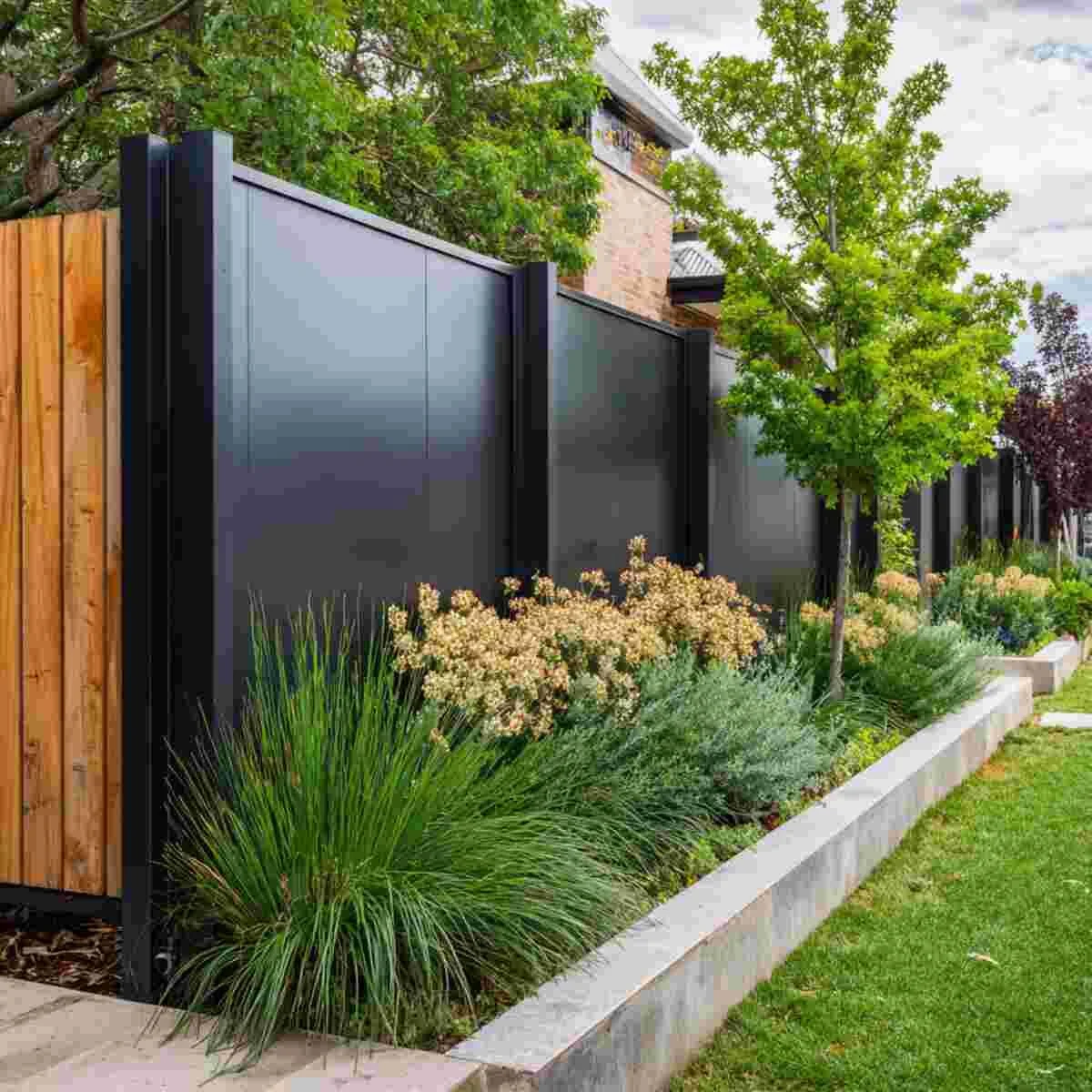
Steel panel fencing suits gardens that want a clean, modern look and a structure that holds up well in difficult weather. Its strength and low maintenance are major advantages in exposed settings.
In very windy gardens, it often works best when used in a perforated or partially open design rather than as one uninterrupted solid sheet. That allows the fence to reduce gusts without taking the full force of the wind in one hit.
This style pairs particularly well with gravel planting, architectural shrubs, and simpler material palettes.
12. Slatted Wood Fencing for Balanced Airflow
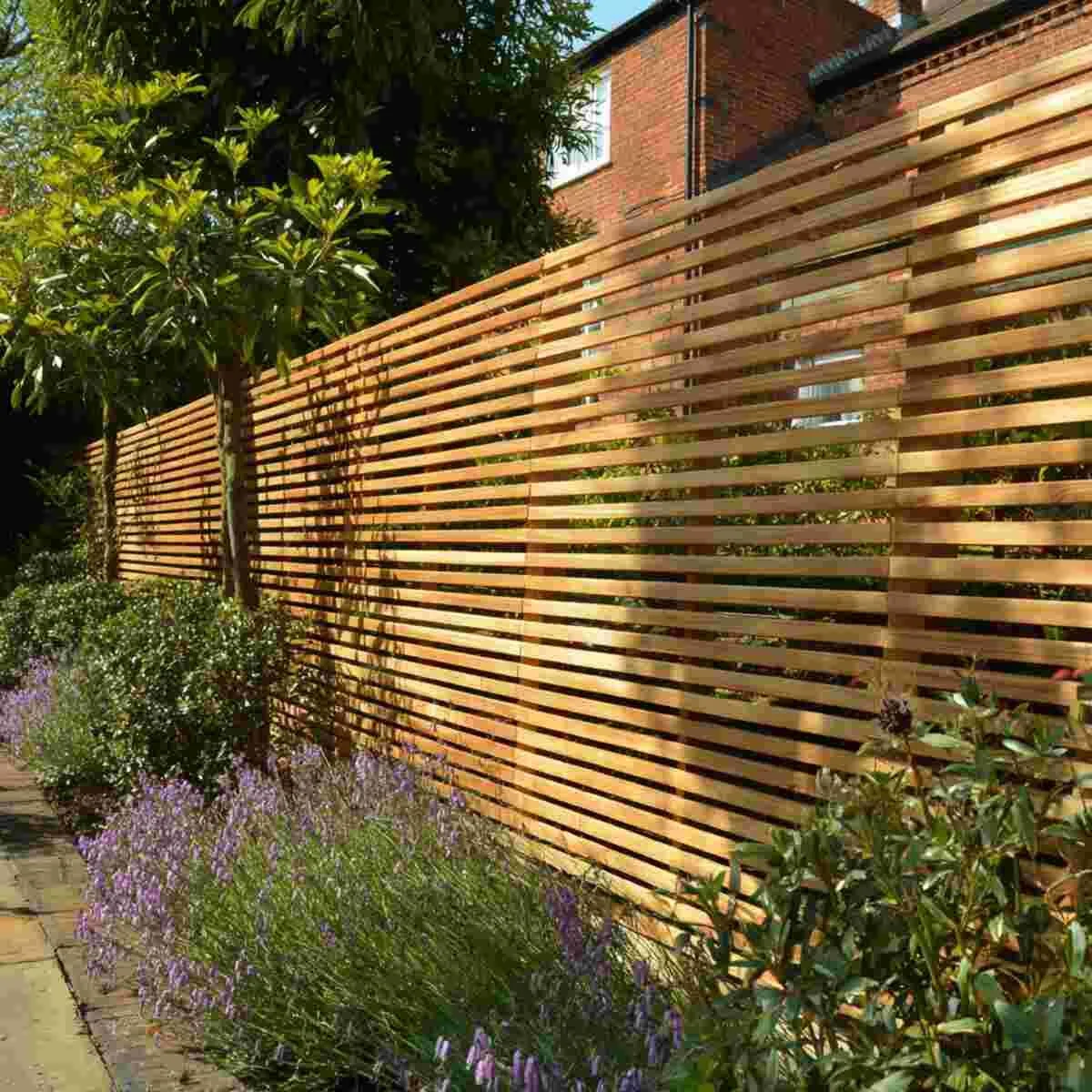
Slatted fencing is one of the best examples of a structure that works with wind rather than against it. The gaps between the boards allow air to pass through in a moderated way, which is often more effective than a fully solid panel.
It also offers a good balance of privacy, light, and visual warmth. In modern gardens, horizontal slats feel especially current, while vertical slats can read more classic depending on the detailing.
Keep the spacing consistent and the posts well anchored. In exposed gardens, construction quality makes a noticeable difference.
13. Willow Hurdles for Lightweight, Natural Screening
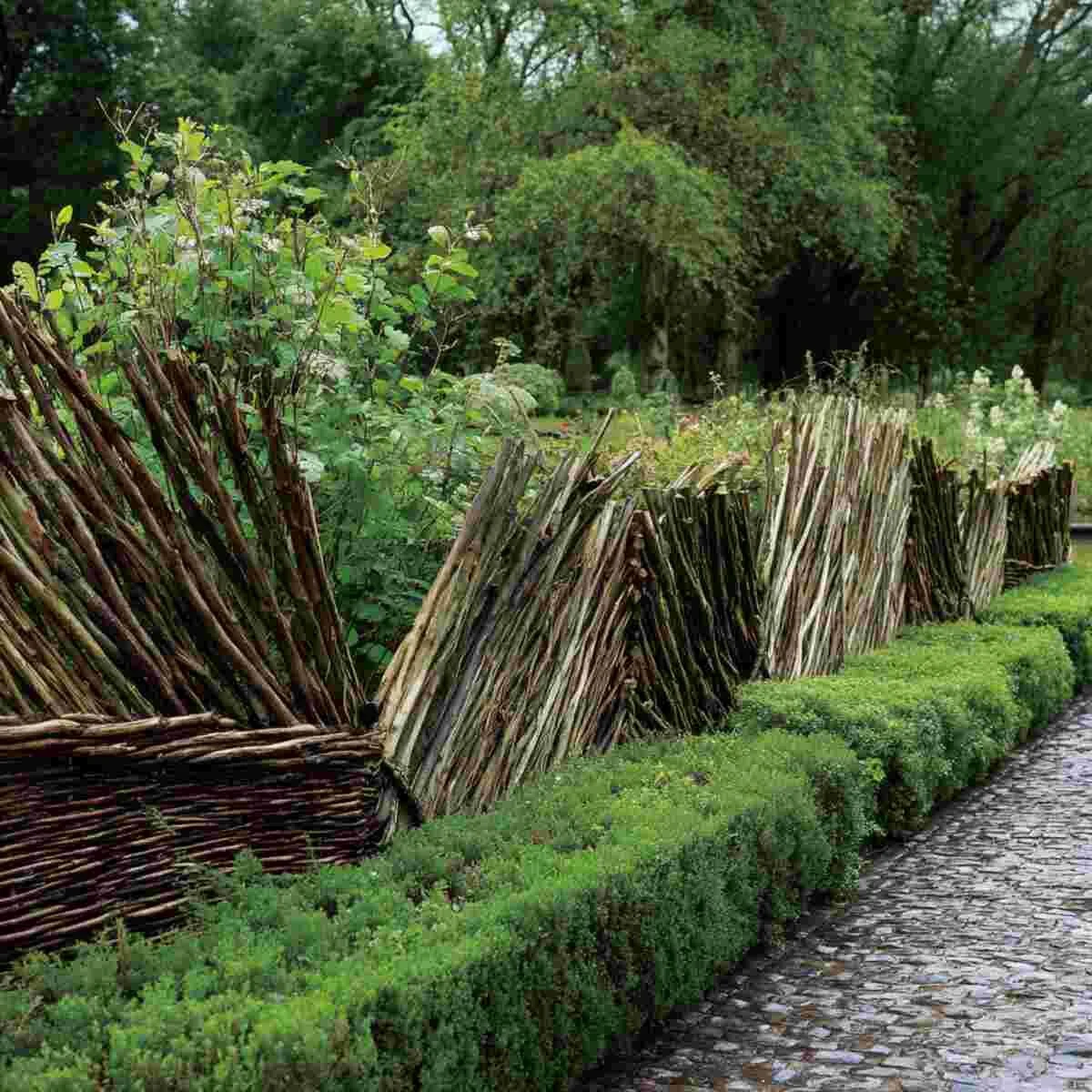
Willow hurdles are portable woven panels that can be used as standalone screens or attached to existing posts and supports. Their woven form helps soften wind, while the material itself gives the garden a relaxed, organic feel.
They are especially useful in cottage-style spaces, kitchen gardens, and temporary setups where you want flexibility. Because they are lighter than masonry or steel structures, they are best in sheltered-to-moderately windy positions or as part of a layered system.
They look particularly good paired with herbs, cut flowers, and natural planting styles.
14. Vertical Garden Walls for Green Screening in Small Spaces
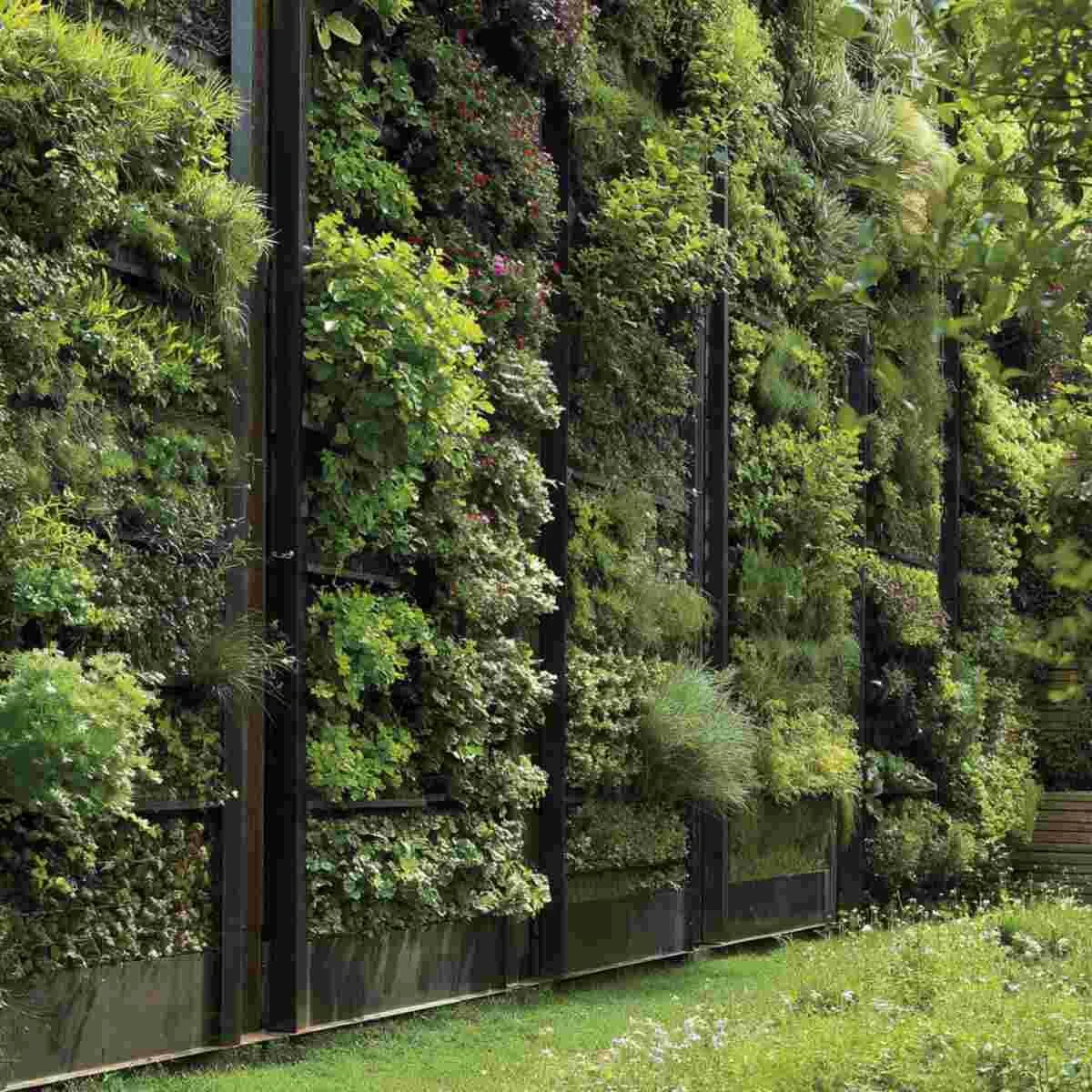
Vertical garden walls combine planting and structure in a way that is especially useful in urban gardens where every square foot matters. They can help soften wind, buffer a wall, and create a more humid microclimate around a seating area or courtyard.
They are not usually the first line of defence on a very exposed site, but they can contribute meaningfully to a more sheltered feel when used with screens, walls, or pergolas nearby.
They also offer an excellent way to bring greenery into places where ground planting is limited.
15. Corrugated Metal Screens for Strong, Modern Shelter
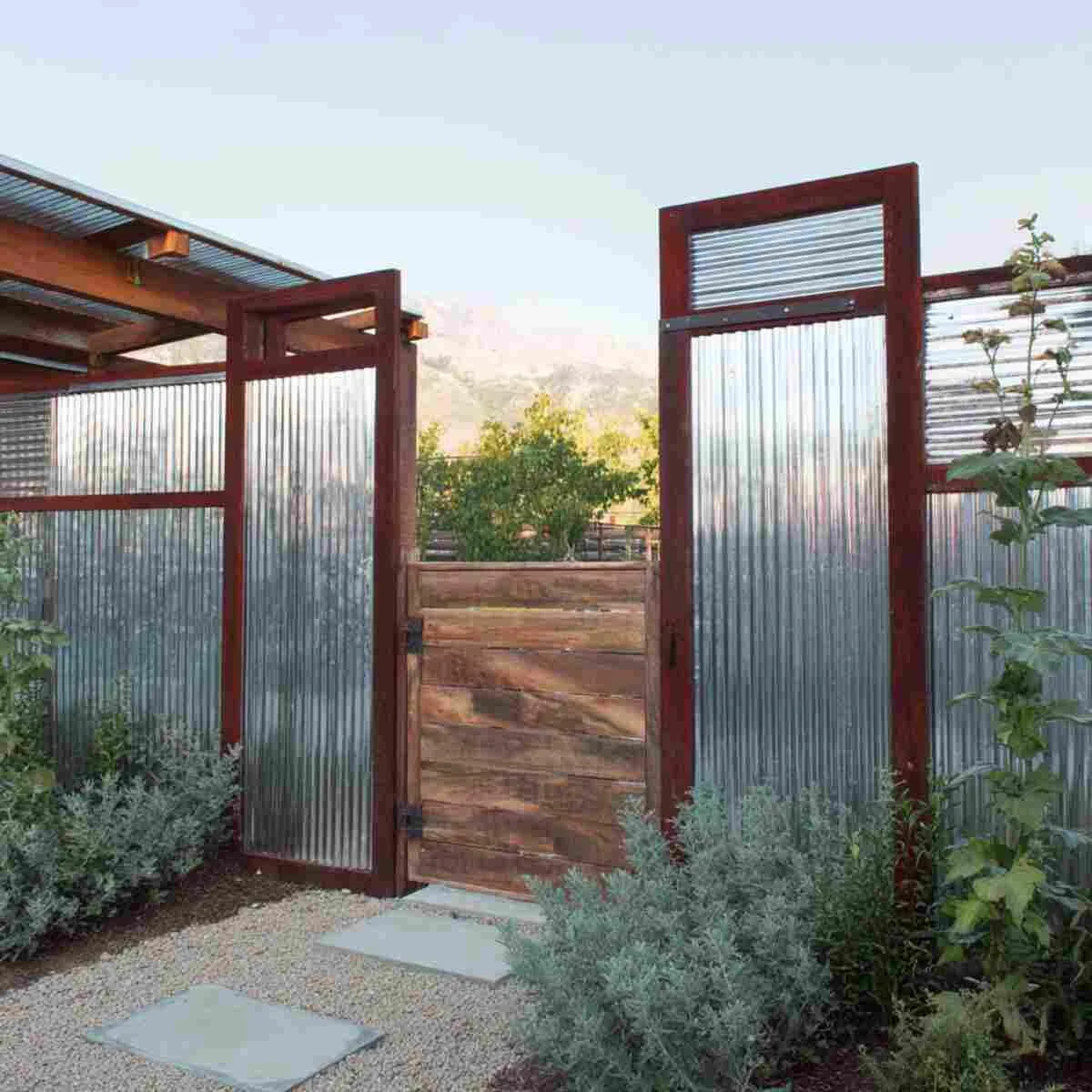
Corrugated metal has strength without the visual heaviness of a thicker wall. The ridged surface also helps disperse force more evenly than a completely flat panel, which makes it a practical material in windy settings.
These screens work particularly well in industrial, contemporary, or minimalist gardens where texture comes from materials as much as from plants. They also pair well with timber, gravel, corten steel, and drought-tolerant planting.
If you use metal screening in a highly exposed site, make sure the support posts and fixings are rated for the conditions.
16. Arched Garden Tunnels for Sheltered Walkways
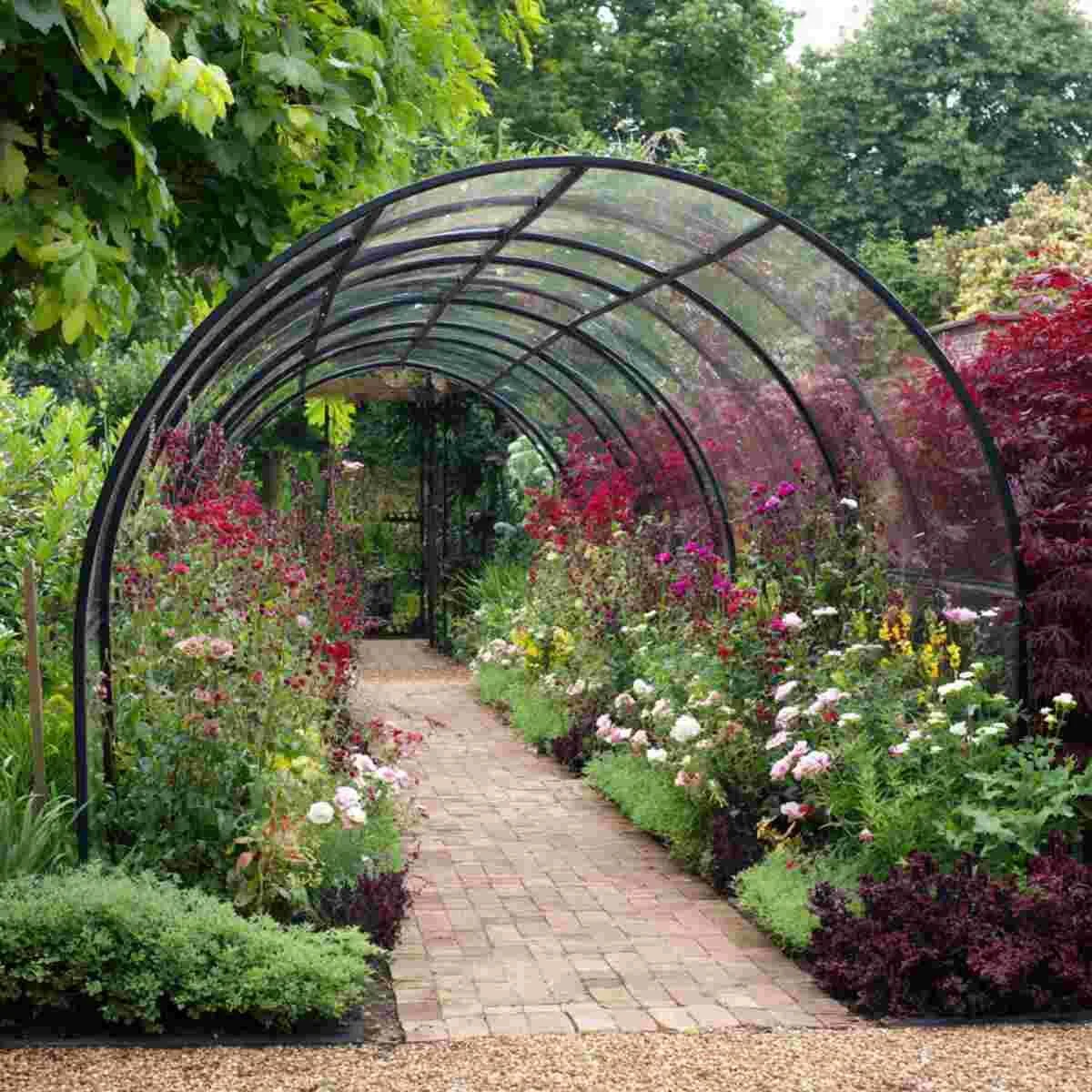
Arched tunnels provide both structure and movement through the garden while helping direct wind over the top rather than straight through the planted area. They are especially effective when planted with climbers that soften the sides and roof.
This makes them a useful choice for connecting one part of the garden to another, creating a more protected passage or growing zone. They can also give a windy garden a stronger sense of destination and enclosure.
The curved shape is part of the advantage. It encourages airflow to move around the structure more smoothly than it would around a flat barrier.
17. Concrete Block Walls for Maximum Shelter
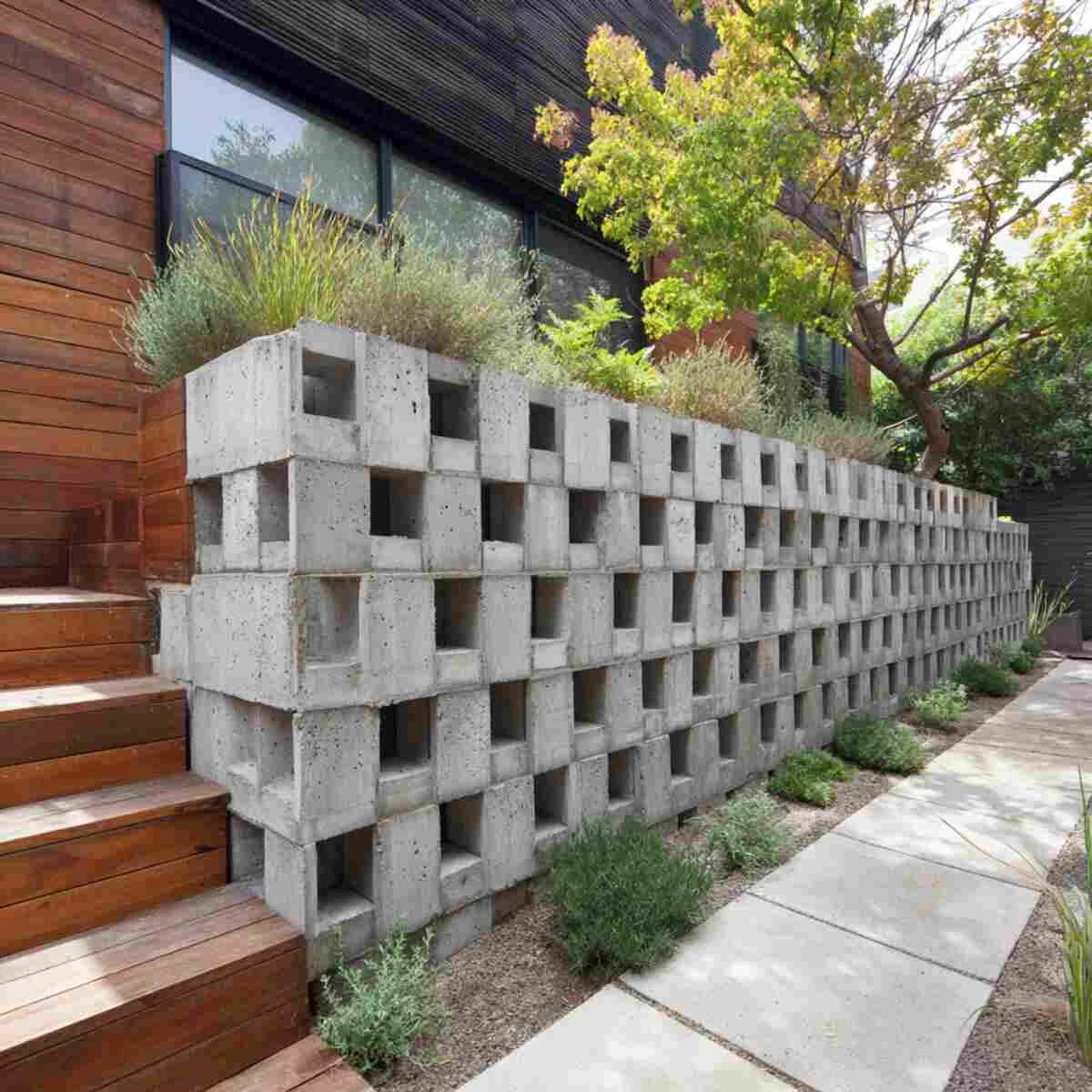
Where exposure is severe, a concrete block wall can provide the most dependable protection. It is a strong choice for boundary walls, service areas, and heavily exposed spots where lighter structures would struggle.
Because it is a fully solid barrier, placement matters. It can create turbulence if used without thought, so it often works best combined with planting or secondary screening to soften the effect.
Visually, concrete can feel stark on its own. Cladding, planting, or textural finishes usually help it sit better in a garden setting.
18. Shade Sails Anchored to Strong Posts
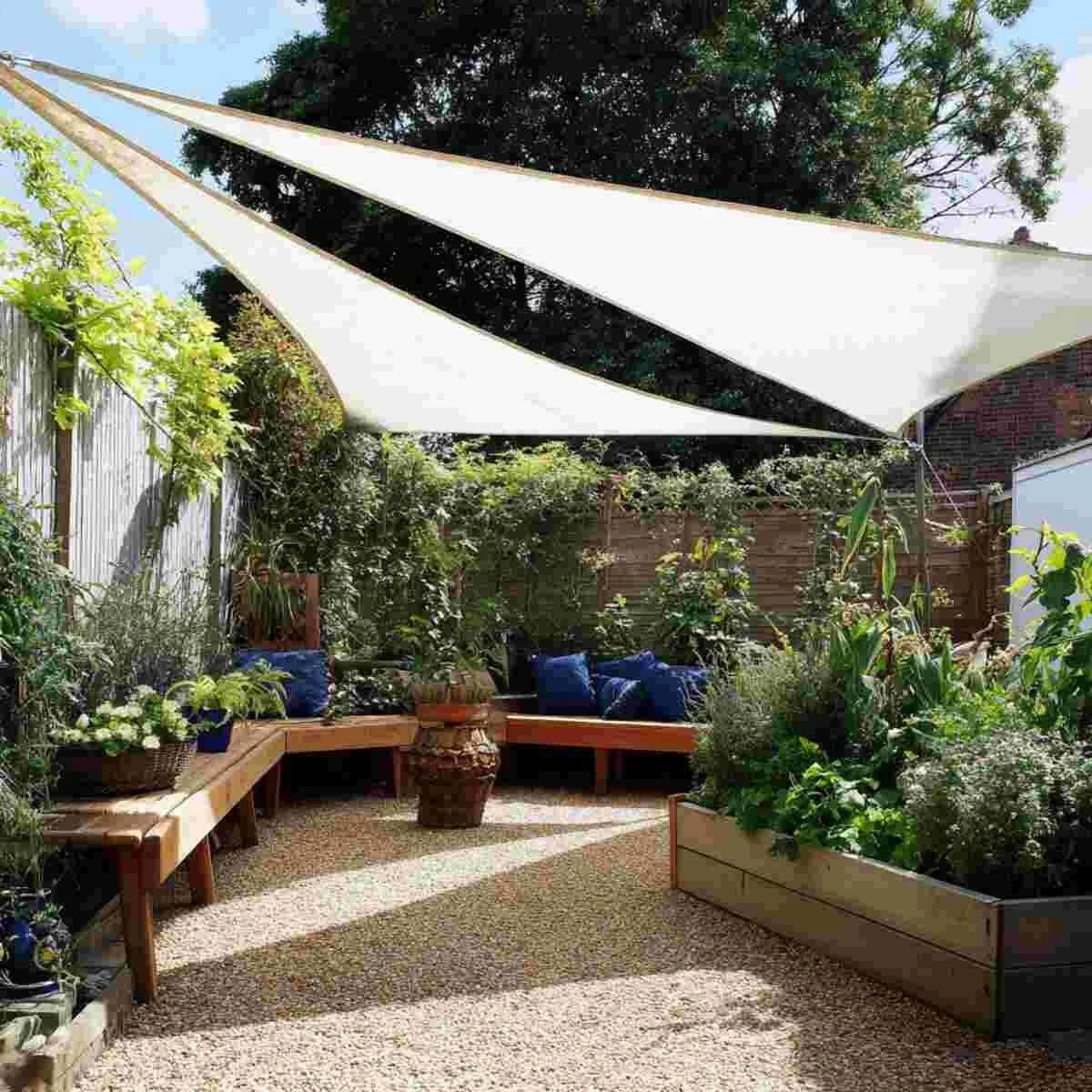
Shade sails are not usually the first structure people associate with wind protection, but when carefully angled and properly anchored they can help redirect gusts and improve comfort in exposed seating areas.
The important detail is installation. In windy gardens, weak posts or poor tensioning will quickly become a problem. The sail should be positioned so it sheds air upward and avoids pooling force in one place.
This is a good option when the goal is to make a patio or terrace more usable rather than shielding the entire garden.
19. Greenhouse Lean-Tos for Stable Growing Space
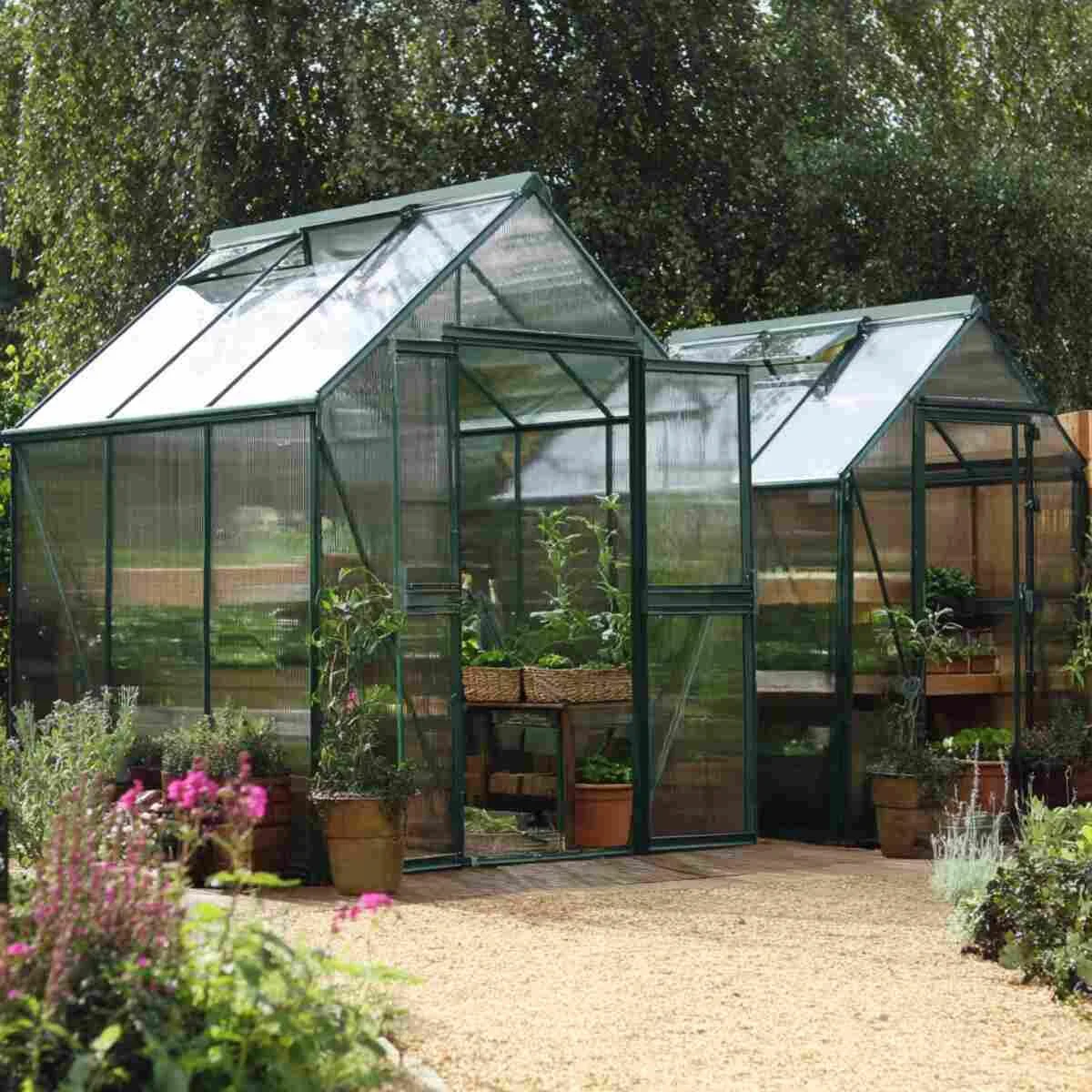
A lean-to greenhouse attached to an existing wall is usually more wind-stable than a freestanding greenhouse because the wall provides both support and shelter. That makes it a very practical structure in smaller windy gardens.
It also creates a warmer growing environment for delicate plants and can extend the useful gardening season without requiring a large footprint.
Place it on the more sheltered side of the building if possible, and ensure the glazing and frame are suited to local weather conditions.
20. Wind-Resistant Gazebos for Protected Seating Areas
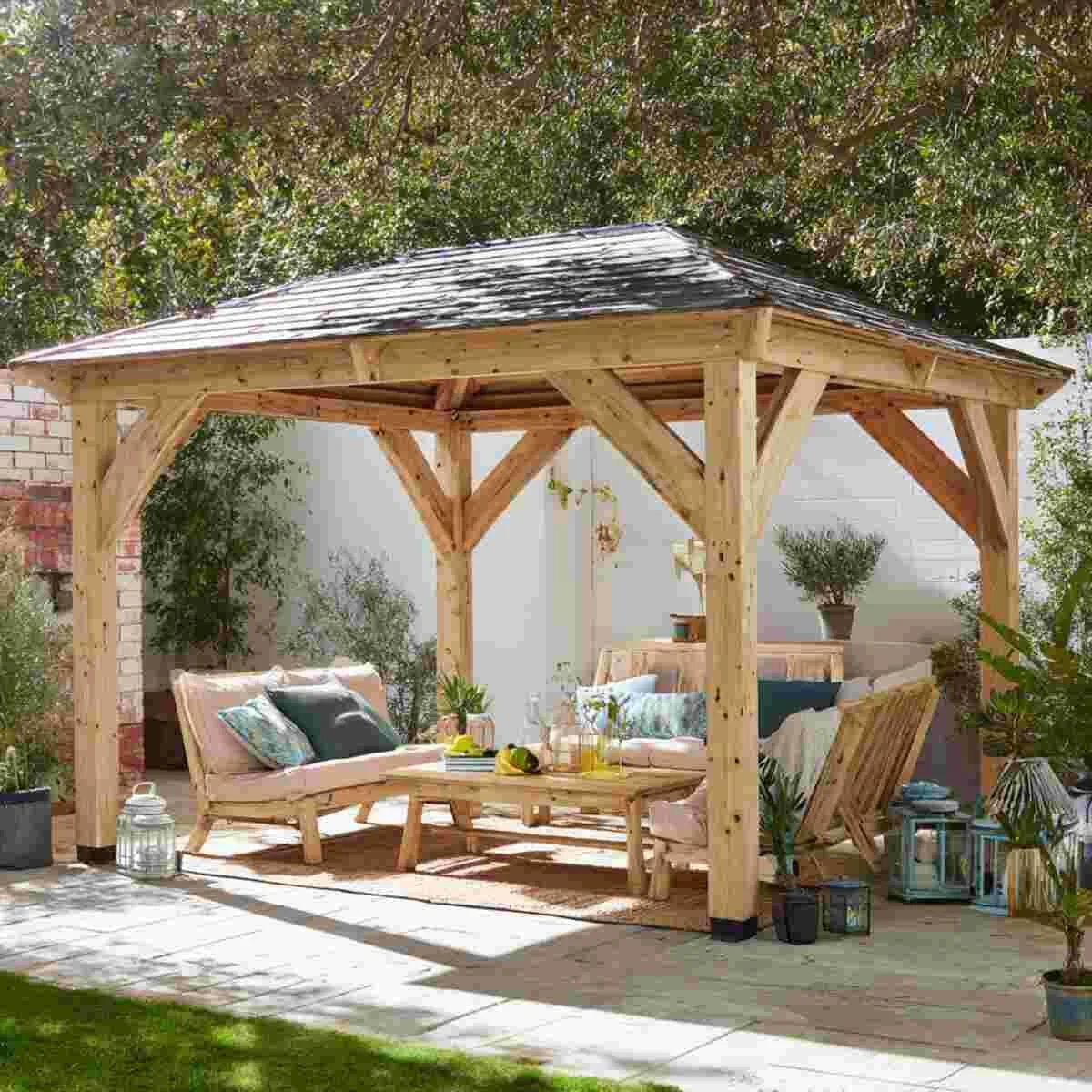
A gazebo can turn a windy garden into a usable outdoor room, but only if it is designed for exposure. Vented roofs, open-sided airflow, and strong anchoring are what separate a truly wind-resistant gazebo from one that feels vulnerable in bad weather.
These structures work well in larger gardens where a permanent destination space makes sense. They are particularly useful if the rest of the site remains breezy and you want one reliably sheltered place to sit.
Soft furnishings, side screens, or planting around the base can make the structure feel even more protective.
21. Corten Steel Windbreak Panels for Durable Drama
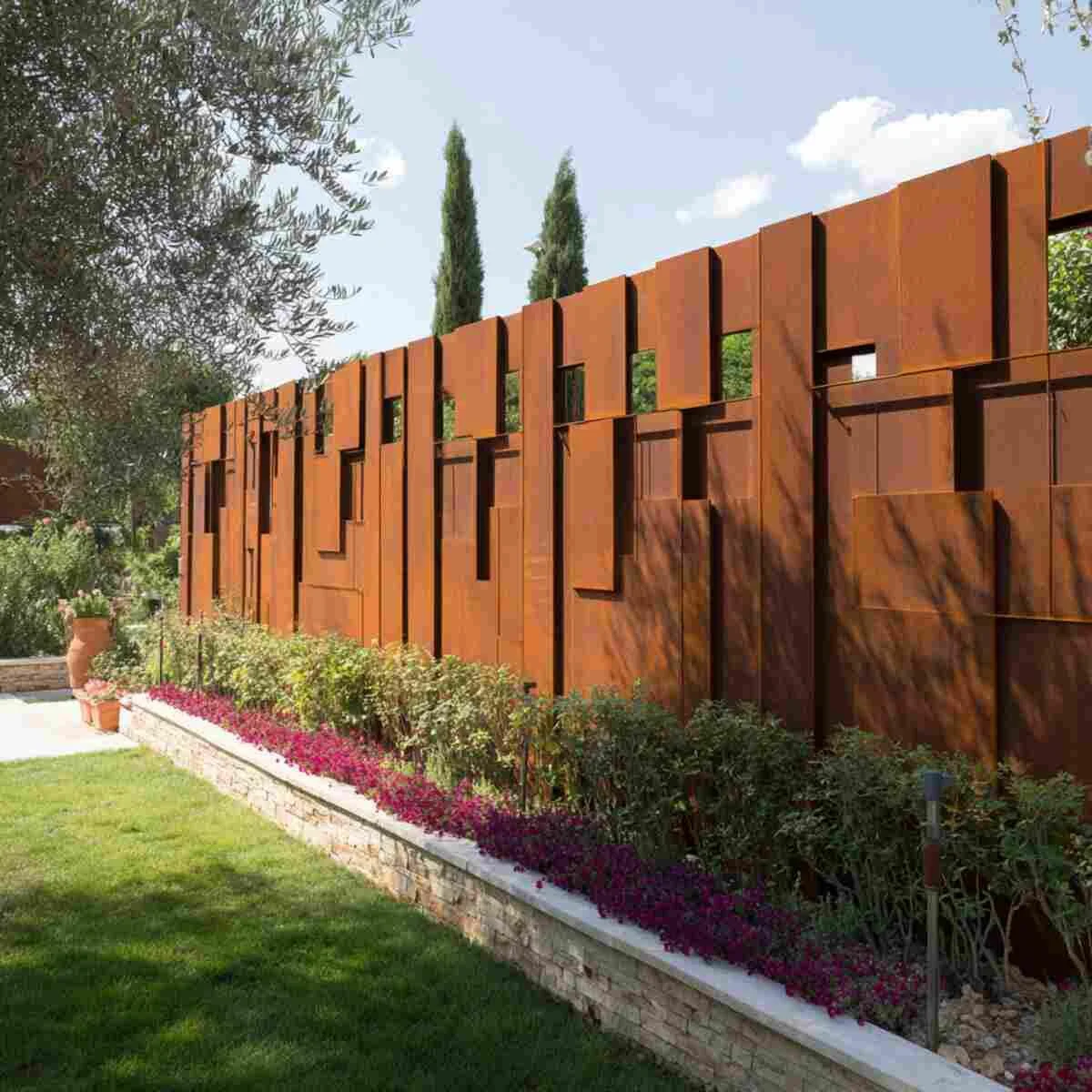
Corten steel panels combine weather resistance with strong visual character. Their rusted finish adds warmth and a sculptural quality that works especially well in contemporary and dry-climate gardens.
They are durable, low-maintenance, and effective at creating defined shelter when placed thoughtfully. As with other solid or semi-solid panels, perforated versions often work better in very exposed spots because they reduce pressure on the structure itself.
Use them where you want the windbreak to feel like a design statement as well as a practical intervention.
22. Tied Reed Screens for Flexible, Natural Filtering
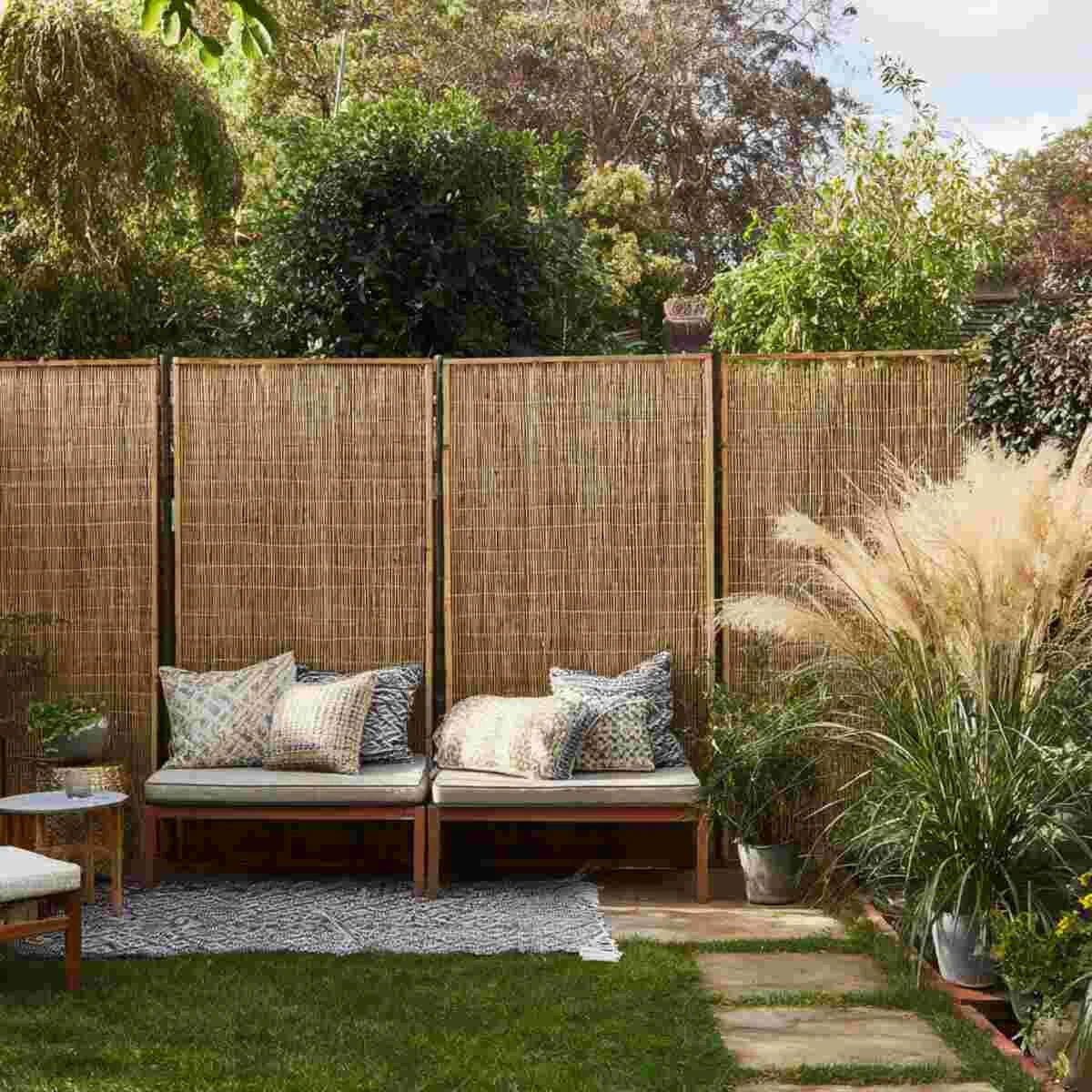
Reed screens offer a softer, more natural look than many manufactured panels. Because they are made from tightly bound natural stems, they help break up wind without creating a completely hard edge.
They are especially effective in Mediterranean, coastal, or informal gardens where you want the barrier to blend in. On their own, they are better for light to moderate screening than for the harshest exposure, but they work well as part of a layered system.
Use them on pergolas, along fences, or around seating spaces that need a little extra calm.
23. Living Willow Domes for Sheltered Garden Features
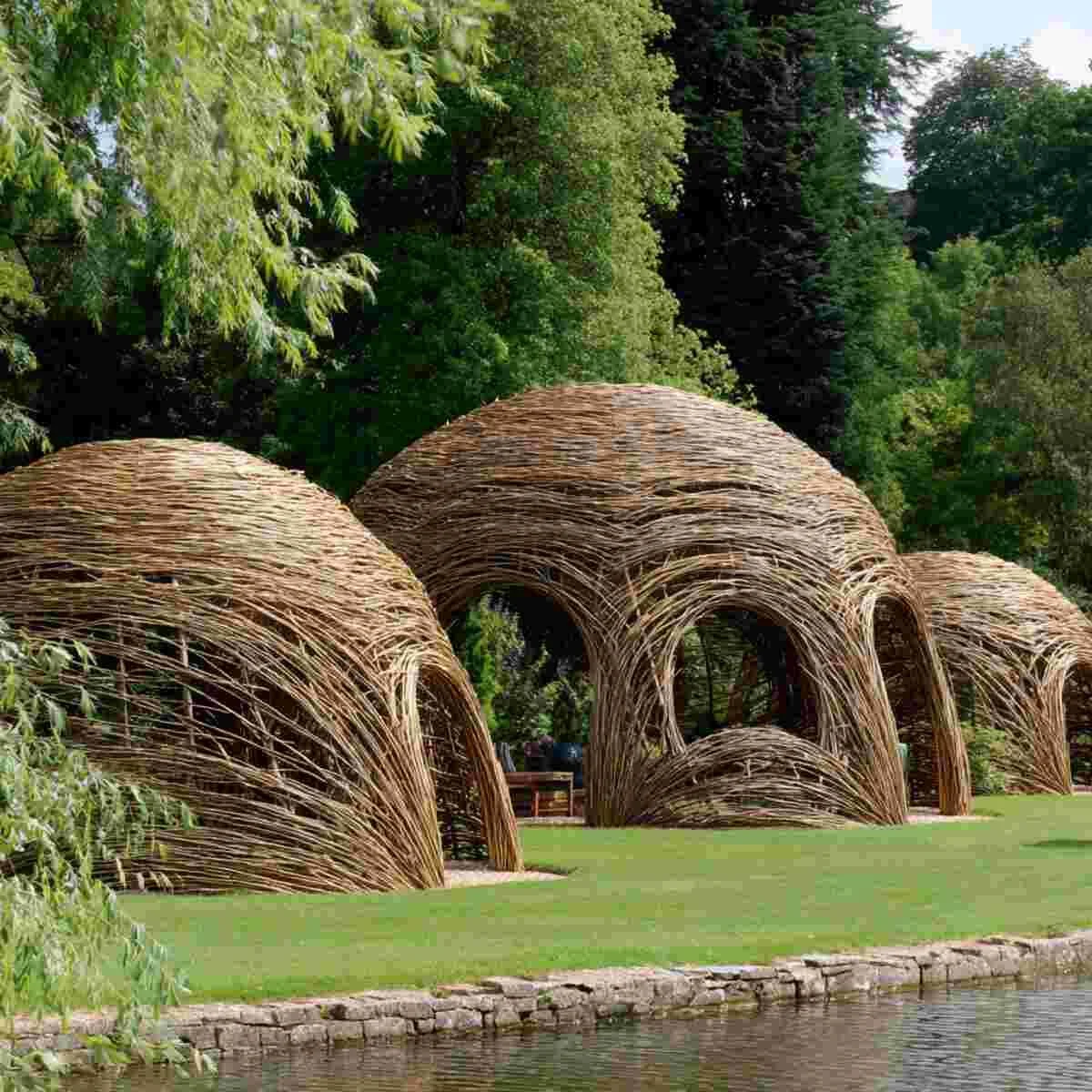
Living willow domes are both playful and practical. Built from living rods that root and strengthen over time, they create semi-enclosed structures that absorb wind movement while making a sheltered space inside.
They work particularly well in family gardens, wildlife gardens, and spaces where you want something more imaginative than a conventional screen or gazebo. As they grow, they become denser and more atmospheric.
This is less about boundary-scale wind protection and more about creating a magical, protected pocket within the garden.
24. Tall Ornamental Grass Barriers for Soft Screening
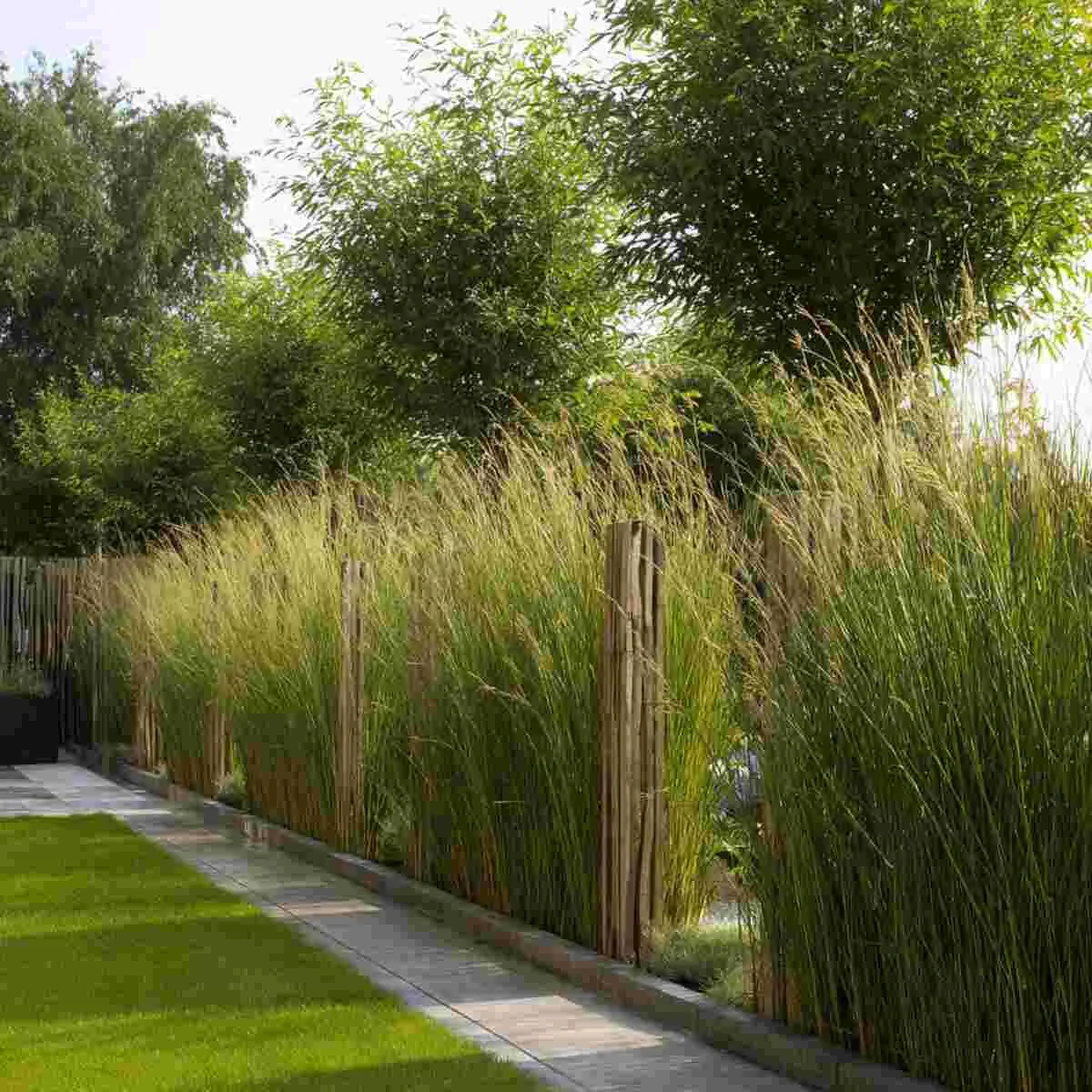
Used in dense rows or repeated drifts, tall grasses can function almost like a living screen. Their ability to sway without breaking makes them one of the most naturally wind-adapted structures you can add to a garden.
They are particularly good along path edges, around patios, or as a softer front layer in front of stronger built barriers. The effect is lighter than a hedge but often more graceful.
This is a strong option if you want movement, wildlife value, and seasonal texture along with wind reduction.
25. Retractable Canvas Awnings for Flexible Shelter
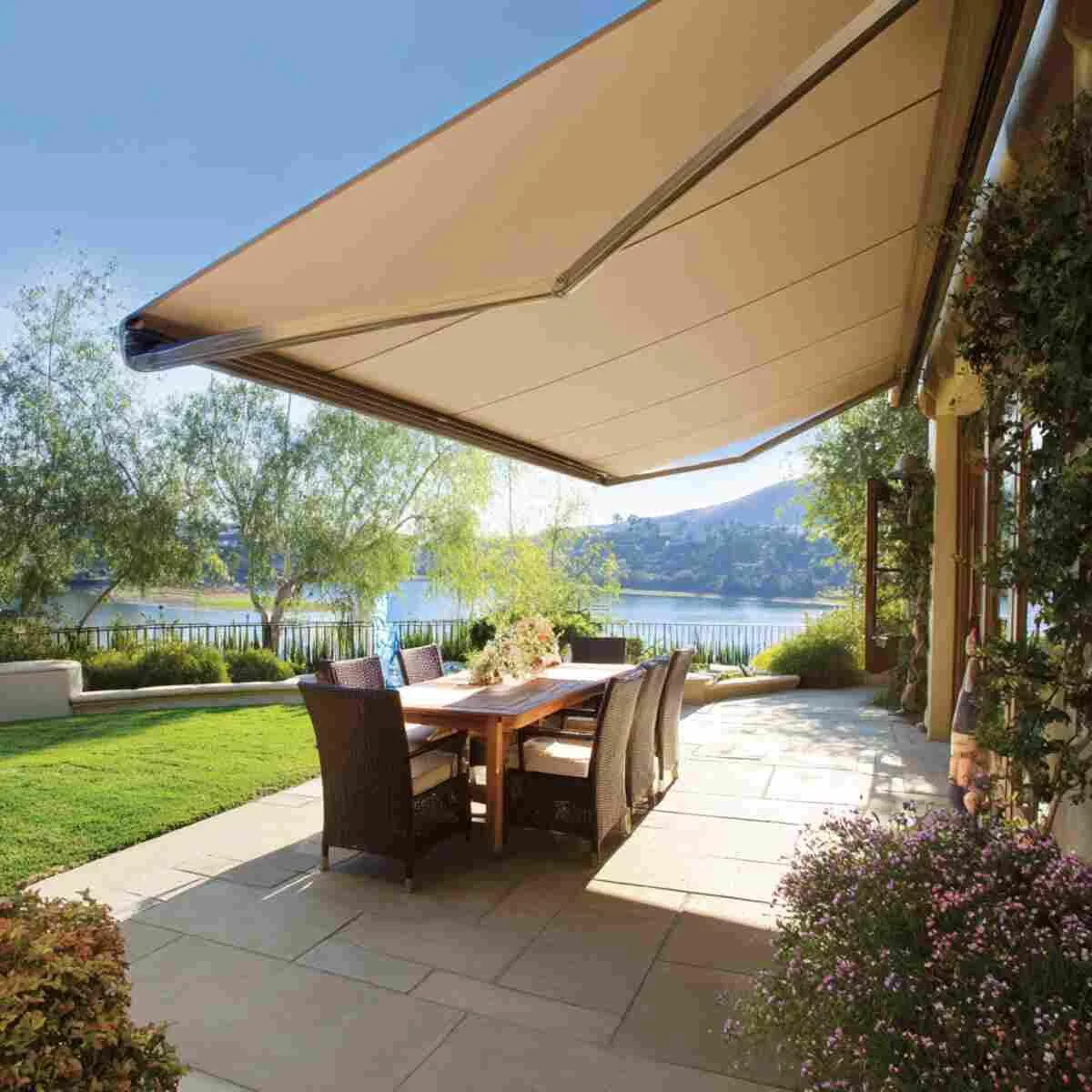
Retractable awnings are useful because they adapt to conditions. On calm or sunny days, they provide shade and comfort. When stronger winds arrive, they can be closed to prevent strain or damage.
That flexibility makes them especially valuable on patios attached to the house, where you want shelter but do not always want a fixed overhead structure. They are not a whole-garden solution, but they are a highly practical one for everyday outdoor living.
Choose a model designed for exterior use and, ideally, one suited to breezier climates rather than a basic fair-weather version.
How to Choose the Right Wind-Resistant Structure
The best structure depends on how exposed your garden is and what you want to protect. A structure that works for a patio may not be enough for an open boundary, and a full wall may be far more than a small courtyard needs.
- For strong, permanent shelter: gabion walls, retaining walls, concrete block walls, and well-built steel panels are the most robust choices
- For filtered airflow: slatted fencing, louvered screens, trellises, hedges, and grasses usually perform better than fully solid barriers
- For seating areas: pergolas, gazebos, shade sails, and retractable awnings are especially useful
- For small gardens: planter-trellis combinations, vine walls, and lean-to structures help save space
- For a softer look: living structures such as hedges, willow, bamboo, and grasses feel more natural in planted gardens
Frequently Asked Questions
What structure works best in a very windy garden?
For severe exposure, heavier and more permanent structures such as gabion walls, retaining walls, concrete walls, or well-anchored steel systems are usually the strongest options. In many cases, they work best when combined with planting that softens and filters the wind further.
Is a solid wall better than a slatted fence for wind?
Not always. A fully solid wall can create turbulence on the sheltered side, especially in strong gusts. Slatted or partially permeable structures often reduce wind more effectively by filtering airflow instead of stopping it abruptly.
Are pergolas suitable for windy gardens?
Yes, if they are designed and anchored properly. Pergolas with slatted roofs and open airflow usually perform better than heavier, sail-like structures that catch too much wind.
What is the lowest-maintenance windbreak option?
Gabion walls, steel panels, corten screens, and concrete structures are all relatively low-maintenance once installed. Among living options, dense evergreens such as yew, arborvitae, or juniper are often easier to maintain long term than more delicate planting.
Can I combine more than one wind-resistant structure?
Yes, and in many gardens that works best. A layered strategy such as a slatted screen with shrubs in front, or a retaining wall with grasses above it, often creates better shelter and a more attractive result than relying on a single element alone.
Final Thoughts
The most successful windy gardens usually rely on a mix of strength and flexibility. Heavy structures create protection where it is most needed, while filtered screens and planting soften the effect and make the space feel more natural. Whether you need a serious boundary solution or just a calmer patio corner, the right structure can make your garden easier to use, easier to plant, and far more enjoyable in every season.
Written by the Zeeshe Home Editorial Team, a blog focused on practical home, garden, and outdoor inspiration.


