
There is a brief window in spring when the garden feels newly awake, and bulbs are often the first to set the mood. Tulips, daffodils, hyacinths, snowdrops, and smaller naturalizing varieties can turn a bare border or plain walkway into something memorable without demanding months of upkeep.
The appeal is not just color. A well-planned bulb garden gives structure after winter, brings fragrance closer to the house, and fills awkward spaces before summer perennials take over. The ideas below are arranged with that in mind: what each look offers visually, where it suits the garden best, and how to make it feel intentional rather than scattered.

Tulip Border Ideas Along a Front Path
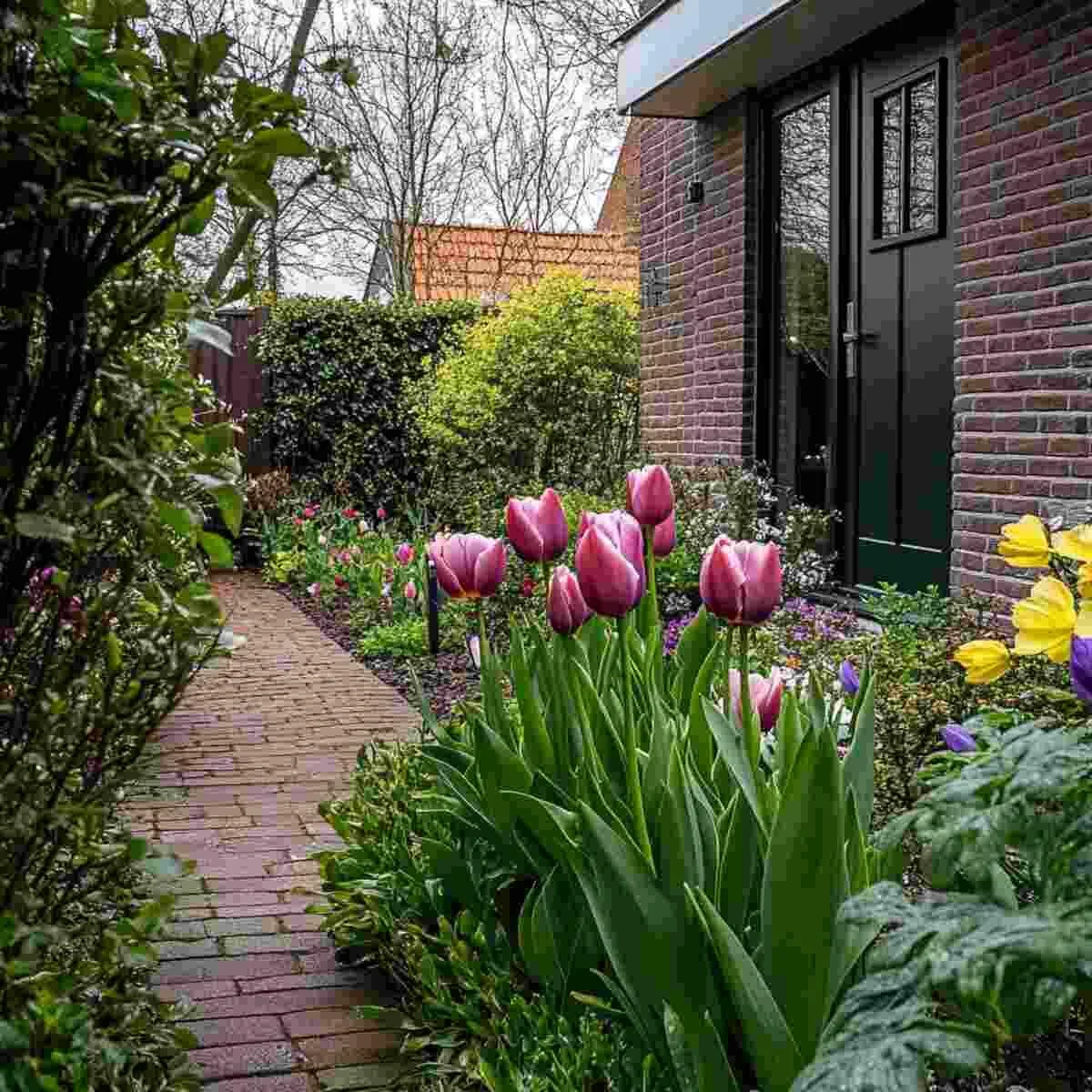
A tulip-heavy border has a sense of occasion that suits an entry path beautifully. The upright stems create order, while saturated pinks and companion blooms soften brick, stone, and other hard landscaping.
This style works especially well where the bed is viewed from both sides, such as a front walk or path to the door. Instead of planting one bulb at a time, group tulips in generous clusters so the display reads as a sweep of color rather than scattered dots.
- Choose a border at least 12 to 18 inches deep so tulips do not look cramped.
- Place taller tulips toward the middle or back, with daffodils or lower spring flowers in front.
- Repeat the same tulip color every few feet for a calmer, more editorial look.
If your front garden gets strong spring wind, sturdier mid-height tulips are usually easier to maintain than very tall, oversized varieties.
Daffodil Garden Ideas for Window Boxes and Entrances
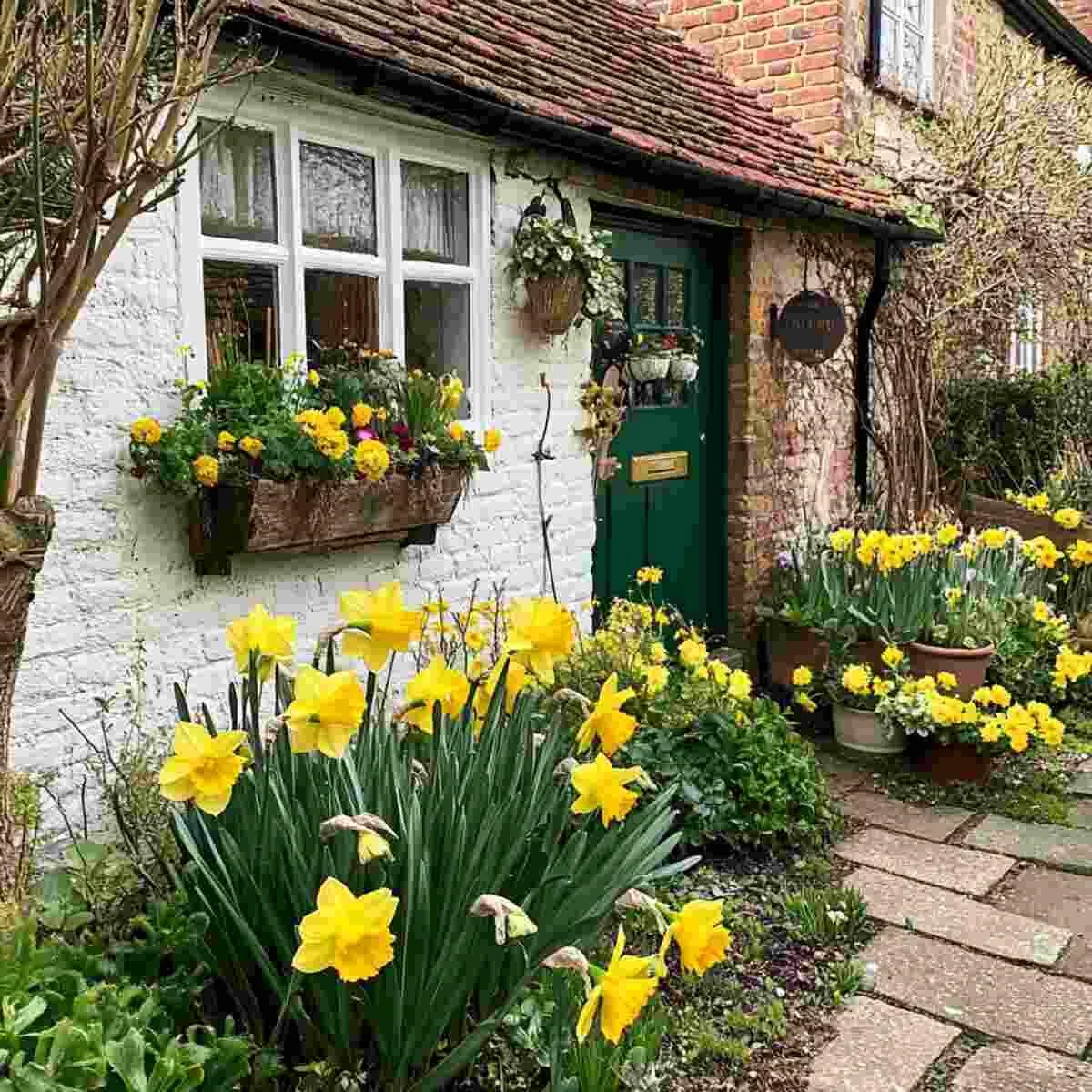
Daffodils bring brightness in a way few spring flowers can. Used around a doorway, on a porch, or beneath windows, they lift the entire exterior and make even a small home garden feel cheerful and established.
They are also one of the most forgiving bulbs for beginners. Many varieties return reliably and tolerate colder conditions better than fussier spring bloomers. For an entrance display, combining in-ground daffodils with matching pots or window boxes creates continuity and makes the house feel more connected to the garden.
- Use shorter daffodil varieties in containers so the arrangement stays balanced.
- Keep the strongest yellow tones near doors, gates, or seating areas where you want the eye to land first.
- Mix in white-flowered bulbs if the overall look feels too bright or busy.
Because daffodil foliage needs time to die back naturally, place them where fading leaves will be hidden later by nearby perennials or soft groundcover.
Fragrant Hyacinth Planting Ideas for Garden Paths
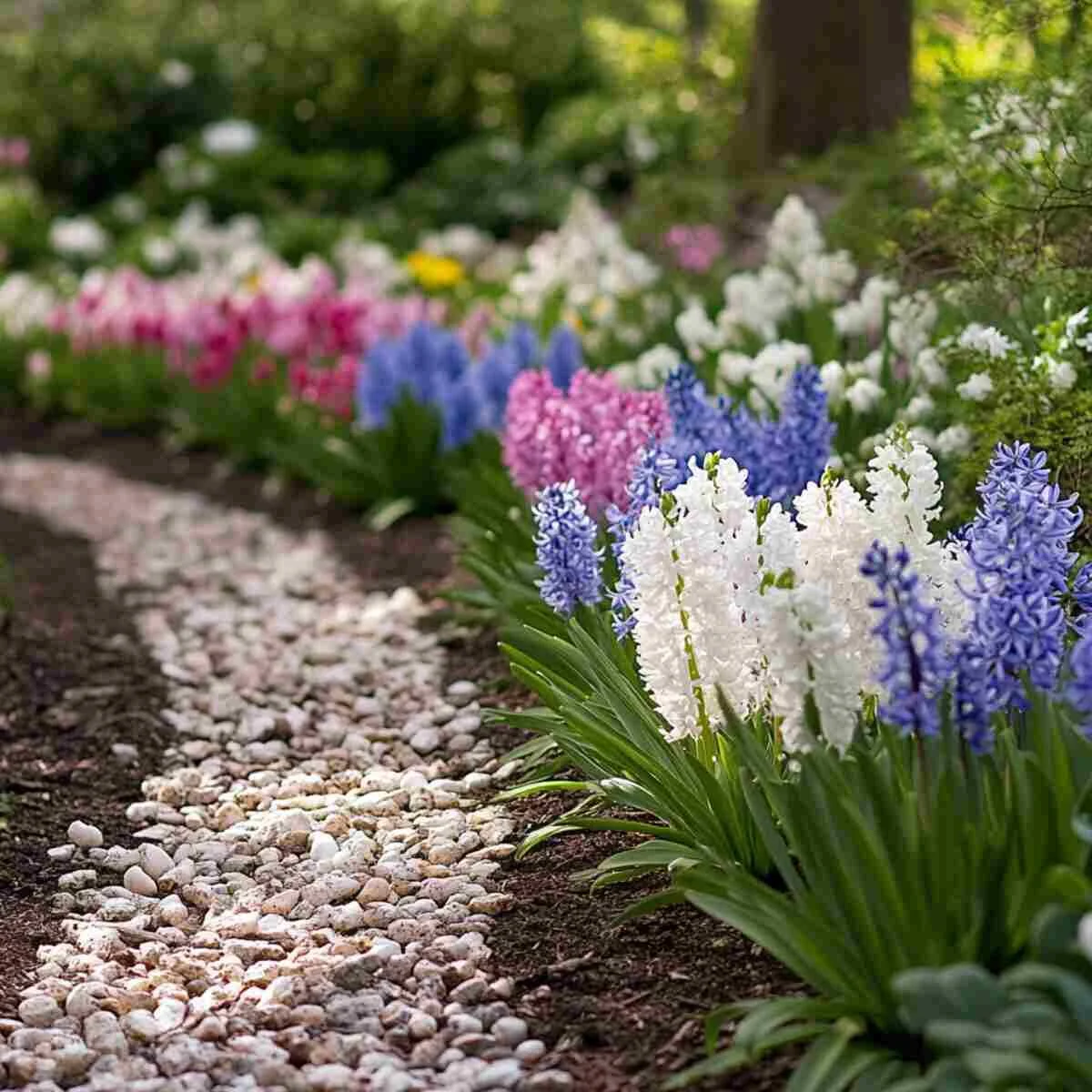
Hyacinths earn their place in smaller gardens because they deliver both fragrance and dense color. Planted alongside a path, they turn an ordinary route into a more immersive spring experience, especially near the front door, a side passage, or a sitting area.
The compact flower spikes look best when planted closely in repeated color drifts. Blues, soft pinks, and white together feel fresh and romantic, while a single-color scheme feels cleaner and more modern.
Because hyacinths are short, they are most effective where the viewer is close by. They tend to disappear in large open beds, but along a narrow path or edge they feel rich and full.
- Reserve them for areas where fragrance can be appreciated at close range.
- Use gravel, pebble, or stone paths to contrast their dense flower heads.
- Avoid overly wet spots, as bulbs are more likely to rot in soggy soil.
Crocus Border Ideas for Early Spring Color
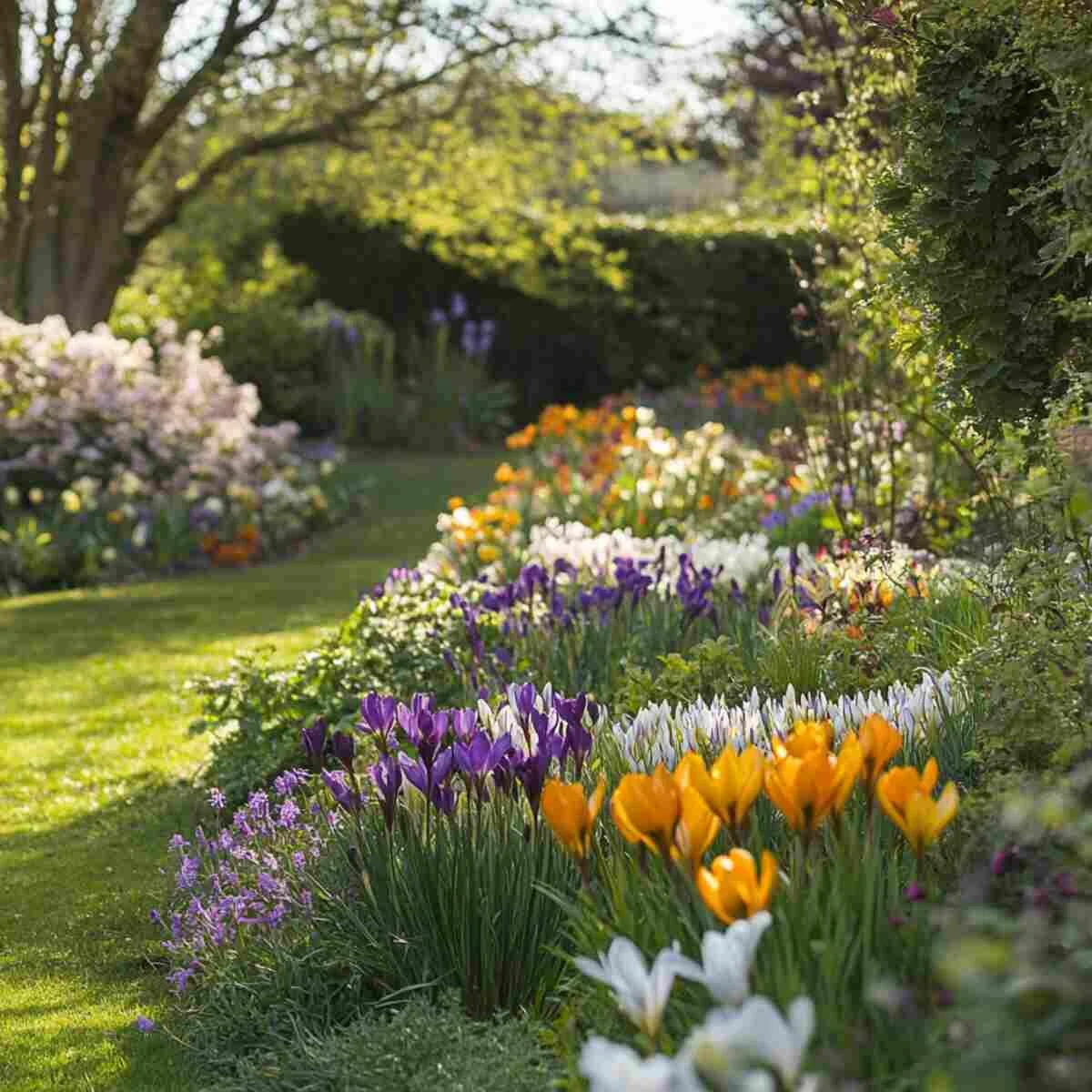
Crocuses are often at their best when used in quantity. Their low profile makes them ideal for edging lawns, filling the front of borders, or softening the line between a path and planting bed.
The charm here comes from scale. A few crocuses can look sparse, but a broad ribbon of mixed purple, white, and orange reads like a carpet of color just when the garden needs it most. They are especially useful in larger yards where taller spring bulbs would require a bigger budget to create impact.
Keep the planting loose rather than rigid. Slight irregularity makes the display feel more natural, especially near lawns or beneath deciduous trees.
- Best suited to the front edge of beds where they will not be hidden by taller plants.
- Plant in wide drifts instead of straight lines.
- Allow foliage to fade before mowing if they spill into grassy areas.
Allium Garden Accents with Architectural Shape
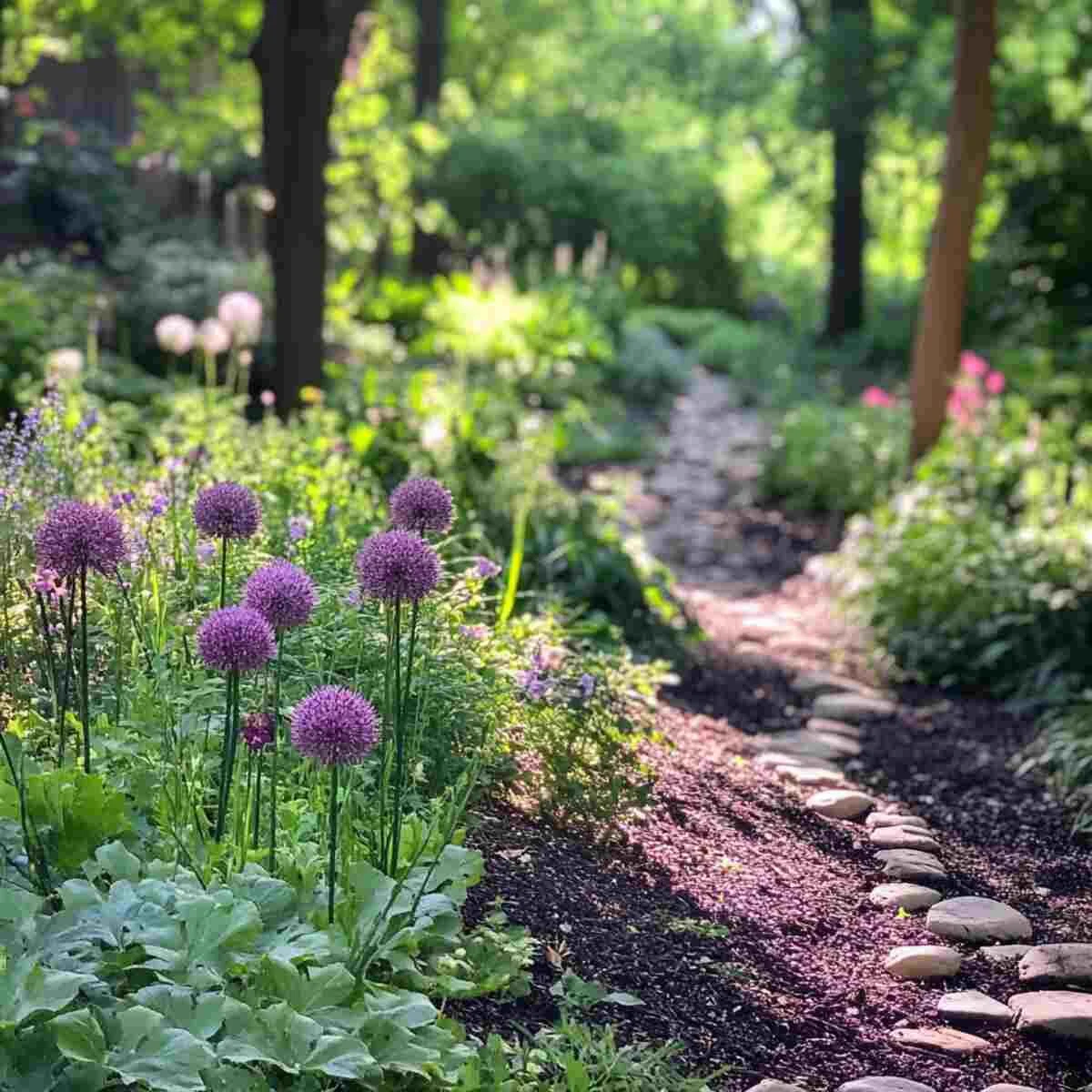
Alliums bring a different kind of beauty to a bulb garden. Their round flower heads feel sculptural, and their tall stems provide punctuation among softer foliage and informal planting.
This makes them particularly useful in woodland-style paths, mixed perennial borders, and gardens that need more vertical rhythm. Purple alliums against green planting feel dramatic without looking heavy, and the seed heads often stay attractive after bloom.
Use them sparingly and deliberately. A handful placed through a border often looks more refined than a dense block. Their height also helps them rise above lower spring growth, which keeps the garden layered rather than flat.
- Space them so each flower head has room to stand out.
- Pair them with leafy plants that disguise their fading strap-like foliage.
- Ideal in borders where structure matters as much as color.
Iris and Daylily Color Pairings for Bold Borders
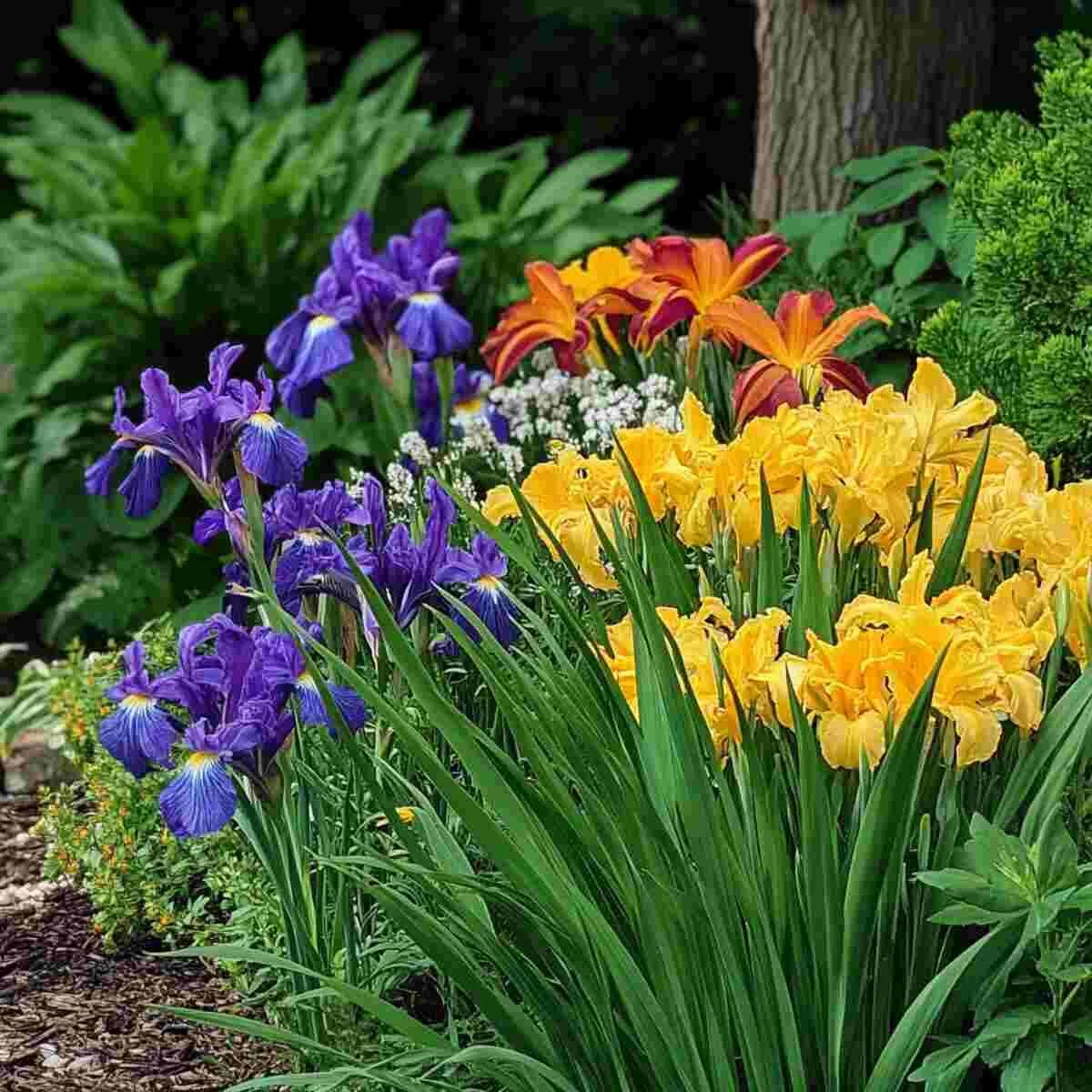
This planting leans into contrast, using deep violet, gold, and red-orange for a border that feels lively and expressive. It suits gardeners who want their spring and early summer beds to feel lush rather than restrained.
Irises contribute shape and strong vertical lines, while daylilies broaden the palette and carry the display further into the season. In practical terms, this combination is useful when you want one bed to bridge the gap between spring bulbs and summer perennials.
Because the colors are intense, placement matters. This type of mix works best in a sunny border with enough room for each plant to hold its own. In a very small garden, too many strong shades can feel cluttered.
- Use one dominant color and let the others act as accents.
- Keep the surrounding hardscape and furniture simple so the planting remains the focus.
- Allow enough width in the bed for iris foliage and daylily fans to spread.
Snowdrop Woodland Garden Ideas for Shady Corners
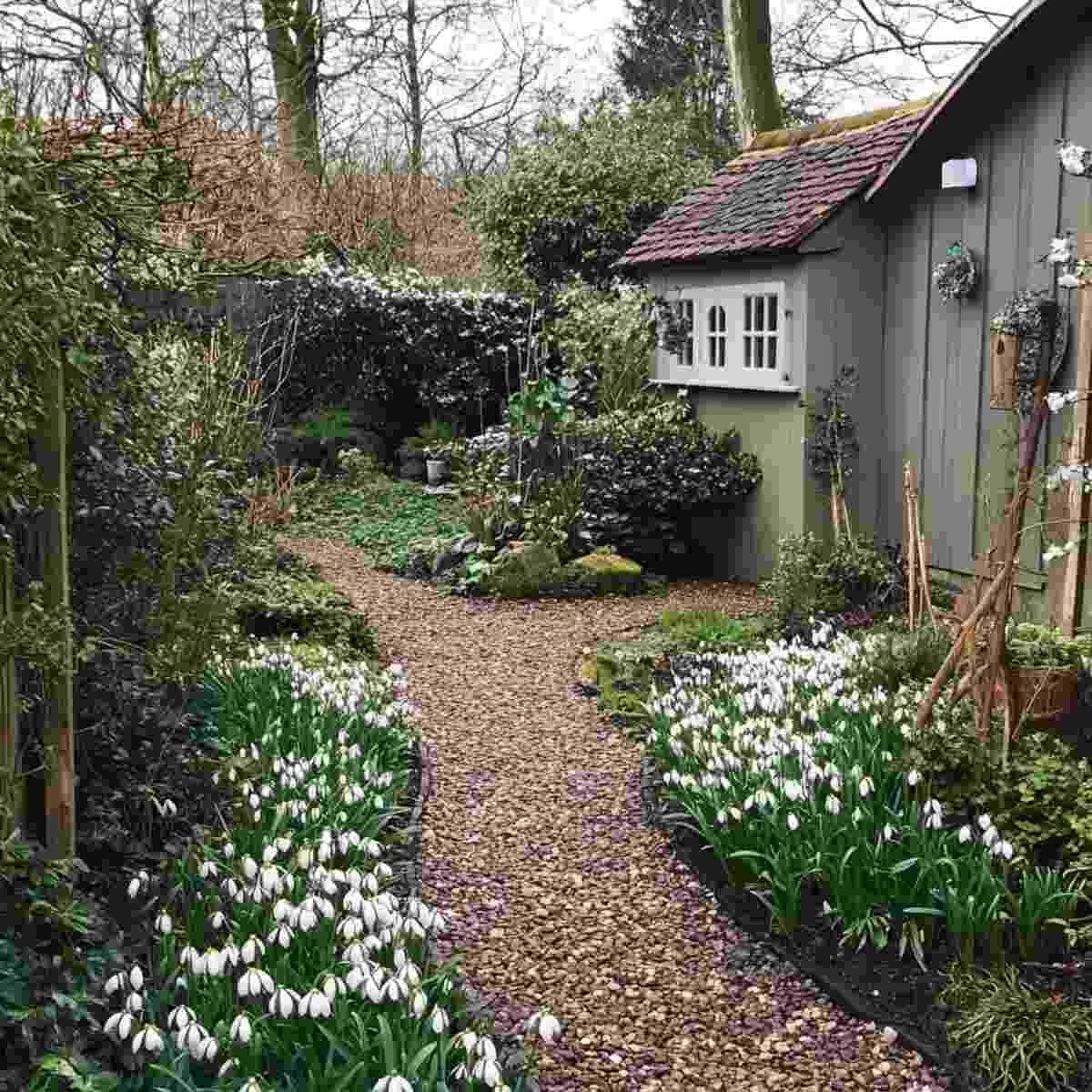
Snowdrops are understated, which is exactly why they are so effective in a quieter part of the garden. Along a rustic path, beneath trees, or near a shed, they bring a calm, naturalized look that feels in keeping with the season rather than staged.
They are particularly useful in gardens with dappled shade, where showier bulbs may struggle. Planted in colonies, they soften worn edges and make practical spaces feel considered.
The key is restraint. Snowdrops do not need bright companions to make an impression. Their beauty comes from repetition, subtle movement, and the freshness of white against damp earth and green foliage.
- Best in lightly shaded areas with soil that does not dry out completely in winter.
- Plant in drifts that echo the curve of the path.
- Leave them undisturbed so clumps can expand over time.
Grape Hyacinth Ideas Near Water Features and Rock Edges
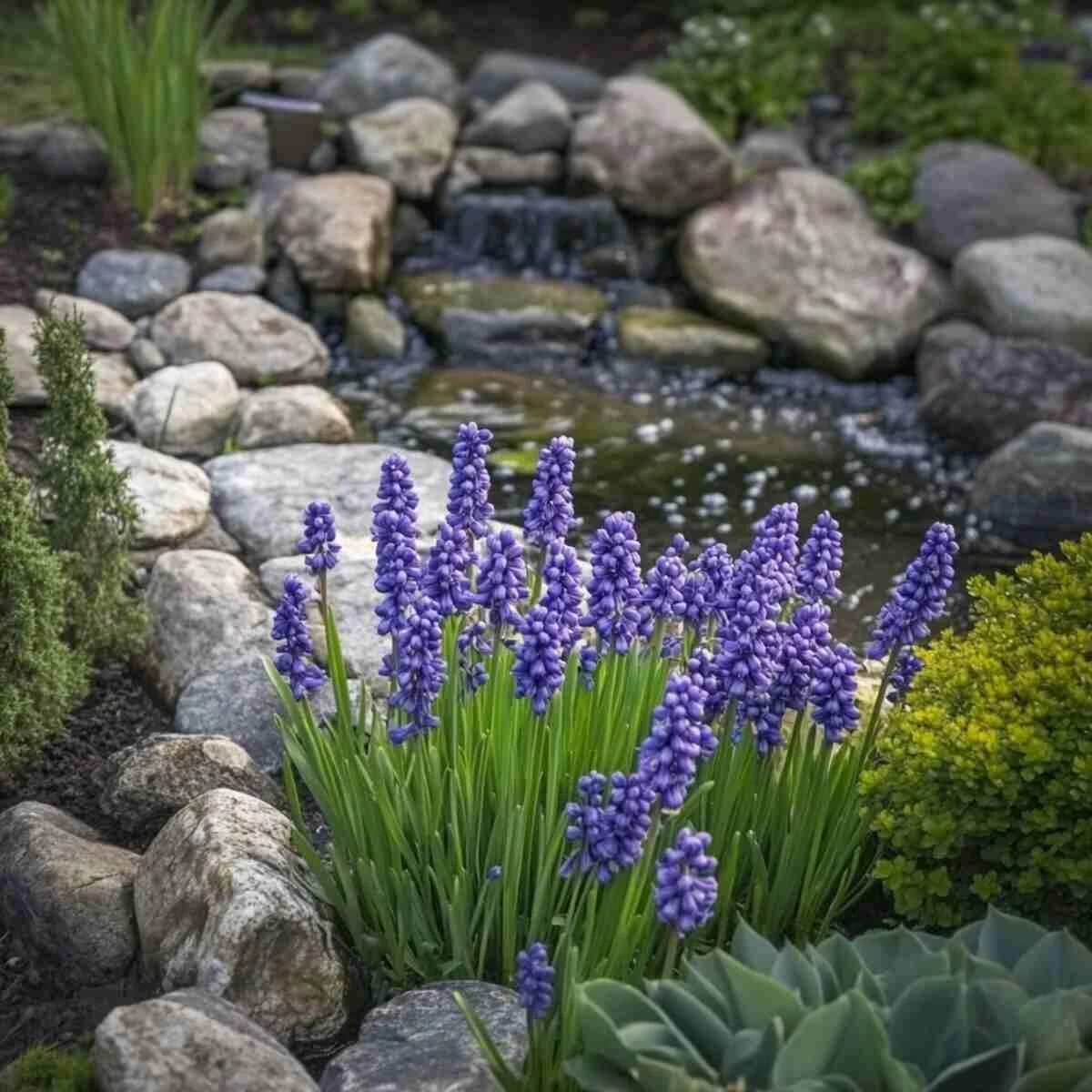
Grape hyacinths have a saturated blue-purple tone that stands out beautifully near water, stone, and silver-green foliage. When planted beside a pond edge, rill, or shallow water feature, they introduce color without overwhelming the calm mood of the space.
Their small scale is part of their charm. They read best as a concentrated ribbon or pocket of bloom, especially where smooth stones or gravel sharpen the contrast. In a rock garden, the same principle applies.
Because the flowers are compact, place them where the viewer will pass close by. They work best as detail rather than long-distance drama.
- Use them to define the edge of a water feature or stepping-stone path.
- Repeat in clusters instead of scattering a few bulbs across a large bed.
- Pair with neutral stone so the flower color stays crisp and clear.
Scilla Planting Ideas for Small Spaces and Layered Borders
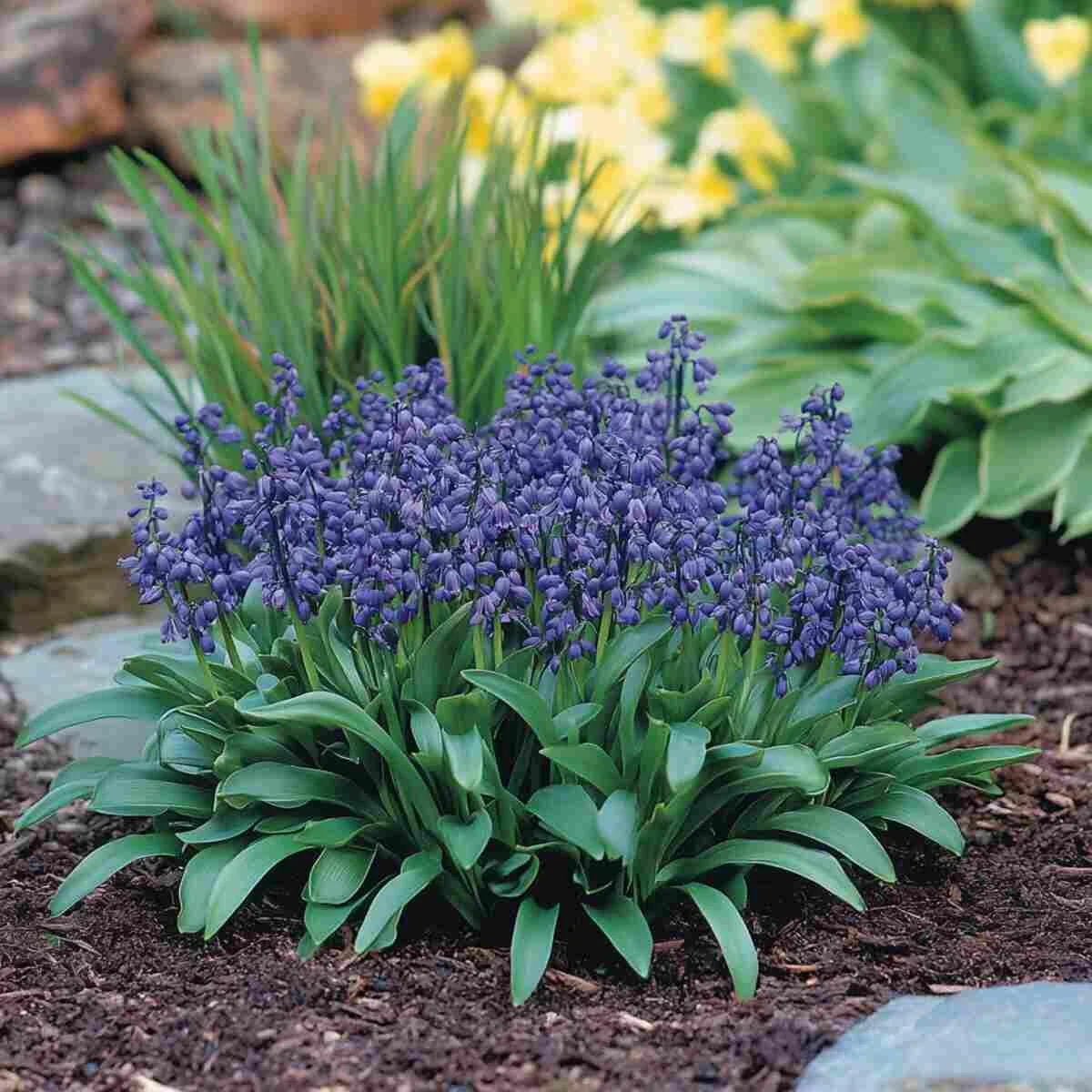
Scilla is invaluable in smaller gardens because it delivers strong color without taking up visual or physical space. Tucked into a border edge, rock garden, or narrow bed, it gives an immediate sense of spring fullness.
The rich blue-purple flowers also mix well with primroses and early foliage, which makes them useful for gardeners who want layered planting without relying on large blooms. They are especially effective where a bed needs a concentrated burst of color near eye level.
Scilla tends to look best when the surrounding planting is loose and natural rather than highly formal. Let it weave among other early flowers rather than forcing it into strict geometric patterns.
Fritillaria and Daffodil Pairings with a More Collected Feel
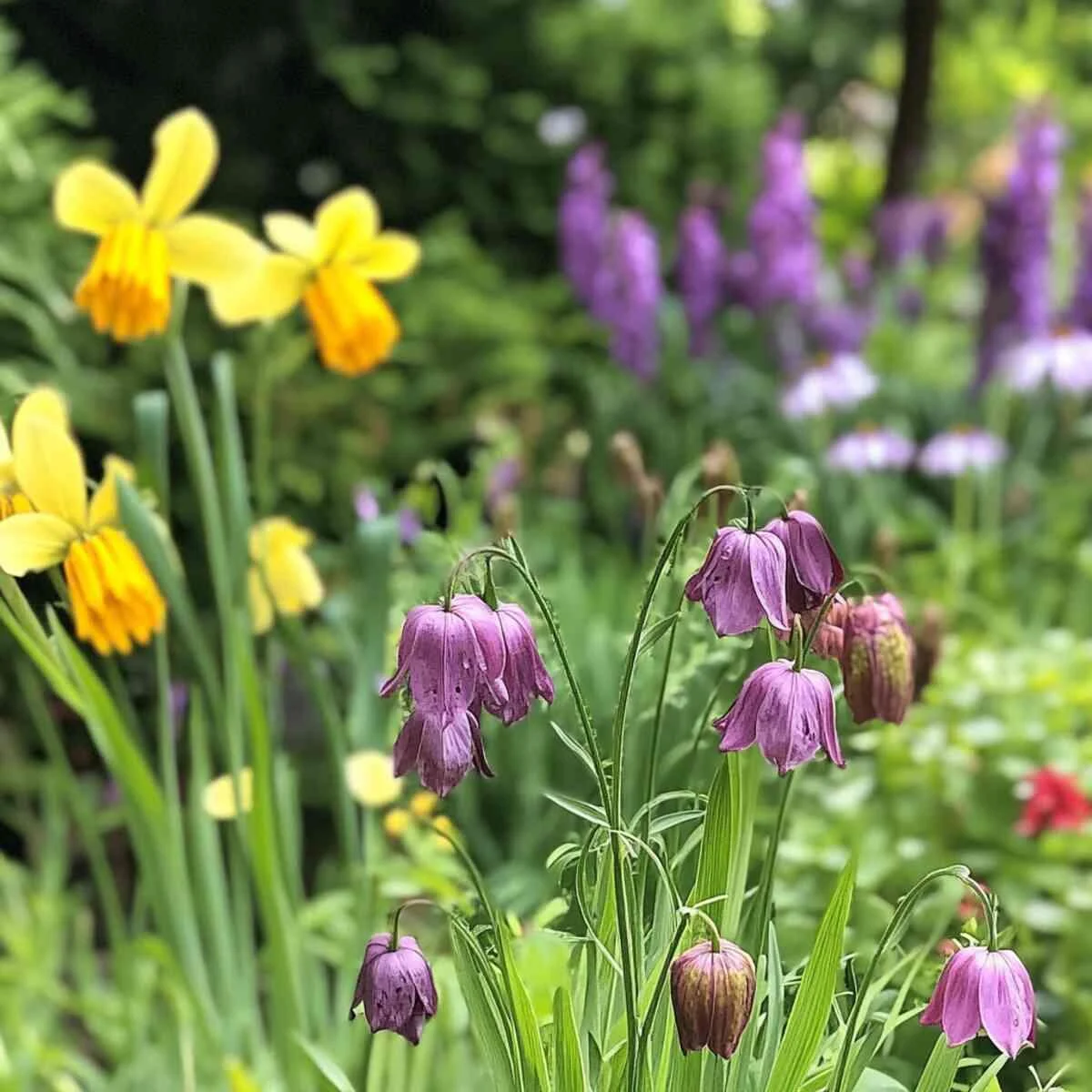
Fritillaria brings intricacy to a spring planting. The nodding blooms and subtle checkered petals feel rarer and more collected than standard bedding displays, especially when set beside uncomplicated daffodils.
That contrast is what makes the pairing successful. Daffodils provide brightness and structure, while fritillaria introduces detail that rewards a closer look. The combination suits cottage-style gardens, lightly wild planting, and borders that benefit from a touch of variation.
Because fritillaria flowers are more delicate visually, avoid surrounding them with too many competing shapes. A quieter backdrop helps their patterning stand out.
- Keep them near paths or seating areas where the flowers can be seen up close.
- Mix with daffodils in modest numbers rather than overwhelming the bed.
- Choose a well-drained site, especially in winter.
Dutch Iris Ideas for Crisp, Elegant Spring Beds
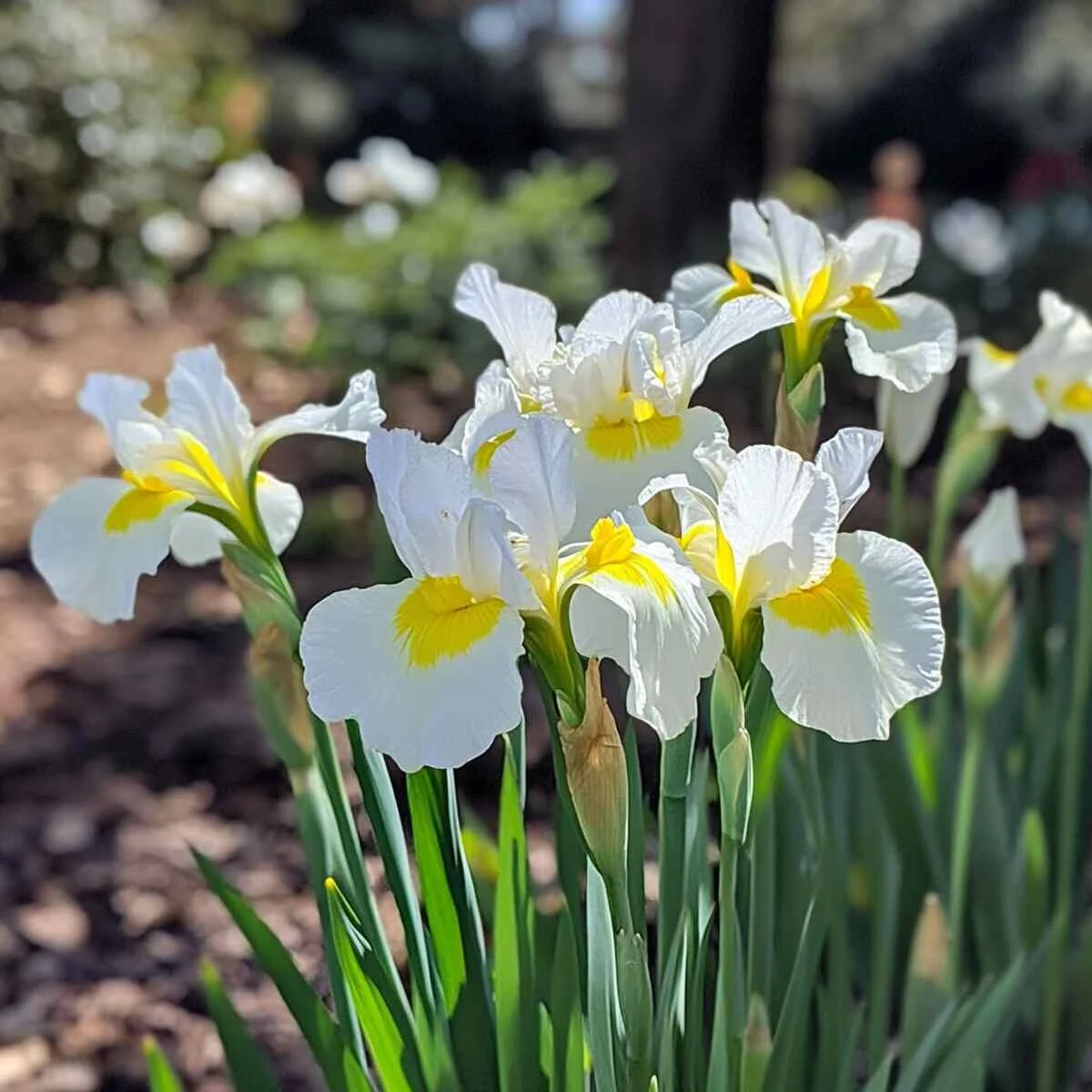
Dutch iris offers a cleaner, more tailored look than many classic spring bulbs. The white petals and yellow flare in this planting feel fresh, sharp, and refined, making the flowers well suited to modern borders as well as traditional garden beds.
Because the bloom form is so distinctive, repeating them in a drift is often more effective than mixing too many other flowers nearby. They stand comfortably on their own, especially against a simple green backdrop.
This is a strong choice for anyone who wants spring bulbs to look polished rather than overly sweet. The flowers also cut well, so placing them in a reachable bed near the house has an added benefit.
- Use in sunny borders with clean planting lines.
- Repeat one variety for a more sophisticated result.
- Pair with foliage-forward plants rather than overly busy spring mixes.
Bee-Friendly Spring Bulb Ideas for a More Living Garden
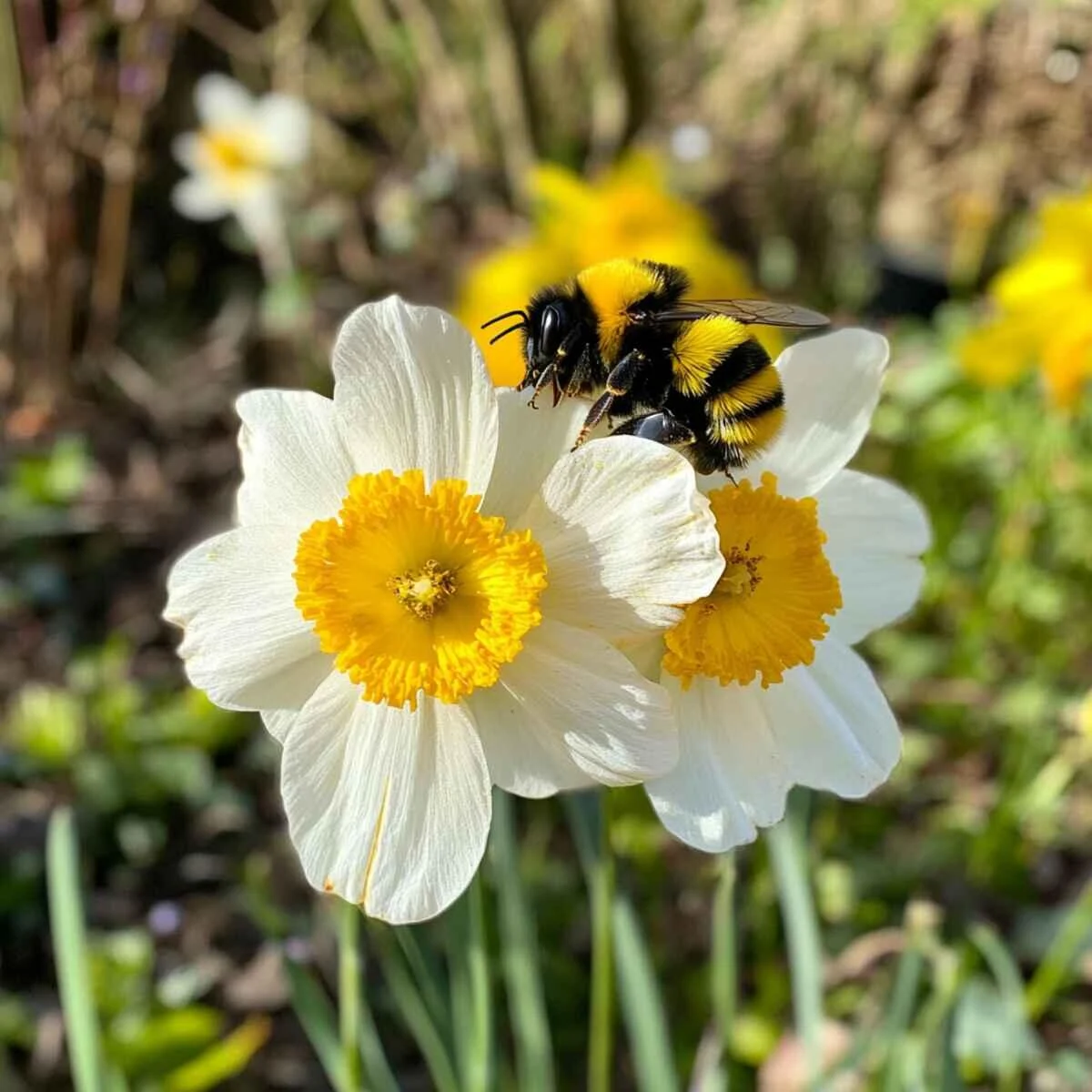
One of the strongest arguments for spring bulbs is how much life they bring back into the garden after winter. Early blooms can offer an important source of nectar and pollen when little else is open, and daffodils, species tulips, crocuses, muscari, and other spring flowers help create that first wave of activity.
A pollinator-friendly bulb garden does not need to look wild. It can still be neat, intentional, and highly decorative. The difference is in variety and bloom timing. Instead of relying on a single flower for one short burst, mix bulbs that open in succession so the garden stays useful for longer.
- Plant several early and mid-spring varieties rather than a single peak moment.
- Avoid overly sterile-looking spaces with no layered planting around bulbs.
- Leave some areas a little less formal so insects can move through the garden easily.
Frequently Asked Questions
How many bulbs do you need for a full-looking spring display?
It depends on the bulb size, but most spring gardens look more generous when bulbs are planted in groups rather than individually. Small bulbs such as crocus, scilla, and grape hyacinth often need large drifts to register well, while taller bulbs such as tulips, daffodils, and alliums can make an impact in smaller clustered numbers.
Which spring bulbs are easiest for beginners?
Daffodils are usually the most forgiving. They are reliable, widely available, and less likely to be bothered by pests. Crocuses and grape hyacinths are also approachable choices for gardeners who want early color without a complicated planting plan.
Where should spring bulbs be planted for the best visual impact?
Focus on places you pass often: along a front path, near the entry, under windows, beside seating areas, or at the front of borders. Small bulbs should sit close to paths or edges, while taller bulbs can anchor deeper beds.
Can you mix spring bulbs with existing perennials?
Yes, and it often makes the garden look more settled. Spring bulbs thread naturally through perennial beds, and later-emerging foliage from perennials can help hide bulb leaves as they fade. This is one of the easiest ways to keep the display looking tidy after flowering ends.
Final Thoughts
The most successful spring bulb gardens are rarely the most complicated. They place color where it will be noticed, repeat shapes often enough to feel deliberate, and account for what happens after the flowers pass. Start with one area that needs a lift in late winter or early spring, then build outward once you know which bulbs perform best in your garden.
Written by the Zeeshe Home Editorial Team, a blog focused on practical home décor ideas and inspiration.


