
Grey flooring earns its place in the living room for one simple reason: it gives you options. It can read crisp and modern, warm and relaxed, or tailored and classic depending on what you pair with it. That flexibility is especially useful in living rooms, where furniture, lighting, and textiles often do more of the visual work than the floor itself.
The trick is not to treat grey flooring as a finished look on its own. It needs contrast, softness, and a clear point of view. The ideas below show how to make grey floors feel intentional, comfortable, and visually complete, whether you are working with laminate, tile, vinyl plank, or stained wood.

1. Honey Wood Furniture That Softens Cool Floors
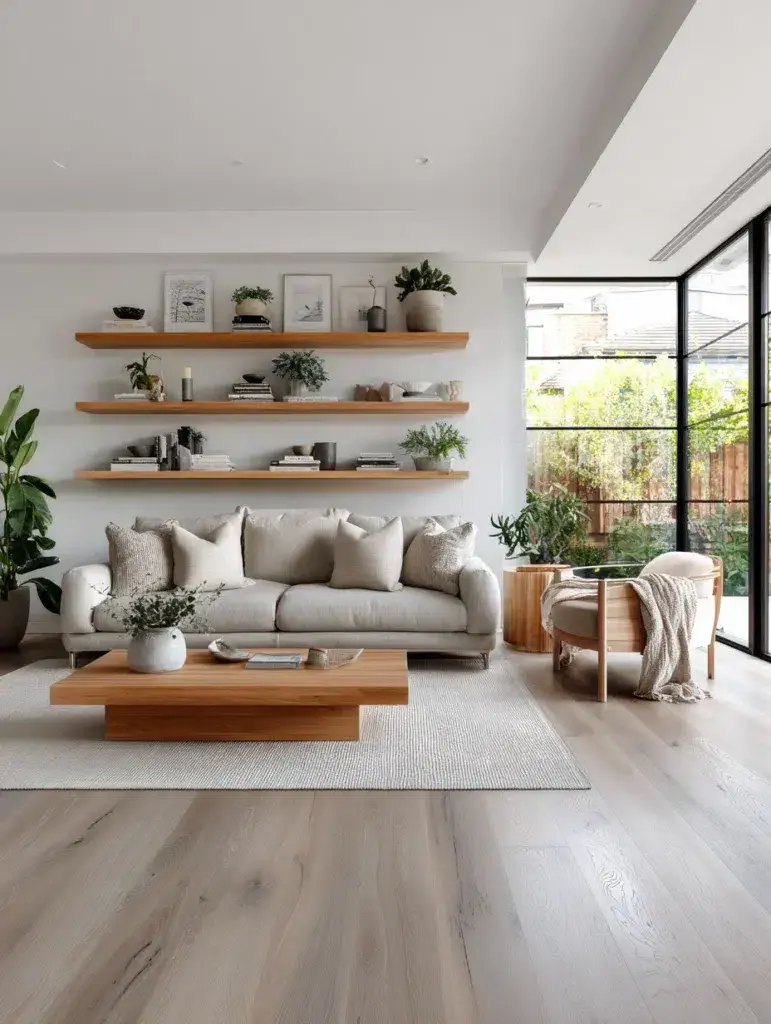
Grey flooring can feel a little sharp when every surface in the room leans cool. Honey-toned wood fixes that quickly. It introduces warmth without fighting the floor, which is why oak, walnut, and ash furniture often look so settled in these spaces.
Use wood where the eye naturally lands first: a coffee table, console, shelving, or picture frames. A medium wood tone usually feels more balanced than anything too orange or too dark.
- Best for light and mid-grey floors
- Works especially well in modern, rustic, and transitional rooms
- Choose two or three wood pieces rather than filling the entire room with one finish
2. Black and White Styling With Cleaner Contrast
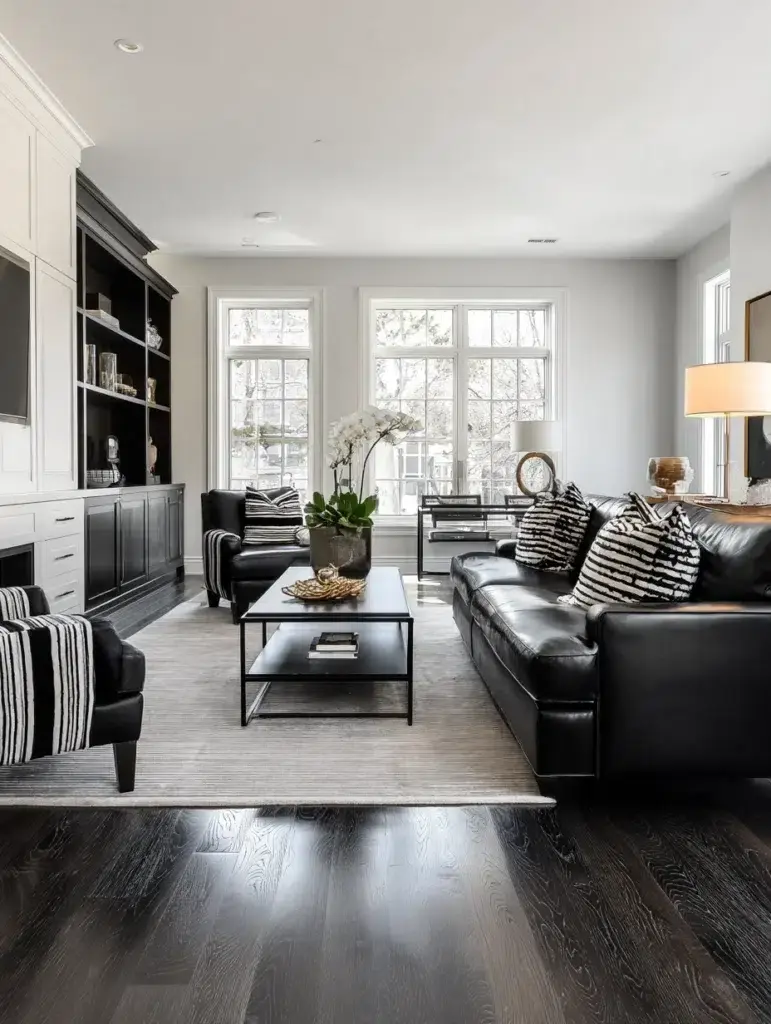
Grey flooring handles strong contrast beautifully. Black adds structure, white keeps the room bright, and the floor sits comfortably between the two. The result feels graphic and polished instead of stark.
This direction suits living rooms with good daylight, sharp architectural lines, or a more minimal furniture plan. Black window frames, slim side tables, or a dark media unit can give the room definition without making it feel heavy.
Keep white present in the walls, upholstery, or curtains so the darker pieces feel deliberate rather than dominant.
3. Scandinavian Simplicity With Lighter Layers
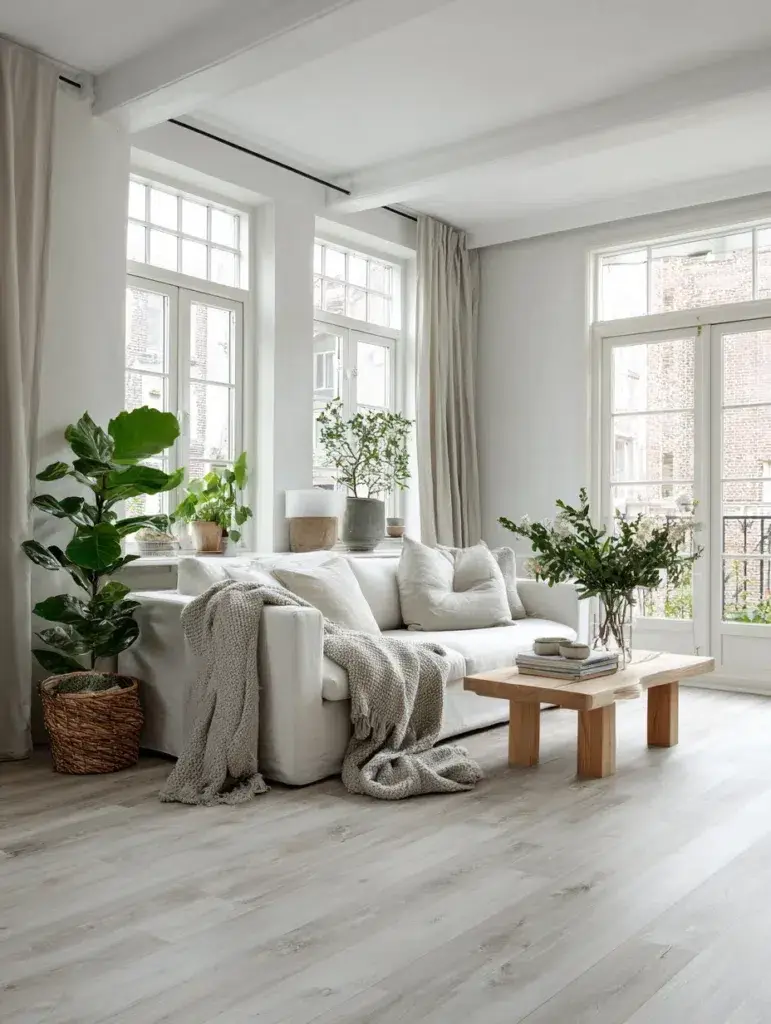
Scandinavian rooms rely on restraint, light woods, and practical comfort, which makes grey flooring a natural fit. It gives the room a calm base while pale walls, streamlined furniture, and soft textiles keep everything feeling open.
This look works best when the furniture profile stays low and the palette stays edited. Linen curtains, simple lighting, and a wool rug will do more here than lots of decorative accessories.
Plants also help. They break up the neutrality and bring a fresher, more lived-in feel to the room.
4. Rust and Terracotta Accents That Warm the Room Instantly
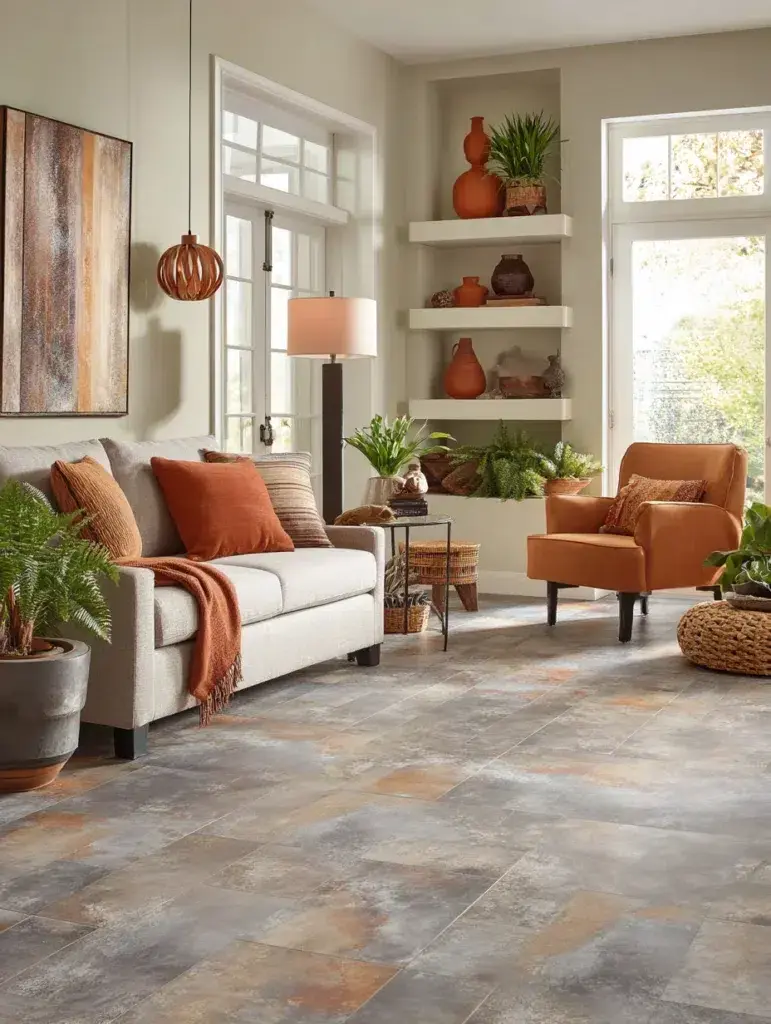
Rust, clay, and terracotta have enough richness to warm up grey floors without making the room feel loud. They suit living rooms that need more character but not a full color overhaul.
Bring these shades in through cushions, artwork, ceramics, or a single accent chair. They tend to look especially strong against cooler grey flooring because the temperature contrast is so clear.
Pair them with cream, olive, or warm beige if you want the room to feel earthy rather than highly styled.
5. A Monochrome Scheme Built on Several Greys
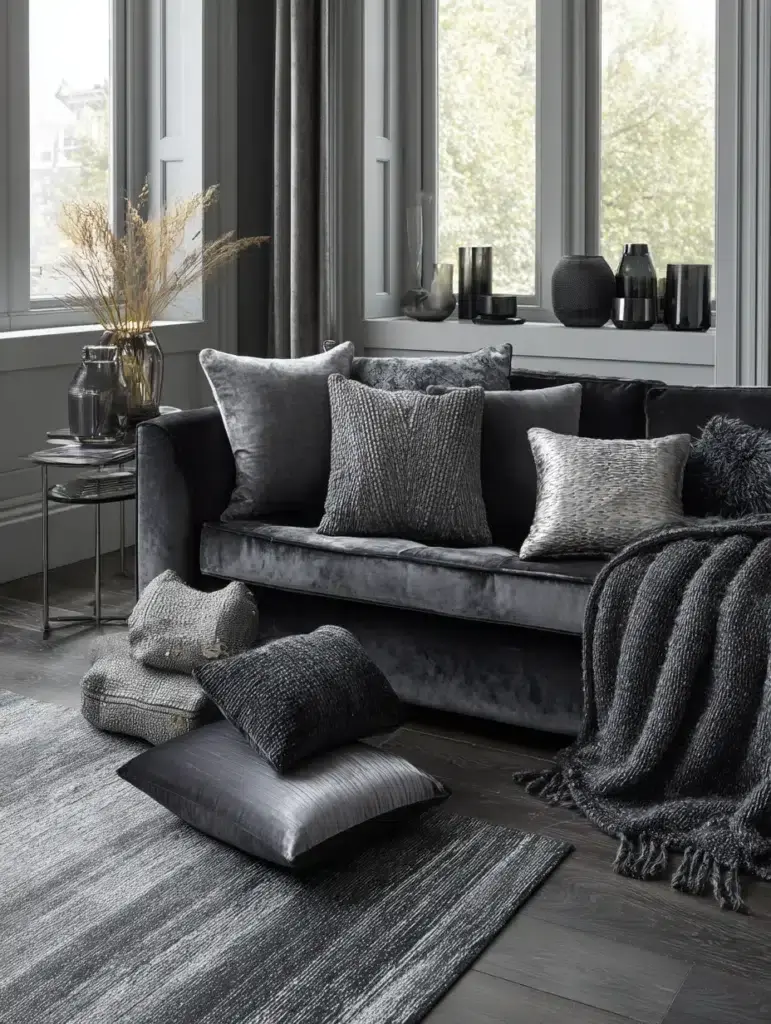
Grey-on-grey can be sophisticated, but only when the shades are clearly varied. A charcoal sofa, medium grey flooring, pale walls, and silver-toned accents create depth because each layer reads differently.
The mistake is keeping every grey too similar. When that happens, the room falls flat. Use light, medium, and dark values so the eye can separate each surface easily.
- Mix matte and soft-sheen finishes
- Include at least one warmer grey to avoid a cold result
- Add texture through boucle, knit, leather, or brushed metal
6. White and Cream Pieces That Brighten Darker Floors
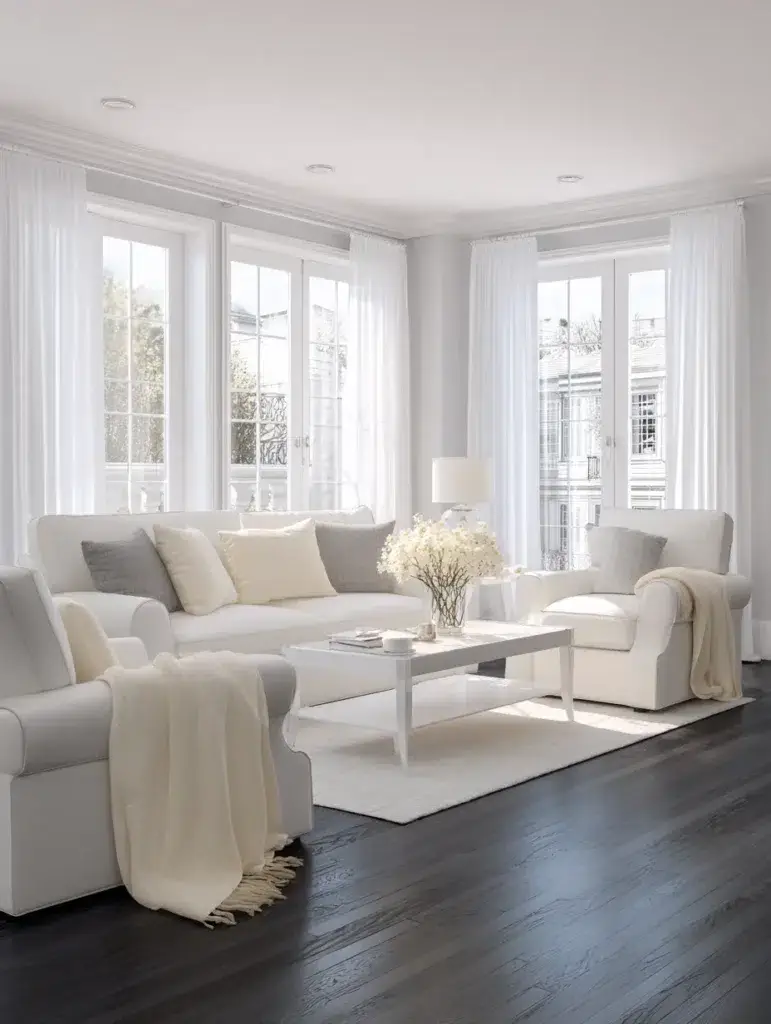
Darker grey flooring can anchor a room beautifully, but it usually benefits from lighter furnishings above it. White and cream upholstery, pale curtains, and softer wall colors lift the room and help the floor feel intentional rather than heavy.
This approach is useful in smaller living rooms, especially when there is limited natural light. Cream tends to be easier to live with than bright white because it feels softer against grey and hides everyday wear a little better.
Look for washable slipcovers, performance fabrics, or textured upholstery if the room gets regular family use.
7. Metallic Finishes That Make Grey Floors Feel More Refined
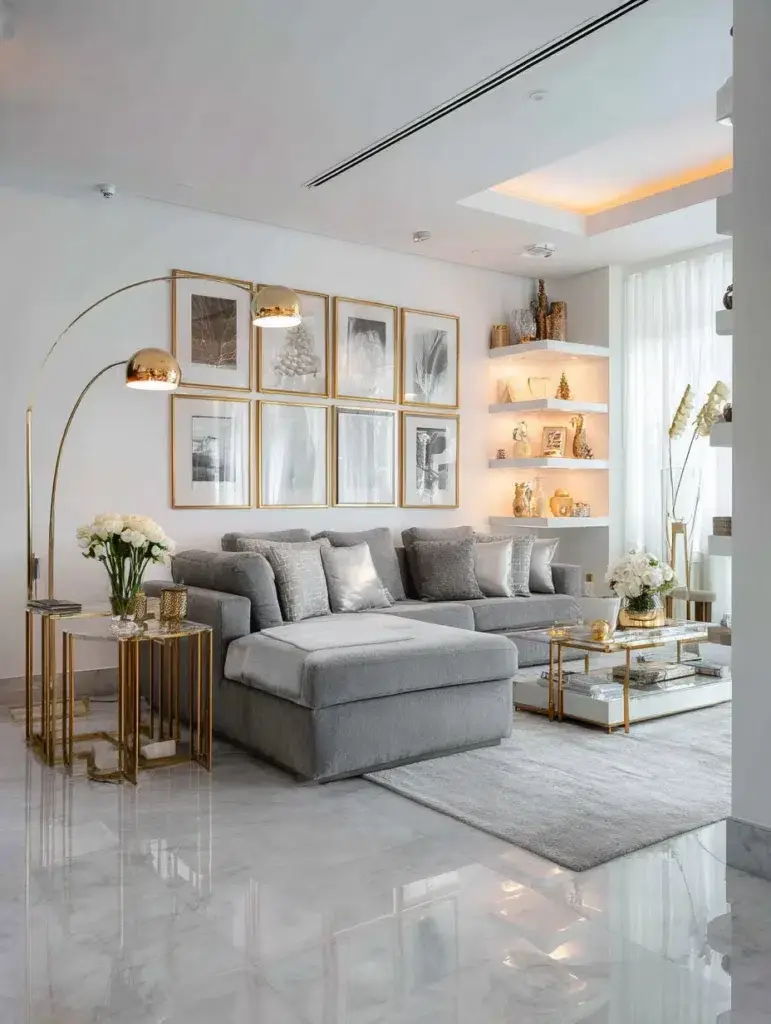
Metallic accents bring light into a room that might otherwise read flat. Brass, chrome, blackened steel, or brushed nickel can all work with grey flooring, but the finish should match the mood of the room.
Brass feels warmer and more decorative. Chrome looks sharper and more modern. Black metal leans industrial. Repeat the same finish in a few places so it looks edited rather than accidental.
A floor lamp, side table, mirror frame, or cabinet hardware is usually enough. A little shine goes a long way here.
8. Bold Artwork That Carries the Color Story
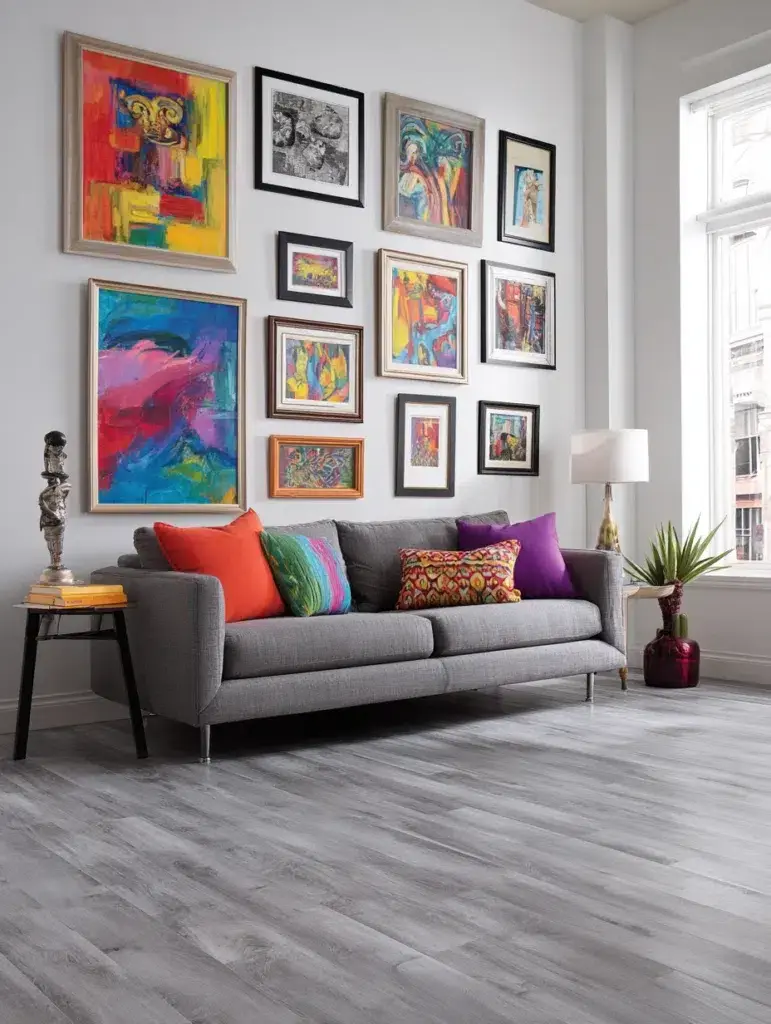
Neutral flooring gives artwork room to lead. That is especially helpful in living rooms where furniture is simple and the palette feels a bit too safe. Large-scale art can introduce movement, color, and personality without adding more furniture or pattern.
If you want the room to feel cohesive, pull one or two colors from the artwork into pillows, books, or smaller objects nearby. That visual repetition makes the room feel considered.
One larger piece often has more impact than many smaller pieces, particularly above a sofa or console.
9. Layered Rugs That Make Grey Floors Feel More Lived In
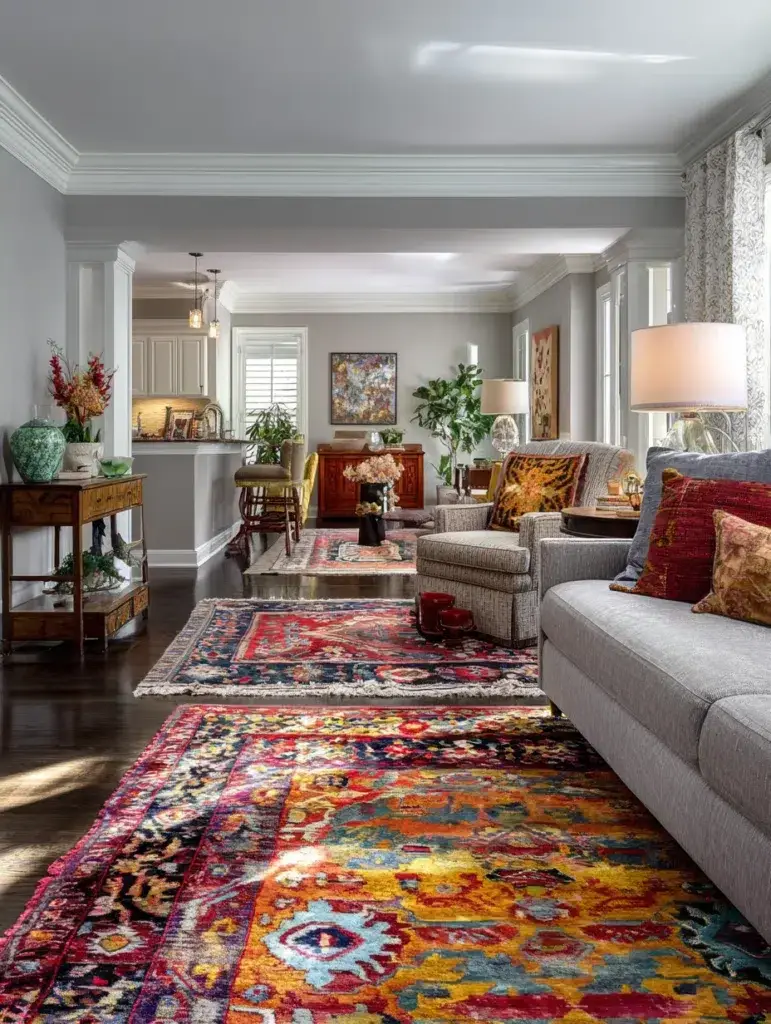
Layering rugs is one of the easiest ways to stop grey flooring from feeling too hard or too exposed. It also helps define the seating zone in open-plan spaces.
Start with a larger neutral base rug if the room needs warmth or softness, then add a smaller patterned rug on top for personality. This works particularly well when the flooring is cool-toned laminate or tile, which can otherwise feel a little stark.
- Make sure the larger rug is big enough for at least the front legs of the sofa
- Use a flatter weave underneath for stability
- Keep the top rug smaller so the layering reads clearly
10. Indoor Plants That Break Up All the Grey
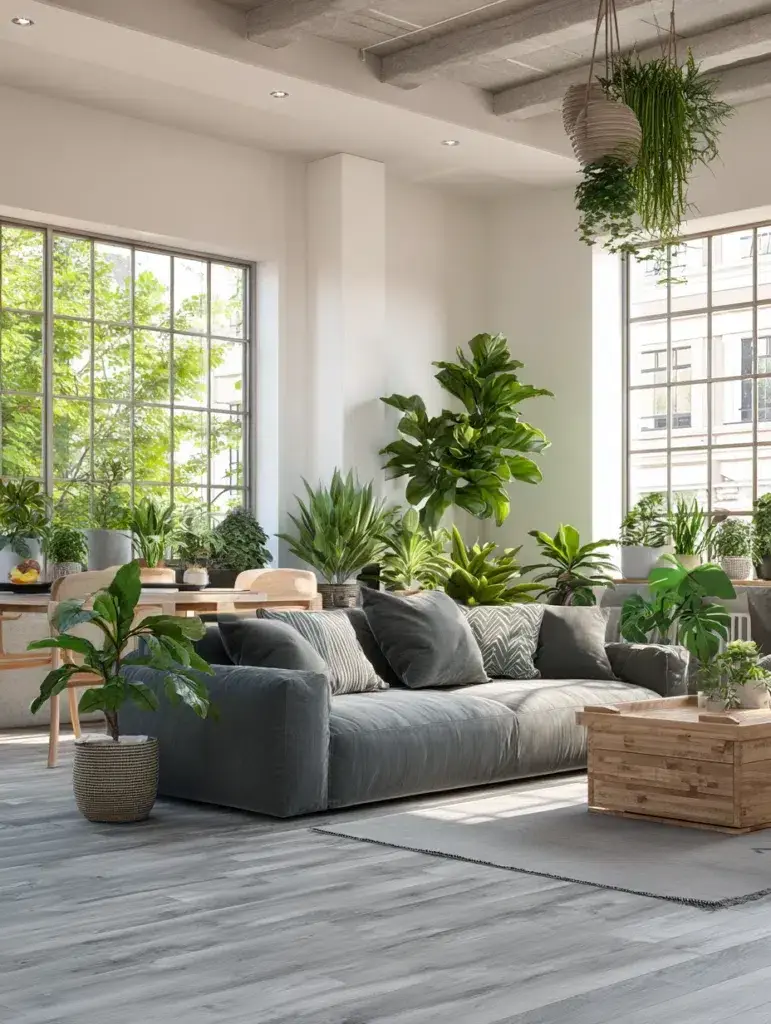
Green foliage adds the kind of contrast grey flooring benefits from most: something organic, irregular, and alive. Even a simple plant corner can make the room feel less styled and more settled.
Use a mix of heights so the greenery feels integrated into the room rather than lined up as decoration. Tall floor plants work well beside a sofa or window, while smaller varieties soften shelves and tables.
If you prefer low-maintenance options, snake plants, ZZ plants, and pothos are easier to manage than fussier statement plants.
11. Layered Lighting That Changes How the Floor Reads
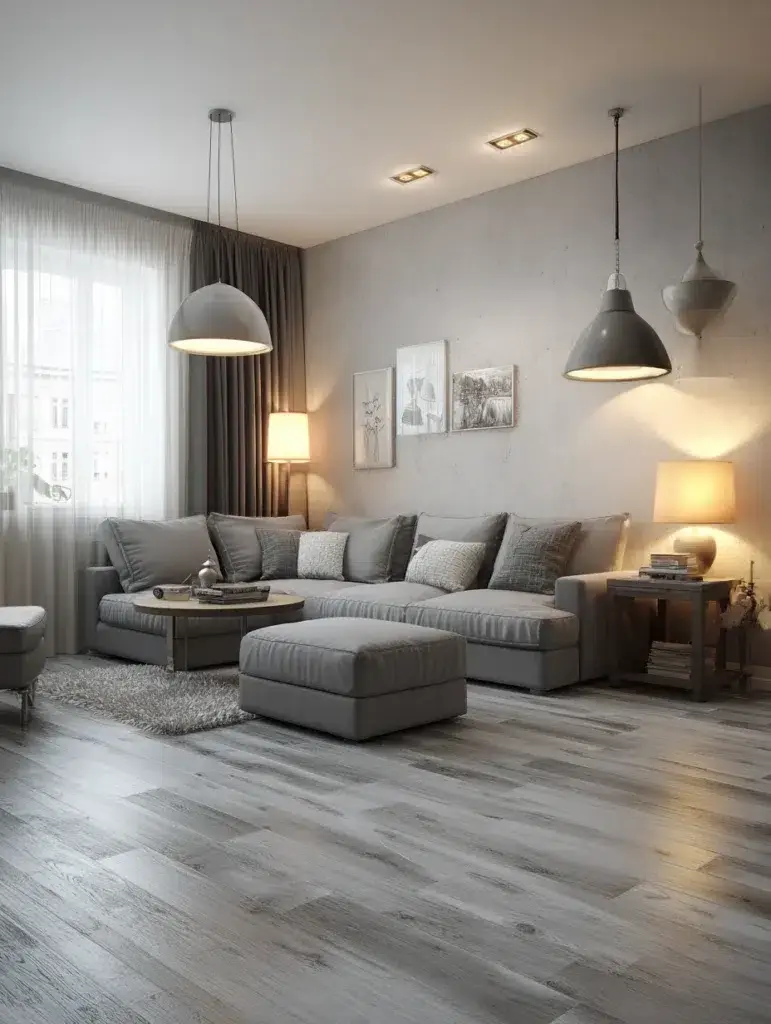
Grey floors look different throughout the day, which means lighting matters more than many people expect. A room lit only from overhead can make the floor feel flatter and cooler. Layered lighting brings dimension back into the space.
Use a mix of ambient, task, and accent lighting so the room stays functional while still feeling soft in the evening. Warm bulbs usually suit grey flooring better than very bright white ones.
- Aim for warm white bulbs around 2700K to 3000K
- Add a floor lamp near the seating area
- Use table lamps to soften corners and shelves
12. A Mix of Modern and Vintage Pieces That Feels More Personal
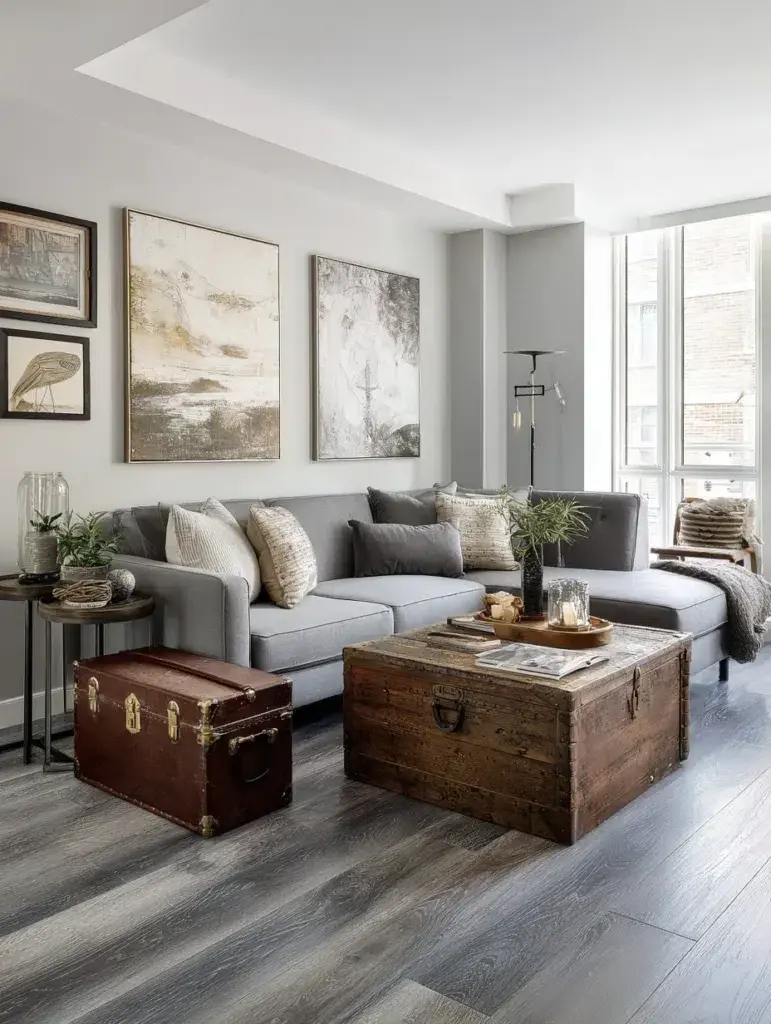
Grey flooring works surprisingly well with mixed eras because it does not lean too strongly in one direction. That makes it easier to blend a streamlined sofa with an older wood table, vintage lighting, or inherited accessories.
The contrast between old and new gives the room character. The floor keeps those pieces from feeling disconnected. This is a strong approach if you want a living room that feels collected rather than bought all at once.
Limit yourself to one or two standout vintage pieces so the room still feels balanced.
13. Plush Textiles That Take the Edge Off Hard Surfaces
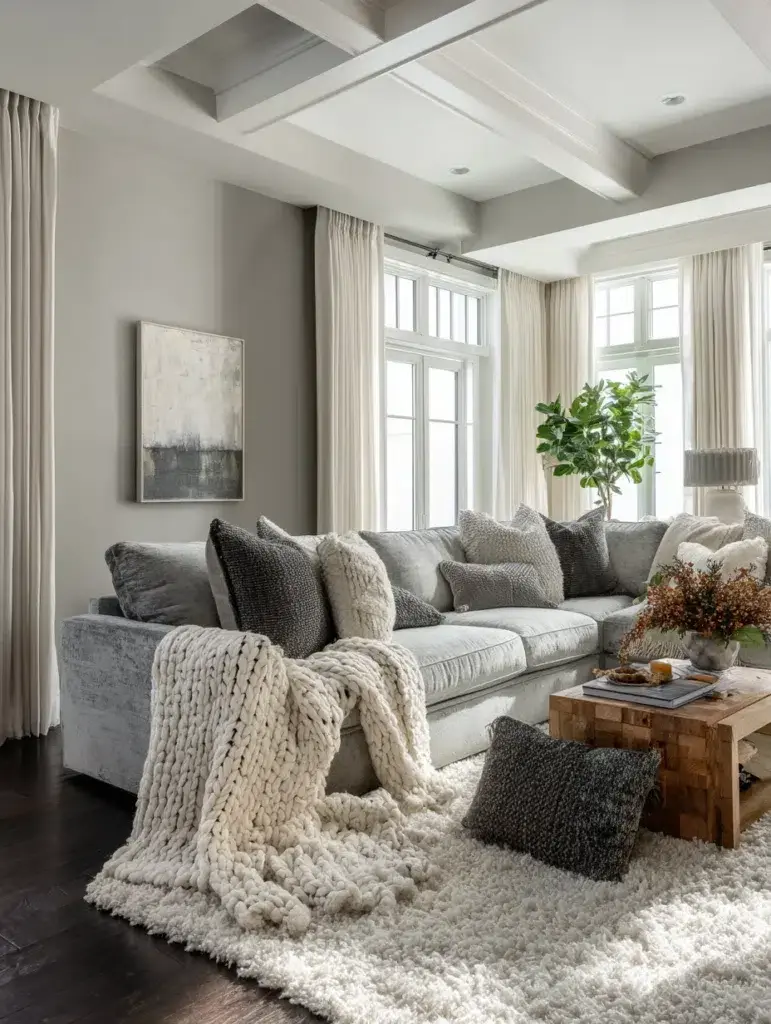
Grey floors often look sleek, but comfort depends on what you layer over them. Thick throws, generous cushions, upholstered seating, and a substantial rug can completely change how the room feels.
This matters most in family living rooms and media spaces where the goal is to relax rather than simply admire the design. Texture is what prevents the room from feeling one-note.
Mixing velvet, boucle, chenille, linen, or wool gives the room visual softness even when the palette stays fairly neutral.
14. Color Blocking That Helps Open Rooms Feel More Defined
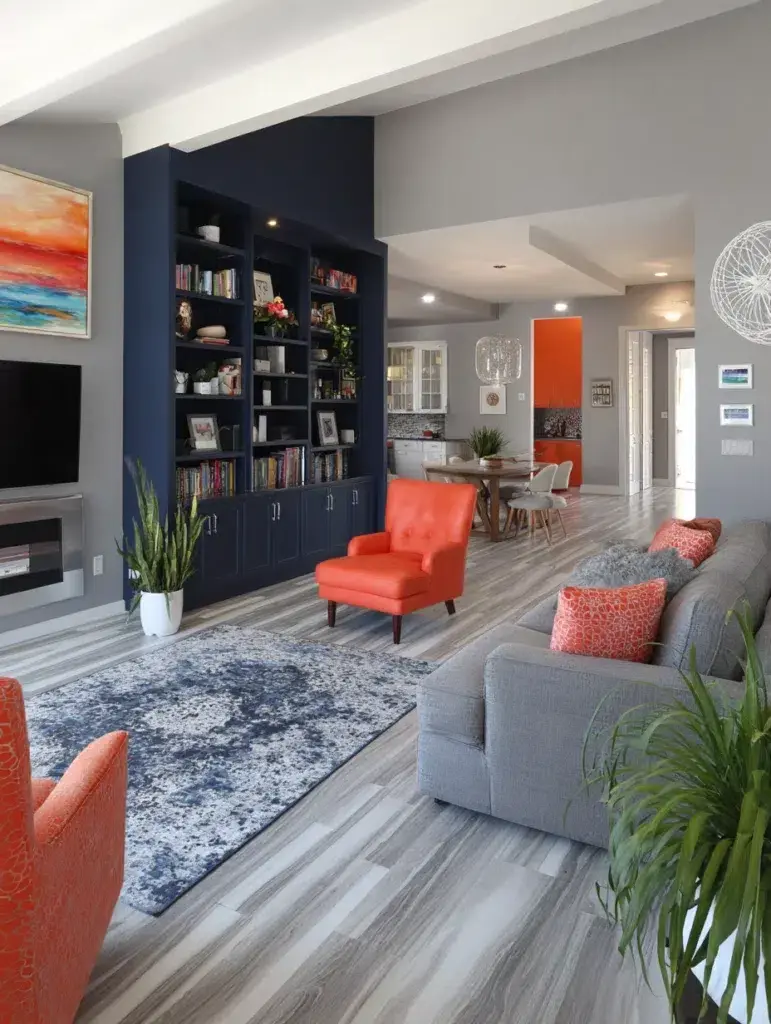
In open-concept spaces, grey flooring often runs continuously through several zones. Color blocking helps separate the living area visually without interrupting that flow.
An accent chair in a strong shade, a painted wall behind the sofa, or a concentrated group of colorful textiles can establish the seating area clearly. The flooring keeps the overall plan cohesive while color does the organizing.
Choose two or three main shades and repeat them. That keeps the room feeling structured rather than scattered.
15. Industrial Details That Suit Grey Flooring Naturally
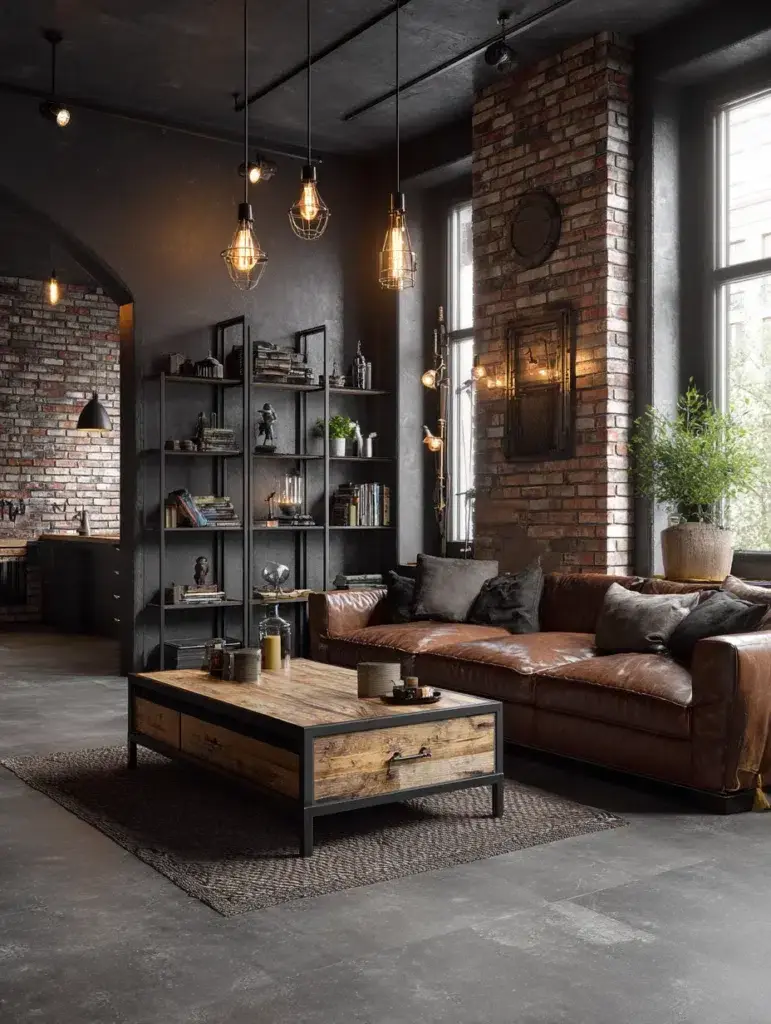
Industrial styling has an obvious affinity with grey floors. Metal, concrete, brick, and weathered wood all sit comfortably alongside a cool neutral base, which makes the room feel cohesive rather than themed.
The secret is balance. Without softer elements, the space can feel too severe. Upholstered seating, a textured rug, and warm lighting keep the room grounded in comfort.
This look tends to suit loft-style spaces, modern apartments, and living rooms with black window frames or exposed architectural details.
16. Wallpaper That Gives the Room More Movement
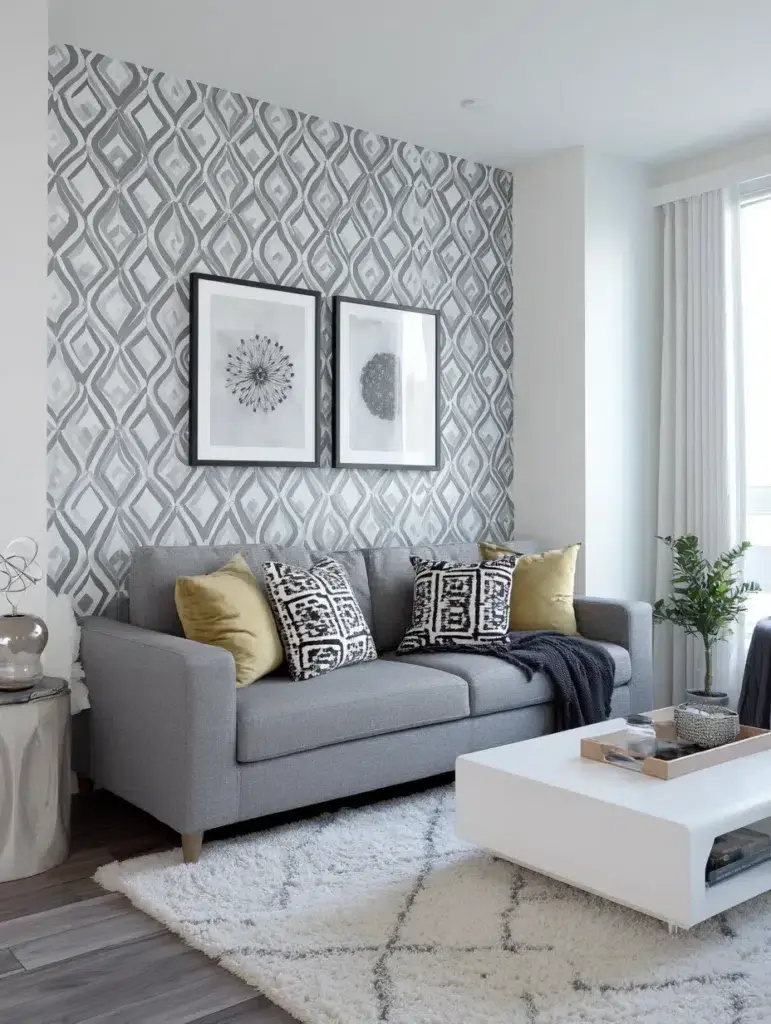
Because grey flooring is visually quiet, wallpaper can carry more of the decorative weight without overwhelming the room. A patterned wall adds energy, especially in living rooms where the furniture is simple and the color palette is restrained.
Large-scale patterns feel bolder and more architectural. Smaller prints create softness and detail. Either can work, but the scale should suit the room size and the amount of furniture already present.
An accent wall is often enough. It gives the space a focal point while allowing the flooring to remain the calm base underneath.
17. Symmetrical Furniture Placement That Feels Polished
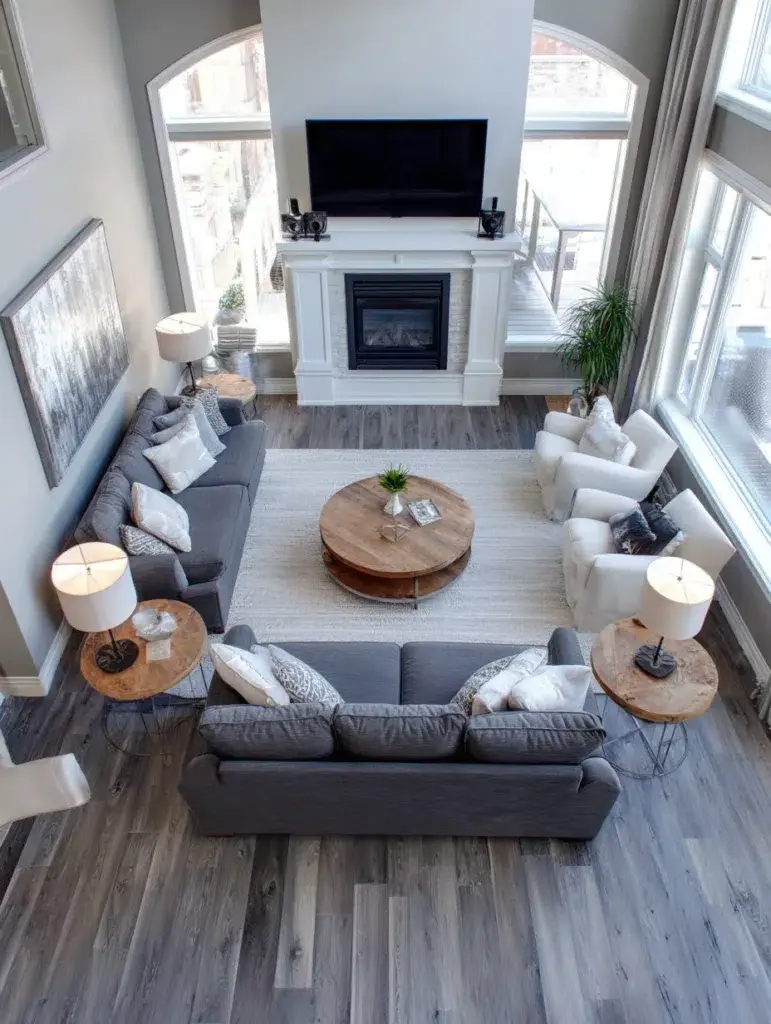
Uniform flooring makes furniture placement more noticeable, which can be a real advantage. When the room is arranged symmetrically, grey floors help that order stand out.
Matching side tables, a centered coffee table, and balanced lighting can make even an ordinary living room feel more composed. This approach works especially well in formal sitting rooms or spaces with a fireplace as the focal point.
If full symmetry feels too rigid, keep the larger pieces balanced and vary the accessories slightly.
18. Stripes and Geometrics That Add Visual Energy
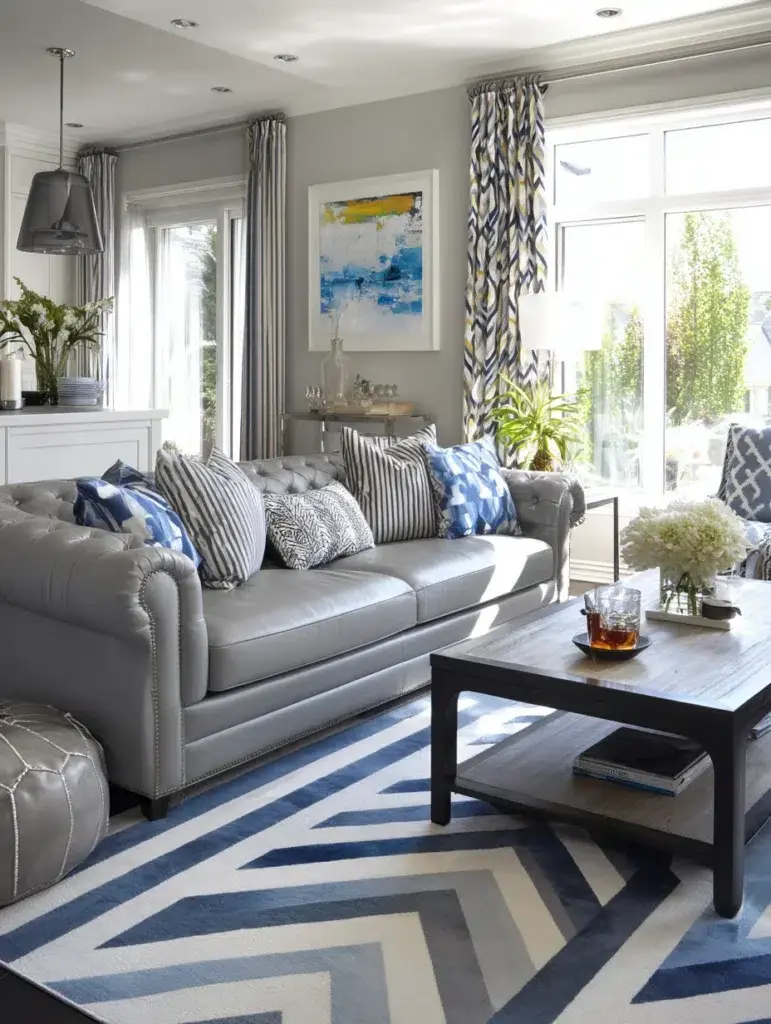
Grey flooring can sometimes make a room feel very still. Pattern introduces movement. Stripes, checks, and geometric motifs guide the eye through the room and make the layout feel more dynamic.
Use these patterns where they can be changed easily: rugs, cushions, curtains, or a single upholstered piece. The flooring will keep them from competing too aggressively with one another.
Directional pattern can also be practical. Horizontal stripes can visually widen a narrow room, while vertical lines help draw the eye upward.
19. Natural Stone Accents That Echo the Floor Without Matching It Exactly
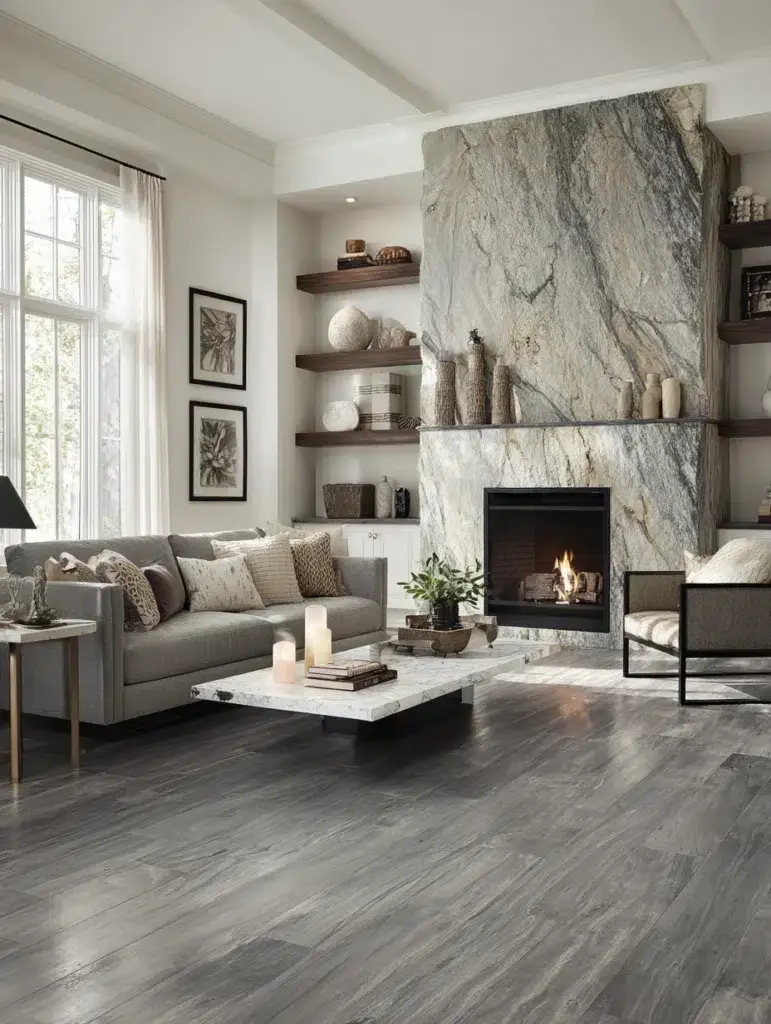
Stone surfaces often contain soft veining and tonal shifts that work beautifully with grey flooring. They bring a more organic texture into the room, which helps balance the cleaner, more uniform finish of many grey floors.
Marble-topped tables, slate accessories, or a stone fireplace surround can all add weight and refinement. The effect is especially strong in living rooms that lean modern or minimalist.
Because stone is visually substantial, even one or two pieces can have a noticeable impact.
20. Natural Light Planning That Makes Grey Floors Look Better All Day
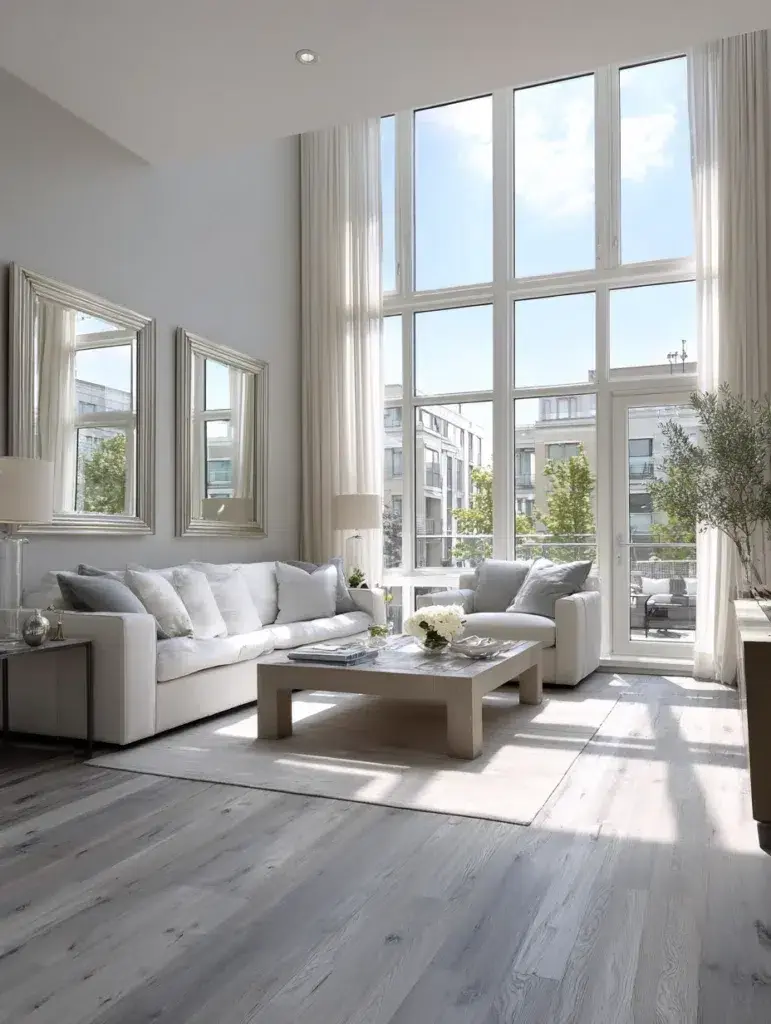
Grey flooring changes character depending on the daylight it receives. In bright south-facing rooms it can look crisp and airy. In dimmer spaces it may read deeper and cooler. That is why furniture placement, mirrors, and window treatments matter so much.
Keep window coverings light if you want the floor to feel brighter. Use mirrors to bounce light deeper into the room, especially if the living area sits far from the windows. A reflective or pale-toned coffee table can help for the same reason.
It is worth checking the floor at different times of day before finalizing your wall color and textiles.
21. Personal Collections That Make a Neutral Room Feel Like Home
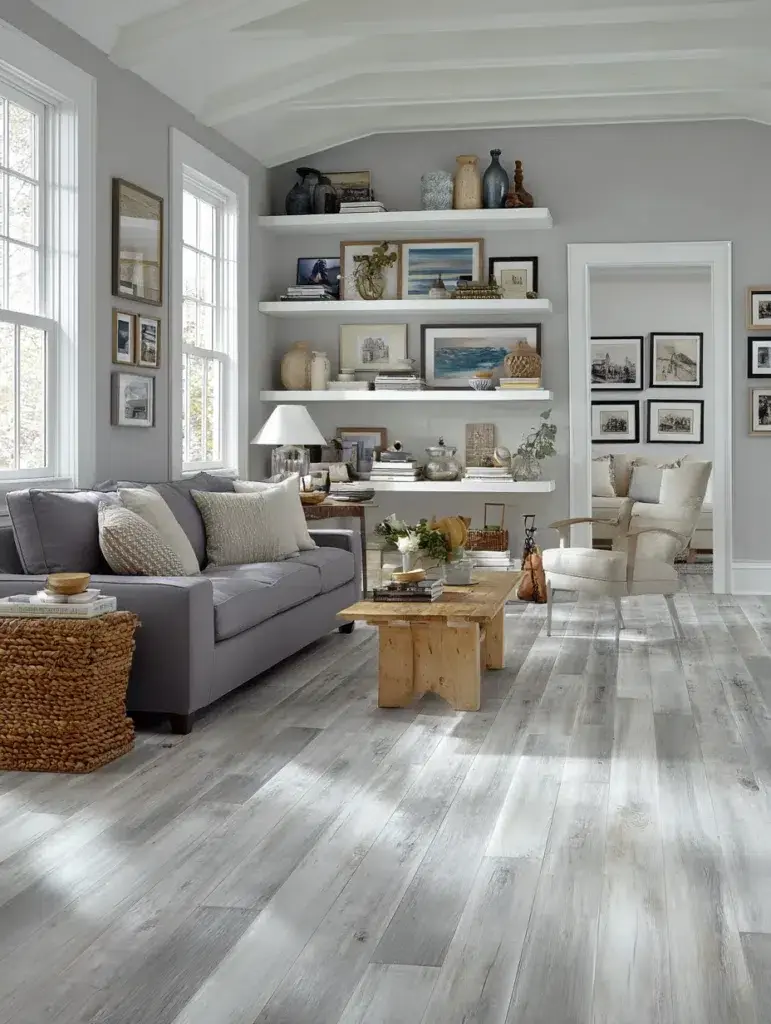
Grey flooring is often at its best when it fades into the background a little. That makes it an ideal base for meaningful displays, whether you collect books, ceramics, framed travel photos, or smaller vintage finds.
The goal is arrangement, not accumulation. Group similar objects together, vary heights, and leave some open space so the display feels intentional. A neutral floor helps these collections stand out without making the room feel busy.
Living rooms built around personal pieces usually feel more relaxed and memorable than ones filled only with decorative filler.
Frequently Asked Questions
What wall colors work best with grey flooring in a living room?
Soft white, warm beige, greige, muted sage, and pale taupe are all reliable choices. The best option depends on whether your flooring reads cool or warm. Cooler grey floors often benefit from warmer wall colors so the room does not feel overly sharp.
How do I make grey flooring feel warmer?
Bring in warmth through wood tones, soft lighting, layered rugs, and textiles with visible texture. Rust, terracotta, camel, olive, and cream also help counter the cooler feel of grey.
Does grey flooring make a small living room look bigger?
It can. Mid-tone and lighter grey floors tend to feel open when paired with lighter walls and furniture. Very dark grey flooring can still work in a small room, but it usually needs stronger lighting and brighter furnishings above it.
What rug color looks best on grey floors?
Cream, beige, rust, olive, soft blue, and patterned neutrals are all easy pairings. The best choice depends on whether you want the rug to blend into the room or stand out as a focal point.
Is grey flooring still a practical choice for busy living rooms?
Yes. Grey flooring is generally forgiving with dust and everyday wear, especially in mid-tones. Texture and variation in the floor finish also help conceal minor marks more effectively than very dark or very glossy surfaces.
Final Thoughts
Grey flooring gives a living room flexibility, but the room only feels finished when the layers above it are working just as hard. Warm wood, better lighting, softer textiles, thoughtful contrast, and a few personal details make all the difference. Start with the mood you want the room to have, then use the floor as the backdrop rather than the headline.
Written by the Zeeshe Home Editorial Team, a blog focused on practical home décor ideas and inspiration.


