
A white kitchen has a way of making a home feel cleaner, lighter, and more open right away. It reflects natural light beautifully, works with almost every design style, and gives you a flexible backdrop that can be dressed up or kept simple depending on your taste.
That said, a good white kitchen is rarely just one flat shade repeated everywhere. The best ones feel layered. They combine different finishes, a little contrast, practical materials, and enough texture to keep the space from feeling cold or overly plain.

These white kitchen ideas are all about helping you create a space that feels fresh and polished while still being comfortable enough for everyday life.
1. Mix Warm and Cool White Tones for Depth
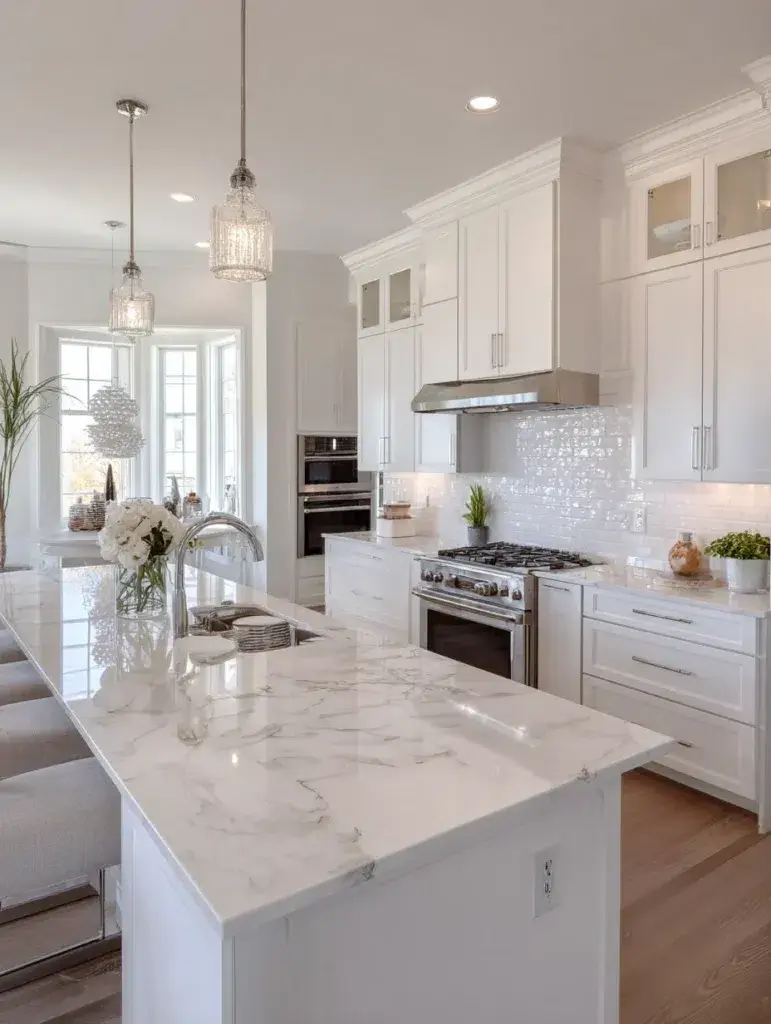
One of the easiest ways to make a white kitchen feel more interesting is to avoid using the exact same white everywhere. Warm whites can soften the space, while cooler whites keep it crisp. When combined thoughtfully, they create dimension without making the room feel busy.
For example, soft ivory cabinets can pair beautifully with a brighter backsplash or cooler countertop. The shift is subtle, but it helps the kitchen feel more layered and intentional rather than flat.
This works especially well in kitchens that get changing light throughout the day, since different whites respond to sunlight in different ways.
2. Install Open Floating Shelves to Keep the Room Airy
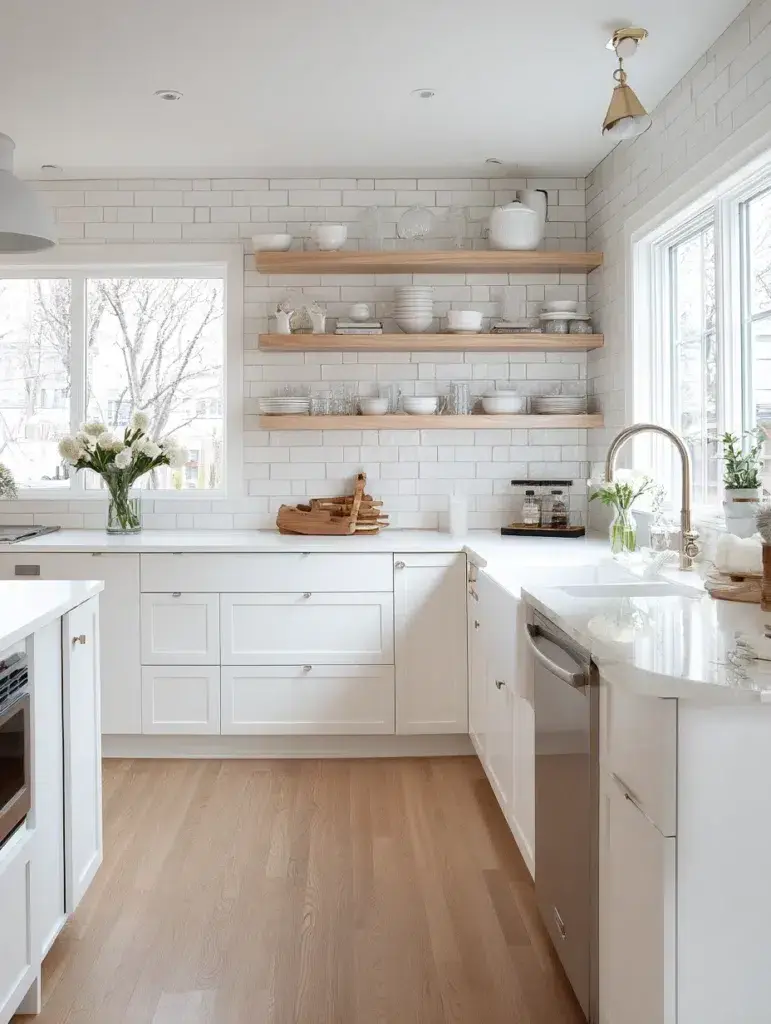
Open floating shelves can make a white kitchen feel lighter and less boxed in. They break up a wall of upper cabinets and give you a place to display dishes, glassware, cookbooks, or a few decorative pieces without adding visual heaviness.
In smaller kitchens, this can be especially helpful because it opens the room up and lets the wall color continue through. The key is keeping the display simple and useful rather than overcrowded.
If you like a clean, edited look, a few shelves can do a lot more for the room than another row of closed cabinetry.
3. Choose a White Marble Backsplash for Soft Pattern
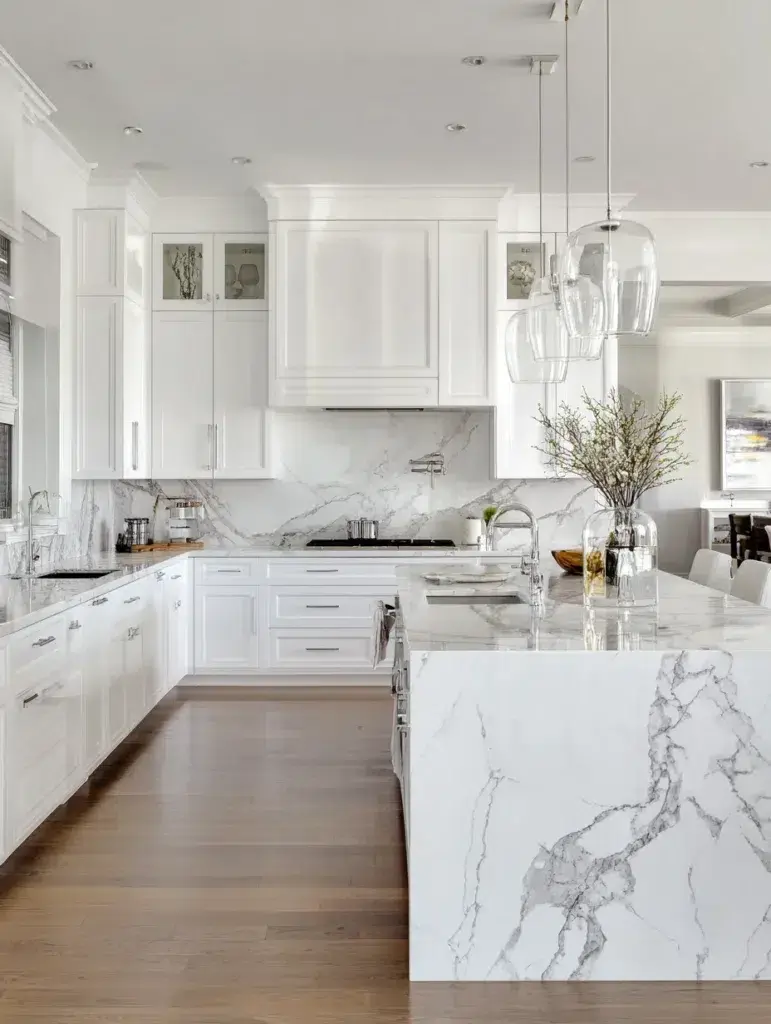
A white marble backsplash adds movement and natural variation while still keeping the kitchen bright. The veining gives the room a little quiet drama, which is useful in an all-white palette where plain surfaces can sometimes feel too static.
This kind of backsplash works especially well when you want something elegant but not overly bold. It brings in visual texture without demanding a lot of extra styling around it.
If real marble is not practical for your budget or maintenance preferences, marble-look surfaces can still give a similar effect with less upkeep.
4. Add White Shiplap Walls for Character
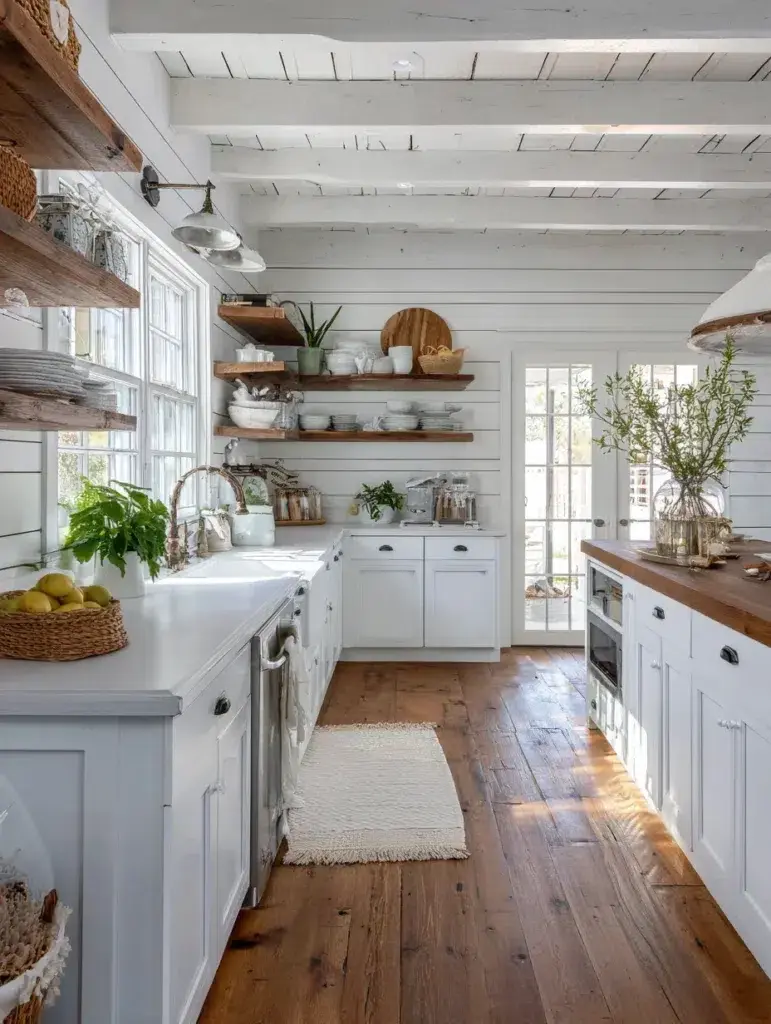
White shiplap is a useful way to add texture to a kitchen without changing the color palette. The horizontal lines bring subtle structure, and the overall effect feels calm, casual, and bright.
It can work in farmhouse kitchens, coastal spaces, and even transitional designs when used in a restrained way. In a mostly white room, this kind of wall detail helps prevent everything from blending into one smooth surface.
It is also a practical choice for walls that need a little more durability and visual interest than plain drywall alone.
5. Install White Quartz Countertops for a Durable, Clean Look
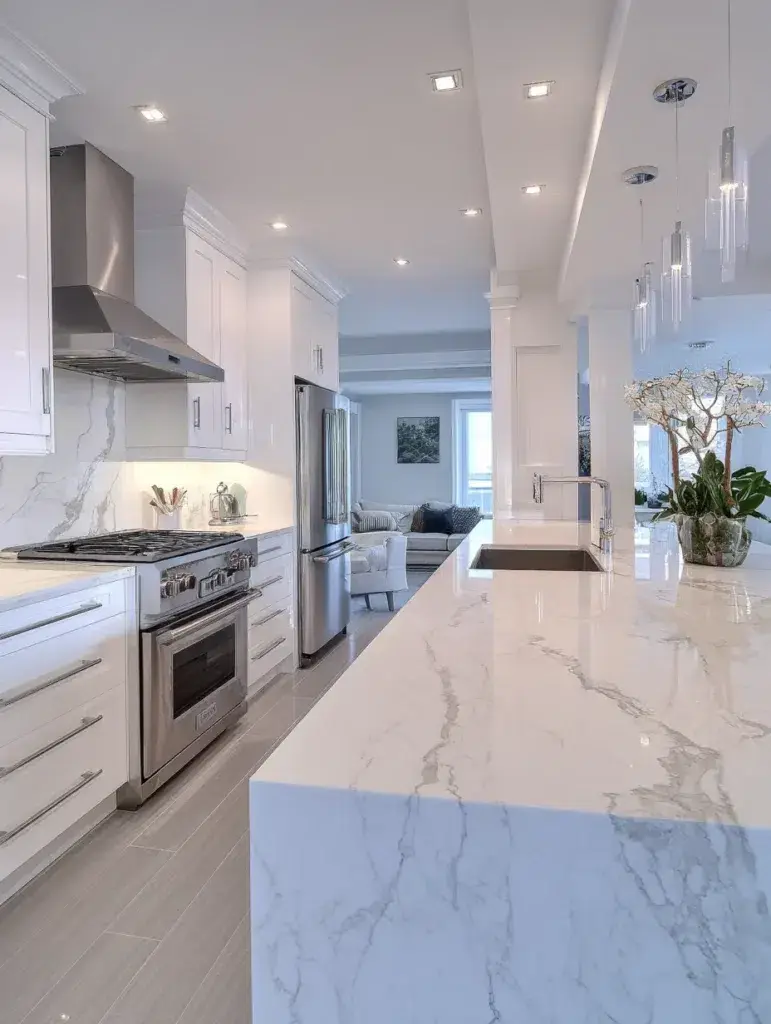
White quartz countertops are popular for good reason. They give a kitchen a bright, polished look while standing up well to everyday use. If you love the look of marble but want something easier to maintain, quartz is often the practical alternative.
Depending on the style you choose, quartz can look nearly solid white or include soft veining for a more natural stone effect. Either way, it helps reflect light and keeps the kitchen feeling clean and open.
For busy households, this is one of the easiest ways to get the white kitchen look without choosing a surface that feels high-maintenance.
6. Incorporate White Subway Tile for a Timeless Backdrop
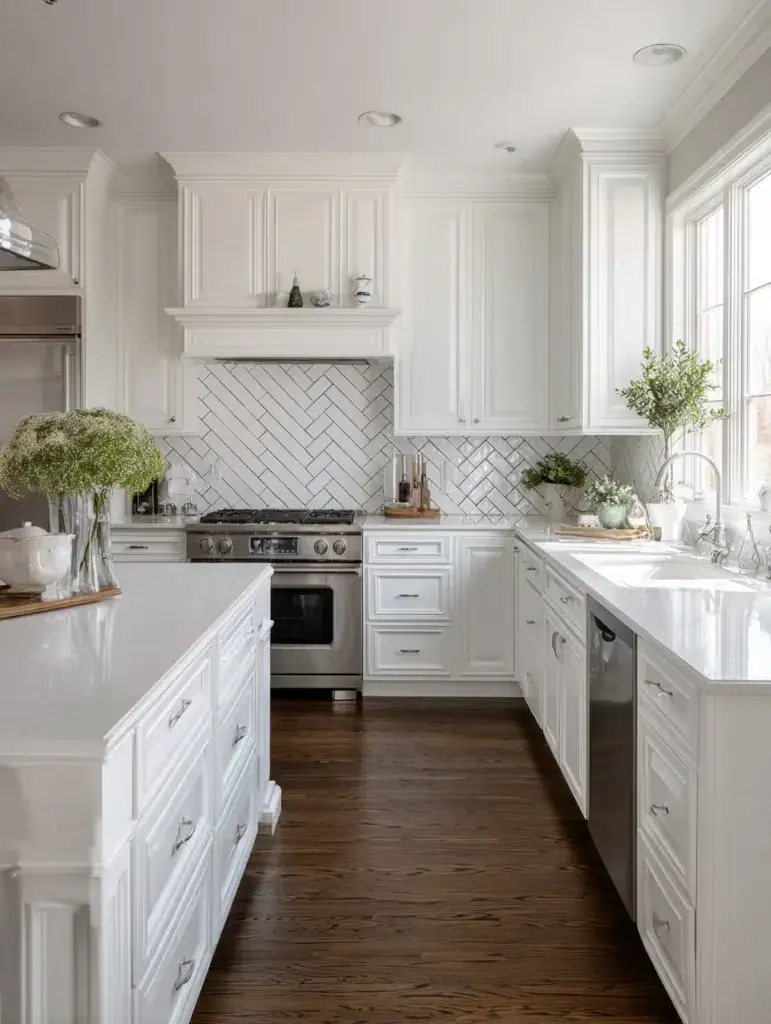
White subway tile has become a classic because it works with nearly everything. It feels clean, bright, and familiar without looking plain when installed well. It also gives you room to shift the rest of your decor over time without needing to redo the backsplash.
Even with a simple tile, you can still create interest through layout. Stacked, herringbone, and offset patterns all change the feel of the wall while keeping the material itself understated.
It is one of the safest long-term choices if you want your kitchen to feel current without chasing short-lived trends.
7. Paint Cabinets in a Crisp, Clear White
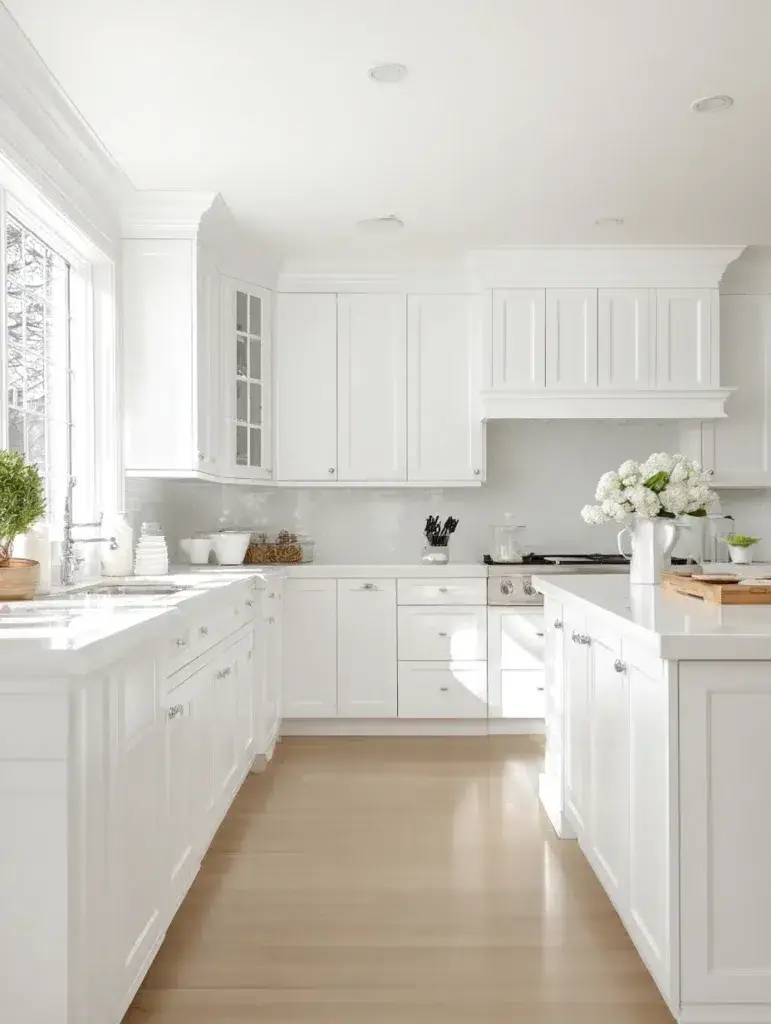
Painting cabinets white is still one of the most effective ways to refresh a kitchen. It can brighten dark corners, make an older layout feel cleaner, and create a strong base for nearly any style direction you want to take afterward.
The most important part is choosing the right undertone and finish. A white that looks beautiful on a paint chip can read too blue, too yellow, or too stark once it covers an entire wall of cabinetry. Testing in your actual kitchen light matters.
When done well, white cabinets do not disappear. They become the calm framework that supports the rest of the room.
8. Add a White Farmhouse Sink as a Focal Point
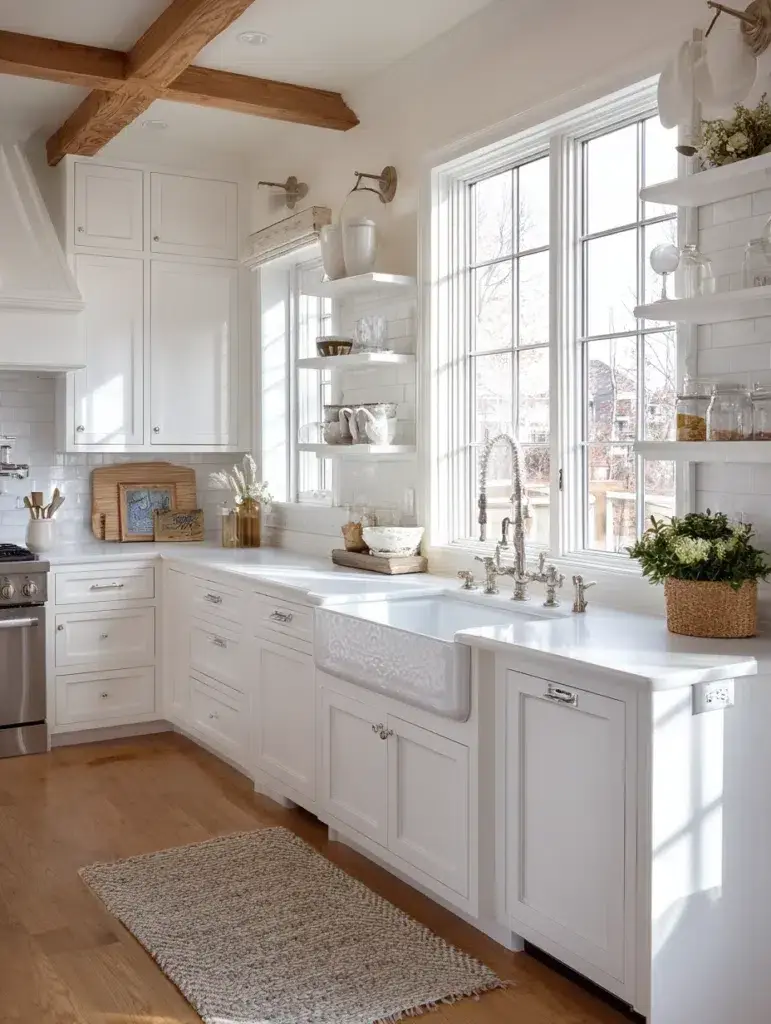
A white farmhouse sink gives a kitchen a central feature that feels both practical and classic. Its deeper basin is useful for everyday cooking and cleanup, while the apron front adds shape and softness to standard cabinetry.
In an all-white kitchen, this kind of sink works especially well because it contributes to the palette without disappearing completely. It feels substantial and finished rather than purely utilitarian.
This is a good choice if you want one standout detail that still fits naturally into a bright, timeless kitchen design.
9. Install White Pendant Lights to Brighten the Visual Line
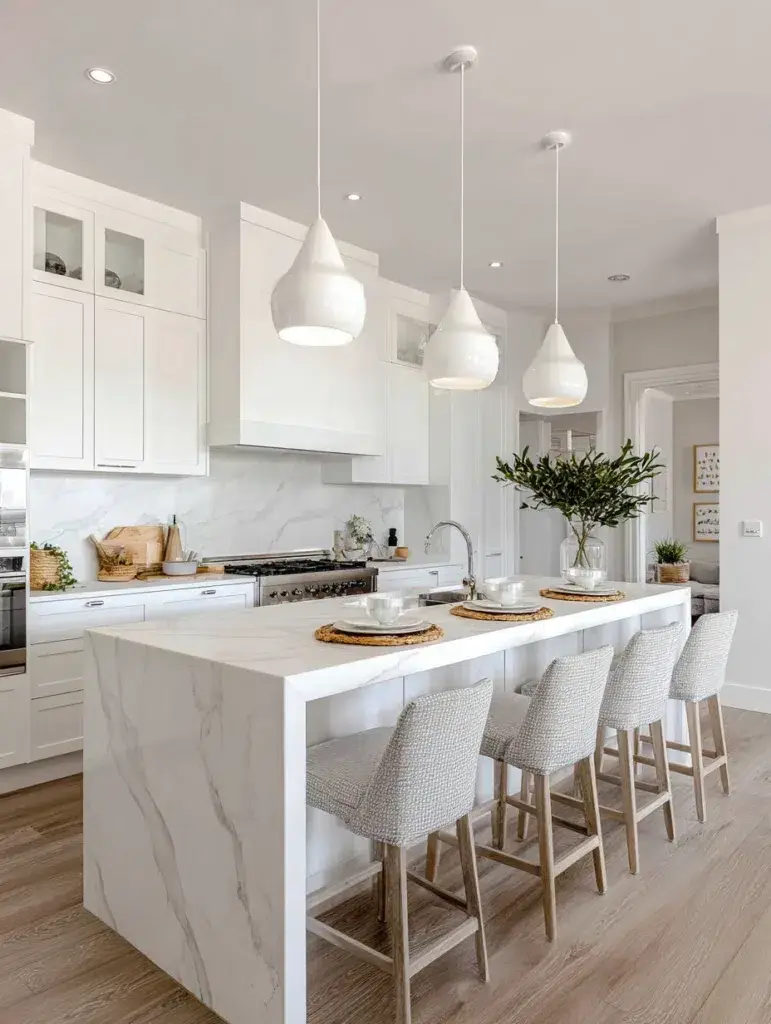
Pendant lights are not just about lighting. They also shape the look of the room. White pendants can help carry the palette upward while adding form above an island or dining nook.
Because they blend more gently into a white kitchen than dark fixtures, they help keep the room feeling open. At the same time, a well-chosen pendant still adds enough shape to make the ceiling line more interesting.
This is especially useful in kitchens where you want statement lighting without introducing too much contrast.
10. Use White Bar Stools for a Cohesive Seating Area
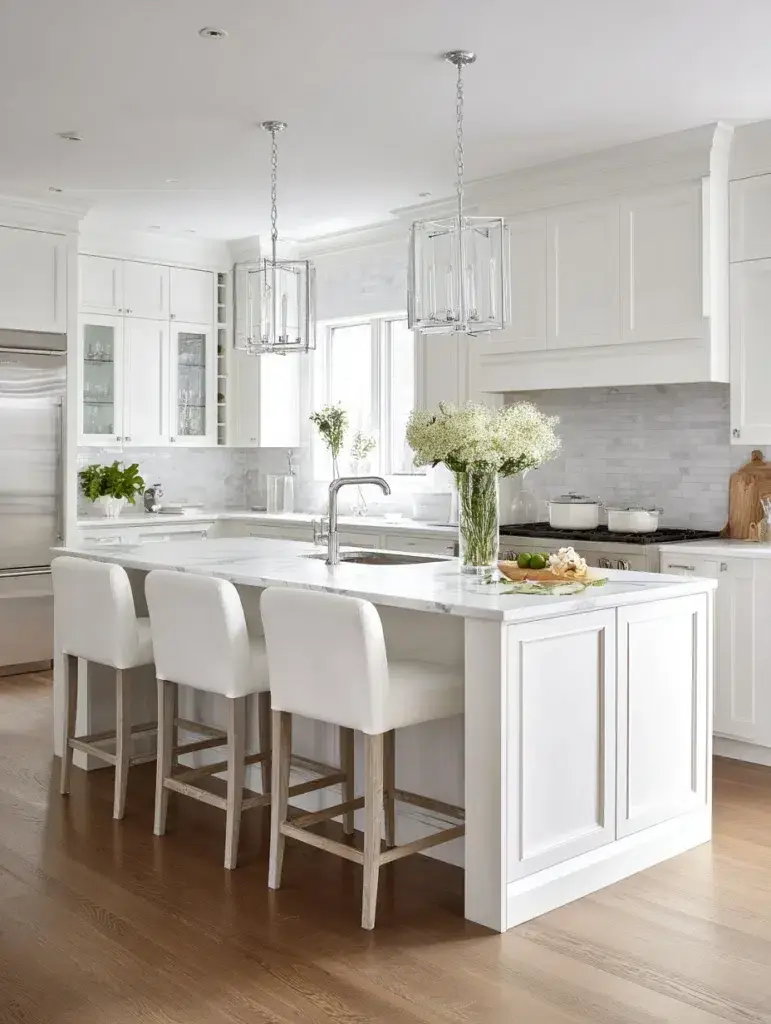
White bar stools can help a kitchen island feel like a natural extension of the rest of the room. Instead of breaking the palette, they keep the line of sight calm and continuous, which can make the kitchen feel more spacious.
To keep the seating area from feeling too flat, look for stools with interesting shape, texture, or leg material. A white seat with wood or metal details often works better than something that feels overly uniform.
They are especially effective in kitchens where the island is already a visual anchor and does not need another strong competing color.
11. Add White Crown Molding for a Finished Look
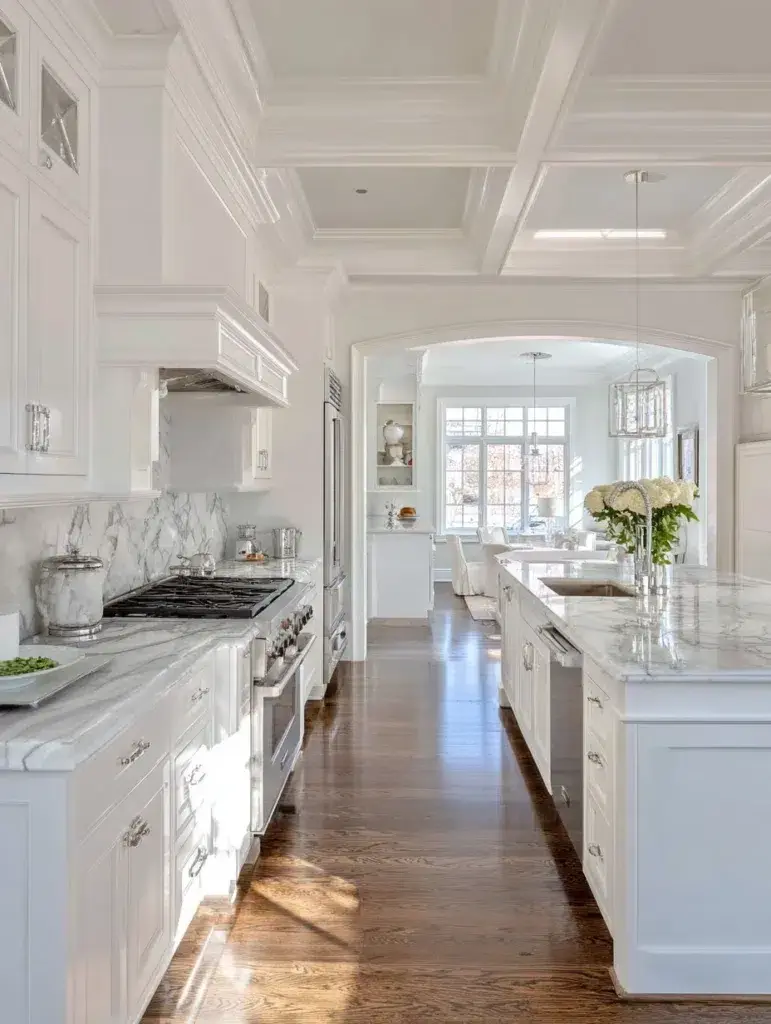
Crown molding is one of those details people may not notice immediately, but they definitely feel when it is missing. In a white kitchen, it helps connect cabinets, walls, and ceiling in a way that makes the entire space feel more complete.
It is particularly useful when cabinets stop short of the ceiling and you want that transition to look intentional rather than unfinished. Even a simple profile can add a more polished architectural feel.
For traditional, cottage, or transitional kitchens, this small detail can make a surprisingly big visual difference.
12. Choose White Roman Shades to Soften the Windows
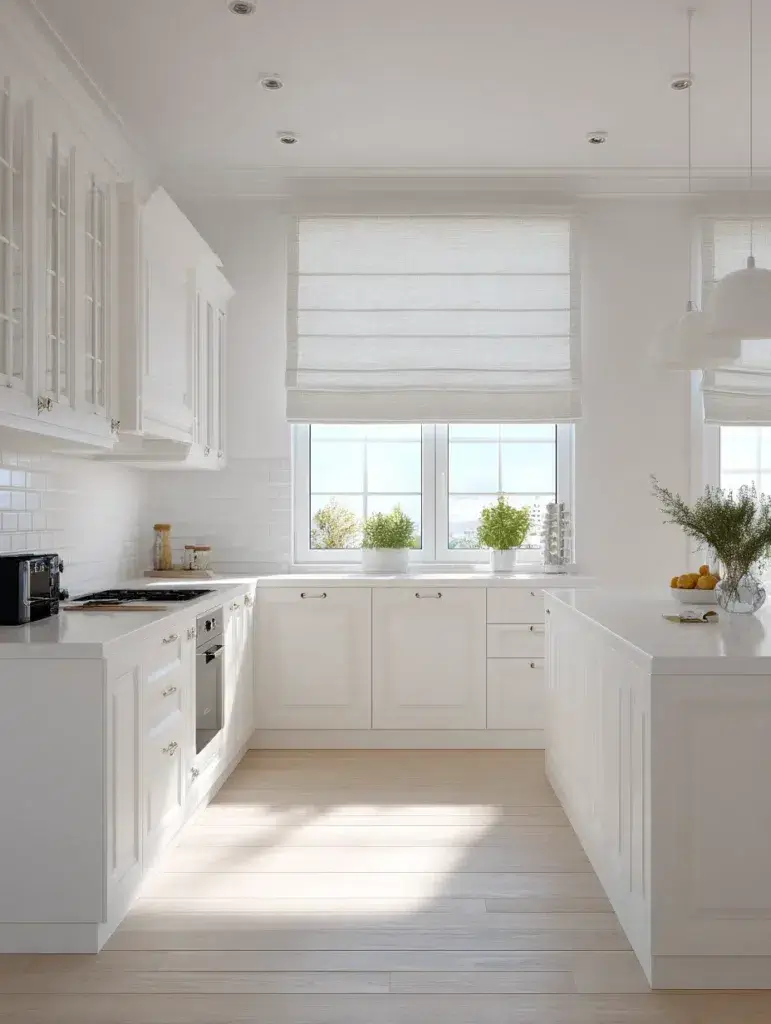
A kitchen full of hard surfaces benefits from something soft. White Roman shades add that softness without interrupting the light, especially when made from linen or another lightly textured fabric.
They also work well if you want the window treatment to feel calm and integrated rather than decorative for its own sake. In a white kitchen, the texture becomes more important than color, so fabric choice matters.
This is a simple way to make the room feel more comfortable and lived-in while keeping the palette bright.
13. Install White Glass Cabinet Doors for Lightness and Display
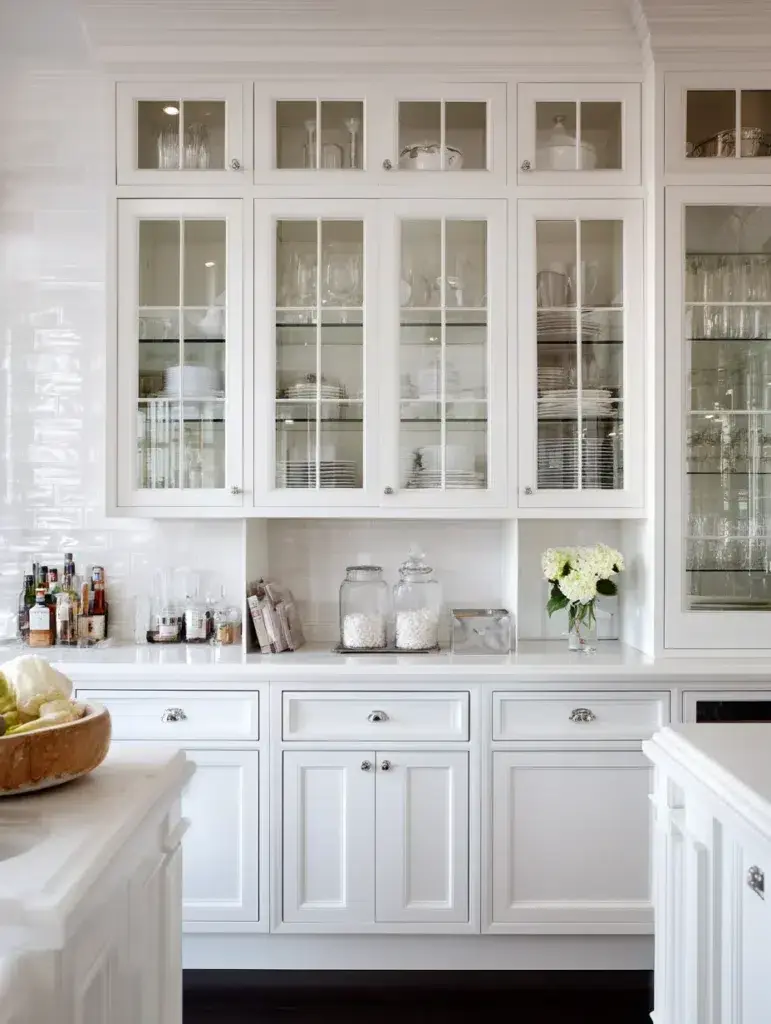
Glass cabinet fronts can break up a wall of white cabinetry and make the kitchen feel more open. They let you display dishes or glassware while still keeping the cabinet framework intact.
In a white kitchen, this is especially useful because it adds reflection and depth without bringing in a new strong material or color. It works best when what is inside the cabinet is simple and reasonably tidy.
If you like the look of open shelving but want a little more visual control, this is a strong middle ground.
14. Add a White Tile Floor for a Bright Foundation
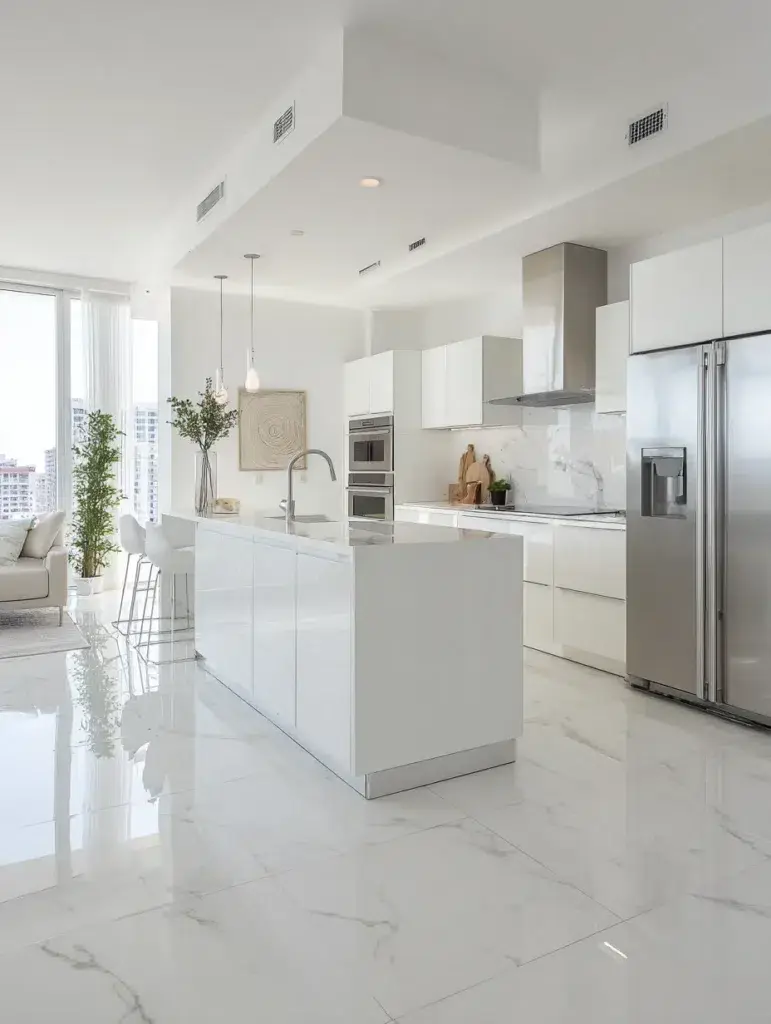
A white tile floor can make the entire kitchen feel brighter from the ground up. It reflects light, supports the rest of the palette, and helps smaller kitchens feel more open.
To keep it practical, larger-format tile or tiles with a bit of pattern or softness in tone can be easier to live with than stark bright white squares. The goal is clean and airy, not clinical.
This is one of the strongest ways to reinforce a white kitchen look if you want the whole room to feel cohesive and fresh.
15. Incorporate White Open Shelving Units for Extra Storage
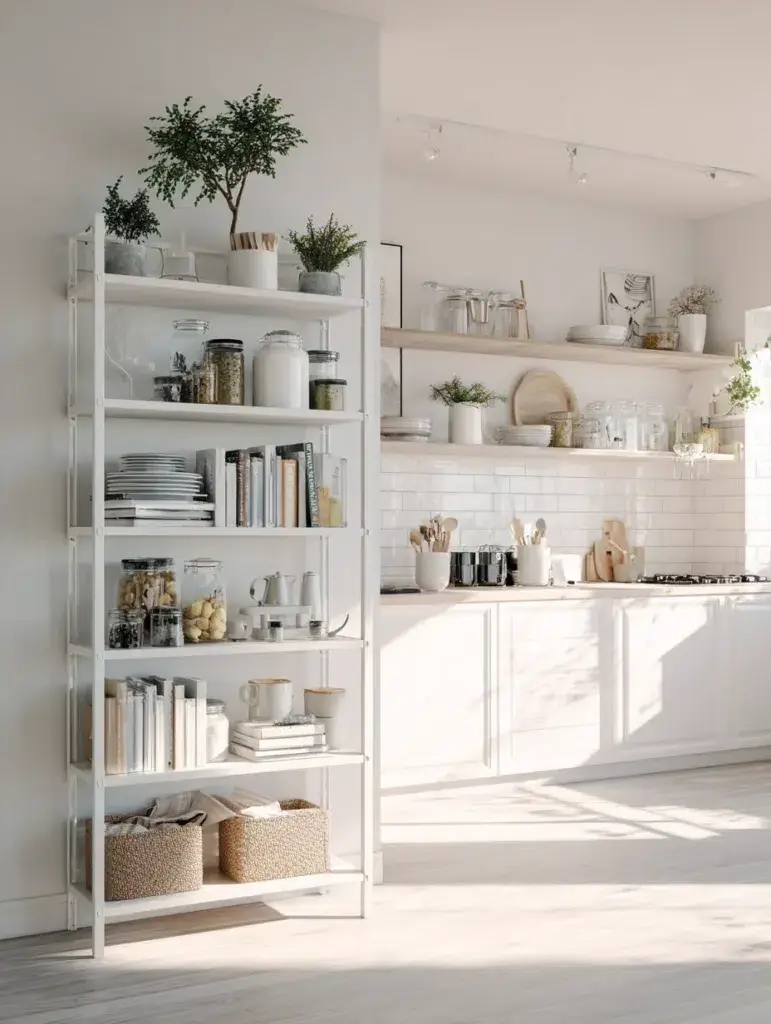
Freestanding or built-in white shelving units can add useful storage without making a kitchen feel heavy. They are especially helpful in awkward corners, breakfast nooks, or areas where upper cabinets would feel too bulky.
Because the shelving stays within the same color family as the walls or cabinets, it can offer practical storage while remaining visually quiet. That means you gain function without making the room feel more crowded.
This works best when the shelves are styled with a mix of useful and decorative items instead of being packed too tightly.
16. Use White Drawer Pulls and Knobs for Subtle Detail
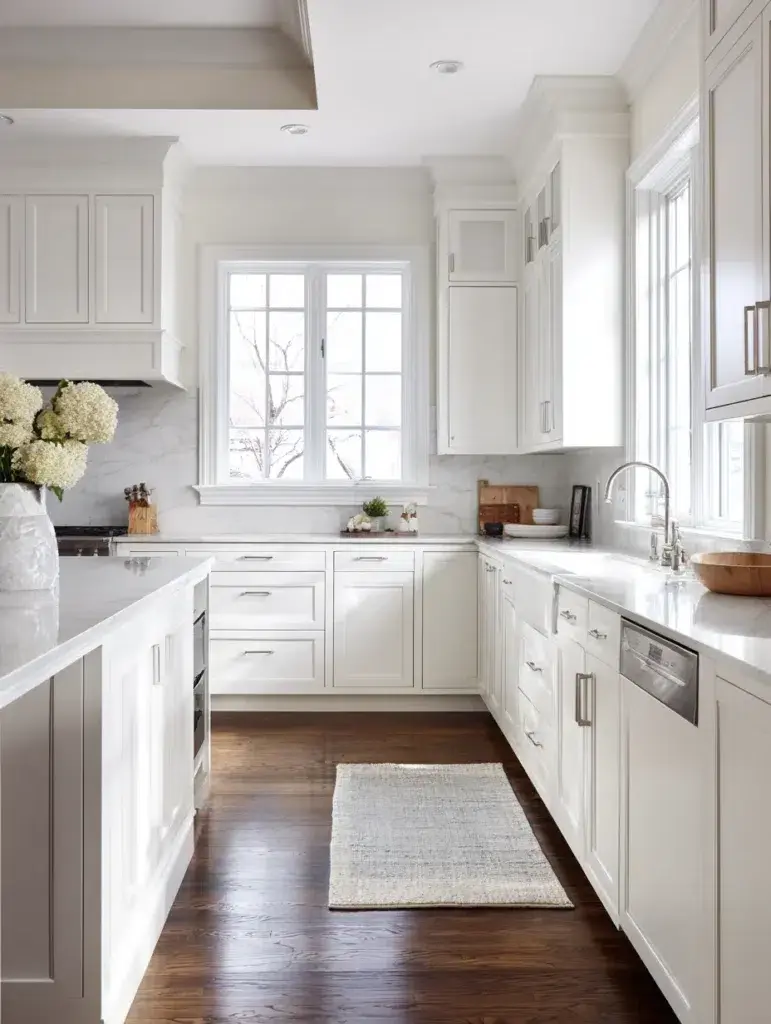
White hardware can create a soft, nearly seamless look on white cabinets. Instead of drawing attention to every door and drawer, it keeps the cabinetry reading as one calm, continuous surface.
This is especially appealing in kitchens where you want a more understated look and prefer texture or shape to do the work rather than contrast. Ceramic or painted knobs can also add a subtle handcrafted touch.
It is a small choice, but it can shift the kitchen toward a softer and more integrated feel.
17. Install a White Range Hood That Blends In Beautifully
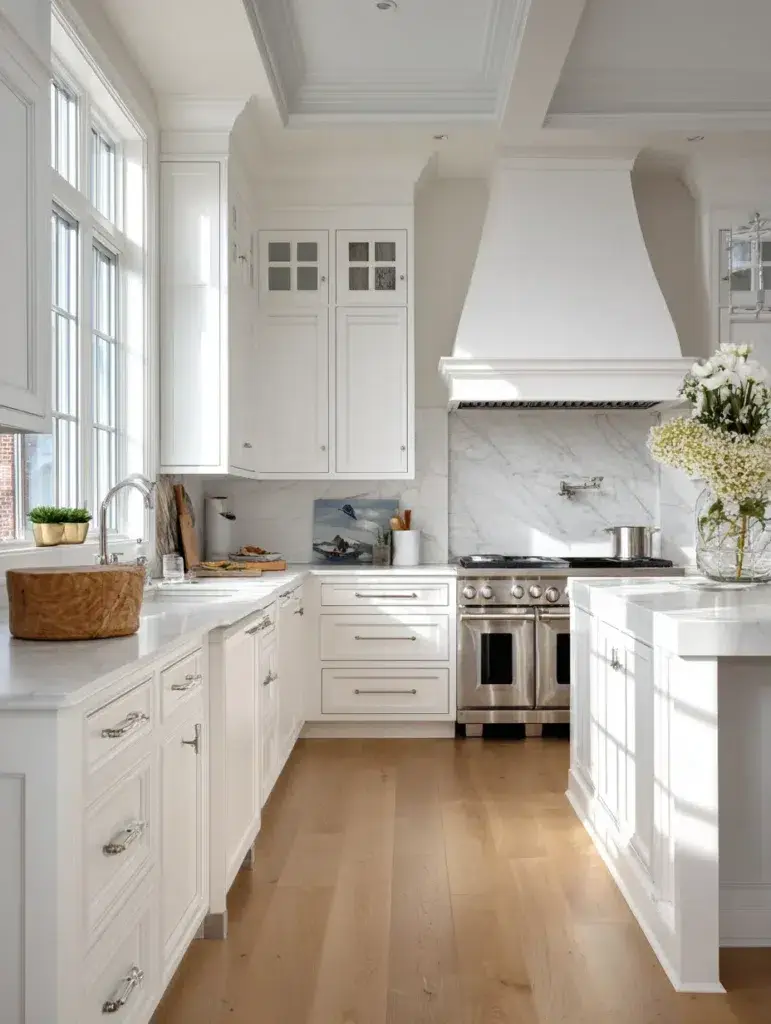
A white range hood can either disappear into the cabinetry or become a quiet focal point, depending on its shape and trim. In both cases, it helps the cooking wall feel cleaner and more intentional than a standard exposed metal hood might.
This is especially effective in kitchens with a soft, classic, or custom look. The hood can tie together upper cabinets, backsplash, and wall color while still doing its practical job.
When shaped well, it adds architecture instead of clutter.
18. Add White Wainscoting for Texture and Protection
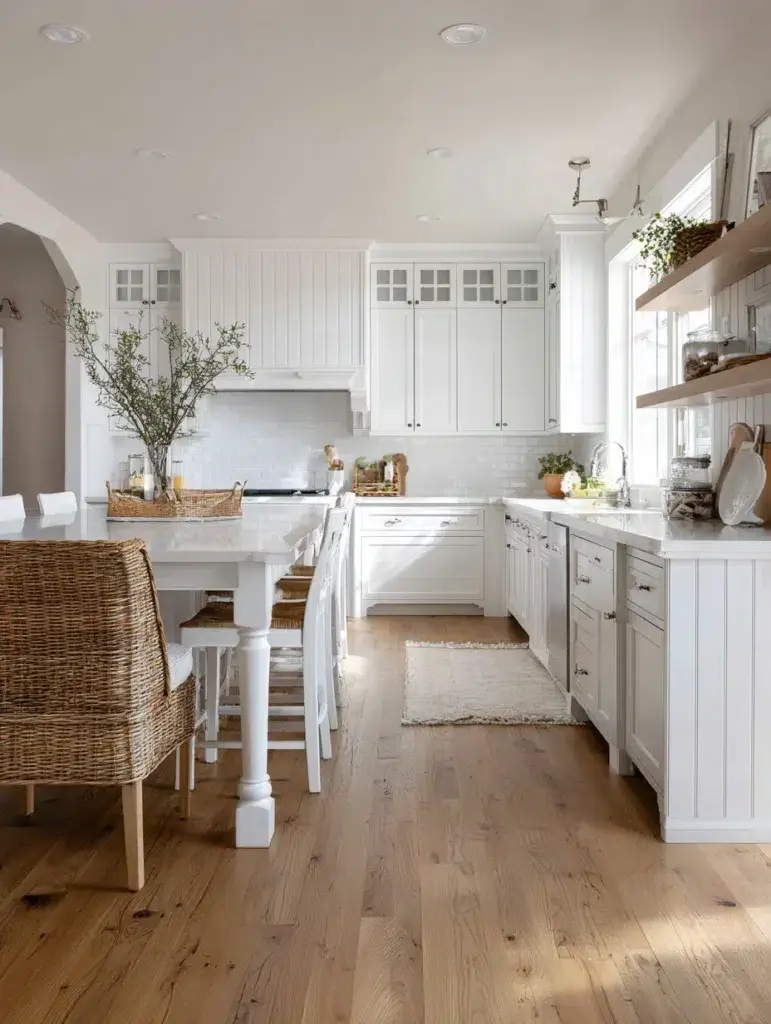
White wainscoting adds subtle texture and can help protect walls in breakfast areas or lower-traffic kitchen zones. It introduces a more traditional or cottage-inspired detail while staying fully within the white palette.
This kind of paneling is useful when the kitchen needs a little more character but you do not want to rely on bold color or pattern. It also creates a sense of structure on otherwise plain walls.
It is one of those features that feels decorative and practical at the same time.
19. Choose White Small Appliances for a Cleaner Countertop Look
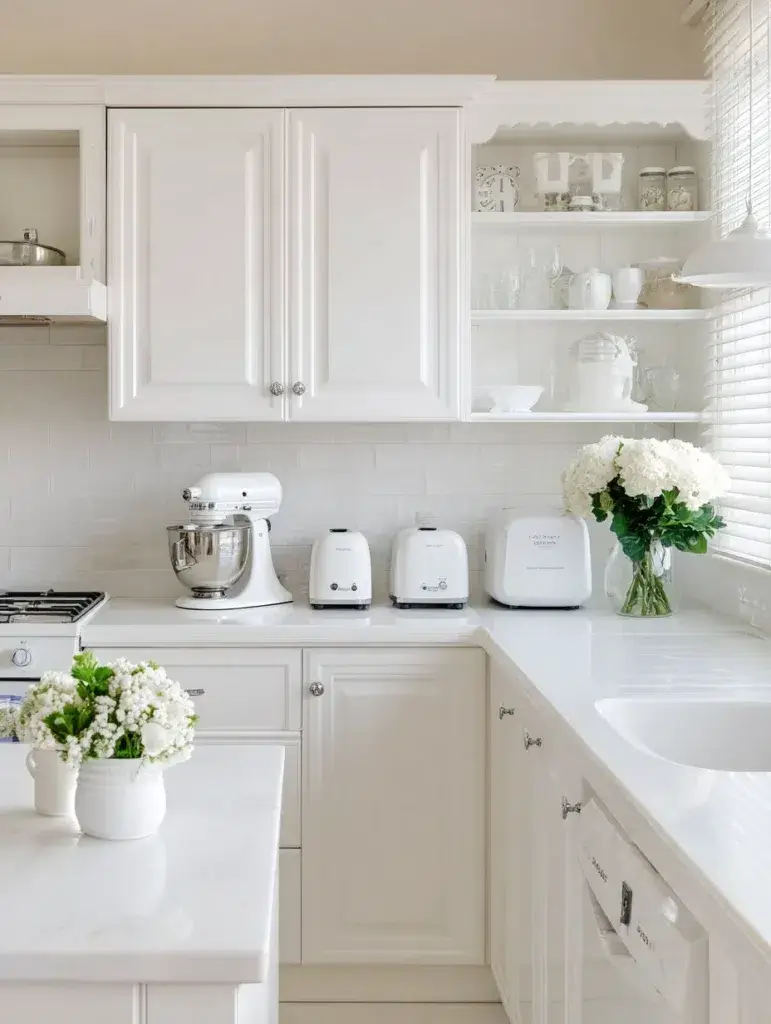
Small appliances can easily interrupt a white kitchen if they are all different colors and finishes. White appliances help them blend into the space more naturally, which keeps countertops looking calmer and less cluttered.
This is especially helpful in kitchens where appliances stay out full-time. A toaster, mixer, or coffee machine in white can still feel present and useful without visually crowding the room.
If your goal is a more restful kitchen, this is an easy detail that supports the overall effect.
20. Install White Ceiling Beams for Architectural Interest
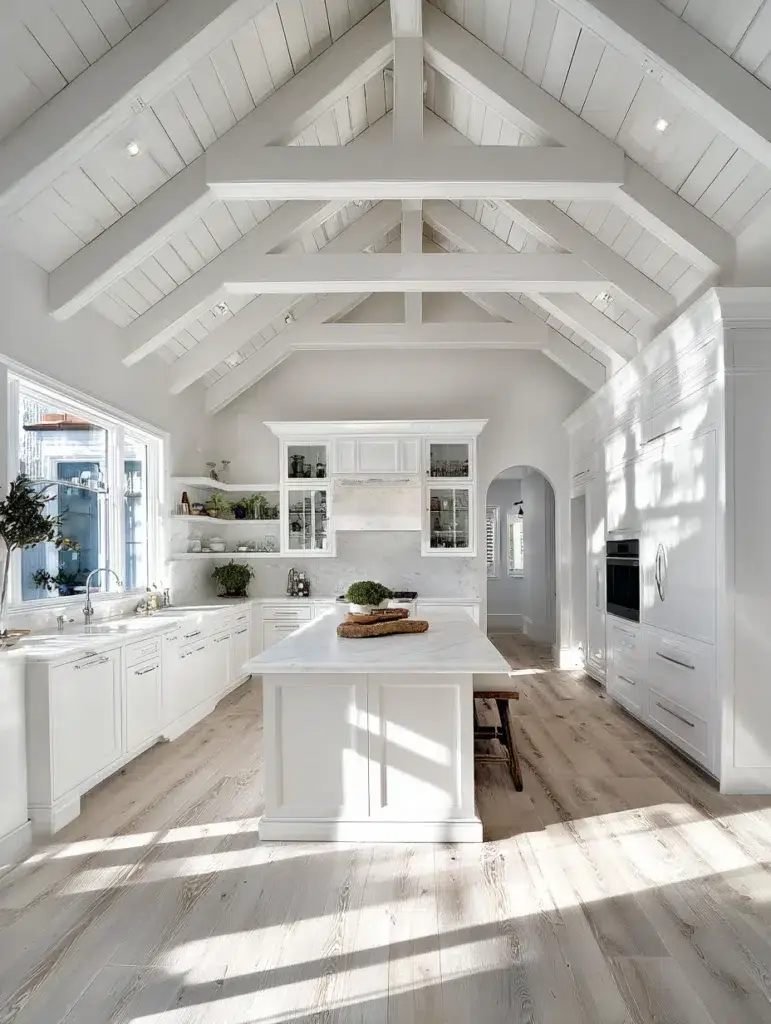
White ceiling beams add structure and character without darkening the room. Unlike stained wood beams, they let you introduce overhead detail while still preserving the bright, open feeling that makes white kitchens so appealing.
They work especially well in kitchens with vaulted ceilings or open-plan layouts where the ceiling needs a little definition. In lower-ceilinged kitchens, simpler beam styles usually work best.
This is a strong option when you want the room to feel more architectural without moving away from the white palette.
21. Add White Decorative Molding for a Custom Feel
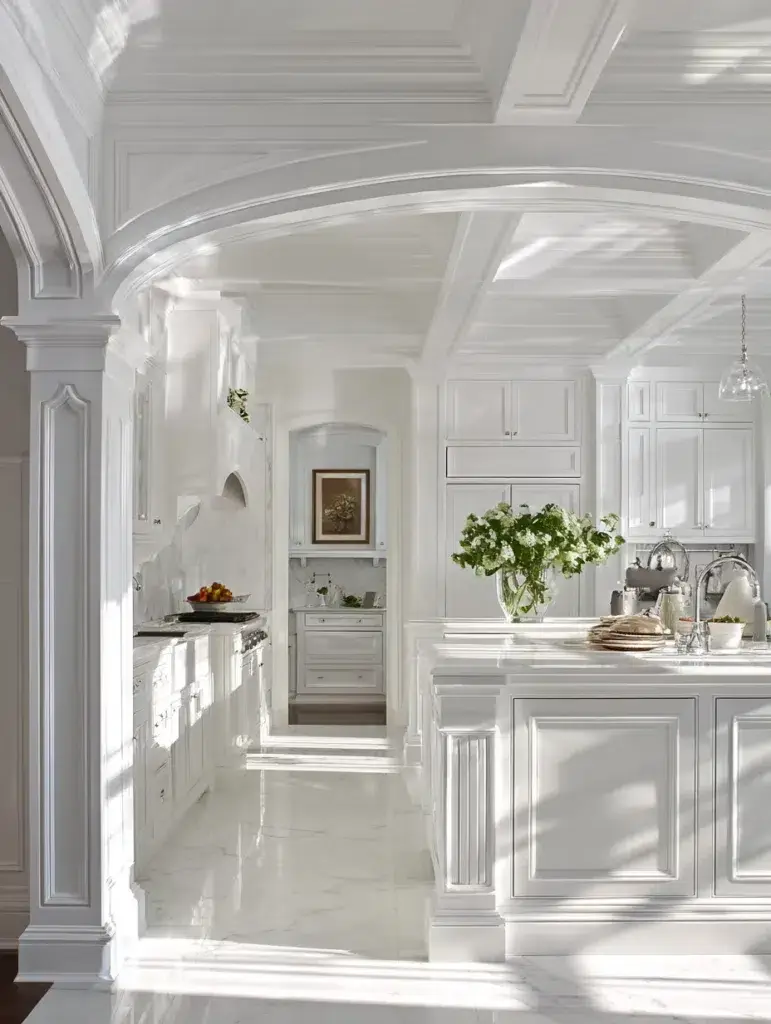
Decorative molding can make standard cabinetry or plain walls feel much more custom. Applied carefully, it adds shape and depth while still keeping the room clean and cohesive.
In a white kitchen, this works because the detail reads through shadow and form instead of color contrast. That makes it ideal for homeowners who want more refinement without introducing busy surfaces.
Used on cabinet fronts, around windows, or as wall detail, molding can help a simple kitchen feel more considered and complete.
Final Thoughts
A beautiful white kitchen is rarely about whiteness alone. What makes it work is the layering of finishes, materials, shape, light, and small practical details that keep the room from feeling flat or overly stark.
You do not need to do everything at once. A new backsplash, a different shade of cabinet paint, better lighting, or softer window treatments can all shift the room in a meaningful way. Start with the part that feels most important to your daily routine, then build from there.
Written by the Zeeshe Home Editorial Team, a blog focused on practical home décor ideas and inspiration.


