
Jewelry deserves more than being hidden inside a drawer, tangled in a box, or scattered across a dresser. When necklaces, rings, earrings, bracelets, and watches are displayed properly, they become easier to use, easier to protect, and much more enjoyable to look at every day.
A good jewelry display is not only about decoration. It should also help you organize your collection, prevent tangling, protect delicate pieces, and make your favorite items easy to reach. Whether you are styling a bedroom vanity, organizing a dressing table, setting up a boutique counter, or preparing a craft booth, the right display can make your jewelry feel more valuable and intentional.

If you are styling a bedroom vanity or dresser, you may also like these hotel bedroom ideas for creating a more polished and relaxing room setup.
My Experience with Jewelry Displays
When organizing jewelry at home, I noticed that the biggest issue was not owning too many pieces. The real problem was visibility. Jewelry stored in drawers was often forgotten, while pieces placed on open displays were used more often.
The most useful setup was separating jewelry by type. Necklaces worked better on hooks, grids, or busts because they stayed untangled. Rings looked cleaner in trays or velvet boxes. Bracelets were easier to manage on tiered trays, bottles, or stands. This simple sorting method made the whole collection easier to use without making the room feel messy.
For daily jewelry, open display works well. For valuable, sentimental, or delicate pieces, closed storage is safer. The best approach is usually a mix of both: keep everyday pieces visible and store expensive pieces in lined drawers or protective boxes.
What Makes a Good Jewelry Display?
A strong jewelry display should do three things: show the jewelry clearly, protect it from damage, and match the style of the space. If a display looks pretty but makes jewelry hard to remove, it becomes frustrating. If it is practical but messy, it will not improve the look of the room or selling area.
Before choosing a display idea, think about the type of jewelry you use most. Necklaces usually need hanging space to prevent tangling. Rings and studs need small compartments or soft surfaces. Bracelets look good on bars, trays, bottles, or rounded stands. Statement pieces need more open space so they do not compete with each other.
- For necklaces: use hooks, grids, busts, branches, or hanging displays.
- For rings: use velvet boxes, trays, ring cones, or divided compartments.
- For earrings: use grids, frames, pegboards, or cards.
- For bracelets: use trays, stands, bottles, or tiered displays.
- For valuable pieces: use lined drawers, enclosed cases, or secure storage.
How to Set Up a Jewelry Display Step by Step
Before choosing a display style, it helps to plan your jewelry setup properly. This prevents the final arrangement from looking crowded or random.
- Sort your jewelry by type: Separate necklaces, rings, earrings, bracelets, watches, and statement pieces.
- Choose the right location: Use a wall, vanity, dresser, shelf, drawer, or tabletop depending on your available space.
- Place daily pieces first: Jewelry you wear often should be easiest to see and reach.
- Add height: Use risers, trays, shelves, or stands so the display does not look flat.
- Leave breathing room: Empty space makes jewelry look more valuable and less cluttered.
- Protect delicate pieces: Use velvet, felt, soft lining, or closed storage for fragile jewelry.
Quick Comparison: Which Jewelry Display Should You Choose?
| Goal | Best Display Option | Why It Works |
|---|---|---|
| Save space | Wall grids or pegboards | They use vertical space and keep tabletops clear. |
| Create a luxury look | Velvet boxes or jewelry busts | Soft textures and clean shapes make pieces feel premium. |
| Display jewelry for selling | Acrylic risers or mannequins | They improve visibility and help customers compare pieces. |
| Prevent necklace tangling | Hooks, grids, branches, or hanging displays | Necklaces stay separated and easy to choose. |
| Style jewelry as décor | Bookcase or framed displays | They blend jewelry with the room design. |
1. Vintage Suitcase Displays That Feel Like a Discovery
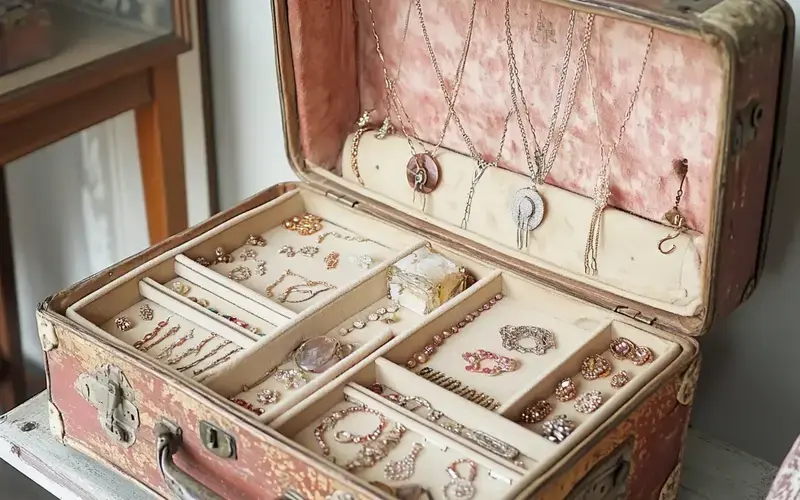
A vintage suitcase creates a jewelry display that feels personal and full of character. When the suitcase is opened, the jewelry appears like a curated collection rather than ordinary storage. This idea works especially well for vintage jewelry, handmade pieces, craft fairs, flea markets, and boutique-style home displays.
To make the display more practical, line the inside with velvet, felt, or soft fabric. This helps protect delicate pieces from scratches and gives the setup a more finished look. You can also add small boxes, mini trays, or risers inside the suitcase to create different levels.
- Use velvet or felt lining to protect delicate items.
- Add small trays to separate rings, earrings, and bracelets.
- Keep the layout open so each piece is easy to see.
- Use the inside lid for necklaces or hanging earrings.
2. Floating Shelves for Clean, Minimal Jewelry Displays
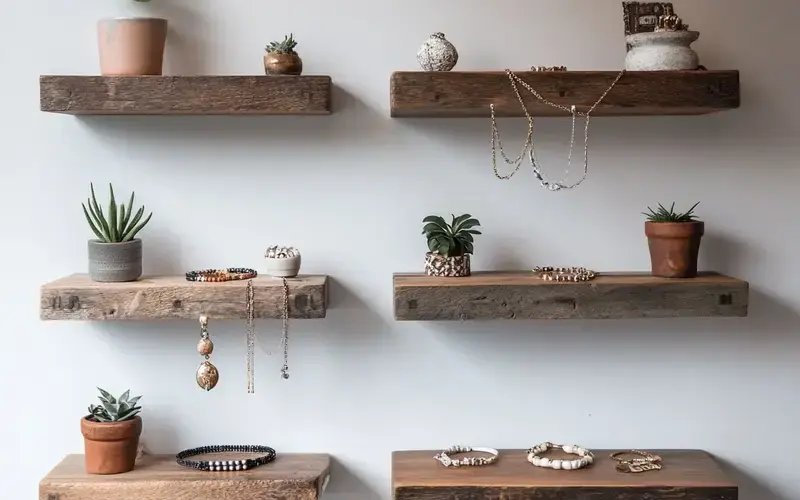
Floating shelves are a smart choice for anyone who likes a clean and modern look. They help jewelry feel intentional rather than crowded. This style works best when you display selected pieces instead of your entire collection.
Wood shelves add warmth and suit cozy bedrooms or natural décor. White shelves look fresh and minimal, while black shelves can make gold or silver jewelry stand out more clearly. The key is to avoid overcrowding. A shelf with a few well-placed pieces usually looks better than one packed with every item you own.
For the best result, combine shelves with small dishes, stands, or jewelry busts. You can display necklaces on a small bust, rings in a dish, and bracelets on a small tray. This gives the shelf structure and keeps the arrangement easy to use.
If you enjoy styling surfaces around the home, explore these coffee table styling ideas for more display inspiration.
3. Acrylic Risers for Multi-Level Visual Interest
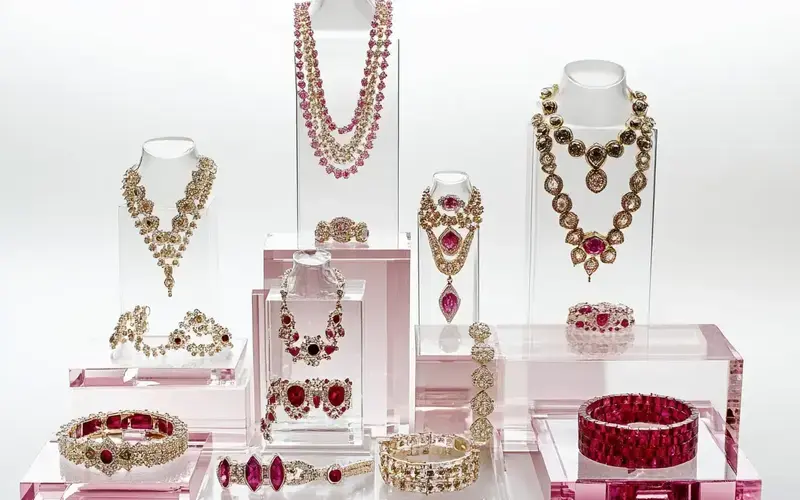
Acrylic risers are useful when you want to display jewelry at different heights without making the setup look bulky. Because they are clear, they do not distract from the jewelry itself.
This idea is especially helpful for rings, earrings, small boxes, bracelets, and featured pieces. A flat display can look boring, but risers create movement and help the eye travel across the arrangement.
Use a mix of short, medium, and tall risers. Place your most detailed or valuable pieces where light can hit them clearly. This works well for both home vanities and professional product displays.
4. Pegboard Jewelry Walls for Flexible Organization
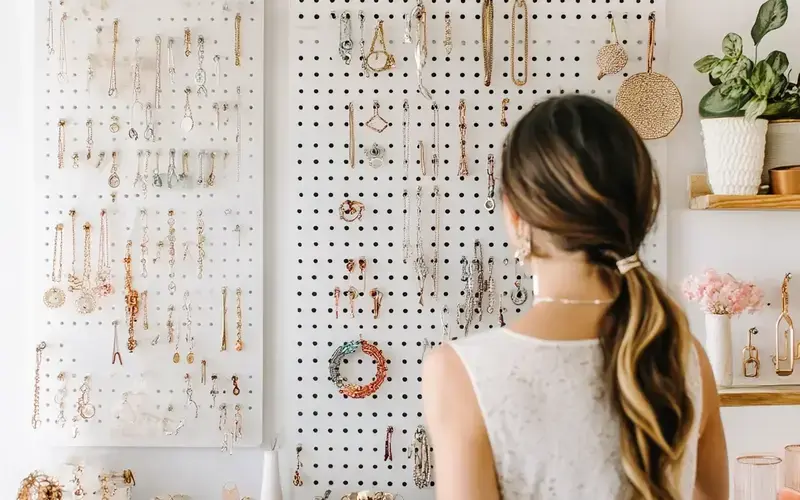
A pegboard jewelry wall is one of the most flexible display ideas. You can move hooks, shelves, baskets, and holders whenever your collection changes. This makes pegboards useful for craft rooms, dressing areas, bedrooms, and small jewelry businesses.
They are especially good for necklaces and bracelets because hanging space helps prevent tangling. You can also add small containers for rings, studs, brooches, or hair accessories.
To make a pegboard look more stylish, paint it to match your room or frame it like wall décor. Leave enough space between hanging pieces so the display looks neat instead of overloaded.
For wall-based styling inspiration, these above bed decor ideas can also help you create a more finished bedroom wall.
5. Framed Displays That Turn Jewelry Into Wall Art
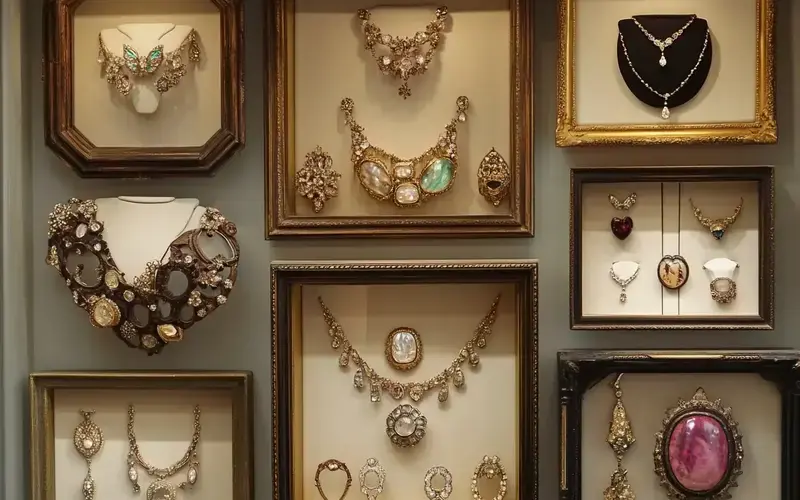
Framed displays are perfect when you want jewelry to become part of the room design. Instead of hiding your favorite pieces, you can display them like small artwork.
A shadow box is better for bulkier pieces, while a slim frame with mesh, fabric, or wire works well for earrings and lighter necklaces. This idea is especially useful for pieces you want to admire but do not wear every day.
Choose a frame style that matches your space. Gold frames look elegant, wood frames feel natural, and black frames create a clean modern look. For a softer effect, line the frame with linen, velvet, or neutral fabric.
6. Branch Displays for an Organic, Natural Look
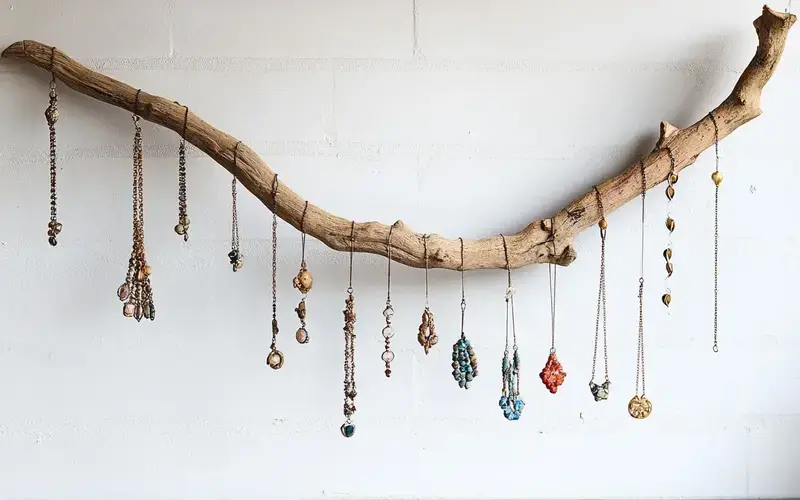
Branches, driftwood, or smooth wooden sticks can create a beautiful natural jewelry display. This idea works well in bohemian, rustic, coastal, handmade, and earthy-style spaces.
Long necklaces look especially good on branch displays because they can hang freely without tangling. You can mount a branch on the wall, hang it with cord, or place it on a small stand.
Before using a branch, clean it, dry it fully, and seal it if needed. Make sure it is stable enough to hold jewelry without tipping or scratching delicate pieces.
7. Mannequin Displays for Realistic Styling
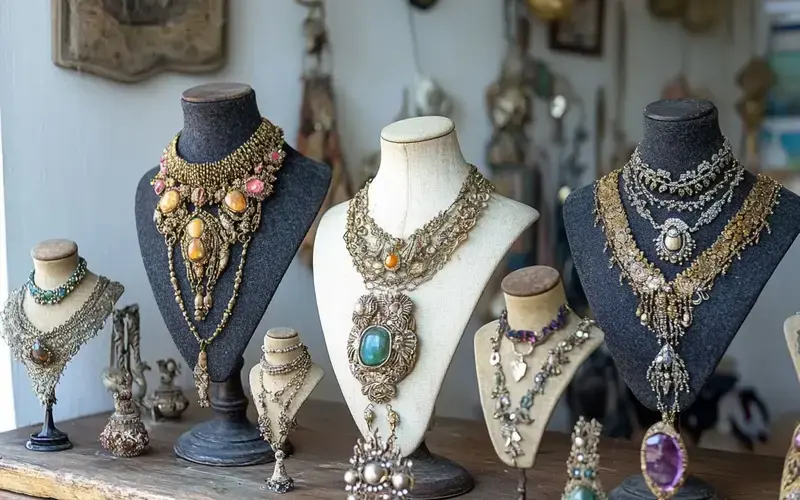
Mannequin displays are useful because they show jewelry in a realistic way. Instead of lying flat, necklaces and layered pieces are shown as they would appear on the body.
This makes mannequins ideal for boutiques, dressing rooms, market booths, and photography setups. They are especially helpful when selling necklaces because customers can quickly understand the length and shape.
For a softer home look, choose fabric-covered busts. For a modern retail display, simple white, black, or neutral mannequins usually look cleaner and more professional.
8. Tiered Trays for Compact, Organized Displays
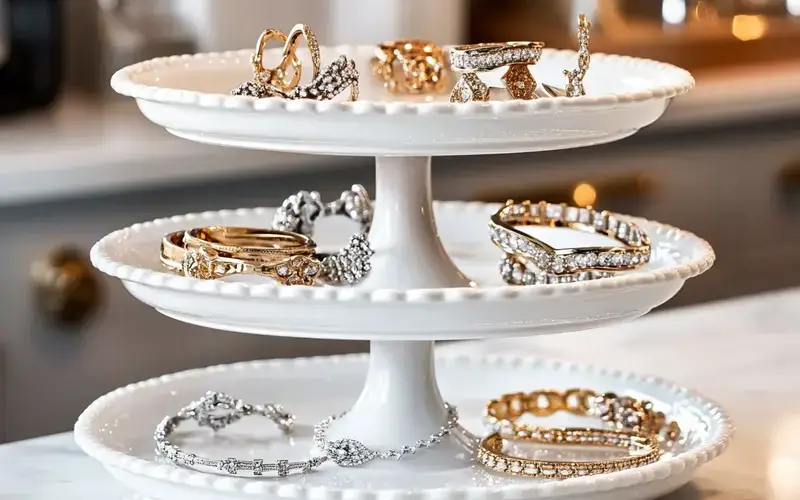
Tiered trays are practical for small spaces because they add several display levels without using much surface area. They work well on dressers, vanities, boutique counters, bedside tables, or craft tables.
Use the top tier for small pieces like rings and earrings. Place bracelets, watches, or larger items on the lower tiers for better balance. This keeps the display stable and easier to browse.
To prevent the tray from looking messy, group similar pieces together. For example, keep gold rings in one section, colorful bracelets in another, and daily-use items in the most reachable spot.
9. Hanging Displays for a Light, Eye-Catching Effect
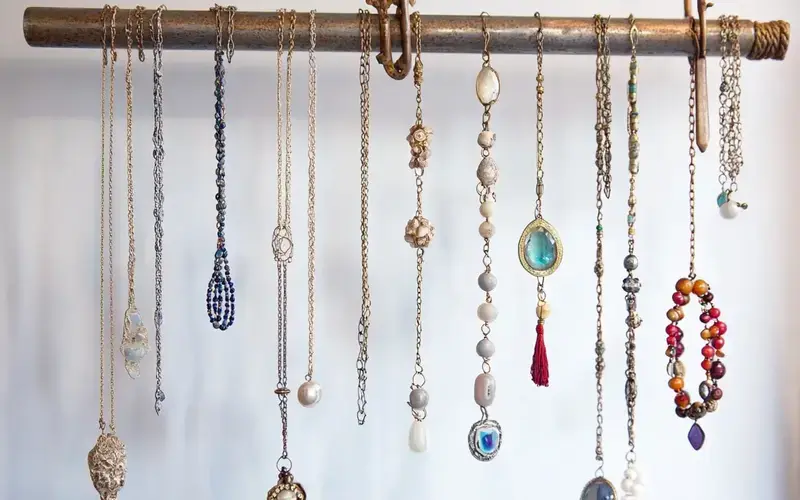
Hanging displays are excellent for necklaces, long earrings, and lightweight bracelets. They create a light, airy look and allow jewelry to catch light naturally.
This idea works best when there is enough vertical space. If the hanging area is too crowded, pieces can tangle or overlap. Keep enough distance between hooks or hanging points.
For home use, hanging displays can be mounted near a mirror or dressing table. For retail use, they are effective because they bring products closer to eye level.
10. Antique Furniture for Storage and Display Combined
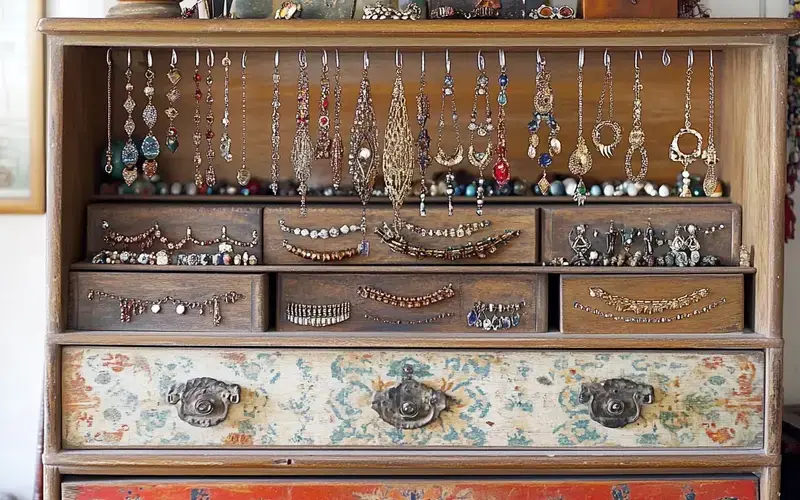
Antique furniture is a beautiful option when you want storage and display in one place. A small cabinet, vanity, dresser, or side table can hold trays, boxes, hooks, and featured pieces.
Drawers are useful for delicate or valuable jewelry, while the top surface can display everyday favorites. This keeps the setup both attractive and practical.
Choose furniture that fits the scale of your room. A large cabinet may overpower a small bedroom, while a small vintage table can create a charming jewelry corner.
11. Geometric Grids for Modern, Structured Displays
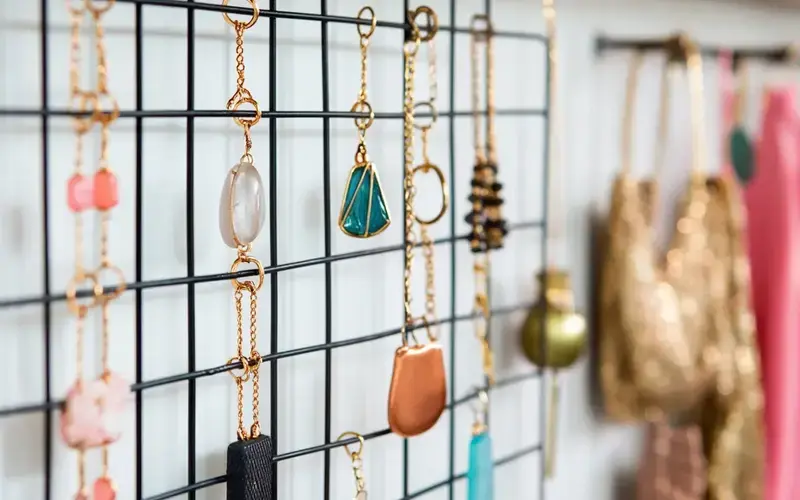
Geometric grids are ideal for modern jewelry displays. They create clear lines and make the arrangement easy to scan.
Use grids for earrings, necklaces, bracelets, or small display cards. They are lightweight and simple to mount on a wall or place on a tabletop stand.
The key is to use negative space. If every square is filled, the display can look crowded. Leave open areas so your best pieces stand out.
12. Bookcase Displays for a Collected, Lifestyle Look
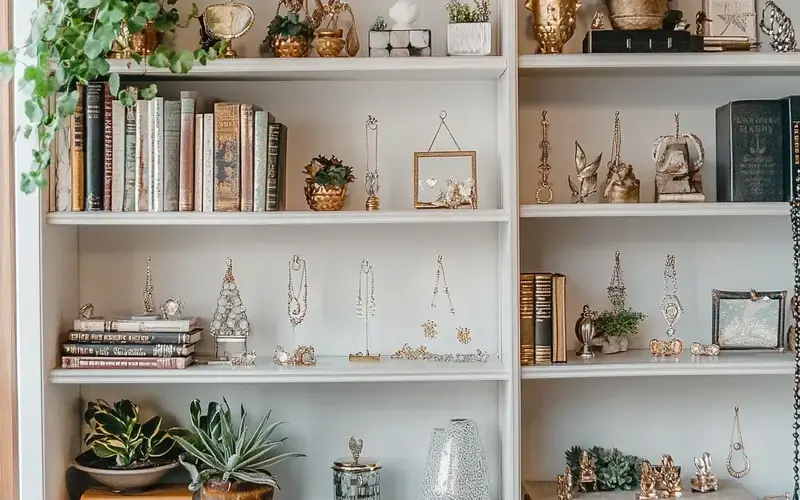
A bookcase display is a good choice if you want jewelry to blend naturally into your room. Instead of looking like a separate storage area, the jewelry becomes part of your décor.
Mix jewelry stands with books, candles, small plants, framed photos, or decorative bowls. This creates a lifestyle-style display that feels personal and warm.
Keep the layout edited. Too many objects can hide the jewelry and make the shelf look cluttered. A few well-placed pieces usually look better than a crowded shelf.
13. Jewelry Busts for Classic Presentation
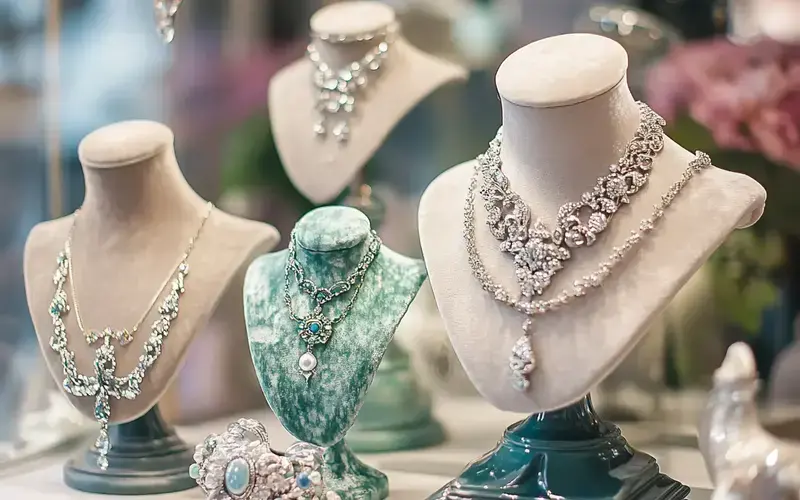
Jewelry busts are classic because they display necklaces in a natural shape. They help show length, layering, and how a piece may sit when worn.
Use busts for statement necklaces, delicate chains, pearls, pendants, or layered sets. They are especially useful for product photography and retail counters.
Choose a bust color that contrasts with your jewelry. Light busts work well with dark or colorful pieces, while darker busts can make silver and gold jewelry stand out.
14. Wine Bottle Displays for an Upcycled Approach
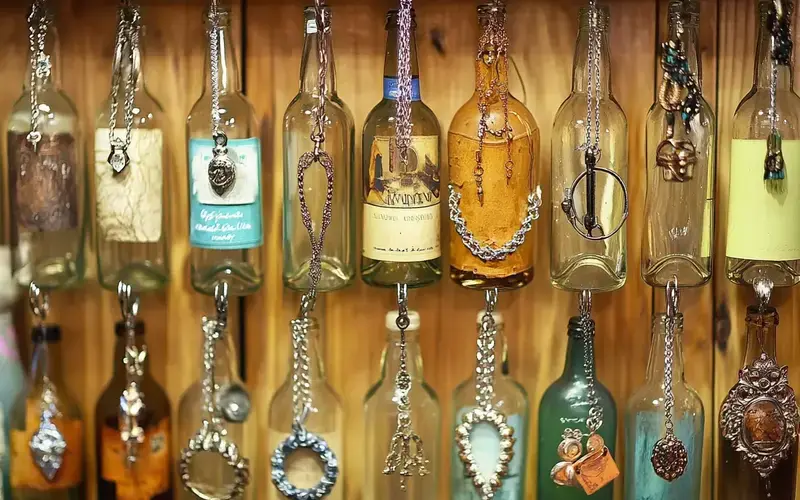
Wine bottle displays are a creative upcycled idea for bracelets, bangles, and long necklaces. They add height to a table display and can make the setup feel more artistic.
This idea works best when the bottles are clean, simple, and cohesive. Too many different colors or labels may distract from the jewelry itself.
For a polished look, use bottles in matching tones or wrap them with neutral fabric, twine, or paint. Keep the jewelry arrangement simple so the display does not feel busy.
15. Velvet Ring Boxes for Small, Detailed Pieces
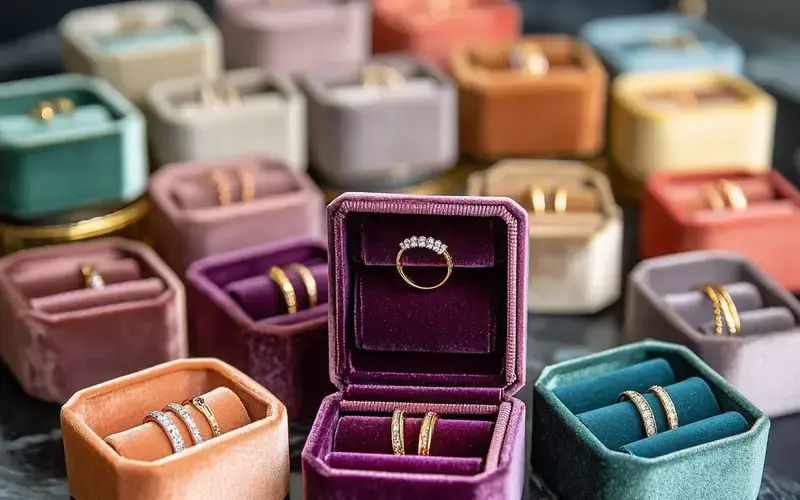
Velvet ring boxes are perfect for rings, studs, small pendants, and delicate pieces. The soft texture protects jewelry and makes it feel more luxurious.
This idea is especially useful for engagement rings, handmade rings, boutique displays, and photography setups. A controlled color palette usually looks more professional than too many bright box colors.
For home use, keep a small velvet box on a vanity for the rings you wear most often. For retail use, use several boxes in one color family for a cohesive look.
16. Wire Grid Displays for Flexible Layouts
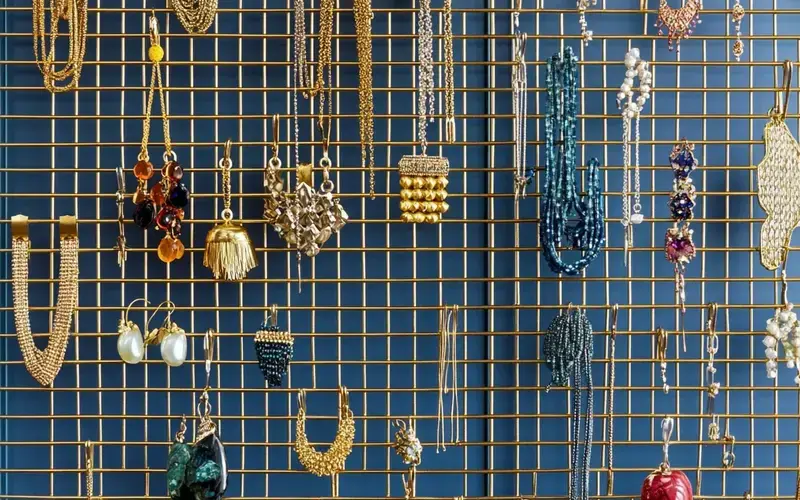
Wire grids are flexible and easy to customize. You can use hooks, clips, cards, or small baskets to display different types of jewelry.
They are especially useful for earrings and necklaces because the open grid structure provides many hanging points. This makes them practical for home organization and small shop displays.
To make a wire grid look more professional, keep the arrangement balanced. Put heavier-looking pieces lower and lighter items higher.
17. Custom-Built Displays for Tailored Solutions
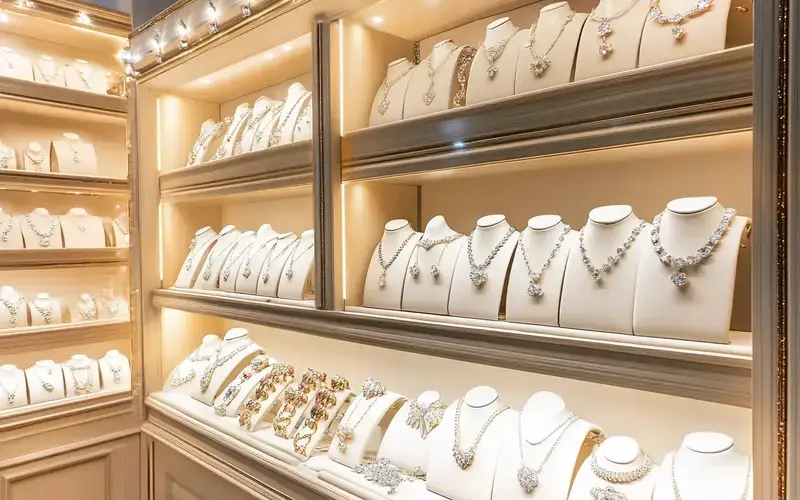
A custom-built jewelry display is the best option when standard organizers do not fit your needs. This can include wall-mounted cabinets, drawer inserts, lit display shelves, custom necklace bars, or built-in vanity storage.
Before focusing on decorative details, think about function. Decide how many necklaces, rings, earrings, and bracelets you need to store. Then plan the display around visibility, spacing, protection, and easy access.
Custom displays are especially useful for serious collectors, boutique owners, handmade sellers, or anyone with limited space but a large collection.
Best Jewelry Display Ideas by Jewelry Type
| Jewelry Type | Best Display Ideas | Why |
|---|---|---|
| Necklaces | Hooks, busts, branches, grids | They prevent tangling and show length clearly. |
| Rings | Velvet boxes, trays, ring dishes | They keep small pieces protected and easy to find. |
| Earrings | Frames, pegboards, wire grids | They keep pairs visible and organized. |
| Bracelets | Tiered trays, bottles, stands | They display shape and prevent piles. |
| Statement pieces | Floating shelves, busts, risers | They give bold pieces enough space to stand out. |
Best Jewelry Display Setup for Small Spaces
If you are working with a small bedroom, apartment, or compact dressing area, use vertical space first. A wall grid, pegboard, or floating shelf can hold necklaces and earrings without using the top of your dresser. Then use one small tray or velvet box for rings and everyday pieces.
This approach keeps your surface clean while still making your jewelry visible. It also prevents the common problem of everything ending up in one crowded bowl.
For practical storage inspiration, these blanket storage ideas can help you organize soft items while keeping your room stylish.
How to Choose the Best Jewelry Display for Your Space
The best jewelry display depends on your space, your collection size, and how often you wear each piece. If you wear jewelry every day, choose an open display that makes selection easy. If you own valuable or delicate pieces, use closed storage for protection.
- For small bedrooms: use wall grids, floating shelves, or tiered trays.
- For vanities: use velvet boxes, busts, trays, and small stands.
- For boutiques: use acrylic risers, busts, grids, and custom displays.
- For craft fairs: use suitcase displays, pegboards, tiered trays, and portable grids.
- For luxury pieces: use lined drawers, enclosed cases, or velvet displays.
If your jewelry display is part of a small living area, these small living room TV ideas may help you plan the surrounding space better.
Common Jewelry Display Mistakes to Avoid
- Displaying too many pieces: Overcrowding makes jewelry harder to appreciate.
- Mixing too many display styles: A consistent look feels more polished.
- Ignoring tangles: Necklaces need hanging space or separate compartments.
- Using rough surfaces: Delicate jewelry can scratch against unfinished wood or metal.
- Poor lighting: Jewelry looks better when details and shine are easy to see.
- No grouping system: Separate pieces by type, color, material, or use.
Frequently Asked Questions
How do I keep jewelry displays from looking cluttered?
Display fewer pieces and group similar items together. Leave space between items so each necklace, ring, or bracelet can stand out clearly.
What is the best display for necklaces?
Hooks, busts, pegboards, grids, branches, and hanging displays are best for necklaces because they help prevent tangling and show the length clearly.
Are open jewelry displays safe?
Open displays are fine for everyday jewelry, but expensive, delicate, or sentimental pieces should be stored in lined drawers, enclosed boxes, or secure cases.
How can I make a cheap jewelry display look expensive?
Use a simple color palette, add soft textures like velvet or linen, avoid overcrowding, and keep the display clean. Good spacing can make even affordable jewelry look more premium.
Should jewelry be displayed by color or by type?
For daily use, organizing by type is usually easier. Keep necklaces together, rings together, and earrings together. For visual styling or retail displays, grouping by color can create a more polished look.
Final Thoughts
The best jewelry display is one that makes your collection easier to enjoy and easier to use. A beautiful display should not only look good in photos; it should also help protect your jewelry and keep your daily routine simple.
If you have a small collection, start with a tray, grid, or floating shelf. If you sell jewelry, use risers, busts, pegboards, and clean spacing to make pieces easier to browse. For a more personal look, vintage suitcases, branches, antique furniture, and bookcase displays can add character.
When jewelry is visible, organized, and thoughtfully arranged, it naturally feels more valuable. Choose the display style that fits your space, protect your delicate pieces, and keep the layout clean enough for every item to shine.
Written by the Zeeshe Home Editorial Team, focused on practical home décor, organization, and styling ideas for everyday spaces.


