
A well-designed bedroom can do more than just look good—it can change how you unwind, sleep, and start your day. Hotel rooms are carefully designed to feel calm, uncluttered, and quietly luxurious, which is why they often feel so much more restful than our everyday spaces.
The good news is that you don’t need a full renovation to recreate that experience at home. With a few intentional upgrades—focusing on comfort, lighting, texture, and simplicity—you can turn your bedroom into a space that feels just as relaxing and refined.

These ideas focus on practical changes that make a noticeable difference, whether you’re working with a small bedroom or a larger primary suite.
1. Start with a Comfortable, Supportive Mattress
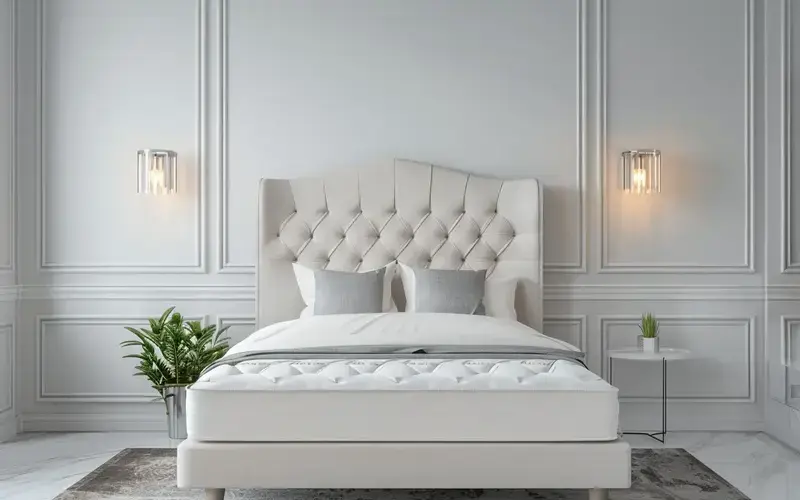
The foundation of any hotel-style bedroom is comfort. If your mattress no longer supports you properly, even the best decor won’t make the space feel restful.
If replacing it isn’t an option, a quality topper can improve comfort significantly. Look for something that balances softness with support so the bed feels plush without losing structure.
2. Layered Bedding That Feels Structured and Inviting

Hotel beds feel inviting because of how they’re built. Start with breathable sheets, then add a duvet or comforter suited to your climate. A second lightweight layer or blanket at the foot of the bed gives the bed a finished look.
Stick to a consistent color palette—often whites or soft neutrals—and let texture do most of the work.
3. A Thoughtful Mix of Pillows

Instead of piling on random cushions, aim for balance. Combine supportive sleeping pillows with a few larger or decorative ones that sit neatly against the headboard.
Too many pillows can feel cluttered, so keep the arrangement intentional and easy to reset each day.
4. Calm, Neutral Colors with Subtle Contrast

Most hotel rooms rely on neutral tones because they create a sense of calm and consistency. Whites, soft grays, warm beige, or muted blues are easy to live with and don’t overwhelm the space.
To avoid a flat look, introduce contrast through textures, darker accents, or a single statement piece.
5. Soft, Layered Lighting Instead of Overhead Glare

Lighting plays a major role in how a bedroom feels. Instead of relying on one bright ceiling light, use multiple sources—bedside lamps, wall sconces, or a floor lamp—to create a softer atmosphere.
Warm-toned bulbs help the room feel more relaxed, especially in the evening.
6. Keep Surfaces Clear and Organized
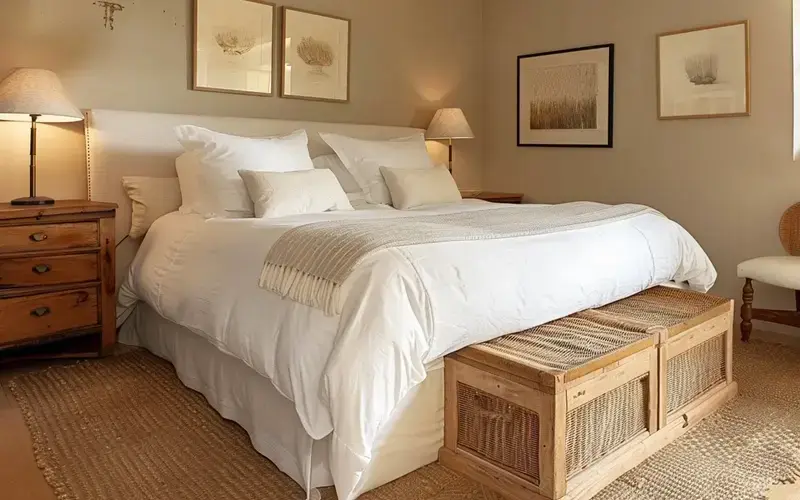
Hotel rooms feel calm because they aren’t crowded with everyday items. Limiting what stays on surfaces—especially nightstands and dressers—makes a noticeable difference.
Hidden storage, baskets, or drawers help maintain that clean look without sacrificing practicality.
7. Add a Headboard That Anchors the Bed
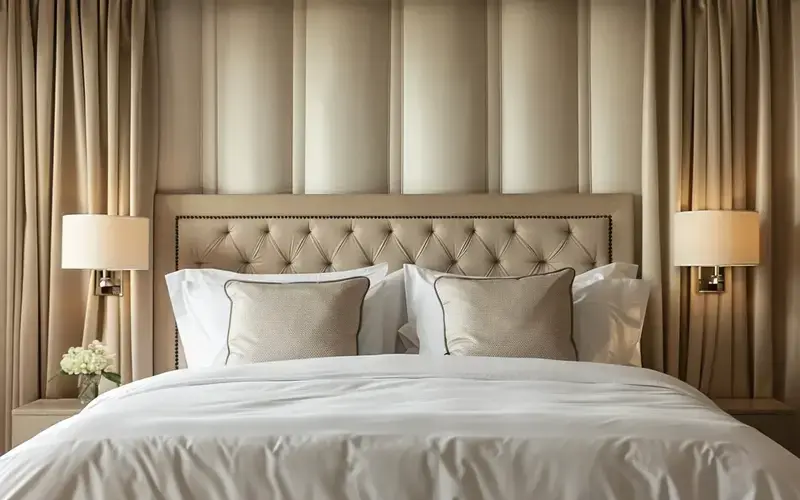
A headboard gives the bed a finished, intentional feel. Upholstered designs in fabric or soft textures tend to feel more comfortable and visually balanced.
If you’re working on a budget, a simple DIY option can still create that structured look.
8. Use Wall Art to Create a Focal Point
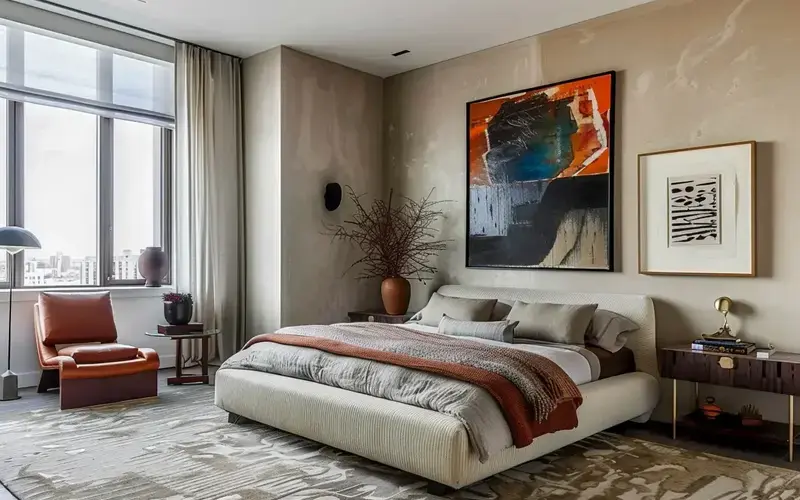
Empty walls can make a bedroom feel unfinished. A single large piece above the bed or a small, well-curated arrangement can bring the room together.
Choose artwork that complements your color palette rather than competing with it.
9. A Soft Rug to Ground the Space
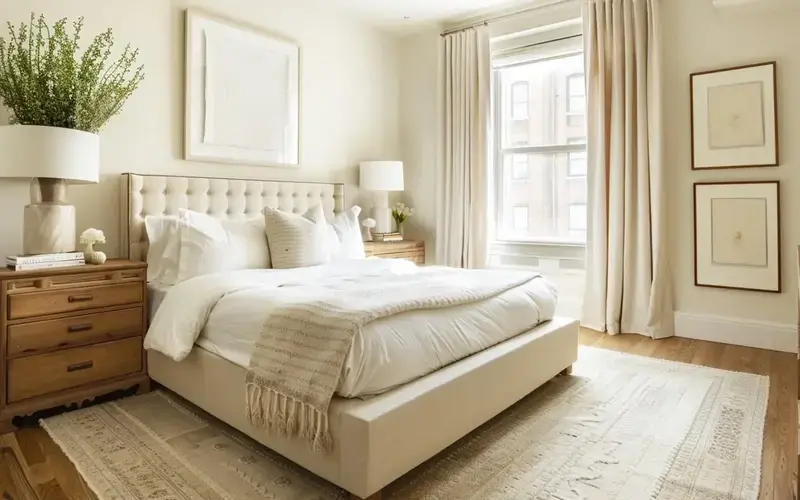
A rug adds warmth and makes the space feel more complete. Ideally, it should extend beyond the bed so your feet land on something soft when you get up.
Neutral rugs work well for a hotel-style look, but subtle patterns can add depth without overwhelming the room.
10. A Small Seating Area if Space Allows
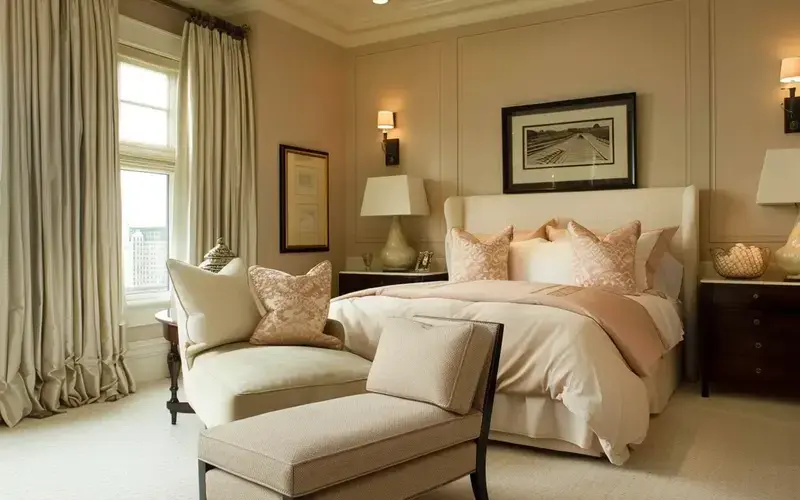
If you have extra room, a chair or bench creates a secondary zone within the bedroom. It makes the space feel more like a suite rather than just a place to sleep.
Even a compact chair paired with a small table can be enough to create that effect.
11. Reduce Screen Presence in the Bedroom
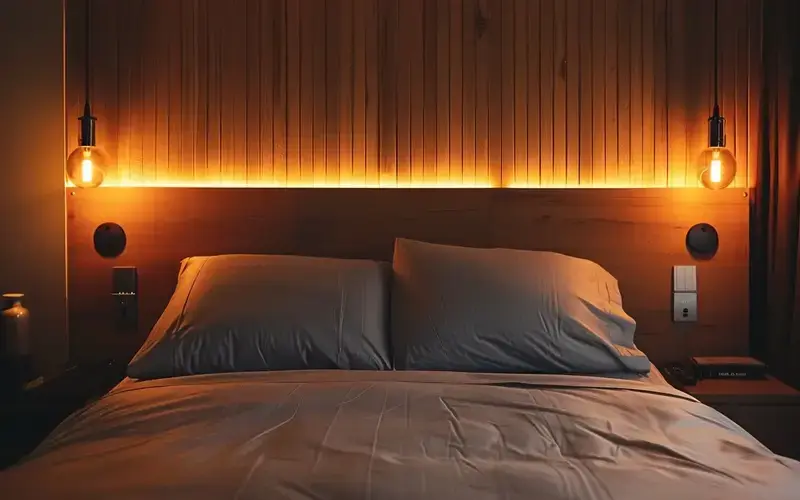
Bedrooms tend to feel more restful when they’re not dominated by screens. Limiting devices—or at least keeping them out of immediate reach—can help the space feel calmer.
Simple swaps like using a traditional alarm clock instead of a phone can make a difference over time.
12. Bring in Natural Elements
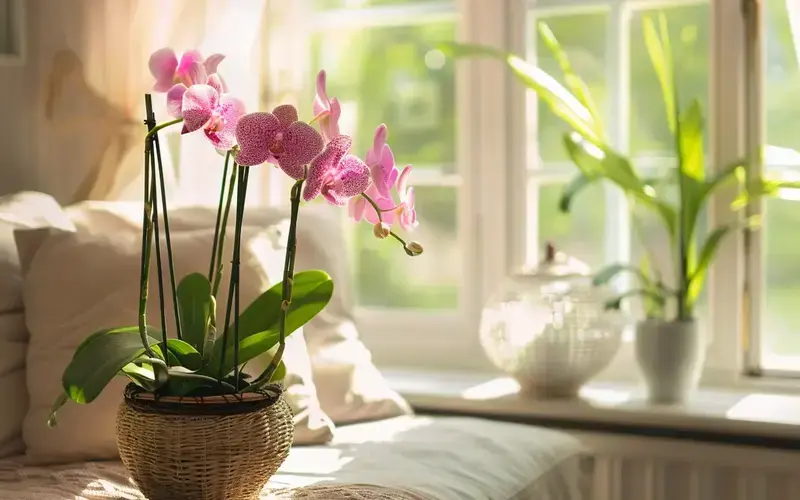
Adding greenery or natural materials helps soften the room. A plant, fresh flowers, or even wood accents can make the space feel more grounded and less artificial.
If live plants aren’t practical, high-quality faux options can still achieve a similar effect visually.
13. Improve Sound Control for Better Sleep
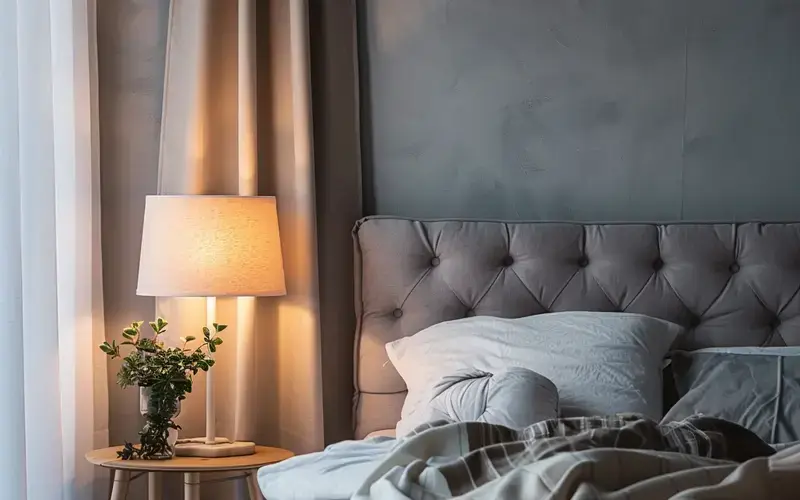
Noise can disrupt sleep more than most people realize. Thick curtains, rugs, and upholstered furniture all help absorb sound and reduce echo.
If outside noise is an issue, layering textiles is often the easiest way to improve the room without major changes.
14. Add Subtle Fragrance to the Room
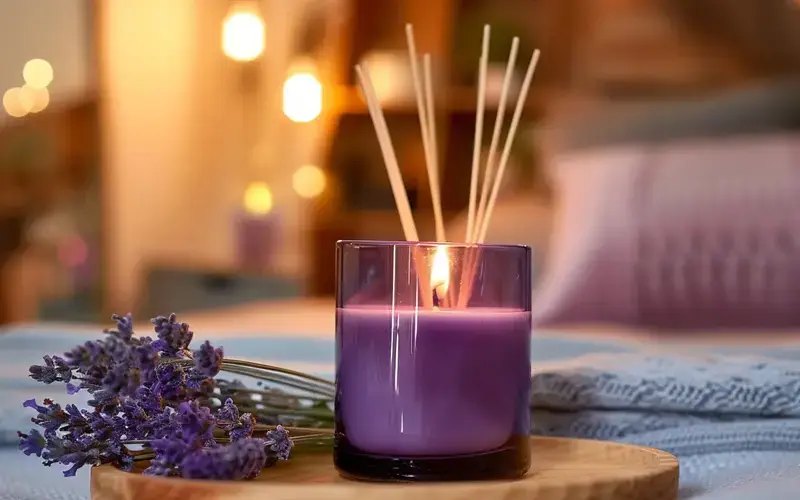
Scent is often overlooked, but it plays a big role in how a space feels. Light, calming fragrances like lavender or vanilla can help signal that it’s time to relax.
Keep it subtle—too strong and it becomes distracting rather than soothing.
15. Install Blackout Curtains for Better Sleep

Controlling light is essential for good sleep. Blackout curtains help block early morning light and reduce glare from outside sources.
Heavier fabrics also contribute to a quieter, more insulated room.
16. Keep Nightstand Essentials Minimal and Useful

A well-styled nightstand should feel intentional, not cluttered. Limit it to a few useful items—water, a book, a lamp, and perhaps a small tray for personal items.
This keeps the space functional while still feeling organized.
17. Add Comfort Through Textiles Like Robes and Slippers
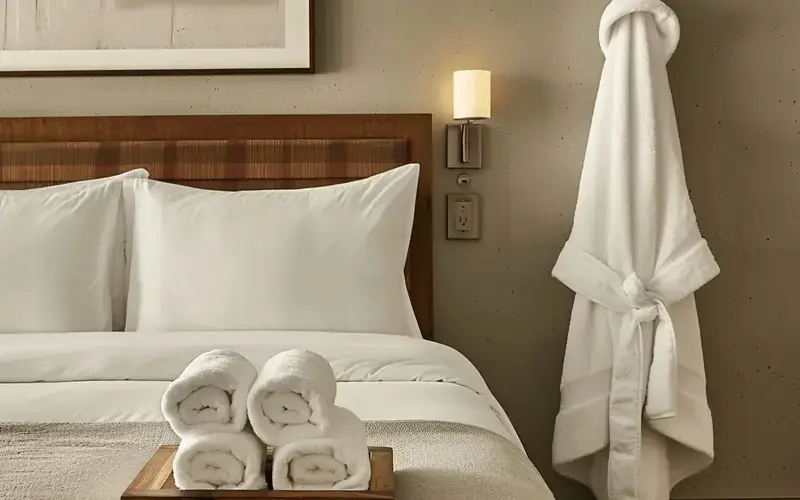
Small comforts can change how the space is used. A robe or soft slippers nearby encourages slower, more relaxed routines in the morning and evening.
It’s a simple addition that makes the bedroom feel more intentional.
18. Smart Storage to Keep the Room Uncluttered
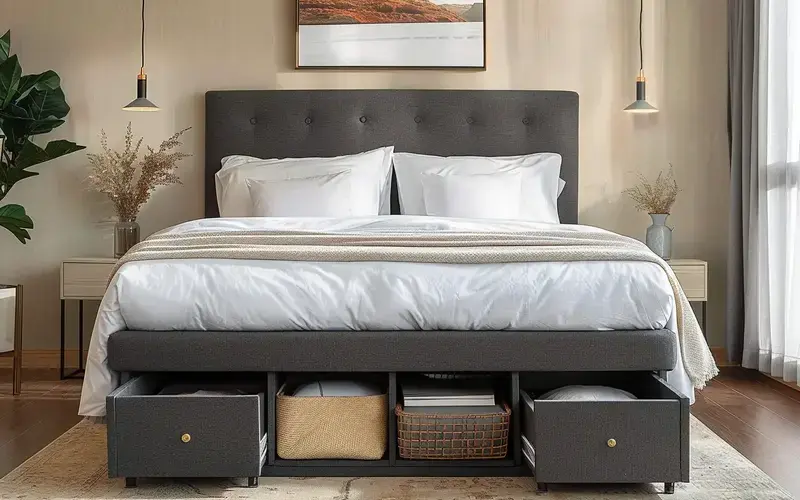
Hidden storage helps maintain a clean visual layout. Ottomans, under-bed storage, or built-in shelving can keep items accessible without being visible.
This is especially important in smaller bedrooms where clutter builds quickly.
19. Fresh Flowers or Simple Greenery for a Finished Look

Fresh flowers or a small plant can instantly make the room feel more complete. Even a single arrangement on a dresser or nightstand adds a subtle sense of care and attention.
Rotate seasonal options to keep the space feeling updated.
20. Upgrade Towels for a Spa-Like Extension

If your bedroom connects to a bathroom, upgrading towels can extend that hotel feel beyond the bed. Thick, absorbent towels in neutral tones create a more cohesive, elevated experience.
21. Use Aromatherapy as Part of Your Evening Routine
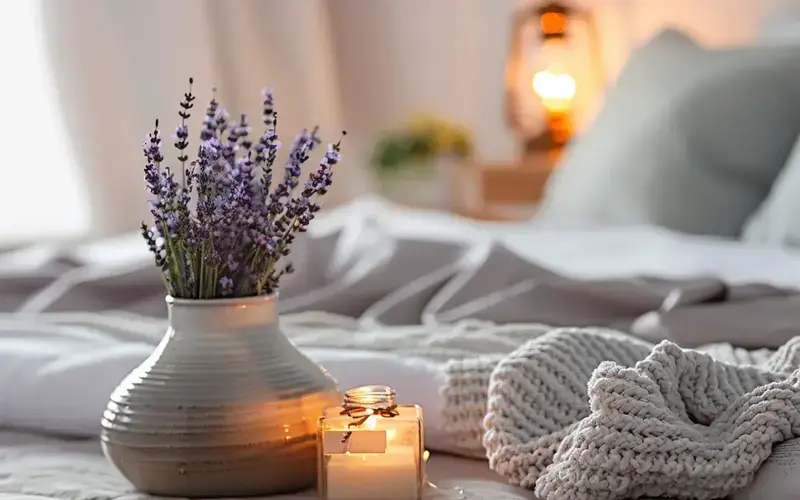
Essential oils or diffusers can become part of your wind-down routine. Scents like chamomile, lavender, or bergamot are commonly used to create a calmer environment before sleep.
Used consistently, scent can help signal a transition from day to night.
Frequently Asked Questions
How can I make my bedroom feel like a hotel on a budget?
Focus on bedding, lighting, and decluttering first. Clean lines, neutral colors, and layered textiles make the biggest difference without requiring major purchases.
What color scheme works best for a hotel-style bedroom?
Neutral tones like white, beige, gray, and soft blue tend to feel the most calming and timeless.
Do I need a lot of pillows to get the look?
No. A balanced arrangement of a few high-quality pillows looks better than an overcrowded bed.
What is the most important upgrade?
The bed itself—especially the mattress and bedding—has the biggest impact on comfort and overall feel.
Are blackout curtains really necessary?
They’re one of the simplest ways to improve slee
p quality, especially if your room gets early light.
Final Thoughts
Creating a hotel-inspired bedroom comes down to comfort, simplicity, and attention to detail. When each element—from bedding to lighting to layout—is chosen with intention, the room starts to feel more restful without needing a complete redesign.
Even small changes can shift how the space feels. Start with one or two upgrades, build gradually, and focus on what makes your bedroom more comfortable to use every day.
Written by the Zeeshe Home Editorial Team, a blog focused on practical home décor ideas and inspiration.


