
Italian interiors have a way of feeling refined without looking rigid. The rooms are warm, layered, and quietly elegant, with natural materials and a sense that everything has been gathered slowly over time. A coffee table is one of the easiest places to bring that mood home, because it sits at the center of the room and naturally draws the eye.
The goal is not to make your space look like a themed villa set. It is to borrow the details that Italian homes do so well: linen, terracotta, marble, pottery, old glass, warm metals, fresh greenery, and objects that feel useful as well as beautiful. These ideas help create a coffee table that feels effortless, welcoming, and a little sun-washed, even if you are nowhere near Tuscany.

How to Style an Italian-Inspired Coffee Table
Italian styling works best when the materials do the talking. Instead of filling the table with too many decorative objects, focus on a few strong pieces with texture, weight, and warmth.
- Start with a soft base: linen, woven texture, or a tray can anchor the arrangement
- Mix earthy and polished materials: terracotta, marble, ceramic, glass, brass, and wood work beautifully together
- Use food and garden references: lemons, olive branches, herbs, and pottery feel especially at home
- Vary the heights: combine one taller element with lower bowls, books, or candles
- Leave breathing room: the table should still feel usable and relaxed
The most convincing Italian-inspired tables feel collected, not crowded.
1. Layer Cream-Colored Linen for a Soft Foundation
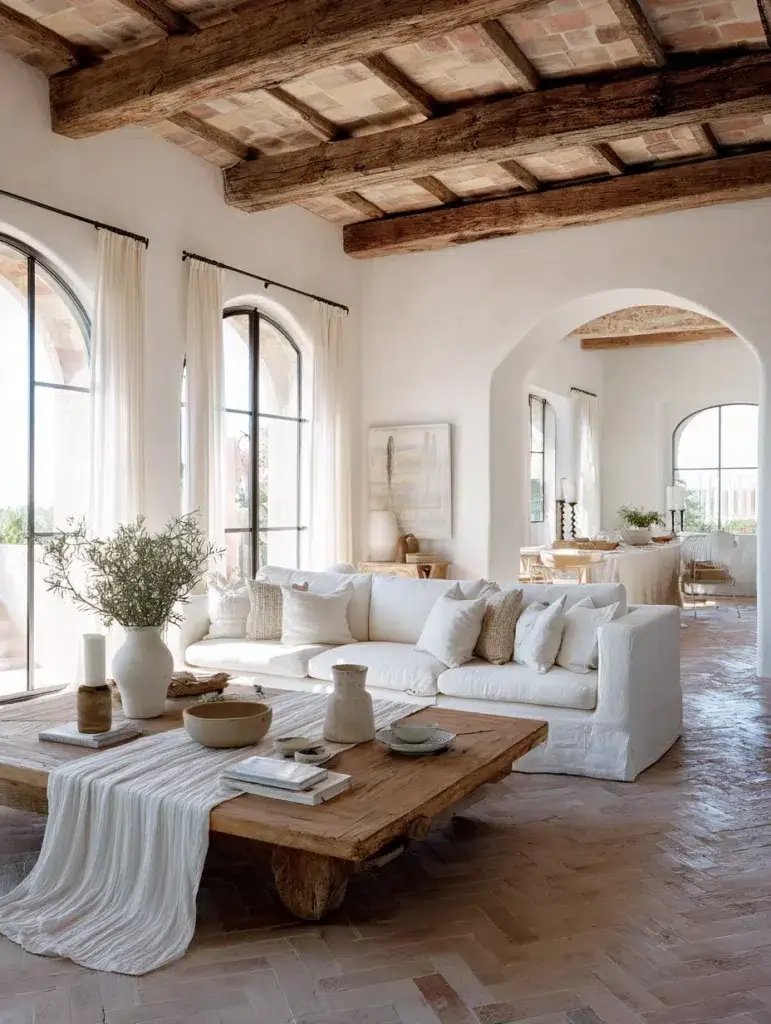
Linen instantly changes the mood of a coffee table. It softens harder materials, brings in that slightly rumpled Mediterranean ease, and helps the entire arrangement feel more relaxed. Cream, ivory, oatmeal, and warm white all work beautifully because they brighten the table without feeling stark.
Use a runner or folded cloth as a base beneath a tray, bowl, or stack of books. The natural creases are part of the appeal. Italian interiors tend to celebrate materials that look lived with rather than perfectly pressed.
This is especially effective on darker wood or stone-topped coffee tables, where the soft fabric helps balance the weight of the surface.
2. Group Terracotta Vases in Different Heights

Terracotta is one of the quickest ways to bring Italian warmth into a room. A group of vases in slightly different heights feels earthy, architectural, and deeply rooted in Mediterranean style. Even empty, they add color and weight to the table.
The key is avoiding a straight line. A looser triangular grouping usually looks more natural and gives the arrangement movement. If the table is large, place the vases on one side and balance them with lower objects elsewhere.
Terracotta also pairs beautifully with olive branches, dried stems, or simple greenery if you want the display to feel less sculptural and more organic.
3. Add Aged Copper for Warm Metallic Depth
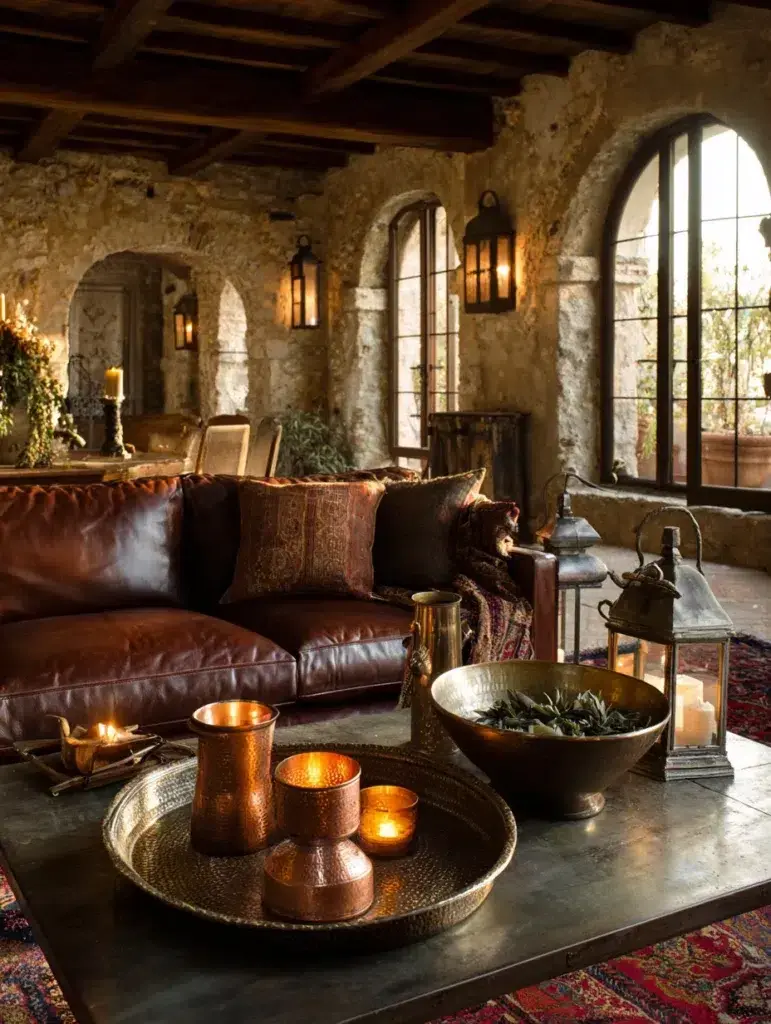
Copper brings a mellow, sun-warmed metallic note that fits beautifully with Italian interiors. It feels richer than silver and more rustic than polished gold, especially when the finish shows a little age or patina.
A small copper tray, bowl, or decorative object can warm up a table filled with ceramics, linen, and wood. It is particularly good in spaces that already have terracotta or olive green in the palette, because those tones make the copper glow even more.
Use it as an accent rather than the main event. One strong copper piece often has more impact than several smaller metallic objects competing together.
4. Use a Woven Tray to Keep the Arrangement Grounded
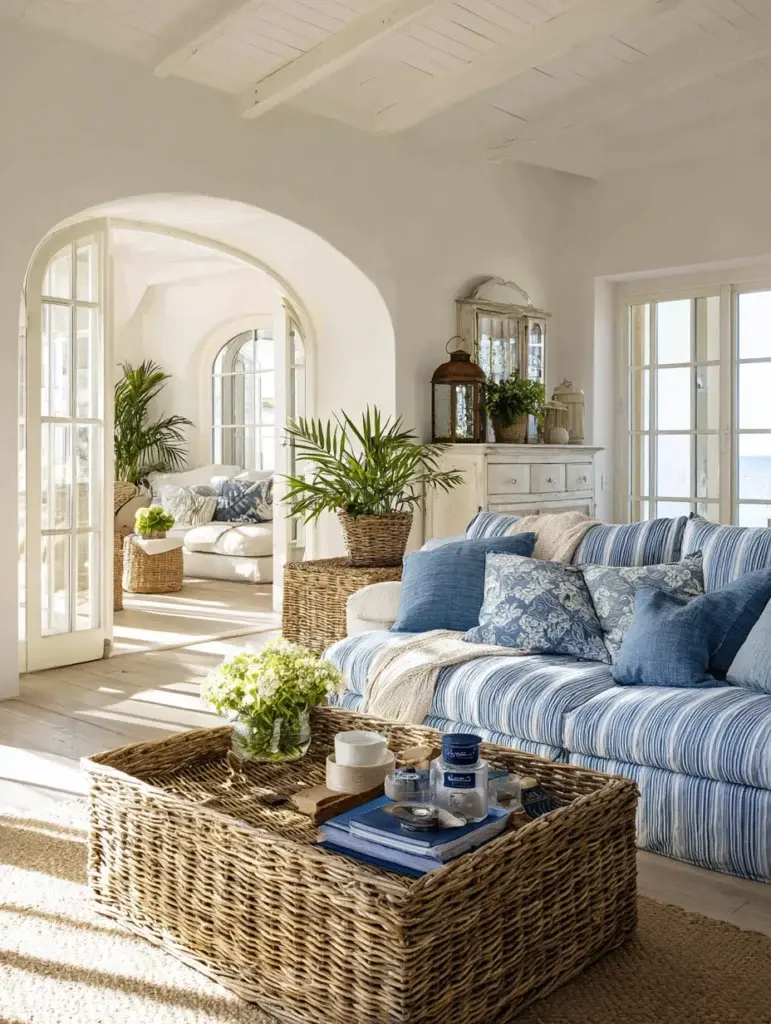
A woven tray helps a coffee table feel more organized without becoming formal. It contains smaller objects, adds texture, and creates a defined zone that makes the styling feel intentional. In Italian-inspired rooms, natural materials like wicker and rattan keep the overall look from becoming too polished.
Use the tray to hold candles, coasters, a vase, or even practical items like remotes. The point is to make daily objects look like part of the room rather than visual clutter.
If your coffee table is on the larger side, a woven tray can also prevent the styling from feeling too scattered across the surface.
5. Style Fresh Olive Branches for Instant Italian Atmosphere
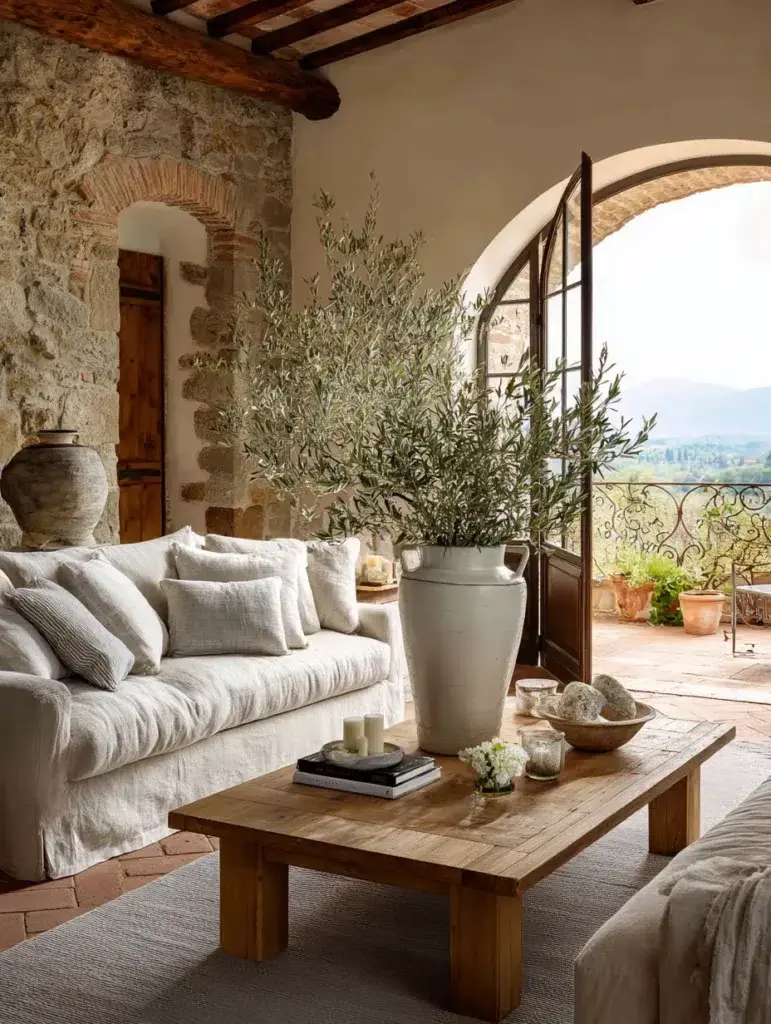
Olive branches are one of the most iconic Italian styling details because they feel simple, natural, and quietly elegant. The silvery-green leaves brighten a room without the sweetness of flowers, and they suit almost every kind of vessel, from clear glass to terracotta to handmade ceramic.
Keep the arrangement loose. Three to five stems are usually enough. Their shape does the work on its own, so there is no need to overfill the vase or add other filler.
Fresh branches look wonderful, but dried or very realistic faux stems can create the same mood if you want something longer-lasting.
6. Add Brass Candlesticks in a Relaxed Cluster
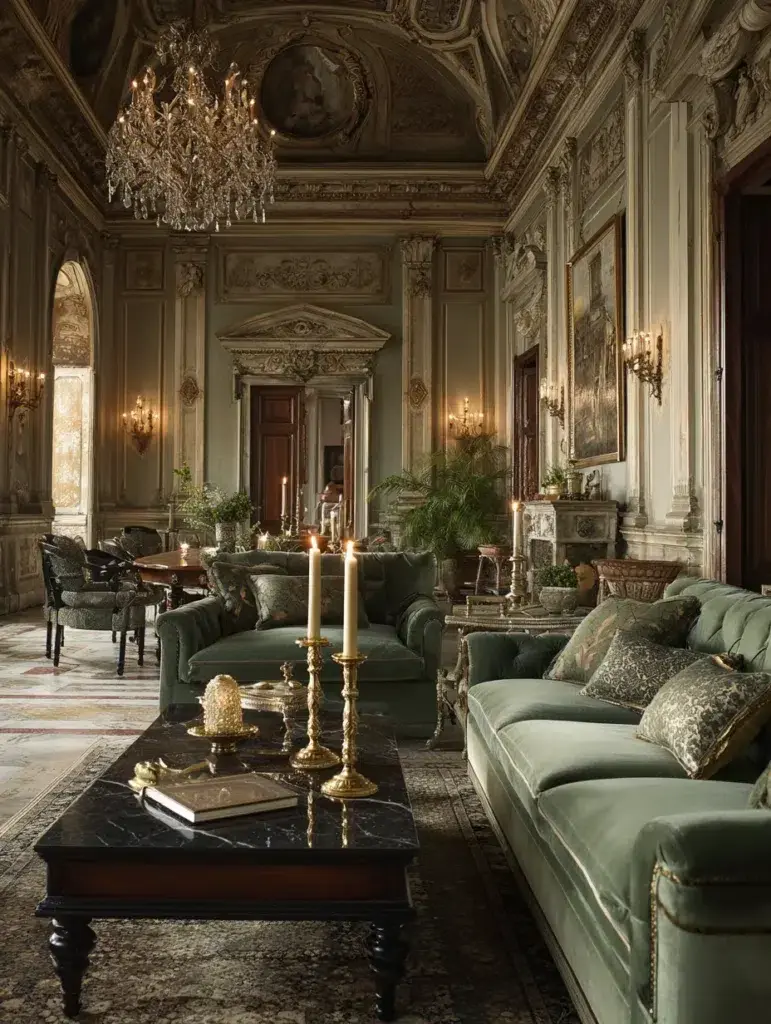
Brass candlesticks bring warmth, height, and a little old-world polish to the table. They feel especially Italian when the finish is soft or slightly aged rather than shiny and formal. A cluster of two or three in varied heights creates a beautiful rhythm across the table.
Use cream or ivory tapers if you want the look to stay classic and understated. If the coffee table is smaller, a single taller candlestick can still create the same elegant vertical lift without taking over the surface.
Pair brass with linen, stone, or pottery so the arrangement feels layered rather than metallic-heavy.
7. Display a Large Ceramic Bowl as a Centerpiece
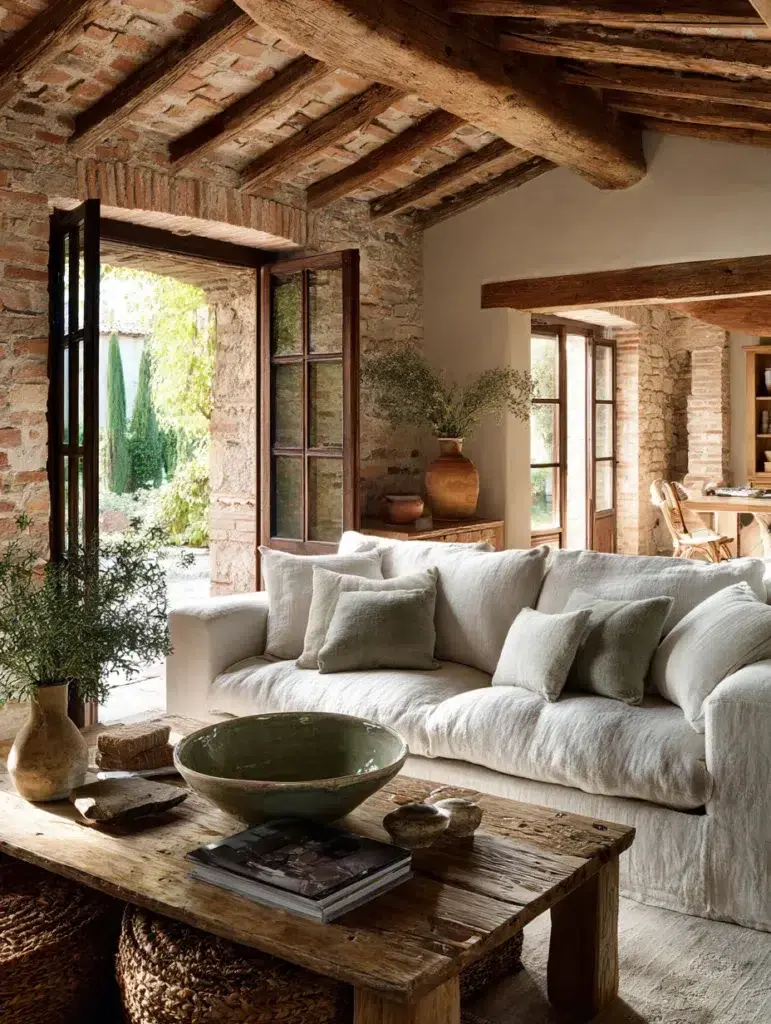
A large ceramic bowl can anchor the whole coffee table. It gives the arrangement a center of gravity and works whether you fill it or leave it empty. In Italian-style spaces, pottery tends to feel especially right because it adds handcrafted texture and a sense of permanence.
Look for pieces with reactive glazes, slight irregularity, or earthy colors such as cream, sage, stone, and ochre. The bowl should feel substantial enough to hold its own against books, trays, or larger vases.
If you do fill it, keep the contents simple: lemons, moss, decorative spheres, or a few natural objects are enough.
8. Repurpose Vintage-Style Glass Bottles
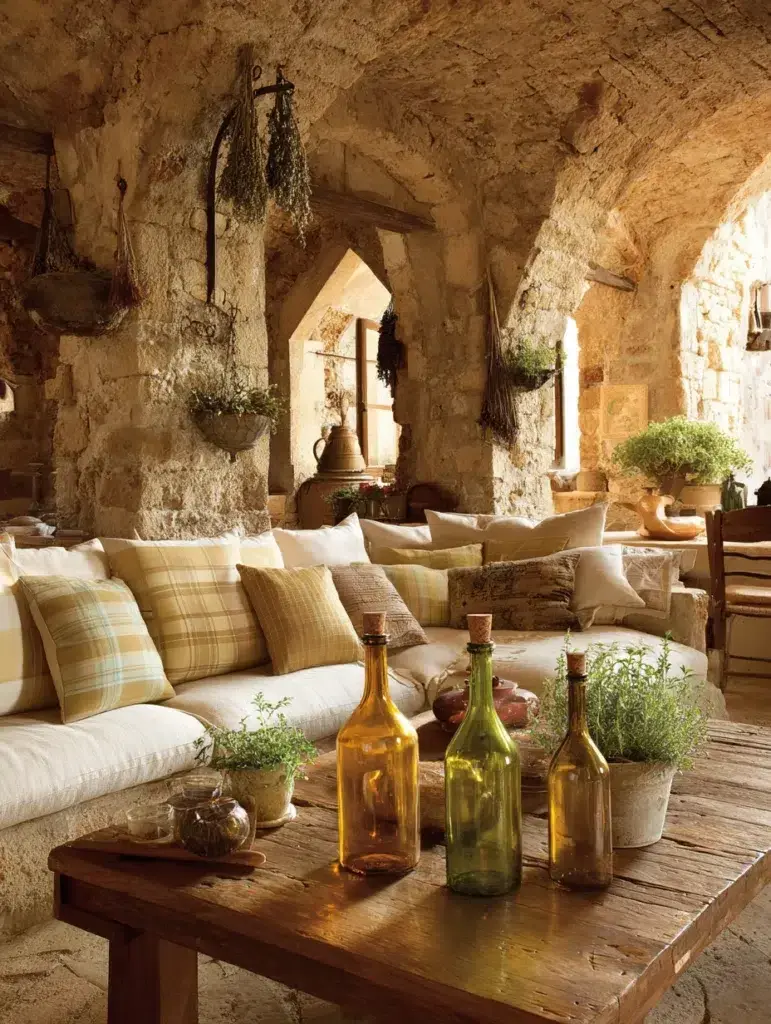
Old glass bottles bring a relaxed, rustic elegance that feels very at home in Italian-inspired interiors. They hint at kitchens, vineyards, and long tables without trying too hard to tell the story. Their transparency also helps the table feel lighter than a row of fully opaque objects would.
Group bottles of different heights, or use just one with a few stems of rosemary, lavender, or olive. If the glass has a slightly green or smoky tone, even better. That aged tint adds character immediately.
These bottles work especially well when combined with wood, stone, and linen, because the glass balances the heavier textures nearby.
9. Stack Marble Coasters Like Decorative Objects
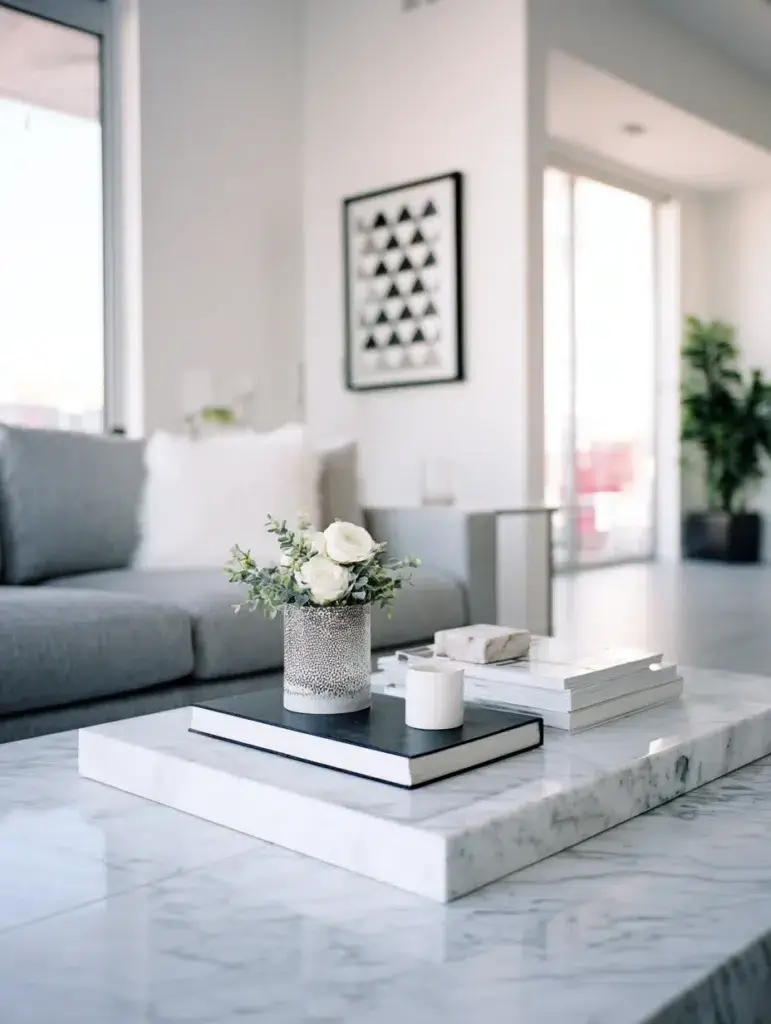
Marble belongs naturally in an Italian-inspired room, but it does not have to appear in large doses. A stack of marble coasters adds subtle luxury, practical function, and a beautiful stone detail all at once. The veining makes each piece feel unique, which adds interest even when they are simply resting on the table.
They look especially good beneath a candle, a glass, or a small vase when not in use. Carrara-style white marble with gray veining is the most classic choice, but warmer stone tones can work just as well if the room leans more rustic.
This is one of the easiest ways to add stone without making the arrangement feel heavy.
10. Use a Tiered Stand for Height and Layering
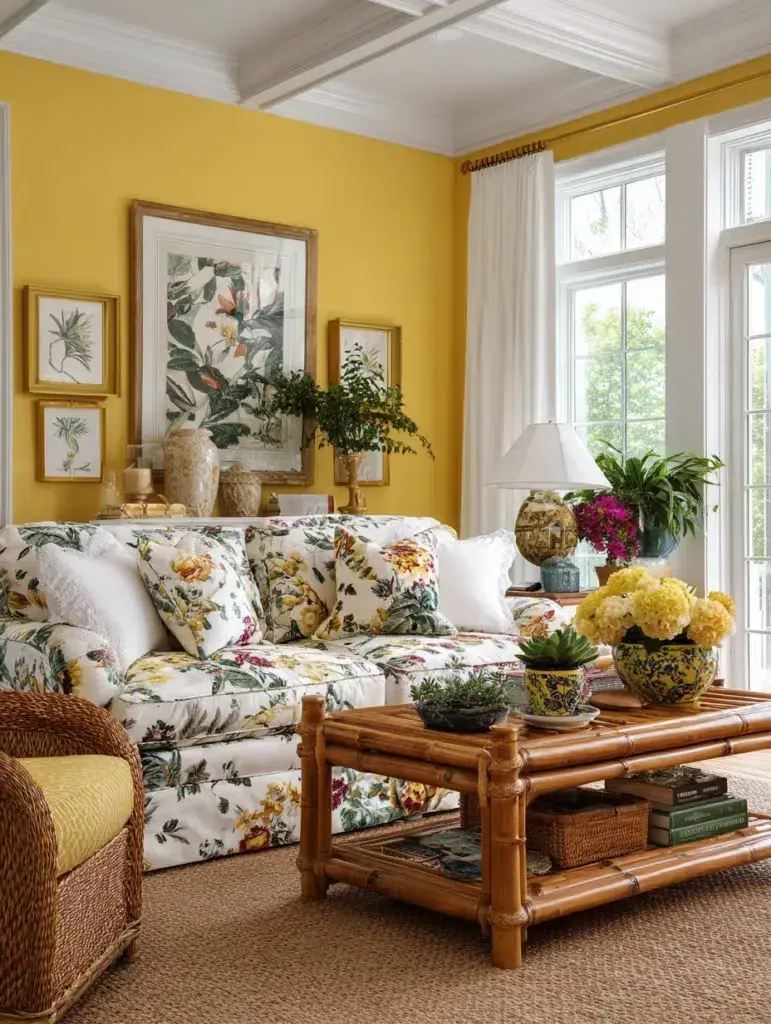
A tiered stand can make a coffee table arrangement feel more dynamic by lifting some of the styling off the main surface. It is particularly useful if you want to display smaller decorative pieces without letting them disappear among larger objects.
Use the lower tier for candles, fruit, or a small bowl, and the upper level for something lighter such as a figurine, shell, or tiny potted plant. The effect feels layered and efficient, which suits Italian interiors well because they often make beautiful use of vertical space without overfilling it.
Choose a stand in wood, ceramic, or a softly aged metal so it blends with the room rather than reading as purely for entertaining.
11. Showcase Artisan Pottery With Visible Character
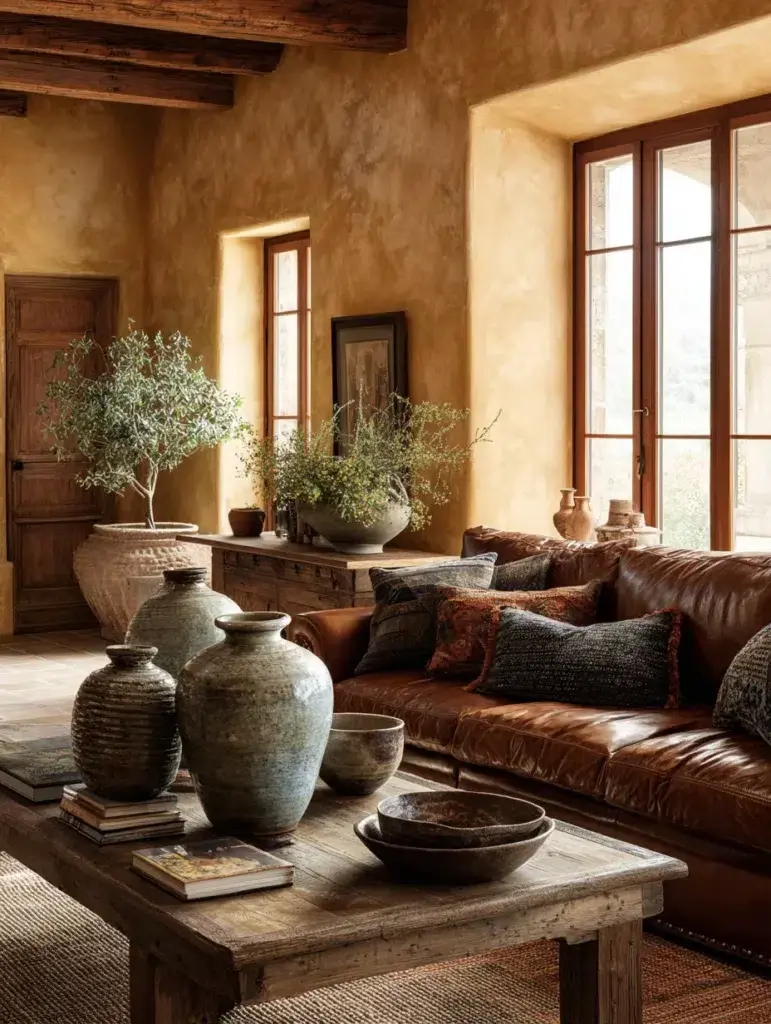
Handmade pottery is one of the strongest styling tools in an Italian-inspired home because it adds both warmth and individuality. Uneven glaze, soft imperfections, and hand-shaped forms are what make these pieces feel special.
Mix smaller and medium-sized vessels rather than lining up matching sets. A vase beside a bowl or a decorative jar creates a collected look that feels far more convincing than buying everything in one style and finish.
Keep the colors within the same warm, earthy family so the variety in shape feels intentional.
12. Fill a Wooden Bowl With Lemons for Mediterranean Energy
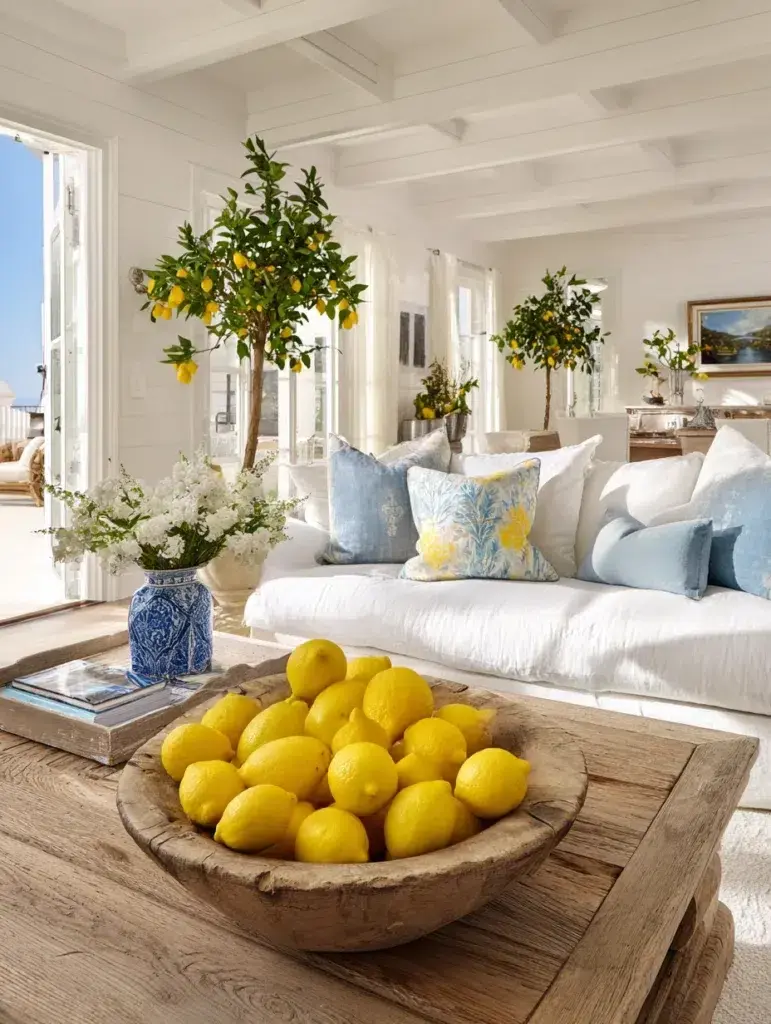
Lemons are simple, bright, and unmistakably Mediterranean. A wooden bowl filled with fresh lemons can change the entire mood of a coffee table, making it feel more sunlit and alive. The yellow against natural wood is a classic Italian pairing because it is both cheerful and grounded.
The bowl itself matters. Something hand-carved, weathered, or softly shaped usually works best, because it keeps the display from feeling too polished. If lemons feel too bold for the rest of the room, use just a few rather than piling the bowl high.
This is one of those styling ideas that looks effortless because it is.
13. Add a Small Wrought Iron Accent for Old-World Structure
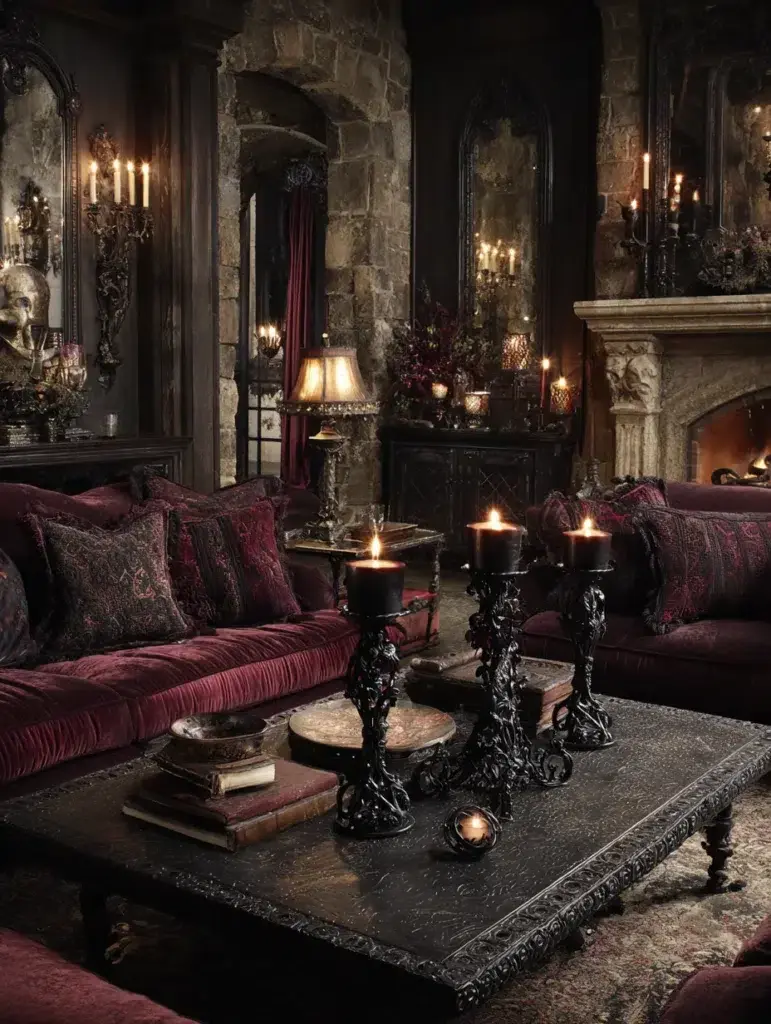
Wrought iron references balconies, lanterns, gates, and all the architectural details that make old Italian buildings so memorable. On a coffee table, even a small piece can introduce that same sense of history and craftsmanship.
A candle holder, decorative stand, or scrollwork accent works well because the metal brings contrast to softer materials like linen and pottery. Keep it balanced with something lighter nearby, such as glass or greenery, so the arrangement does not start to feel too dark or heavy.
One iron accent is usually enough to give the table a stronger architectural note.
14. Stack Woven Placemats for Flexible Texture
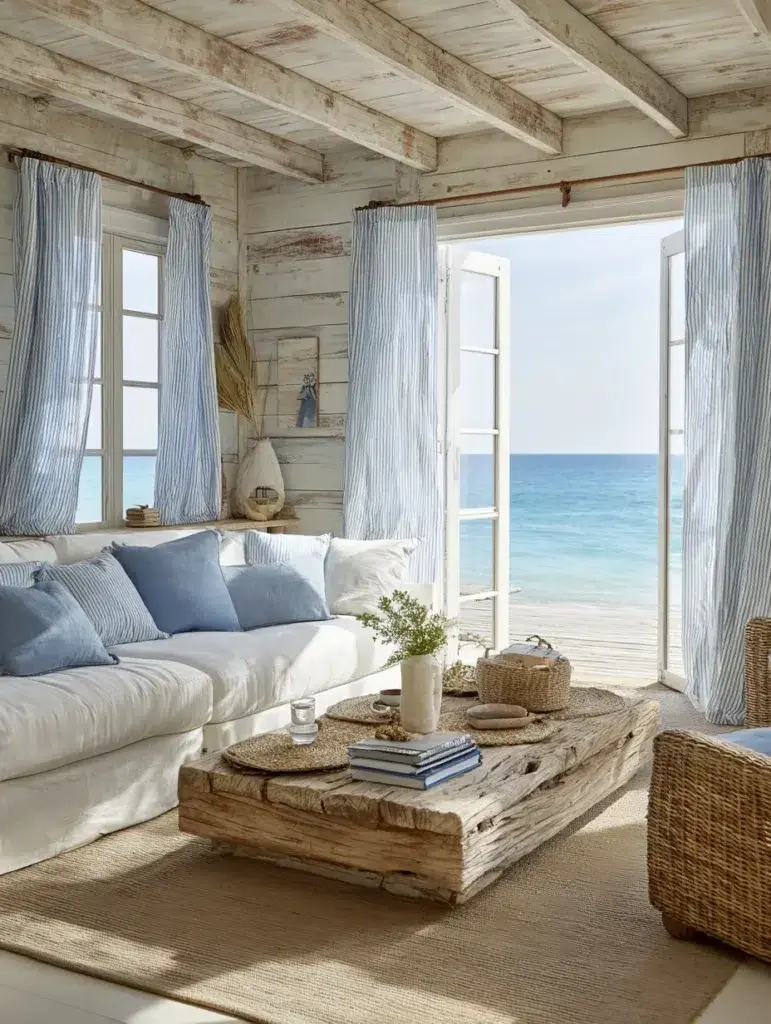
Woven placemats can act almost like mini runners or layered pads beneath a centerpiece. Stacked casually, they add warmth and texture without needing to commit to a full textile across the table.
This works particularly well if you like the softness of woven materials but want something more flexible than a cloth runner. Place a bowl or vase on top, or keep the stack visible as part of the composition. The natural fiber brings a casual, lived-in quality that suits Mediterranean rooms beautifully.
Choose shades that echo the rest of the table, such as straw, warm gray, or soft brown.
15. Use Grape Clusters for a Tuscan Reference
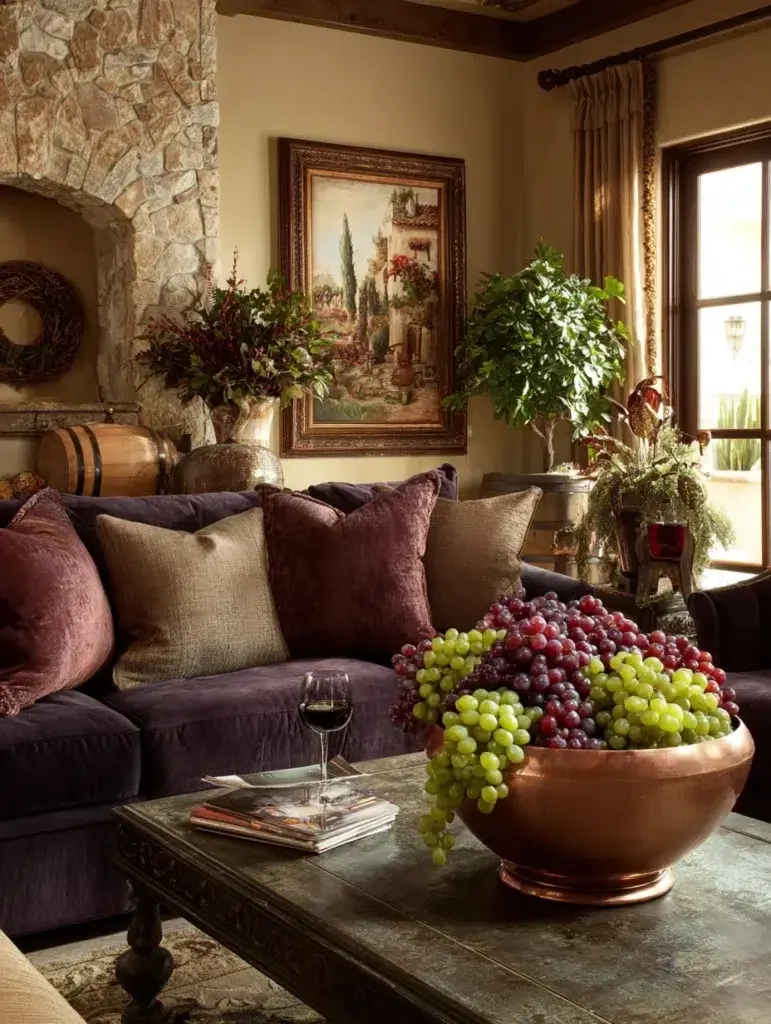
Grapes are one of the more literal references to Italian countryside living, but when styled simply they can still feel elegant. A cluster of grapes in a bowl, on a tray, or spilling slightly over the edge of a vessel hints at vineyard life without becoming costume-like.
Fresh grapes look wonderful if the table is used often and the display will be replaced. High-quality faux grapes can work too, especially in a room where the table styling remains in place for longer stretches.
The important thing is restraint. A little goes much further than a crowded fruit display.
16. Style a Mortar and Pestle as a Sculptural Kitchen Reference
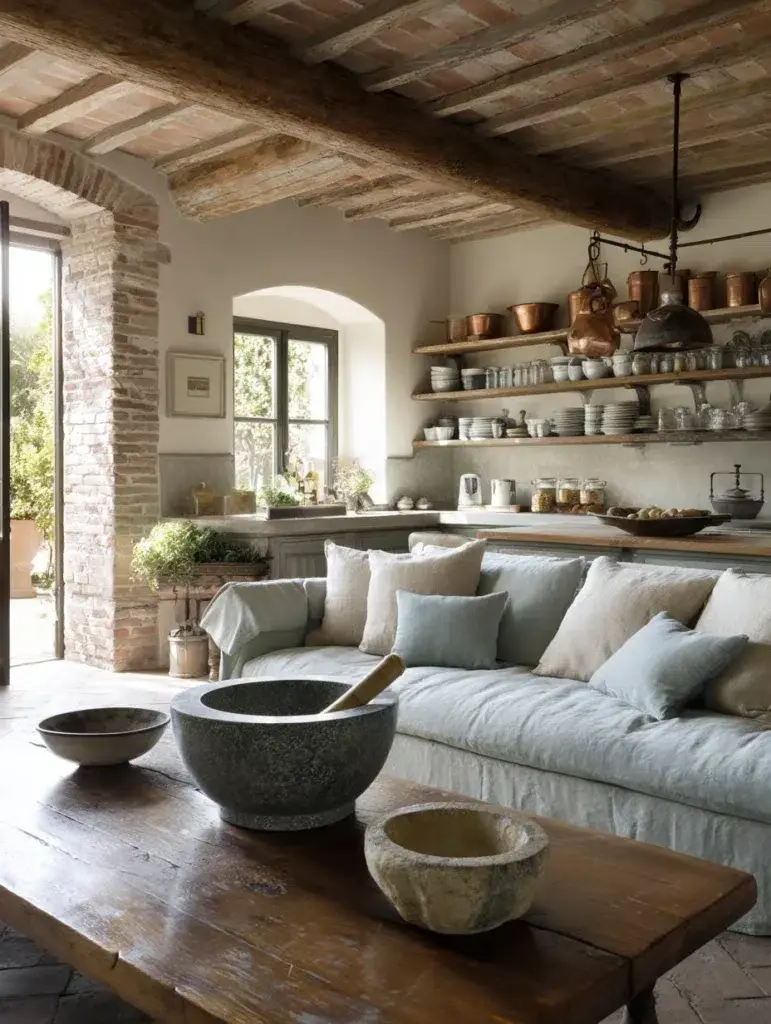
A marble or stone mortar and pestle feels right at home in Italian-inspired interiors because it connects the room to food, herbs, and daily life in a beautiful way. It has both practical meaning and sculptural presence, which makes it especially effective on a coffee table.
Leave it empty if you want to highlight the shape and stone, or add a little dried lavender, rosemary, or potpourri if you want something softer inside. It pairs especially well with books, linen, and ceramics.
This kind of object works because it looks storied rather than purely decorative.
17. Group Glass Bottles With Cork Stoppers
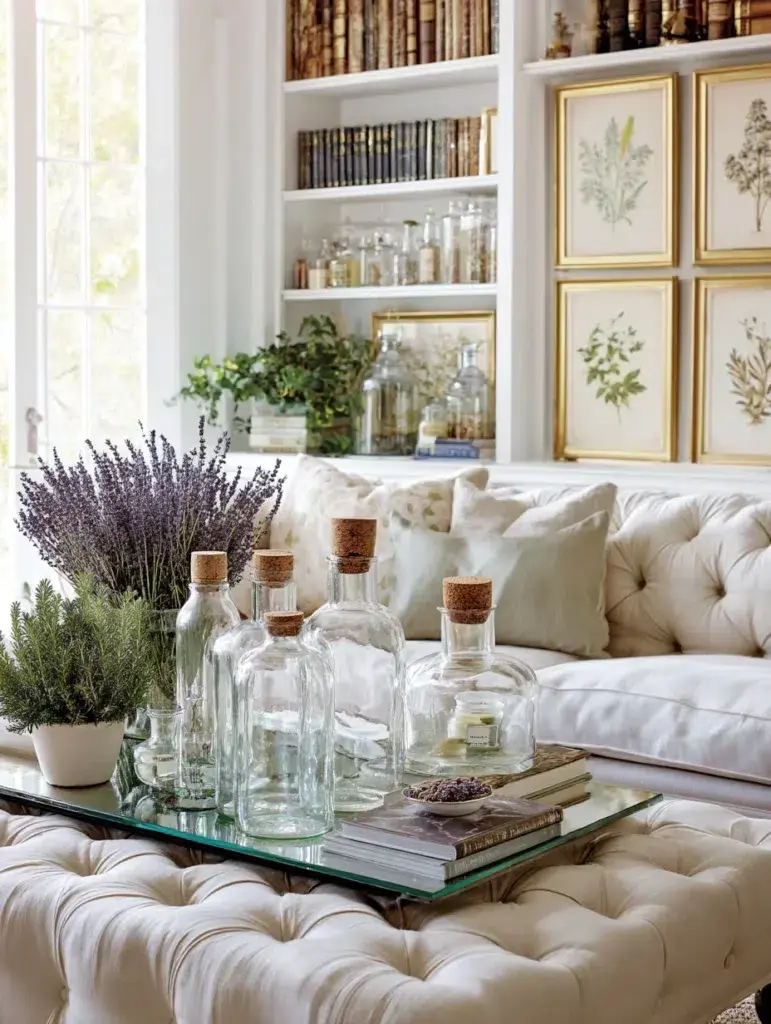
Glass bottles with cork tops have an old apothecary feel that suits Italian styling beautifully. They bring transparency, light reflection, and a little vintage charm without overwhelming the rest of the arrangement.
Use them empty for a cleaner look, or fill them with dried herbs, grains, shells, or tiny branches for more texture. Grouping three in different heights usually feels more natural than placing one on its own unless the bottle is especially striking.
They are especially effective when the table already includes heavier elements like wood or pottery, because the glass introduces contrast and lift.
18. Display Fresh Herbs in Terracotta Pots
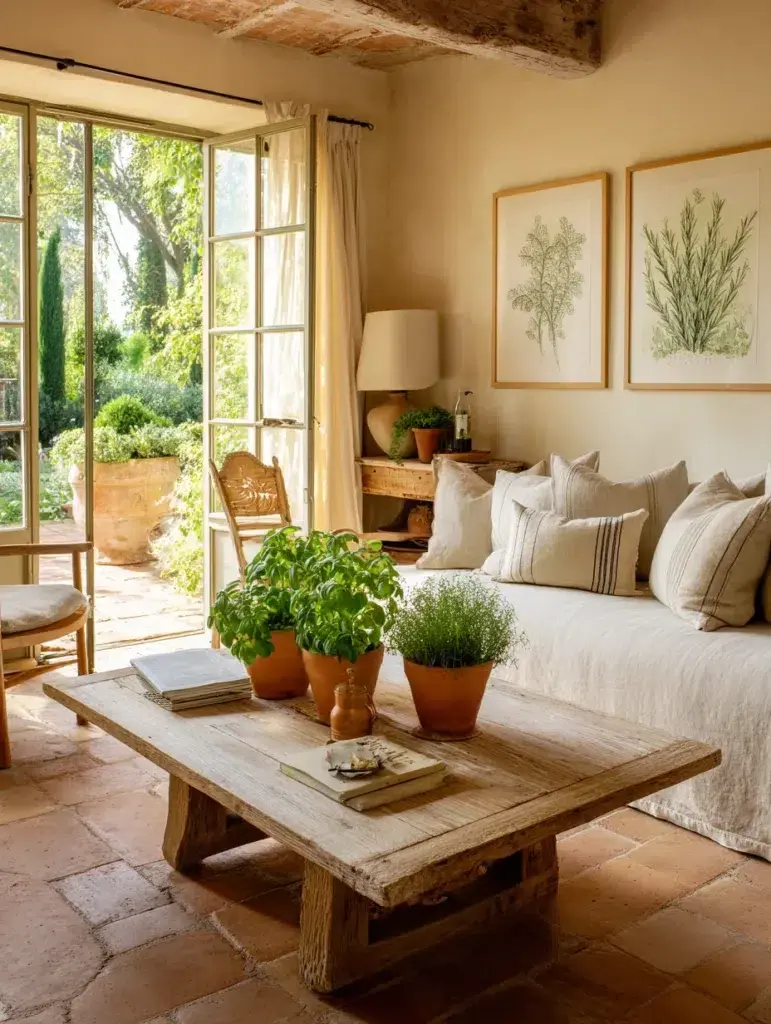
Fresh herbs bring an unmistakable Italian kitchen-garden quality to the room. Basil, rosemary, and thyme all look beautiful in small terracotta pots, and they add scent as well as color. A group of three can make a coffee table feel instantly more alive.
This is especially charming in brighter rooms where the herbs can actually thrive. Use matching pots if you want a cleaner look, or a mixture of worn terracotta containers if you prefer something more rustic and relaxed.
Because the herbs are living, they naturally keep the styling from feeling static.
19. Echo the Coffee Table Palette With Nearby Textiles
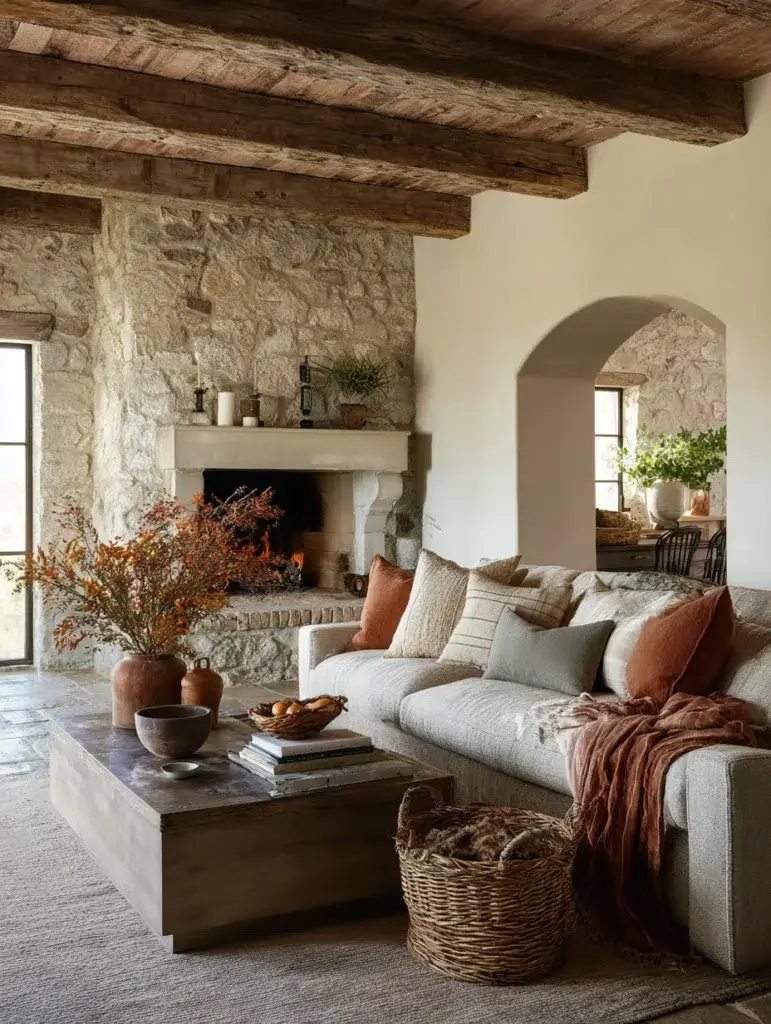
Good coffee table styling never exists in isolation. The surrounding pillows, throws, and upholstery help the table arrangement feel connected to the rest of the room. In Italian-inspired spaces, textured textiles such as linen, cotton, and velvet in earthy or faded Mediterranean tones make everything feel more cohesive.
You do not need an exact match. The goal is simply to repeat the mood. If the coffee table includes terracotta, olive green, cream, or brass, nearby textiles in related shades will make the whole seating area feel more considered.
This is one of the easiest ways to make the table styling feel like part of the room rather than a decorative island.
20. Add a Decorative Magnifying Glass for Old-World Curiosity
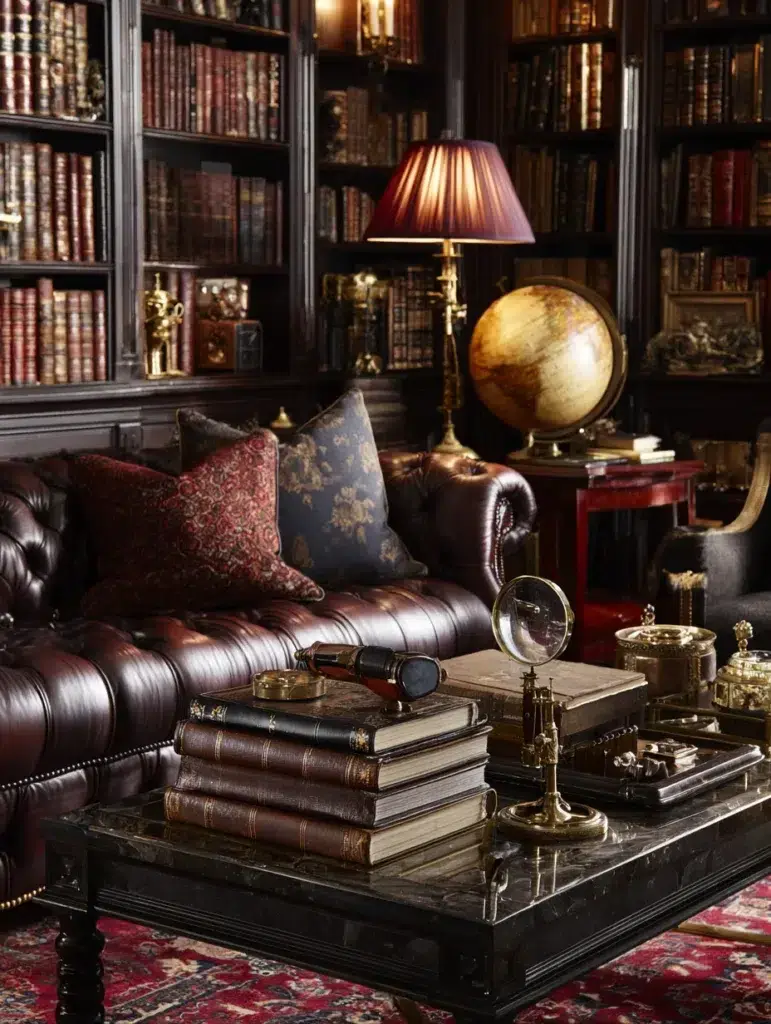
A vintage-style magnifying glass adds a quieter kind of luxury. It hints at libraries, studies, and a slower, more curious way of living, which can feel surprisingly at home in an Italian-inspired room. It also works well as a finishing object placed over a stack of books.
Brass handles, wood details, or aged finishes all help the piece feel more convincing and less novelty-like. The combination of metal and glass also balances well with softer, earthier materials on the table.
It is a small touch, but one that gives the arrangement an extra layer of personality.
21. Display Hand-Painted Ceramic Tiles as Decorative Art
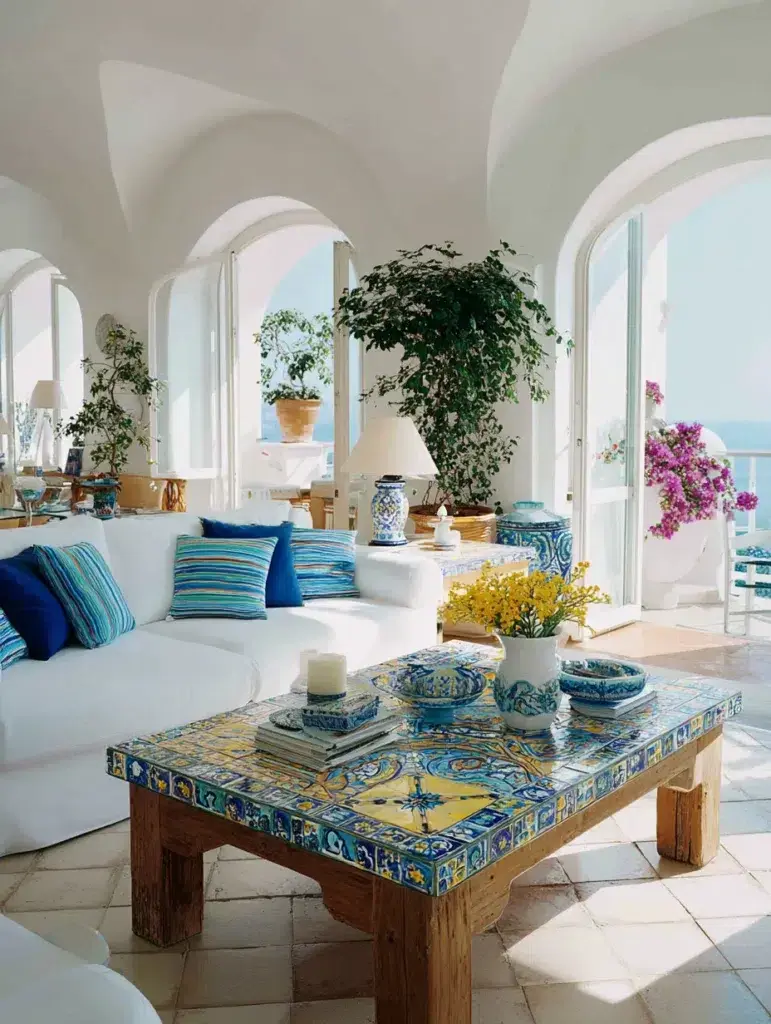
Hand-painted tiles bring color, pattern, and artisan detail in a compact form. Blues, yellows, greens, and whites all feel especially Mediterranean, and the glazed finish catches light beautifully on a coffee table.
You can stack a few like coasters, prop one on a small stand, or lean them against books if the table is large enough. The trick is letting the pattern breathe rather than surrounding it with too many competing decorative elements.
This is a strong choice if the room needs a small shot of color without losing the earthy, collected feeling of the overall styling.
Final Thoughts
An Italian-inspired coffee table works because it balances simplicity with richness. Linen softens it, terracotta warms it, marble cools it, and greenery keeps it alive. The most beautiful arrangements feel effortless because they rely on good materials, a little restraint, and objects that look as though they belong to real life.
You do not need every idea at once. Start with one or two elements that feel natural in your space, then build slowly. That gradual layering is exactly what makes Italian-style interiors feel so inviting in the first place.


