
Small kitchens can sometimes feel limiting, especially when storage is tight and every surface gets used daily. But they also have one major advantage: they’re easier to make feel cozy, personal, and full of character. That’s one reason the boho kitchen style works so well in smaller homes and apartments.
Unlike highly polished kitchen trends that depend on perfect symmetry and expensive finishes, bohemian design embraces warmth, texture, and individuality. It feels collected over time rather than overly planned. A few woven accents, natural materials, layered textiles, and handmade details can completely change the mood of a compact kitchen without requiring a major renovation.

Another reason people gravitate toward boho kitchens is comfort. The space feels lived-in and approachable rather than staged. Open shelving filled with mismatched dishes, hanging plants near windows, textured rugs, and warm lighting all contribute to an environment where people naturally want to gather.
For smaller kitchens specifically, the boho approach can actually make the room feel more intentional. Instead of trying to hide everything behind cabinets, it encourages thoughtful styling and visible storage that doubles as decor.
If you are styling your entire home, you may also enjoy these creative decor ideas to help your spaces feel connected without looking overly coordinated.
My Experience with Small Boho Kitchens
One thing I’ve noticed about small boho kitchens is how quickly they start feeling more comfortable once texture is introduced. Even simple additions like a woven basket, a linen runner, or a few herbs near a window can soften the space in a way sleek modern kitchens sometimes struggle to do.
I once helped style a tiny apartment kitchen that had almost no decorative features at all. The cabinets were plain white, the countertops were basic laminate, and the lighting felt cold. Instead of replacing everything, we focused on layering smaller details: a vintage-inspired rug, open wood shelving, terracotta planters, and warm-toned lighting. The kitchen immediately felt calmer and more welcoming without requiring a major budget.
That’s one of the biggest strengths of boho design. It allows personality to become part of the room instead of hiding everything away. In small kitchens especially, that sense of warmth can make a noticeable difference in how the space feels every day.
How to Create a Small Boho Kitchen Look
- Use natural materials like wood, rattan, clay, and linen
- Incorporate plants to add softness and color
- Mix patterns carefully while keeping the palette cohesive
- Layer warm lighting instead of relying on harsh overhead fixtures
- Use visible storage that also functions as decor
- Prioritize comfort and practicality over perfection
1. Macramé Accents on Shelving
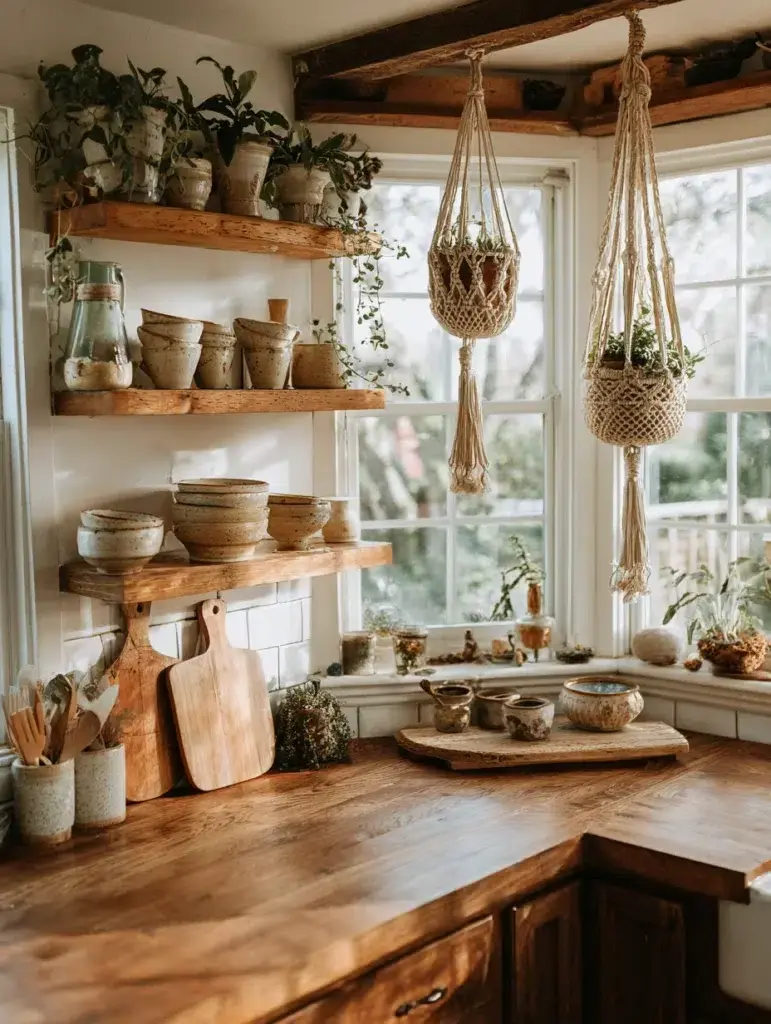
Macramé details work beautifully in small boho kitchens because they introduce softness without creating clutter. Hanging plant holders, woven wall hangings, or even subtle shelf accents help balance harder surfaces like tile, stone, and cabinetry.
Vertical decor becomes especially useful in compact kitchens where counter space is limited. Instead of filling every surface with decor, hanging elements naturally draw the eye upward and make the room feel more layered.
Neutral-toned macramé tends to work best because it blends easily with wood, clay, greenery, and textured fabrics already common in boho spaces.
2. Terracotta Pot Storage
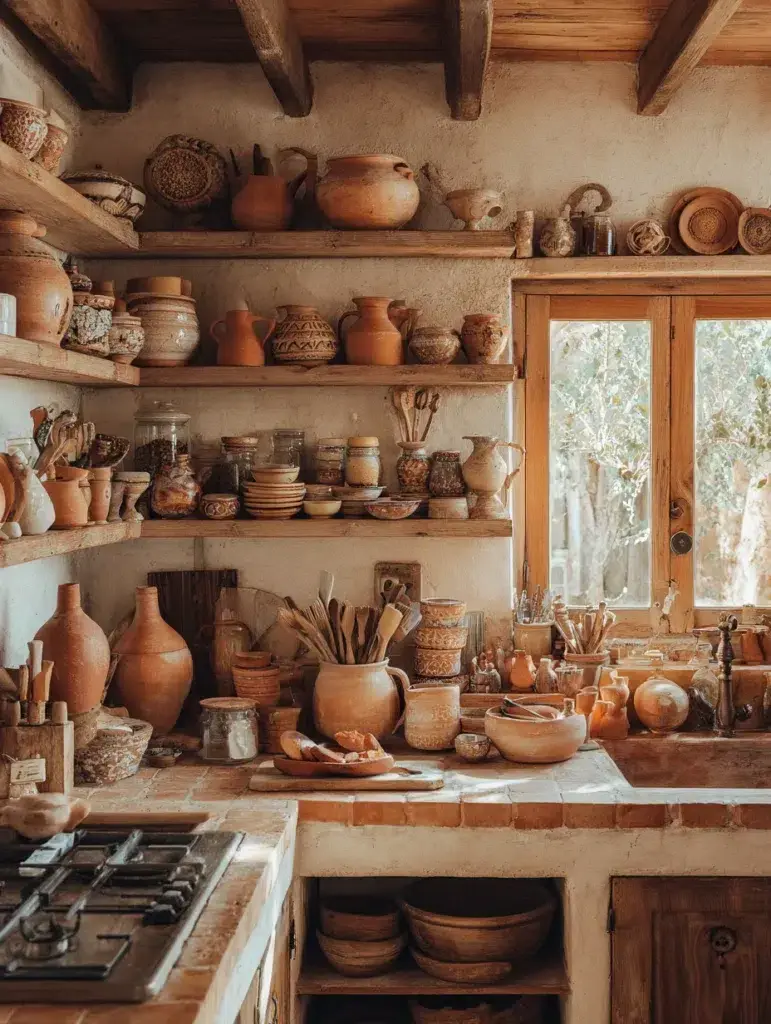
Terracotta naturally complements boho interiors because of its earthy warmth and handcrafted appearance. In kitchens, these pots can be surprisingly functional for storing wooden utensils, herbs, or smaller everyday items.
What makes terracotta especially appealing is that it introduces color in a subtle, grounded way. Instead of bright decorative accents competing for attention, the muted clay tones help the kitchen feel relaxed and cohesive.
Even a few small terracotta pieces near open shelving or windows can make the space feel more lived-in and personal.
3. Rattan Lighting Fixtures
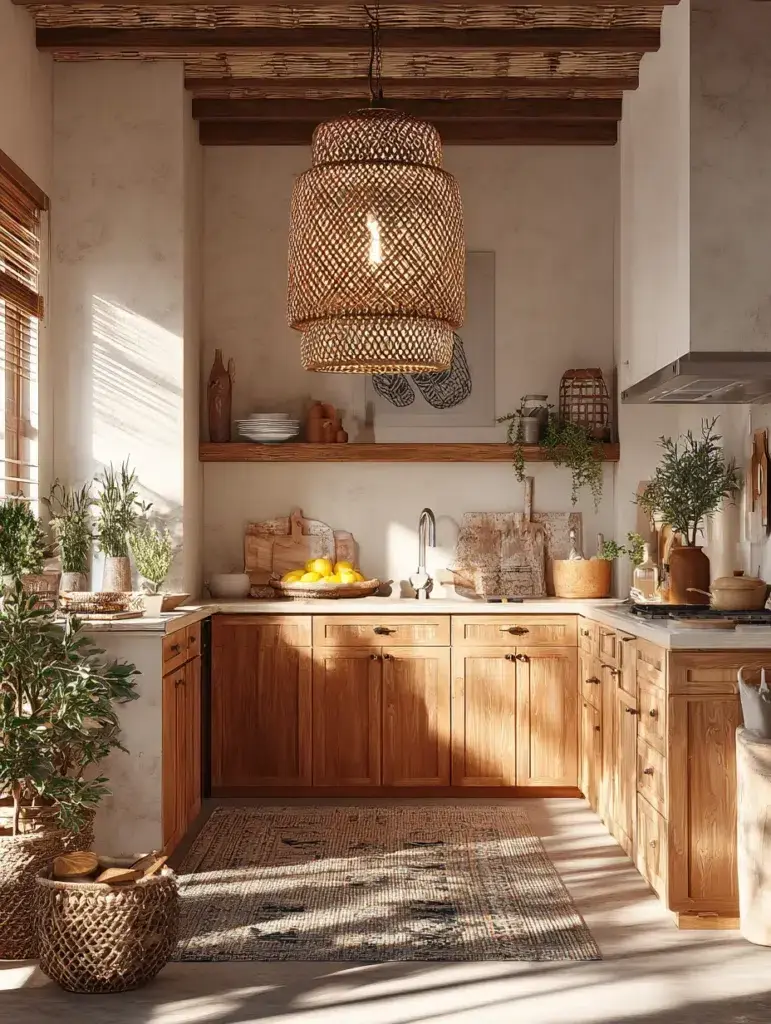
Lighting changes the entire atmosphere of a small kitchen, and rattan fixtures help create a softer, warmer glow compared to harsh exposed bulbs or industrial lighting.
Because woven shades filter light naturally, they create gentle shadows and texture throughout the room. This helps smaller kitchens feel more relaxed in the evenings instead of overly bright or clinical.
Pendant lighting above an island or dining nook works particularly well because it creates a clear focal point without overwhelming the room visually.
4. Open Shelving with Mixed Dishes
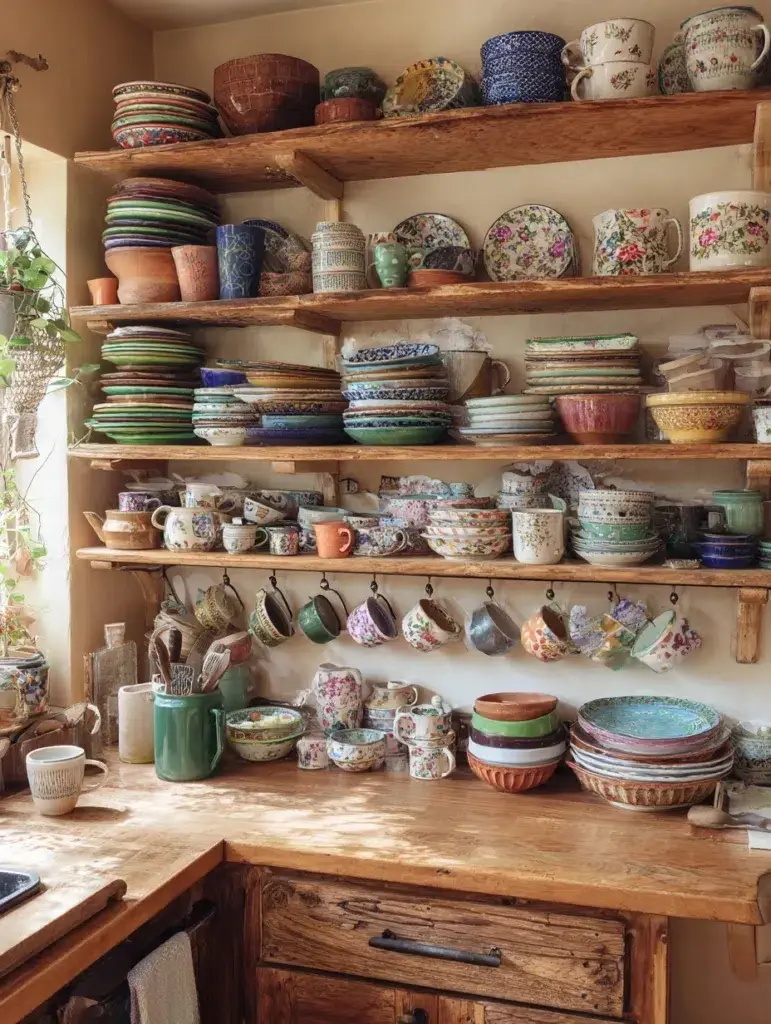
One of the easiest ways to create a boho kitchen feel is through open shelving. Instead of perfectly matching dishes, mixing ceramics, handmade mugs, vintage plates, and textured bowls creates a more collected appearance.
The key is keeping some consistency in color or material so the shelves still feel intentional rather than chaotic. Earth tones, soft whites, muted greens, and natural wood elements usually work well together.
If your kitchen feels visually heavy, replacing just a few upper cabinets with open shelving can immediately make the room feel lighter.
5. Woven Basket Storage
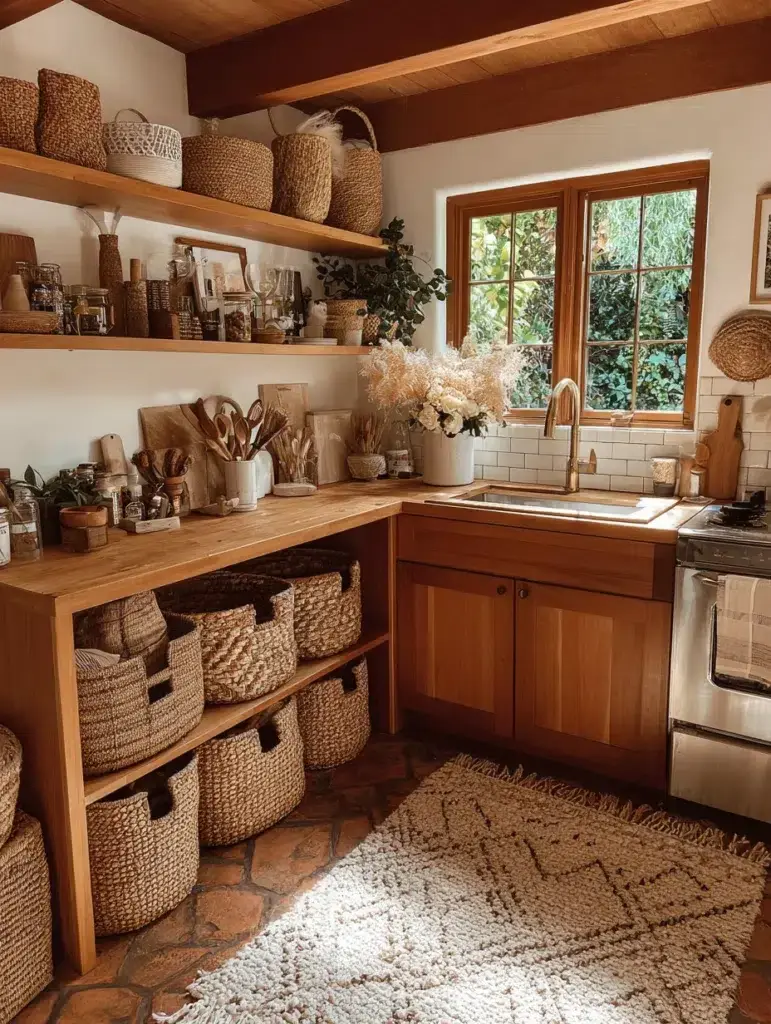
Storage becomes more visible in small kitchens, which is why woven baskets work so well in boho spaces. They help organize produce, linens, or pantry items while still contributing visually to the room.
Natural woven textures also soften the harder lines found in cabinetry and appliances. Instead of looking purely functional, the storage itself becomes part of the decor.
If you enjoy layered natural textures, you may also like these earth tone living room ideas that pair beautifully with relaxed boho interiors.
6. Vintage Rug Accent
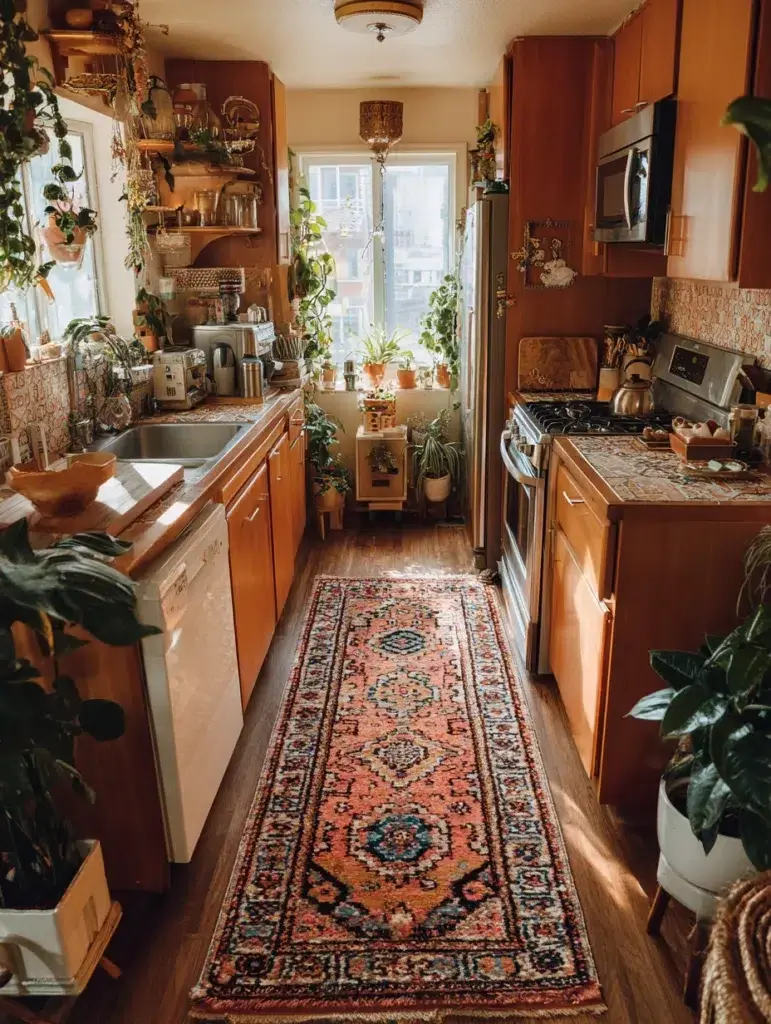
A vintage-inspired rug instantly changes how a kitchen feels underfoot. Beyond appearance, it also makes standing for longer cooking sessions more comfortable.
In smaller kitchens, rugs help define the space and introduce layered color without requiring major renovations. Faded vintage patterns often work especially well because they add personality without overpowering the room.
Washable rugs are usually the most practical option for kitchens where spills and daily traffic are unavoidable.
7. Hanging Herb Garden
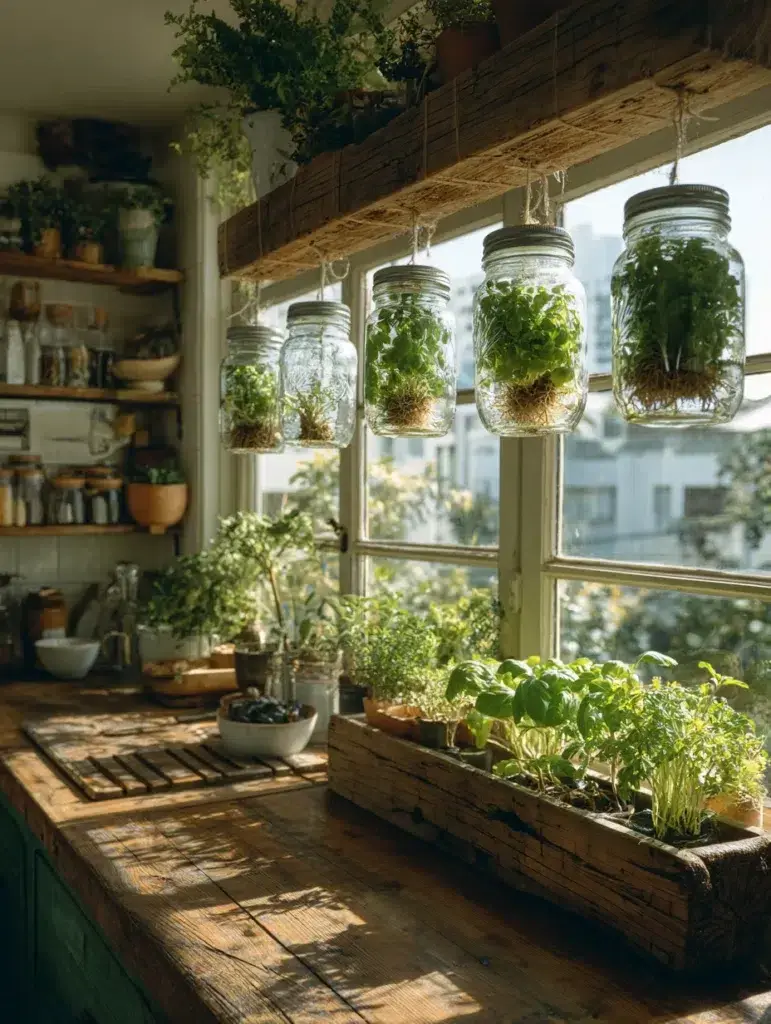
Hanging herbs bring life into a kitchen while also serving a practical purpose. Basil, mint, rosemary, and thyme are all relatively easy to maintain with decent sunlight.
What makes herbs especially appealing in boho kitchens is their slightly imperfect, natural appearance. They soften shelves and windows while making the room feel more connected to nature.
Even a narrow wall-mounted herb rack can make a compact kitchen feel fresher and more welcoming.
8. Natural Fiber Seating
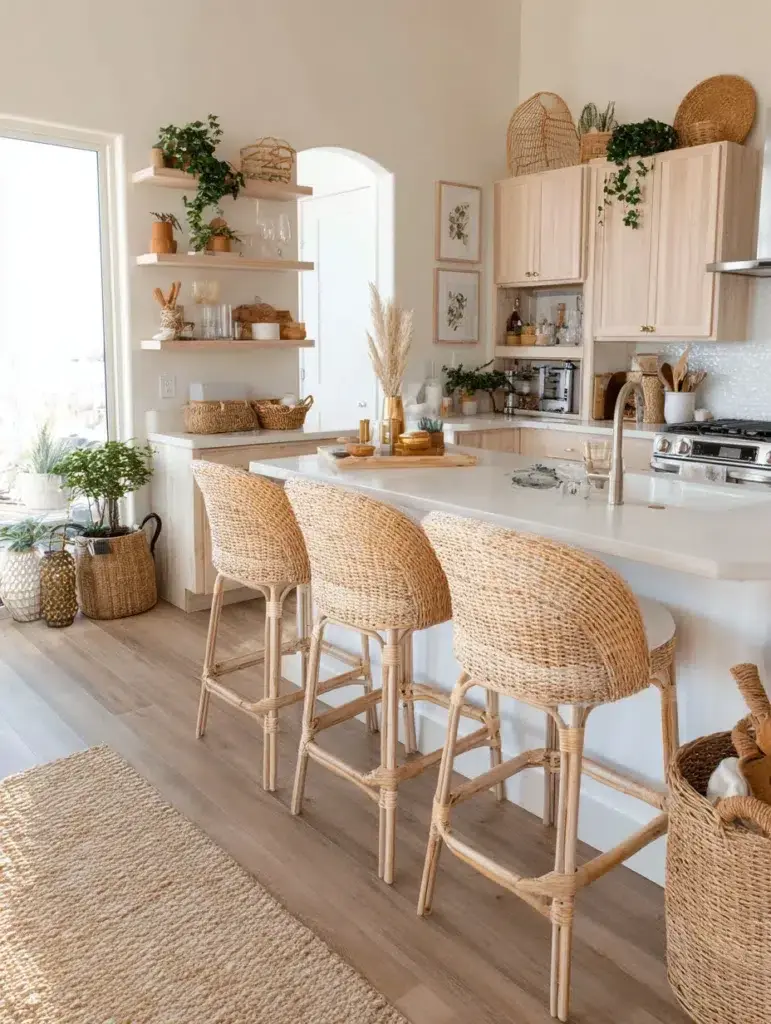
Heavy seating can quickly overwhelm a compact kitchen, which is why rattan, wicker, and cane furniture work so well in boho interiors. They visually feel lighter while still adding texture and warmth.
Backless stools are especially useful in small spaces because they slide neatly under counters and reduce visual clutter.
9. Pampas Grass Decor
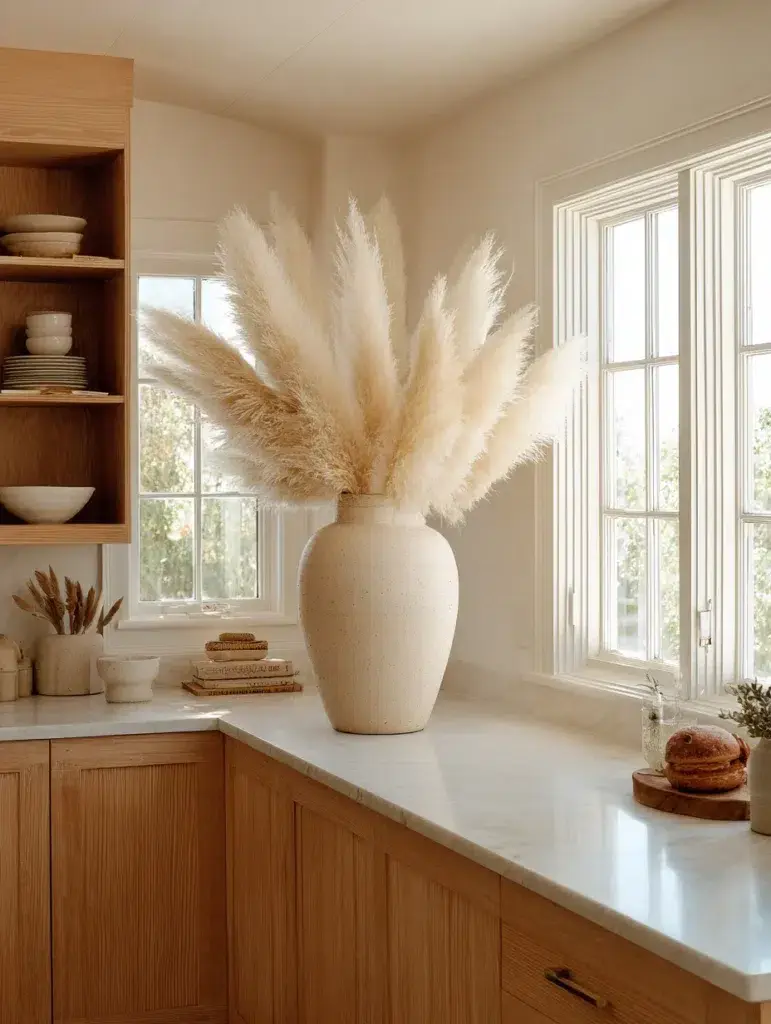
Pampas grass became popular for a reason — it adds softness, movement, and warmth very easily. In kitchens, a small arrangement on a shelf or dining table helps balance harder surfaces like tile and stone.
Neutral dried arrangements also tend to last much longer than fresh flowers, making them practical for busy households.
10. Wooden Crate Storage
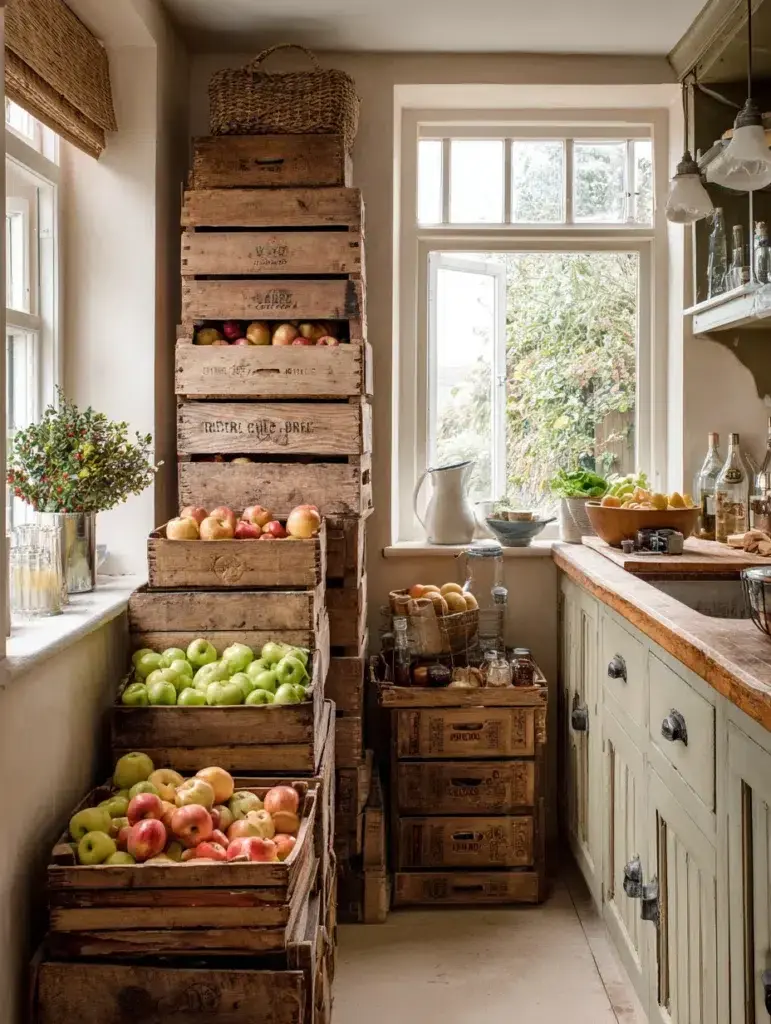
Wooden crates work well in boho kitchens because they add character while remaining highly functional. They can hold pantry items, cookbooks, produce, or even folded linens.
Older wood finishes usually feel more natural and textured compared to heavily polished storage solutions.
11. Brass and Copper Accents
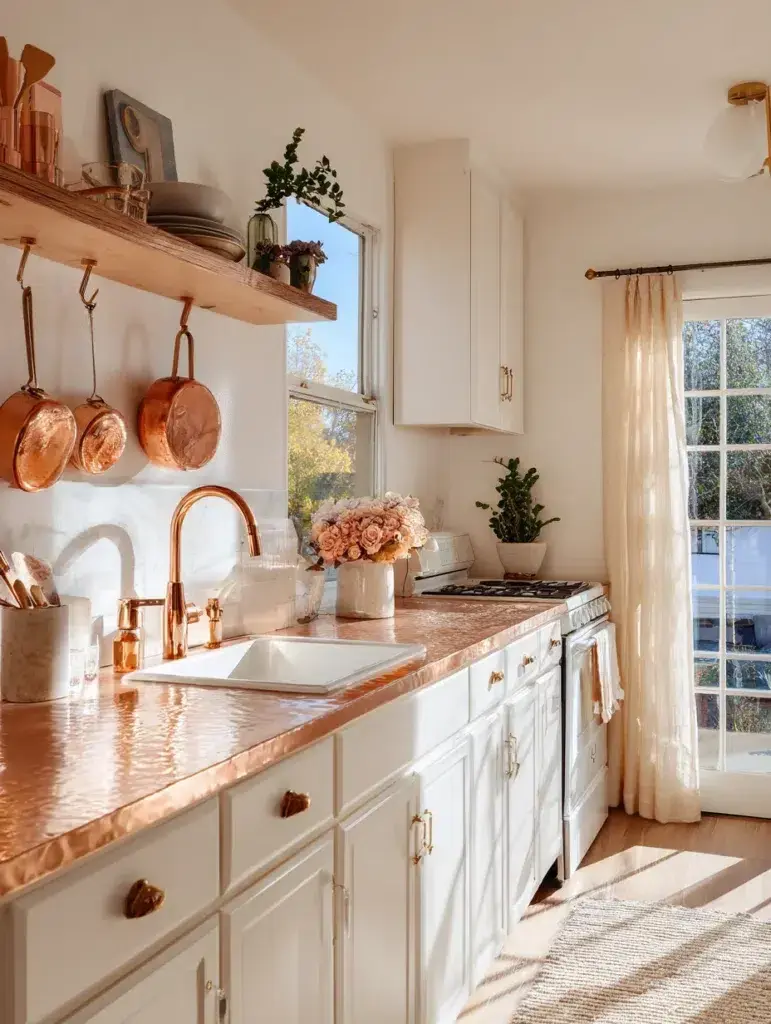
Brass and copper finishes naturally complement the earthy tones common in boho spaces. Small details like cabinet pulls, pendant lighting, or cookware can add warmth without making the kitchen feel flashy.
These warmer metals also age beautifully over time, which fits the relaxed and collected nature of boho design.
12. Textured Backsplash
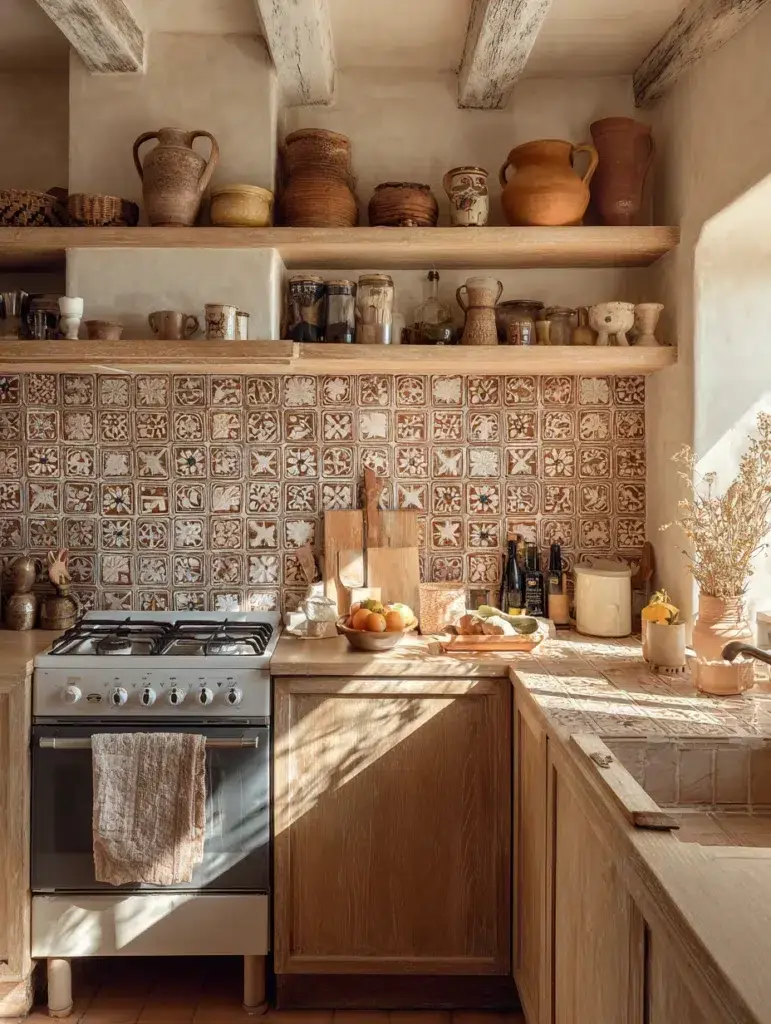
Texture becomes especially important in smaller spaces because it keeps the room from feeling flat. Handmade tile, zellige surfaces, or slightly irregular ceramic backsplashes introduce depth without relying on bold color.
Subtle texture also reflects light differently throughout the day, which helps compact kitchens feel more dynamic and interesting.
13. Live Edge Shelves
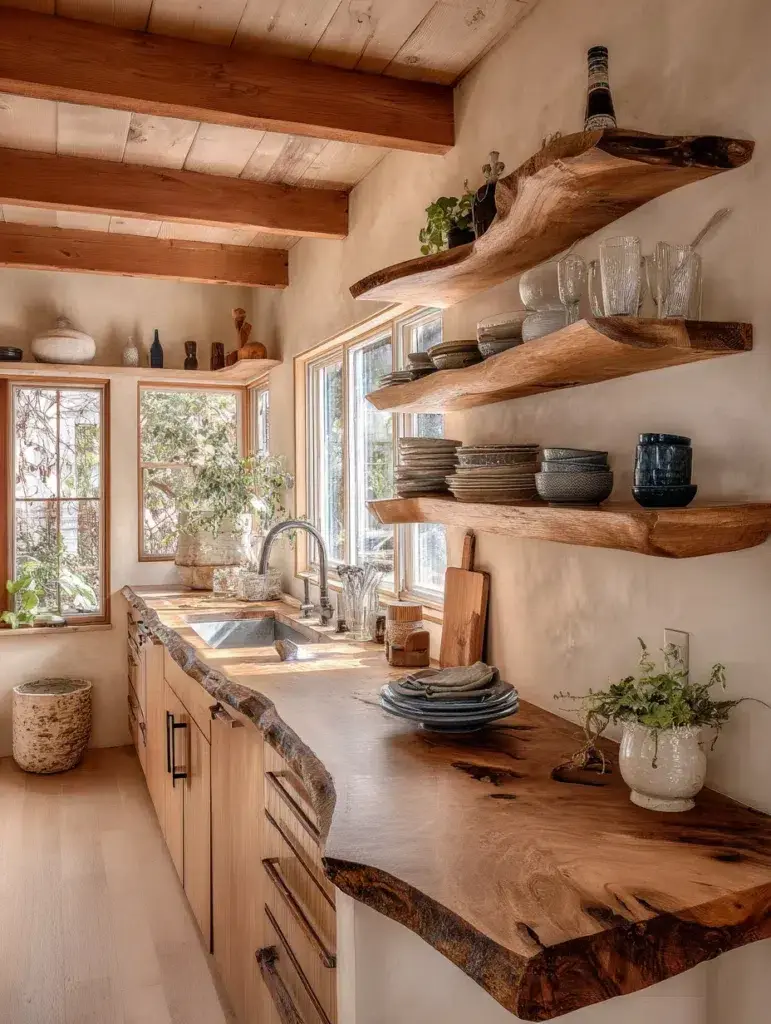
Live edge shelves work beautifully in boho kitchens because they preserve the natural shape and imperfections of the wood. This helps the room feel less rigid and more organic.
Paired with ceramics, plants, and textured glassware, these shelves create a layered look without needing excessive decoration.
14. Geometric Tile Patterns
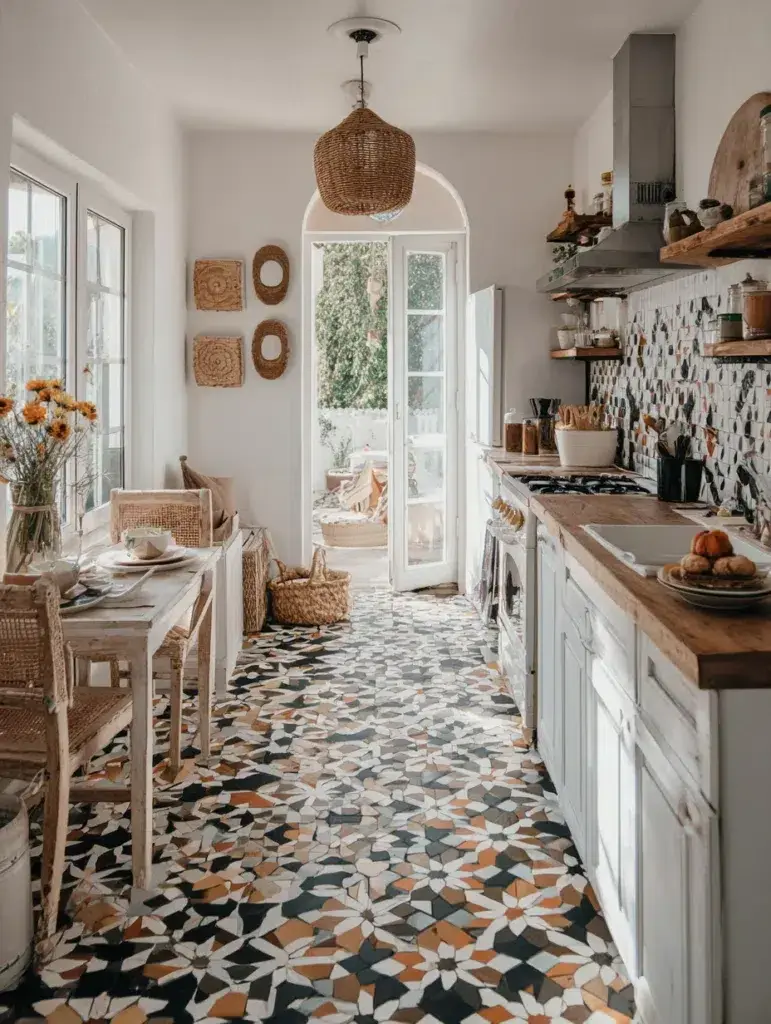
Boho interiors often embrace pattern, but balance matters in smaller kitchens. Geometric tiles help introduce visual interest while still feeling structured enough to avoid chaos.
Muted patterns tend to work best because they create personality without overwhelming the room visually.
15. Wall Planters
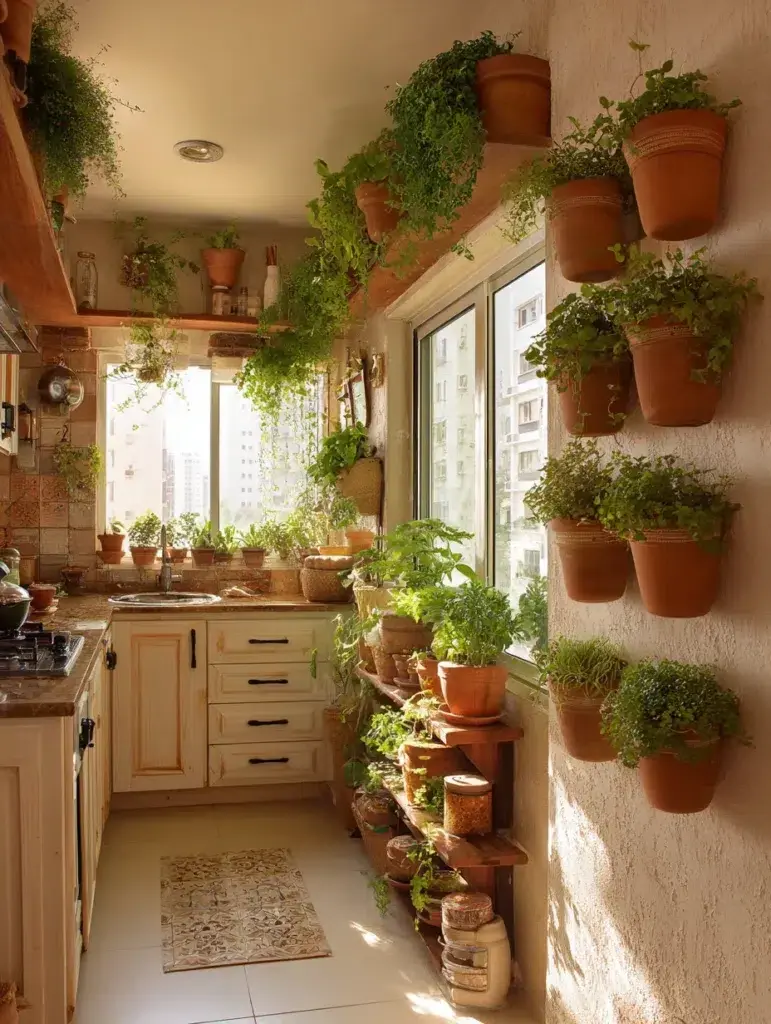
Vertical greenery is especially valuable in small kitchens where floor and counter space are limited. Wall planters help introduce plants without interfering with daily kitchen tasks.
Trailing plants like pothos or ivy soften corners naturally and make compact kitchens feel more relaxed.
16. Woven Wall Decor
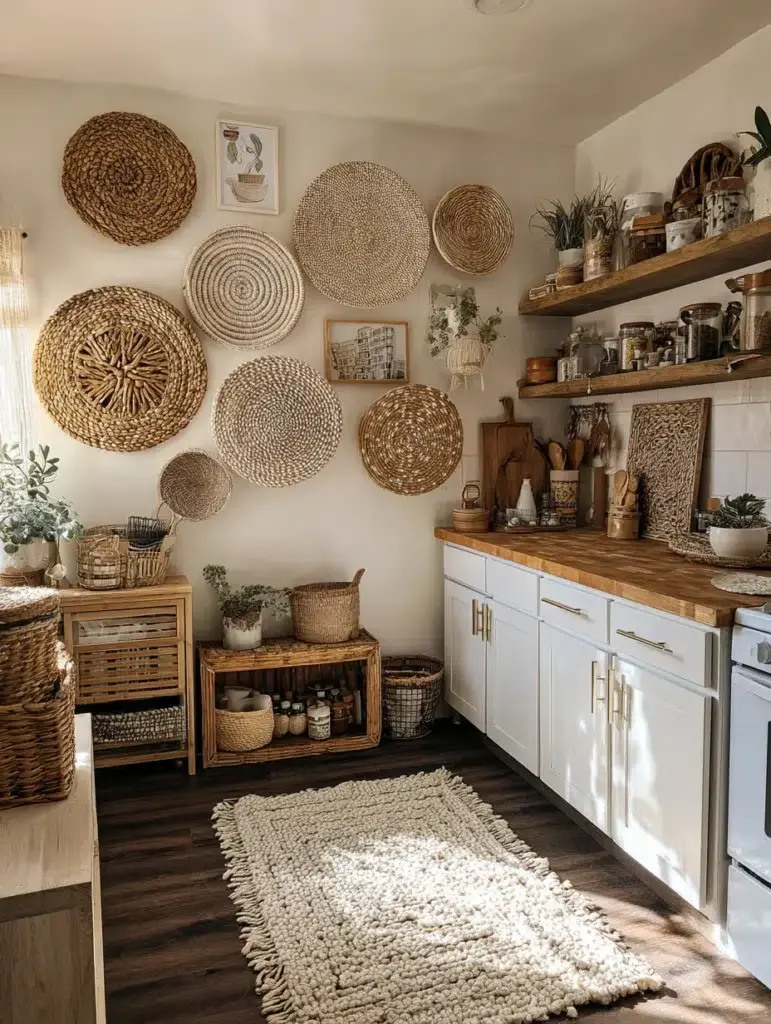
Textile-based wall decor introduces warmth that painted walls alone often lack. Woven placemats, baskets, or handmade hangings create visual softness without requiring major commitment.
Layering different woven textures carefully helps the kitchen feel cozy without appearing cluttered.
17. Hanging Pot Rack
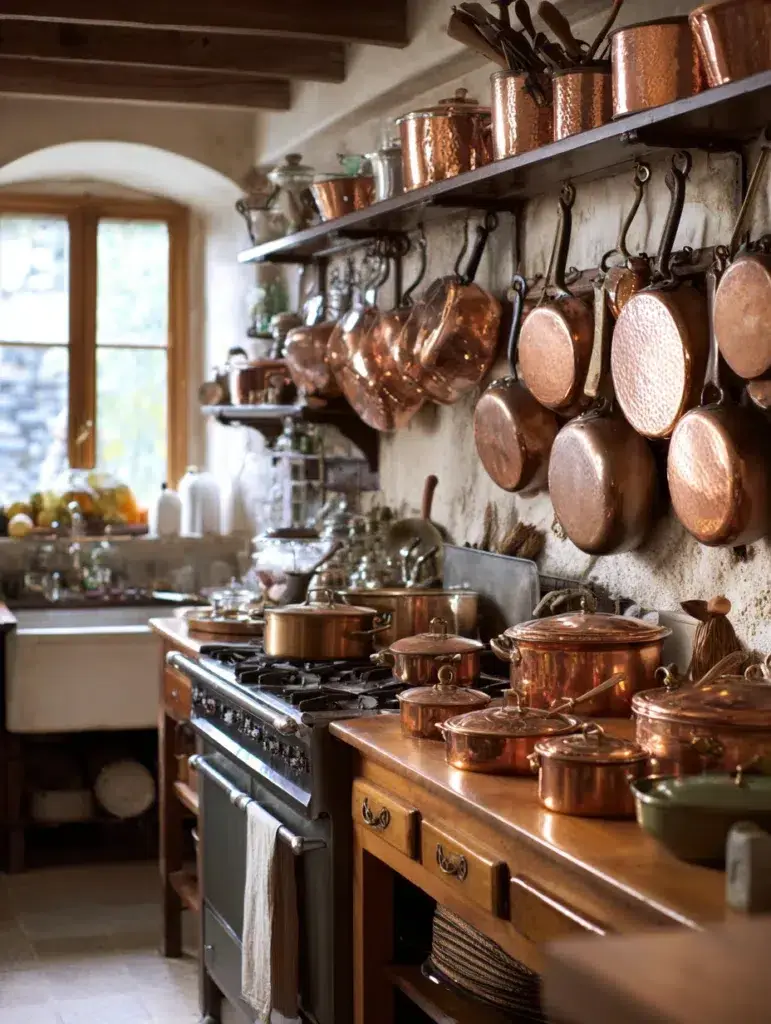
In small kitchens, storage solutions that double as decor are incredibly useful. Hanging pot racks keep cookware accessible while reducing pressure on already limited cabinets.
Using copper or matte black cookware can also make the display feel more intentional visually.
18. Glass Bottle Decor
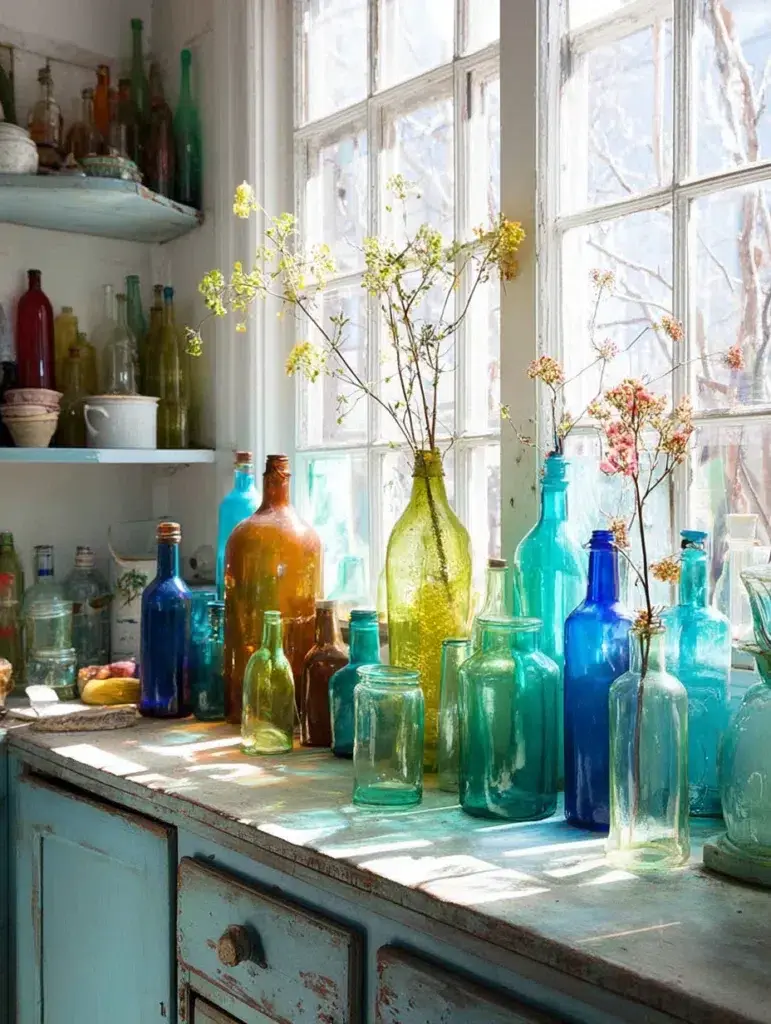
Glass bottles bring color into a kitchen in a quieter, more organic way than bold decor pieces. Placed near windows, they reflect light softly and create visual movement throughout the day.
Amber, green, and smoky blue tones tend to work particularly well in earthy boho palettes.
19. Textile Runners
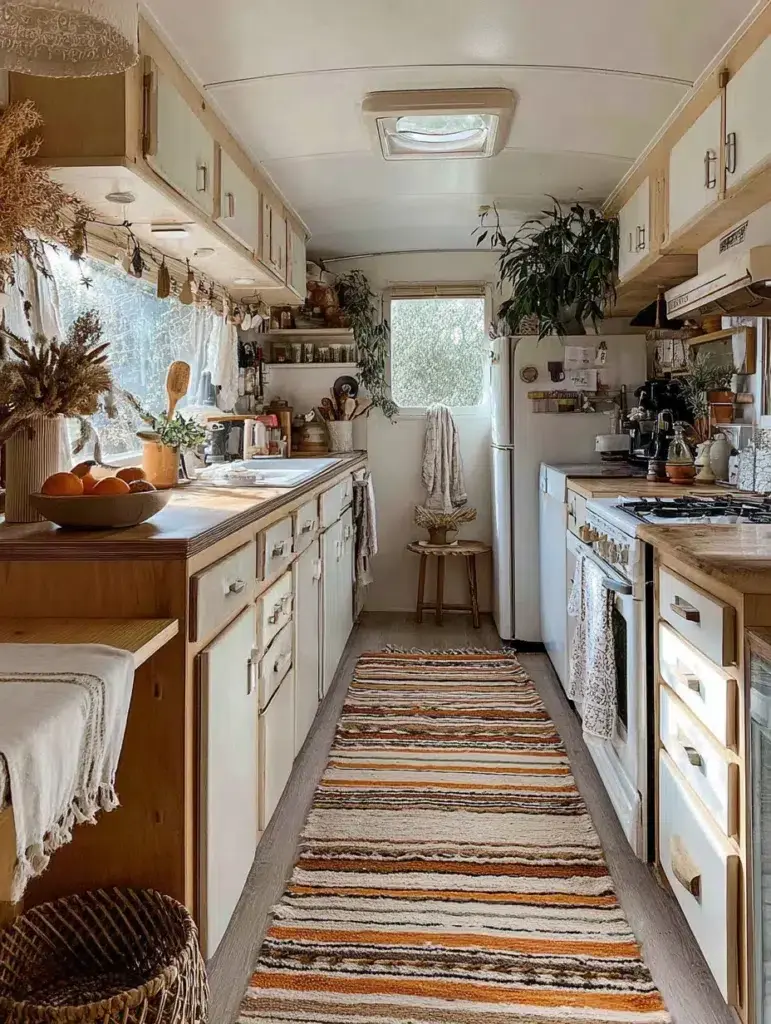
Textile runners help soften harder kitchen surfaces while introducing subtle pattern and warmth. Linen and cotton materials generally feel the most natural in boho interiors.
Neutral stripes or faded patterns help maintain visual calm while still adding personality.
20. Cutting Board Display
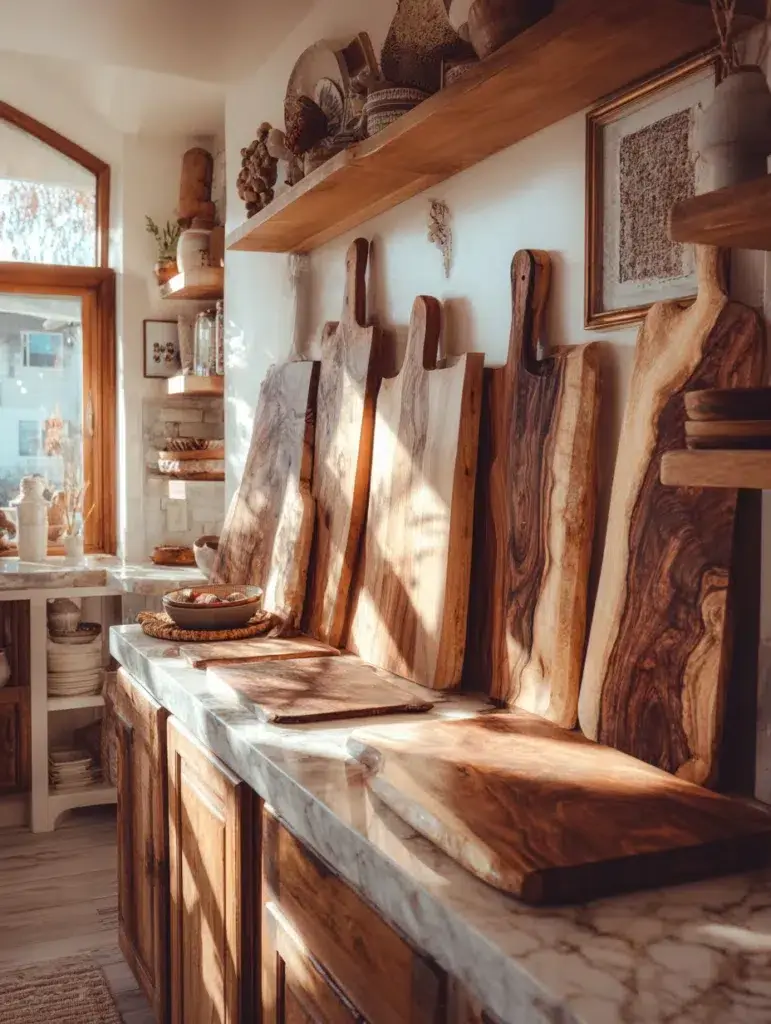
Leaning cutting boards against a backsplash is one of the simplest ways to add warmth and texture to a kitchen. Different wood tones layered together create an intentionally collected look.
Because they’re functional as well as decorative, the kitchen feels authentic rather than overly styled.
21. Beaded Lighting
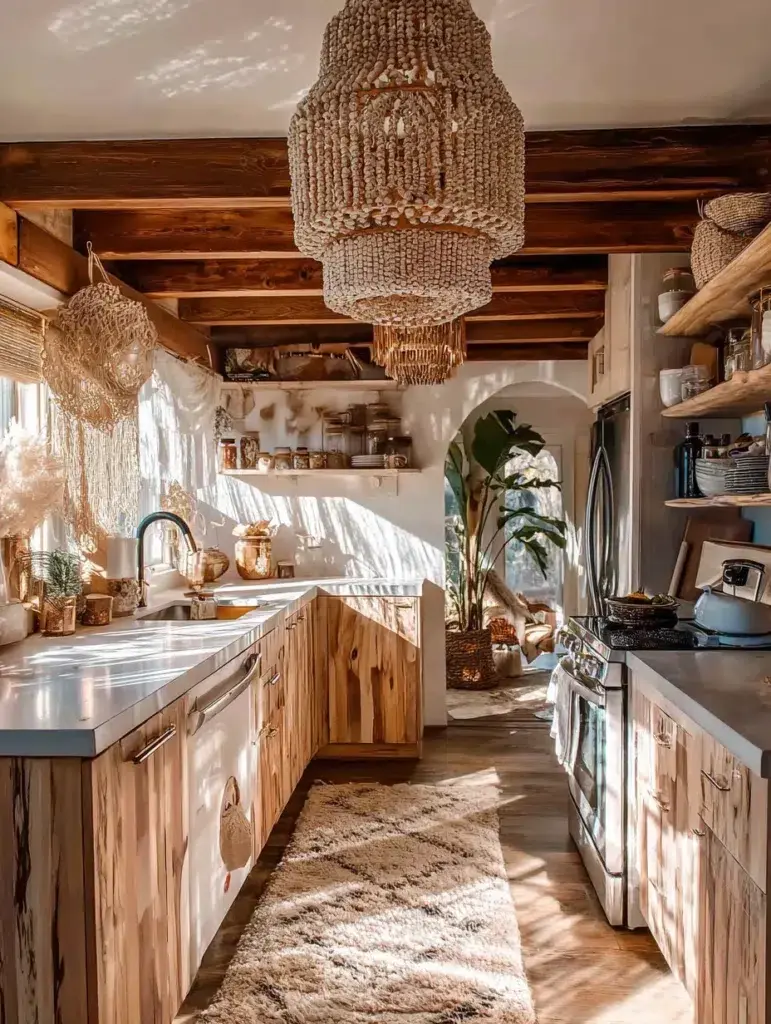
Beaded chandeliers and pendant fixtures add softness and movement that fit naturally into boho interiors. Even in smaller kitchens, a statement light fixture can completely change the atmosphere.
Keeping surrounding decor relatively simple helps the fixture stand out without making the room feel crowded.
Boho Kitchen Materials Comparison
| Material | Why It Works in Boho Kitchens | Maintenance Level | Best Use |
|---|---|---|---|
| Rattan | Lightweight and textured | Low | Lighting and seating |
| Terracotta | Warm earthy color | Low | Planters and storage |
| Natural Wood | Adds warmth and texture | Moderate | Shelving and decor |
| Linen | Softens hard kitchen surfaces | Moderate | Textiles and runners |
Common Mistakes to Avoid
- Overcrowding shelves: Small kitchens need visual breathing room to avoid feeling cluttered.
- Using too many competing patterns: Mixing patterns works best when the color palette stays cohesive.
- Ignoring lighting: Warm layered lighting is essential for creating a cozy boho atmosphere.
- Prioritizing decor over function: Every decorative item should still allow the kitchen to function comfortably.
- Buying everything at once: Boho spaces feel more natural when they evolve gradually over time.
Frequently Asked Questions
Can boho style work in very small kitchens?
Yes. In fact, smaller kitchens often suit boho design especially well because layered textures and personal details naturally make compact spaces feel warmer and more inviting.
What colors work best in a boho kitchen?
Warm neutrals, earthy greens, terracotta, muted mustard, dusty blues, and soft whites all work beautifully together in boho interiors.
How do I avoid making a boho kitchen look cluttered?
Focus on layered textures rather than excessive decor. Leaving some empty space on shelves and counters helps maintain balance.
Do boho kitchens need open shelving?
Not necessarily, but open shelving often helps create the relaxed and collected feeling associated with bohemian interiors.
Final Thoughts
Small boho kitchens work because they prioritize comfort, texture, and personality over perfection. Instead of trying to make a compact kitchen disappear, this style embraces the idea that even practical spaces can feel warm and deeply personal.
What makes the look especially appealing is how approachable it is. You don’t need a full renovation or expensive finishes to create a cozy atmosphere. Small details — layered textiles, handmade ceramics, warm lighting, greenery, and natural materials — often have the biggest impact.
The best boho kitchens rarely feel finished all at once. They evolve gradually through collected pieces, everyday use, and personal touches that make the space genuinely enjoyable to spend time in.


