
Dark brown kitchen cabinets have quietly remained one of the most dependable choices in kitchen design. While white kitchens and pale wood finishes often dominate trend cycles, darker cabinetry continues to appeal to homeowners who want something grounded, warm, and practical for everyday living.
What makes dark brown cabinets stand out is their versatility. Depending on the surrounding materials, they can lean modern, rustic, traditional, transitional, or even slightly industrial. They work equally well in large open-concept homes and smaller kitchens that need visual depth. The secret is learning how to balance them properly.

One common misconception is that dark cabinets automatically make a kitchen feel small or gloomy. In reality, poorly planned lighting and overly dark surroundings usually create that effect. When dark brown cabinetry is paired with lighter countertops, reflective finishes, layered textures, and warm lighting, the result often feels richer and more welcoming than an all-white kitchen.
Another reason homeowners continue choosing dark brown cabinets is practicality. Everyday smudges, light scratches, and minor wear tend to blend in more naturally compared to bright painted finishes. For busy households, especially homes with children or frequent cooking, that alone can make a noticeable difference.
If you’re planning a complete kitchen refresh, you may also enjoy these neutral kitchen color ideas for creating a balanced and calming palette throughout the home.
My Experience with Dark Brown Cabinets
I’ve worked with homeowners who initially worried dark cabinets would overwhelm their kitchens, especially in homes without oversized windows. Interestingly, most of those concerns disappeared once the right balance of materials and lighting came together.
One kitchen I remember particularly well had deep espresso cabinets paired with creamy quartz counters and soft brass hardware. Before the renovation, the room felt flat and disconnected. Afterward, the darker cabinetry actually gave the kitchen more character and helped define the space in a way lighter cabinets never could.
Another practical advantage is maintenance. Dark brown finishes tend to age gracefully. Minor scuffs and fingerprints are usually less noticeable compared to glossy white cabinets. That makes them especially appealing for busy family kitchens where practicality matters just as much as appearance.
How to Style Dark Brown Cabinets Successfully
- Balance dark tones with lighter walls or countertops
- Use reflective materials like glass, marble, or metallic finishes
- Layer warm lighting instead of relying on one overhead fixture
- Mix textures to avoid a flat or heavy appearance
- Leave some visual breathing room through open shelving or lighter flooring
- Incorporate natural elements like wood, greenery, or woven accents
1. Pair with White Marble Countertops
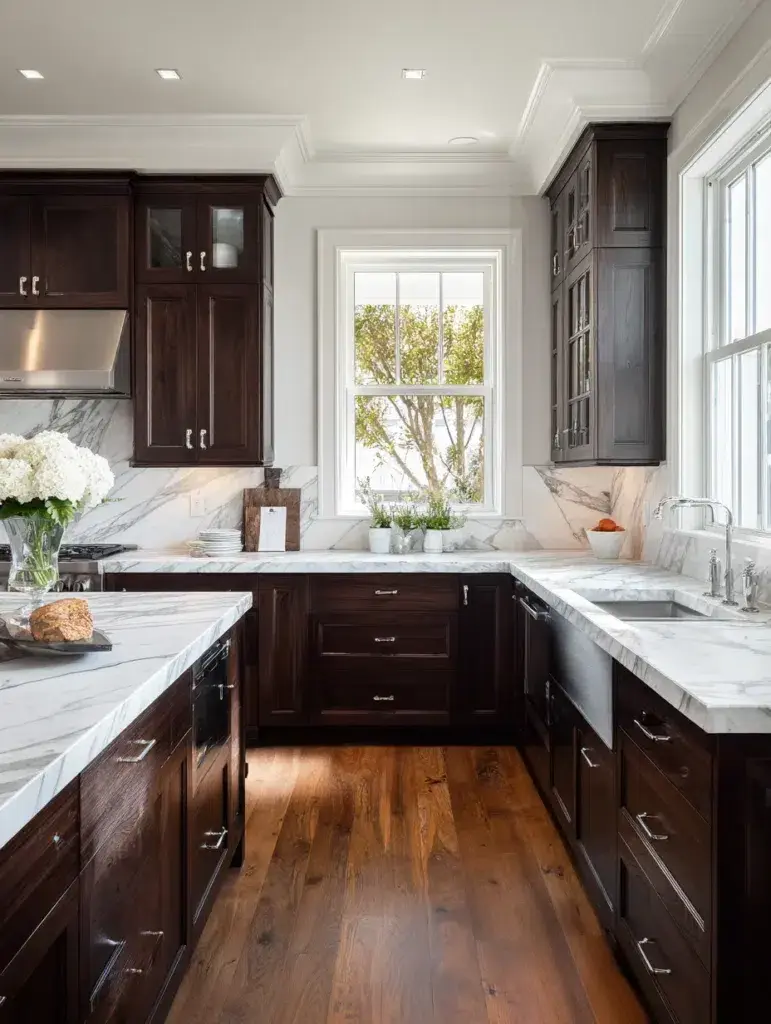
White marble countertops remain one of the most reliable companions for dark brown cabinets because they introduce contrast without feeling harsh. The natural veining softens the visual weight of darker wood while helping light bounce around the room.
This pairing works especially well in kitchens that receive moderate natural light. Even small kitchens can feel more open when the countertop surface stays bright and reflective. If real marble feels too high-maintenance, quartz options with marble-inspired veining offer a similar visual effect while being easier to maintain.
2. Add Brass Hardware for Warmth
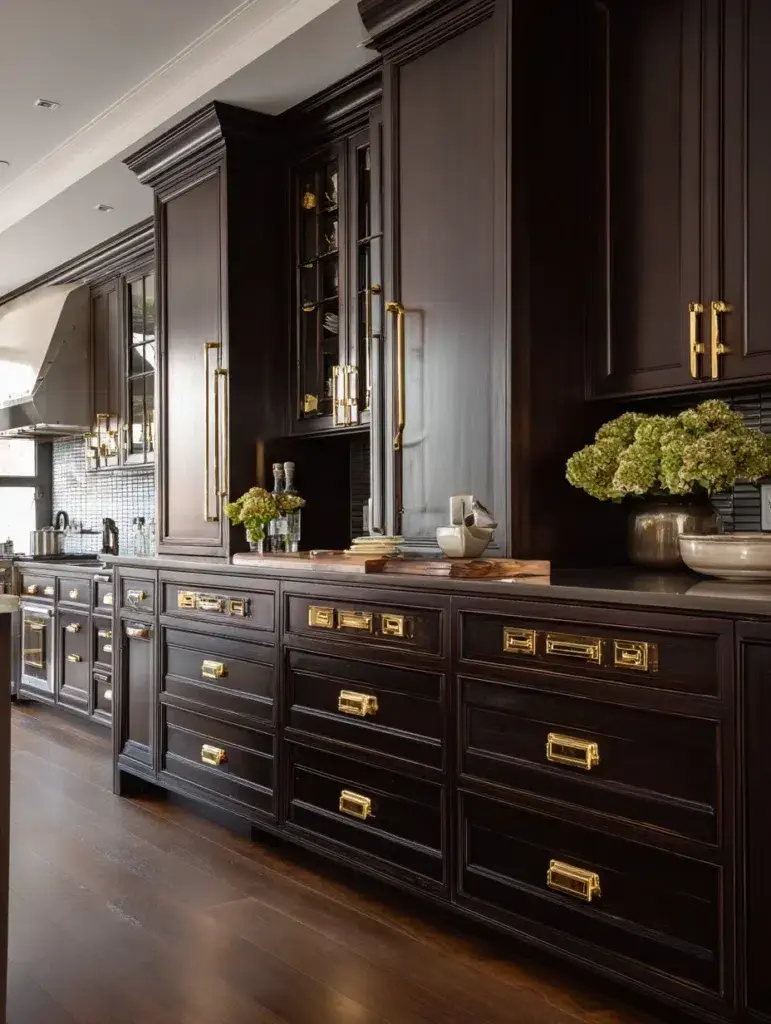
Brass hardware adds a softer warmth that complements brown wood beautifully. Unlike cooler chrome finishes, brass tends to make kitchens feel lived-in and comfortable rather than overly sleek or sterile.
Even a small detail like cabinet pulls can dramatically shift the mood of a kitchen. Unlacquered brass develops character over time, while brushed finishes offer a cleaner, lower-maintenance appearance for busy households.
3. Light Gray Walls for Contrast
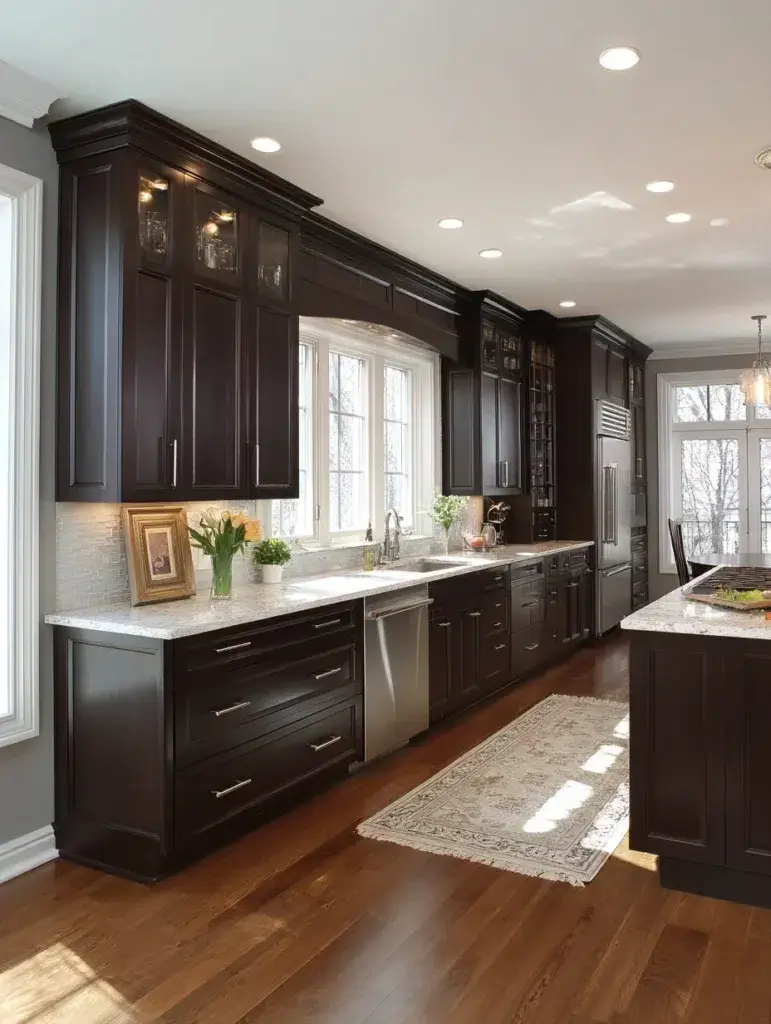
Light gray walls create a subtle contrast that feels calmer than bright white. This combination works particularly well in kitchens where homeowners want a cozy atmosphere without sacrificing brightness.
Warm grays with beige undertones usually pair best with dark brown wood finishes. Cooler grays can sometimes make the space feel disconnected if the wood tones are especially warm.
4. Open Shelving for Balance
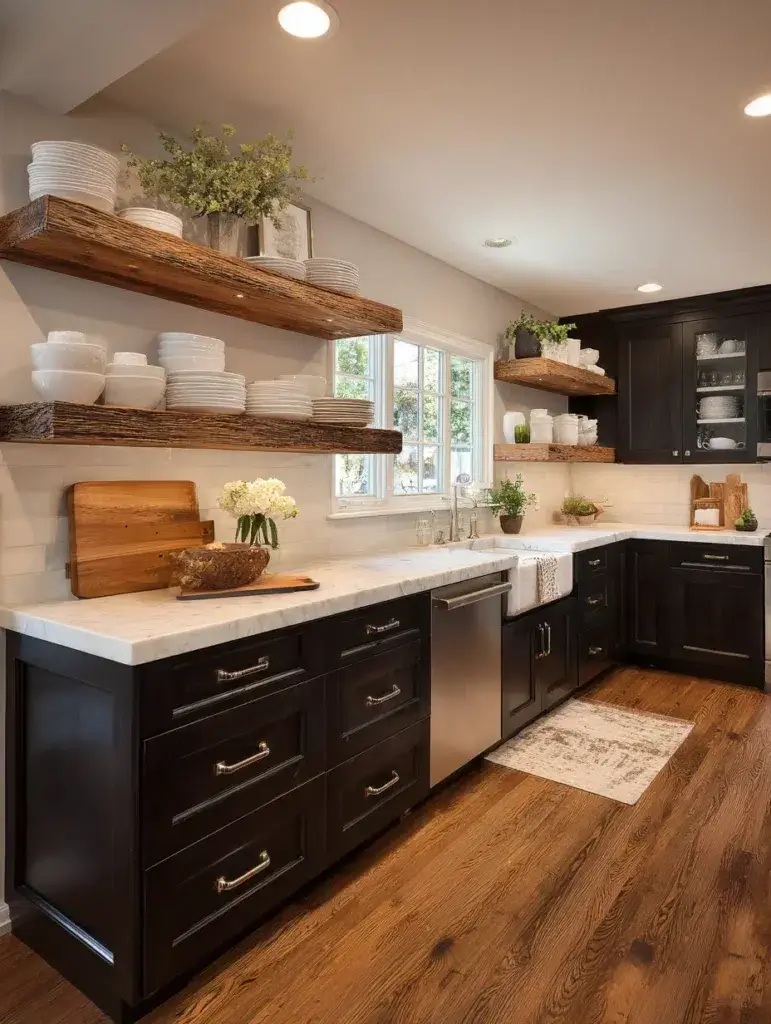
Adding open shelving breaks up long runs of dark cabinetry and helps the kitchen feel lighter overall. It also gives you space to display dishes, glassware, cookbooks, or greenery that introduce softer tones into the room.
One mistake people often make is overcrowding shelves. Leaving some empty space is what keeps the kitchen feeling relaxed rather than cluttered.
5. Stainless Steel Appliances
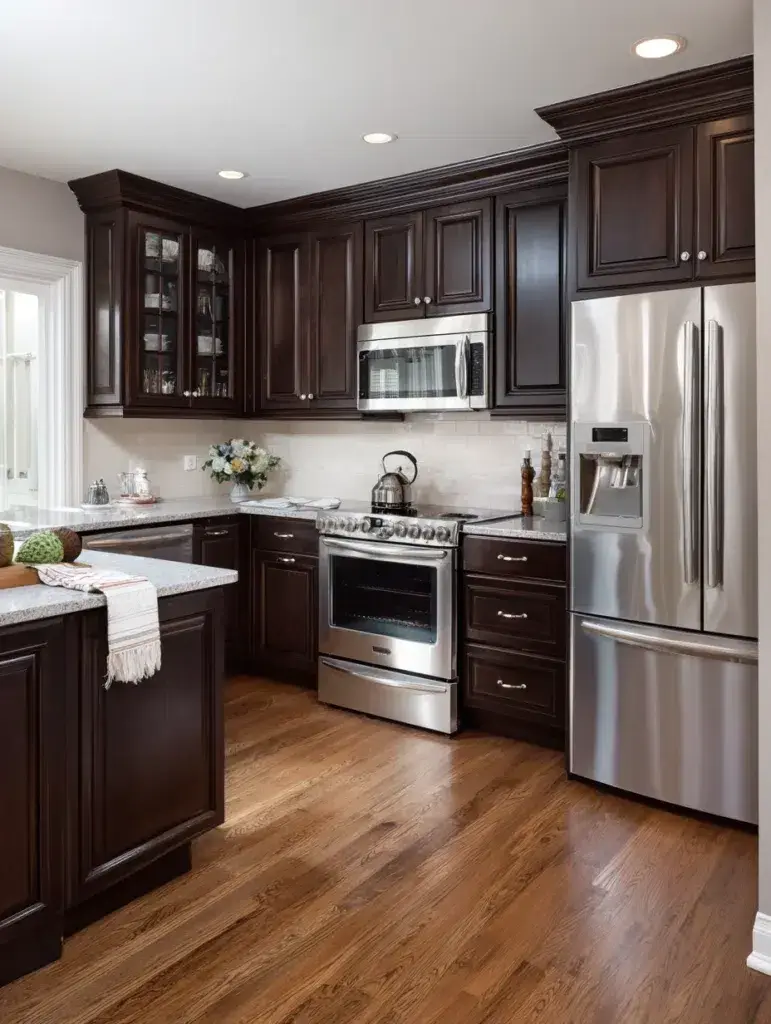
Stainless steel appliances pair naturally with dark brown cabinetry because they add brightness and modern contrast. The reflective surfaces help offset the visual density of darker wood finishes while creating a cleaner overall appearance.
This combination works especially well in transitional kitchens where homeowners want a balance between warmth and contemporary styling.
6. Colorful Backsplash
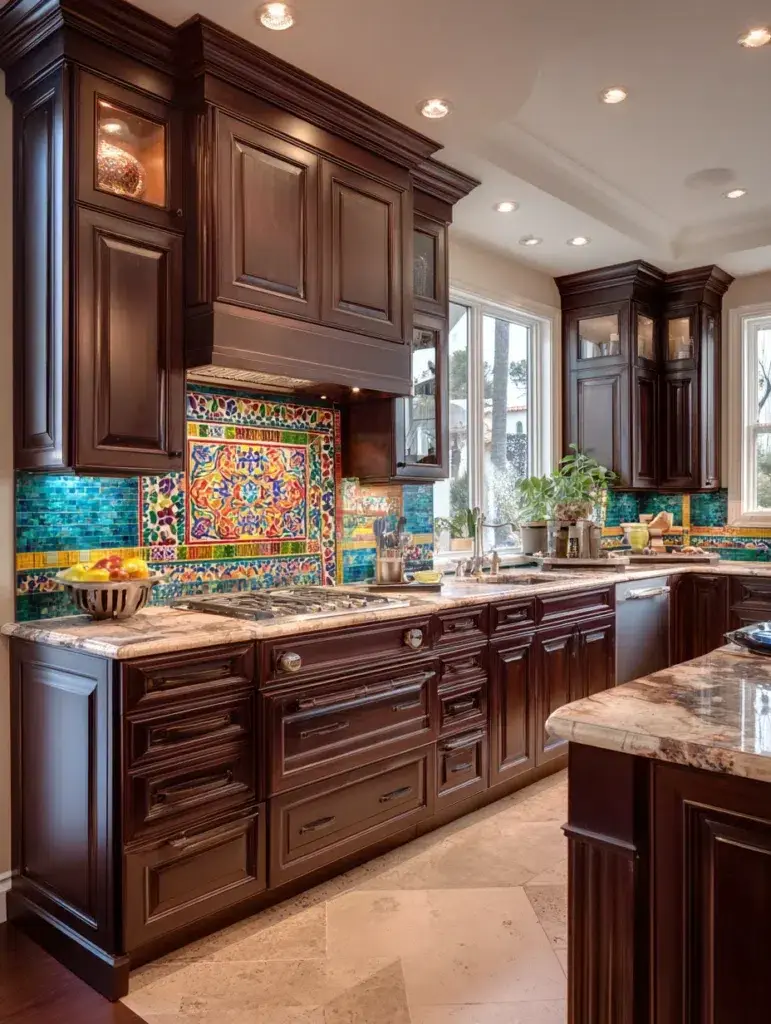
Dark brown cabinets provide an excellent neutral foundation for experimenting with backsplash color. Deep greens, muted blues, terracotta tones, or even handcrafted tiles can add personality without overwhelming the room.
If you enjoy layered natural palettes, you may also like these earth tone decorating ideas that work beautifully across connected living spaces.
7. Natural Wood Flooring
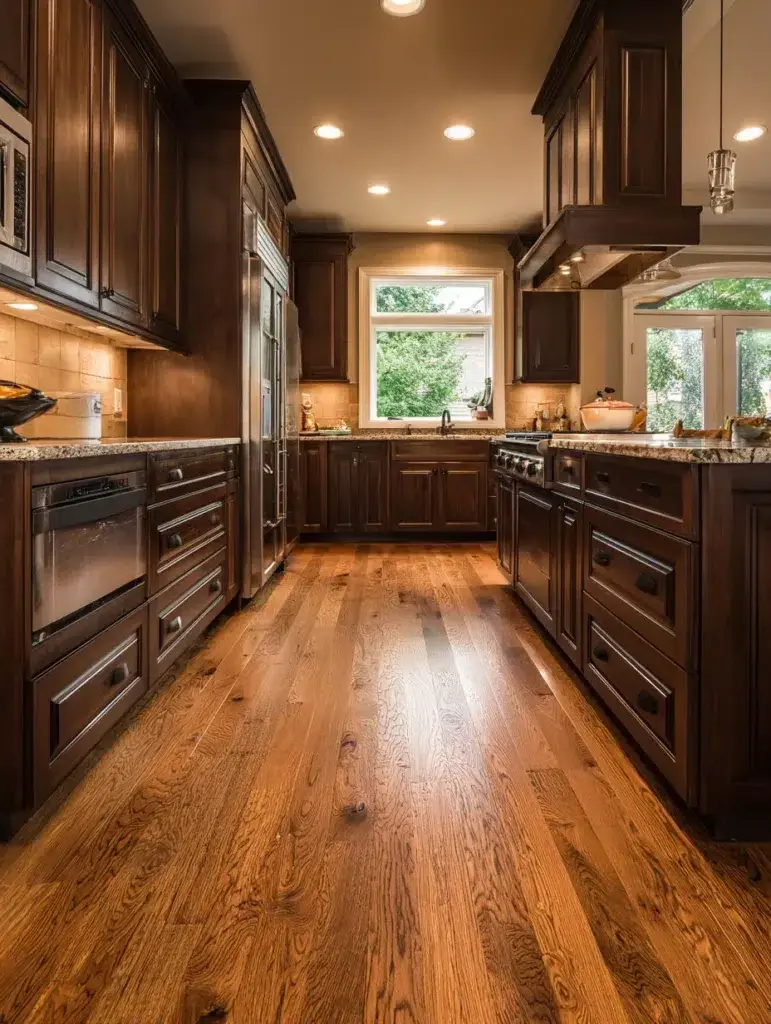
Wood flooring helps connect the kitchen visually and adds natural warmth that prevents darker cabinets from feeling too formal. Medium-toned woods often work best because they create contrast without clashing.
Wide-plank flooring can also make smaller kitchens feel more spacious since fewer seams create a cleaner visual flow throughout the room.
8. Under-Cabinet Lighting
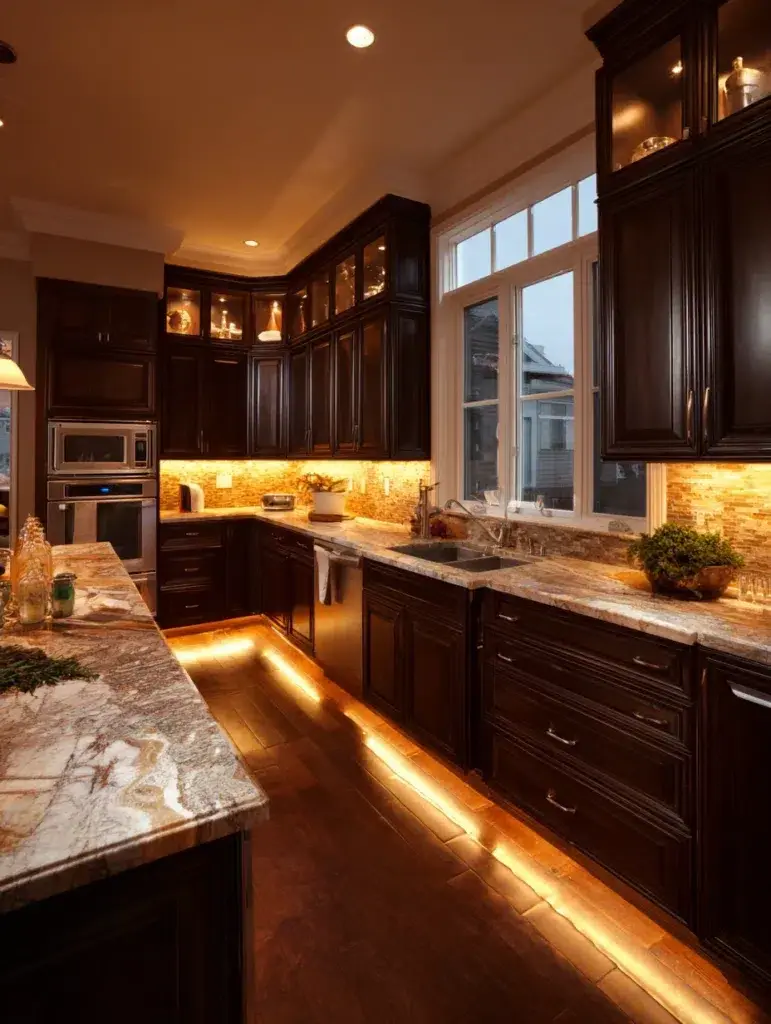
Lighting becomes especially important when using dark cabinetry. Under-cabinet lighting brightens work surfaces while preventing shadows from making the kitchen feel dim.
Warm LED lighting generally works better than cool-toned bulbs with dark wood finishes. Cooler lighting can sometimes make brown cabinetry appear dull or grayish.
9. Mixed Cabinet Depths
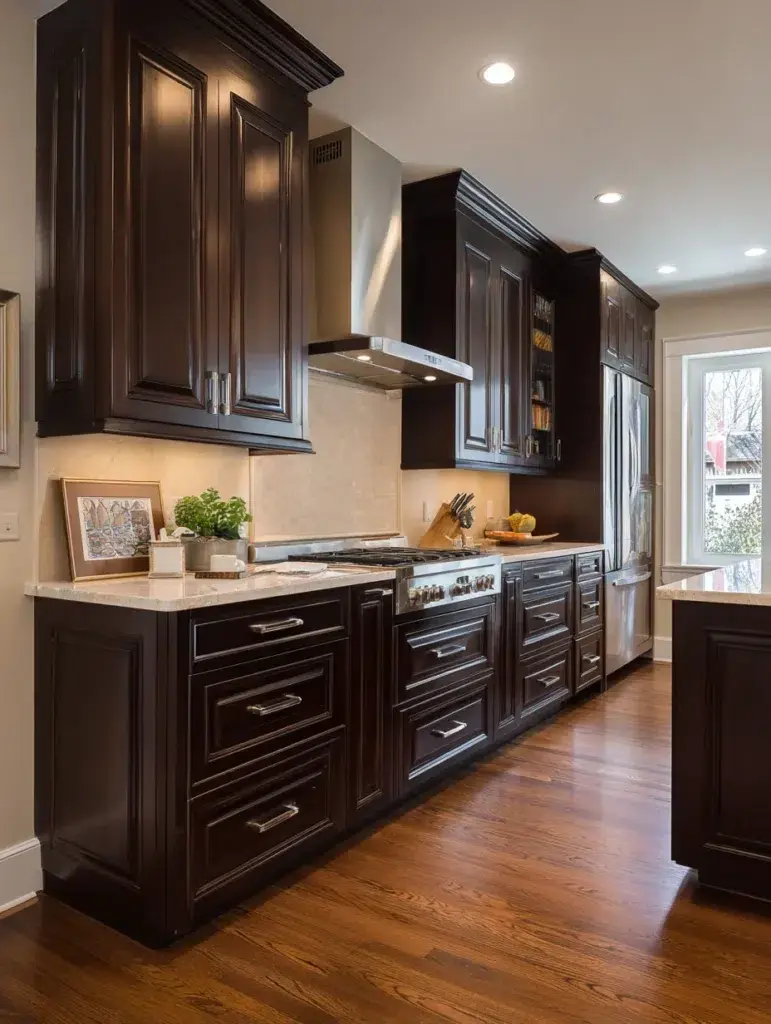
Varying cabinet depths introduces architectural interest and helps larger kitchens feel more custom-designed. This technique works especially well in open layouts where long cabinet walls can otherwise appear heavy.
Glass inserts, recessed niches, and deeper pantry sections all help break visual repetition while improving functionality.
10. Glass-Front Cabinets
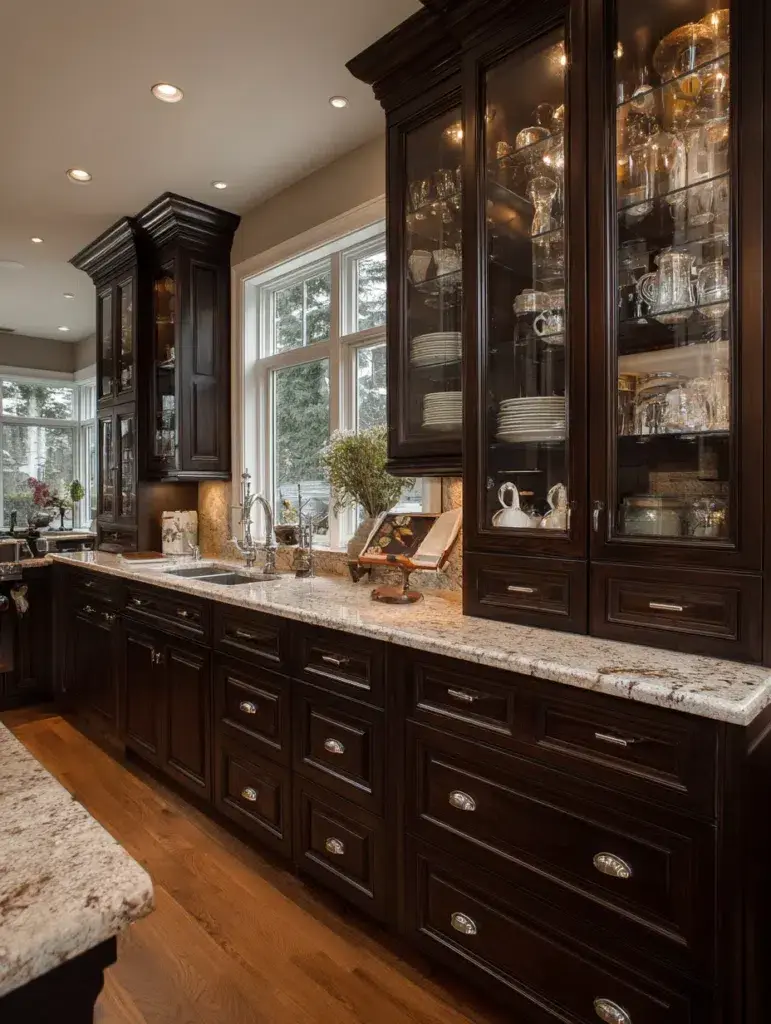
Glass-front cabinets help prevent upper cabinets from feeling too dominant, particularly in smaller kitchens. They also create opportunities to display ceramics, glassware, or textured serving pieces that add personality.
Frosted glass works well if you prefer a cleaner appearance without needing perfectly styled shelves at all times.
11. Two-Tone Cabinet Design
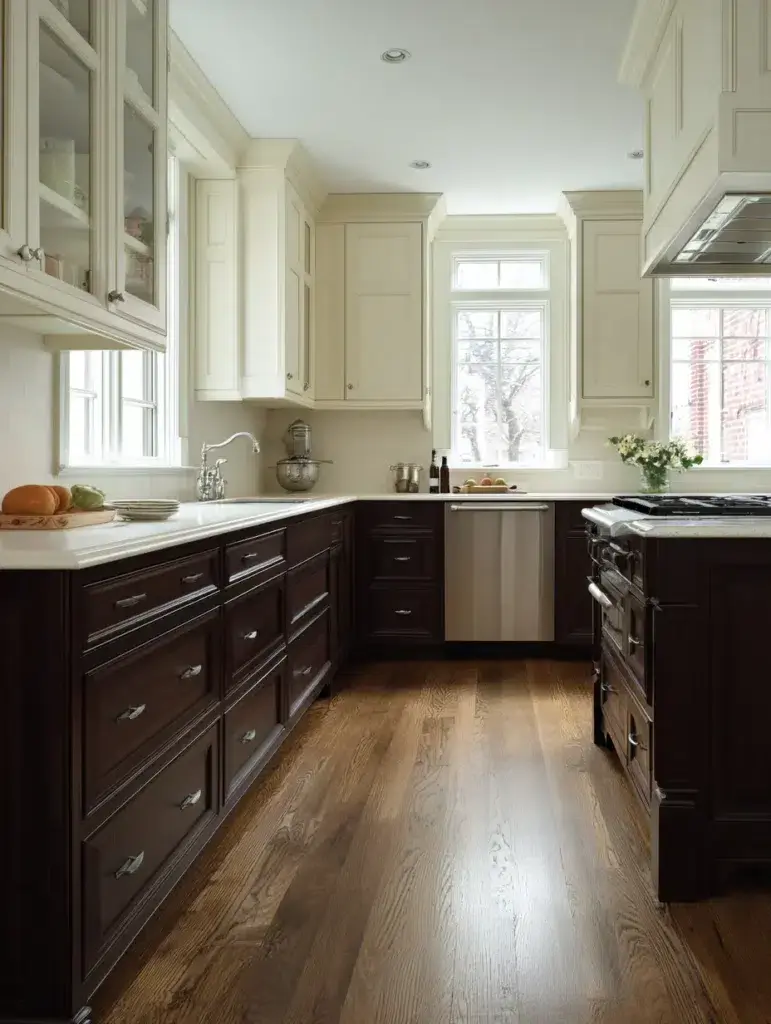
Using dark brown cabinets on the lower half of the kitchen while keeping upper cabinets lighter is one of the easiest ways to maintain balance. This approach anchors the room without making it feel enclosed.
Soft cream, warm white, taupe, or muted sage upper cabinets tend to pair beautifully with deeper brown wood tones.
12. Statement Range Hood
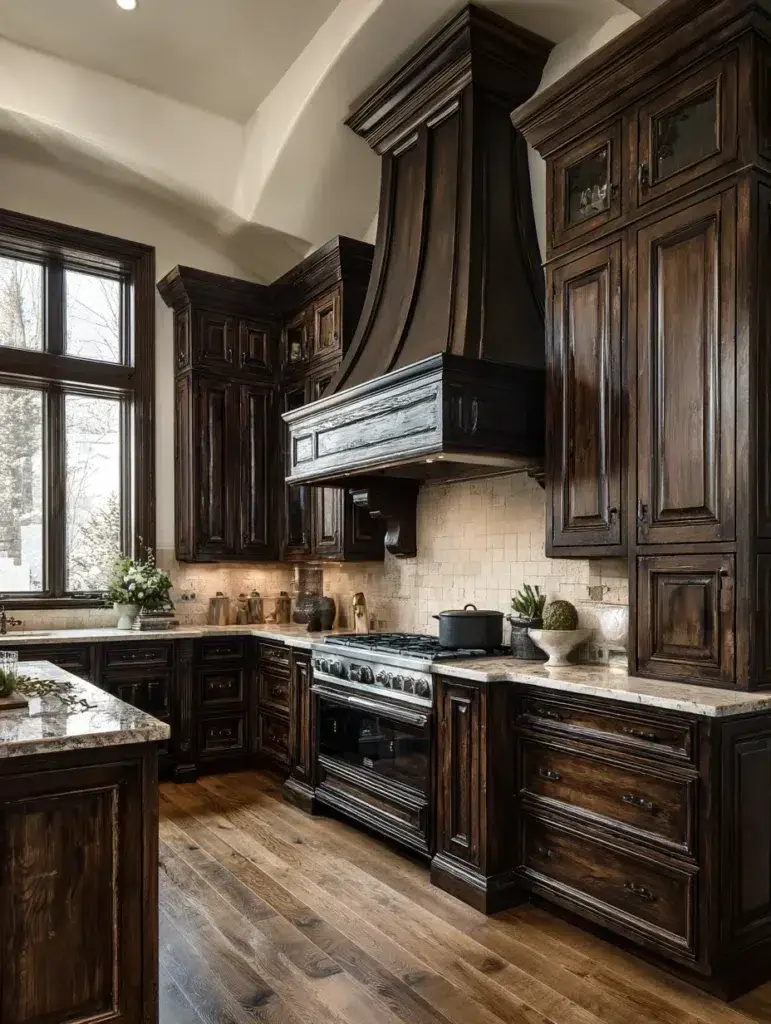
A custom range hood naturally draws the eye upward and prevents darker cabinetry from dominating the room visually. Plaster finishes, wood cladding, or even metal hoods can create a strong focal point.
This design detail is especially effective in kitchens with high ceilings or larger open layouts.
13. Butcher Block Countertops
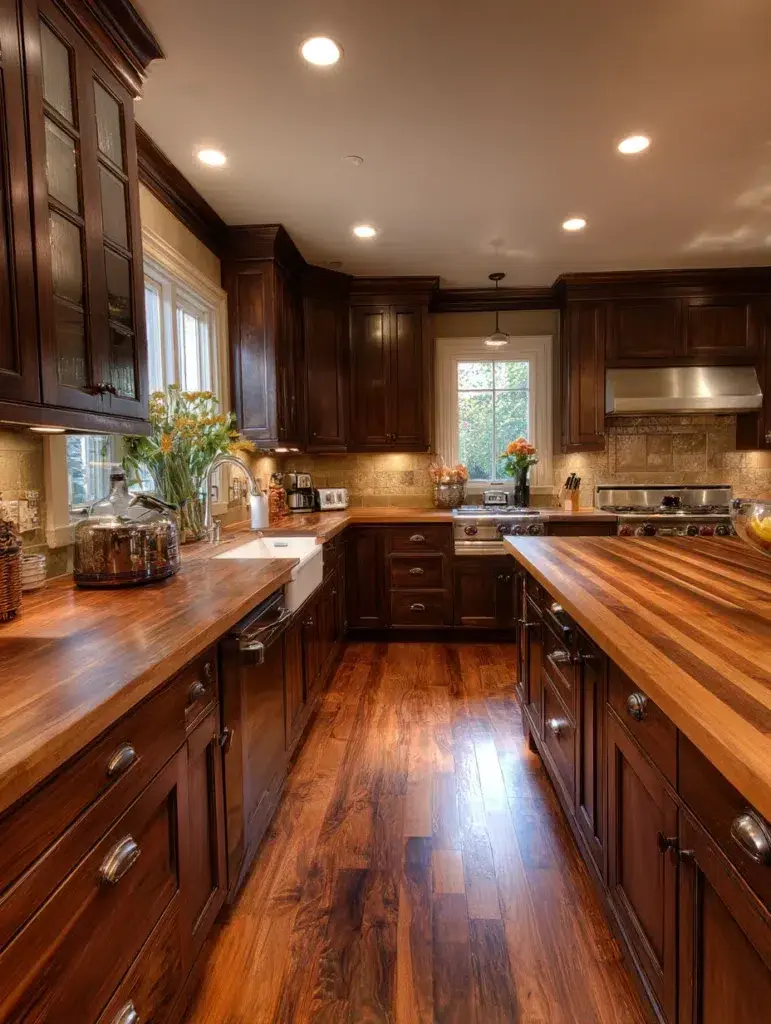
Butcher block countertops create a softer, more relaxed look compared to polished stone surfaces. They pair particularly well with dark brown cabinetry in farmhouse, rustic, and transitional kitchens.
While butcher block does require occasional sealing and maintenance, many homeowners appreciate how naturally it ages over time.
14. Matte Black Fixtures
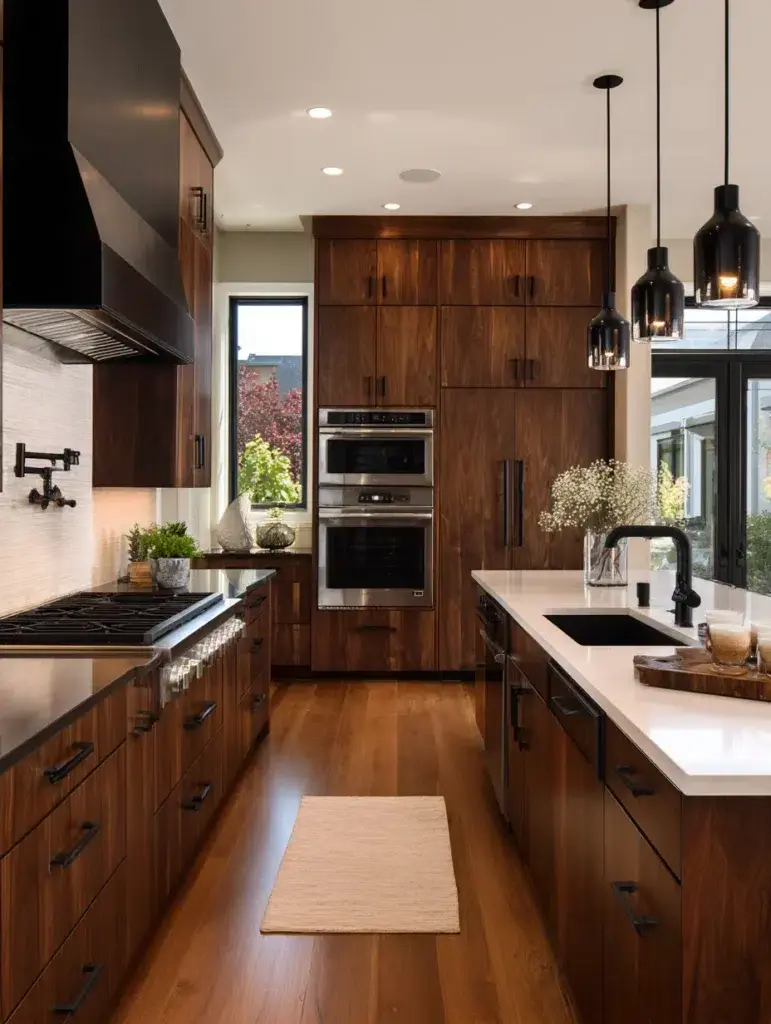
Matte black fixtures create a clean modern contrast while still allowing the cabinetry to remain the visual focus. Faucets, lighting, and cabinet hardware in matte finishes often feel quieter and more timeless than glossy metallic options.
Keeping the surrounding palette relatively simple helps prevent the darker elements from competing visually.
15. Open Concept Layout
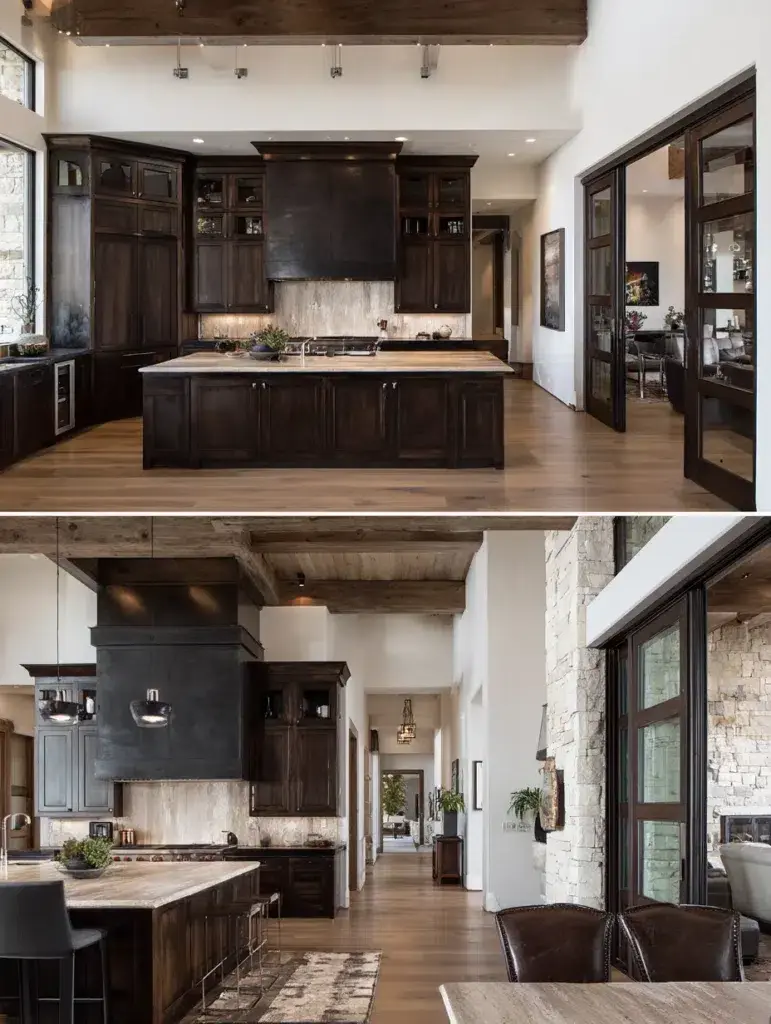
Dark cabinetry often performs best in open-concept homes where natural light flows freely between spaces. Open layouts prevent the kitchen from feeling boxed in and allow darker finishes to feel more balanced.
If your kitchen feels enclosed, even removing a partial wall or adding a larger pass-through can make a noticeable difference.
16. Large Format Flooring
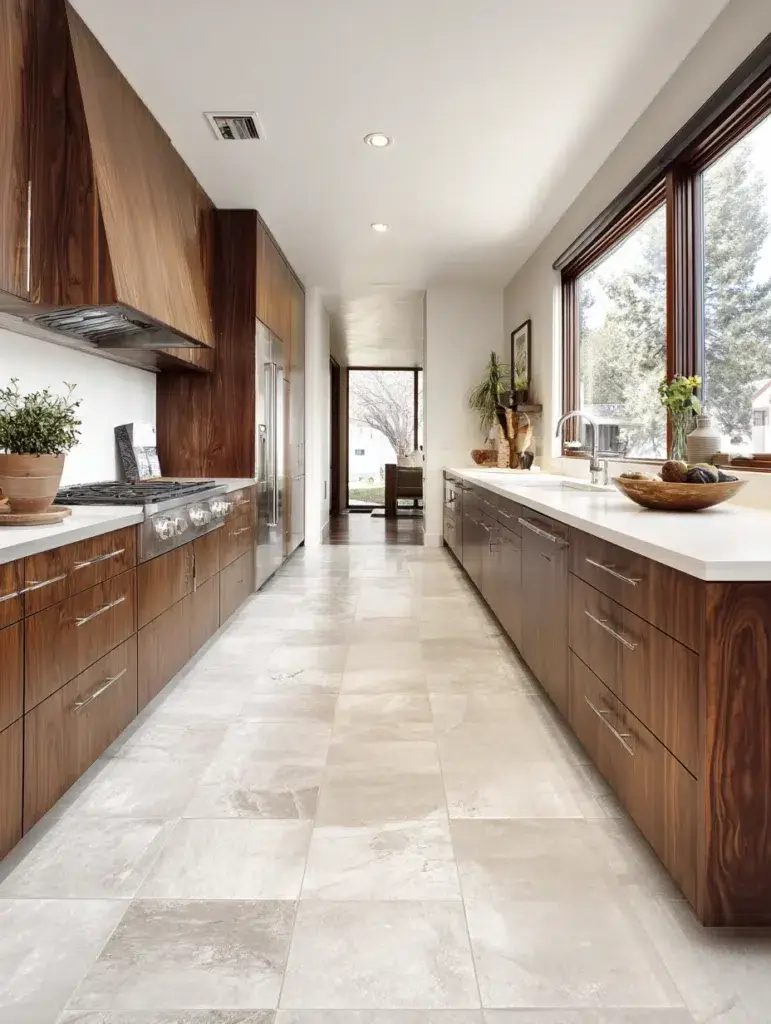
Large-format flooring helps reduce visual clutter because there are fewer grout lines interrupting the space. This creates a calmer, more expansive feeling, especially when paired with rich dark cabinetry.
Neutral stone-look tiles work particularly well because they balance warmth with durability.
17. Coffee Bar Area
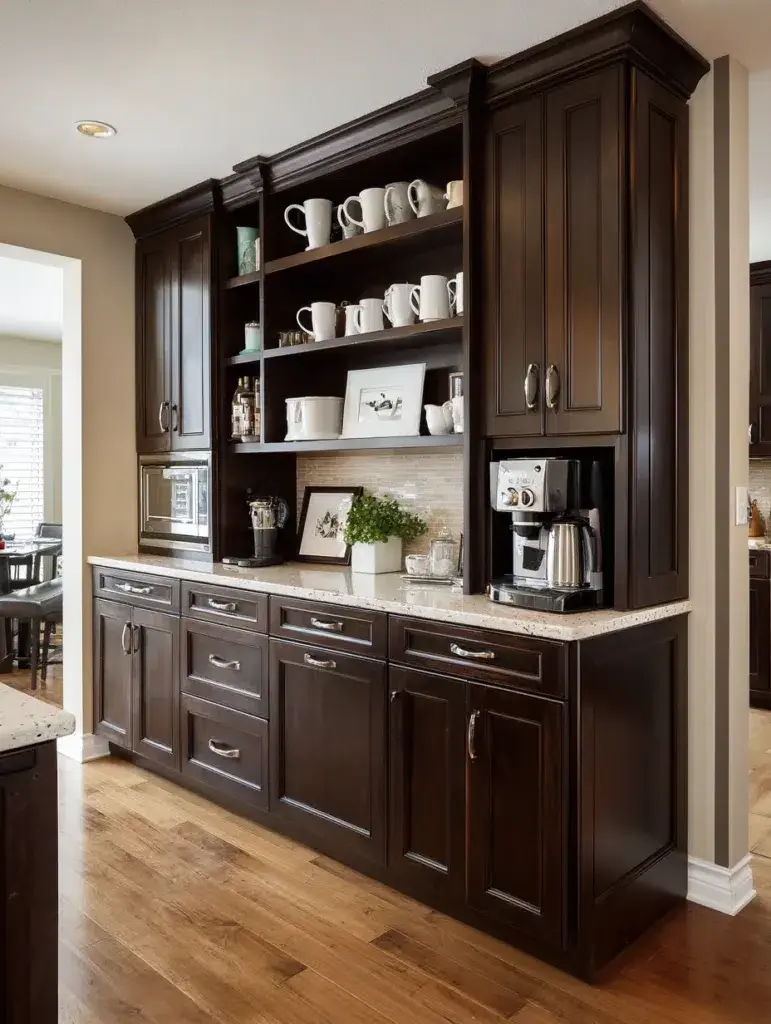
A built-in coffee bar helps break up larger cabinet runs while creating a cozy everyday gathering spot. Open shelving, warm lighting, and textured mugs or ceramics make this area feel especially inviting.
Functionally, it also helps separate beverage prep from cooking zones, which makes busy kitchens run more smoothly.
18. Shiplap Walls
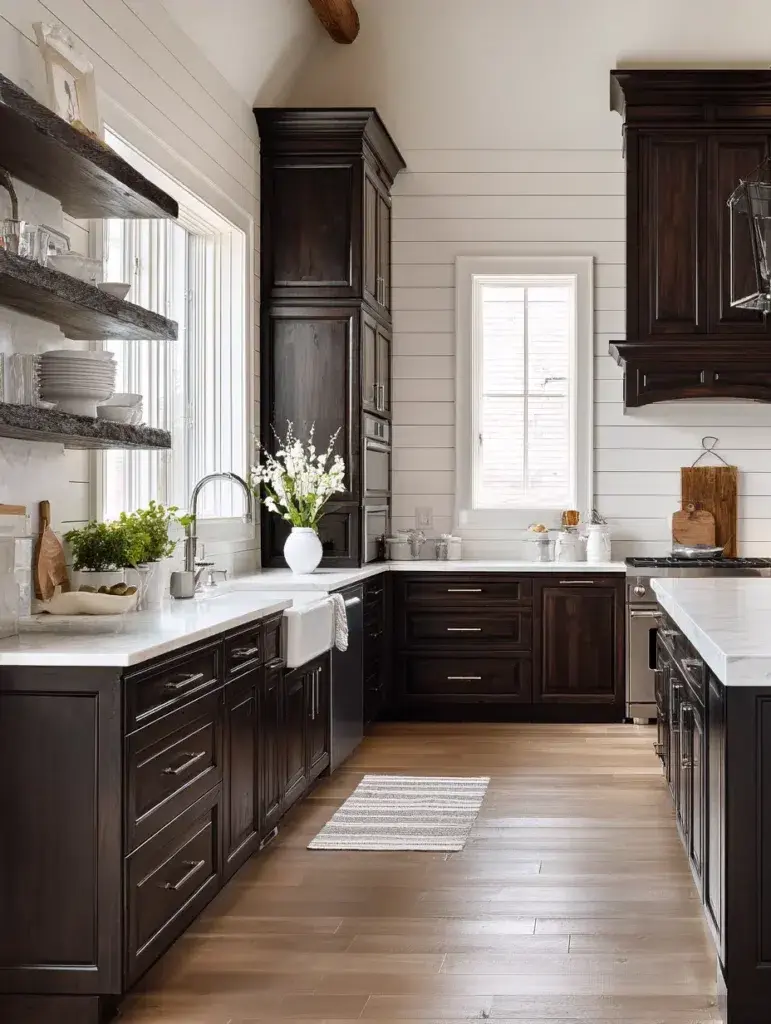
Adding subtle wall texture keeps dark kitchens from feeling visually flat. Shiplap introduces dimension while still maintaining a relaxed, approachable atmosphere.
Painted shiplap in warm white or soft greige tones pairs particularly well with espresso and walnut cabinetry.
19. Farmhouse Sink
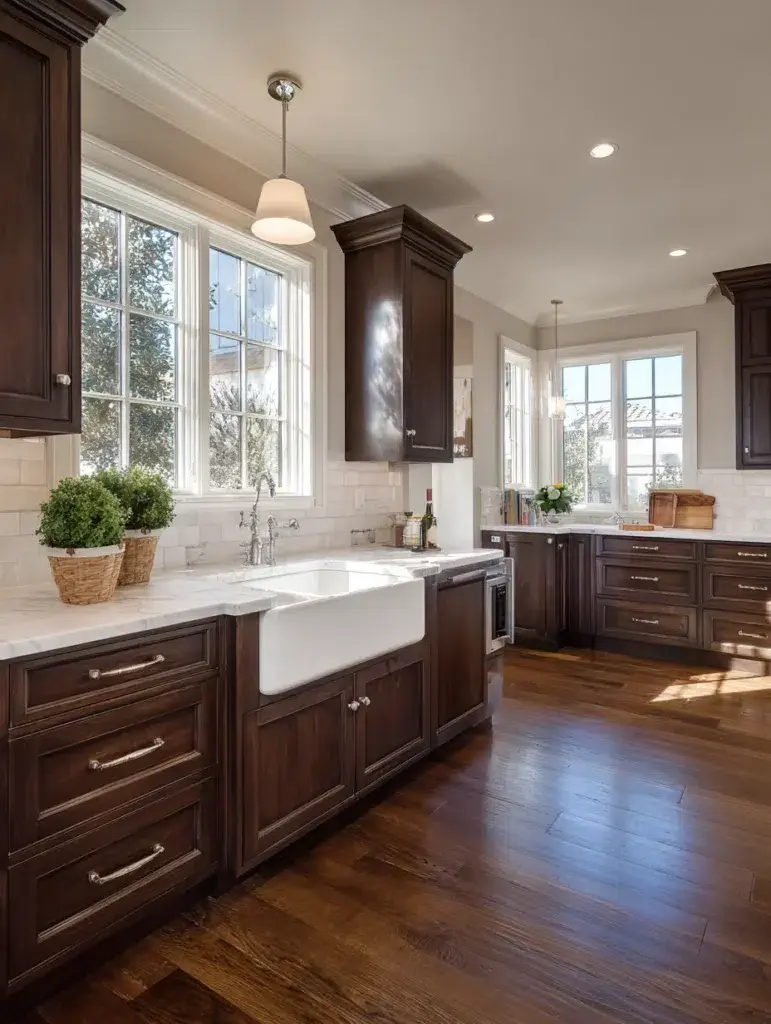
Farmhouse sinks naturally soften the appearance of dark cabinetry because they introduce a lighter focal point at eye level. They also add practicality thanks to their deeper basin and accessible design.
This pairing works beautifully in kitchens that combine modern function with traditional warmth.
20. Pendant Lighting
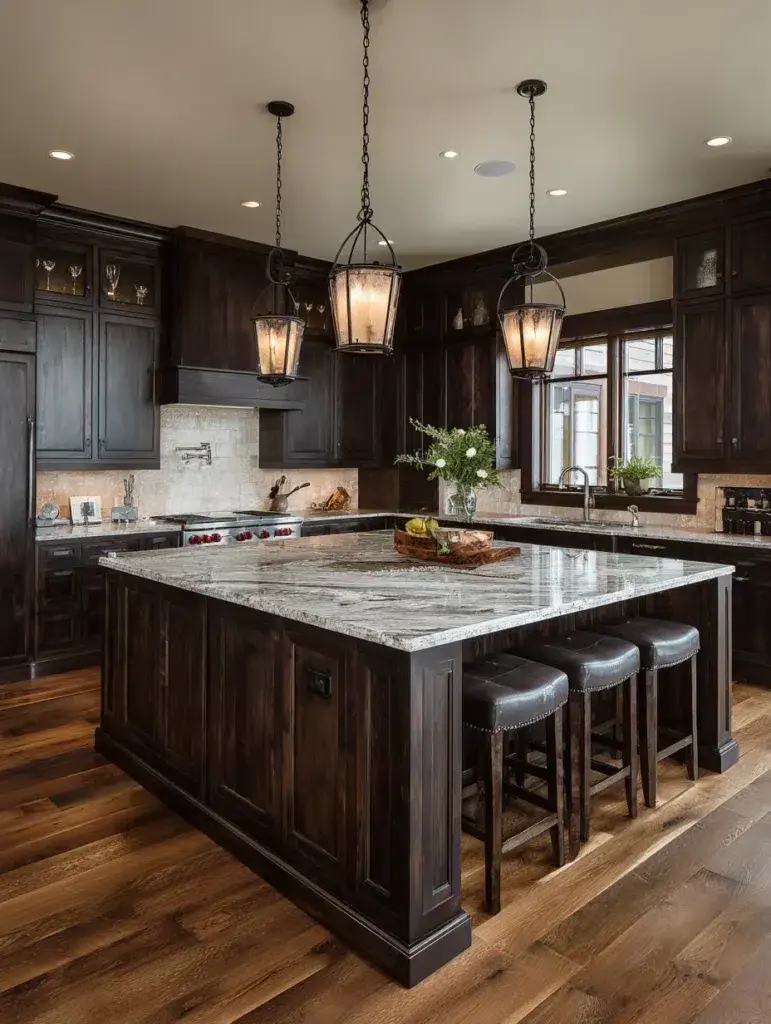
Pendant lighting plays a major role in shaping the mood of a kitchen with darker cabinetry. Oversized pendants above an island help anchor the room while adding visual warmth at eye level.
Glass pendants can help maintain an airy feel, while woven or metal fixtures add texture and personality.
21. Contrasting Kitchen Island
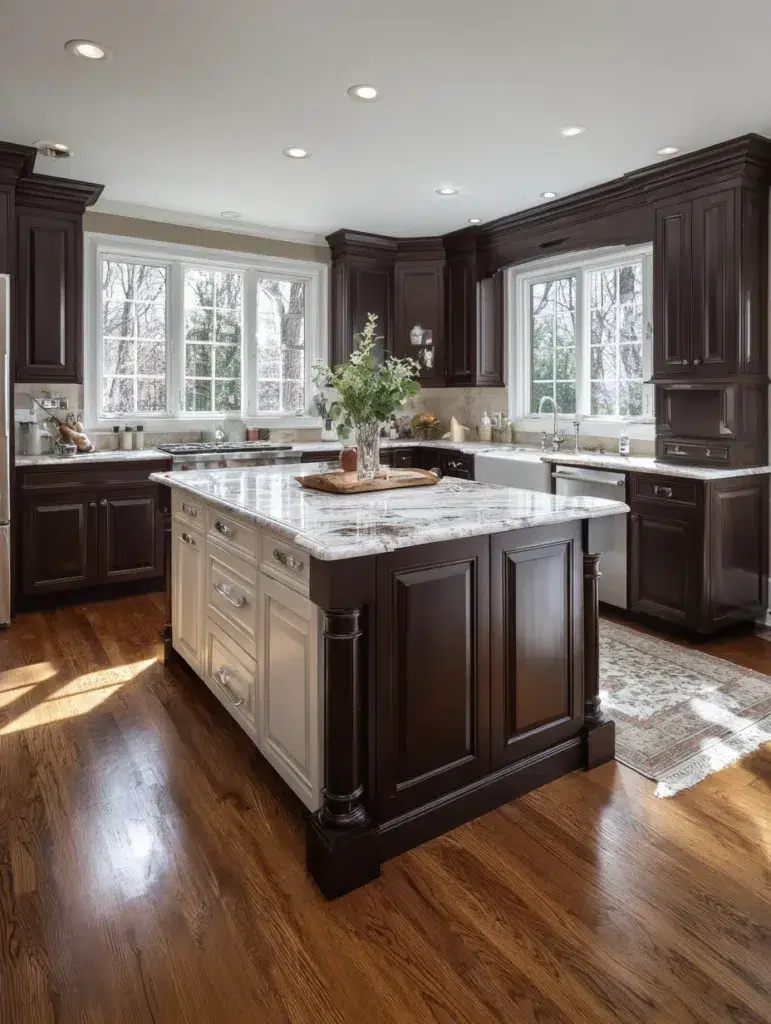
A contrasting island prevents the kitchen from feeling too uniform. Lighter paint colors, natural wood finishes, or even muted green islands can create subtle contrast while still complementing dark cabinetry.
This approach works especially well in larger kitchens where too much matching cabinetry can sometimes feel visually overwhelming.
Dark Brown Cabinet Materials Comparison
| Material | Best Features | Maintenance Level | Style Compatibility |
|---|---|---|---|
| Walnut | Rich grain and natural warmth | Moderate | Modern, transitional, luxury |
| Espresso-Stained Oak | Durable and textured | Low | Traditional, farmhouse |
| Mahogany | Elegant deep reddish tones | Moderate | Classic, formal kitchens |
| Dark Laminate | Affordable and easy to clean | Low | Modern and minimalist |
Common Mistakes to Avoid
- Using too many dark finishes together: Dark flooring, dark walls, and dark cabinets can quickly make a kitchen feel closed in.
- Ignoring layered lighting: One overhead fixture rarely provides enough balance for darker cabinetry.
- Overcrowding shelves and counters: Too many decorative items create visual heaviness.
- Choosing cool-toned lighting: Harsh white bulbs can make brown cabinetry appear dull.
- Skipping texture variation: Mixing wood, stone, glass, and metal keeps the kitchen visually interesting.
Frequently Asked Questions
Do dark brown cabinets make a kitchen look smaller?
Not necessarily. The overall lighting, layout, and surrounding finishes matter more than cabinet color alone. Dark cabinetry paired with lighter surfaces often creates depth rather than making the room feel cramped.
What countertop color works best with dark brown cabinets?
White, cream, light gray, and soft beige countertops usually create the best balance. Marble and quartz are especially popular because they reflect light while adding texture.
Are dark brown cabinets hard to maintain?
In many cases, they’re easier to maintain than white cabinets because minor scratches, smudges, and everyday wear tend to blend in more naturally.
Can dark brown cabinets work in modern kitchens?
Absolutely. Pairing them with clean lines, matte fixtures, minimalist hardware, and lighter surfaces creates a modern yet warm atmosphere.
Final Thoughts
Dark brown kitchen cabinets continue to work because they offer something many trend-focused kitchens eventually lose: warmth and depth. They make a kitchen feel settled, lived-in, and comfortable without sacrificing sophistication.
The key is balance. Thoughtful lighting, layered textures, lighter surfaces, and a few carefully chosen contrasting elements can completely change how dark cabinetry feels within a room.
Whether your style leans modern, rustic, classic, or somewhere in between, dark brown cabinets provide a flexible foundation that tends to age gracefully over time. When designed carefully, they create kitchens people genuinely enjoy spending time in — not just spaces that look good in photos.


