
Beige kitchen cabinets rarely receive the same attention as bright white kitchens or dramatic dark cabinetry, yet they continue to remain one of the most practical and adaptable choices for everyday living. Beige sits comfortably between warm and neutral, creating kitchens that feel soft, relaxed, and approachable without looking dull or overly trendy.
One reason beige cabinets work so well is their flexibility. They can lean modern when paired with clean lines and matte finishes, or feel cozy and traditional alongside wood textures and vintage accents. Whether you prefer farmhouse kitchens, transitional interiors, minimalist spaces, or something more classic, beige usually blends in naturally rather than competing for attention.

Another advantage is how forgiving beige can be in daily life. Fingerprints, dust, water marks, and small scratches often appear less noticeable compared to stark white or very dark cabinetry. For busy households, that practicality matters just as much as appearance.
Beige also creates a calmer atmosphere than many cooler neutrals. Some gray kitchens can feel cold depending on the lighting, while bright white spaces occasionally feel clinical. Beige tends to soften a room naturally, especially when layered with wood, stone, textured tile, and warm lighting.
If you are planning a larger home refresh, you may also enjoy these home color ideas for creating a cohesive palette throughout your space.
My Experience with Beige Kitchen Cabinets
One thing I’ve consistently noticed about beige kitchens is how comfortable they feel almost immediately. Even newly renovated spaces tend to feel more lived-in and welcoming compared to ultra-modern kitchens that rely heavily on stark contrasts.
I once worked on a kitchen renovation where the homeowners originally planned bright white cabinetry. After seeing several samples in their home’s natural lighting, the space started feeling colder than expected. Switching to a soft beige cabinet color completely changed the atmosphere. The kitchen suddenly felt warmer, calmer, and far more connected to the rest of the house.
Another major benefit is flexibility over time. Beige cabinets allow you to update hardware, lighting, wall colors, and decor later without needing to replace the entire kitchen. That makes them a practical long-term choice for homeowners who like evolving their style gradually.
How to Style Beige Cabinets Successfully
- Choose warm or cool beige based on your natural lighting
- Pair beige with contrasting textures to avoid a flat appearance
- Use hardware finishes to shape the kitchen’s overall style
- Balance warm and cool materials thoughtfully
- Layer lighting instead of relying on a single fixture
- Incorporate natural materials like wood, stone, and linen
1. Two-Tone Beige Cabinets
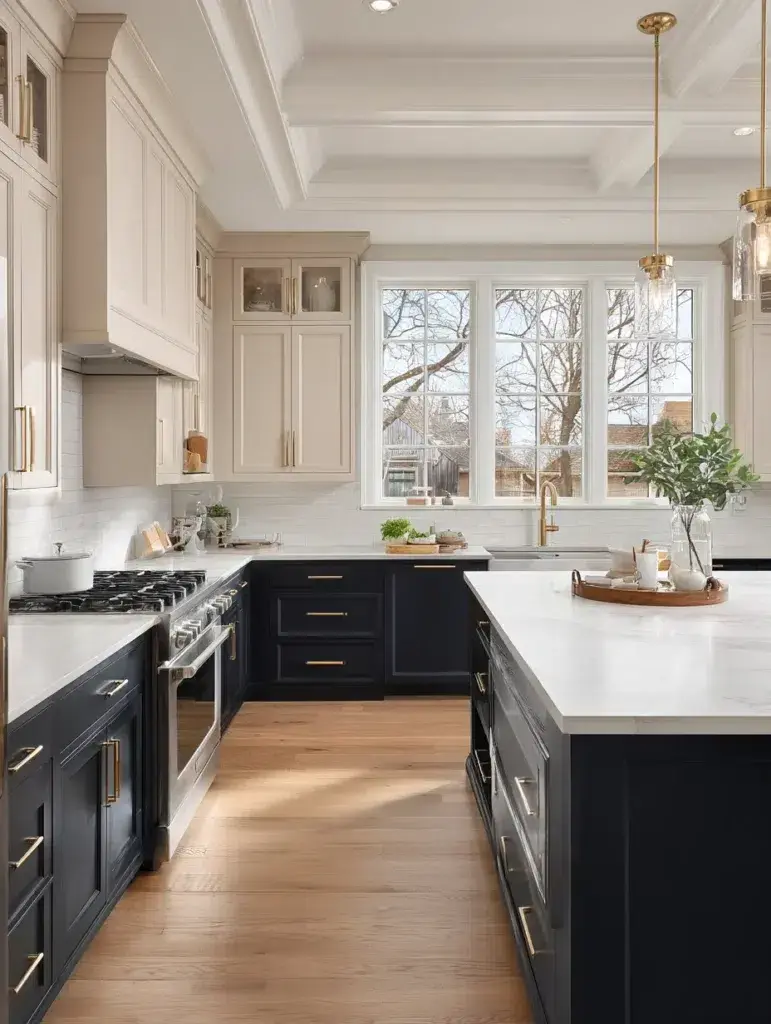
Combining beige upper cabinets with darker lower cabinetry creates visual depth without making the kitchen feel heavy. This approach works especially well in smaller kitchens where dark upper cabinets can sometimes feel overwhelming.
Two-tone designs also help break up large cabinet walls and make the kitchen appear more custom. Warm taupe, walnut, charcoal, or muted olive lower cabinets often pair beautifully with softer beige uppers.
2. Shaker Style Beige Cabinets
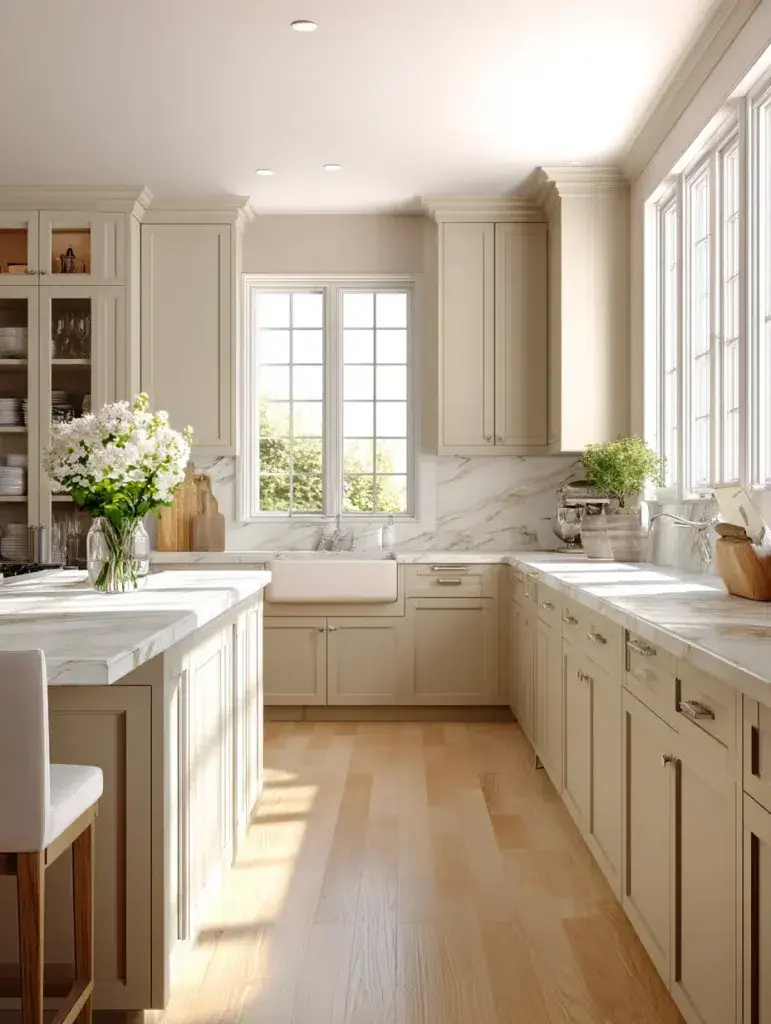
Shaker cabinets remain popular because their clean lines work across many different design styles. When finished in beige, they create a kitchen that feels timeless without appearing overly formal or modern.
This combination works particularly well for homeowners who want flexibility. Decorative details, hardware, and lighting can evolve over time while the cabinetry still feels relevant.
3. Beige Cabinets with Marble Countertops
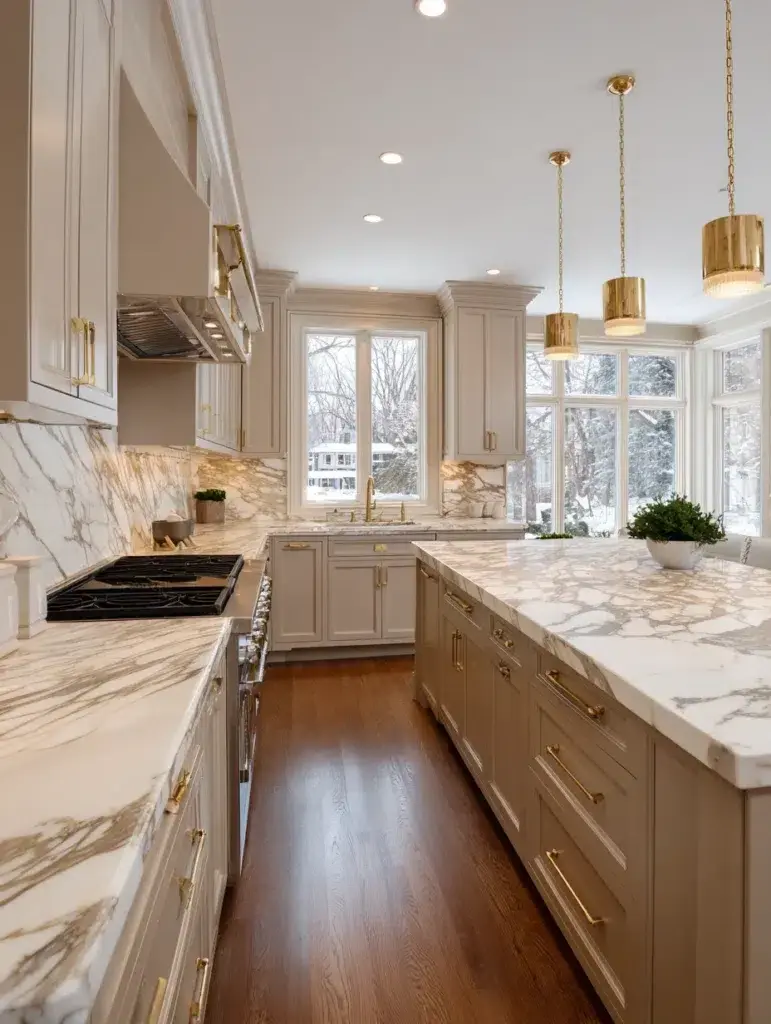
Marble countertops naturally complement beige cabinetry because the soft veining introduces texture without overpowering the room. This pairing feels especially calm and elegant in kitchens with plenty of natural light.
Quartz surfaces with marble-inspired veining are also excellent alternatives for homeowners wanting lower maintenance while keeping a similar visual effect.
4. Open Shelving with Beige Cabinets
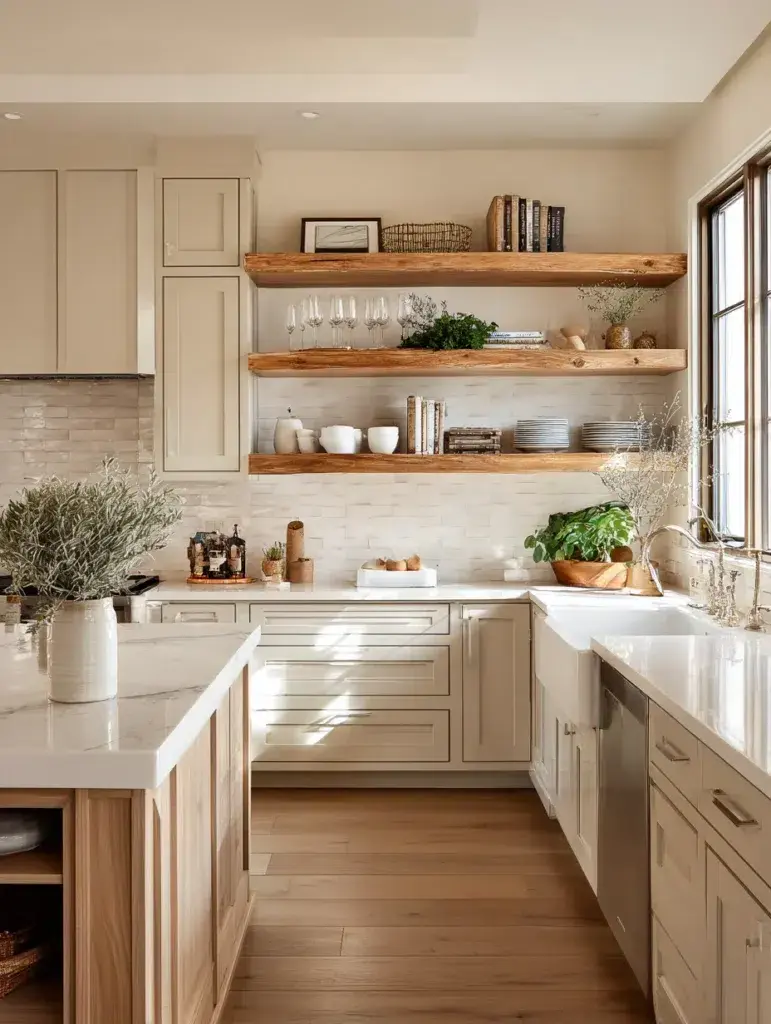
Open shelving helps beige kitchens feel lighter and more personal. It creates opportunities to display ceramics, cookbooks, glassware, greenery, or textured serving pieces that introduce visual variety.
In smaller kitchens, even replacing a few upper cabinets with shelves can noticeably improve openness and natural light flow.
5. Beige Cabinets with Black Hardware
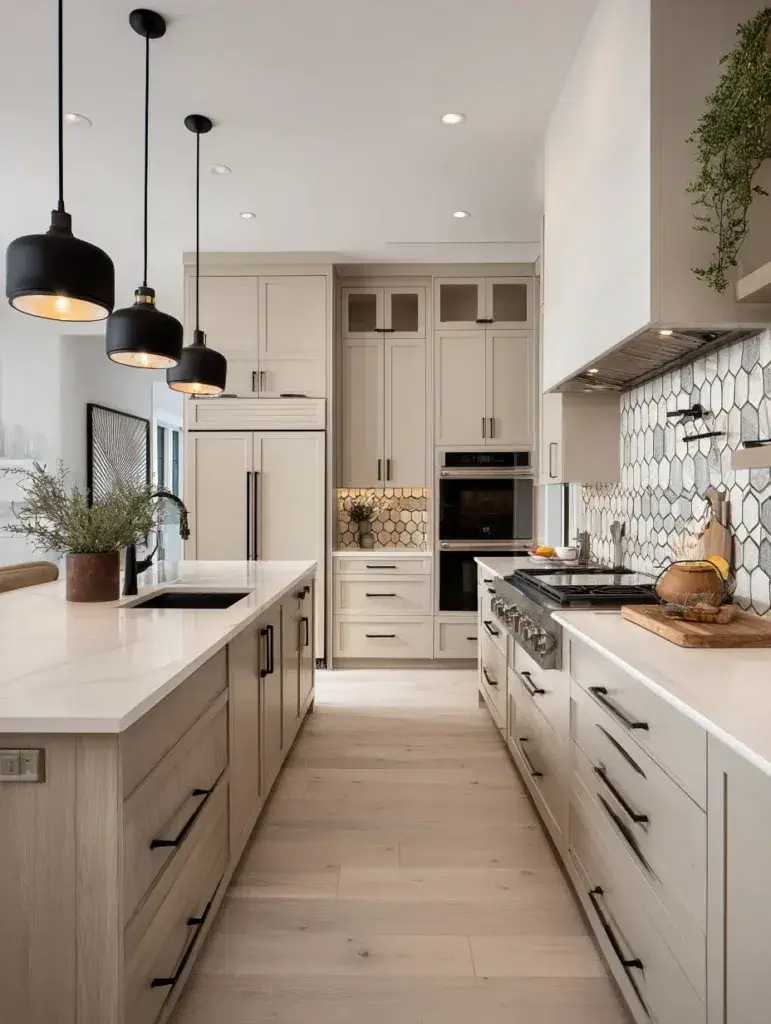
Black hardware introduces crisp contrast that keeps beige kitchens from feeling too soft or traditional. Matte finishes usually work especially well because they feel understated rather than overly dramatic.
This combination fits beautifully into modern farmhouse, transitional, and minimalist kitchen styles.
6. Beige Cabinets with Wood Countertops
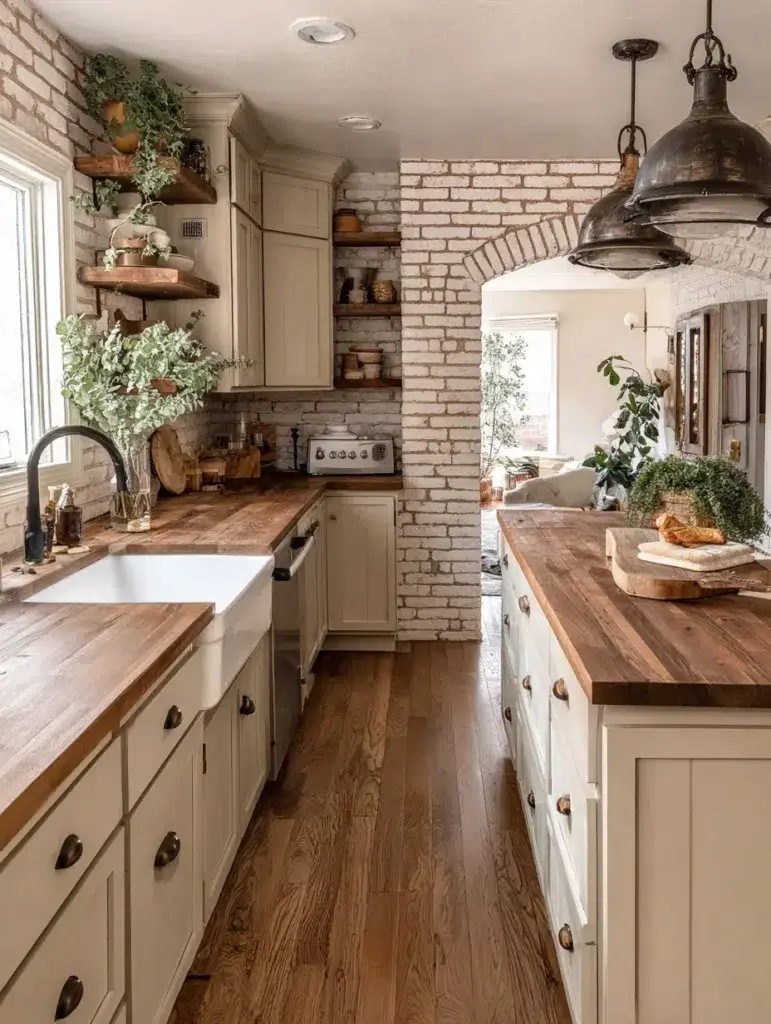
Wood countertops naturally enhance the warmth already present in beige cabinetry. Together, they create a kitchen that feels relaxed, comfortable, and approachable.
Lighter oak surfaces help maintain brightness, while walnut or butcher block counters introduce more depth and richness.
If you enjoy earthy layered interiors, you may also like these earth tone decorating ideas for creating a connected look throughout the home.
7. Beige Lower Cabinets with Glass Uppers
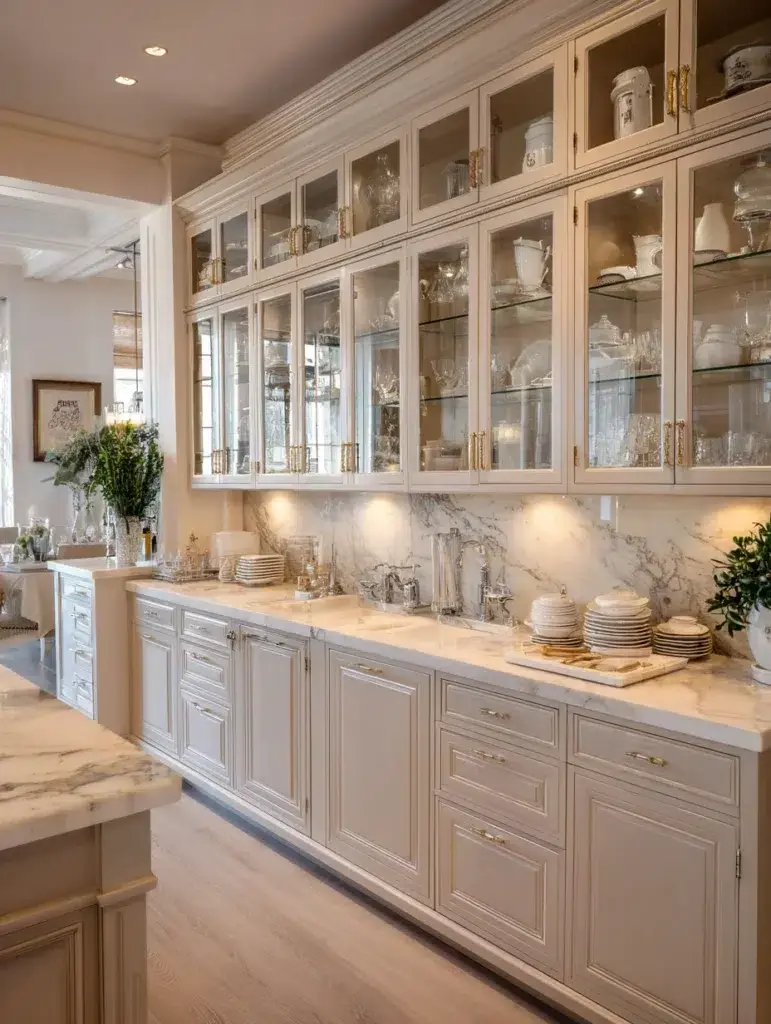
Glass-front upper cabinets create visual breathing room and prevent the kitchen from feeling too enclosed. They also reflect light naturally, helping beige kitchens appear brighter.
Frosted glass works well for homeowners who prefer a cleaner appearance without needing perfectly styled shelves every day.
8. Beige Cabinets with Gold Accents
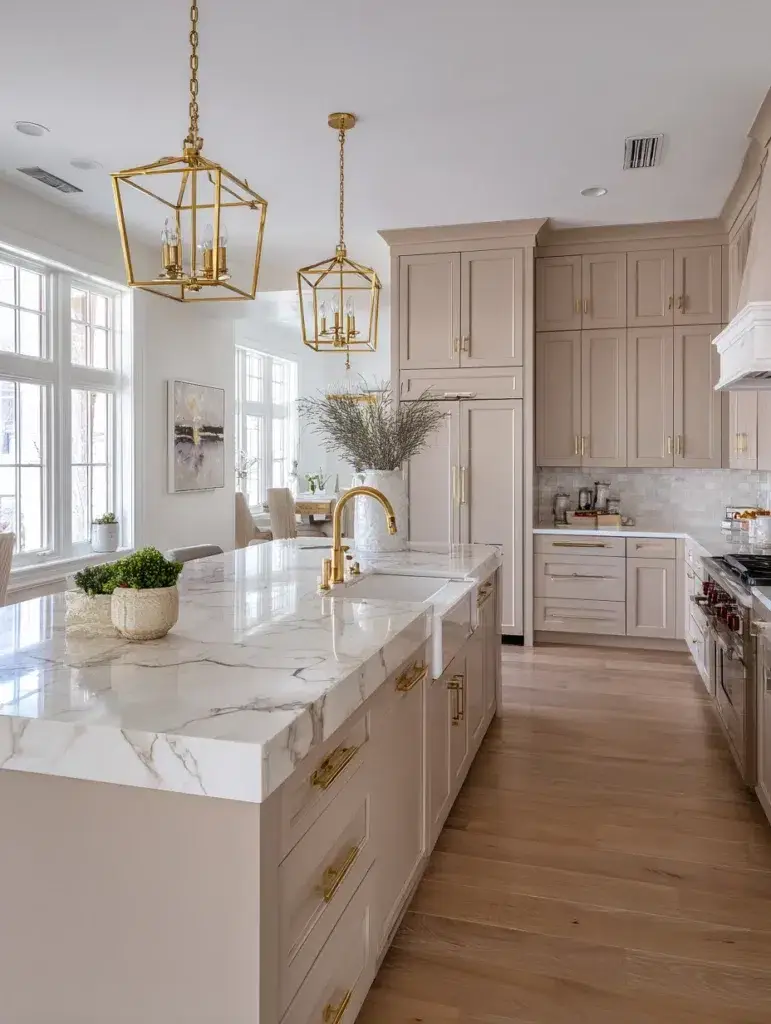
Gold finishes pair beautifully with beige because they share similar warm undertones. Cabinet hardware, lighting, and faucets in brushed gold or champagne finishes create a softer appearance compared to polished chrome.
Keeping the gold accents subtle usually creates the most timeless result.
9. Distressed Beige Cabinets
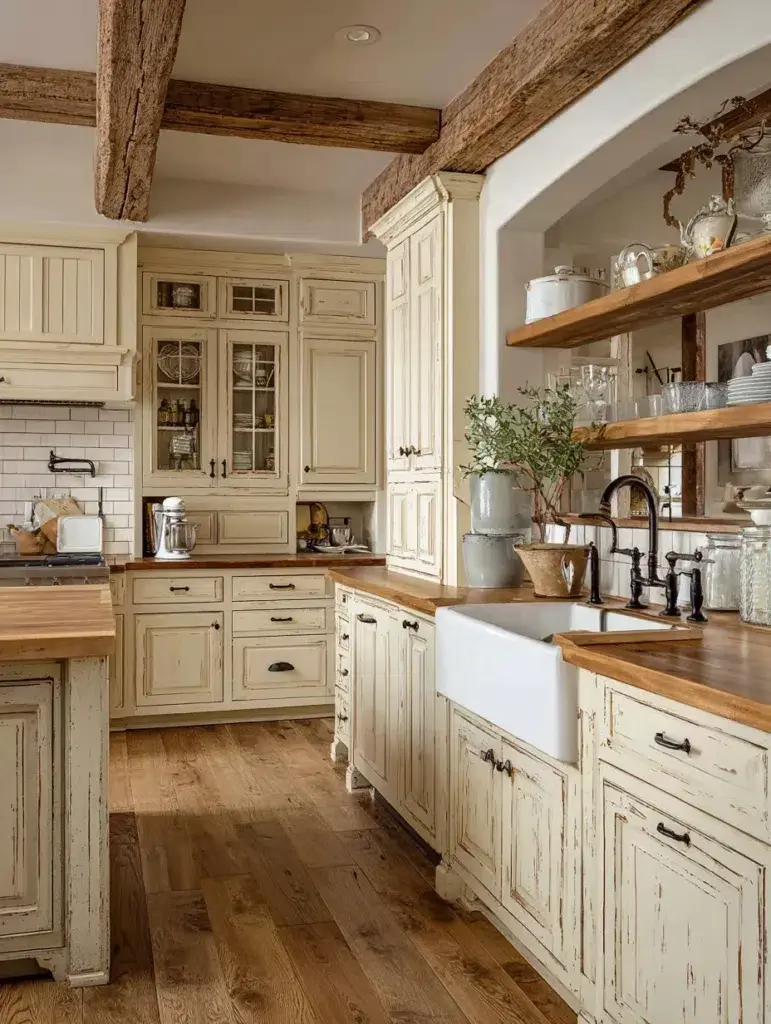
Distressed cabinetry introduces character and texture that perfectly suits farmhouse, cottage, and rustic kitchens. Small imperfections make the kitchen feel more relaxed and less formal.
This style works especially well when paired with open shelving, wood beams, or vintage-inspired lighting.
10. Beige Cabinets with Subway Tile
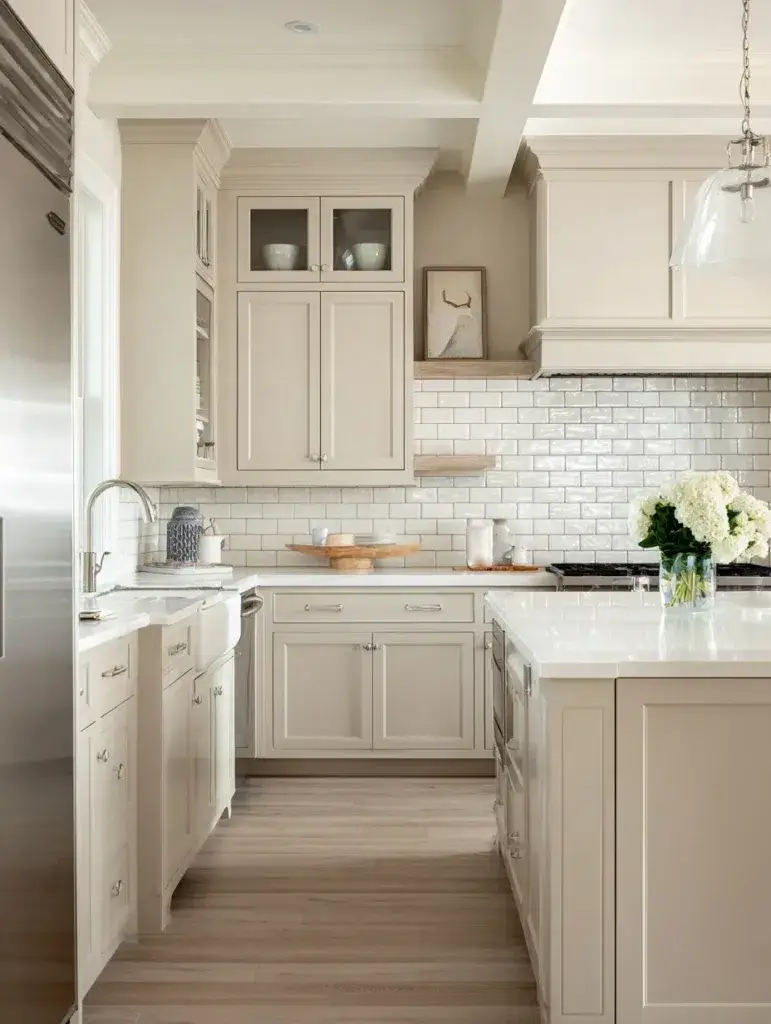
Subway tile remains popular because it adds brightness without competing visually with the cabinetry. Warm white or handmade-style subway tiles usually pair best with beige because they maintain softness throughout the room.
Dark grout lines can create more contrast for homeowners wanting a slightly more modern edge.
11. Beige Cabinets in Small Kitchens
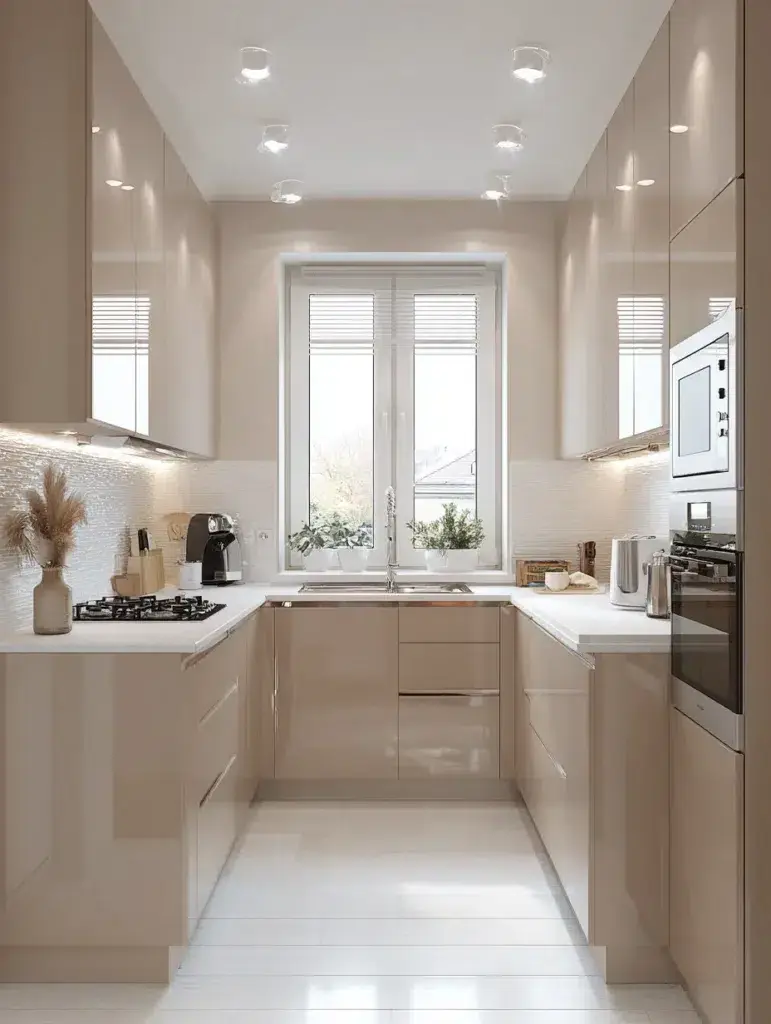
Beige works particularly well in small kitchens because it reflects enough light to keep the room feeling open without appearing overly stark.
Pairing beige cabinetry with reflective surfaces, layered lighting, and light countertops helps compact spaces feel larger and more comfortable.
12. Beige Cabinets with Stainless Steel
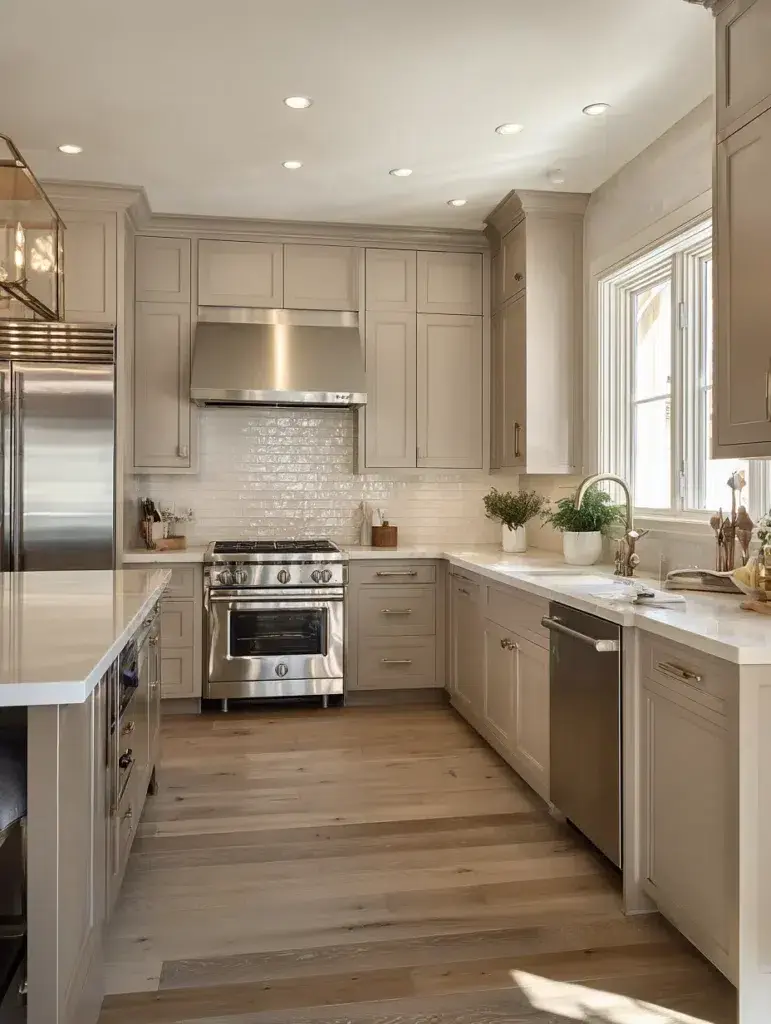
Stainless steel appliances introduce cooler tones that help beige kitchens feel balanced rather than overly warm. The reflective finish also brightens the room naturally.
This combination works especially well in transitional kitchens that mix traditional warmth with modern functionality.
13. Greige Cabinets
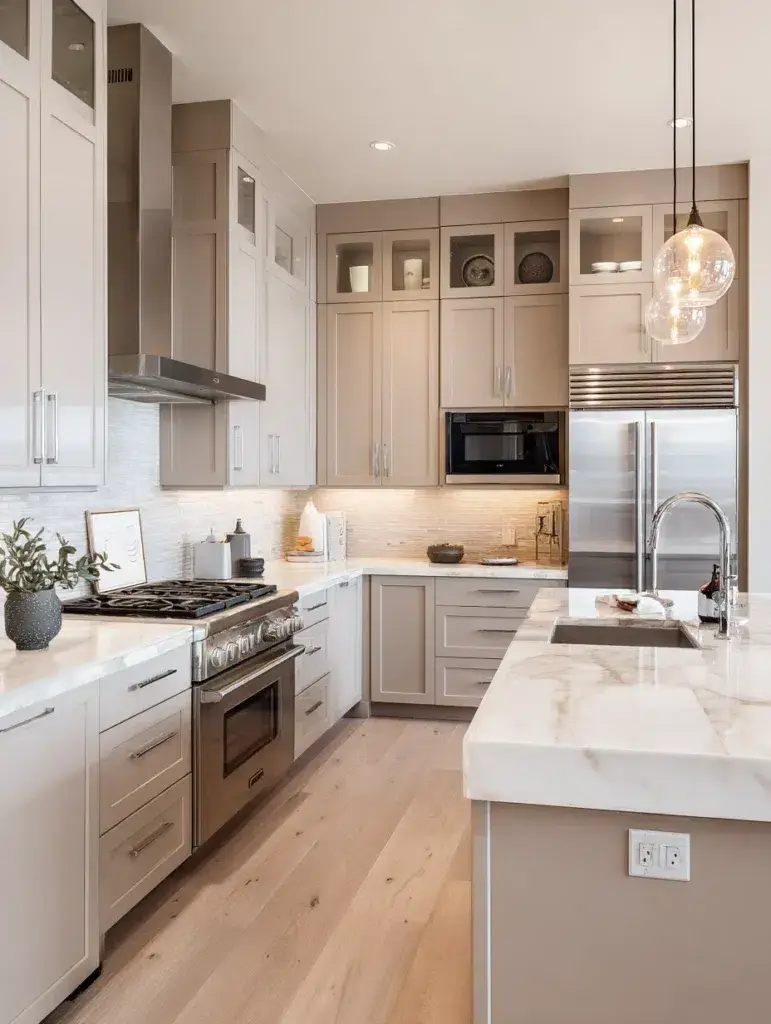
Greige cabinetry offers a slightly more modern interpretation of beige by blending gray and warm undertones together. This creates a softer alternative to cool gray kitchens.
Greige works especially well in homes with contemporary finishes and cooler lighting conditions.
14. Beige Cabinets with Dark Floors
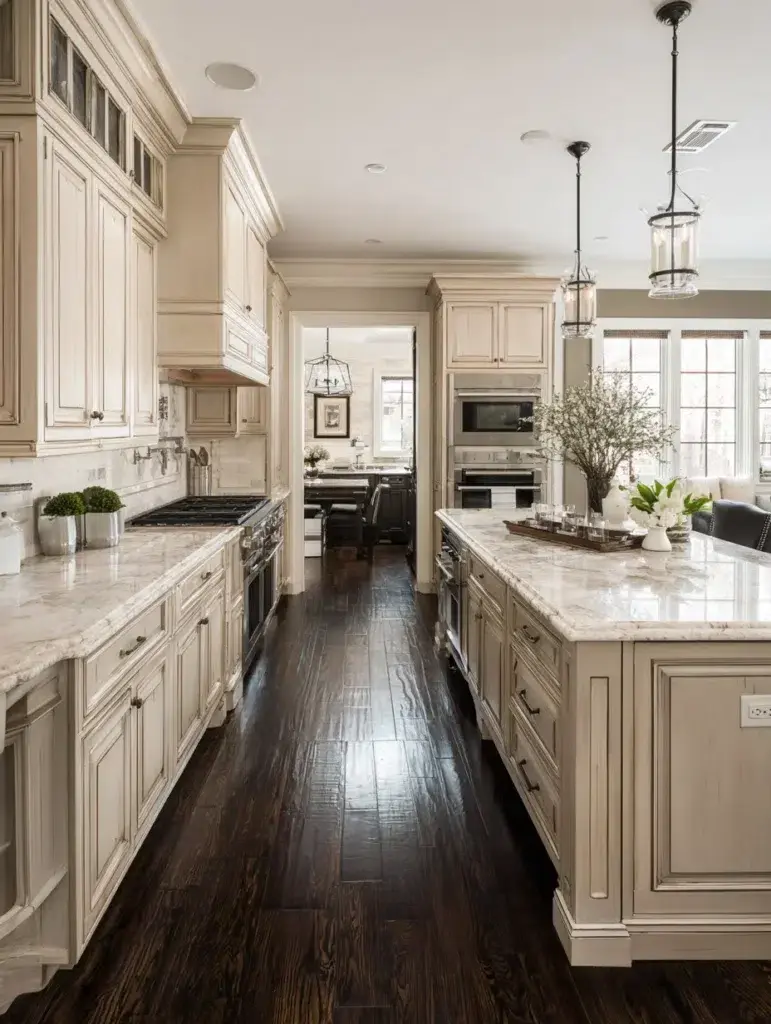
Dark flooring helps anchor beige kitchens and creates stronger visual contrast throughout the room. Walnut, espresso, and charcoal-toned floors can all add depth without overwhelming the cabinetry.
Balancing darker flooring with lighter walls and countertops helps maintain openness.
15. Beige Cabinets with Colorful Island
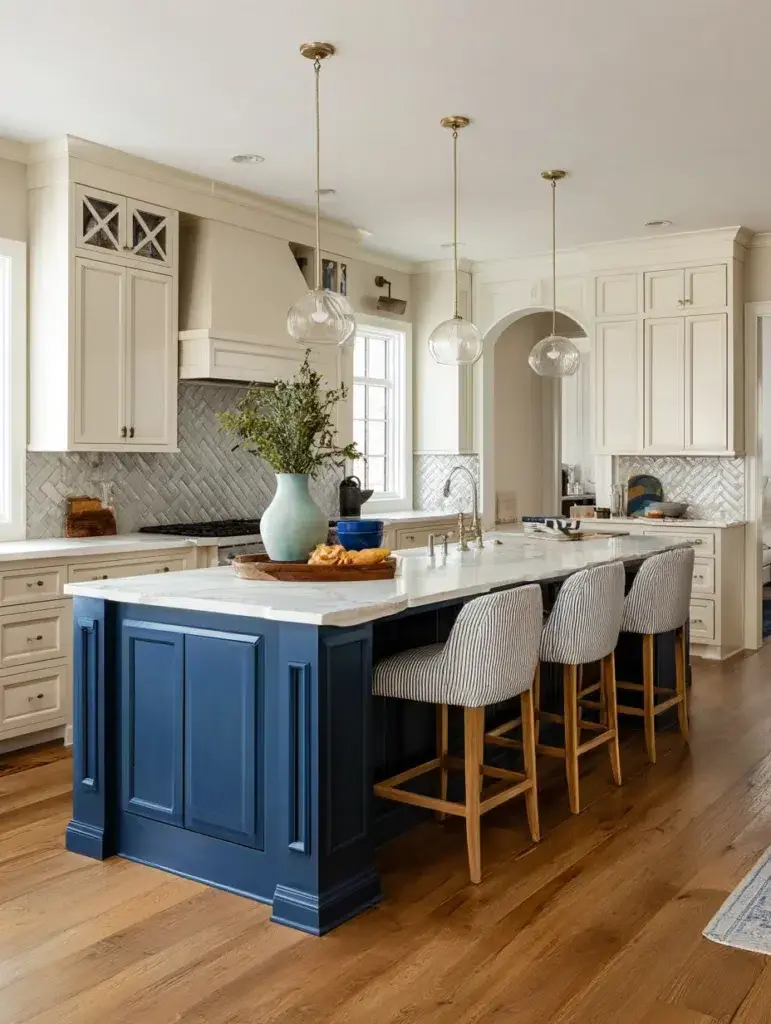
Beige cabinetry creates a calm backdrop that allows a colorful island to stand out without making the kitchen feel overwhelming. Deep green, navy blue, muted terracotta, or charcoal islands all pair beautifully with beige.
This approach works especially well in open-concept kitchens that benefit from a focal point.
16. Beige Cabinets with Brass Hardware
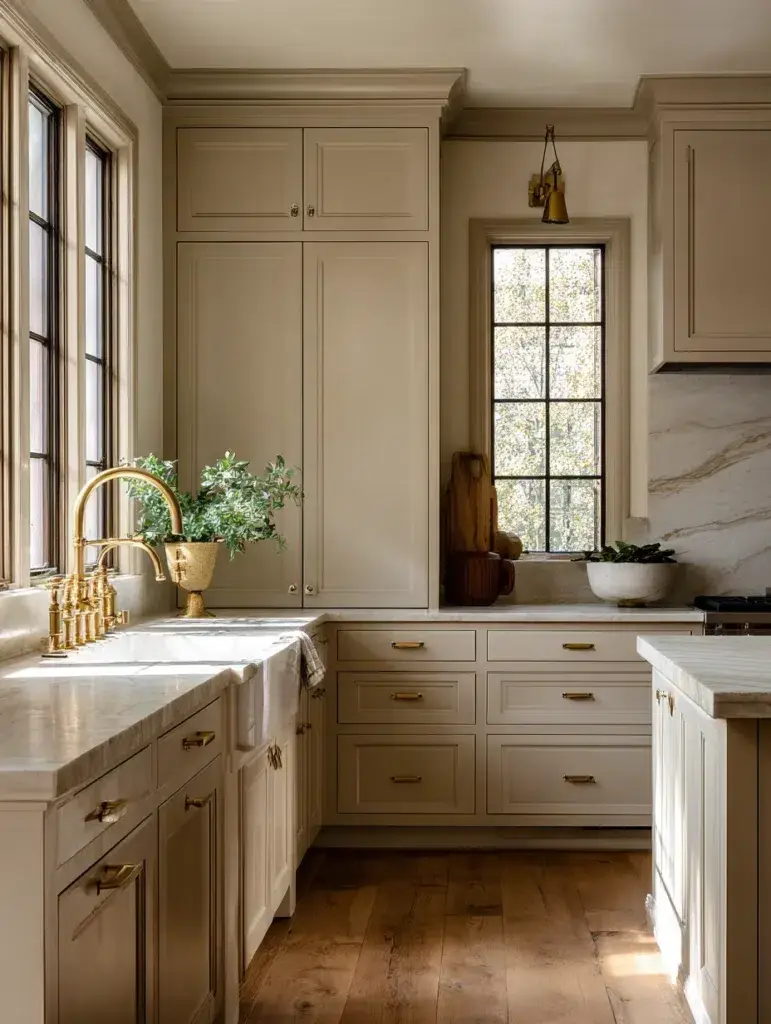
Brass hardware creates warmth and sophistication without feeling overly flashy. It works especially well in kitchens aiming for a more classic or European-inspired atmosphere.
Unlacquered brass also develops a natural patina over time that adds character to the kitchen.
17. Beige Cabinets with White Quartz
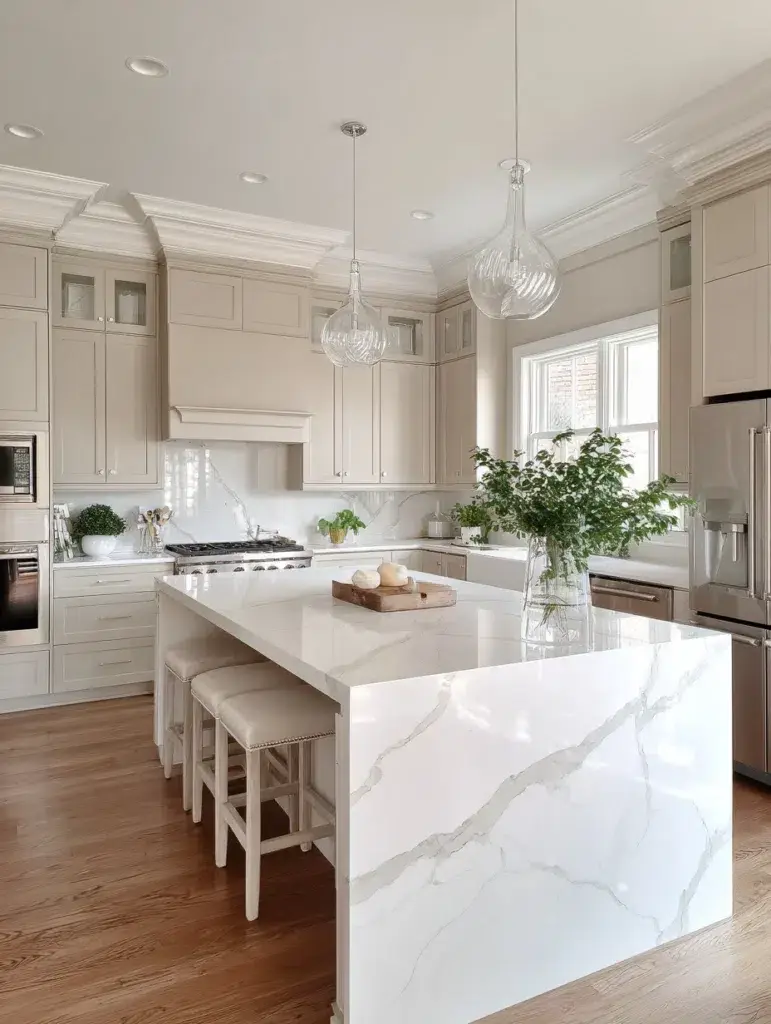
White quartz surfaces provide a cleaner, brighter contrast that keeps beige kitchens from appearing too muted. They’re also highly durable and relatively easy to maintain.
This pairing works especially well in kitchens with limited natural light because it reflects brightness throughout the room.
18. Flat-Front Beige Cabinets
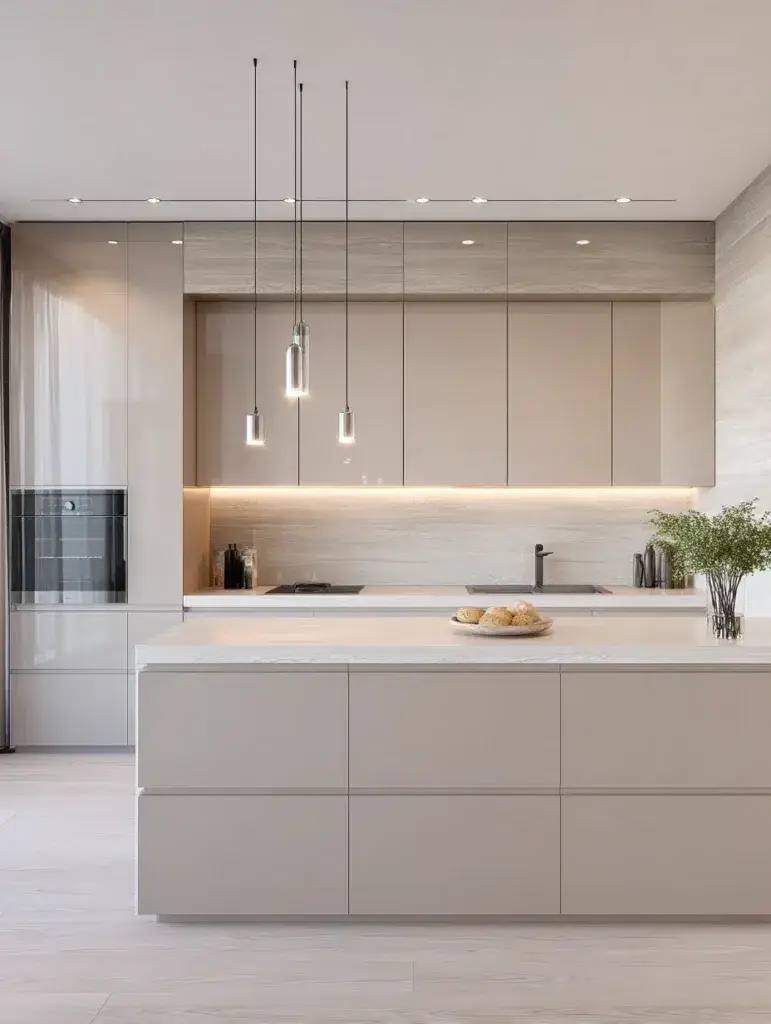
Flat-front cabinetry gives beige kitchens a cleaner and more contemporary appearance. Without decorative paneling, the kitchen feels visually simpler and less busy.
Integrated handles or slim hardware help maintain the minimalist look while still keeping the space warm and approachable.
19. Beige Cabinets with Patterned Tiles
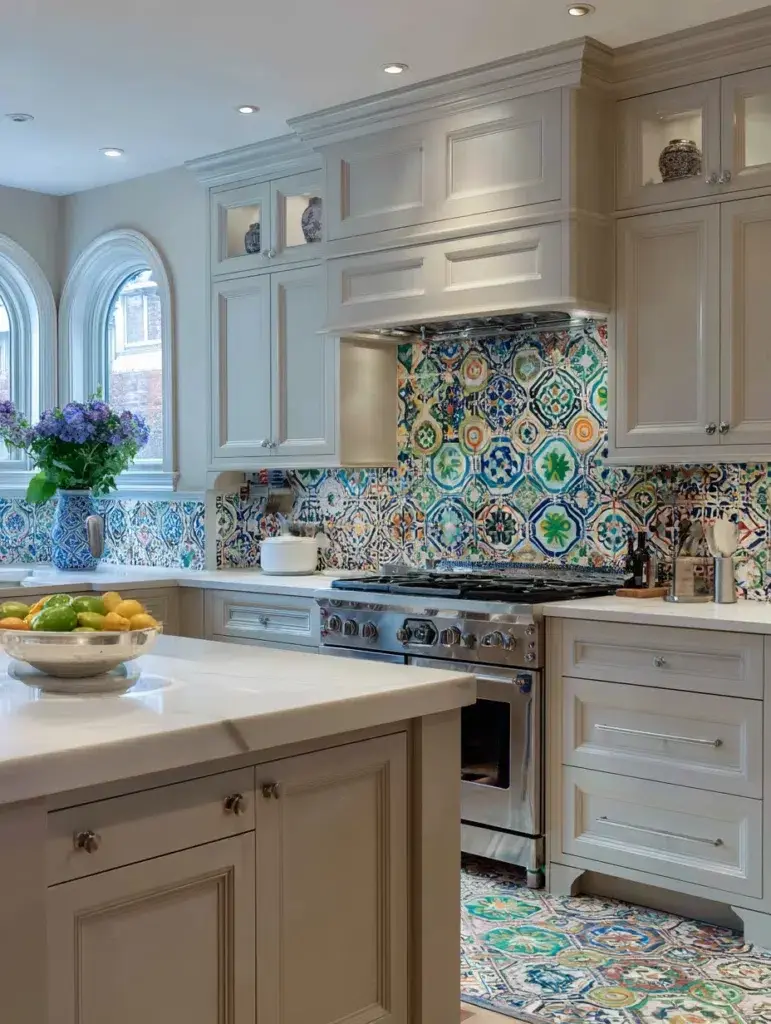
Patterned tile backsplashes help introduce visual movement and personality into neutral kitchens. Beige cabinetry works especially well with patterned surfaces because it doesn’t compete for attention.
Subtle Mediterranean-inspired patterns and earthy geometric designs tend to pair beautifully with warm beige tones.
20. Beige Cabinets with Walnut Accents
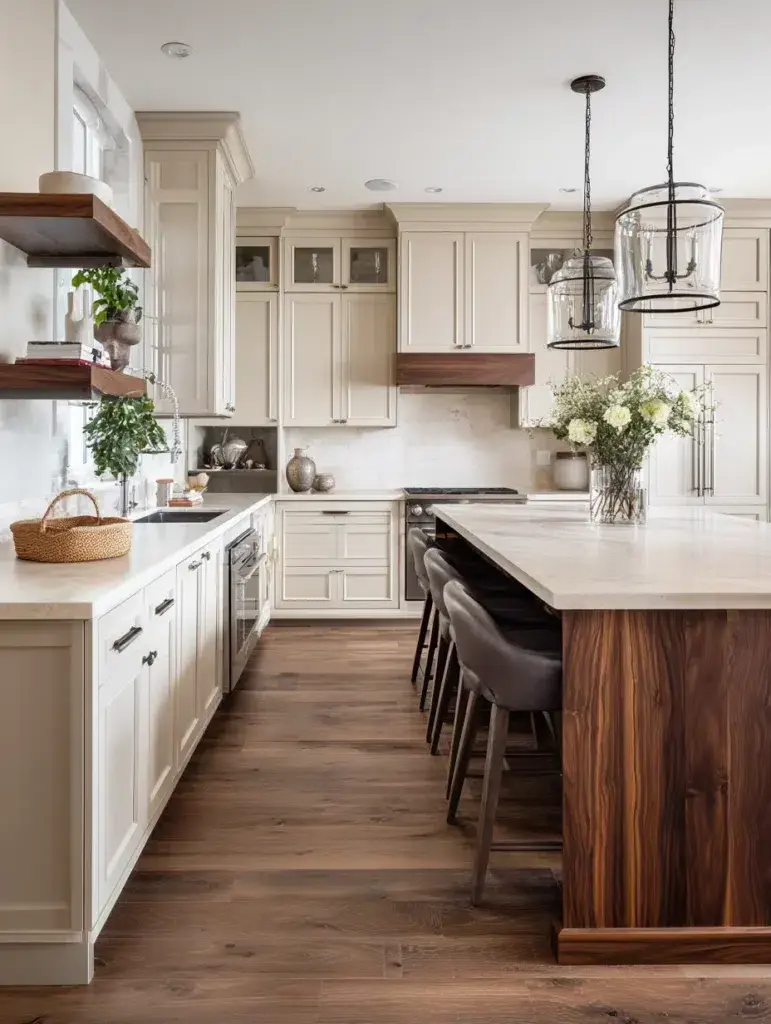
Walnut accents create beautiful contrast against beige cabinetry without introducing harsh darkness. Floating shelves, islands, beams, or trim in walnut tones add richness that helps neutral kitchens feel more layered.
This combination feels especially balanced in transitional and modern organic interiors.
21. Beige Cabinets with Concrete Counters
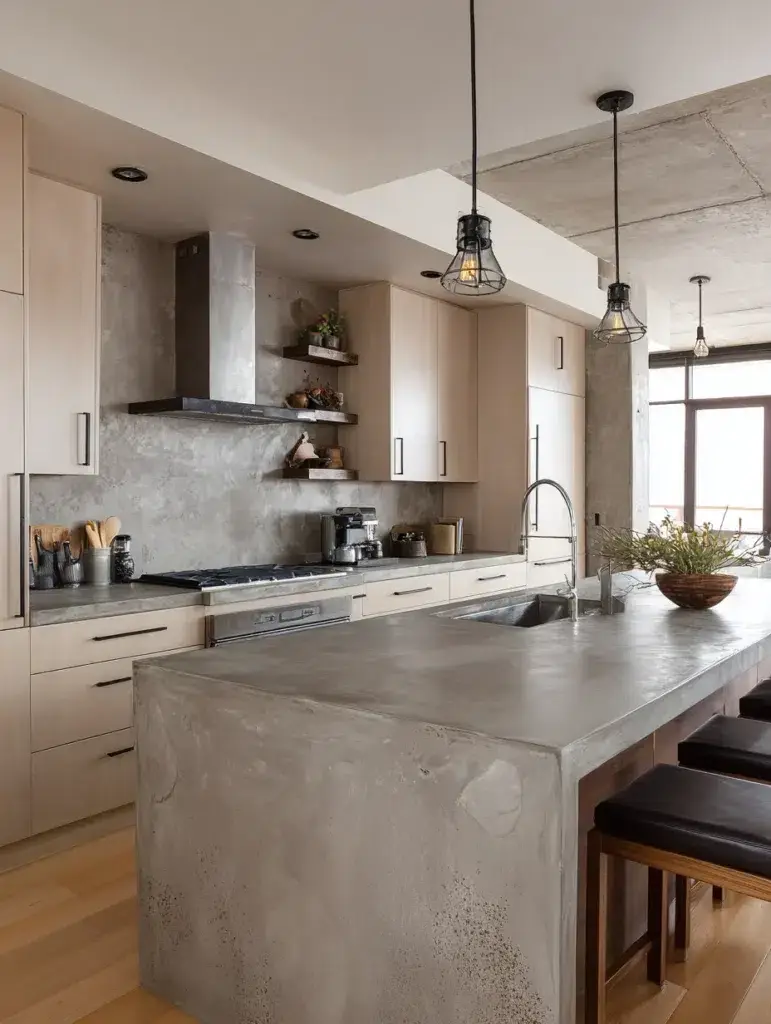
Concrete countertops introduce texture and slightly industrial character that contrasts beautifully with softer beige cabinetry. The cooler tones help create balance while the cabinetry prevents the space from feeling too stark.
Concrete-look quartz surfaces can provide a similar effect with easier maintenance for busy households.
Beige Cabinet Material Comparison
| Material | Best Features | Maintenance Level | Ideal Style |
|---|---|---|---|
| Painted MDF | Smooth finish and affordability | Low | Modern and transitional |
| Oak | Visible natural grain texture | Moderate | Farmhouse and rustic |
| Maple | Durable with smooth appearance | Low | Traditional and classic |
| Walnut Accents | Rich warmth and contrast | Moderate | Luxury and modern organic |
Common Mistakes to Avoid
- Using too many similar beige tones: Without contrast, the kitchen can start feeling flat and washed out.
- Ignoring lighting conditions: Beige changes significantly depending on natural and artificial light.
- Skipping texture variation: Wood, tile, stone, and metal help keep beige kitchens visually interesting.
- Overcomplicating the design: Beige kitchens usually feel best when the palette remains calm and cohesive.
- Using overly cool lighting: Warm bulbs typically complement beige cabinetry much better.
Frequently Asked Questions
Are beige kitchen cabinets outdated?
No. Beige cabinets remain popular because they create warmth and flexibility that many trend-driven kitchen colors eventually lose.
What colors pair best with beige cabinets?
Warm whites, walnut wood, soft gray, olive green, black accents, brass finishes, and natural stone all pair beautifully with beige.
Do beige cabinets work in modern kitchens?
Absolutely. Flat-front designs, minimalist hardware, and concrete or quartz countertops help beige cabinetry feel very modern.
Are beige cabinets good for small kitchens?
Yes. Beige reflects enough light to keep smaller kitchens feeling open while still adding warmth and softness.
Final Thoughts
Beige kitchen cabinets continue to work because they strike a balance many homeowners are searching for. They feel warmer than bright white kitchens, softer than gray, and lighter than darker cabinetry while still remaining highly adaptable.
The best beige kitchens rarely rely on color alone. Texture, lighting, natural materials, and thoughtful contrast all play an important role in making the space feel layered and comfortable.
Whether your style leans modern, farmhouse, traditional, or somewhere in between, beige cabinetry offers a timeless foundation that allows the rest of the kitchen to evolve naturally over time.


