
There’s something about black-and-white kitchens that never really disappears. Trends come and go, but this combination continues to work because it balances contrast, simplicity, and flexibility in a way few color palettes can.
Some kitchens use black and white to create a clean modern atmosphere, while others lean softer and more classic with farmhouse touches, warm wood, or vintage-inspired details. That versatility is what makes the combination so practical. You can shift the mood dramatically just by changing hardware, lighting, textures, or countertop materials.

Another reason black-and-white cabinetry remains popular is that it creates visual structure naturally. White surfaces brighten and open up the room, while black elements anchor the space and add depth. Together, they create a kitchen that feels intentional without relying on trendy colors that may quickly feel dated.
Whether you’re planning a complete remodel or simply updating cabinets and hardware, black-and-white kitchens give you room to personalize the design while still maintaining a timeless foundation.
If you enjoy layered neutral interiors, you may also like these beige kitchen cabinet ideas for a softer and warmer alternative.
My Experience with Black and White Kitchens
One thing I’ve noticed about black-and-white kitchens is how differently they can feel depending on the lighting and materials used around them. A kitchen with glossy black cabinets and bright white counters can feel sleek and dramatic, while matte finishes paired with wood accents create something much warmer and more relaxed.
I once worked on a kitchen where the homeowners worried black cabinetry would make the room feel too dark. Instead of painting everything black, we balanced it with white upper cabinets, warm oak flooring, and soft brass hardware. The contrast gave the kitchen far more depth than an all-white design ever could, but it still felt comfortable enough for daily family life.
That balance is usually the key. The most successful black-and-white kitchens rarely rely on color alone. Texture, lighting, and thoughtful layering are what make the space feel inviting instead of overly stark.
How to Style Black and White Cabinets Successfully
- Use warm lighting to soften strong contrast
- Incorporate wood or natural textures to avoid a cold appearance
- Balance glossy and matte finishes carefully
- Keep countertops and backsplashes relatively simple if cabinetry is bold
- Use hardware intentionally to shape the kitchen’s style
- Allow some breathing room instead of overdecorating every surface
1. Classic Two-Tone Upper and Lower Cabinets
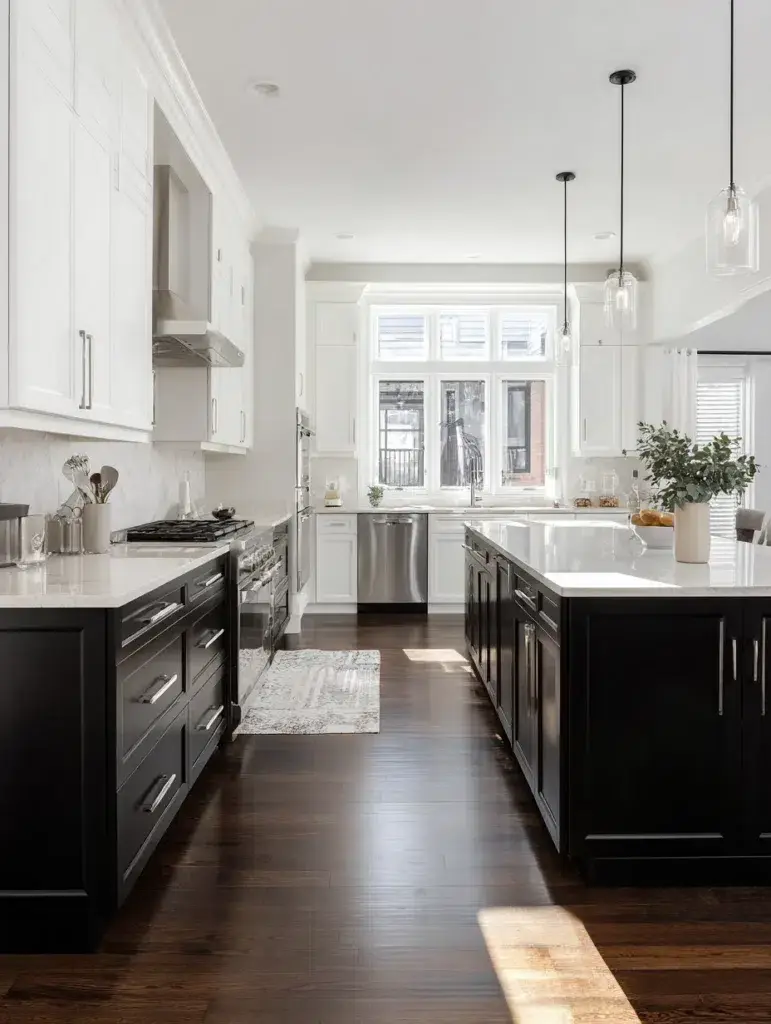
Two-tone kitchens remain popular because they naturally balance brightness and depth. White upper cabinets help the room feel open and airy, while black lower cabinets anchor the kitchen visually and hide everyday wear more easily.
This approach works especially well in medium and smaller kitchens because the darker cabinetry stays grounded below eye level rather than dominating the entire room.
Warm wood flooring or brass hardware can help soften the contrast if you want the kitchen to feel more relaxed and less dramatic.
2. All-Black Cabinets with White Countertops
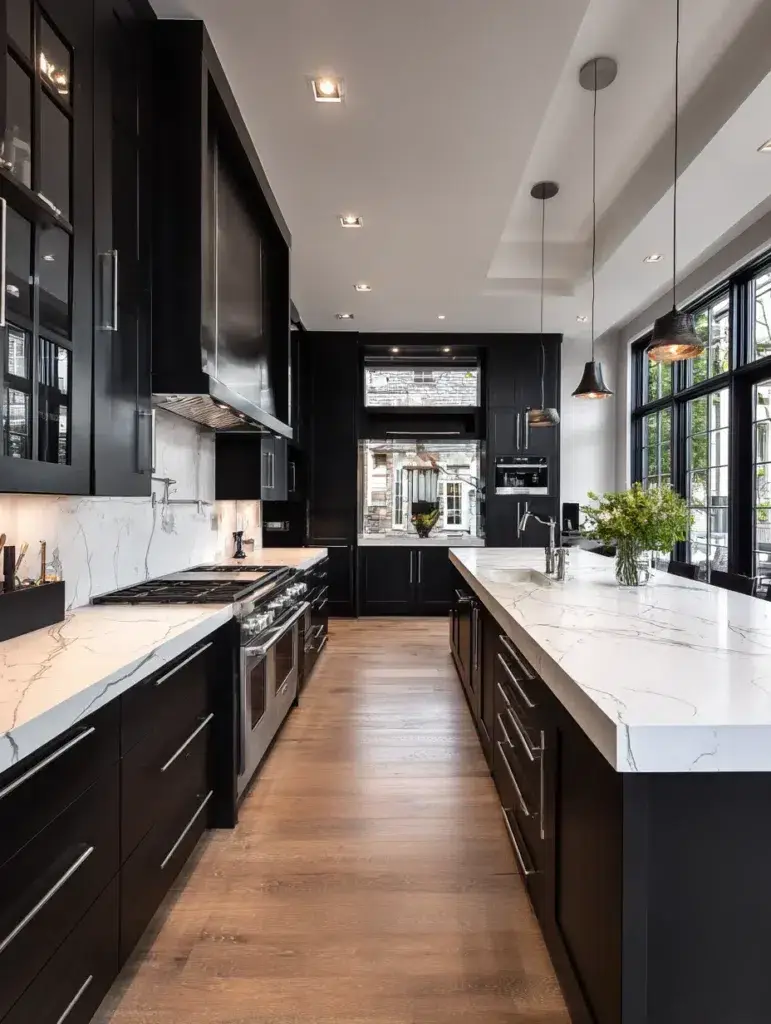
All-black cabinetry creates a bold and sophisticated atmosphere that immediately draws attention. When paired with white marble or quartz countertops, the contrast becomes sharp, clean, and visually striking.
Lighting matters tremendously in kitchens like this. Without enough layered lighting, dark cabinetry can absorb too much light and make the room feel heavy.
Adding under-cabinet lighting, reflective backsplash materials, and lighter flooring helps maintain balance while still allowing the black cabinetry to stand out.
Read More: 17 Beautiful White Oak Cabinet Kitchen Ideas
3. White Shaker Cabinets with Black Hardware
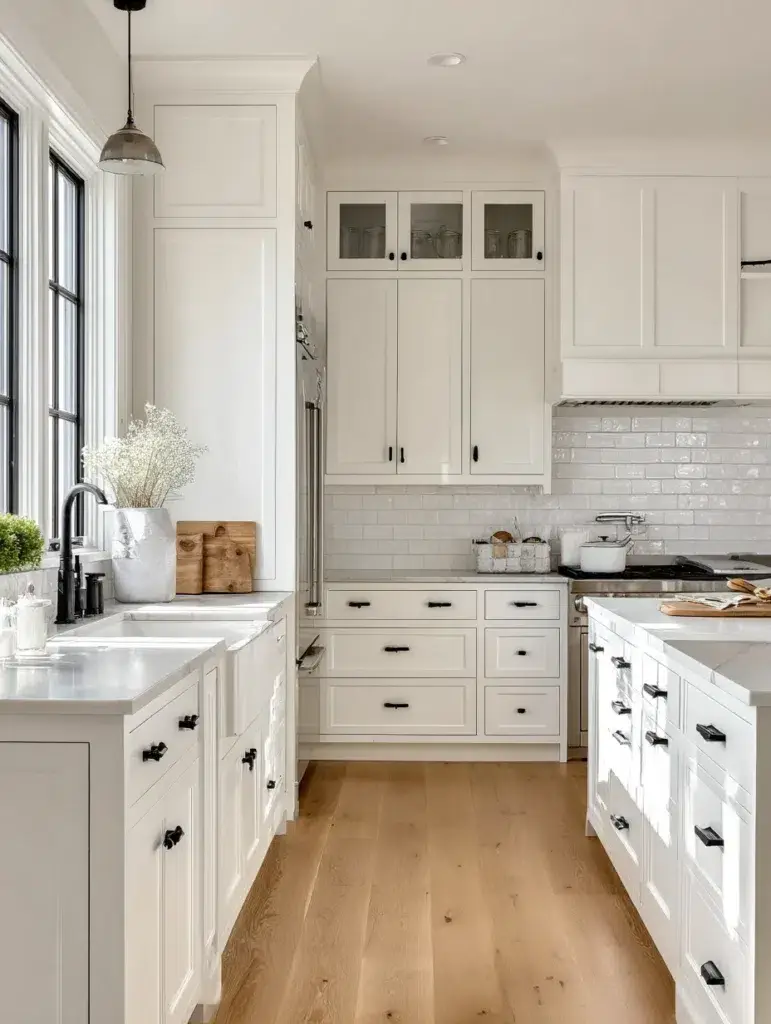
White shaker cabinets paired with black hardware create one of the most timeless combinations in kitchen design. The clean cabinet lines feel classic, while black pulls and knobs introduce definition and contrast.
This look works across modern farmhouse, transitional, Scandinavian, and even minimalist kitchens because it stays visually simple without feeling plain.
Matte black finishes generally feel softer and easier to maintain than glossy hardware, especially in busy family kitchens.
Read More: 17 Ideas for Kitchen Cabinet Handles
4. Black Island with White Perimeter Cabinets
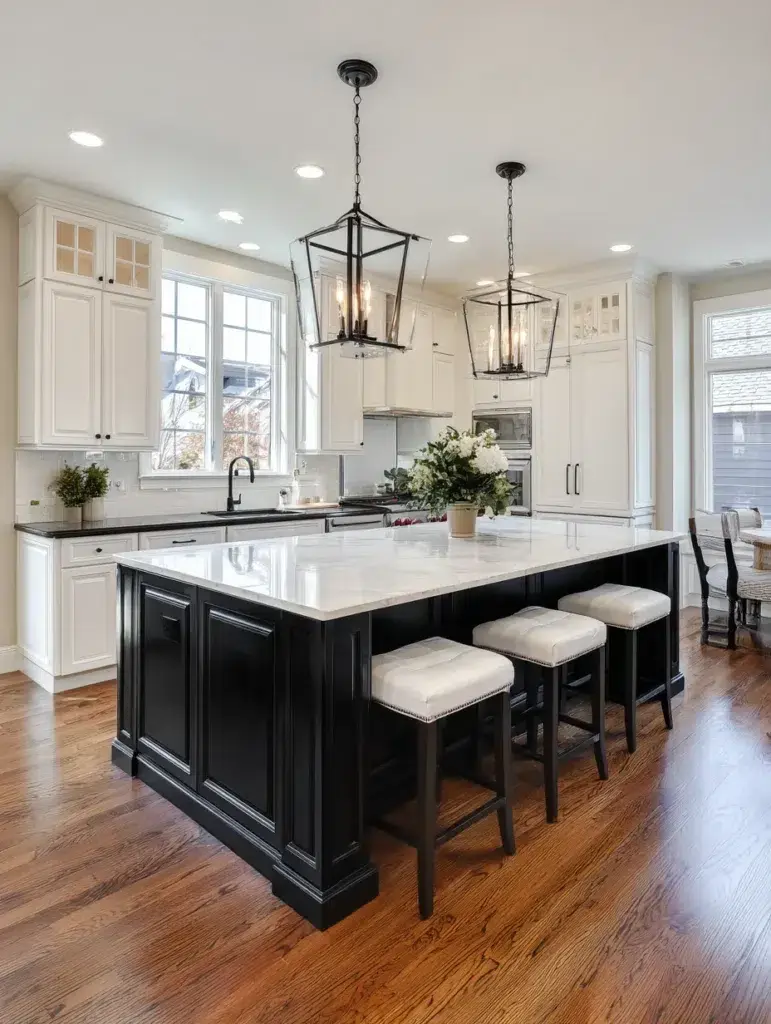
Painting only the island black is a great way to introduce contrast without fully committing to dark cabinetry throughout the room. The island becomes a focal point while the surrounding white cabinets maintain brightness.
This approach works especially well in open-concept kitchens because the island starts feeling more like a furniture piece rather than built-in cabinetry.
Adding pendant lighting above the island further emphasizes the contrast and helps visually define the kitchen zone.
5. Glass-Front Upper Cabinets in White with Black Lowers
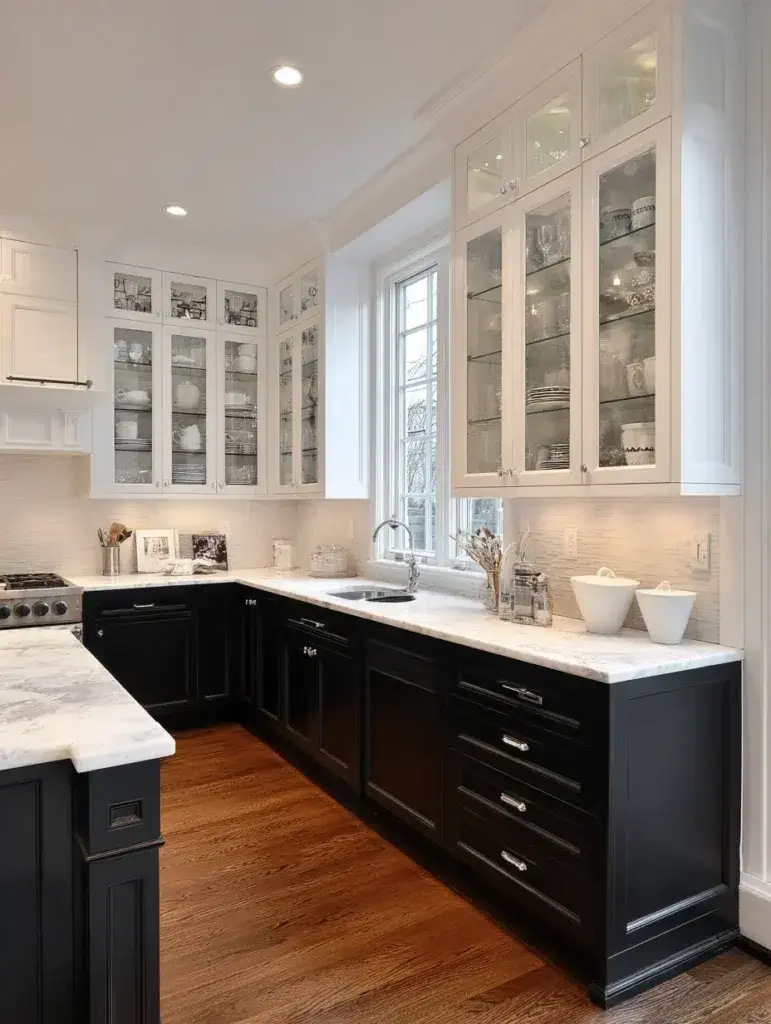
Glass-front cabinets naturally lighten the appearance of upper cabinetry and help black lower cabinets feel less visually heavy. They also create opportunities to display dishes, ceramics, and textured glassware.
Keeping cabinet interiors organized becomes more important with this style, but even a few carefully styled shelves can add warmth and personality.
Warm lighting inside glass cabinets also creates a softer atmosphere during evenings.
Read More: 17 Kitchen Countertop Decor Ideas I’m Obsessed With
6. Black Upper Cabinets with White Lowers
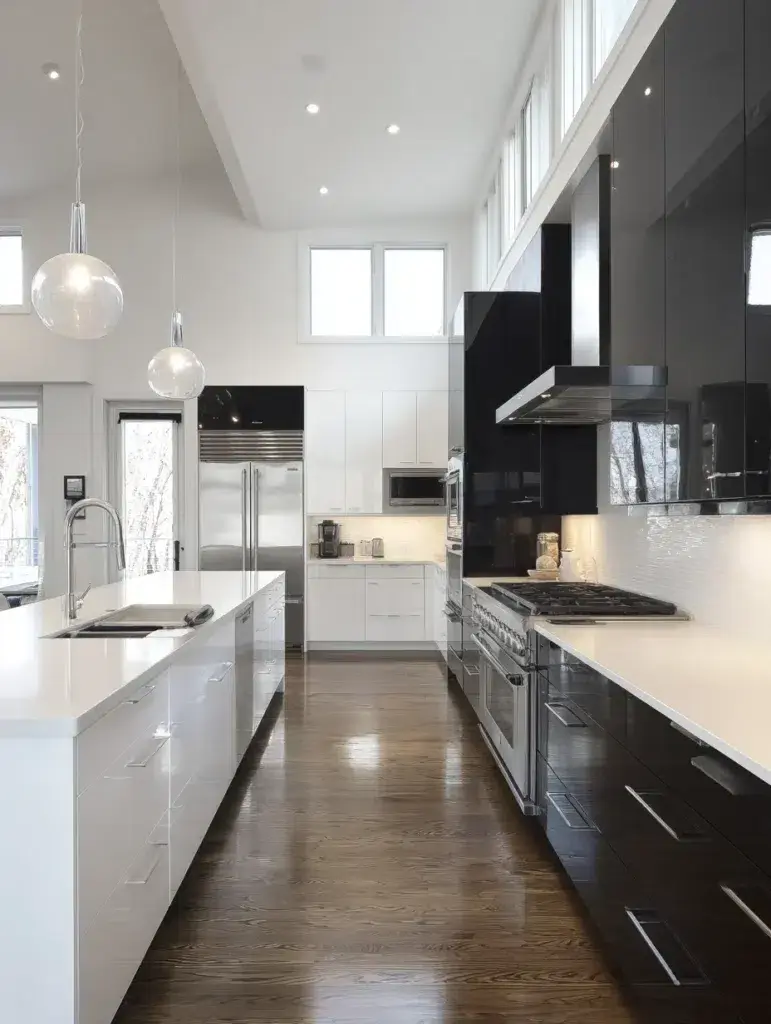
Reversing the traditional two-tone layout creates a more unexpected and modern appearance. Black upper cabinets frame the room dramatically while white lower cabinets keep the kitchen grounded and bright.
This layout tends to work best in kitchens with taller ceilings or large windows where natural light helps balance the darker upper cabinetry.
Simple backsplashes and minimal countertop decor help prevent the kitchen from feeling visually crowded.
7. Checkerboard Cabinet Arrangement
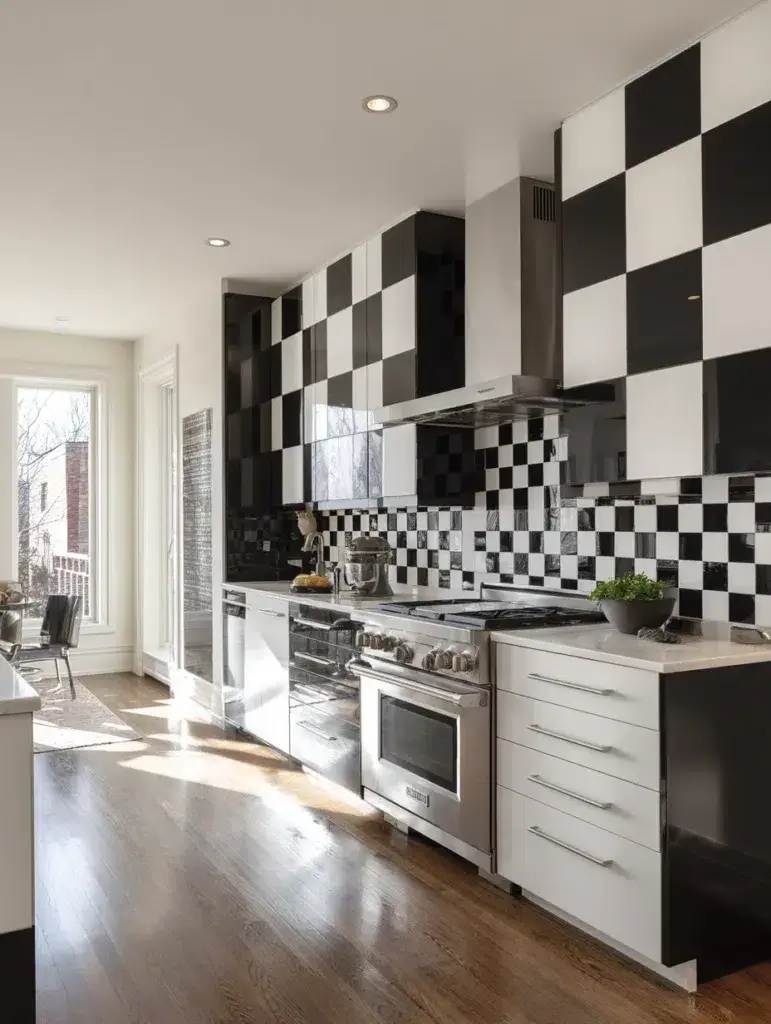
A checkerboard cabinet layout introduces personality and visual movement in a way that feels bold without relying on bright colors. This style works best when limited to one section of the kitchen rather than every cabinet wall.
Because the pattern already creates strong visual interest, surrounding materials should stay relatively calm and neutral.
Flat-front cabinetry usually works best for this look because decorative cabinet profiles can compete with the pattern itself.
8. Black Cabinets with White Subway Tile Backsplash
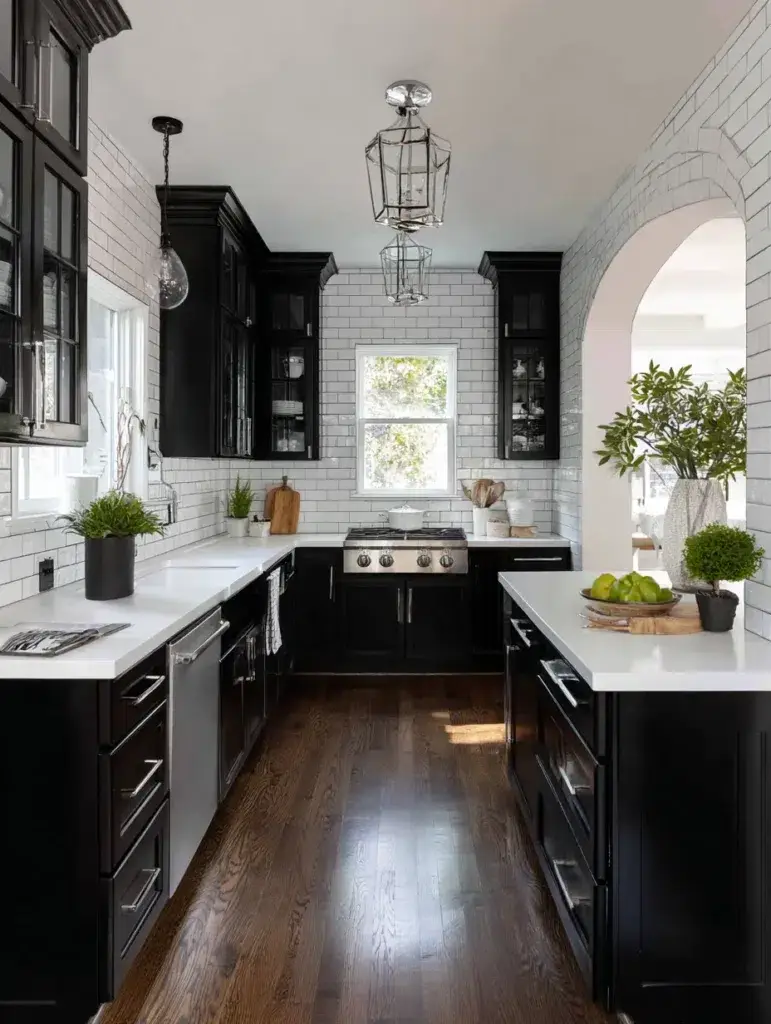
Black cabinets paired with white subway tile remain one of the most dependable kitchen combinations because the texture of the tile softens the contrast naturally.
Handmade or slightly irregular subway tiles add even more warmth and character compared to perfectly glossy versions.
If you enjoy balanced neutral kitchens, you may also like these beige cabinet ideas for a softer take on contrast.
9. Matte Black Cabinets with Brass Hardware
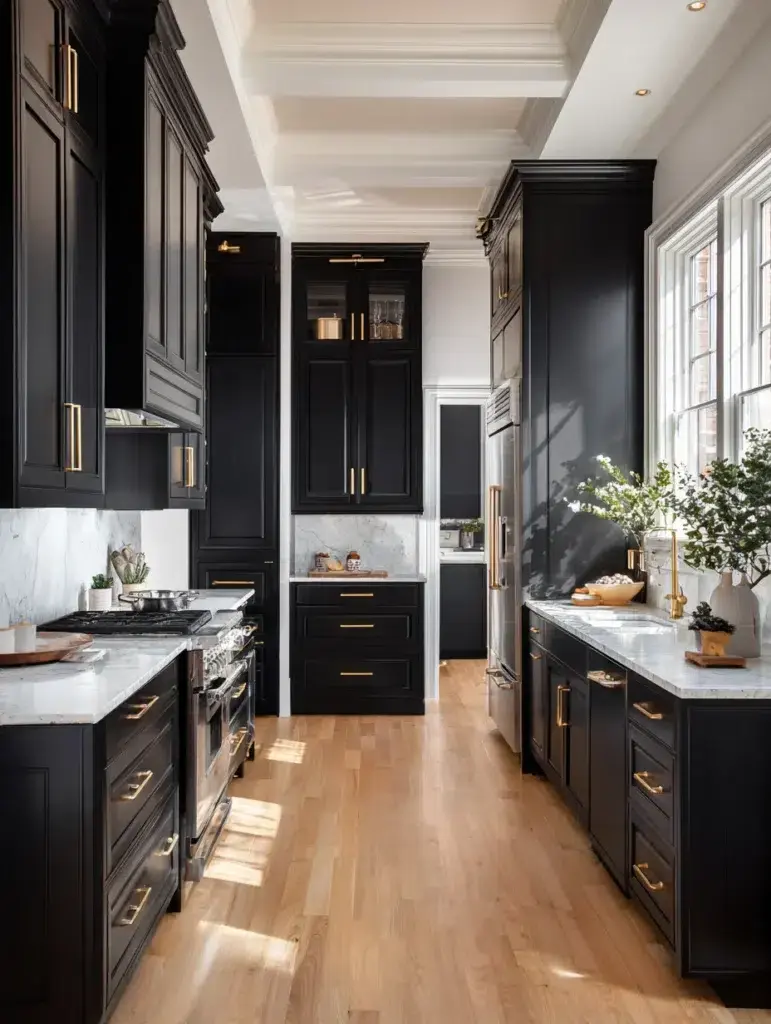
Brass hardware instantly warms up black cabinetry and prevents the kitchen from feeling overly cold or industrial. Brushed brass tends to feel especially balanced because it adds warmth without becoming too shiny.
This combination works beautifully in modern organic and transitional kitchens where softer textures are layered throughout the room.
Adding warm wood shelving or oak flooring further softens the darker cabinetry.
10. White Cabinets with Black Crown Molding
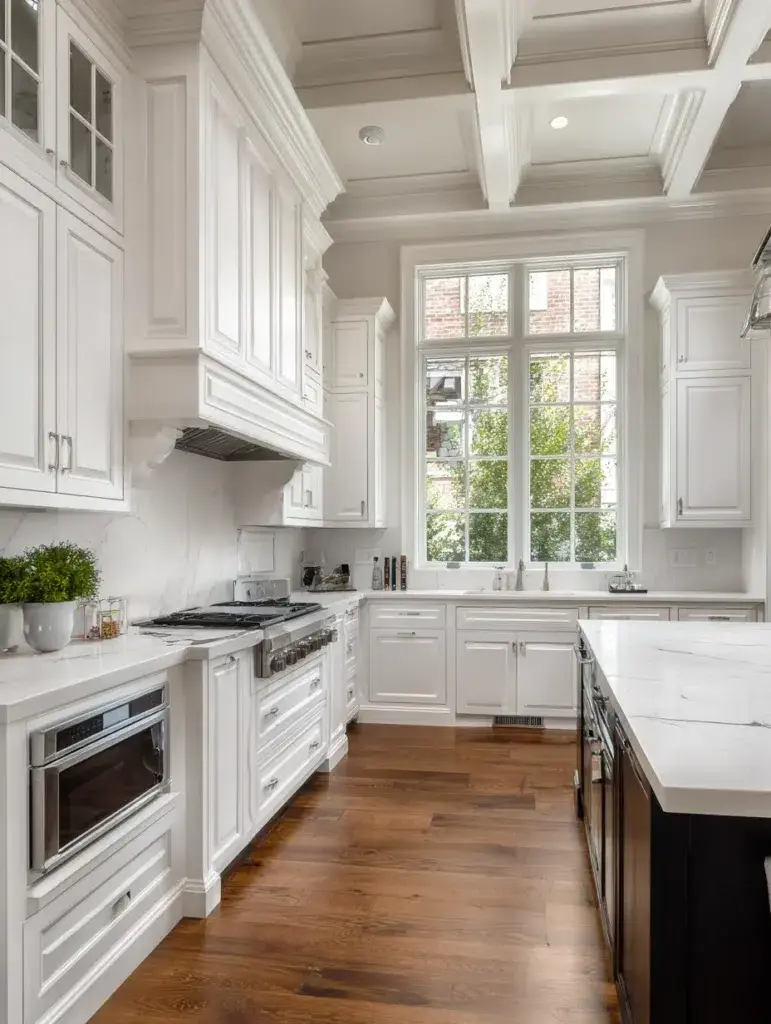
Black crown molding adds subtle contrast without requiring major cabinet color changes. It frames the upper cabinetry and creates stronger architectural definition throughout the kitchen.
This detail works especially well in kitchens with higher ceilings because it naturally draws the eye upward.
Keeping the surrounding walls relatively simple allows the trim detail to stand out more effectively.
11. Black Lower Cabinets with Open White Shelving Above
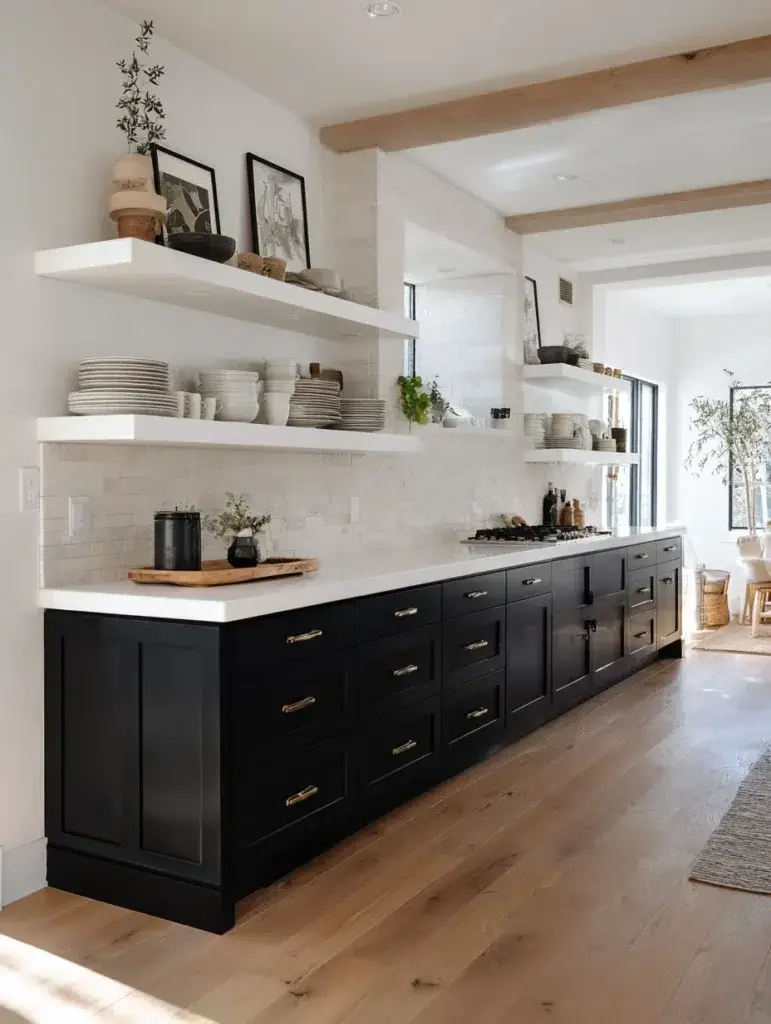
Replacing upper cabinets with open shelving instantly makes a kitchen feel more relaxed and airy. The black lower cabinets provide grounding while the white shelves keep the upper half of the room visually light.
This setup works especially well in smaller kitchens where traditional upper cabinets might feel bulky.
Careful shelf styling matters here. Mixing ceramics, glassware, and a few natural elements creates a balanced and collected appearance.
12. White Cabinets with Black Toe Kicks
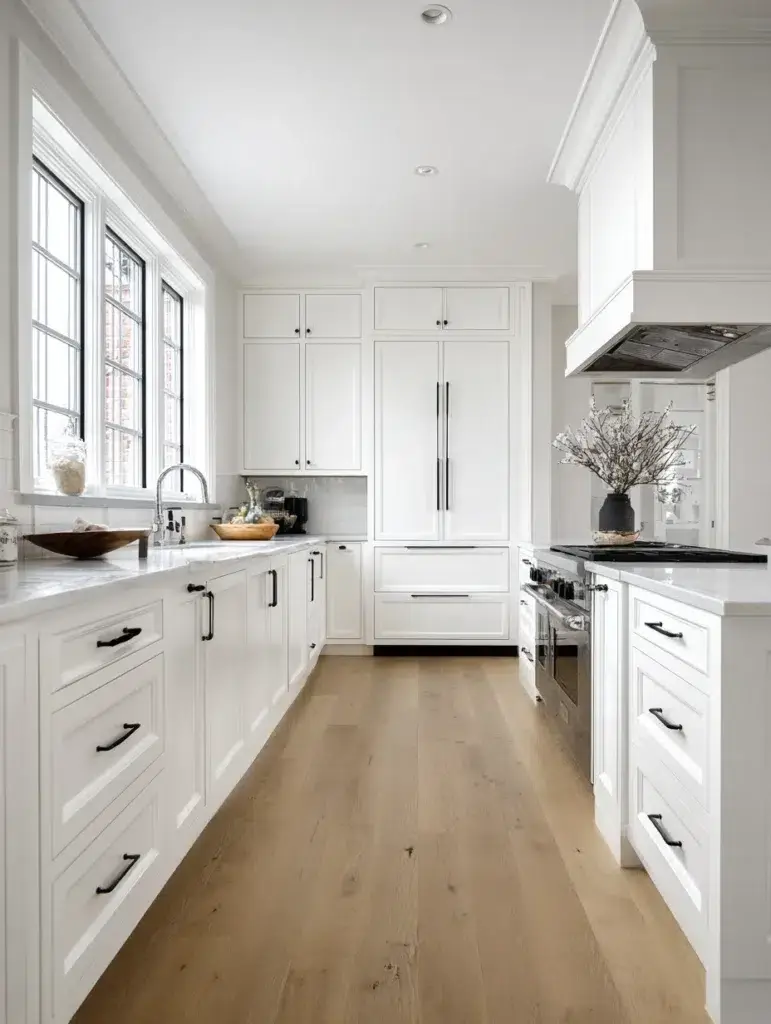
Black toe kicks may seem like a tiny detail, but they create a surprisingly grounded appearance beneath white cabinetry. They also hide scuffs and everyday wear much better than white toe kicks.
This subtle contrast helps the cabinets feel more intentional and visually anchored without overpowering the room.
Carrying the black detail consistently throughout the kitchen creates a cleaner overall look.
13. Two-Toned Pantry Cabinets
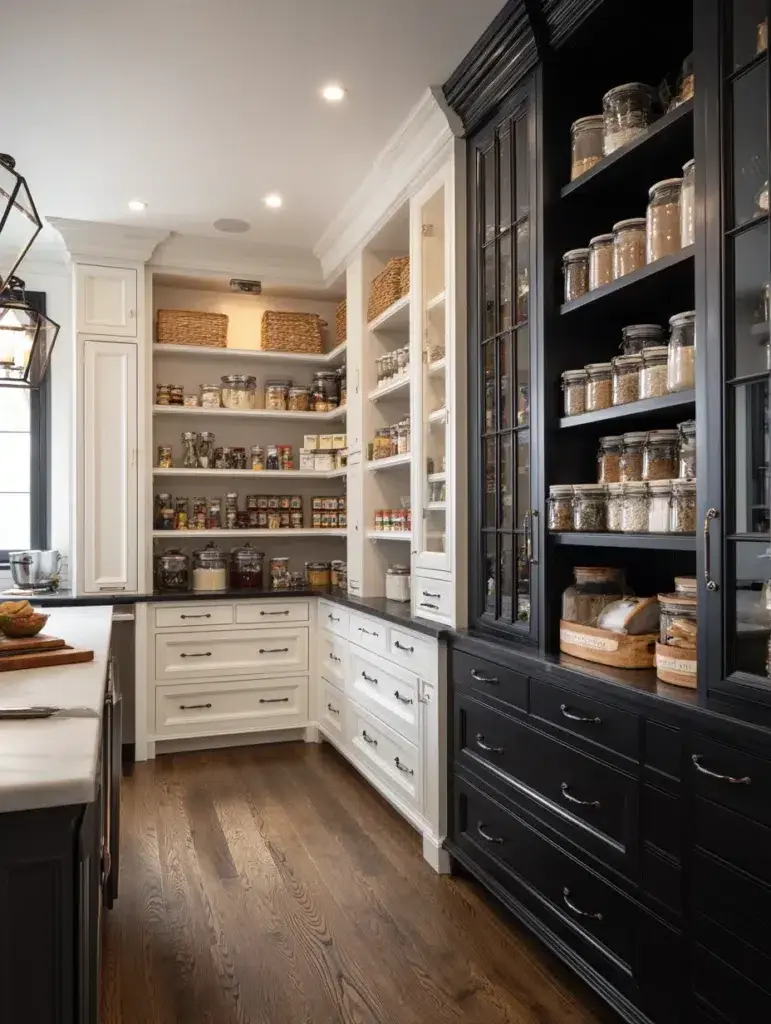
Pantries are often the perfect place to experiment with bolder contrast because they’re slightly separated from the main kitchen space. Two-toned pantry cabinets can create visual personality without overwhelming the primary cooking area.
Open shelving, labeled containers, and integrated lighting help keep the space both functional and visually cohesive.
Using darker cabinetry on lower sections also helps conceal everyday wear from heavier pantry use.
14. Black Cabinets with White Marble Veining
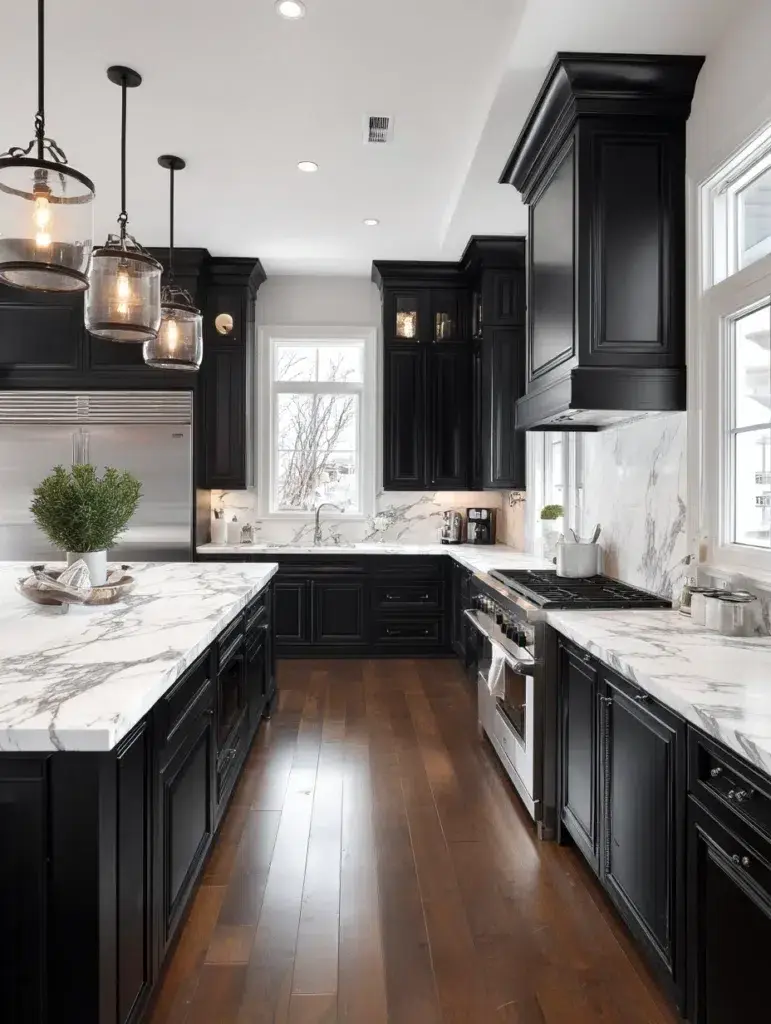
Black cabinets paired with white marble instantly create a more luxurious atmosphere. The natural veining softens the bold contrast while introducing texture and movement throughout the kitchen.
This combination works especially well in larger kitchens where dramatic materials have room to stand out without making the space feel crowded.
Keeping hardware relatively simple allows the marble itself to remain one of the focal points.
15. White Cabinets with Black Window Frames
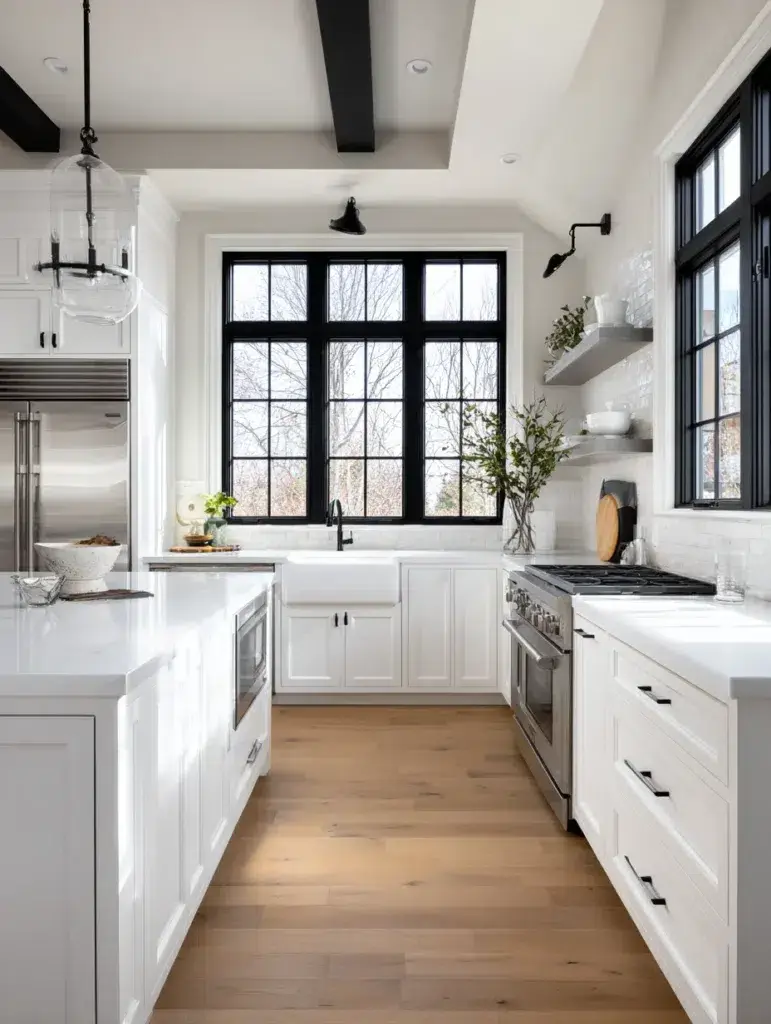
Black window frames naturally extend the black-and-white palette beyond the cabinetry itself. They frame outdoor views beautifully and add stronger architectural lines throughout the kitchen.
This detail works particularly well in kitchens with larger windows or strong natural light.
Matching the window frame color with cabinet hardware or lighting helps tie the entire space together visually.
16. Black Slab-Front Modern Cabinets with White Walls
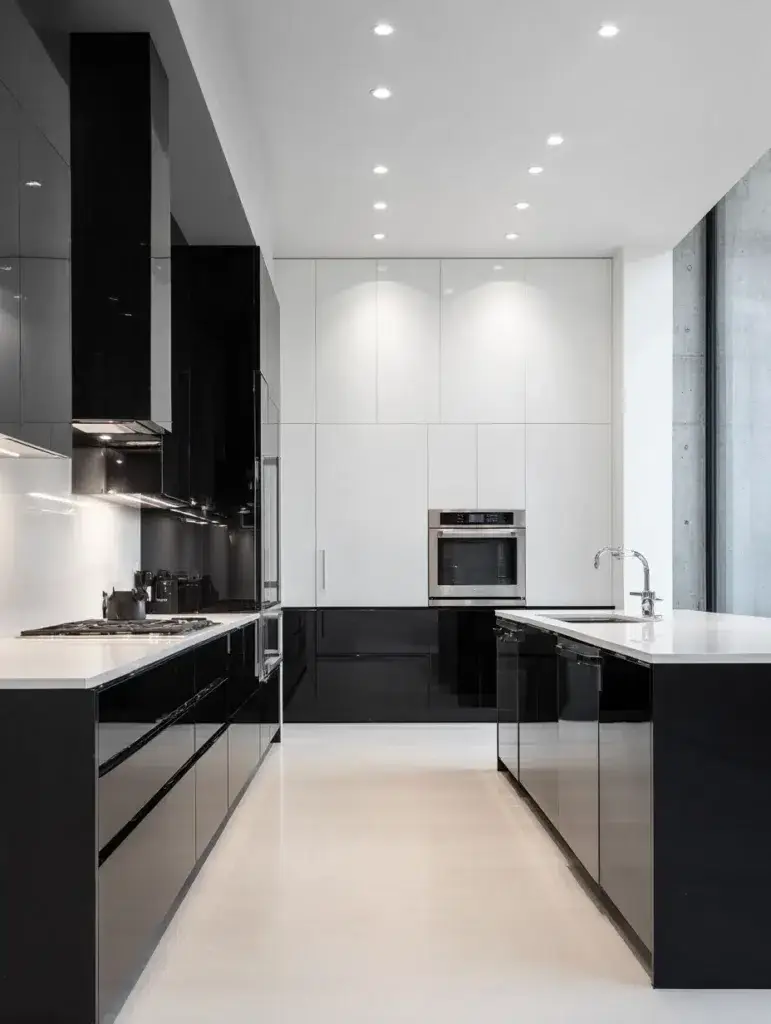
Slab-front cabinetry creates a clean minimalist appearance that feels sleek and contemporary. Matte black finishes make the cabinetry feel architectural while white walls maintain brightness and balance.
Handleless designs or integrated pulls help preserve the simplicity of the overall look.
Adding wood flooring or textured stone helps prevent the space from feeling too stark or cold.
17. White Upper Cabinets with Black Appliance Garage
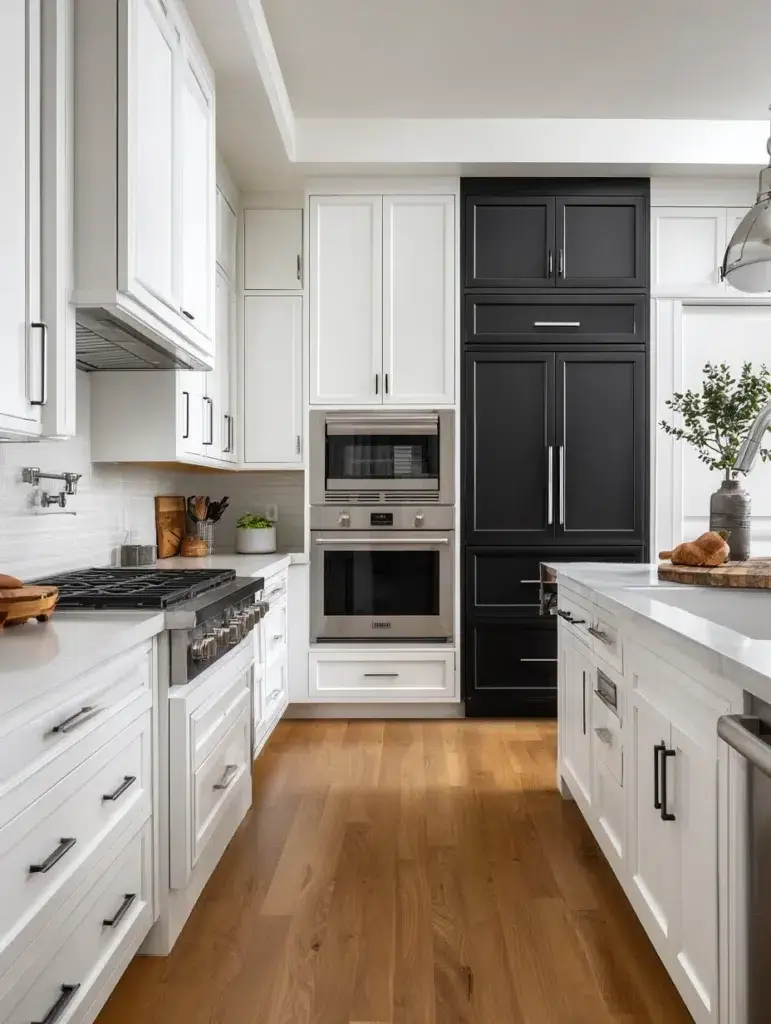
Painting an appliance garage black creates a designated storage zone that visually recedes into the cabinetry instead of drawing attention.
This approach works especially well in kitchens where countertop appliances tend to create clutter. Coffee makers, toasters, and mixers feel more intentional when hidden behind darker cabinetry.
Integrated lighting inside the appliance garage can also improve functionality significantly.
18. Black and White Geometric Tile with Coordinating Cabinets
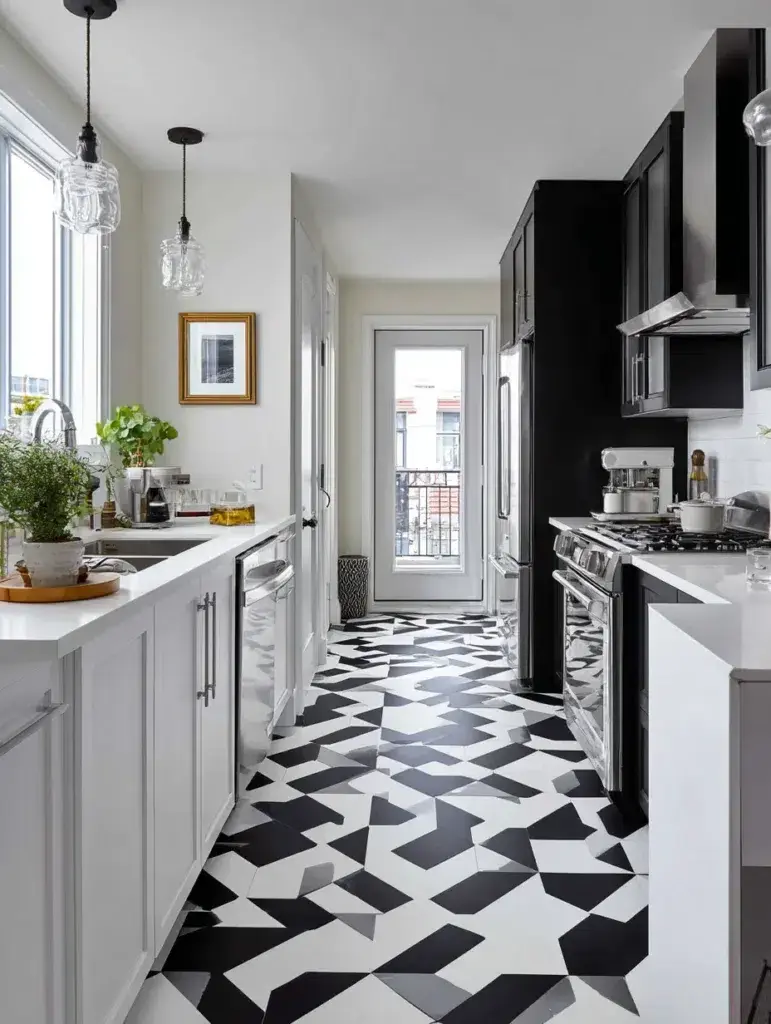
Geometric floor tiles introduce movement and personality while maintaining the black-and-white palette. Because the flooring already creates strong visual interest, simpler cabinetry usually works best alongside it.
Pattern scale matters here. Larger patterns suit open kitchens, while smaller geometric details often work better in compact spaces.
Warm wood stools or woven textures can help soften the graphic contrast naturally.
19. White Beadboard Cabinets with Black Countertops
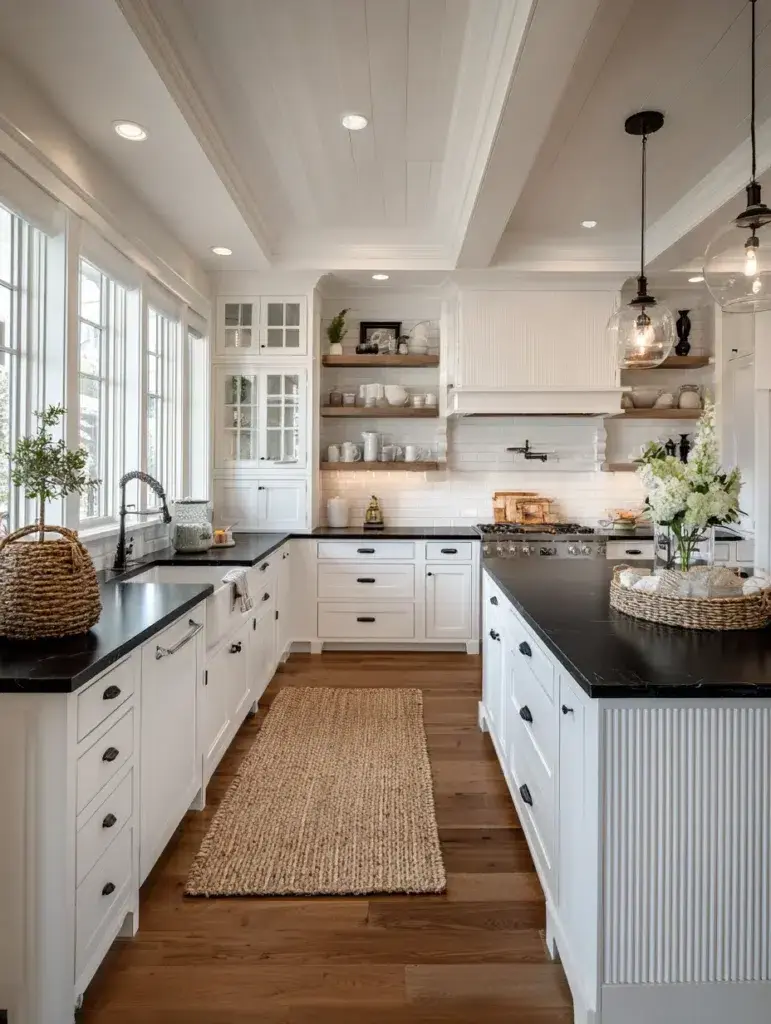
Beadboard cabinets introduce texture and cottage-inspired charm that flat white cabinetry sometimes lacks. Pairing them with black countertops grounds the space while preserving brightness.
This style works beautifully in farmhouse and coastal kitchens where layered texture matters more than ultra-modern minimalism.
Soapstone or leathered granite countertops often complement beadboard particularly well.
20. Black Frame Glass Cabinet Doors on White Cabinets
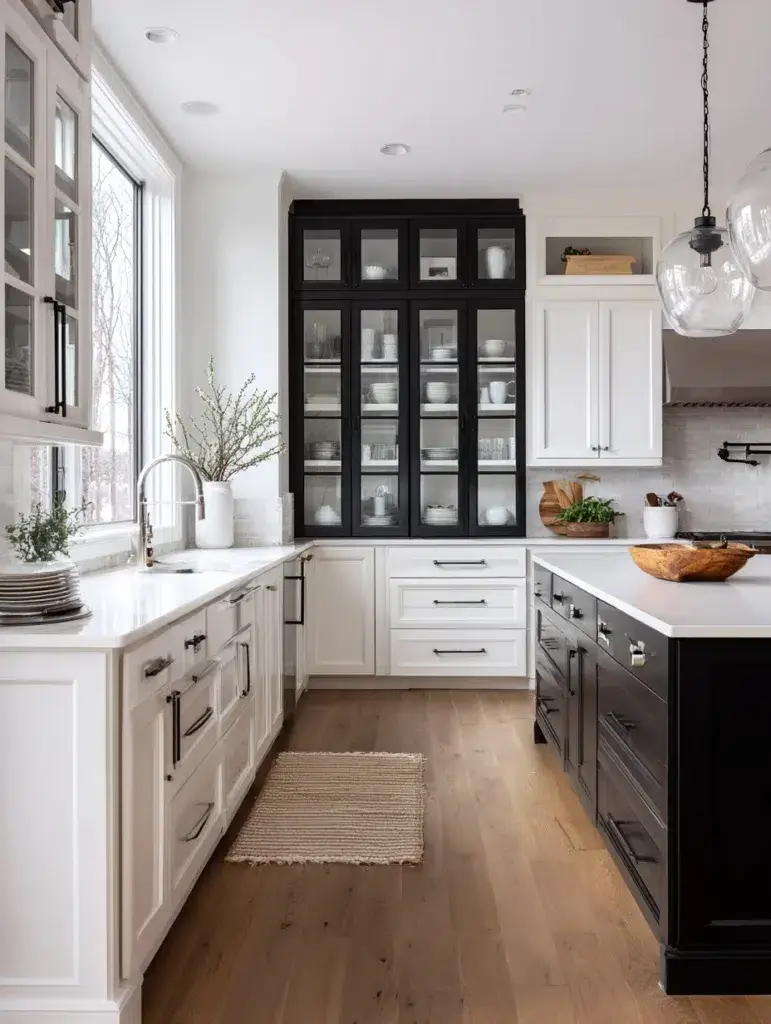
Black-framed glass cabinet doors add a modern farmhouse feel while breaking up long sections of white cabinetry. The black framing introduces structure while the glass keeps the space feeling open.
This works especially well when limited to a few upper cabinets rather than the entire kitchen.
Interior cabinet lighting helps emphasize displayed dishes and glassware beautifully during evenings.
21. Black Cabinets with White Integrated Appliances
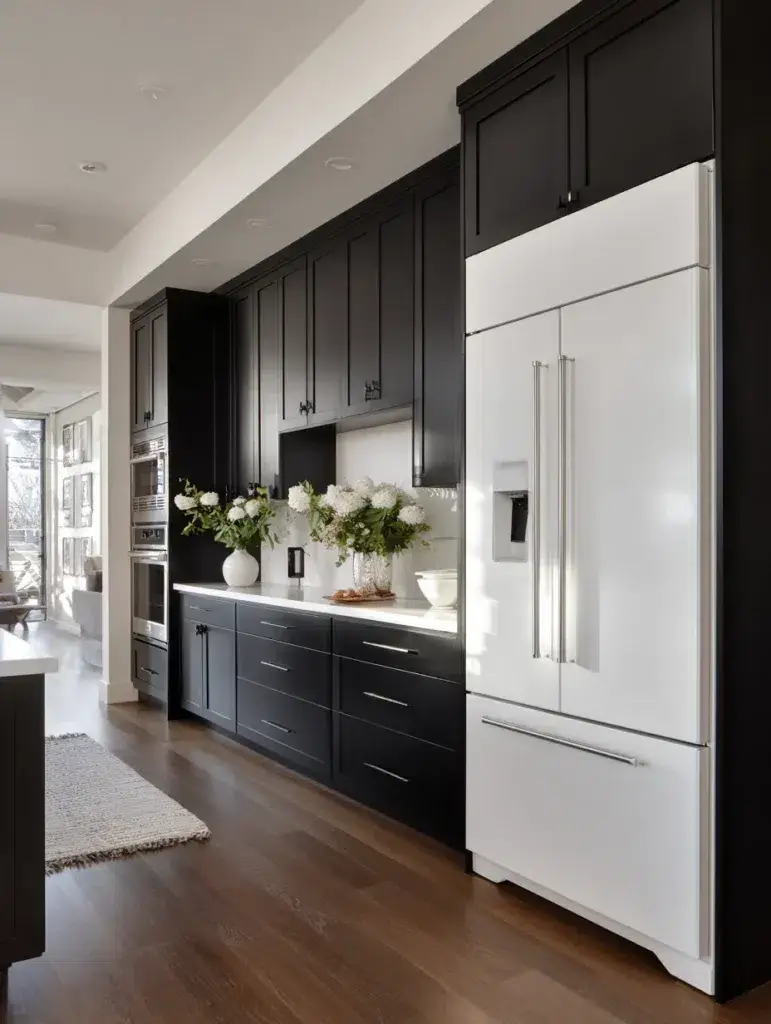
Integrated appliances help black cabinetry feel cleaner and more seamless overall. White appliance panels subtly break up darker cabinet walls without interrupting the overall design flow.
This approach works especially well in minimalist kitchens where visual simplicity is a priority.
Careful planning matters here because integrated appliances require coordination early in the design process.
Black and White Kitchen Style Comparison
| Style | Main Features | Best Materials | Overall Mood |
|---|---|---|---|
| Modern | Flat-front cabinets and minimal hardware | Quartz, matte finishes, slab doors | Clean and sleek |
| Farmhouse | Shaker cabinets and warm textures | Wood accents, beadboard, brass | Warm and inviting |
| Industrial | Dark cabinetry and metal details | Concrete, black steel, exposed lighting | Bold and dramatic |
| Transitional | Balanced contrast and layered textures | Marble, oak flooring, mixed finishes | Timeless and balanced |
Common Mistakes to Avoid
- Using too much stark contrast: Layering warm materials prevents the kitchen from feeling cold.
- Ignoring lighting: Black cabinetry needs proper lighting to avoid feeling heavy.
- Overdecorating: Strong contrast already creates visual interest, so avoid cluttering surfaces.
- Mixing too many styles: Keeping the overall direction cohesive helps black-and-white kitchens feel intentional.
- Choosing overly glossy finishes everywhere: Mixing matte and textured materials creates better balance.
Frequently Asked Questions
Are black-and-white kitchens still in style?
Yes. Black-and-white kitchens remain timeless because the contrast works across many design styles and adapts easily over time.
Do black cabinets make kitchens feel smaller?
Not necessarily. Proper lighting, lighter countertops, reflective surfaces, and balanced layouts help maintain openness.
What hardware works best with black-and-white kitchens?
Matte black, brass, brushed nickel, and even warm bronze finishes all work well depending on the kitchen’s overall style.
How do you soften a black-and-white kitchen?
Wood textures, woven accents, warm lighting, greenery, and natural stone all help create a softer and more inviting atmosphere.
Final Thoughts
Black-and-white kitchen cabinets continue to work because they create a foundation that feels both timeless and adaptable. Whether the design leans modern, farmhouse, transitional, or slightly industrial, the contrast naturally adds structure and visual depth.
The most successful black-and-white kitchens rarely rely only on color. Texture, lighting, hardware, and layered materials are what truly shape the mood of the room.
Whether you choose dramatic black cabinetry, simple white shaker doors, or a balanced two-tone layout, this classic combination leaves plenty of room to create a kitchen that feels personal, practical, and comfortable for everyday living.


