
Scottish-inspired decorating has a way of making a room feel instantly more grounded. It is warm without being fussy, traditional without feeling frozen in time, and layered in a way that makes a living room feel lived-in rather than overstyled. A coffee table is the perfect place to bring that mood in, because it naturally becomes the center of the room and the place where all the surrounding textures meet.
The most successful Scottish styling is not about turning your home into a themed space. It is about borrowing from the atmosphere of Highland interiors: tartan, wool, leather, aged metals, natural greenery, and pieces that feel as though they have been gathered over time. These details create a table that feels welcoming, storied, and beautifully relaxed.

How to Style a Scottish-Inspired Coffee Table
A Scottish-style coffee table usually feels richest when the materials do most of the work. Instead of relying on lots of small accessories, focus on a few pieces with weight, texture, and heritage character.
- Use tartan sparingly but intentionally: one runner, folded napkin, or fabric accent is often enough
- Bring in natural materials: wood, leather, wool, stone, brass, pewter, and glass all suit the look
- Layer heights: combine books, candles, trays, and one taller element such as greenery or a vessel
- Include something storied: a vintage box, old book, map, or heritage-inspired object adds authenticity
- Keep it usable: the table should still have room for cups, conversation, and everyday life
This style works best when it feels collected rather than crowded.
1. Layer a Tartan Runner for Instant Heritage Character
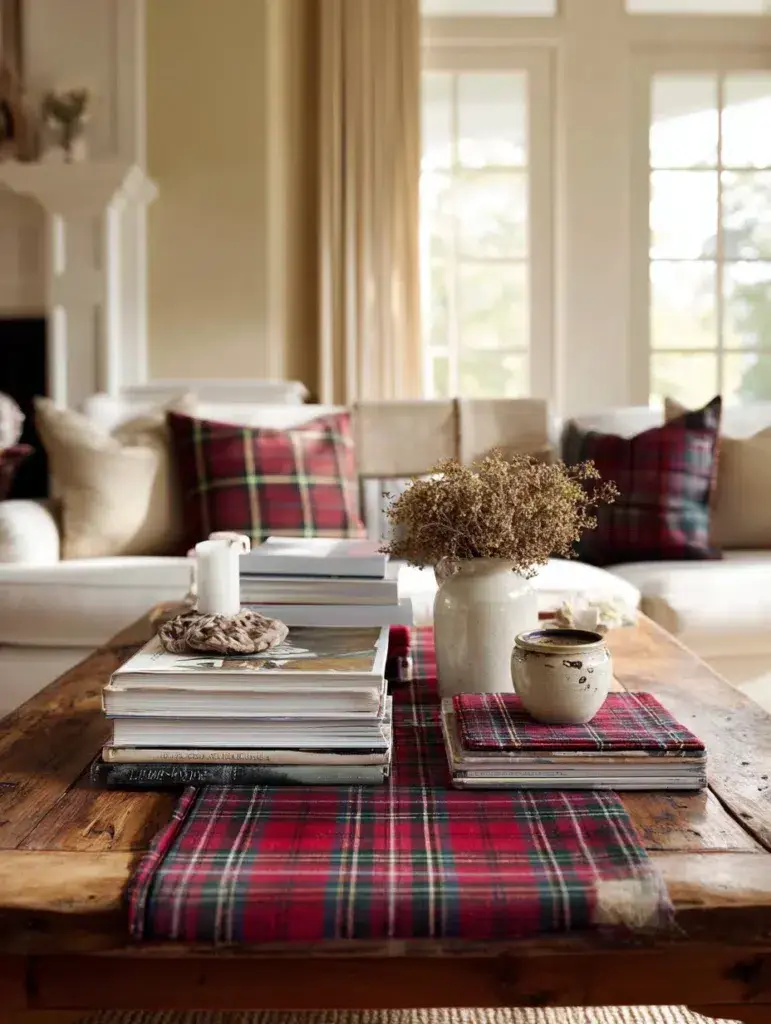
A tartan runner is one of the simplest ways to introduce Scottish influence without overcommitting to the look. Deep reds, forest greens, navy, and muted golds all bring a sense of warmth and history to the table.
Because tartan already has strong visual presence, it works best as a foundation rather than one pattern among many. Use it beneath a tray, books, or candles so the fabric feels integrated into the arrangement rather than draped there as an afterthought.
If the room already includes plaid elsewhere, keep the colors related so the patterns feel intentional together.
2. Stack Leather-Bound Books for a Library-Like Feel
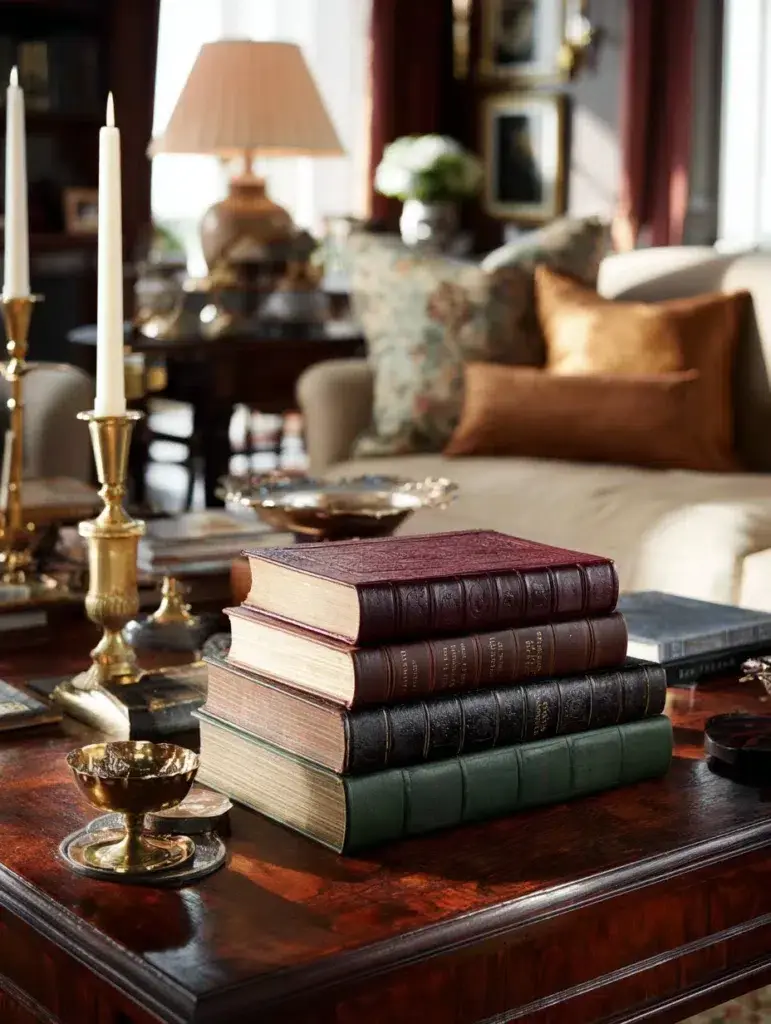
Leather-bound books bring instant depth and a sense of history, which is why they suit Scottish-inspired interiors so naturally. They add height, weight, and a slightly scholarly quality that echoes old manor libraries and country house drawing rooms.
Choose books that feel relevant to the mood of the room. Poetry, landscape photography, travel, history, or whisky books all fit especially well. A short stack topped with a candle, small vessel, or decorative object often looks more convincing than several books spread loosely across the table.
The worn texture of aged leather is part of the charm, so perfection is not the goal here.
3. Display Vintage Pewter for a Subtle Metallic Accent
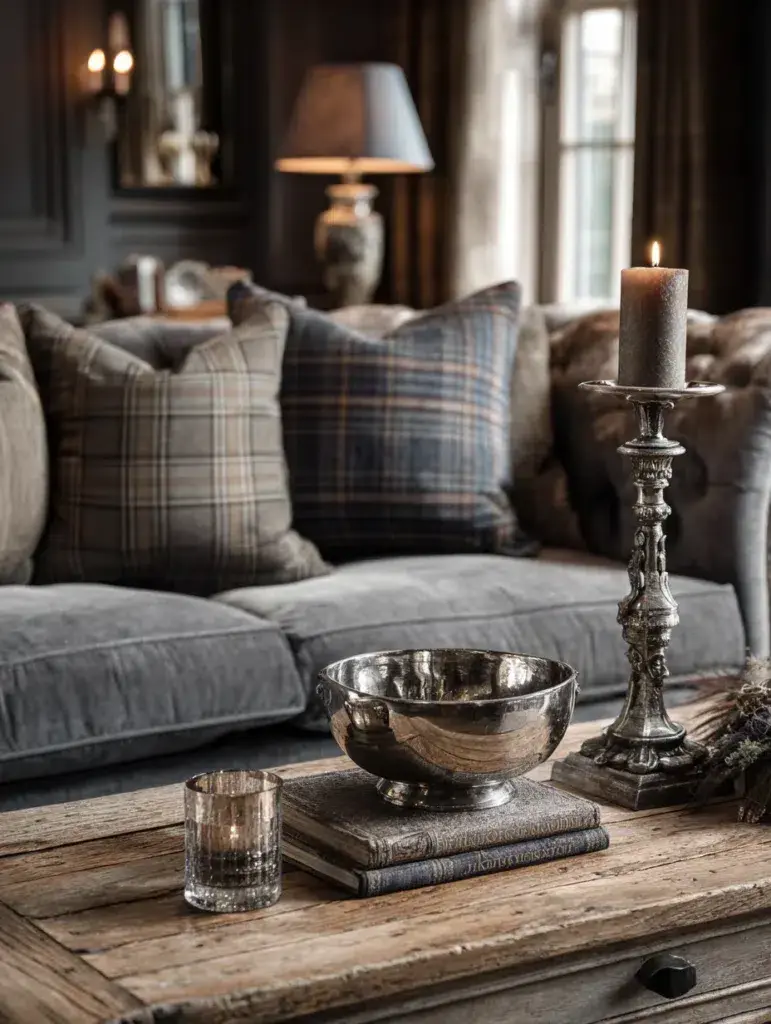
Pewter is understated in the best way. It has a soft, aged sheen that works beautifully with tartan, wood, leather, and wool, which makes it one of the most natural metals to introduce into a Scottish-inspired room.
A small pewter dish or bowl can hold practical items such as remotes, coasters, or matches while still looking decorative. It also works well as a quiet counterpoint to richer materials such as dark wood or heavily patterned fabric.
When styling with pewter, let the finish speak for itself. One good piece usually has more impact than several smaller metallic objects competing together.
4. Add Heather and Dried Botanicals for Highland Atmosphere
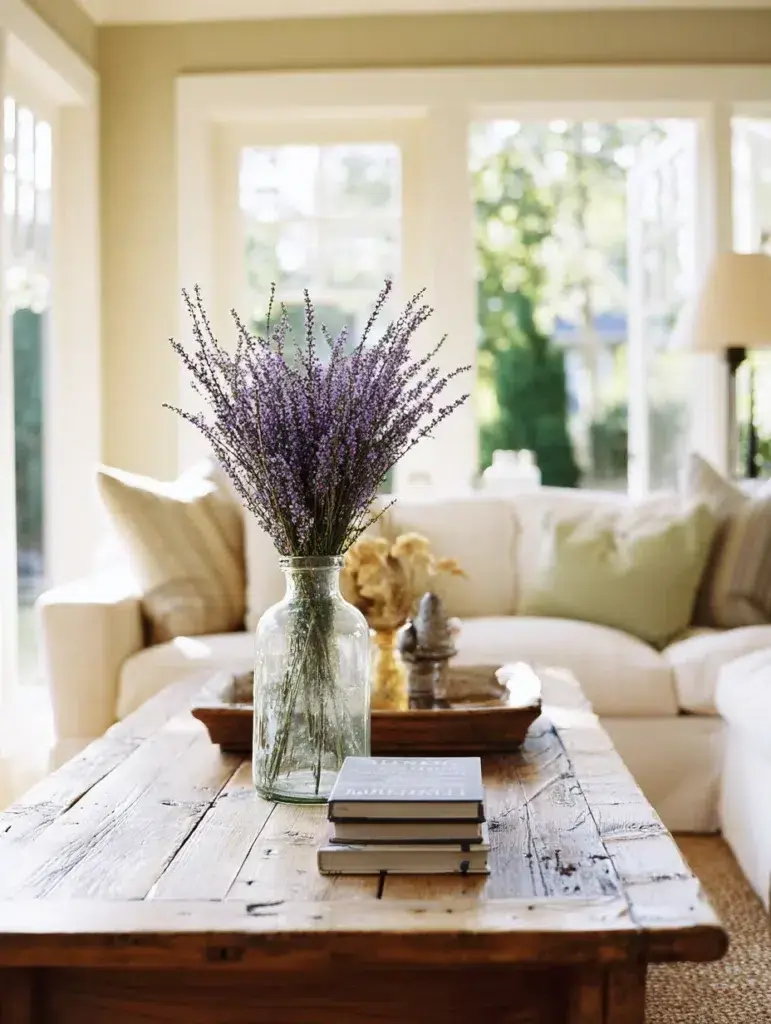
Heather instantly evokes the Scottish landscape, and it brings a lighter, more natural note to what could otherwise become a heavy arrangement. Even a small sprig in a simple vessel can soften the table and make the styling feel more rooted in nature.
Dried grasses, thistles, pine, or branches can create a similar effect if heather is not practical. These botanical details are especially useful because they introduce height and movement without looking too formal.
Use a vessel with some character, such as stoneware, glass, or pewter, so the greenery feels integrated into the rest of the styling.
5. Use a Wooden Tray to Anchor the Arrangement
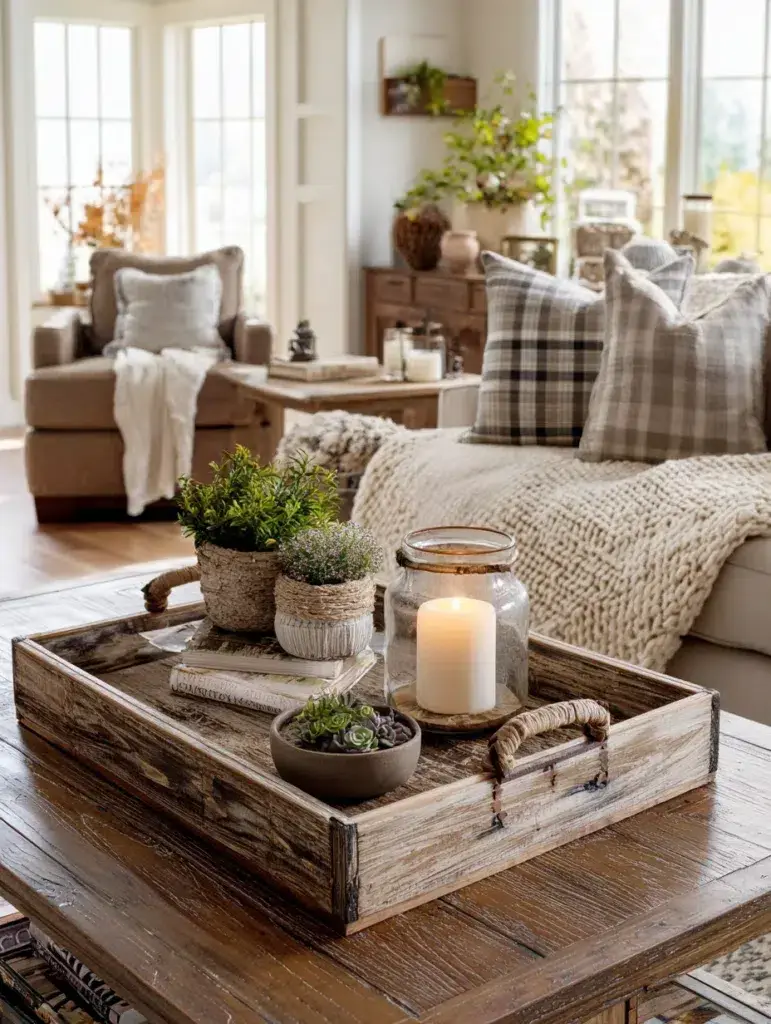
A wooden tray helps a coffee table arrangement feel deliberate. It also keeps books, candles, and smaller pieces visually connected, which is especially helpful if the table itself is large or the styling needs some structure.
Oak, pine, walnut, and other natural wood finishes all suit the Scottish look well, especially when they show some grain, wear, or warmth. A tray with handles can feel slightly more rustic, while a simpler rectangular form tends to feel more tailored.
This is also one of the easiest ways to keep the table practical, since the entire arrangement can be moved when you need more surface space.
6. Add Brass Candlesticks for Warmth and Height
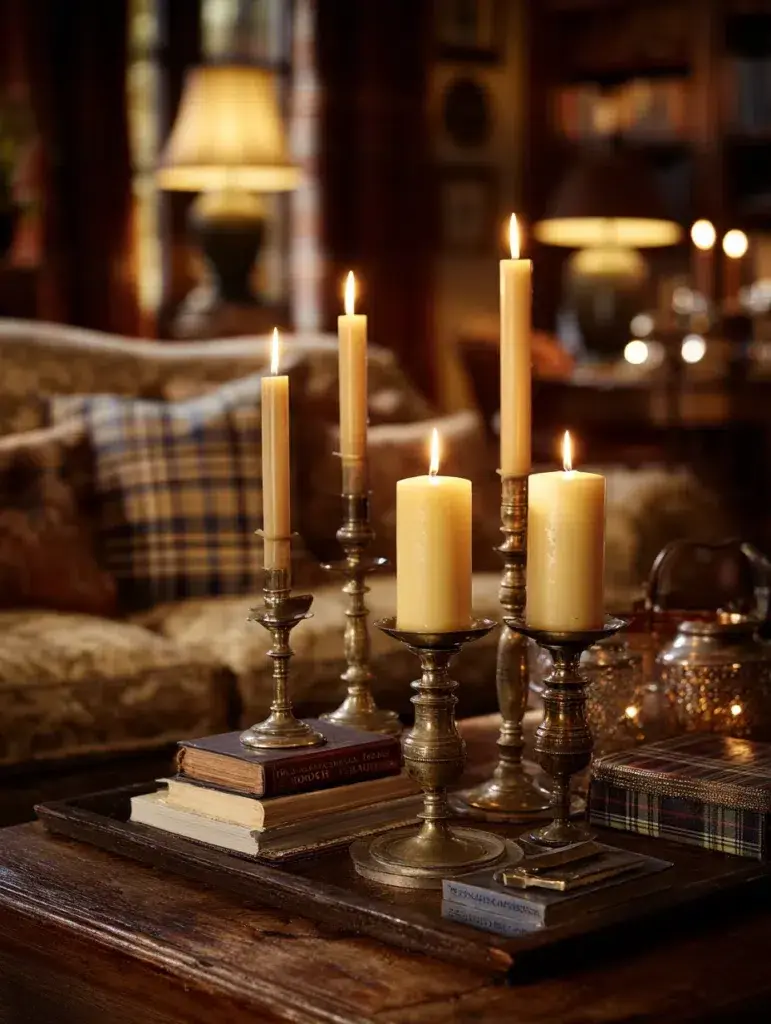
Brass candlesticks introduce warmth in a way that feels elegant rather than shiny. They pair especially well with darker tartans, aged wood, and leather because the metal brings a gentle glow to all those deeper tones.
Use candlesticks of different heights if you want the table to feel more layered, but keep the grouping restrained. Two or three usually feels enough. Taper candles in cream or soft ivory tend to look more timeless here than anything too bright white.
This is one of the easiest ways to add vertical interest without cluttering the table.
7. Style With a Thistle Motif for a Meaningful Detail
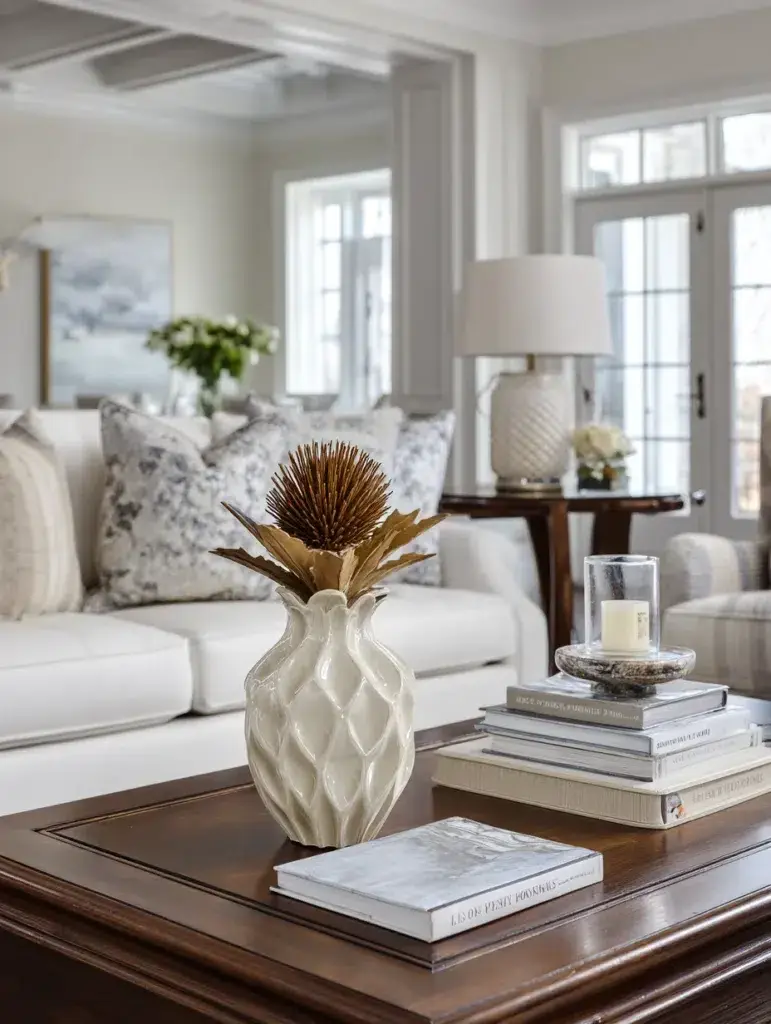
The thistle is one of Scotland’s most recognisable symbols, but it works best when used quietly. A ceramic thistle, small dish, or decorative accent can bring that reference in without making the room feel overly themed.
This is the kind of detail that works beautifully beside stacked books or a candle, especially when the rest of the styling is already restrained. It adds meaning rather than volume.
Because it is symbolic, one well-placed piece usually feels far stronger than repeating the motif several times around the room.
8. Display a Vintage Map of Scotland
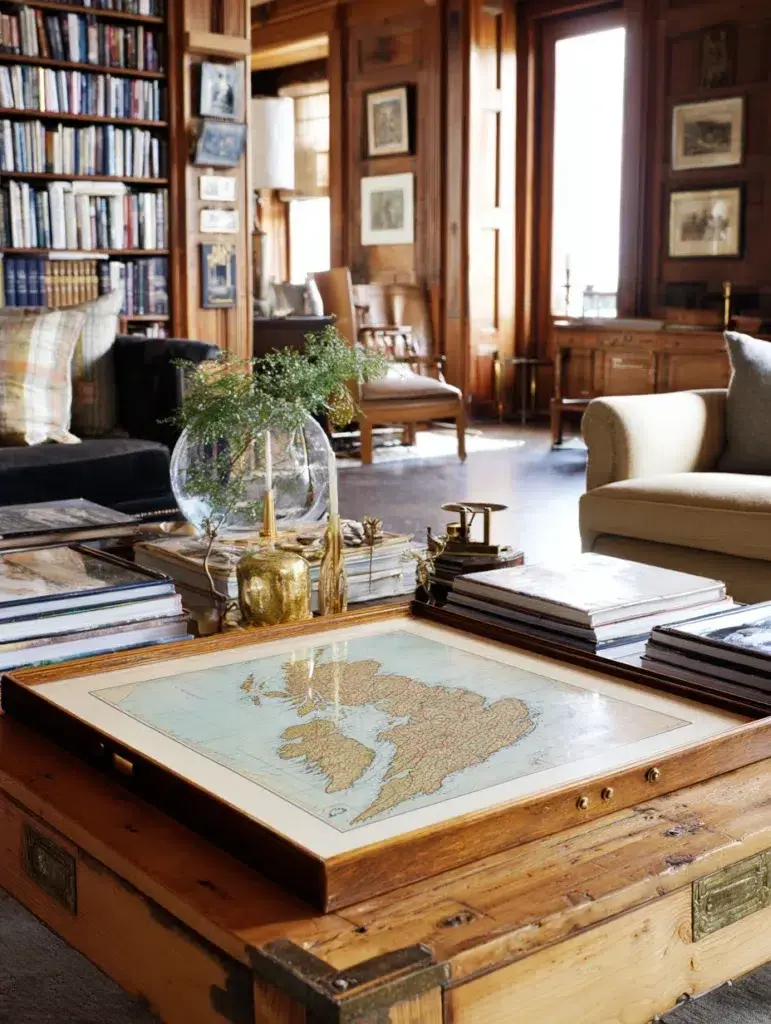
A vintage map brings personality and a sense of place to the table. It is especially useful if you want the styling to feel connected to Scotland in a quieter, more collected way than obvious themed décor would allow.
A small framed map can be leaned against a stack of books or propped on a miniature easel if the table is large enough. A map tucked into a tray or used beneath glass can also work beautifully.
The aged paper tones pair naturally with tartan, wood, and leather, which is why this detail tends to feel so cohesive in Highland-inspired interiors.
9. Incorporate Wool Felt Coasters for Practical Texture
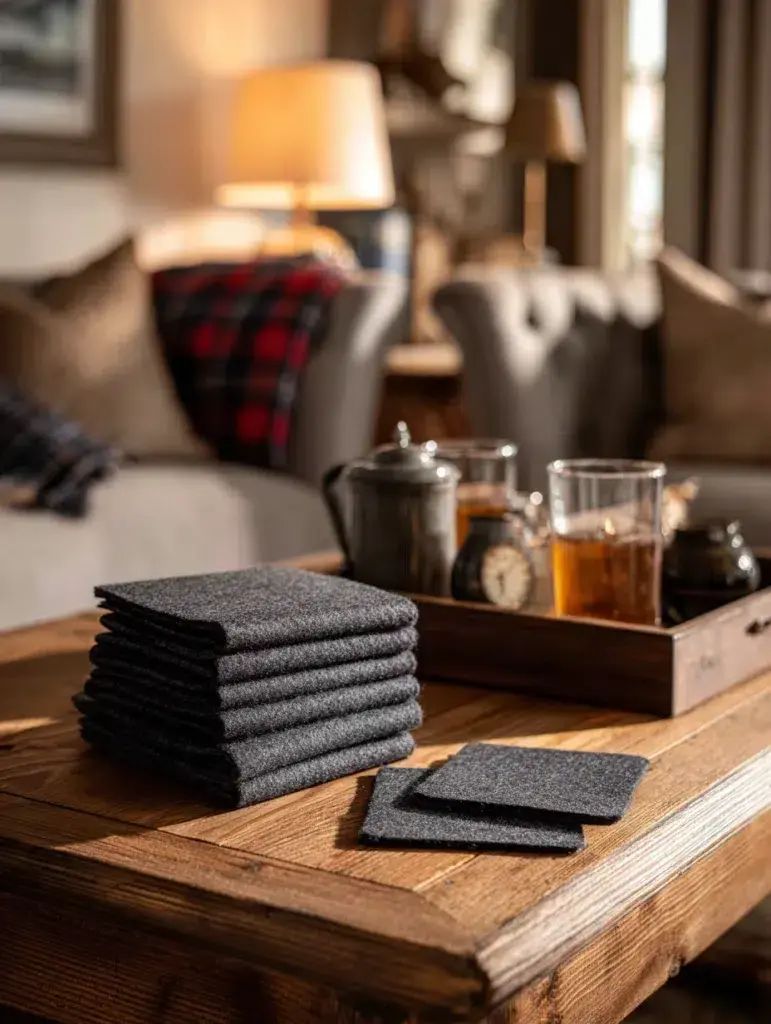
Wool felt coasters bring in one of the most iconic Scottish materials in a very practical form. They protect the table, soften hard surfaces, and quietly reinforce the layered, tactile feel that makes this style work so well.
Charcoal, oatmeal, heather gray, and cream are especially easy choices because they sit comfortably beside tartan fabrics and rustic wood tones. If you want the coasters visible, stack them neatly on a small tray or dish rather than hiding them away.
It is a small detail, but one that makes the styling feel thoughtful rather than purely decorative.
10. Add a Stoneware Crock for Rustic Weight
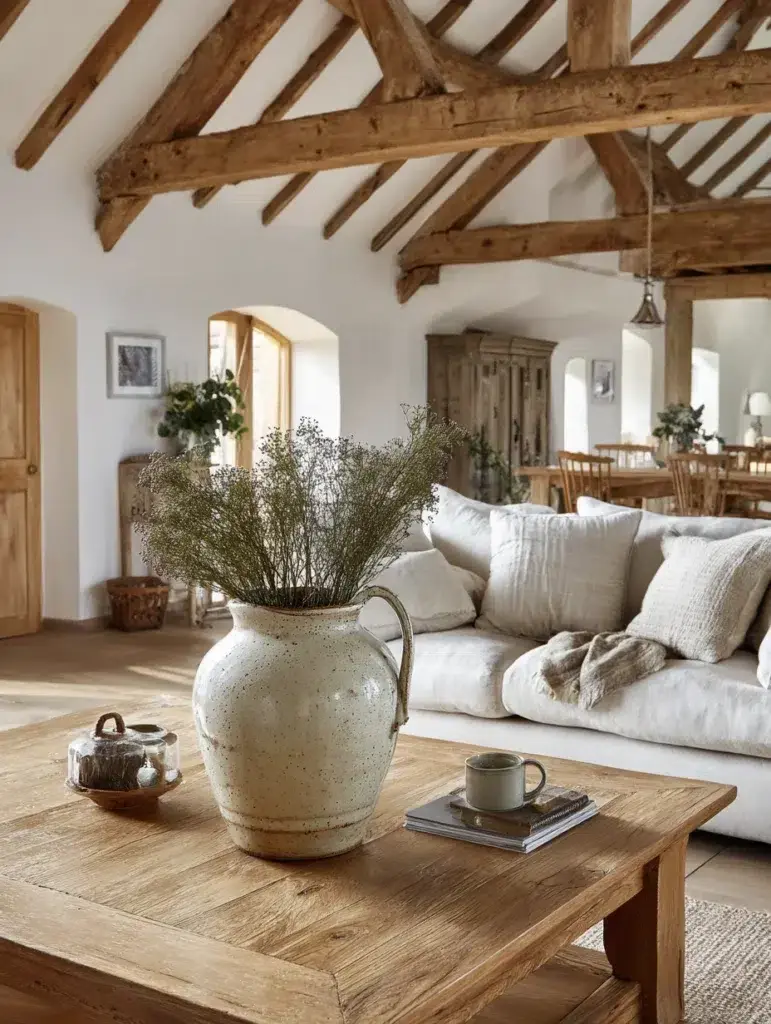
Stoneware has the kind of practical beauty that sits perfectly in a Scottish-inspired room. A crock, jug, or softly glazed vessel adds texture and grounding weight to the table, especially when paired with greenery or dried stems.
Neutral glazes such as cream, gray, soft brown, and weathered blue tend to work best because they support the other materials without fighting for attention. If the vessel has enough presence, it can stand on its own without needing flowers at all.
This is particularly useful if the rest of the arrangement already includes books and candles and simply needs one more sculptural element.
11. Fold in Clan Tartan Napkins or Cloths
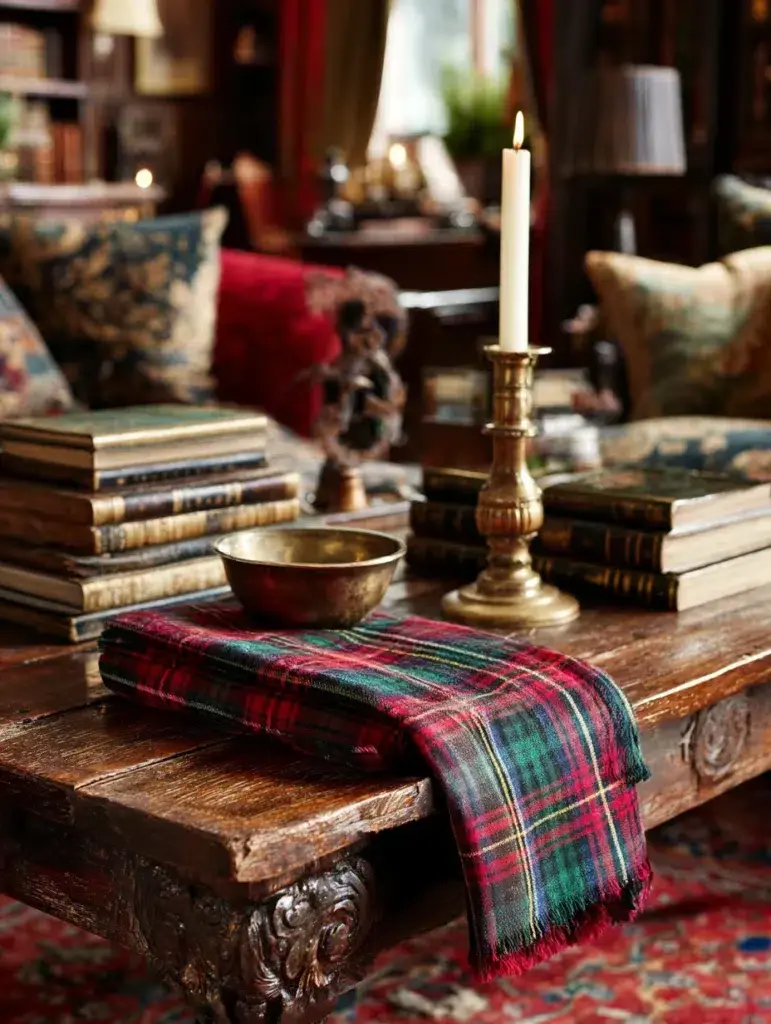
A folded tartan napkin or small cloth adds fabric layering without requiring a full runner across the table. It is an easy way to introduce pattern in a more understated way, especially if the coffee table arrangement is fairly minimal.
If you know your clan tartan, this detail can feel especially personal. Otherwise, choose a tartan whose colors work naturally with the room. Drape it loosely beneath a bowl, books, or candles so it feels relaxed rather than overly arranged.
Softly folded fabric tends to feel more authentic here than anything overly crisp or perfectly symmetrical.
12. Display a Small Whisky Decanter for Refined Character
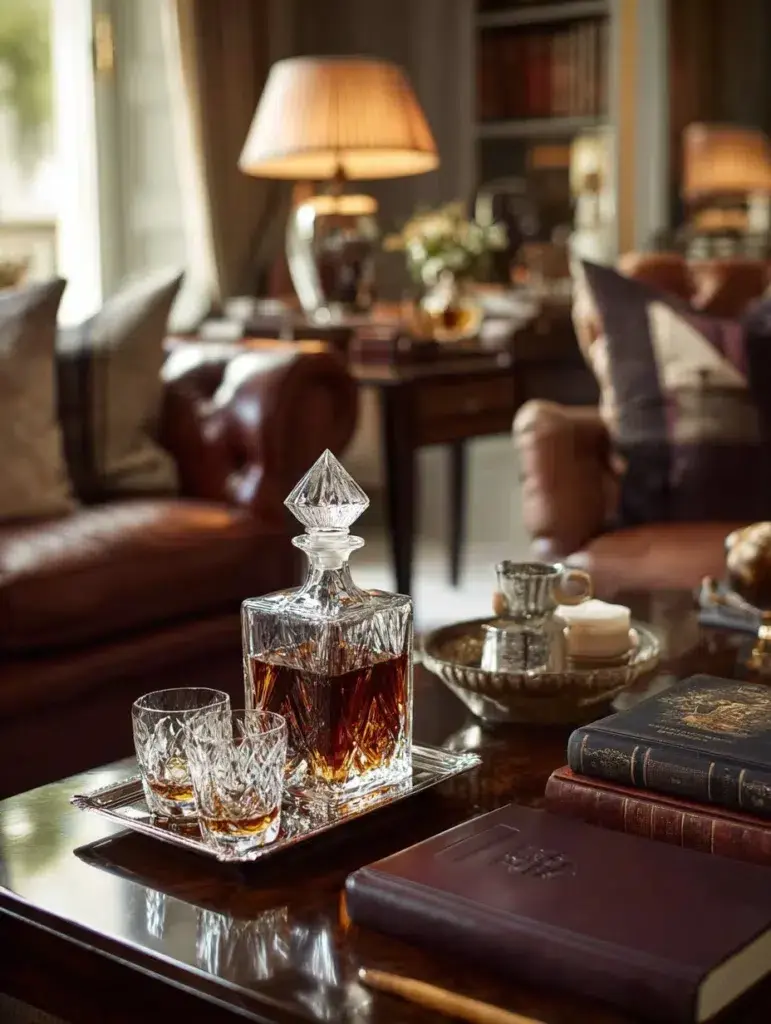
A small whisky decanter brings a polished, heritage feel to the coffee table and ties naturally into one of Scotland’s best-known traditions. It also adds light-catching sparkle, which can be useful in a room filled with heavier textures.
It looks especially good on a tray with books or candles, where the glass can contrast against wool, leather, or wood. Even if it is purely decorative, it contributes something refined without feeling formal in the wrong way.
The key is keeping the scale right. One decanter or a small decanter-and-glass pairing is usually enough.
13. Use Woven Baskets for Hidden Storage Beneath the Table
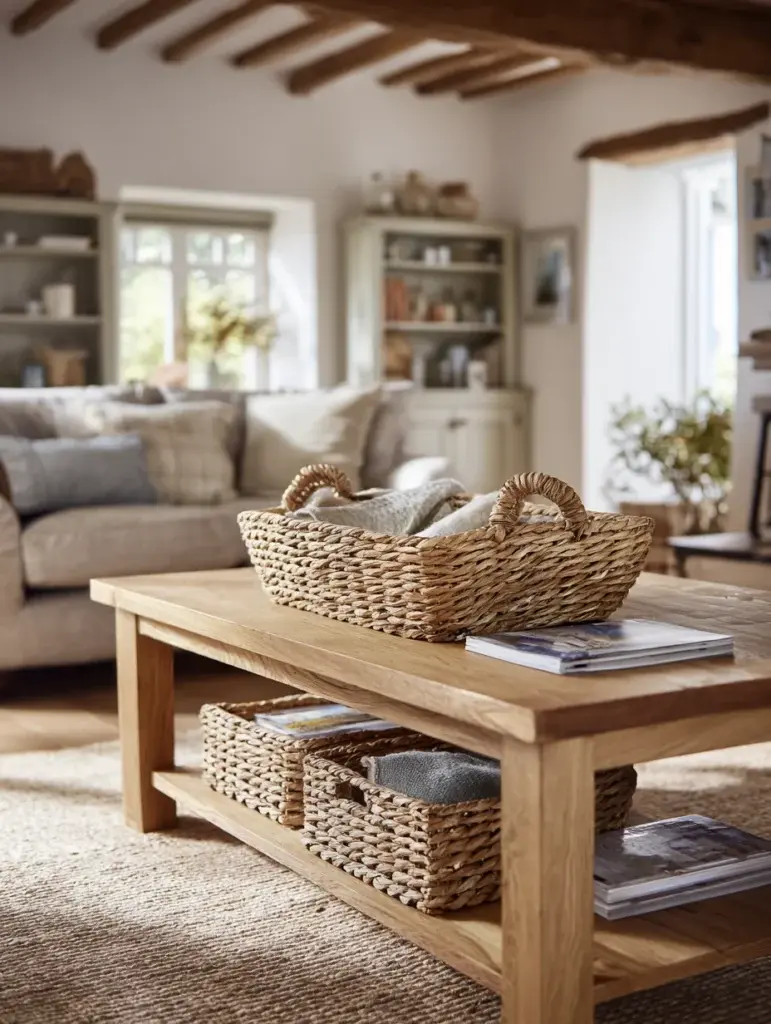
Scottish-inspired rooms often feel comfortable because they are not overstyled or overly precious. Woven baskets help maintain that ease by giving you a place to tuck away blankets, magazines, or everyday clutter without disrupting the mood of the room.
They also add texture and warmth, especially if the coffee table has a lower shelf or open base. Seagrass, wicker, and rougher woven finishes tend to feel especially at home with tartan, wood, and leather.
This is a practical move, but it also helps the whole room look more considered.
14. Cluster White or Cream Candles for Soft Light
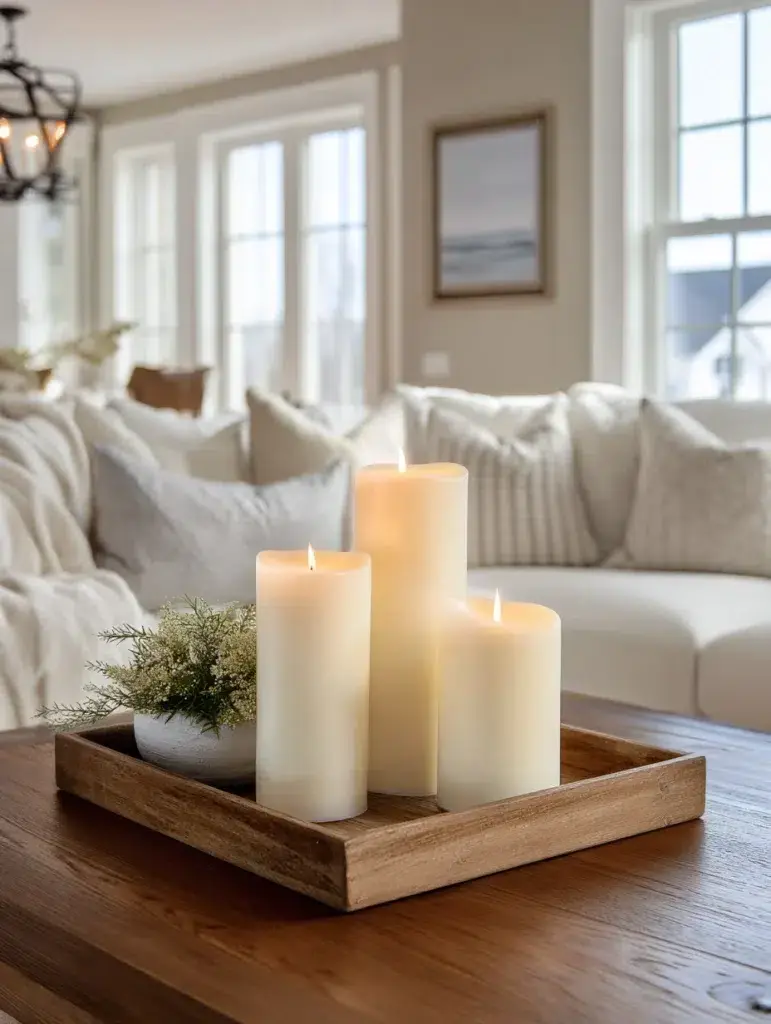
A cluster of cream or ivory candles can soften the whole coffee table arrangement. They add gentle vertical variation, make the room feel more welcoming in the evening, and balance some of the darker or heavier elements often found in Scottish-style interiors.
Vary the heights slightly and group them in odd numbers if you want the display to feel organic. A tray or shallow dish beneath them helps keep the cluster looking intentional.
This is one of the simplest additions on the list, but often one of the most effective.
15. Introduce Copper for Warm, Handcrafted Contrast
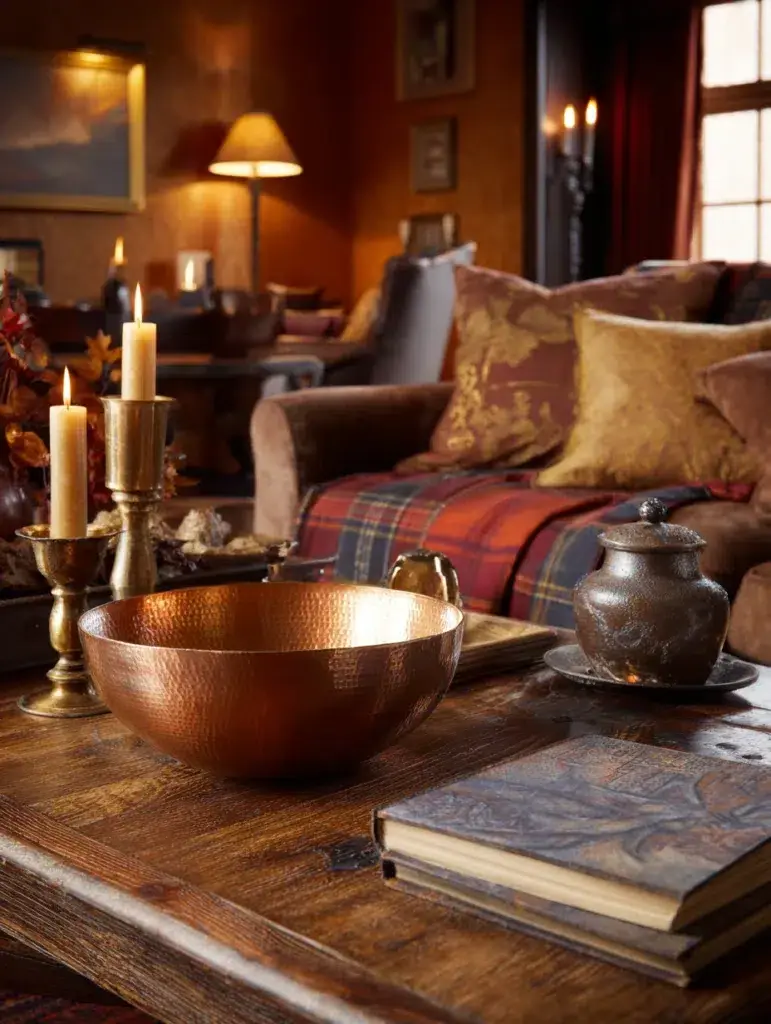
Copper brings a richer, warmer metallic note than silver or chrome, which is why it works so naturally beside tartan and deep wood. A hammered bowl or small cup adds a handcrafted feel that makes the table look more layered and less polished in a showroom sense.
Because copper already has strong character, keep the piece small and let it act as an accent rather than a focal point. It looks particularly good beside candles, greenery, or leather-bound books.
If the room already contains brass, copper can still work, but keep the tones similarly warm so the metals feel related.
16. Display Vintage Scottish Books for Instant Authenticity
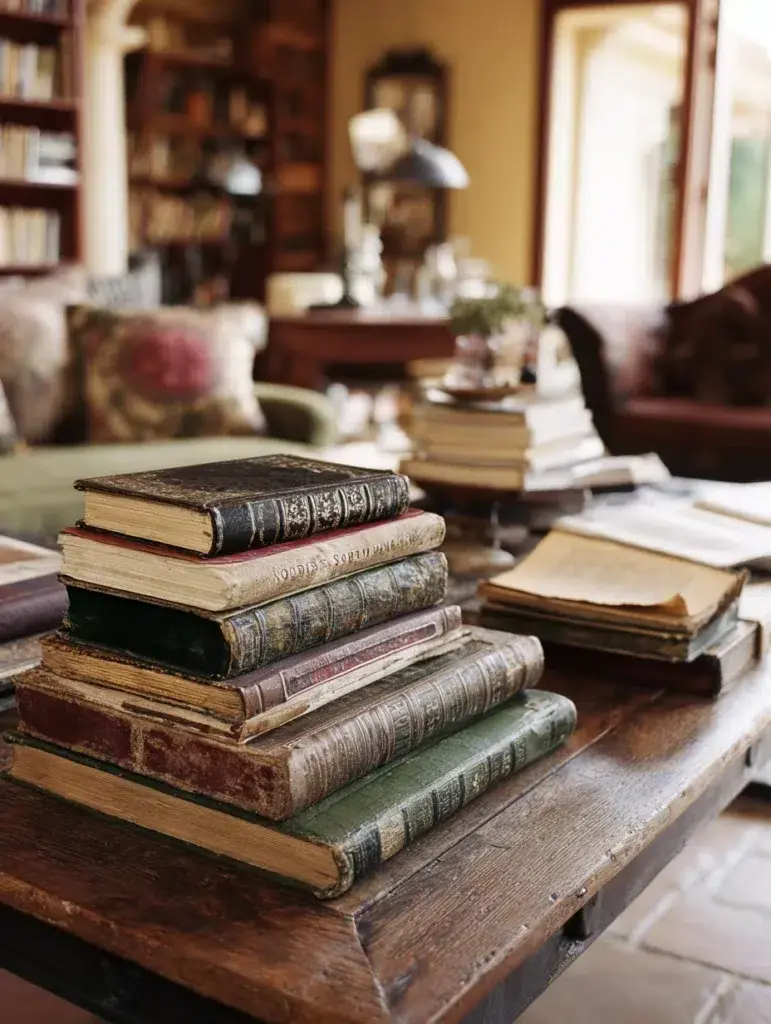
Books with a clear Scottish connection make the coffee table feel personal rather than generically themed. Travel guides, landscape books, poetry, folklore, or old historical volumes all help create a sense of place.
These are especially effective if the covers have character, whether in worn cloth, faded paper, or aged leather. Even a small stack can tell a story and make the arrangement feel as though it reflects real interests rather than decorative styling alone.
Use them where they can be picked up and enjoyed, not just admired from across the room.
17. Add Moss for a Touch of Highland Green
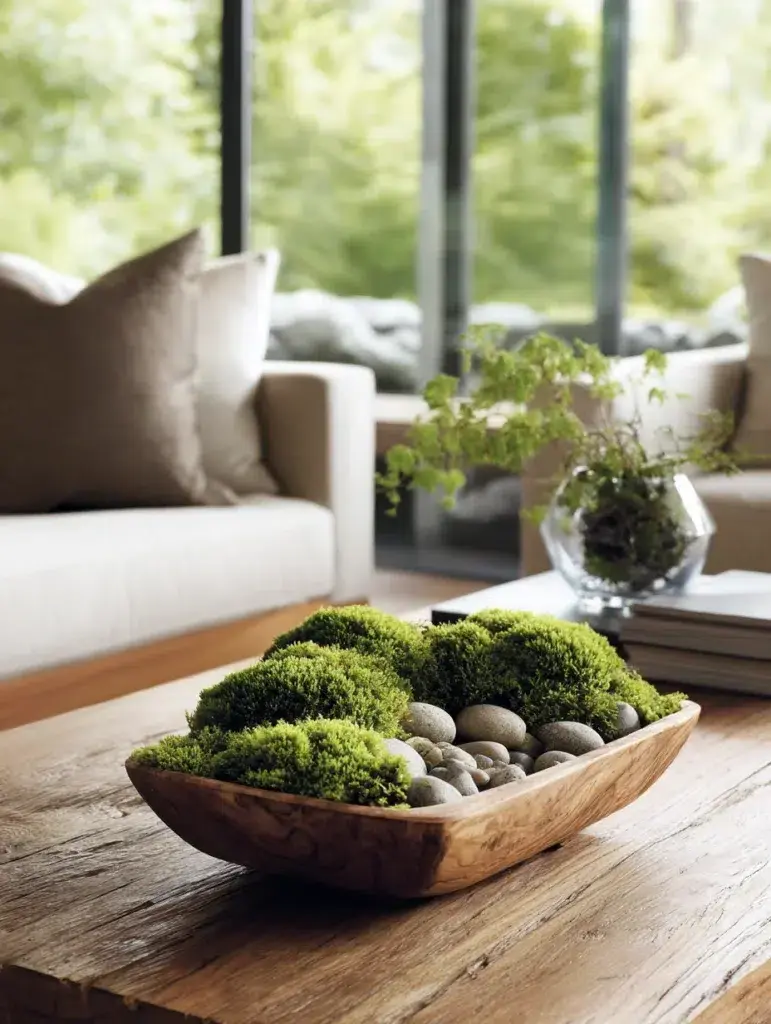
A small bowl of preserved moss introduces a lush, grounded green that immediately softens a Highland-inspired arrangement. It feels organic, slightly wild, and very much in keeping with the damp, rugged beauty associated with Scottish landscapes.
Moss works particularly well when the rest of the styling leans dark or heavily textured, because it brings in a fresher, softer note. A low bowl or shallow dish usually looks best, keeping the greenery from becoming too formal or fussy.
It is a simple addition, but one that makes the whole table feel more alive.
18. Use Vintage Metal Boxes for Storage With Character
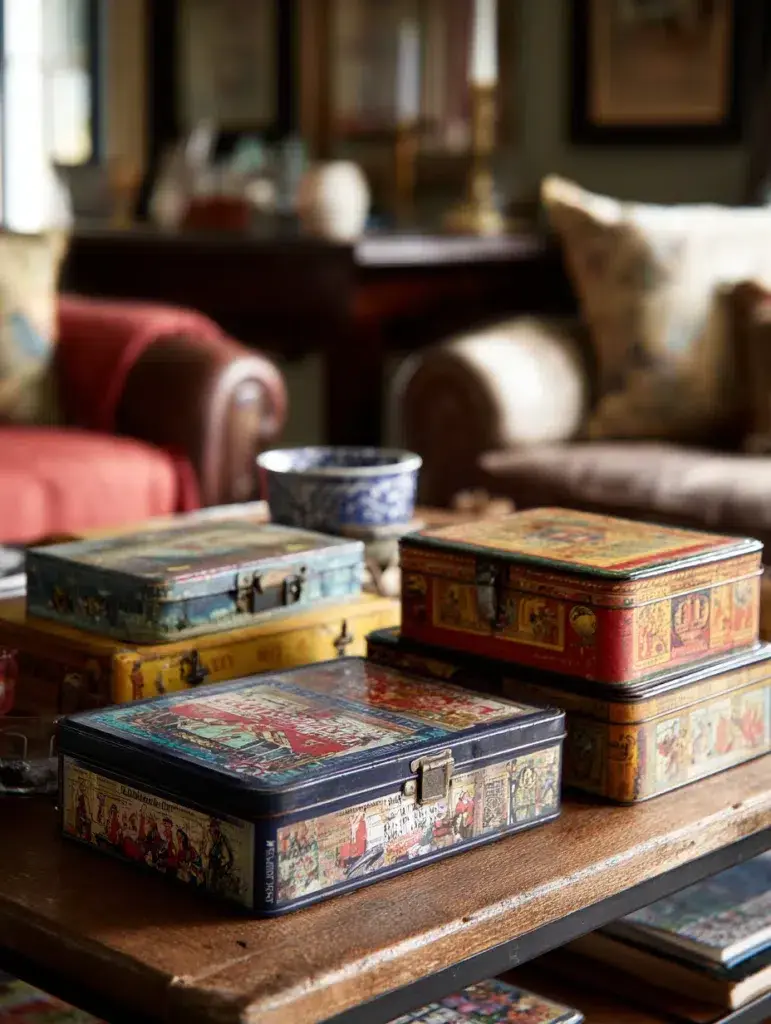
Vintage tins and metal boxes bring both function and nostalgia. They are useful for tucking away coasters, matches, or smaller items while also contributing to the layered, inherited look that suits Scottish interiors so well.
Because they often come with aged patina, old labels, or muted finishes, they add instant character without needing much else around them. A single box on a tray or beside a stack of books can be enough to make the table feel more collected.
This is also an easy way to add a touch of history without spending much.
19. Add Fresh Greenery in Glass Bottles for a Cottage Feel
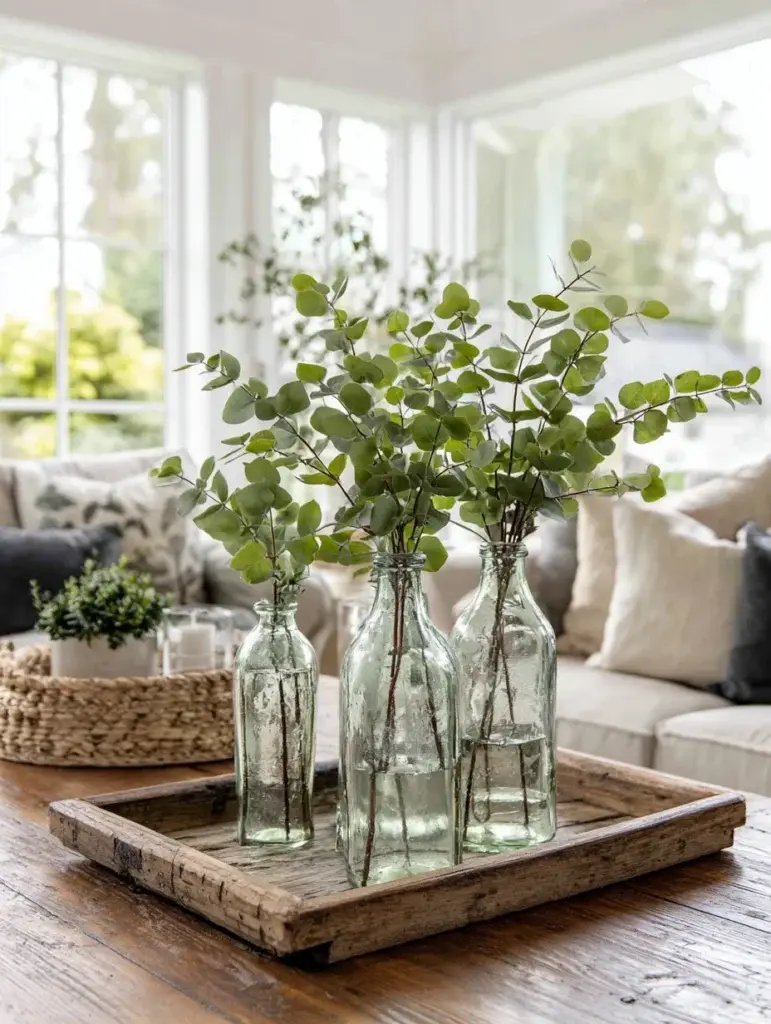
Simple greenery in old glass bottles brings a more relaxed cottage note to the coffee table. It feels unfussy and slightly rural, which makes it especially appealing if you want the room to nod toward a Scottish cottage rather than a more formal estate look.
Herbs, leafy cuttings, or a few gathered stems are usually enough. Clear or lightly tinted bottles work well because they keep the arrangement airy and let the greenery do the work.
Use them in pairs or trios if the table is larger, but do not overfill them. The charm lies in the simplicity.
20. Layer in Chunky Knit Texture for Highland Warmth
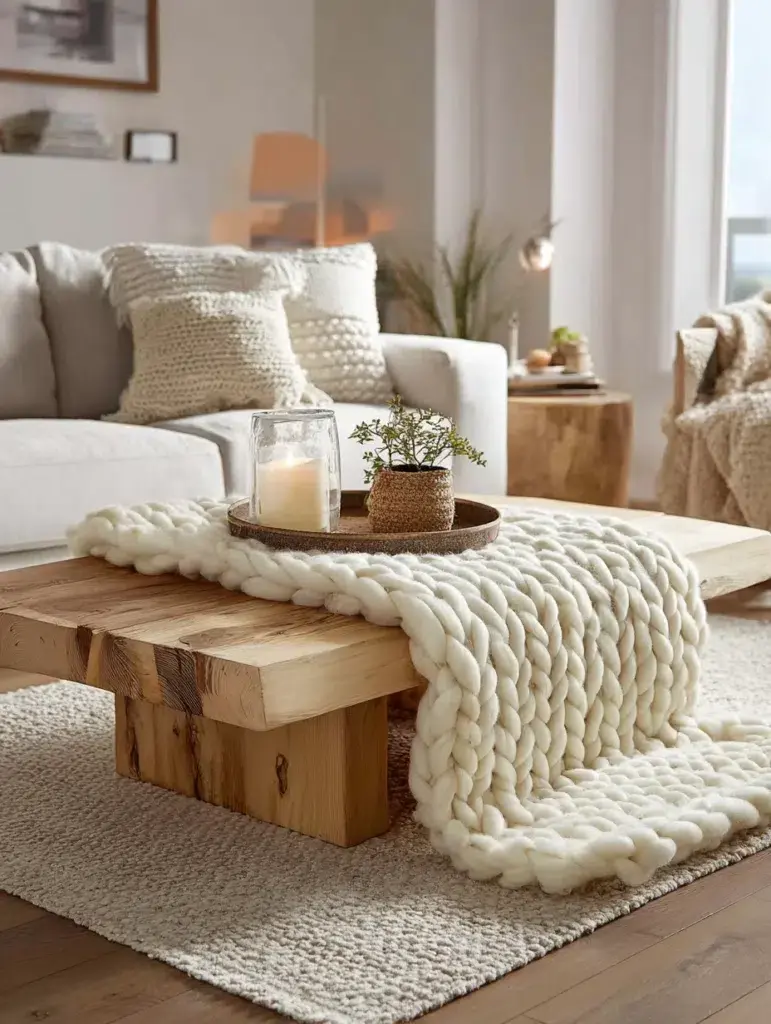
Chunky knit fabric adds the kind of softness that keeps a Scottish-inspired room from feeling too dark or stern. A knit runner, folded textile, or even a casually placed swatch can bring in the warmth associated with wool blankets and fireside living.
This works particularly well in colder months, when the coffee table can help carry the room’s seasonal coziness. Keep the knit tone neutral or heritage-friendly so it sits comfortably beside tartan and wood.
Because the texture is already strong, use it lightly and let it act as one layer among several rather than the whole story.
21. Add a Highland Cow Figurine for a Playful Finishing Touch
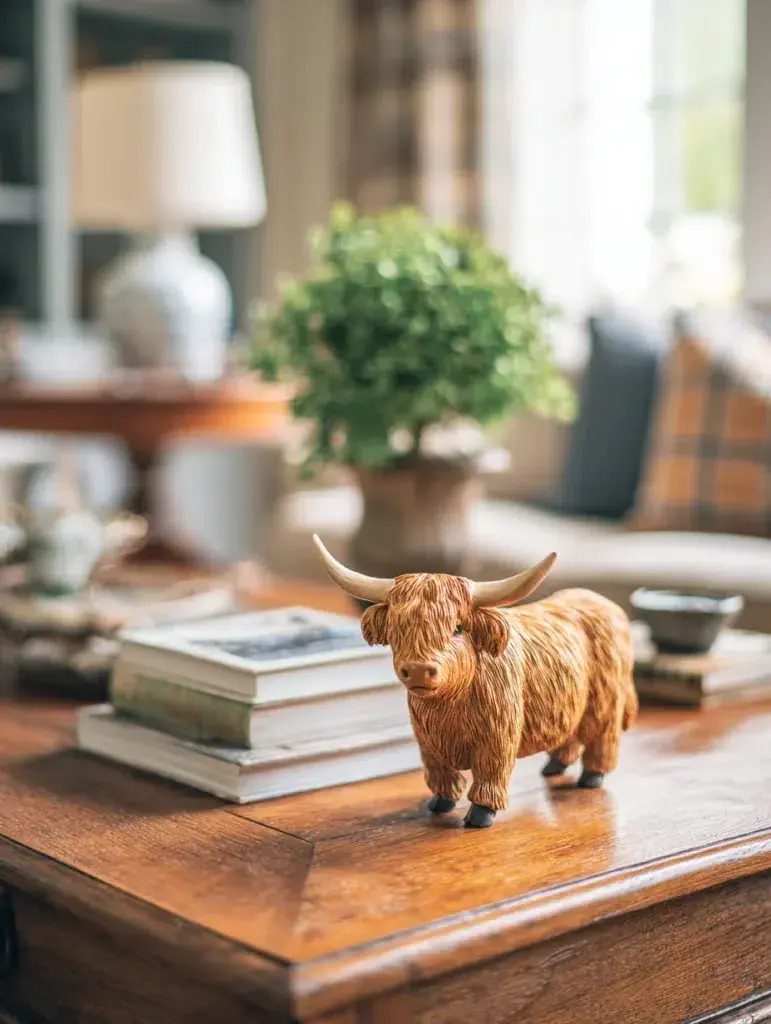
A small Highland cow figurine can add a bit of personality to the table, especially if the rest of the styling is fairly serious or traditional. It is one of the more playful references to Scotland, so it works best when kept subtle.
Style it beside books, a candle, or greenery so it feels like part of the arrangement rather than a novelty item placed on its own. Materials matter here too. Wood, ceramic, or cast metal versions usually feel more elevated than anything too bright or obviously souvenir-like.
Done well, it adds charm without tipping the whole room into theme décor.
Final Thoughts
A Scottish-inspired coffee table feels best when it balances warmth, heritage, and restraint. Tartan, leather, wood, brass, greenery, and a few meaningful accents can create a table that feels storied and inviting without looking overdone.
The beauty of this style is its flexibility. You can lean more cottage, more manor house, or more modern depending on the shapes and materials you choose. What matters most is that the arrangement feels layered, comfortable, and a little collected over time.
Frequently Asked Questions
How do you decorate a coffee table in a Scottish style?
Start with warm, heritage-inspired layers such as tartan fabric, leather-bound books, natural wood, brass or pewter accents, candles, and a little greenery. The goal is to create a collected look that feels cozy and grounded rather than overly themed.
What colors work best for Scottish home decor?
Deep heritage tones such as forest green, burgundy, navy, warm brown, charcoal, and muted gold all work beautifully. These shades pair naturally with wood, leather, wool, and aged metals.
What is the most iconic Scottish decor element?
Tartan is probably the most recognisable element in Scottish-inspired décor. It brings instant heritage character, but it tends to look best when used intentionally rather than repeated too heavily.
How can I make my living room feel cozy like a Scottish cottage?
Layer wool and knit textures, use warm woods, add candlelight, bring in natural greenery, and mix practical pieces with vintage-style details. A room feels most cottage-like when it is comfortable as well as visually warm.
Can Scottish decor work in modern homes?
Yes. Scottish-inspired styling works very well in modern spaces when it is edited carefully. A few tartan touches, a rustic tray, leather books, or brass candlesticks can introduce Highland warmth without overwhelming a cleaner room.


