
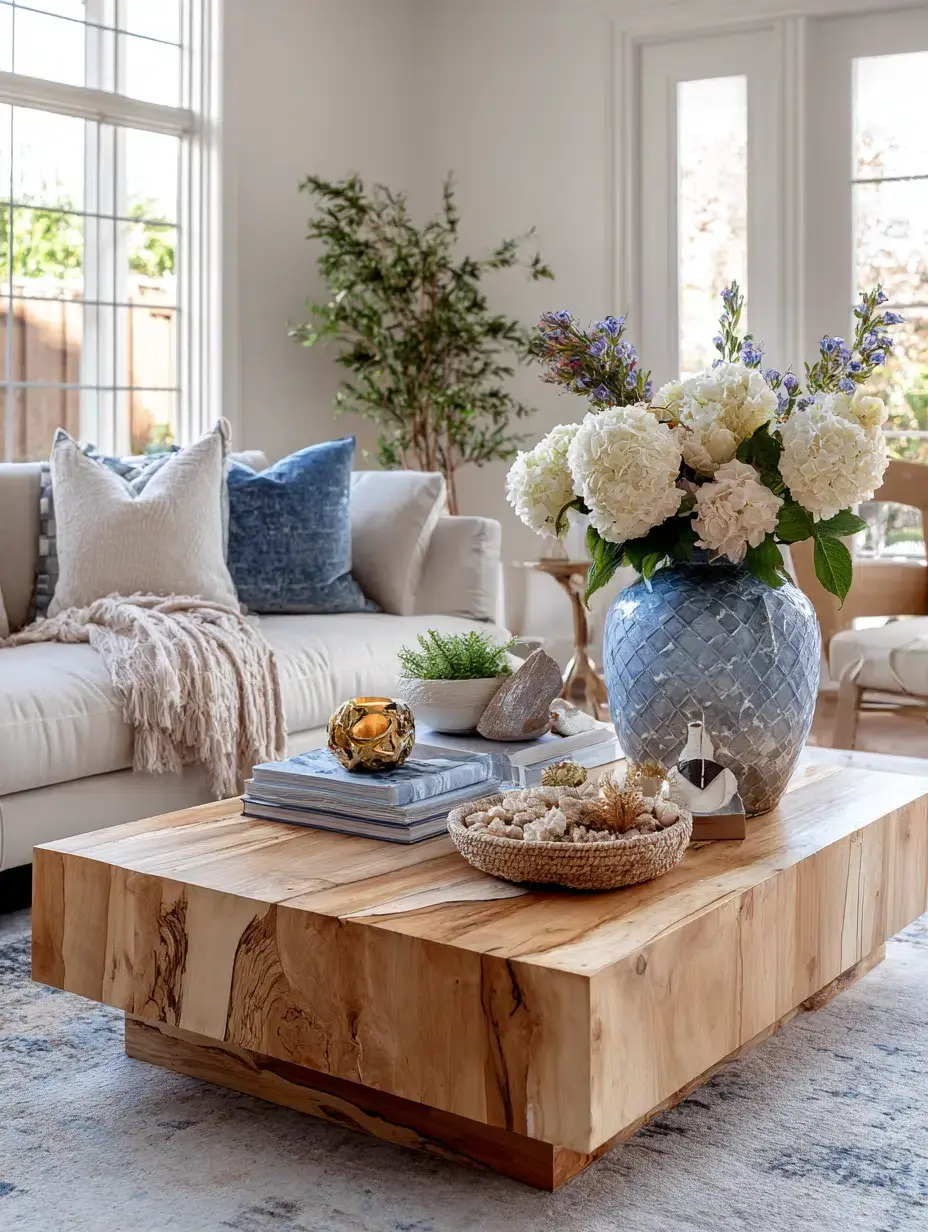
Mediterranean decorating feels inviting because it never looks too arranged. The best rooms borrow from coastal homes in Italy, Greece, Spain, and Morocco, where stone, linen, pottery, wood, and hand-finished details all sit together with ease. A coffee table is one of the simplest places to bring in that mood without changing the whole room.
The formula is straightforward: start with natural materials, add one or two pieces with age or texture, then layer in something living or sun-washed. Think olive branches, terracotta, worn brass, woven trays, and ceramics that look as though they came back from a village market.

These ideas are meant to feel beautiful and usable. Mediterranean style should make a living room feel softer, warmer, and easier to settle into, not too precious to touch.
1. Embrace the Quiet Beauty of Travertine
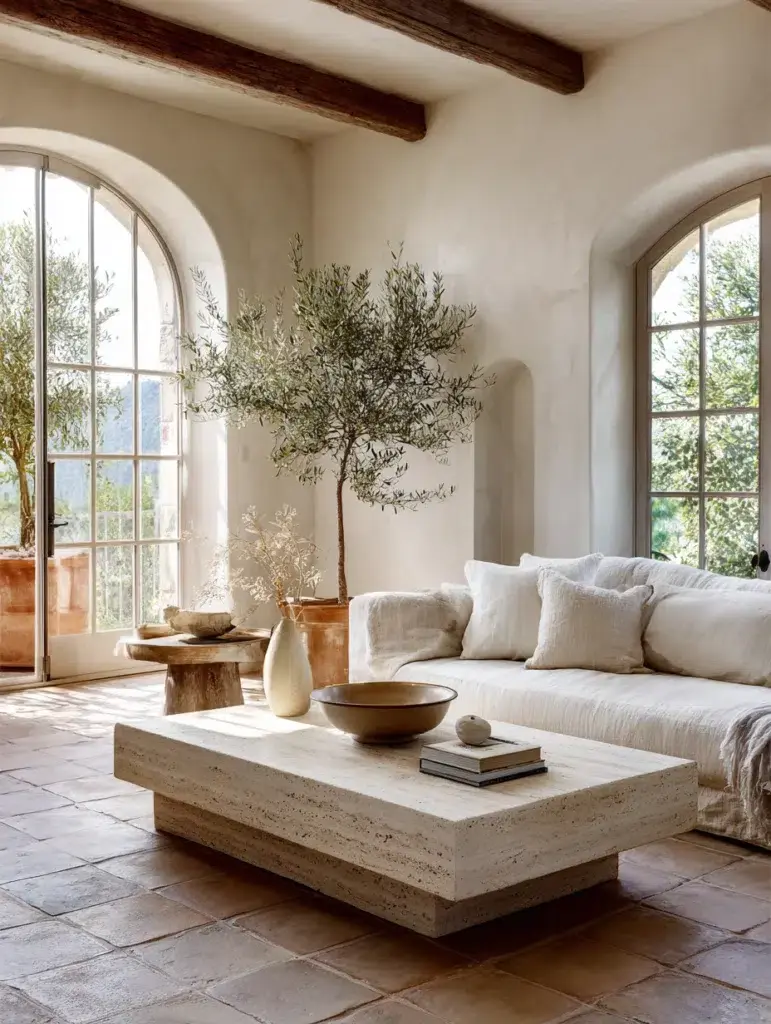
Travertine brings instant Mediterranean character because it already looks sun-warmed and time-softened. Its creamy tone and naturally pitted surface add depth even before you style a single object on top.
If your table is already stone, keep the rest of the arrangement spare. A low bowl, a candle, and a short stack of books usually feel more elegant than filling every inch. If your table is wood or metal, a small travertine tray or coaster set can bring in the same grounded effect.
This material works best when you let it show. Negative space is part of the look.
2. Layer Textured Ceramics for a Handmade Feel
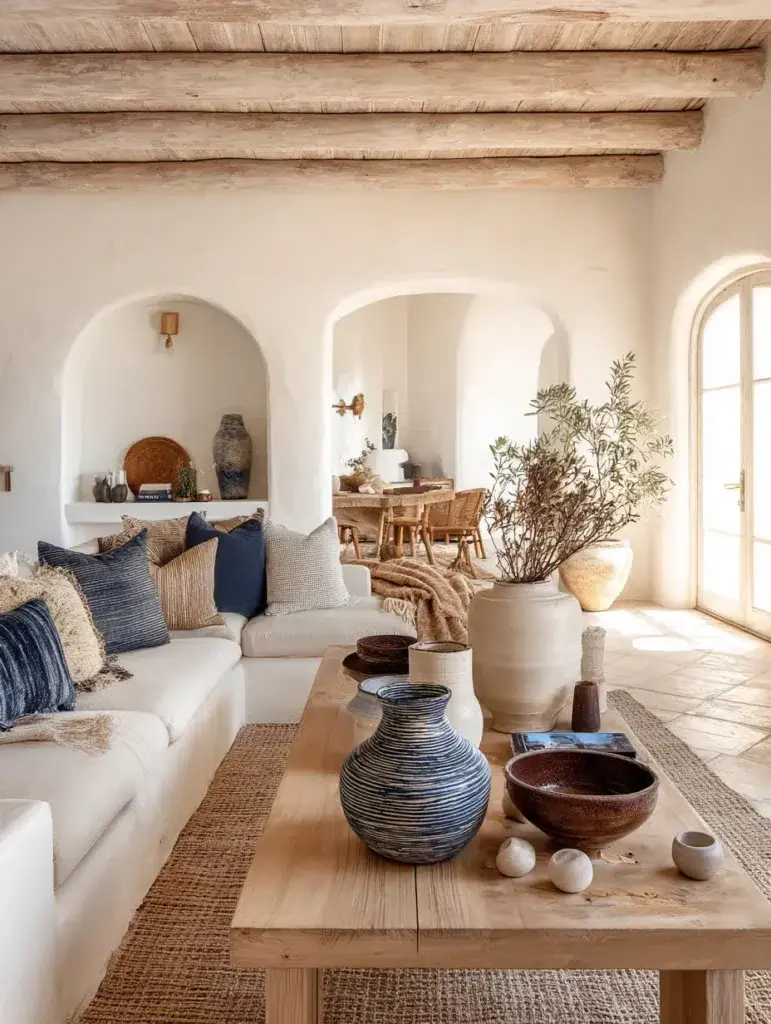
Mediterranean rooms often feel collected because they rely on handmade pottery rather than glossy, identical accessories. On a coffee table, ceramics add shape, softness, and a subtle artisan quality.
Mix a larger serving bowl with one or two smaller vessels, and lean toward finishes that feel matte, chalky, or lightly irregular. Warm white, clay, sand, faded blue, and olive all work beautifully together. Rounded forms help soften square or rectangular tables, while taller vessels can add needed height.
Keep the palette restrained and let the silhouettes carry the arrangement.
3. Add Wrought Iron for Old-World Structure
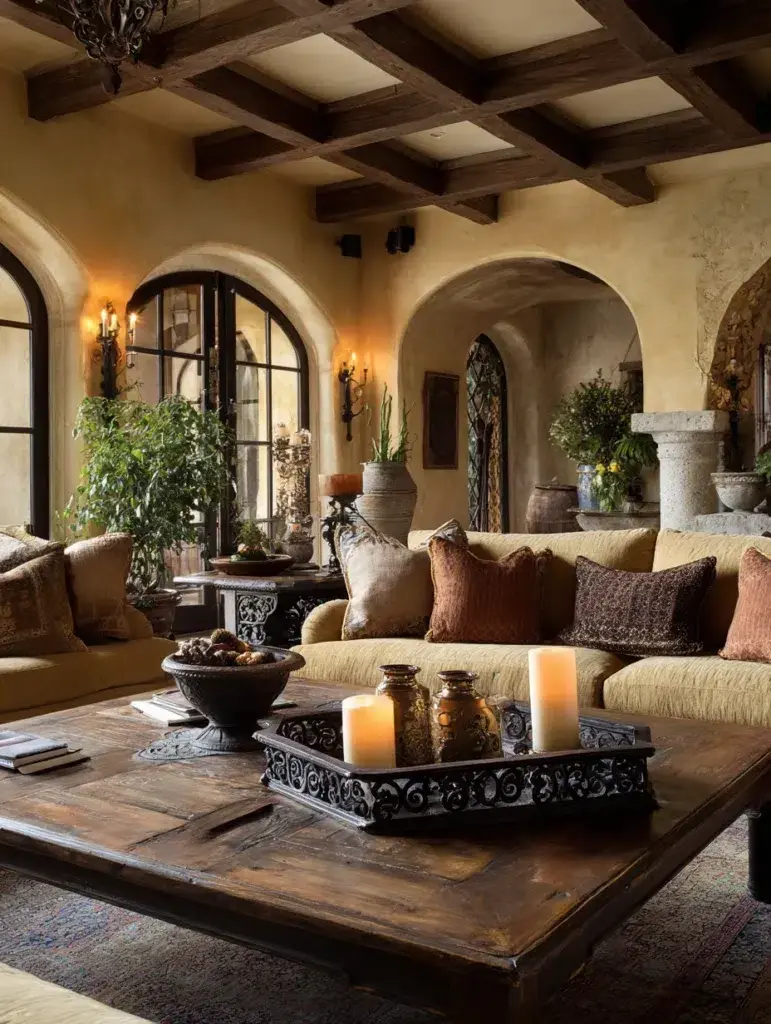
Wrought iron brings in a more architectural side of Mediterranean decorating. It hints at courtyard gates, lantern brackets, balcony railings, and old hardware without needing a large statement piece.
A small tray, candle holder, or decorative stand can anchor softer elements like linen and ceramics. Because black iron has visual weight, one piece usually goes further than several. It is especially useful on pale tables that need contrast.
Balance it with something lighter nearby, such as glass, greenery, or a pale ceramic vessel, so the table still feels airy.
4. Bring in Olive Branches for an Instantly Mediterranean Note
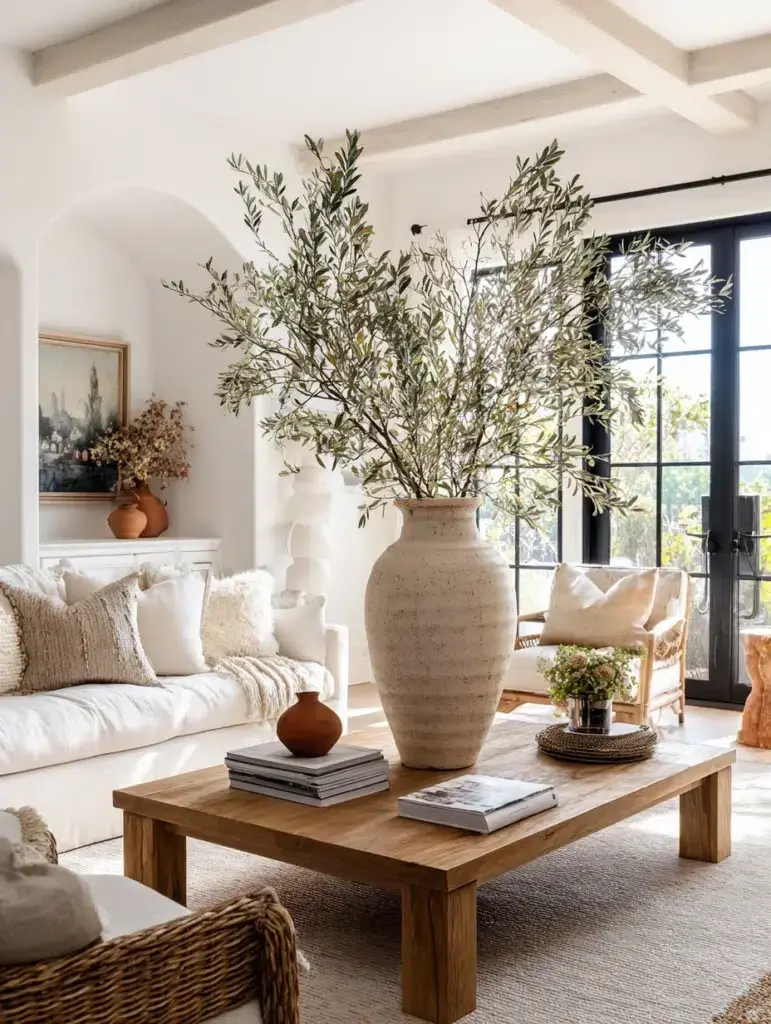
Olive branches are one of the easiest Mediterranean styling shortcuts because they look graceful in almost any container. Their muted green leaves read as sophisticated rather than bright, and they work with stone, terracotta, wood, and white ceramics alike.
Keep the stems loose and slightly asymmetrical. A small vase with just a few branches often looks better than a dense arrangement. The line of the stems adds movement without cluttering the table.
Fresh branches are lovely when available, but preserved or high-quality faux stems work just as well for everyday styling.
5. Use Rustic Wooden Bowls to Warm the Table
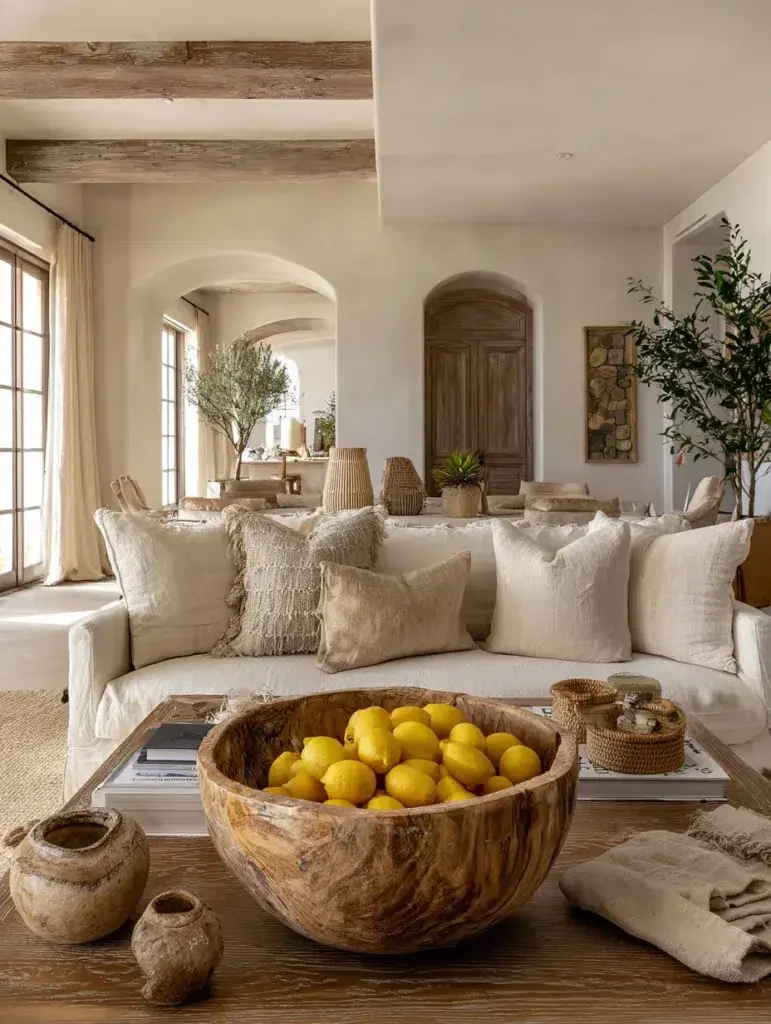
Wood brings a softer, more lived-in warmth to Mediterranean spaces, especially when the finish feels slightly worn or hand-carved. A rustic bowl can stand alone as sculpture or hold practical items such as coasters, remotes, or citrus.
Look for visible grain, shallow irregularity, and a tone that feels naturally sun-dried rather than heavily stained. On a stone or plaster-toned table, wood stops the palette from feeling too cool.
This is also an easy way to introduce texture without adding pattern.
6. Create a Soft Candle Moment
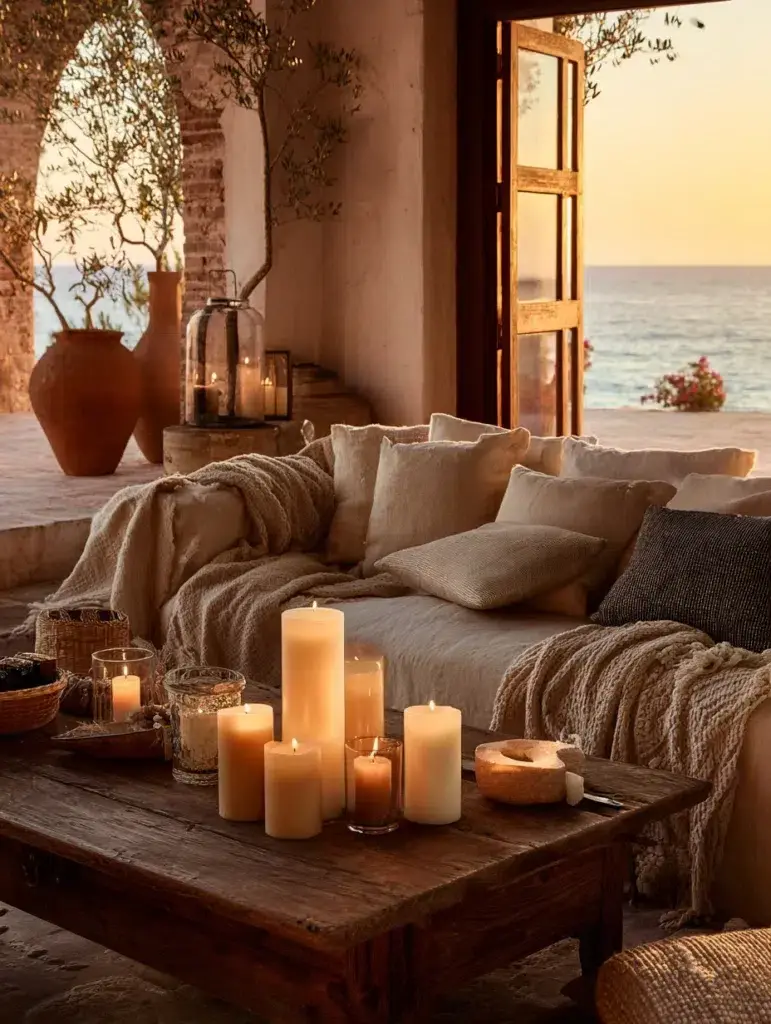
Mediterranean interiors tend to glow rather than glare, and candles help create that softer atmosphere. A cluster of two or three in slightly different heights makes a coffee table feel instantly more intimate.
Ivory, sand, terracotta, and soft cream are the most natural choices. Group them on a tray or ceramic dish so they feel intentional rather than scattered. If you use pillars, keep them low enough that they do not block conversation across the table.
Even unlit, candles add warmth and rhythm to the arrangement.
7. Add a Touch of Moroccan Mosaic
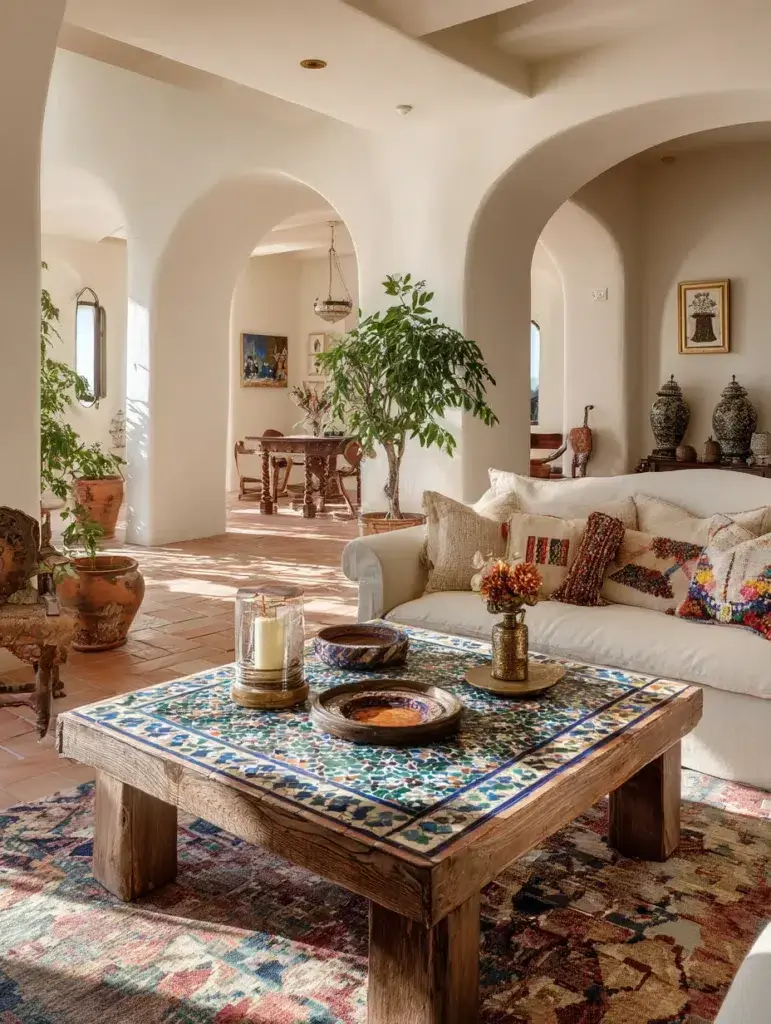
Moroccan influence sits comfortably within Mediterranean decorating, especially when the rest of the table is fairly neutral. Mosaic detail brings in craftsmanship, color, and a little geometry without requiring a large commitment.
A tray, coaster set, or small tile accent can introduce blue, green, and terracotta in a way that feels vibrant but still grounded. One patterned element is often enough. The goal is to add a handcrafted note, not overwhelm the surface.
When the surrounding materials are stone, linen, or wood, mosaic details feel even more special.
8. Use Blue and White Pieces for a Coastal Lift
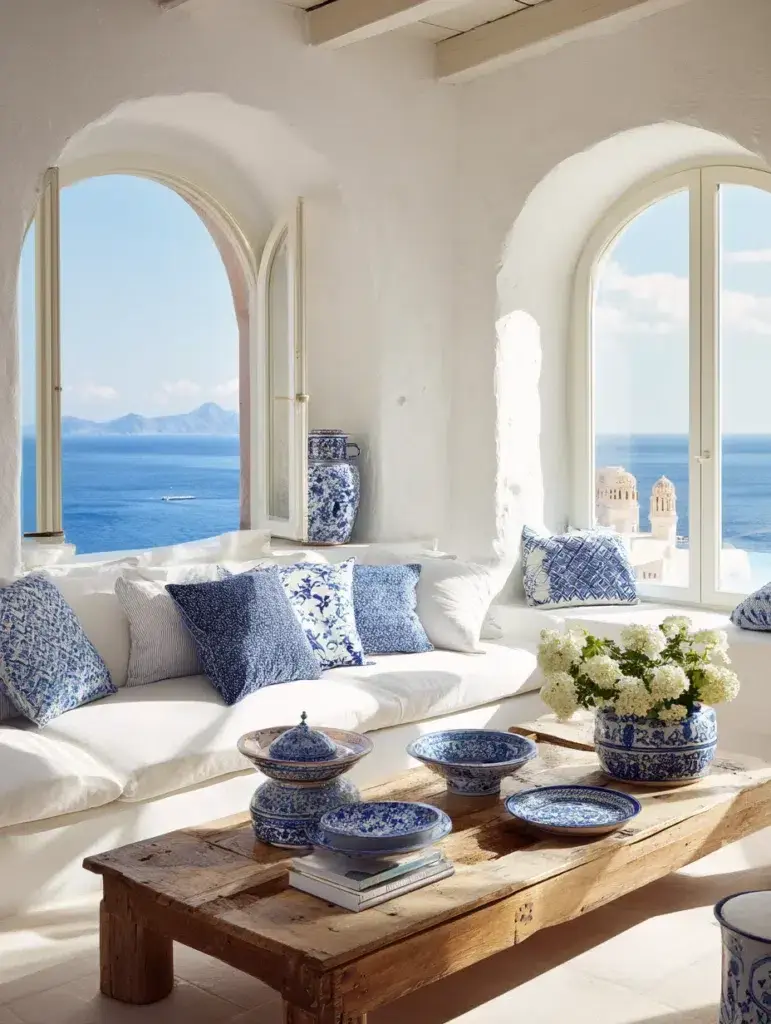
Blue and white always feel at home in Mediterranean spaces because they echo sea, sky, and sunlit walls. On a coffee table, the pairing can sharpen a neutral palette and add a cleaner coastal edge.
A single patterned bowl, tile, or vase is often enough to brighten the whole arrangement. If you mix blue-and-white pieces, keep the scale varied so the patterns do not compete. One bolder piece paired with quieter textures usually looks best.
This combination works especially well in rooms that already lean warm and earthy, because it gives the eye a cooler resting point.
9. Layer in Natural Woven Elements
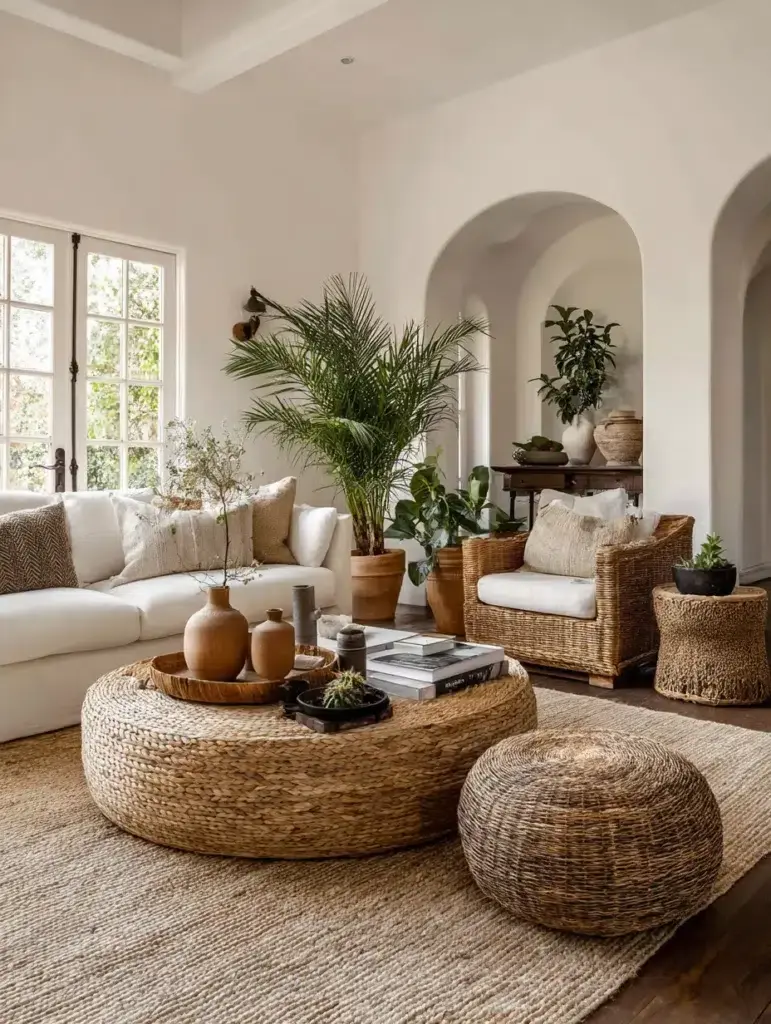
Woven textures help prevent a coffee table from feeling too hard or polished. Rattan, jute, water hyacinth, and seagrass all bring in the kind of casual craftsmanship that Mediterranean homes do so well.
A woven tray or placemat-style base can define the arrangement and keep smaller pieces from feeling visually adrift. This is especially useful on large tables, where items can otherwise look scattered.
Natural fibers also pair beautifully with ceramics and stone because they add warmth without adding visual heaviness.
10. Include One Sculptural Object
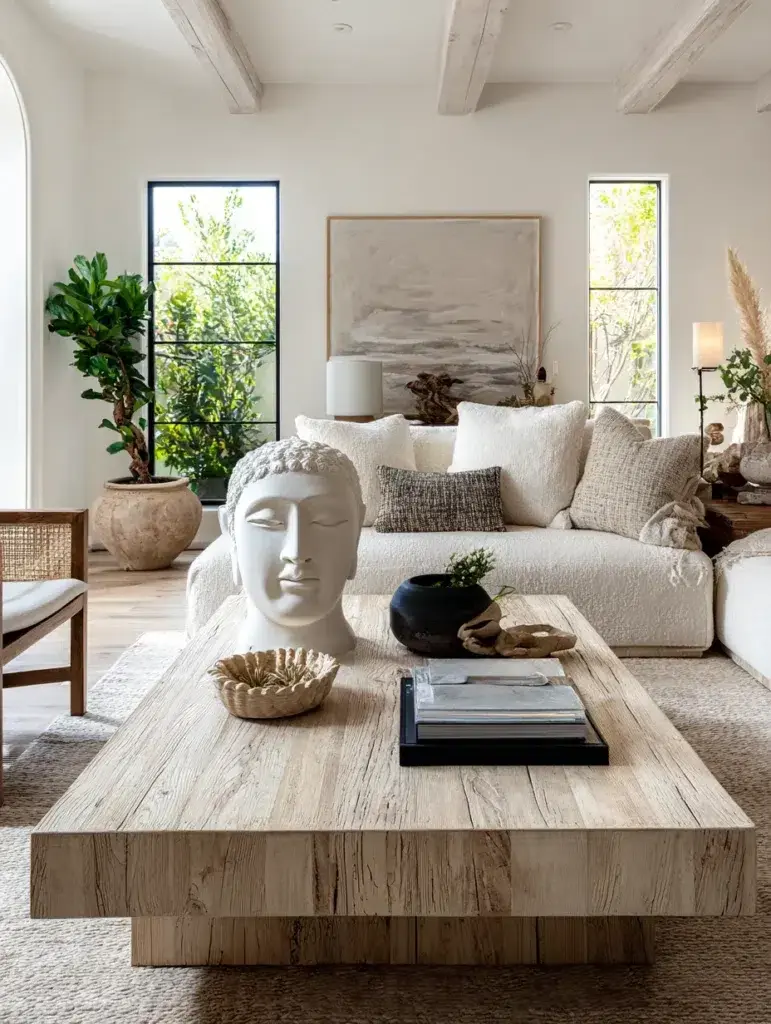
A sculptural piece gives the table a focal point that feels intentional and artistic. In a Mediterranean-inspired room, that might be an abstract ceramic shape, a bust-like object, or something that quietly references classical forms.
The important part is restraint. One strong object often has more presence than several smaller curiosities. Place it slightly off-center, then support it with simpler elements such as a folded textile, a candle, or a small stack of books.
The contrast between sculpture and more practical objects makes the arrangement feel layered rather than decorative for decoration’s sake.
11. Add a Linen Runner for Softness and Structure
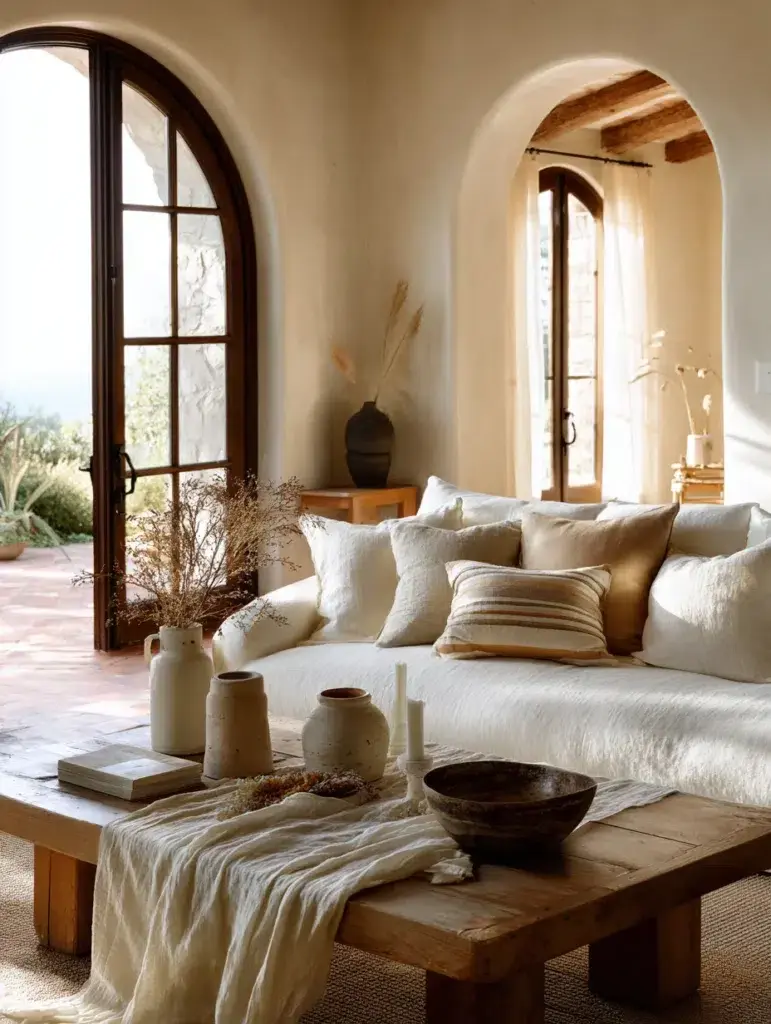
Linen introduces the kind of softness that Mediterranean spaces rely on to balance stone, tile, wood, and metal. A runner can define the center of the table and make even a simple grouping of objects feel more considered.
Choose natural shades such as flax, ivory, or pale gray, and let the fabric wrinkle a little. Crisp perfection works against the mood. Linen should feel touched, relaxed, and easy.
This is especially helpful on darker coffee tables, where a pale textile layer can brighten the whole display.
12. Showcase Fresh Citrus
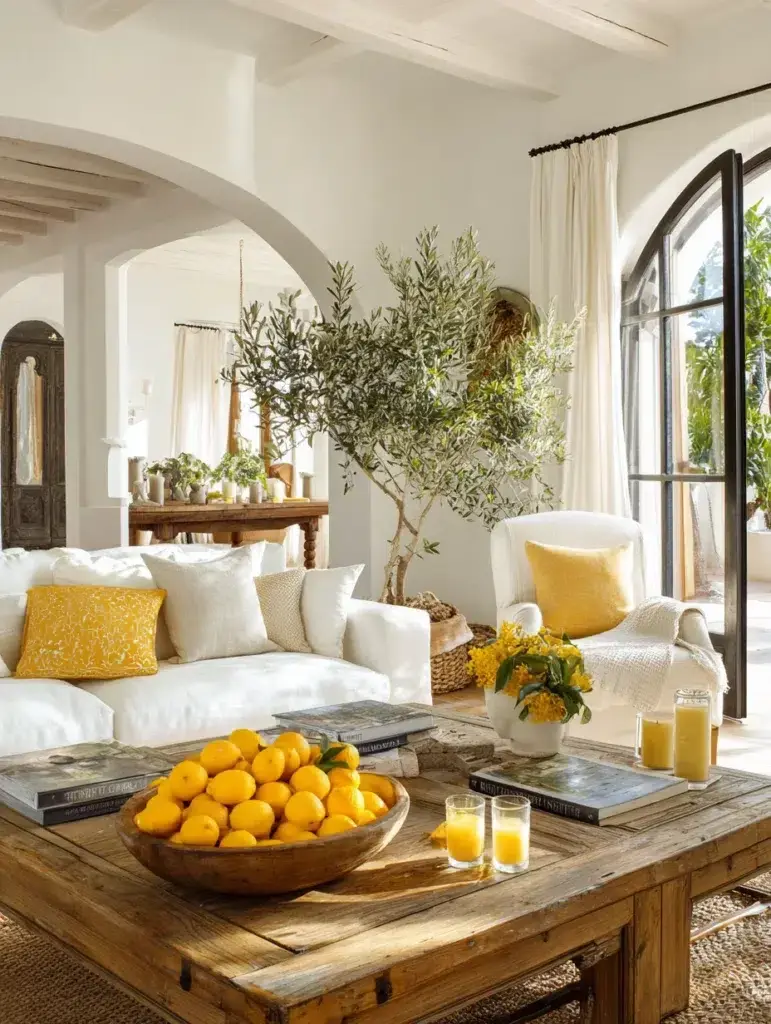
Citrus is one of the most recognisable Mediterranean touches, but it still feels fresh because it is both decorative and practical. A bowl of lemons or oranges adds color, life, and a slightly informal warmth that suits this style perfectly.
Choose a bowl with enough presence to support the fruit, preferably ceramic or wood. If the room is otherwise quiet in color, citrus can become the one bright accent that wakes everything up. If the room already has strong blue or terracotta notes, use fewer pieces of fruit and let them act as punctuation.
Fresh fruit is ideal, but the effect comes just as much from the shape and color as from anything else.
13. Use Terracotta as a Repeating Accent
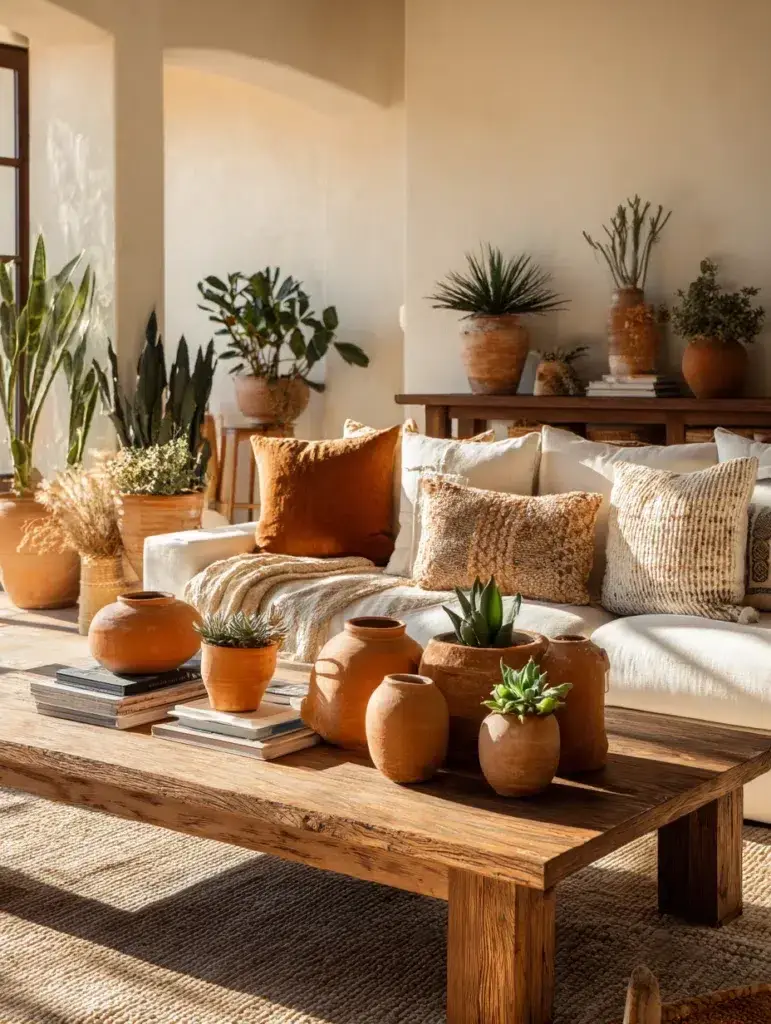
Terracotta gives a coffee table that unmistakable sun-baked warmth found throughout Mediterranean homes. Small planters, candle holders, shallow bowls, or handmade decorative pieces all help echo that clay-rich palette.
One of terracotta’s strengths is that it becomes more convincing as it ages. Slight chalkiness, wear, or variation in tone makes it feel more authentic, not less. That is why it works so well in rooms that aim for relaxed beauty instead of polish.
Repeat the material once or twice across the room if you want the coffee table styling to feel integrated with the larger space.
14. Introduce Vintage Brass for Warm Contrast
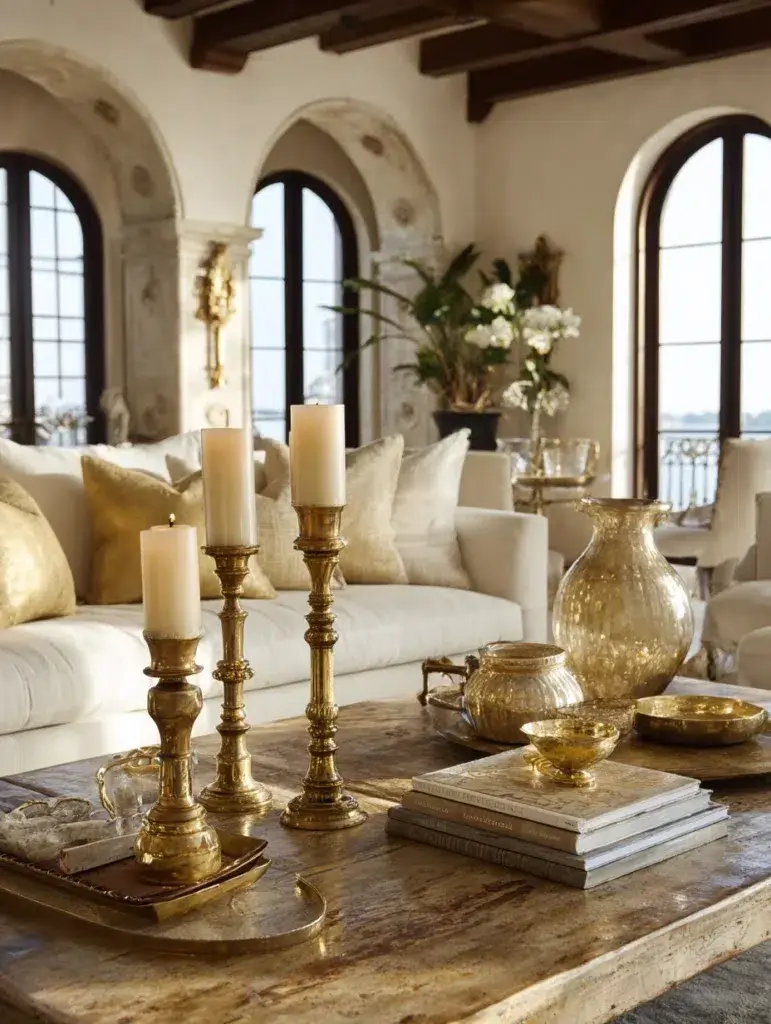
Brass adds a warm metallic note that works beautifully with Mediterranean colors and textures. It feels a little decorative, but not too refined, especially when the finish has softened with age.
A small brass dish, candlestick, or decorative stand can add just enough glow to keep the table from feeling too matte. Patina is part of the charm here, so look for finishes that feel mellow rather than highly polished.
Brass is especially useful when the arrangement needs contrast but not another dominant color.
15. Display Decorative Tiles as Small Art Pieces
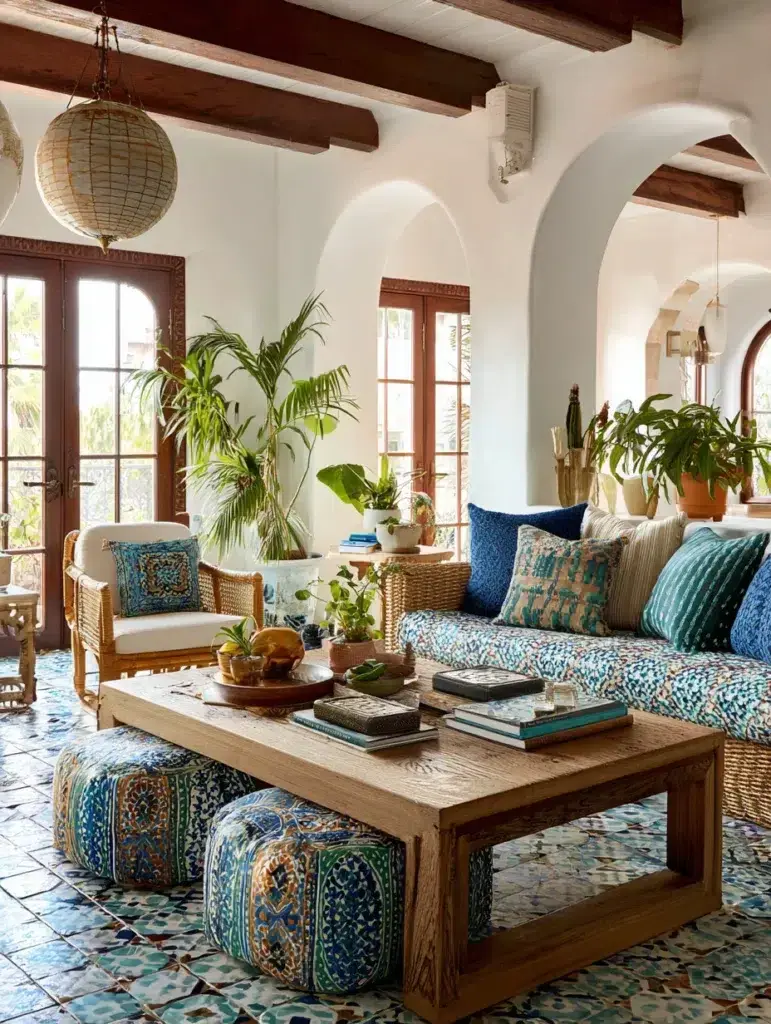
Decorative tiles bring in Mediterranean pattern in a compact, useful way. They can work as coasters, small layered accents, or tiny pieces of art stacked beside a candle or bowl.
Hand-painted motifs in blue, ochre, green, and terracotta feel particularly at home in this look. If the rest of the table is quiet, tiles can provide exactly the right amount of visual detail.
They are most effective when used sparingly. One or two beautiful pieces usually feel more elevated than a full, busy spread.
16. Use Sea Glass and Shells in a Restrained Way
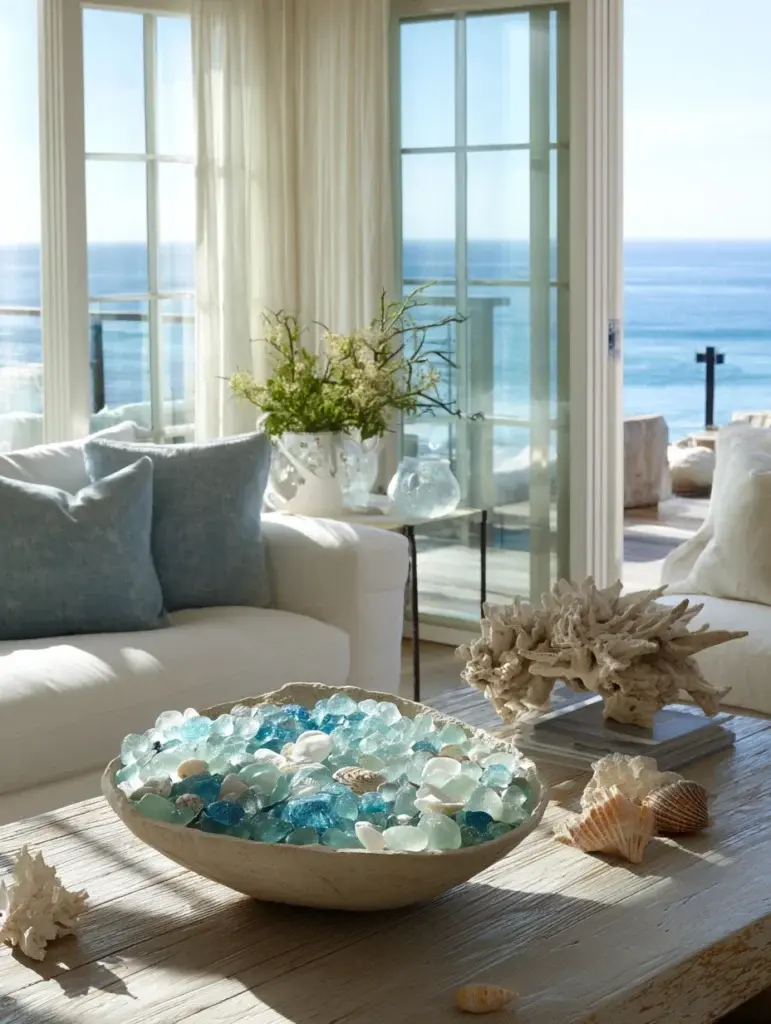
Mediterranean style often nods to the sea, but the best coastal references feel natural rather than themed. A small bowl of sea glass, a few shells, or a coral-like object can add that marine connection without making the table feel like a souvenir display.
These pieces work best in low, quiet groupings. Their beauty is in the irregular shapes and faded tones, which pair especially well with pale wood, blue-and-white ceramics, or travertine.
Use them as supporting texture, not the main attraction.
17. Add Fresh Herbs for a Kitchen-Garden Feel
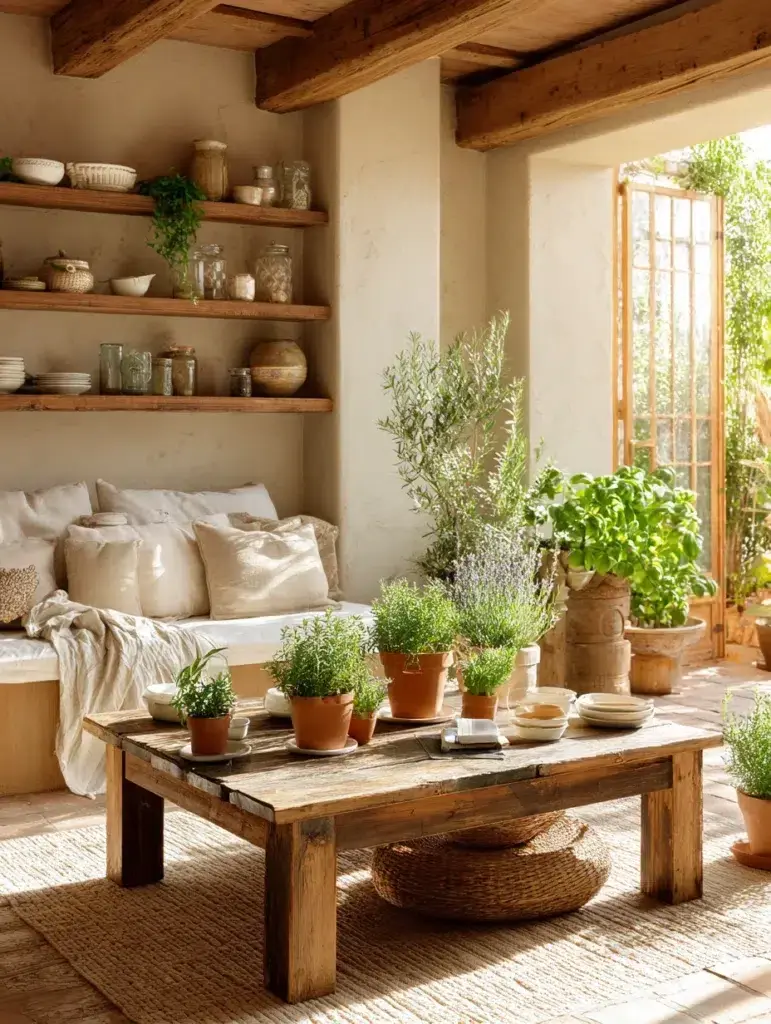
Fresh herbs make a coffee table feel alive and connected to daily life, which is very much in the spirit of Mediterranean decorating. Rosemary, thyme, basil, and oregano add scent, texture, and a practical beauty that feels grounded rather than decorative.
Terracotta or simple white ceramic pots work best. Group two or three together if the table is large, or use a single herb plant as a quiet green accent. Keep the planters small enough that they do not dominate the surface.
This is one of the most charming ways to make a living room feel slightly more indoor-outdoor.
18. Layer Neutral Textiles for Depth
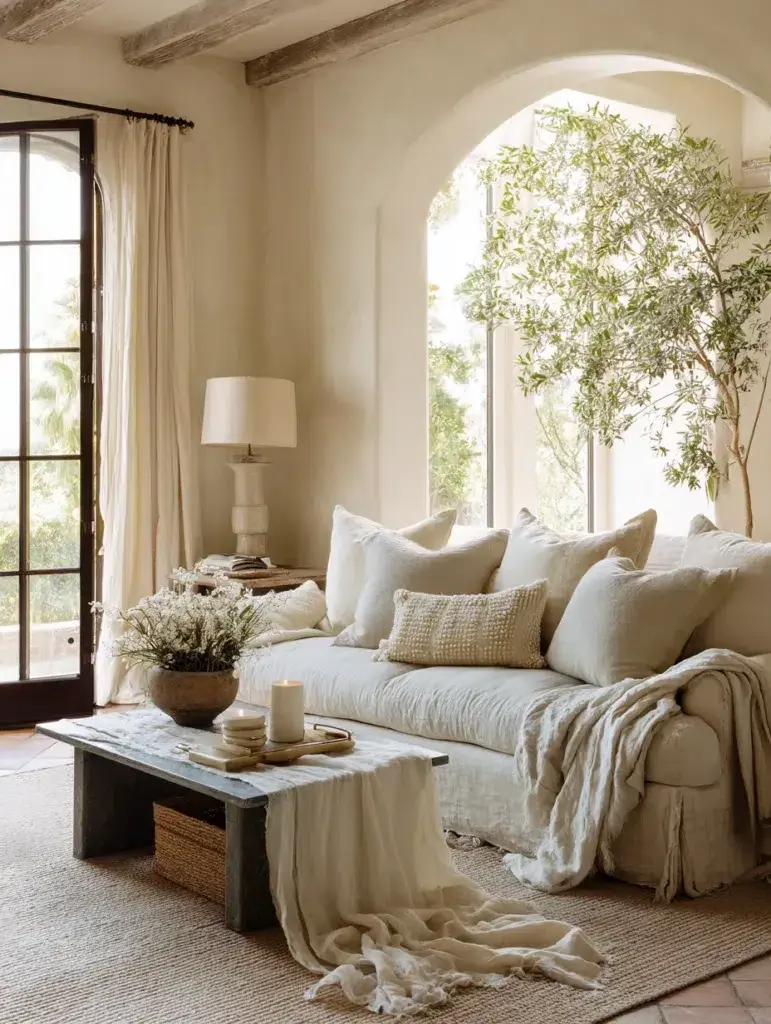
Beyond a linen runner, smaller textile touches can help a coffee table feel softer and more relaxed. A loosely draped cloth, a folded napkin beneath a bowl, or a square of textured linen under a vase can all add subtle depth.
Keep the colors quiet and natural. Sand, soft beige, ivory, and pale gray work especially well because the texture becomes the focus. Mediterranean style rarely relies on busy fabrics in small styling moments; it prefers calm, tactile layers.
These textile details are especially useful when the table surface feels visually cold on its own.
19. Use a Distressed Wooden Tray to Gather the Arrangement
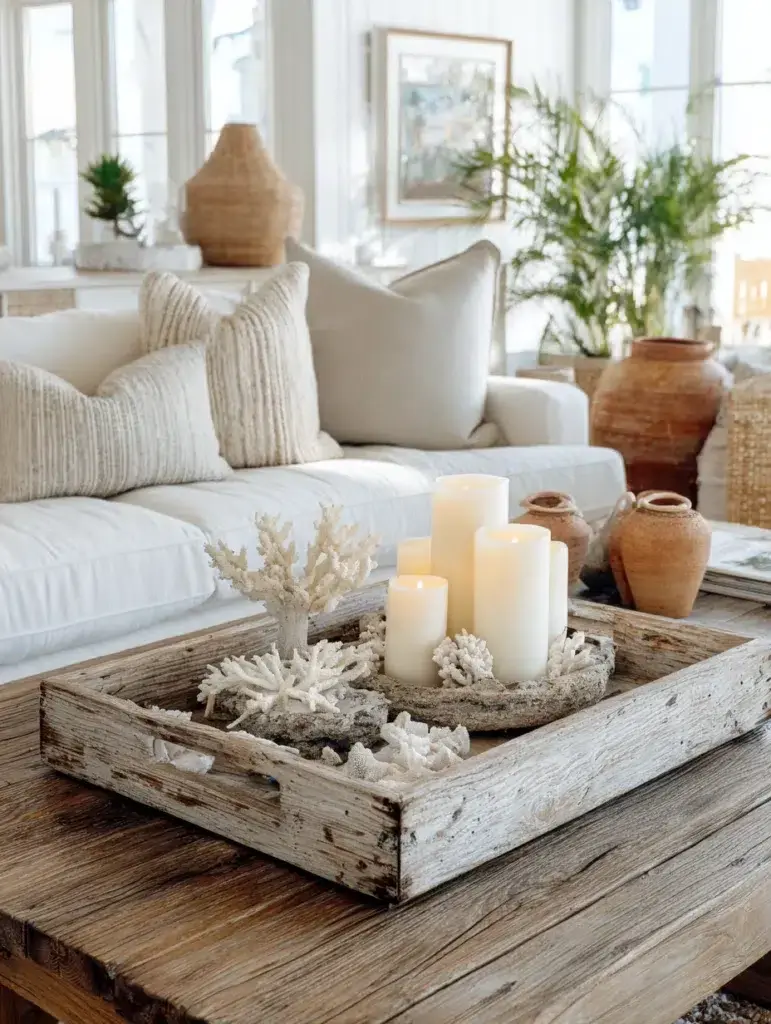
A distressed wooden tray helps a coffee table feel both styled and practical. It gathers smaller objects into one readable arrangement and makes it easy to clear the surface when needed.
Look for finishes that feel whitewashed, weathered, or gently sun-faded rather than freshly stained. Those softer surfaces fit naturally into Mediterranean spaces, where materials often look touched by time.
Use the tray to hold candles, coasters, herbs, or one decorative bowl. It keeps the table from feeling busy while still allowing for layered styling.
20. Include Artisan Glass for Light and Soft Color
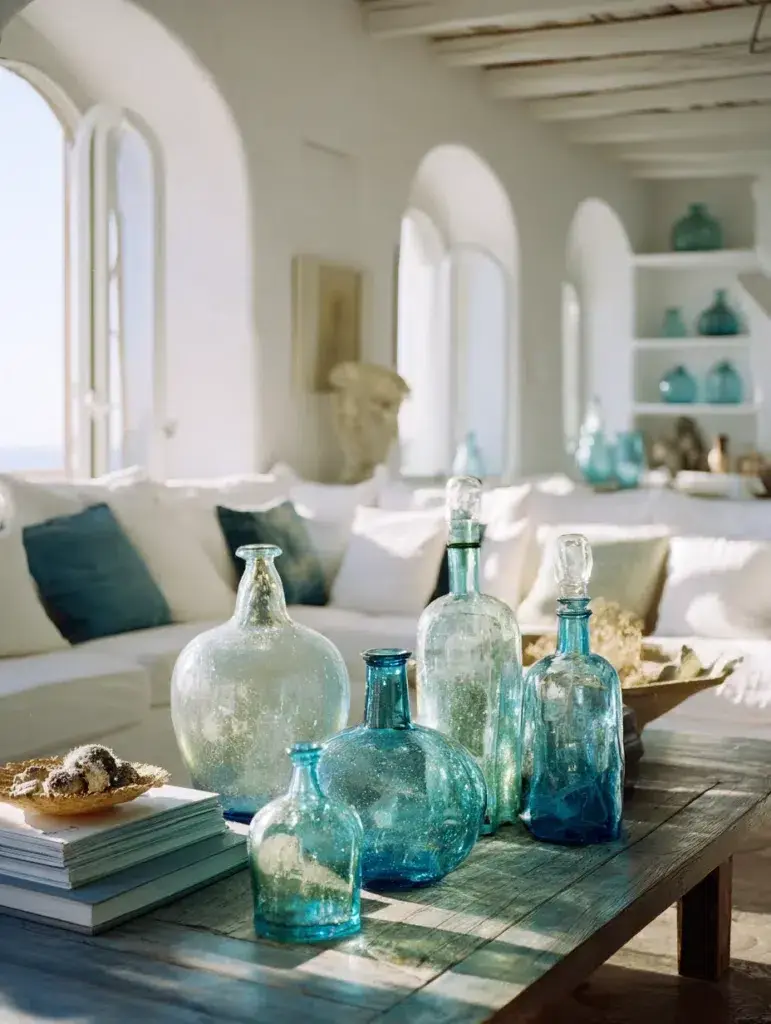
Artisan glass adds a lighter, watery quality that works beautifully in Mediterranean rooms. Pale blue, seafoam, and soft green glass pieces can catch sunlight and make the whole table feel more luminous.
Bud vases, bottles, or small bowls are especially useful because they bring in color without adding heaviness. This kind of glass works best when paired with matte textures like ceramics, linen, or aged wood, so the contrast feels deliberate.
Try grouping two or three rather than relying on a single small piece that may get visually lost.
21. Create Height with a Small Decorative Stand
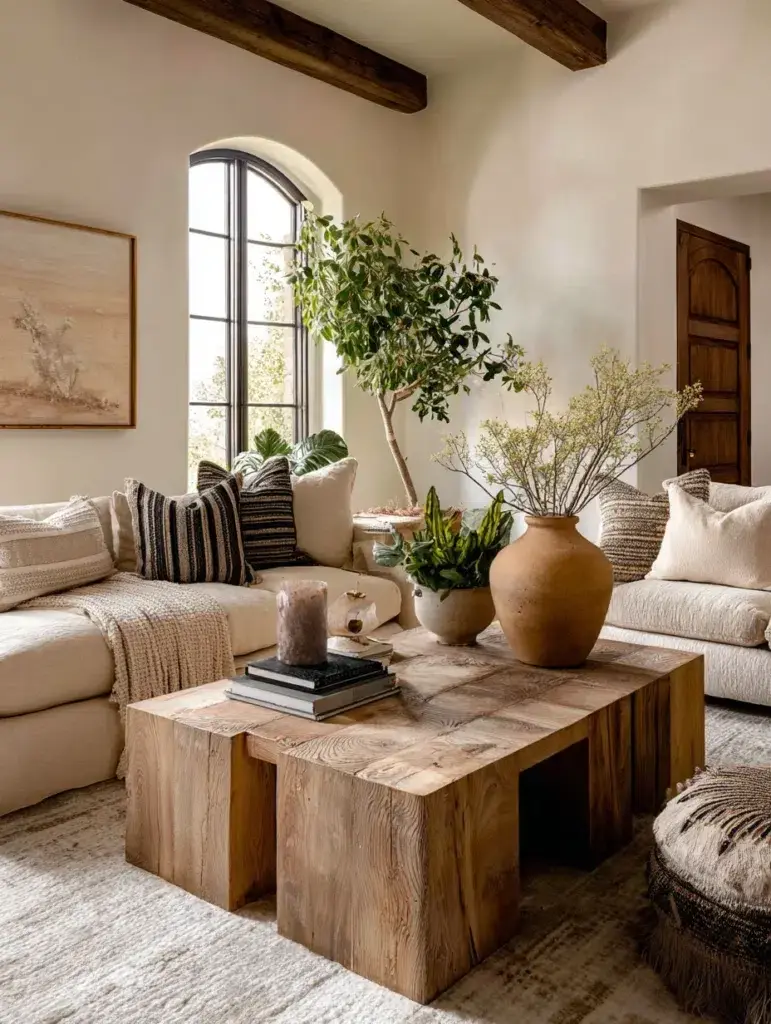
A little variation in height helps a coffee table arrangement feel finished. A small pedestal or riser can lift a candle, bowl, or plant so the display has more shape and rhythm.
Choose a stand in a material that already belongs to the palette, such as wood, stone, or ceramic. It does not need to be large or dramatic. Even a slight lift can make one object feel more intentional and stop the whole arrangement from reading too flat.
This is especially helpful on large coffee tables, where low objects can disappear if everything sits at the same level.
Final Thoughts
Mediterranean coffee table styling works best when it feels easy, tactile, and slightly collected over time. Stone, linen, ceramics, terracotta, wood, herbs, and soft metallics all contribute to that sun-washed mood without requiring a perfect formula.
Start with one or two elements that feel natural in your room. A bowl of lemons, a vase of olive branches, a woven tray, or a cluster of candles is often enough to shift the whole atmosphere. The goal is not to create a showroom display. It is to make the room feel warmer, calmer, and more welcoming every day.
Written by the Zeeshe Home Editorial Team, a blog focused on practical home décor ideas and inspiration.


