
Have a balcony that gets more shade than sun? That does not mean you have to give up on creating a beautiful outdoor space. In fact, a shaded balcony can become one of the calmest and most relaxing parts of your home when you choose the right plants, containers, and layout.
Many people make the mistake of treating every balcony garden the same way. They buy bright flowering plants, place them in a dark corner, water them too often, and then wonder why the plants start looking weak. Shade container gardening works best when you select plants that naturally enjoy lower light and arrange them in a way that makes the space look full, balanced, and easy to maintain.

This guide shares practical shade container garden ideas for balconies, including hanging baskets, rail planters, large pots, vertical wall planters, and grouped container displays. These ideas are especially useful for apartment balconies, covered patios, narrow outdoor corners, and small spaces that receive indirect light instead of strong direct sun.
Before You Start: What Makes a Good Shade Container Garden?
A successful shade container garden is not just about picking pretty plants. The container size, drainage, soil mix, and placement all matter. Plants in shaded areas often grow more slowly, so they need a setup that supports healthy roots and prevents soggy soil.
Start with containers that have drainage holes. This is very important because water sitting at the bottom of a pot can cause root rot. Use a lightweight potting mix instead of heavy garden soil, because container plants need soil that drains well but still holds enough moisture.
For the best visual effect, combine different plant shapes. Use one taller plant, one medium filler plant, and one trailing plant in larger containers. This simple method makes even a small balcony feel more designed and complete.
- Best container types: hanging baskets, rail planters, deep pots, wall planters, and wide bowls
- Best light condition: bright shade, filtered light, or gentle morning sun
- Best soil: lightweight potting mix with compost or organic matter
- Main mistake to avoid: watering on a fixed schedule without checking the soil first
1. Ferns in Hanging Baskets
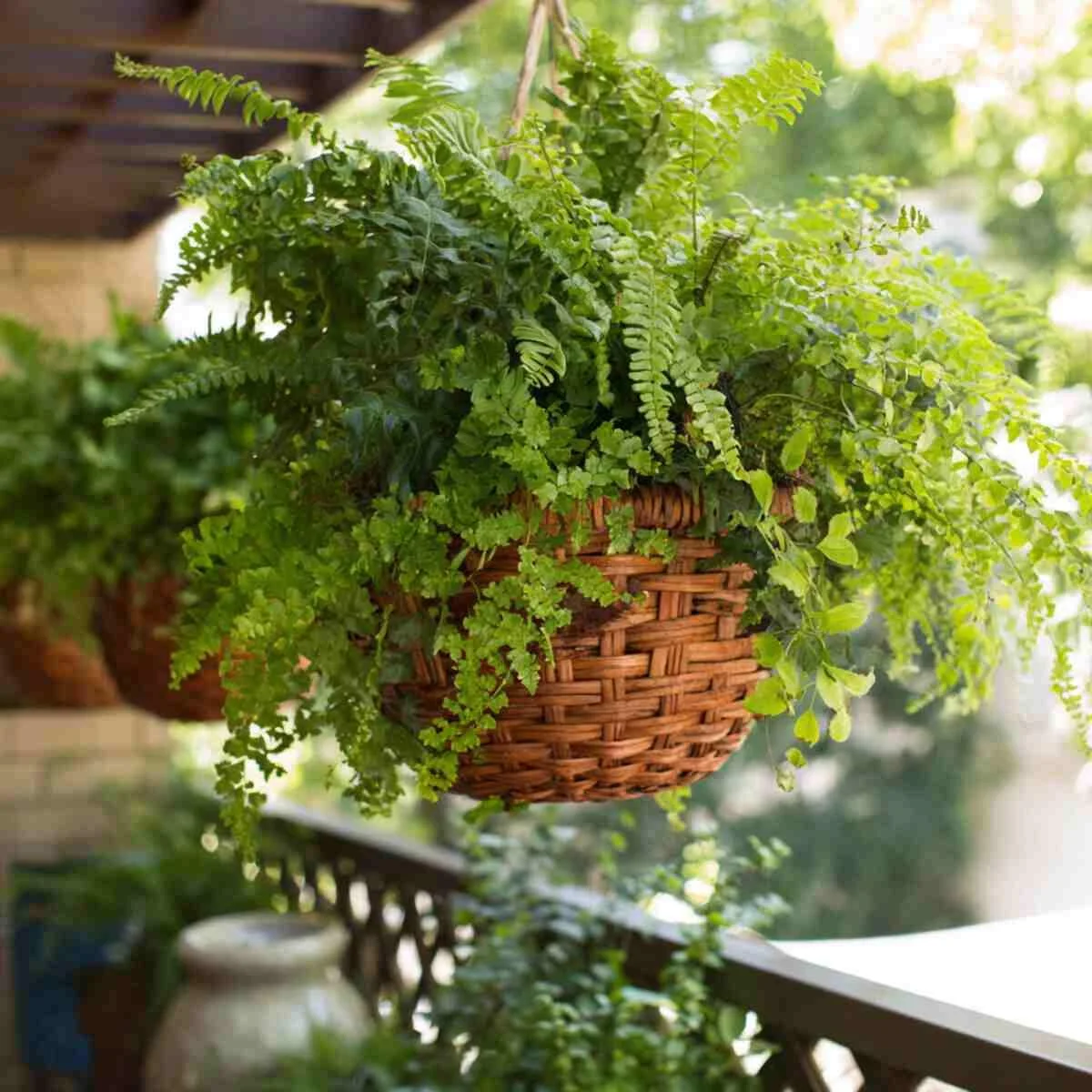
Ferns are one of the easiest ways to make a shaded balcony feel lush and peaceful. Their soft, arching fronds bring movement and texture to low-light spaces without needing strong direct sun.
Hanging baskets are especially useful on small balconies because they add greenery above the floor. This keeps the walking area open while still making the space feel full and planted.
To keep ferns healthy, place them in bright shade or indirect light. They prefer consistent moisture, but they should not sit in water. If the edges of the leaves turn brown, the air may be too dry or the soil may be drying out too much between waterings.
2. Hostas in Large Pots
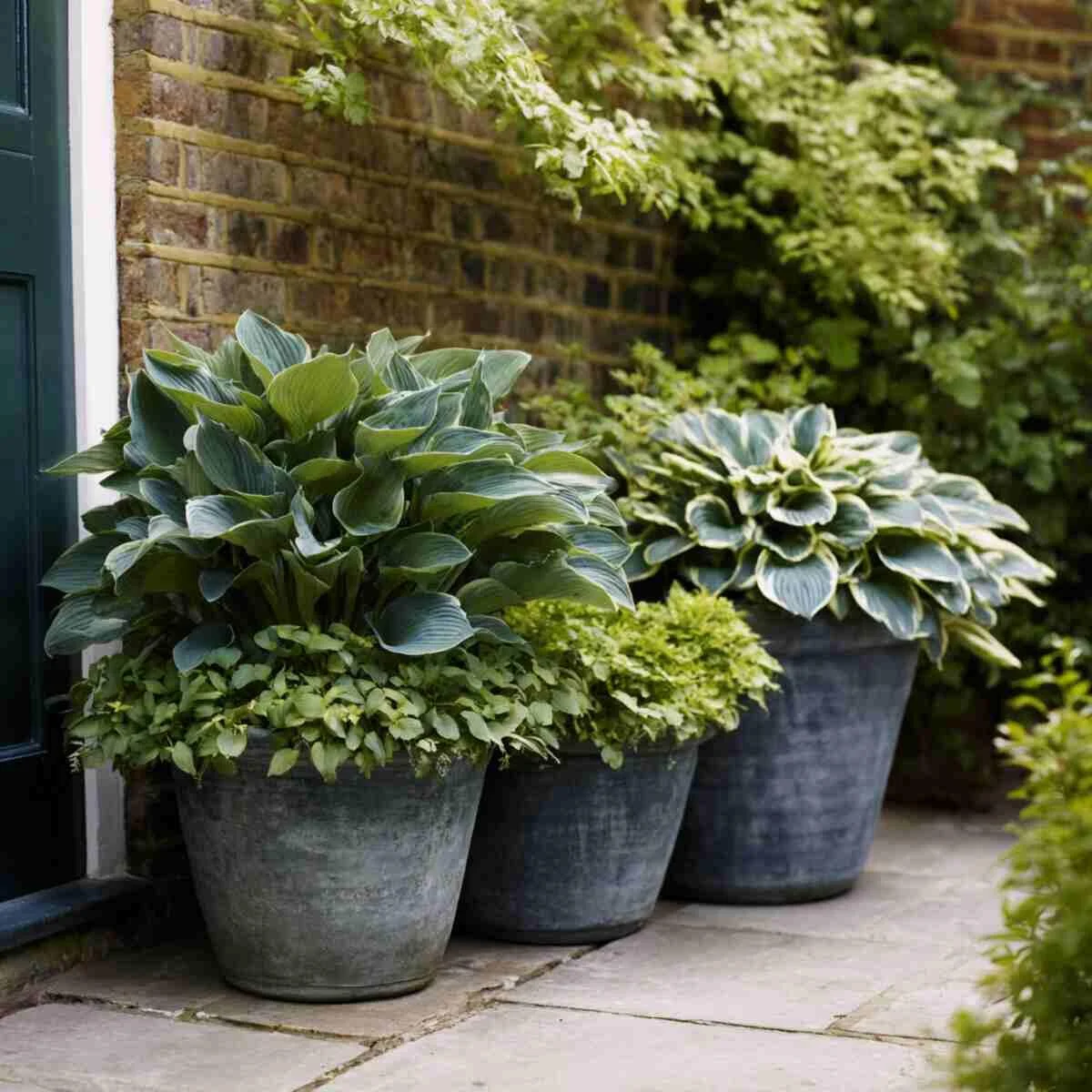
Hostas are excellent plants for shaded balconies because they are known for their bold, attractive leaves. Their broad foliage adds structure and makes a container arrangement look more established.
Large pots work best for hostas because they give the roots room to grow and help the plant stay stable. Smaller containers can dry unevenly and may limit growth.
Hostas look beautiful when placed in balcony corners, beside seating areas, or behind smaller plants. They are especially useful if you want a calm, green look without relying too heavily on flowers.
3. Begonias in Window Boxes
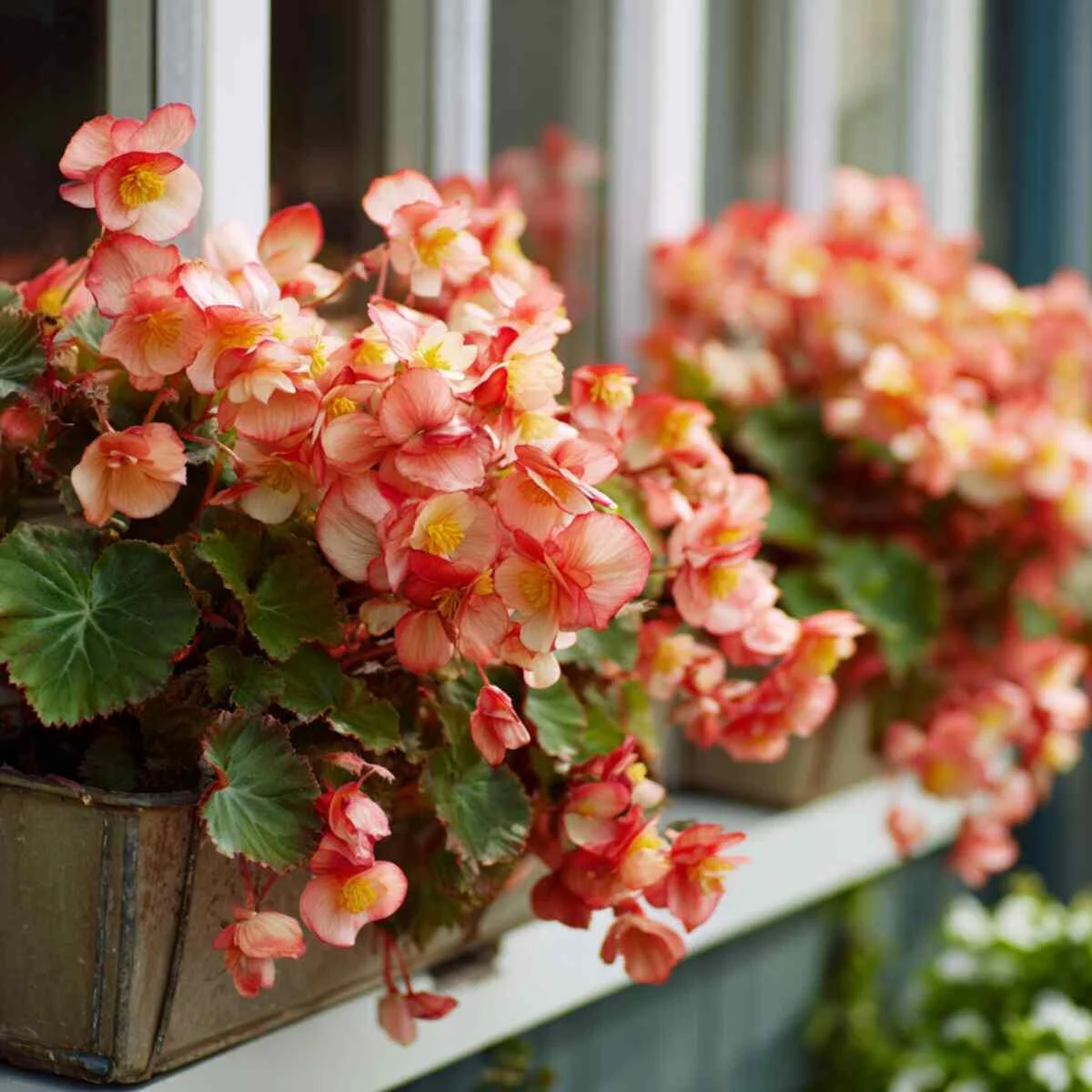
Begonias are a great choice if you want flowers in a shaded balcony. They bloom well in partial shade and can brighten areas where many sun-loving flowers would struggle.
Window boxes and railing planters are perfect for begonias because they place color along the balcony edge. This makes the whole space feel more cheerful without taking up valuable floor space.
Begonias also pair nicely with foliage plants such as ferns, coleus, and heucheras. This mix gives you both color and texture, which helps the arrangement look more complete.
4. Fuchsias in Tall Planters
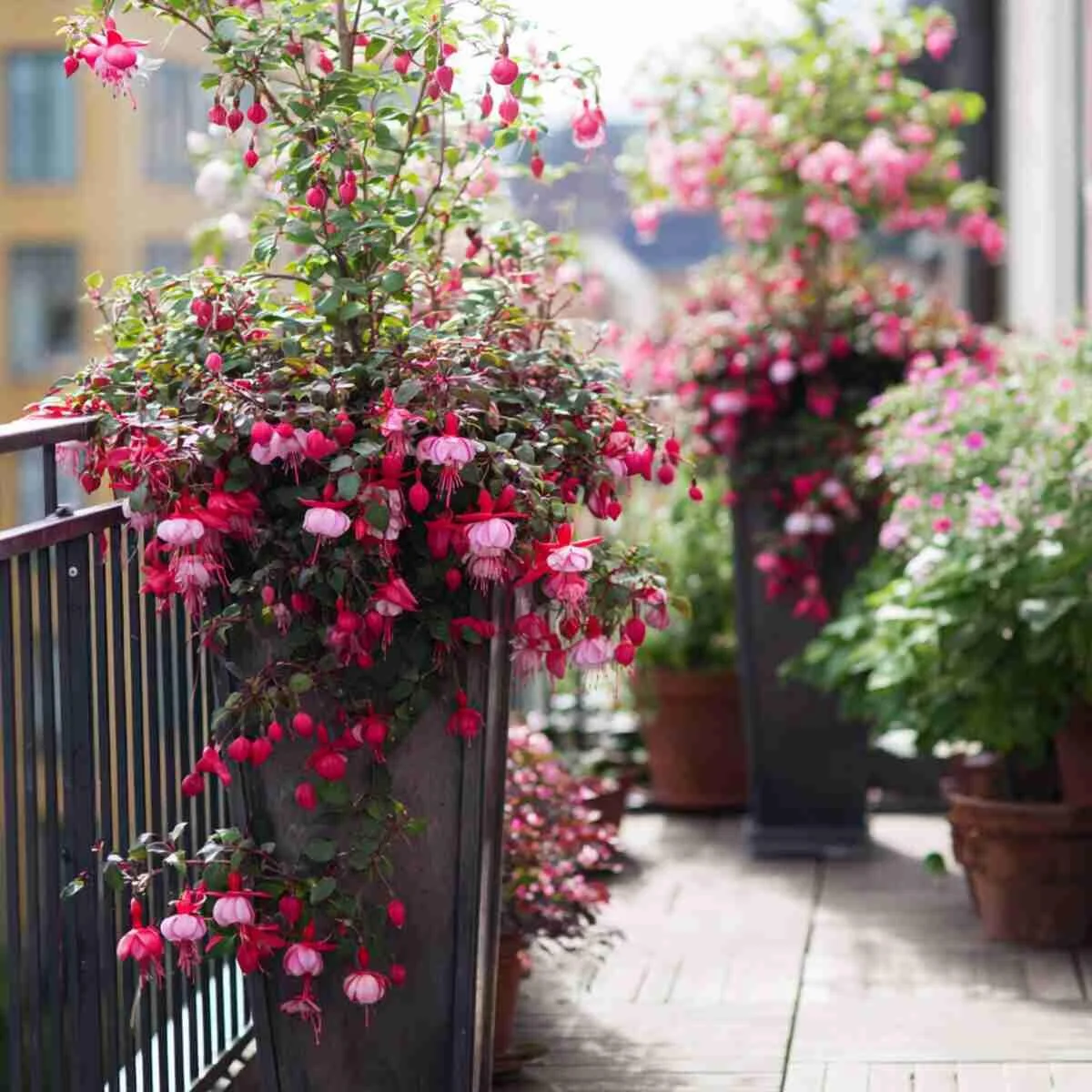
Fuchsias are loved for their elegant hanging flowers. They do well in bright shade or filtered light and can make a balcony feel more decorative and lively.
Tall planters are a smart choice because fuchsia blooms hang downward. Raising the plant makes the flowers easier to see and gives the display a more polished look.
Fuchsias prefer evenly moist soil, but they do not like being waterlogged. A container with good drainage is essential. Place them where they are protected from harsh afternoon sun and strong wind.
5. Caladiums in Decorative Bowls
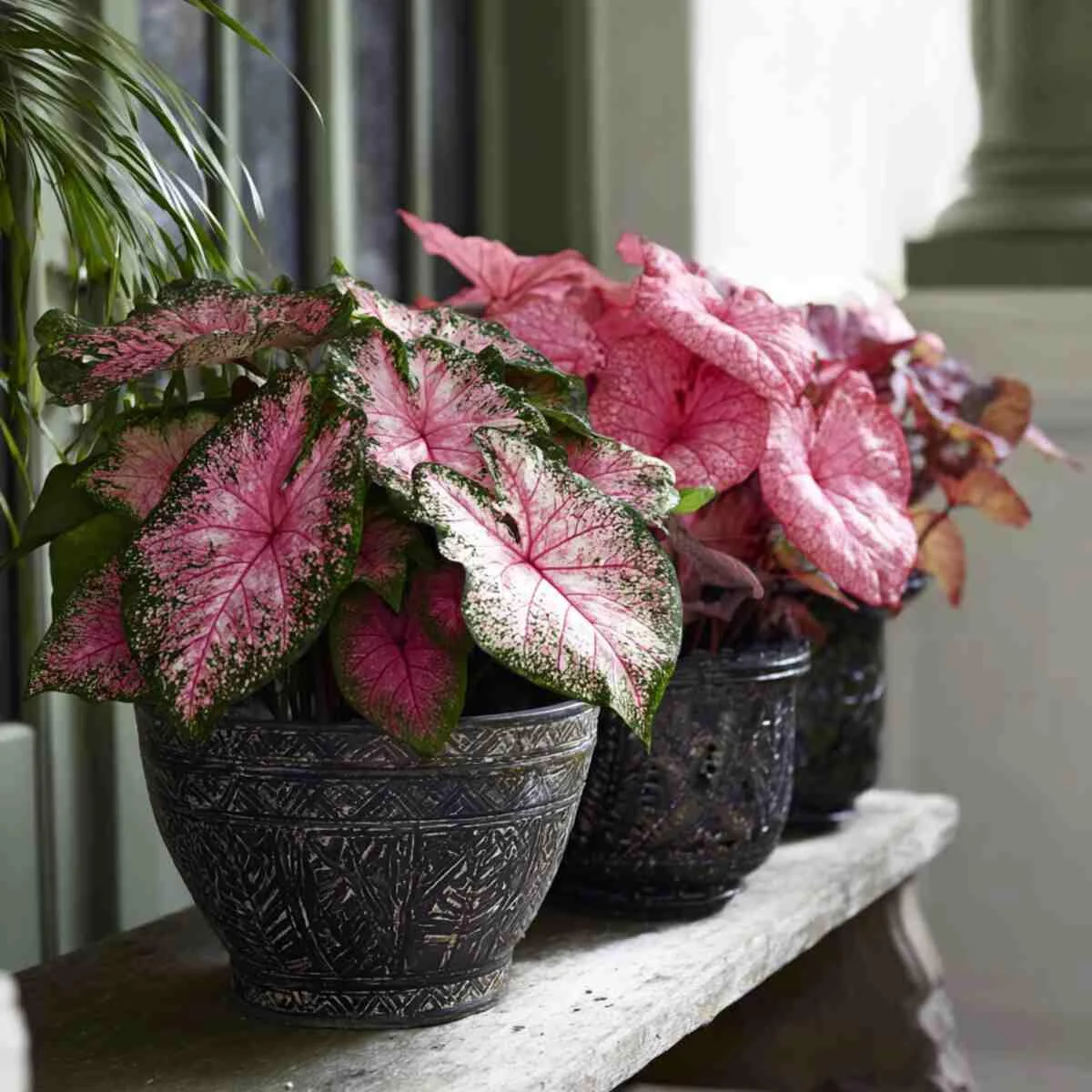
Caladiums are ideal for shaded balconies because their colorful leaves create visual interest without needing flowers. Their foliage can include shades of green, white, pink, and red.
Wide decorative bowls or low planters work well because they allow the leaves to spread and become the main feature. This is especially helpful for modern, tropical, or cozy balcony designs.
Caladiums usually prefer warm conditions and consistent moisture. Avoid placing them in cold, windy corners, and make sure the container drains properly.
6. Impatiens in Rail Planters
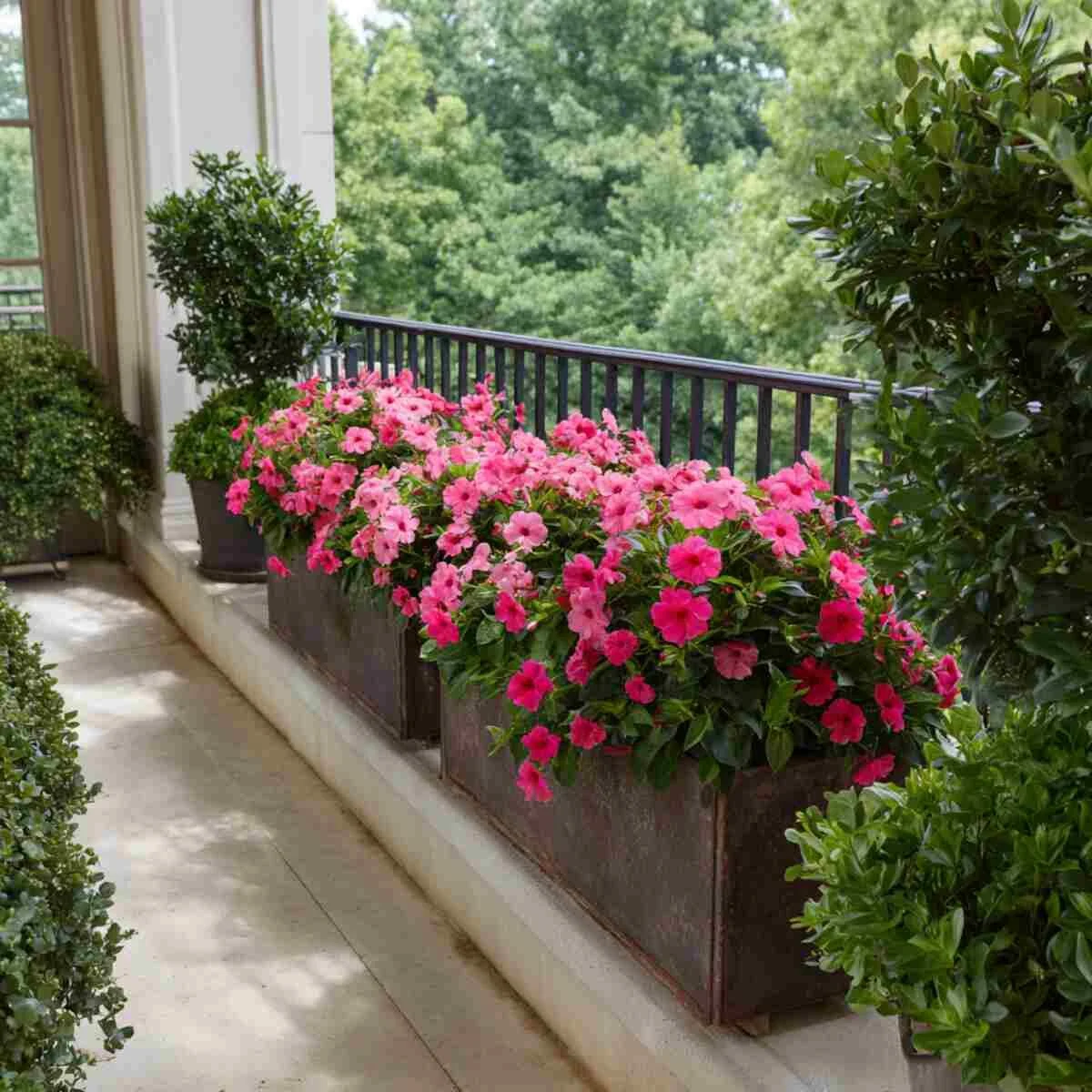
Impatiens are popular because they bloom well in shade and fill in quickly. They are a reliable option if you want bright flowers but do not have enough sunlight for many traditional balcony plants.
Rail planters make good use of narrow balcony space. They add color around the edges and help define the outdoor area visually.
For best results, keep the soil lightly moist and remove faded flowers when needed. Impatiens are especially attractive when planted in groups rather than as a single small plant.
7. Heucheras in Mixed Container Groups
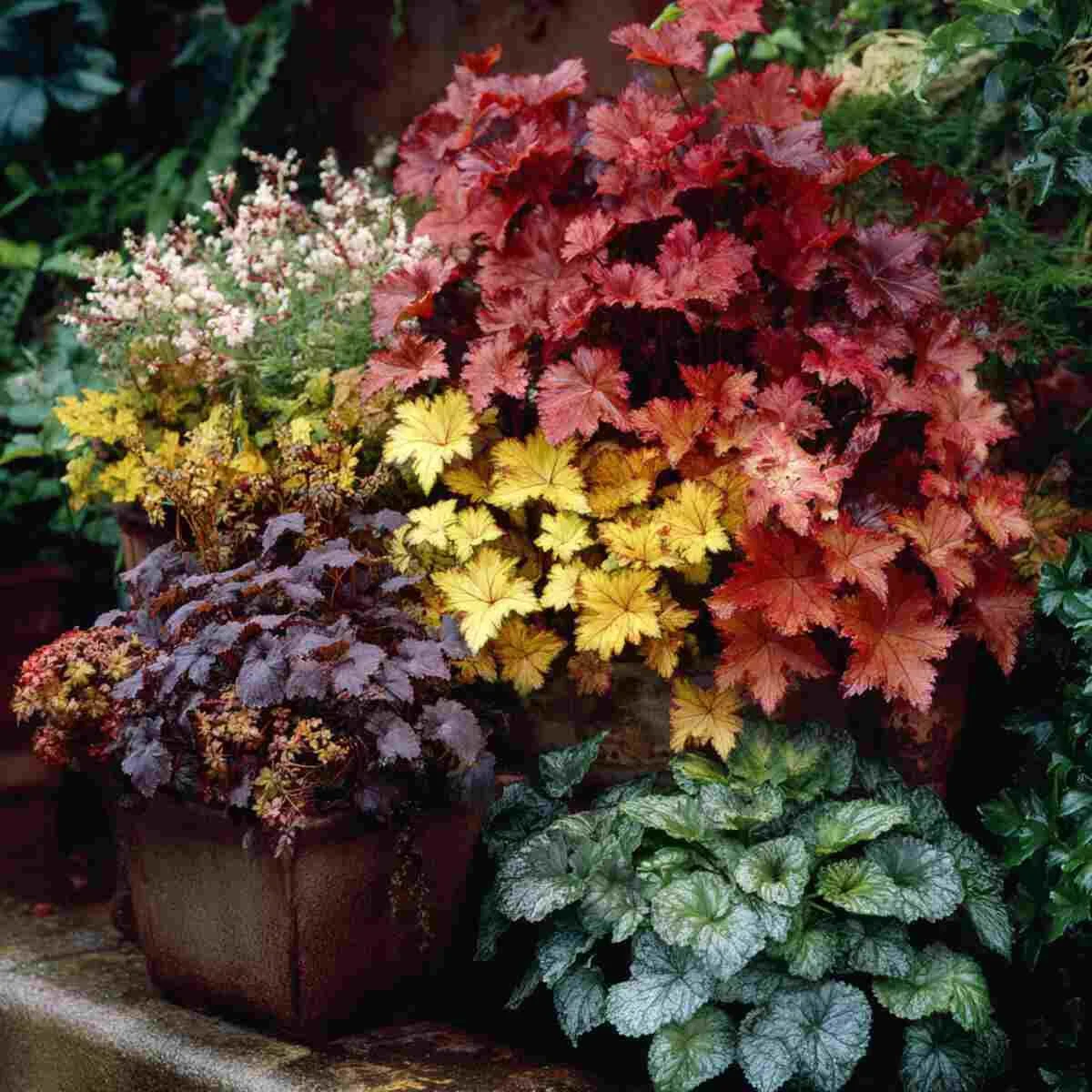
Heucheras, also called coral bells, are grown mainly for their colorful leaves. Their foliage may appear in shades of green, bronze, purple, burgundy, or silver.
They are useful in mixed containers because they provide contrast even when flowers are not blooming. This keeps the balcony garden looking attractive for a longer period.
Try pairing heucheras with ferns, begonias, or trailing ivy. The combination of different leaf shapes makes the container feel layered and professional.
8. Coleus in Terracotta Pots
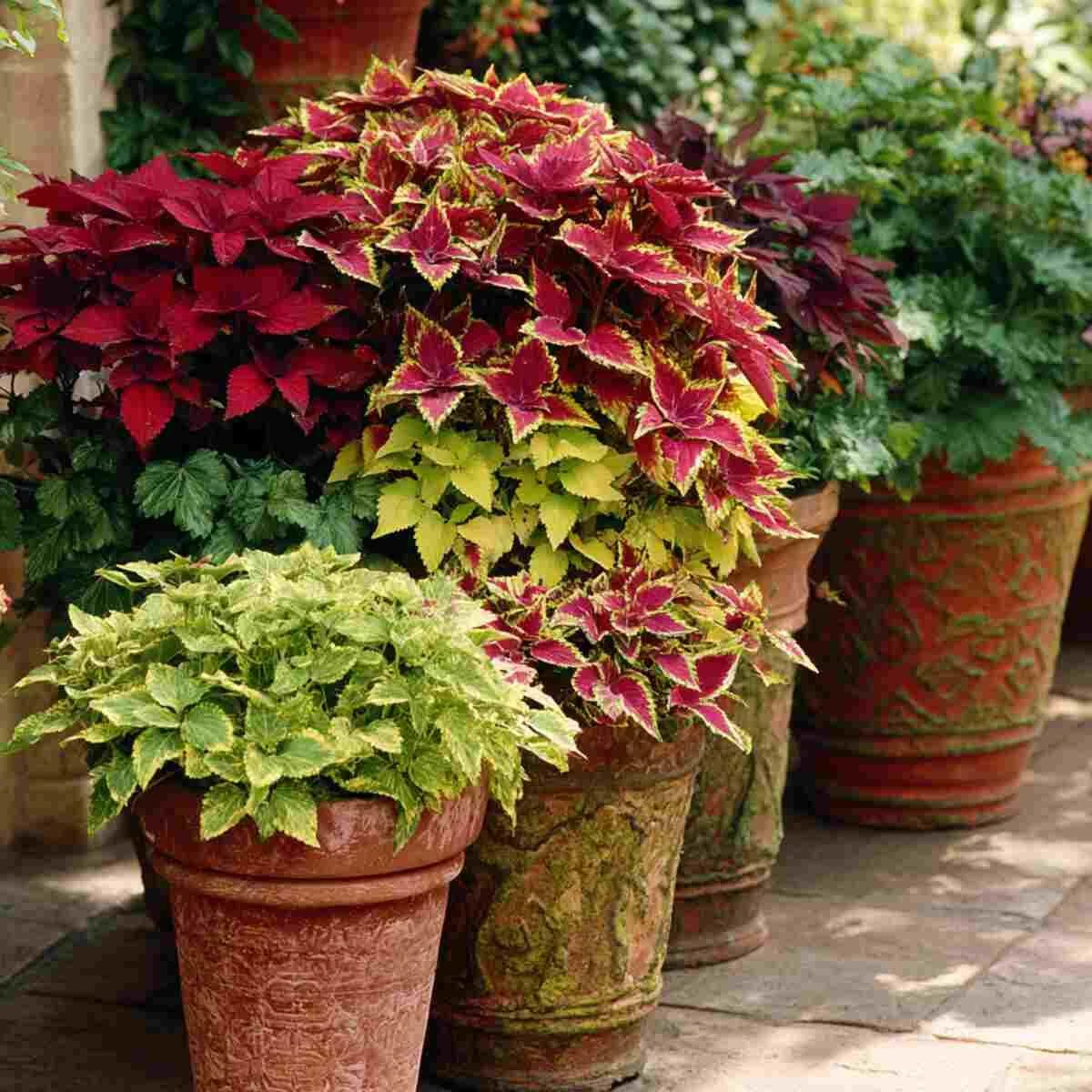
Coleus is one of the best foliage plants for adding color to a shaded balcony. Its leaves come in many combinations of green, red, pink, burgundy, and chartreuse.
Terracotta pots suit coleus because the warm color of the clay balances the bright leaves. This creates a natural and cozy look.
To keep coleus bushy, pinch back the growing tips occasionally. This encourages fuller growth instead of tall, weak stems.
9. Ivy in Vertical Wall Planters
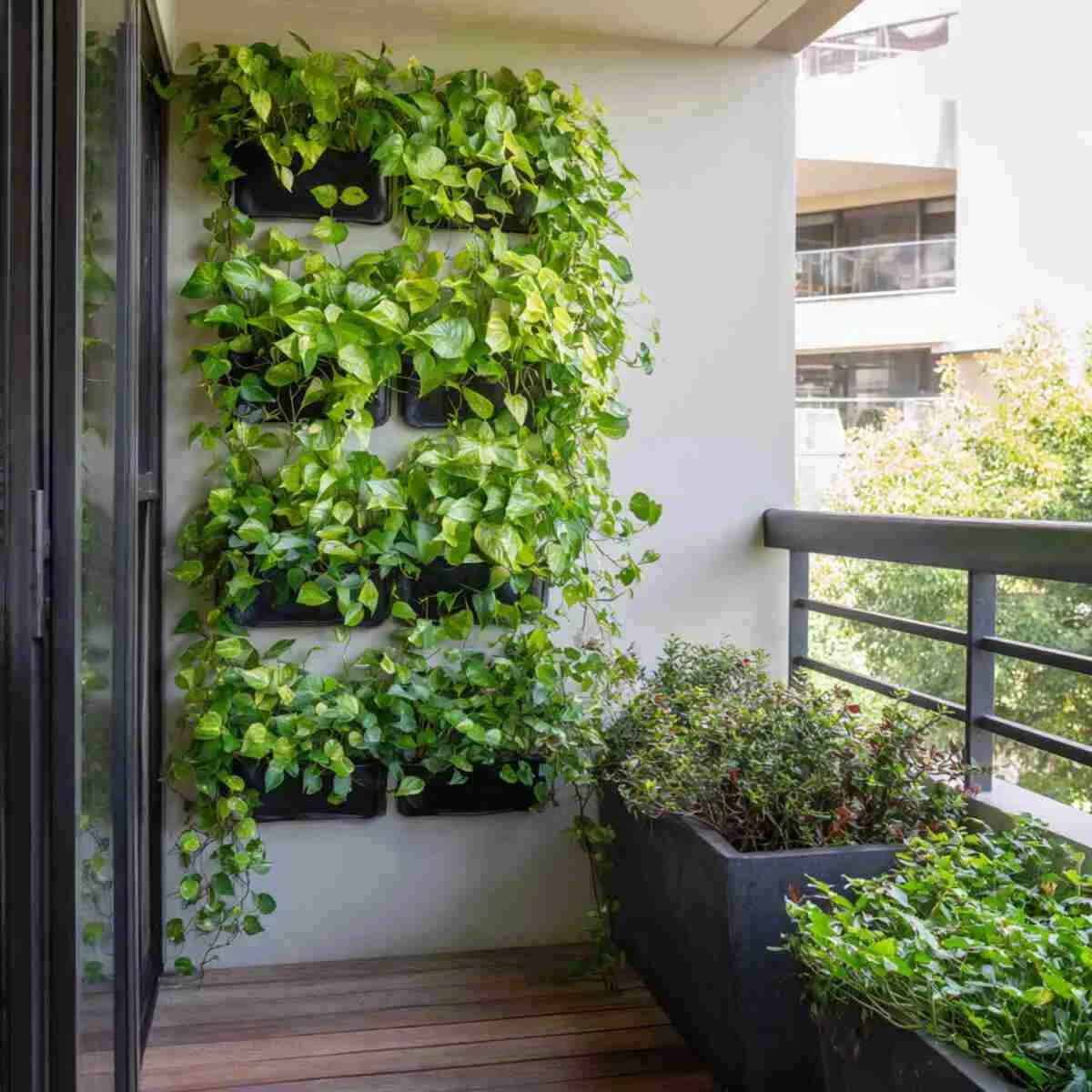
Ivy is a classic trailing plant that handles shade well. It helps soften hard balcony walls, railings, and corners.
Vertical wall planters are especially helpful for narrow balconies. They allow you to create a green wall effect while keeping the floor clear.
Trim ivy regularly so it stays neat and does not overpower the rest of the container garden. It is best used as a background or trailing accent rather than the only plant in the space.
10. Astilbe in Large Tub Containers
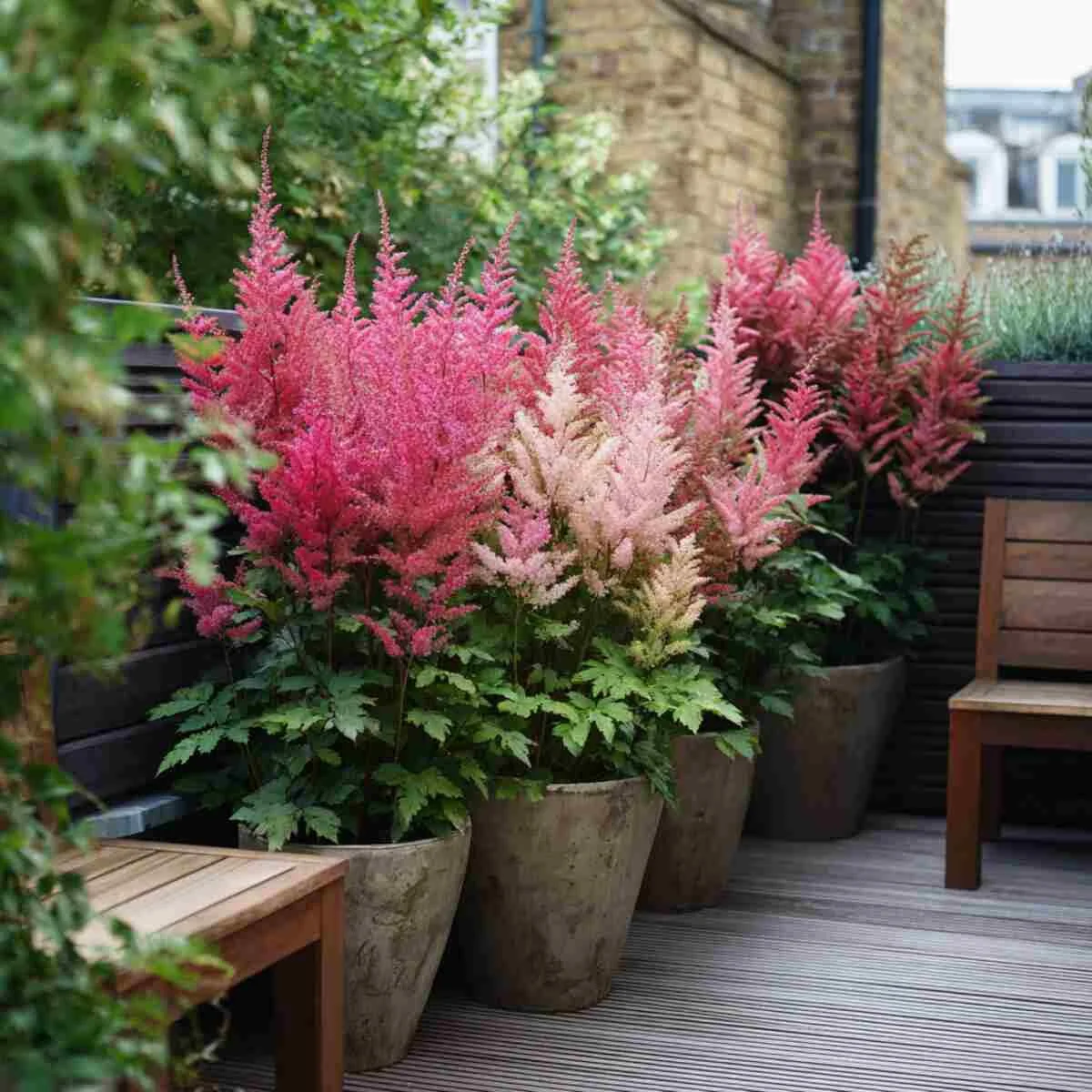
Astilbe adds softness, height, and elegance to a shaded balcony. Its feathery flower plumes make the space feel more like a small garden retreat.
Large tub containers are useful because astilbe prefers consistent moisture. A bigger pot helps prevent the soil from drying too quickly.
Place astilbe in a shaded corner or near other foliage plants for a peaceful, cottage-style look.
11. Japanese Forest Grass in Sleek Planters
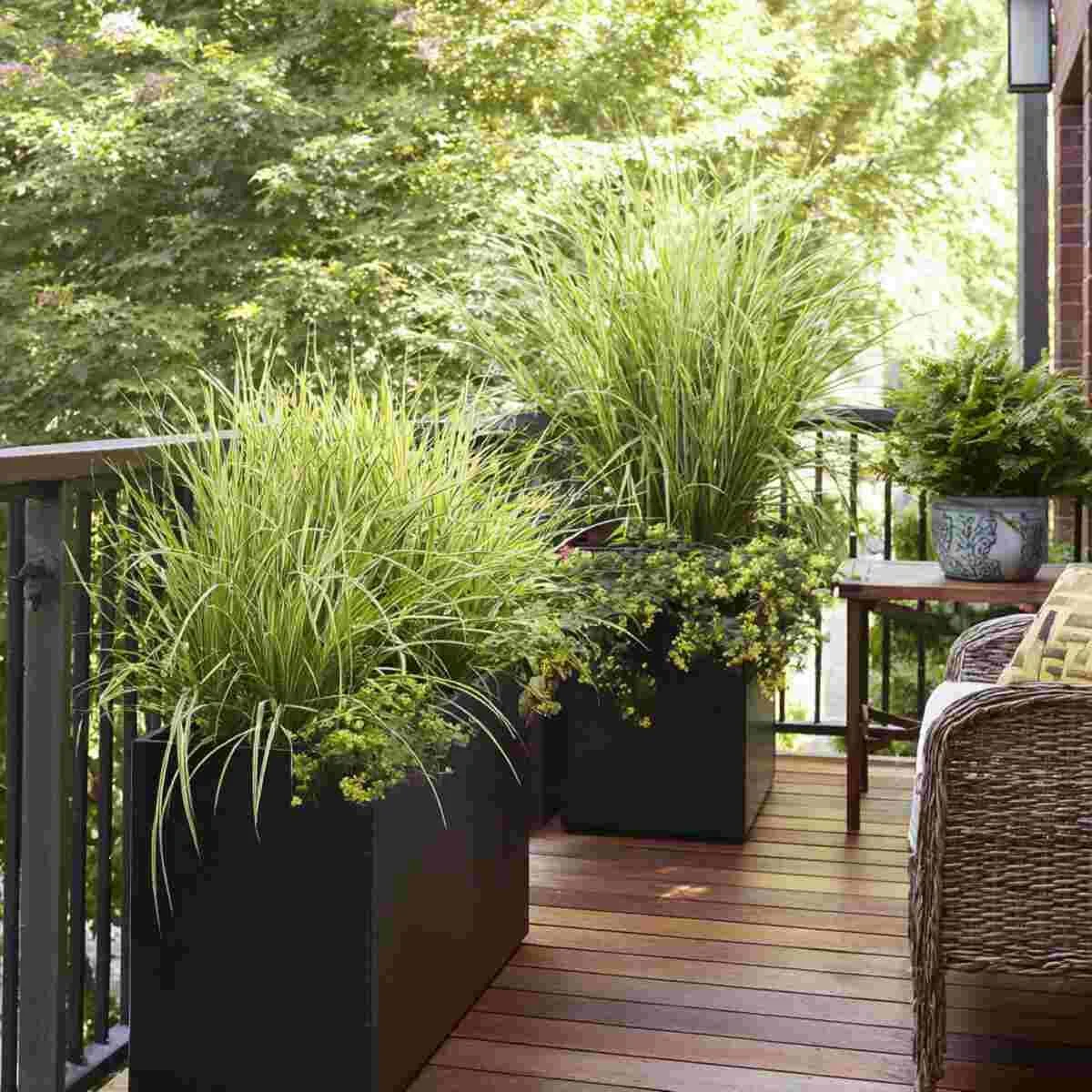
Japanese forest grass is a beautiful choice for shaded balconies because of its flowing, graceful leaves. It adds movement without looking messy.
Sleek planters work well because they keep the focus on the natural shape of the grass. This is a good option for minimalist balcony designs.
Use it near seating areas, beside a doorway, or as a soft edge around larger containers.
12. Lamium in Small Decorative Pots
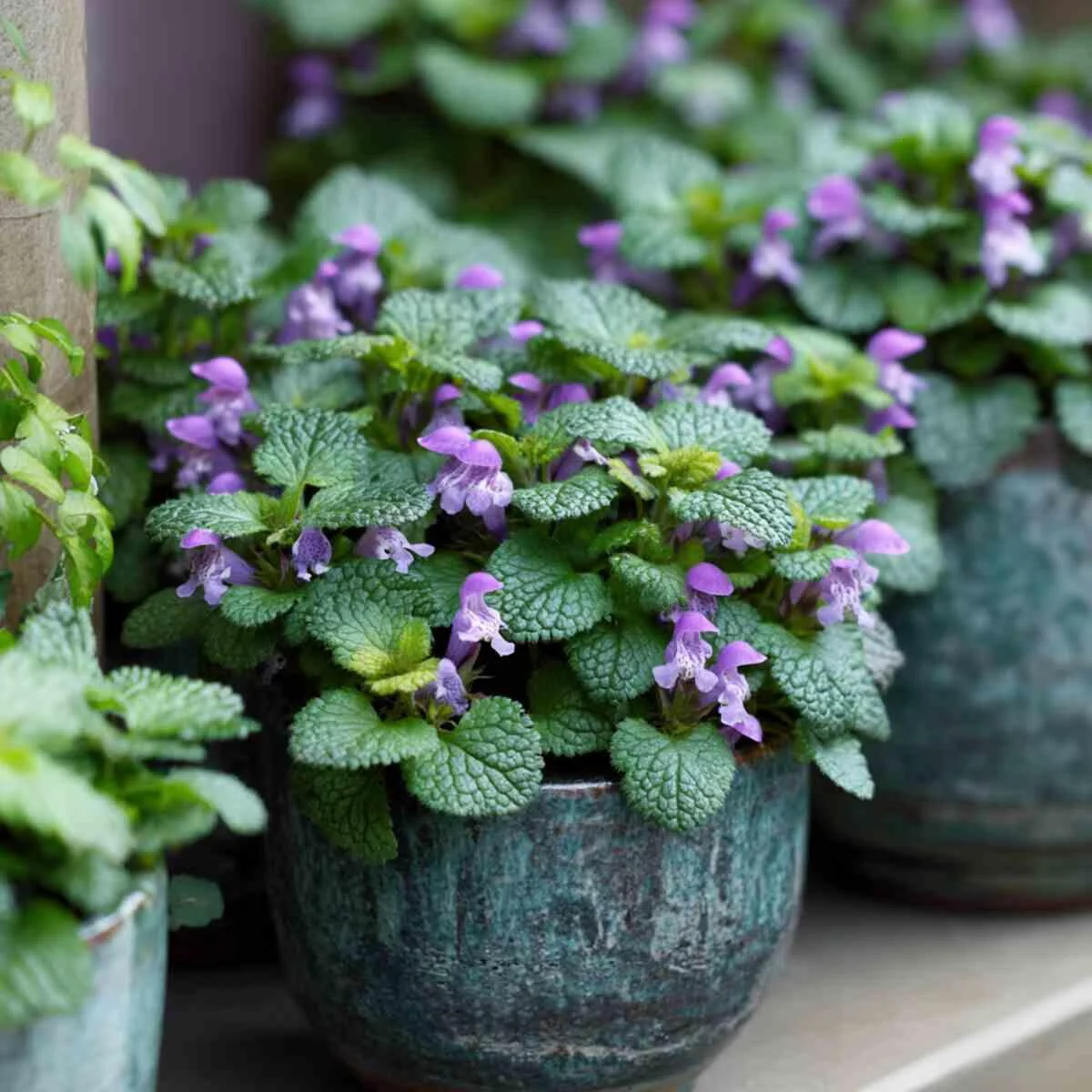
Lamium is a compact shade plant that works well in small pots. Its variegated leaves help brighten darker balcony corners.
Because it trails gently, lamium is useful on shelves, plant stands, and grouped container displays. It can also soften the edges of larger pots.
This is a practical choice when you want a plant that adds detail without taking over the entire arrangement.
13. Bleeding Heart in Medium Planters
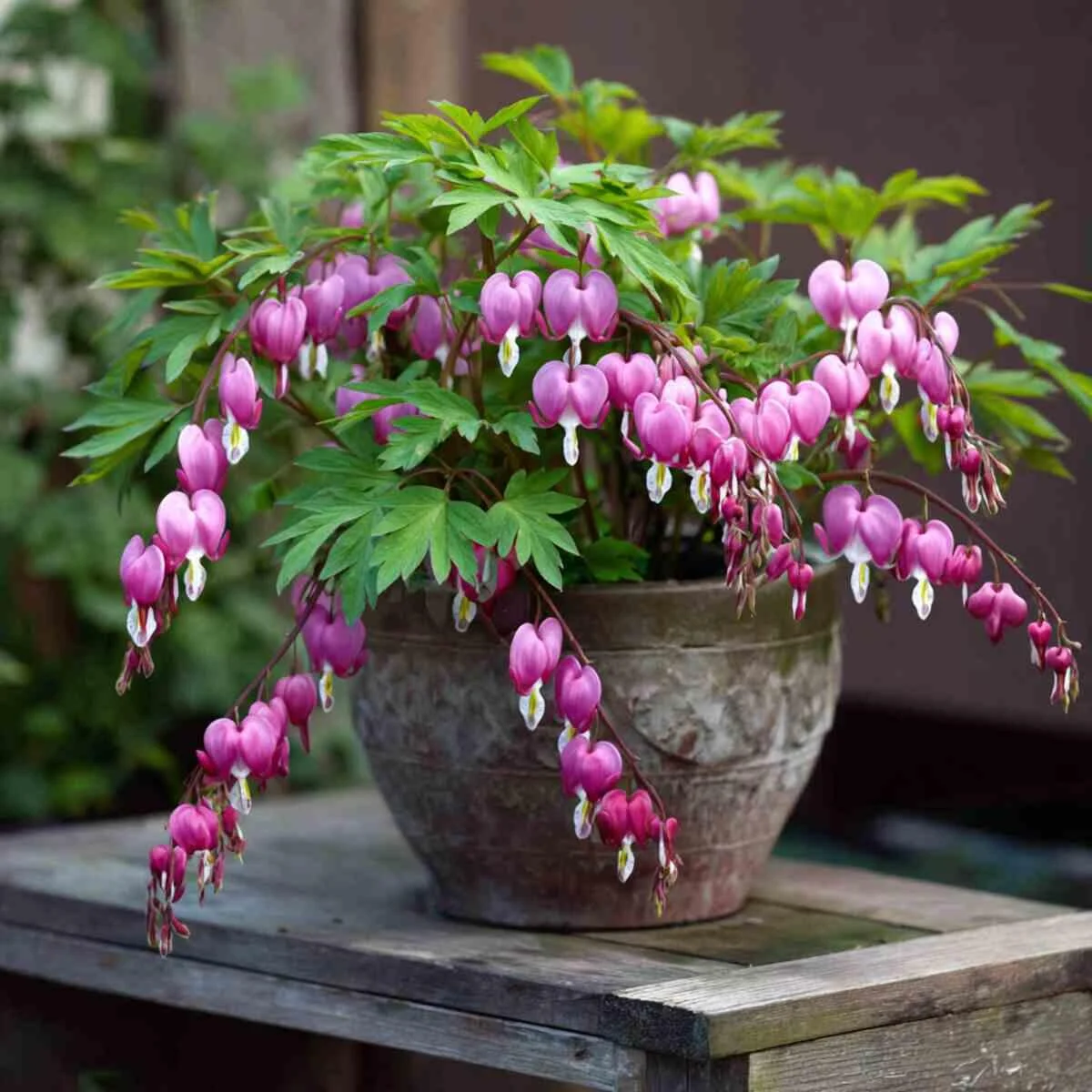
Bleeding heart is a charming shade plant with arching stems and heart-shaped flowers. It gives a balcony a quiet, woodland-style feeling.
Medium planters are usually the right size because they provide enough soil without taking up too much balcony space.
This plant looks especially nice near ferns, hostas, or other soft foliage plants.
14. Tiarella in Low Wide Bowls
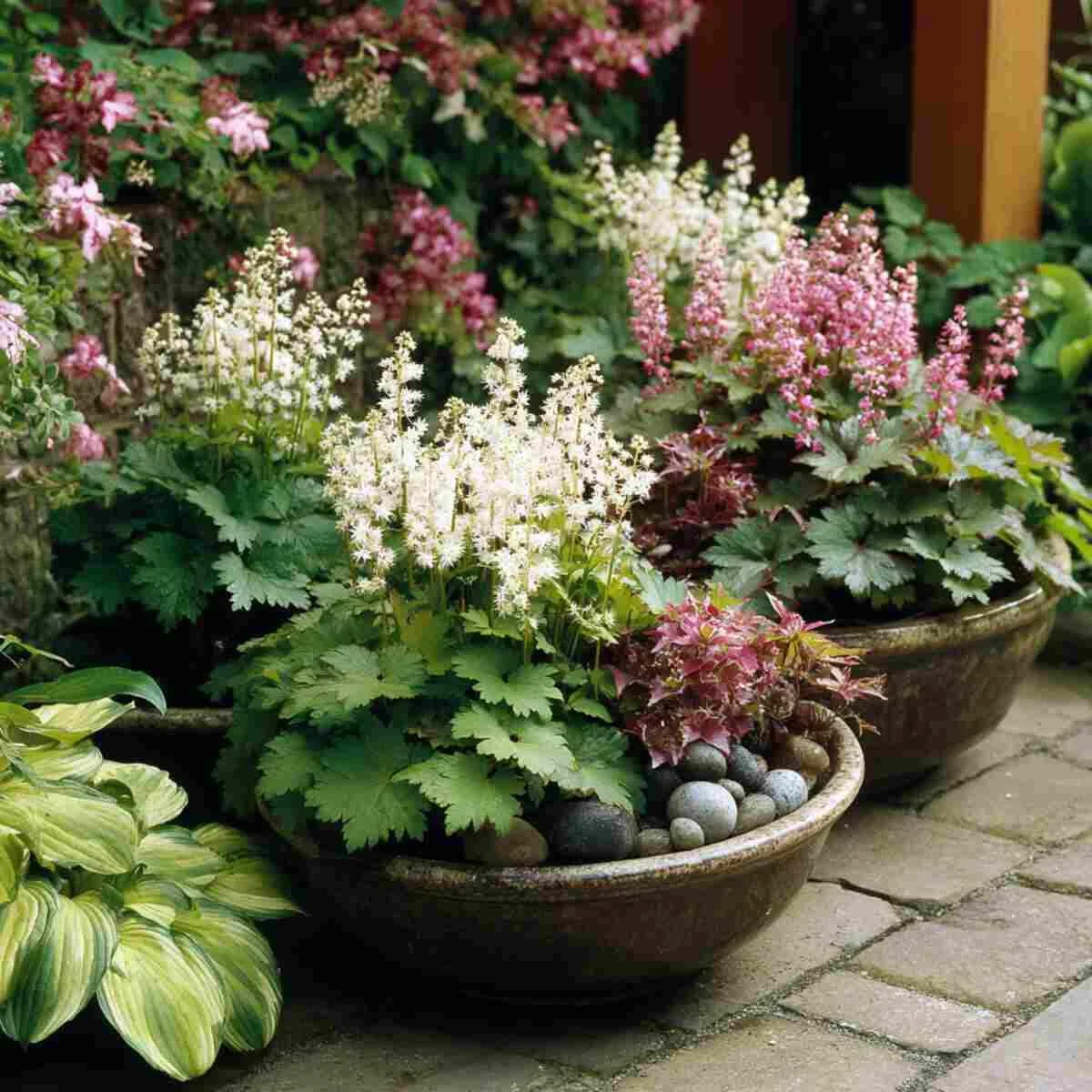
Tiarella, also known as foamflower, is a lovely plant for shaded containers. It has attractive foliage and small airy flowers that add gentle detail.
Low wide bowls help display the plant’s spreading shape. They work well on balcony tables, low stands, or near the front of grouped containers.
Tiarella is a good option if you want a soft, natural look without using large dramatic plants.
15. Ligularia in Statement Containers
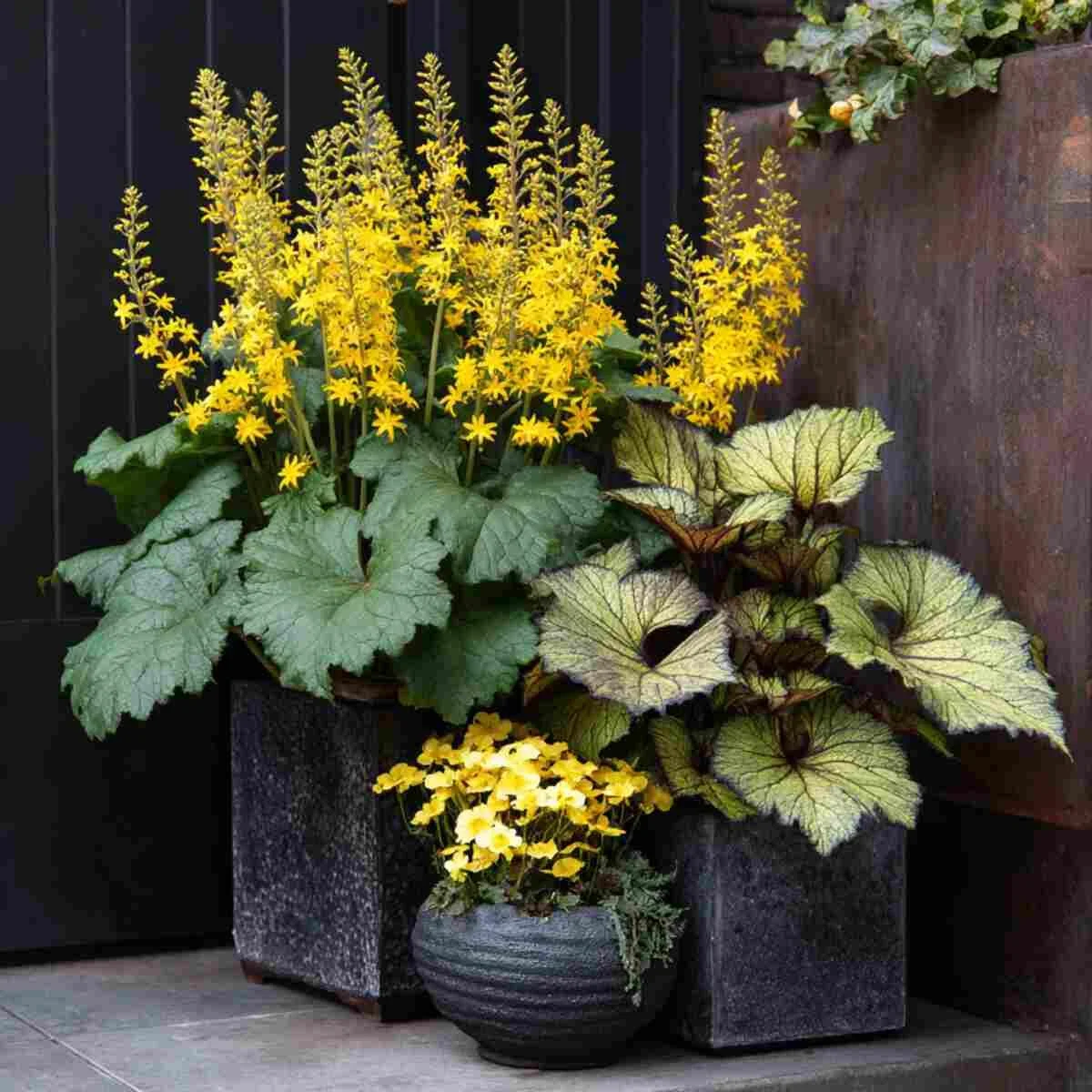
Ligularia is a strong choice when you want one container to stand out. Its large leaves create a bold, almost tropical effect in shaded spaces.
Use a statement pot and place it in a corner where it can act as the main feature. This helps the balcony look intentional rather than cluttered.
Ligularia prefers consistent moisture, so do not let the soil dry completely.
16. Polka Dot Plants in Hanging Baskets
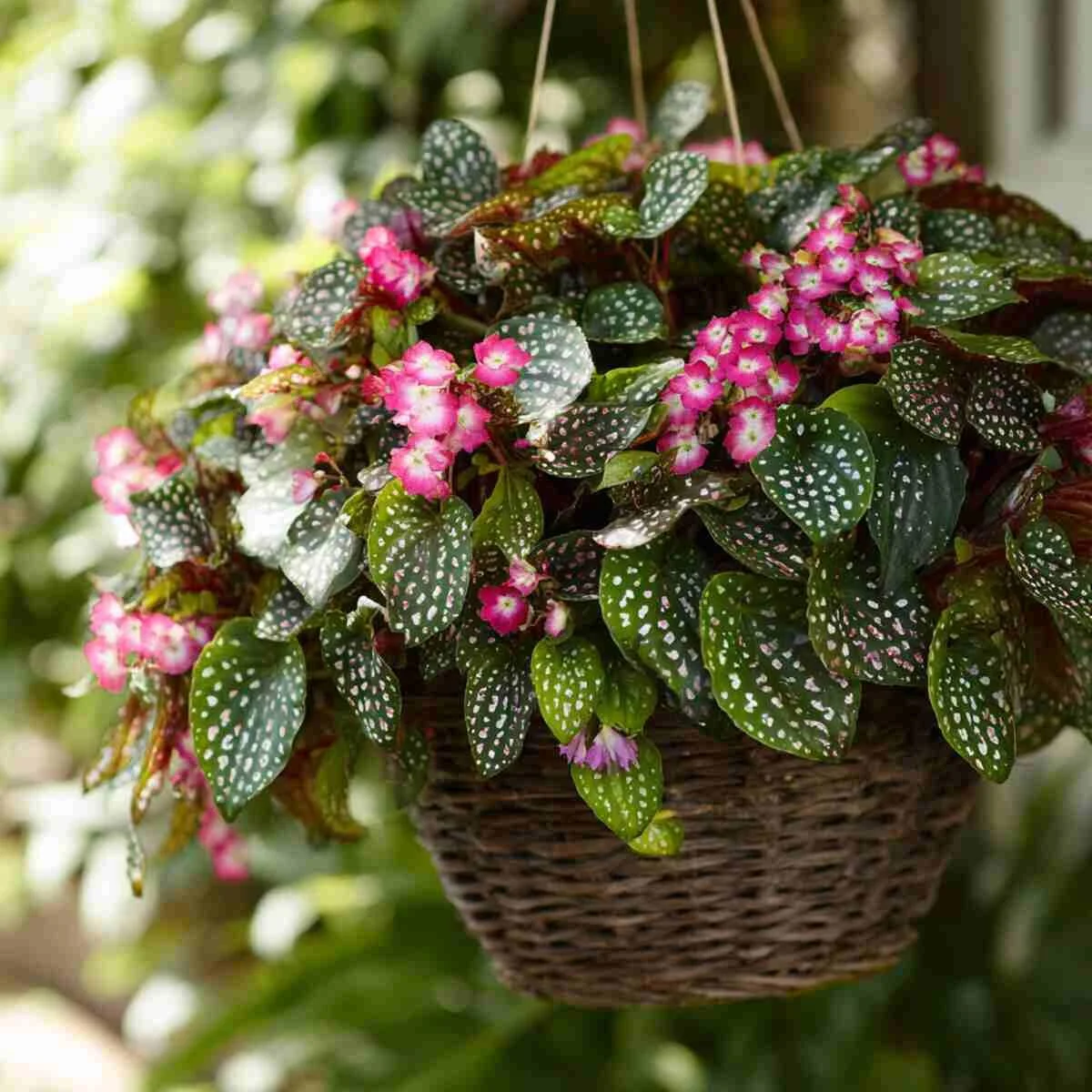
Polka dot plants are a fun way to add pattern and color to a shaded balcony. Their spotted leaves make the space feel lively even without many flowers.
Hanging baskets help place the color higher in the design. This gives the balcony more depth and makes the garden feel fuller.
Pair them with plain green plants so their patterned leaves stand out clearly.
17. Turtlehead in Rectangular Planters
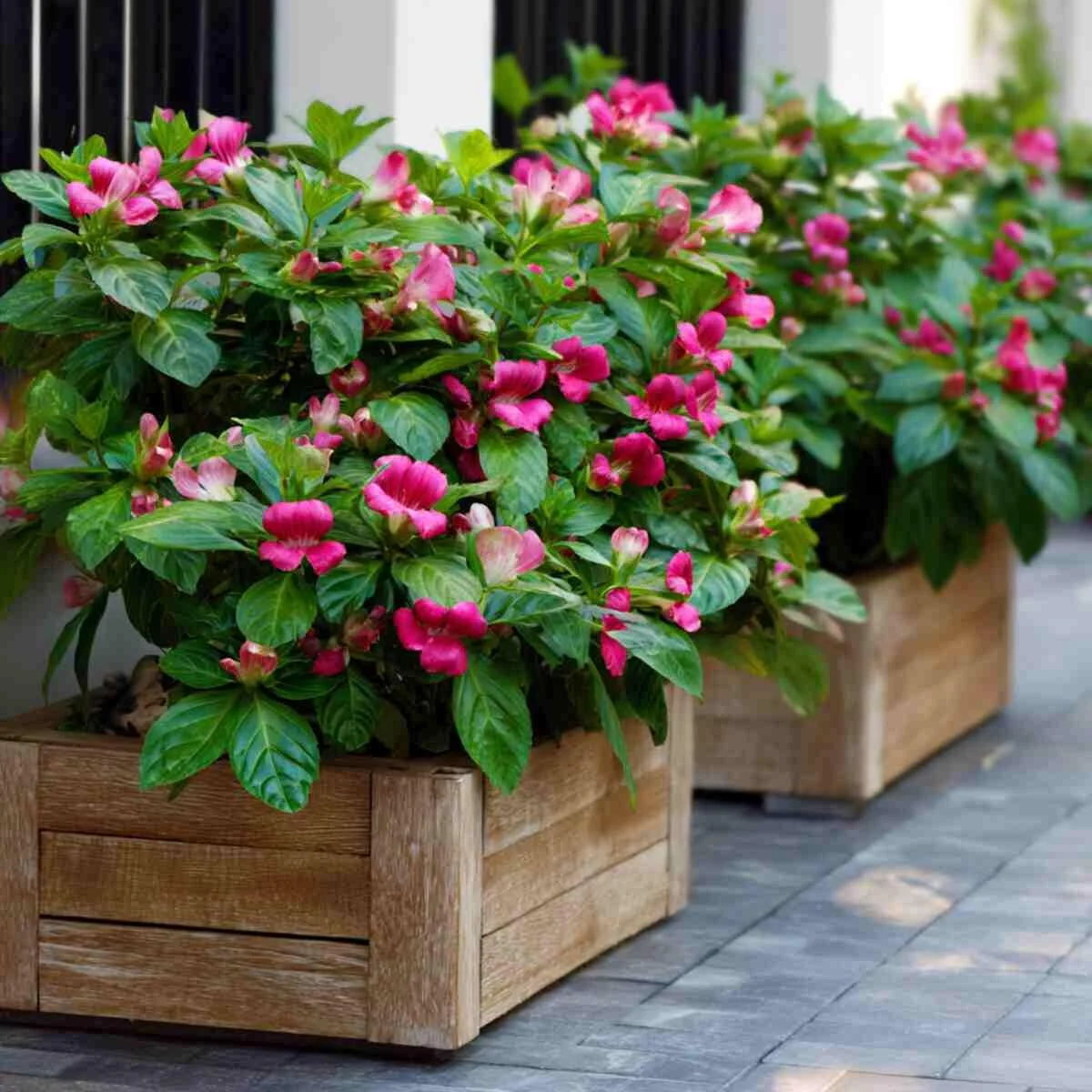
Turtlehead is a useful flowering plant for shaded balconies because it grows upright and keeps a tidy structure. Its blooms add seasonal interest while the foliage stays fresh-looking.
Rectangular planters are a good match for railings, walls, or narrow balcony edges. They help keep the planting organized.
This is a strong option when you want flowers but still prefer a clean, structured layout.
18. Alocasia in Tall Corner Containers
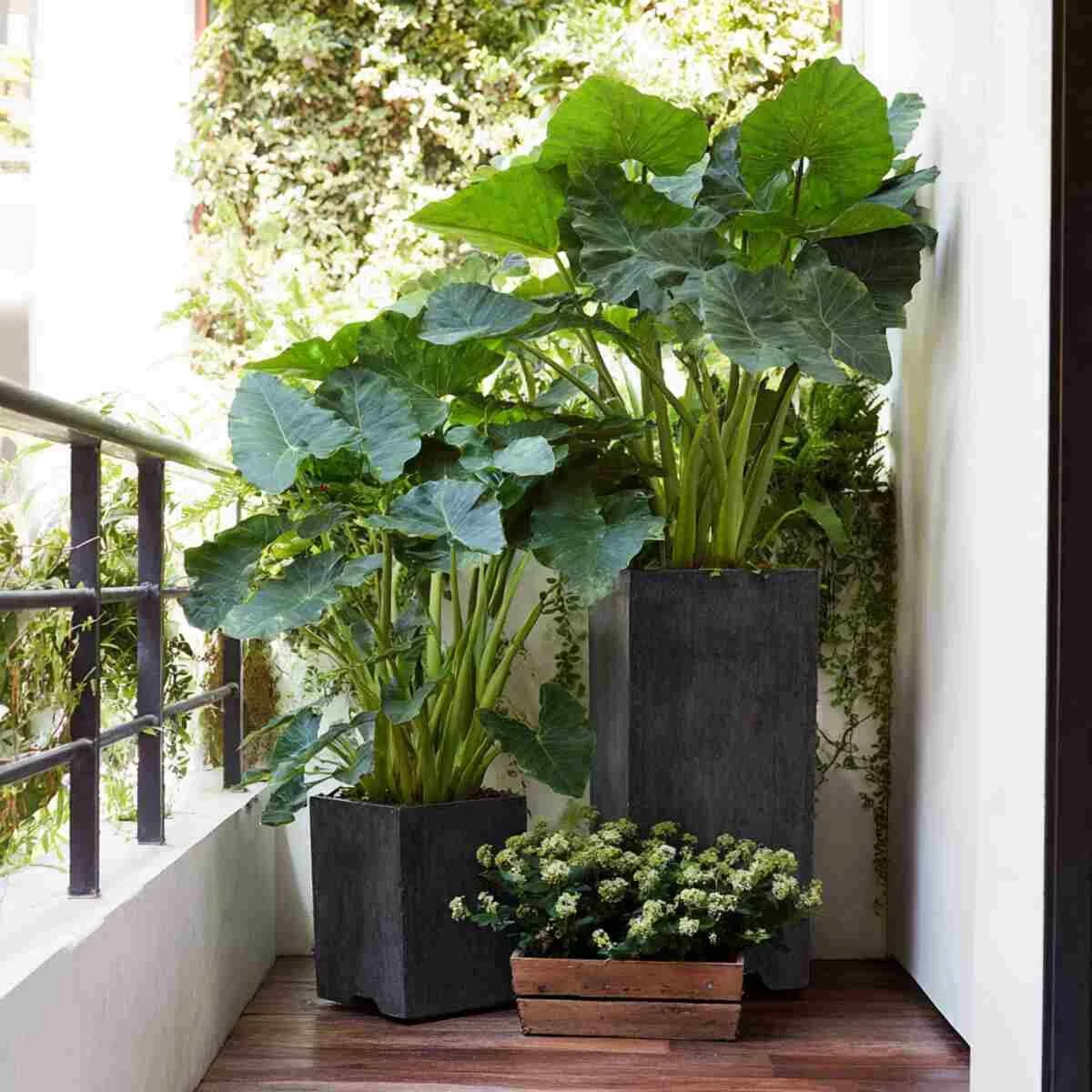
Alocasia is perfect if you want dramatic leaves and a tropical look. Its large foliage can make a shaded balcony feel lush and stylish.
Tall corner containers are useful because they raise the leaves closer to eye level. This makes the plant look more sculptural and intentional.
Keep alocasia away from cold drafts and make sure the pot has good drainage. It works best as a focal point rather than a background plant.
19. Solomon’s Seal in Low Deck Pots
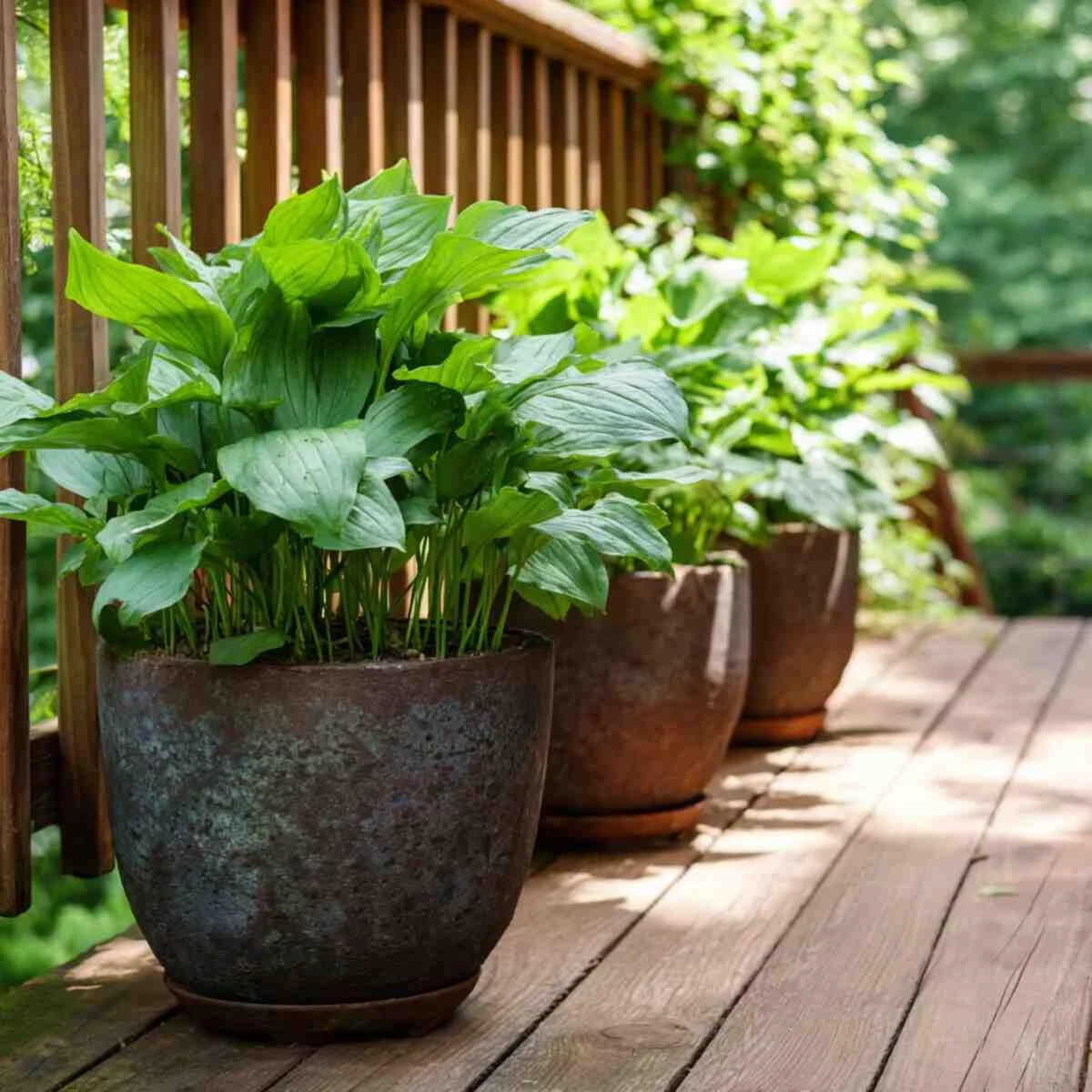
Solomon’s seal has a gentle arching habit that suits shaded spaces beautifully. It gives the balcony a quiet woodland feel.
Low deck pots are a good choice because they allow the stems to curve naturally near the floor. This softens hard balcony surfaces and makes the lower part of the space feel planted.
Use it near seating areas or along the edge of a container grouping for a calm, natural effect.
20. Foamflowers in Small Grouped Planters
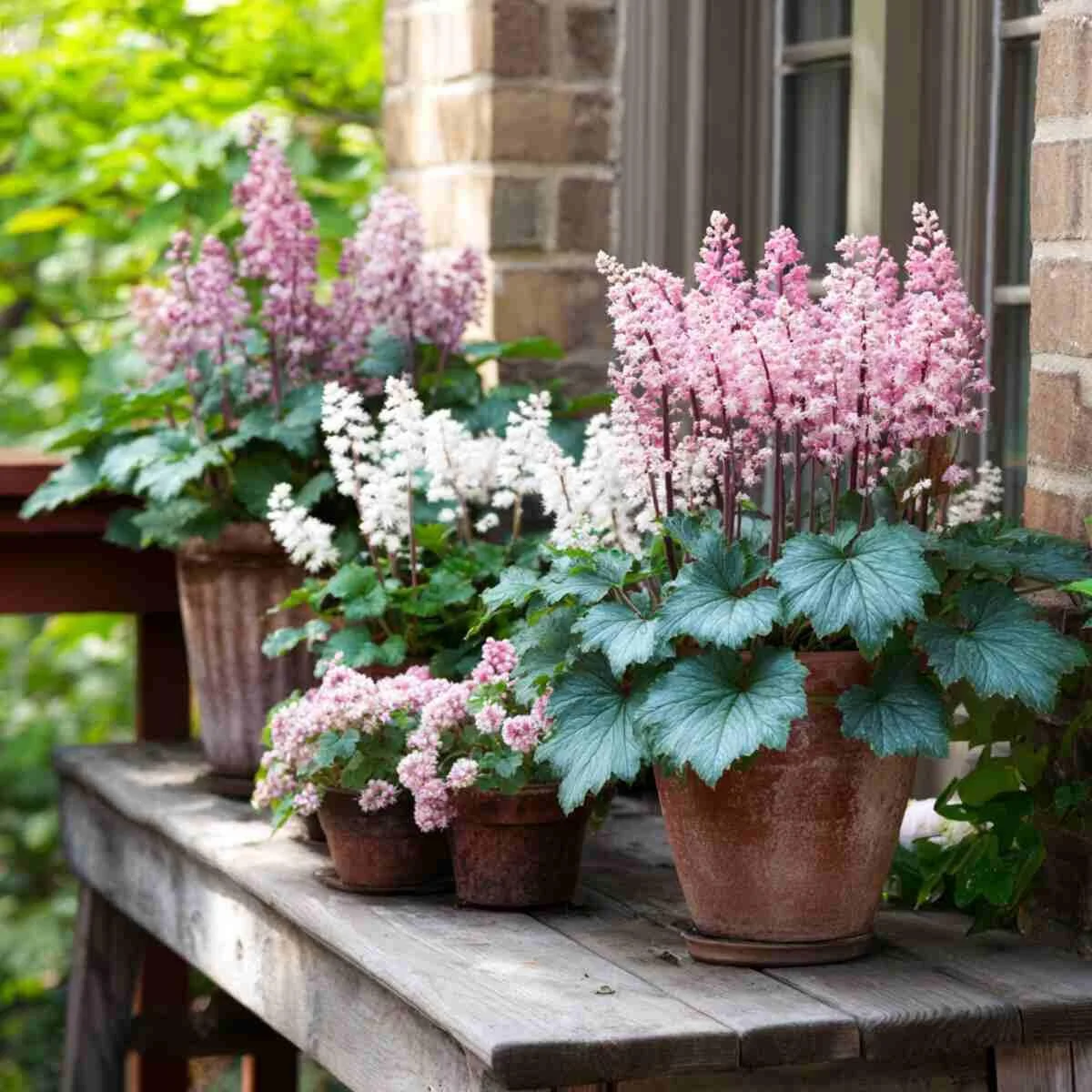
Foamflowers are excellent for small grouped planters. Their delicate flowers and attractive leaves create a light, charming look.
You may also like: 19 Early Spring Flowers That Bloom First in Your Garden
Grouping small containers together is a smart way to make a balcony feel fuller without using one oversized pot. It also makes the arrangement easier to move and adjust.
This idea is especially helpful for renters or anyone who likes changing the balcony layout from season to season.
How to Arrange Shade Containers on a Balcony
The way you arrange containers can make a big difference. Instead of placing pots randomly, try to create layers. Put taller plants at the back, medium plants in the middle, and trailing plants near the front or edges.
If your balcony is narrow, use rail planters and wall planters to save floor space. If you have a corner available, create a grouped container display with different pot heights. A plant stand can also help you add height without needing many large containers.
- Use hanging baskets for ferns, polka dot plants, or trailing foliage.
- Use large pots for hostas, ligularia, or alocasia.
- Use rail planters for begonias, impatiens, or turtlehead.
- Use low bowls for caladiums, tiarella, or small mixed displays.
- Use wall planters for ivy or other trailing greenery.
Common Shade Container Gardening Mistakes to Avoid
Shade gardening is easier when you know what not to do. Many balcony plants fail because of small care mistakes rather than poor plant choice.
- Overwatering: Shaded containers dry slowly, so watering too often can damage roots.
- No drainage: Every container should have drainage holes.
- Using full-sun plants: Plants that need strong light may become weak and leggy in shade.
- Choosing tiny pots: Small pots can limit root growth and dry unevenly.
- Ignoring airflow: Crowded shaded areas can stay too damp, which may encourage plant problems.
- Using only one plant texture: A mix of broad leaves, fine foliage, and trailing plants looks more attractive.
Best Plant Combinations for Shade Containers
If you want your balcony containers to look more professional, combine plants with different roles. A simple container recipe is “thriller, filler, and spiller.” The thriller is the main upright plant, the filler adds fullness, and the spiller trails over the edge.
| Container Style | Main Plant | Filler Plant | Trailing Plant |
|---|---|---|---|
| Soft green shade pot | Hosta | Fern | Ivy |
| Colorful shade planter | Caladium | Begonia | Lamium |
| Modern balcony corner | Alocasia | Heuchera | Ivy |
| Flowering rail planter | Impatiens | Begonia | Lamium |
Simple Care Tips for Shade Container Gardens
Once your containers are planted, regular care keeps them looking fresh. Shade plants usually need less frequent watering than sun plants, but they still need attention.
- Check soil moisture before watering.
- Remove yellow or damaged leaves to keep plants healthy.
- Rotate containers occasionally so plants grow evenly.
- Use slow-release fertilizer lightly during the growing season.
- Clean up fallen leaves to prevent damp buildup around pots.
Also watch how light changes during the day. A balcony that seems fully shaded in the morning may receive strong afternoon sun later, especially in summer. Move sensitive shade plants away from hot direct sun if leaves begin to scorch.
Final Thoughts
A shady balcony can still become a beautiful green retreat when you choose plants that naturally enjoy lower light. Instead of fighting the shade, use it to create a calm and relaxing container garden with leafy plants, soft flowers, and trailing greenery.
Ferns, hostas, begonias, ivy, caladiums, heucheras, coleus, and alocasia all offer different textures and colors for shaded spaces. By mixing container sizes, using vertical space, and arranging plants in layers, even a small balcony can feel full and thoughtfully designed.
The best shade container garden is not the one with the most plants. It is the one that fits your light conditions, watering habits, and available space. Start with a few reliable plants, arrange them well, and your shaded balcony can become a peaceful garden corner you enjoy every day.


