
The first flowers of the year do more than brighten a garden. They shift the mood of the entire space. After months of bare branches and quiet beds, even a small patch of early bloom can make the season feel as though it has truly turned.
Early spring planting works best when it balances beauty with timing. Some flowers shine in shade while trees are still bare, some hold their own in pots near the front door, and others are most effective when allowed to naturalize in drifts. The ideas below are arranged to help readers choose the right look for the right place rather than treating every early bloomer the same way.

Snowdrop Border Ideas for the Earliest Garden Color
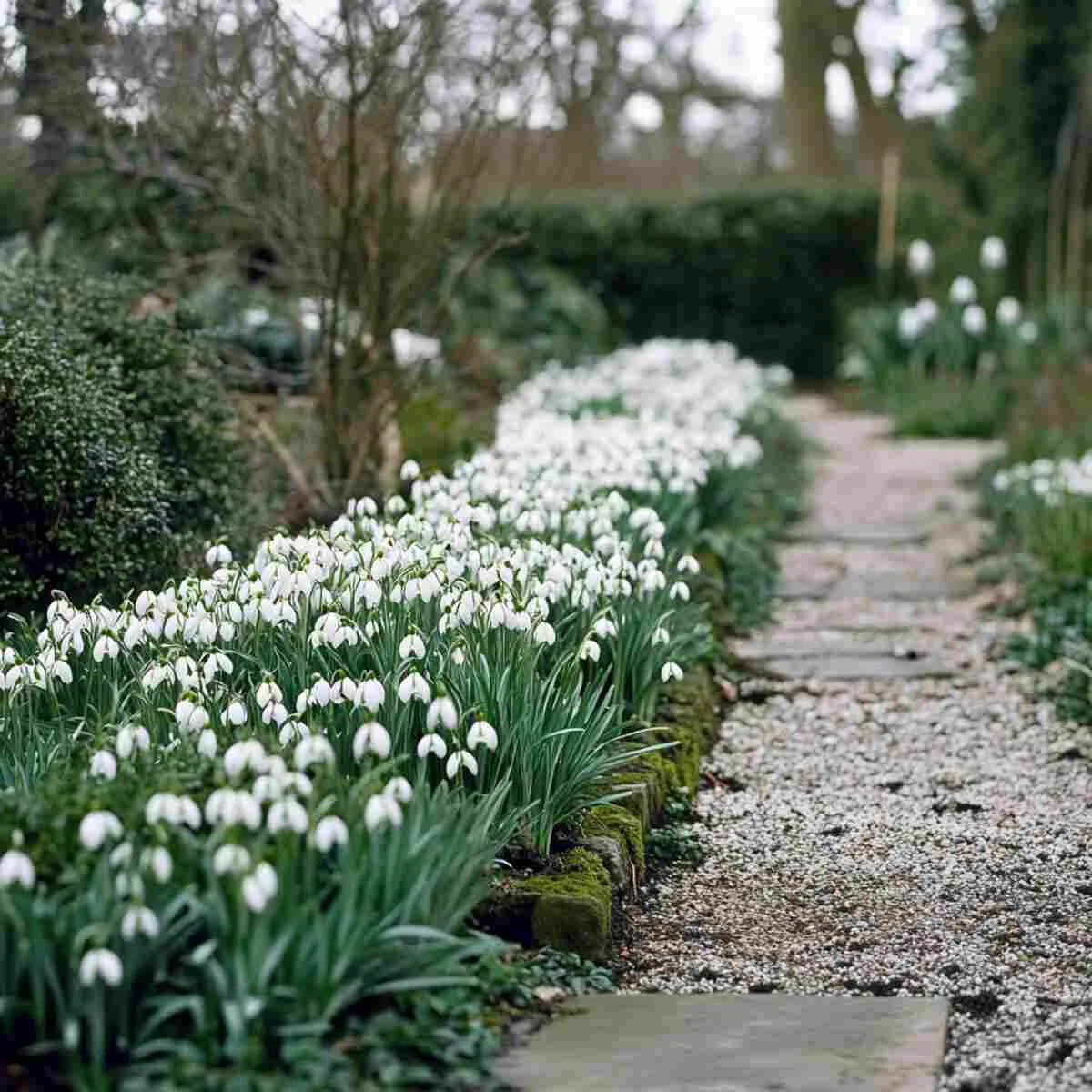
Snowdrops have a quiet elegance that suits the earliest weeks of the season. Their white, nodding blooms do not demand attention, yet they completely change the feel of a border that has looked empty for months.
They work especially well along paths, near gates, or beneath deciduous shrubs where they can be seen up close. Instead of planting them in a stiff line, let them gather in soft drifts so the effect feels natural and settled.
- Best in lightly shaded beds or woodland edges.
- More effective in clusters than in scattered singles.
- Leave clumps undisturbed so they can spread gradually over time.
Early Crocus Rock Garden Ideas
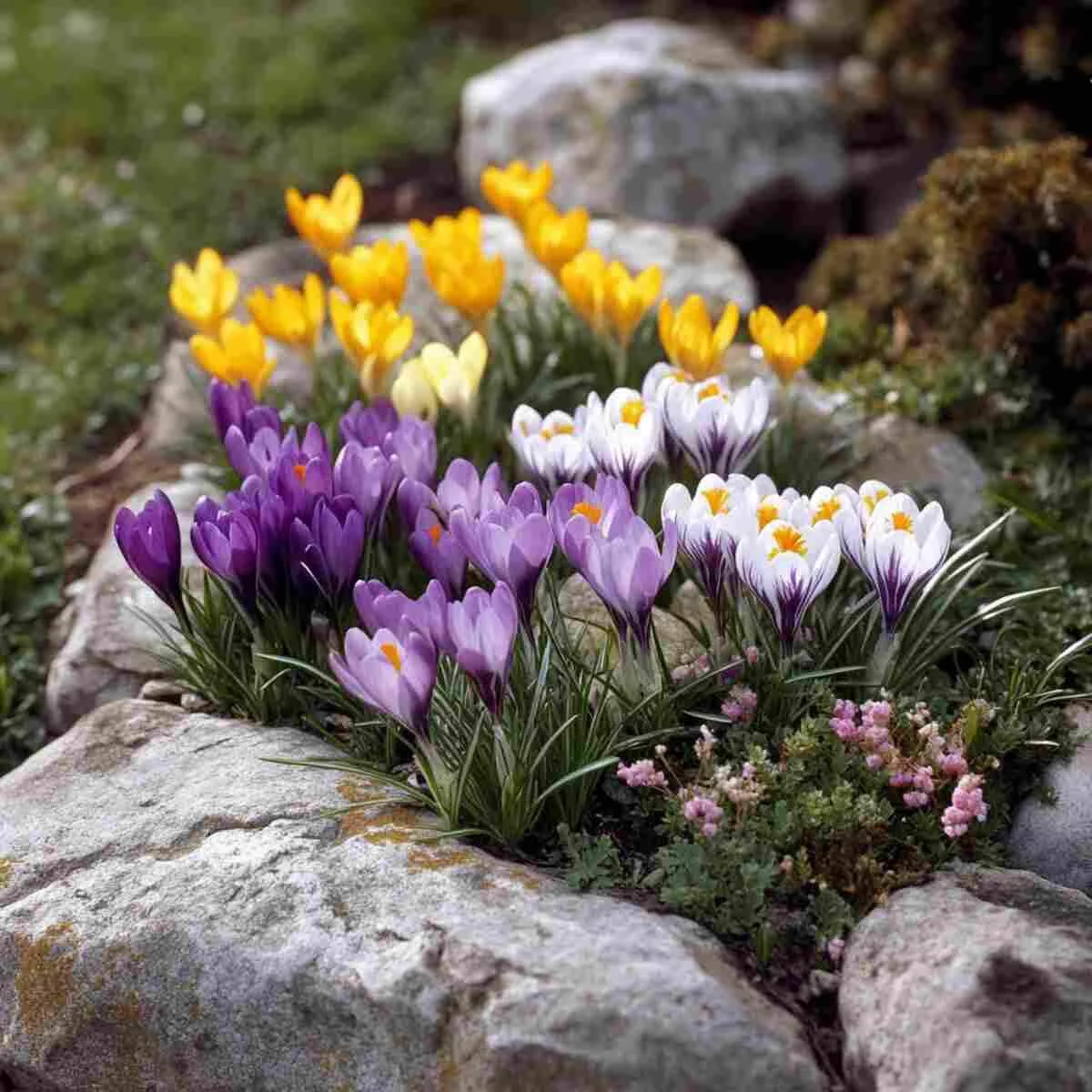
Crocuses bring a burst of color at a point in the year when the garden still feels mostly brown and grey. In a rock garden, their jewel-like flowers look even sharper against gravel, stone, and low evergreen planting.
This is one of the most useful layouts for small spaces because rock gardens warm up quickly in spring and give short flowers a setting where they do not disappear. Purple, yellow, and white mixes feel lively, though a single-color drift can look more polished.
Mini Daffodil Planter Ideas for Patios and Steps
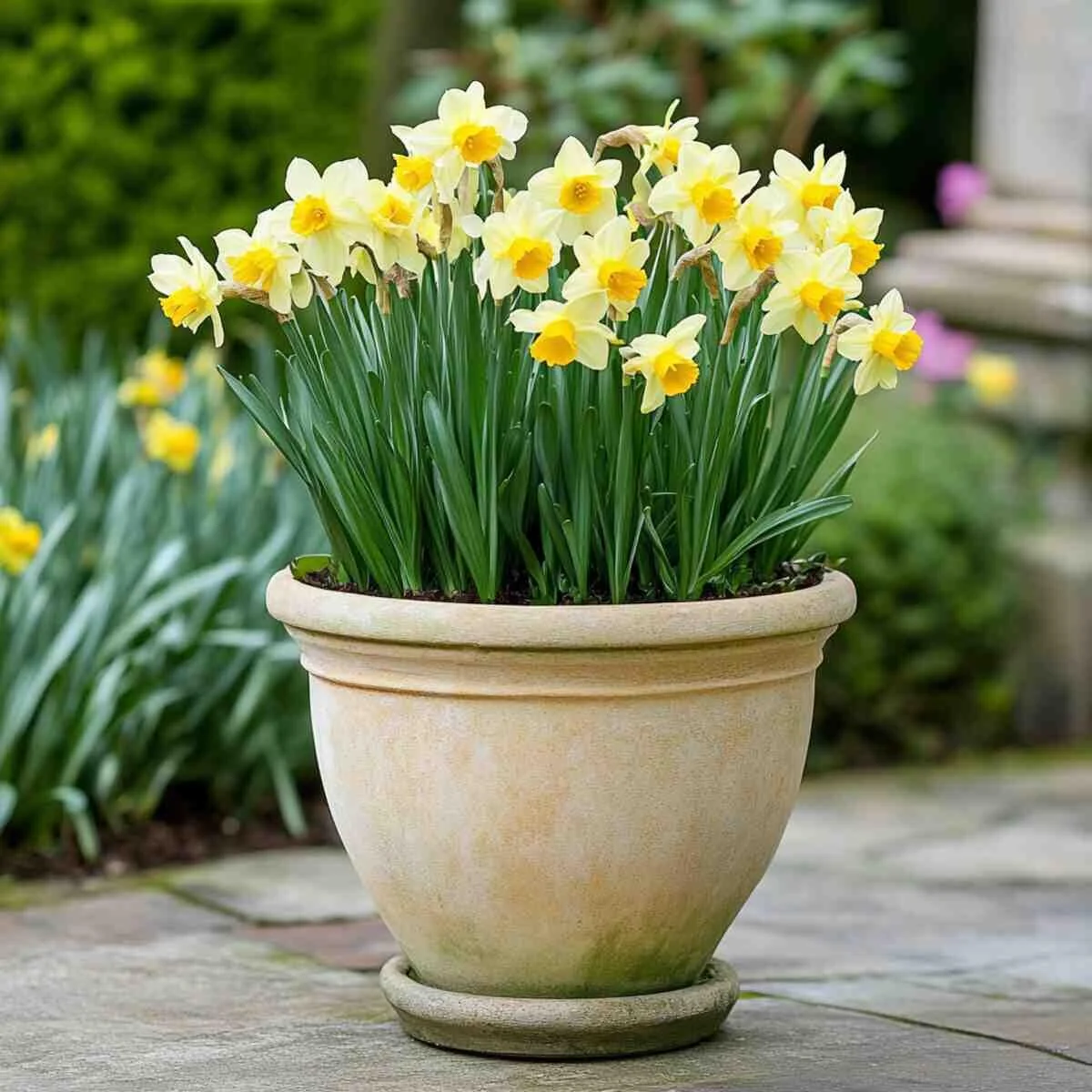
Mini daffodils are one of the easiest ways to bring spring close to the house. Their compact size makes them ideal for containers on steps, patios, balconies, and front porches where larger bulbs would feel oversized.
They are especially effective near entries, where even a few pots can make the exterior feel brighter and more welcoming. Grouping several containers together usually looks better than placing one pot on its own.
- Choose pots with good drainage so bulbs do not sit in cold, wet compost.
- Repeat the same variety across several containers for a cleaner look.
- Place them where early blooms can be enjoyed from indoors as well as outside.
Tulip Cluster Bed Ideas for a Stronger Spring Display
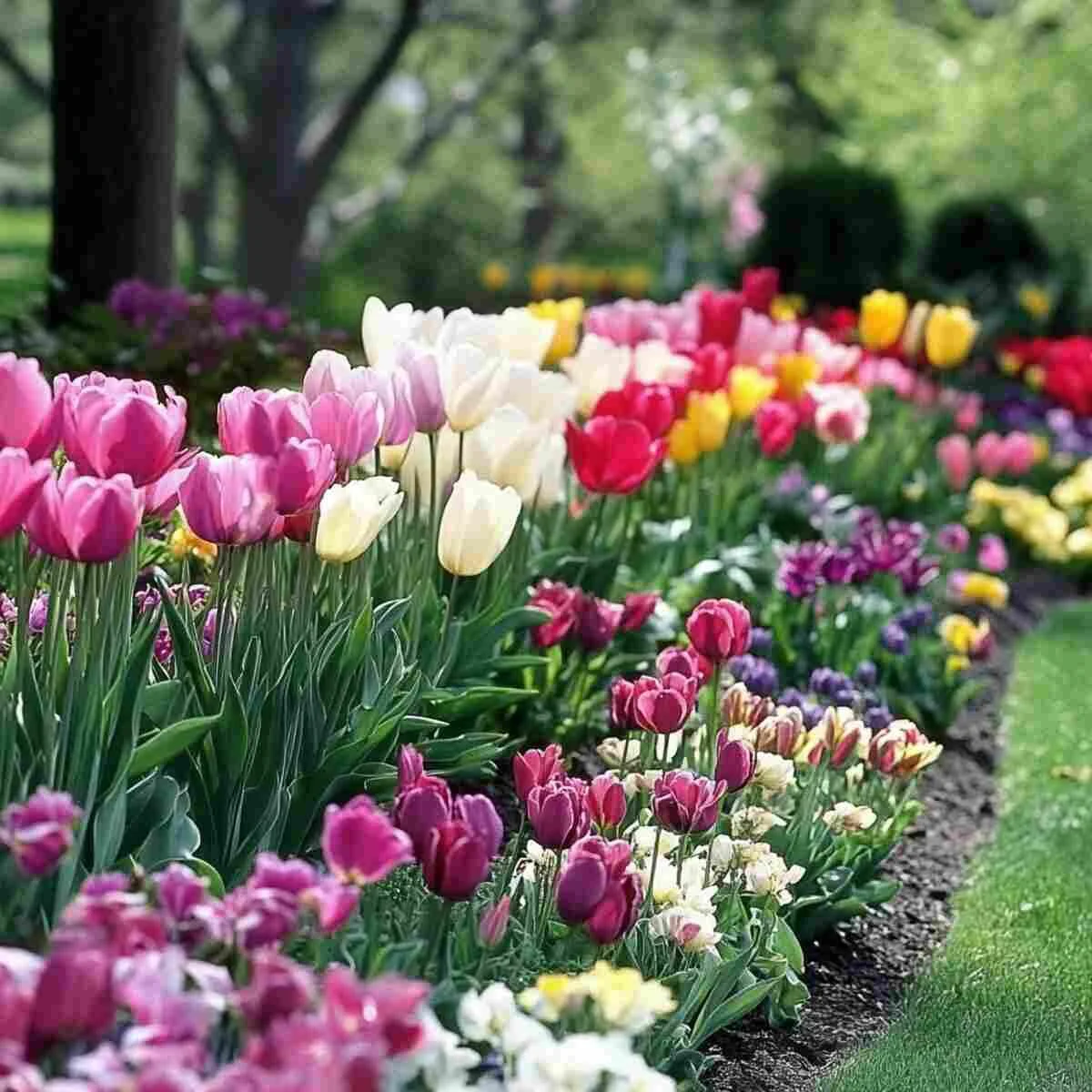
Tulips have more presence when they are planted in concentrated groups rather than dotted thinly across a bed. A clustered layout gives color real weight and makes the planting look designed instead of accidental.
This approach suits front gardens, formal borders, and areas where you want a clear focal point from the street or the house. If the bed is visible from a distance, larger groupings will read far better than isolated stems.
For a calmer result, repeat one or two shades throughout the bed instead of mixing every color available.
Hyacinth Fragrance Corner Ideas Near Seating and Entryways
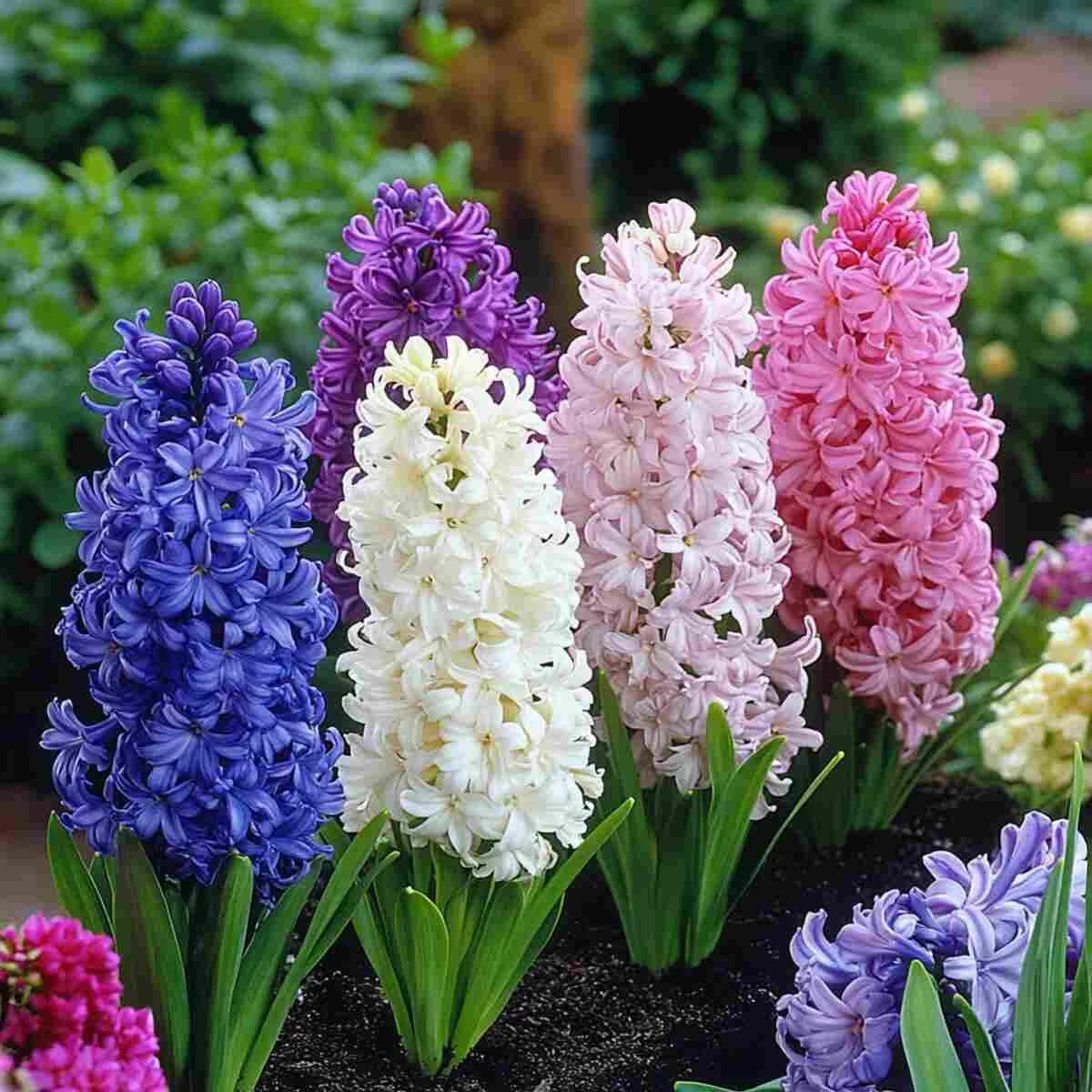
Hyacinths earn their place through scent as much as color. A dedicated planting near a doorway, bench, or front path means their fragrance becomes part of the early spring experience rather than being lost in the wider garden.
The dense flower spikes also give small areas a richer look, which is useful where space is limited but you still want the garden to feel full. Blues, pinks, and white all work well, though repeating one tone often feels more sophisticated.
- Keep them close to places people actually pass or sit.
- Use them in smaller pockets rather than large distant beds.
- Choose a site with good drainage, especially through winter.
Hellebore Shade Garden Ideas for Dim Corners
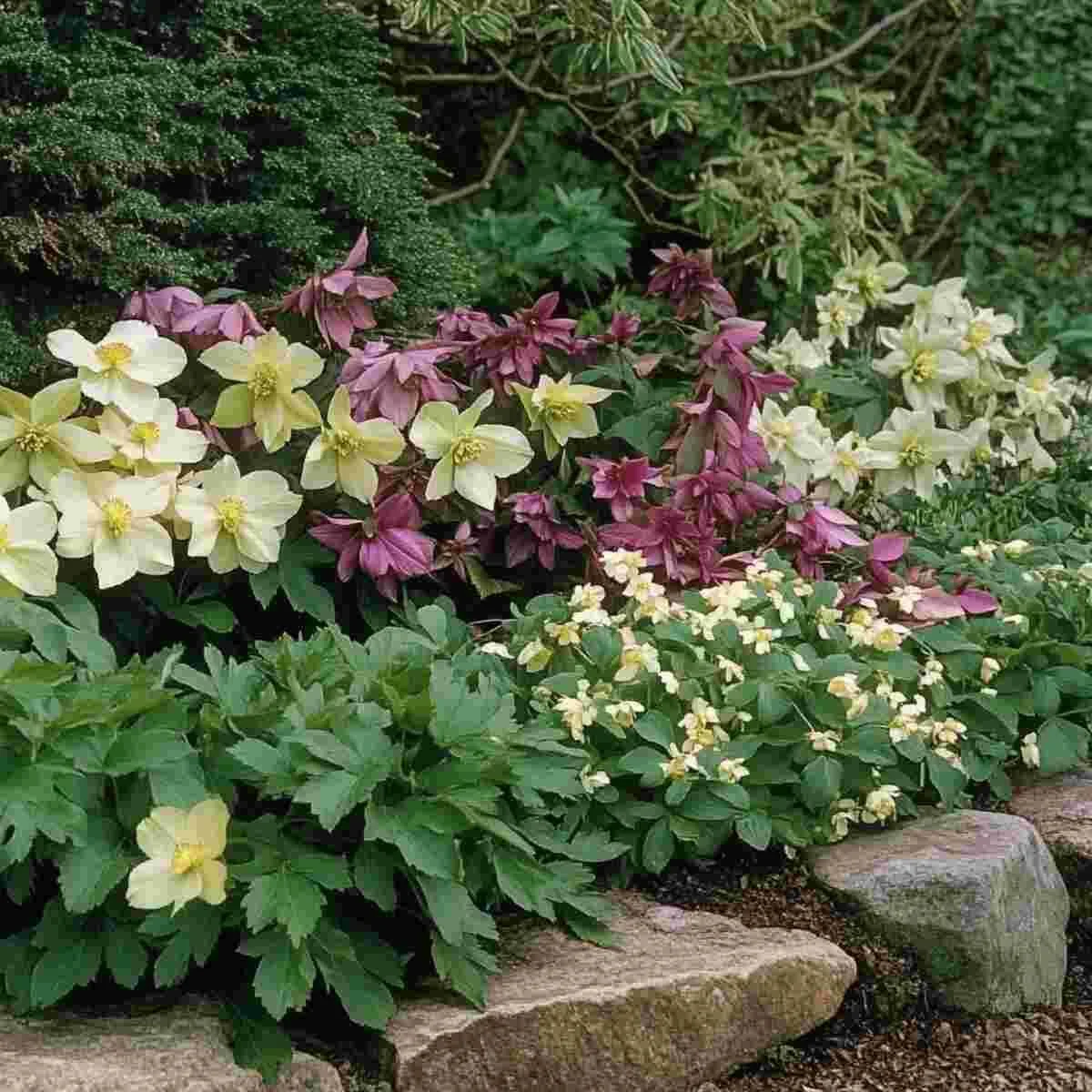
Hellebores are invaluable in gardens with shade because they bloom when many other plants are still dormant. Their flowers bring softness and depth to areas that might otherwise stay flat until much later in spring.
They are most convincing when planted in drifts under trees, beside paths, or along the front of a shaded border where their flowers can be viewed from above. The leathery foliage also gives them presence long after the bloom period has passed.
Primrose Border Strip Ideas for Instant Early Color
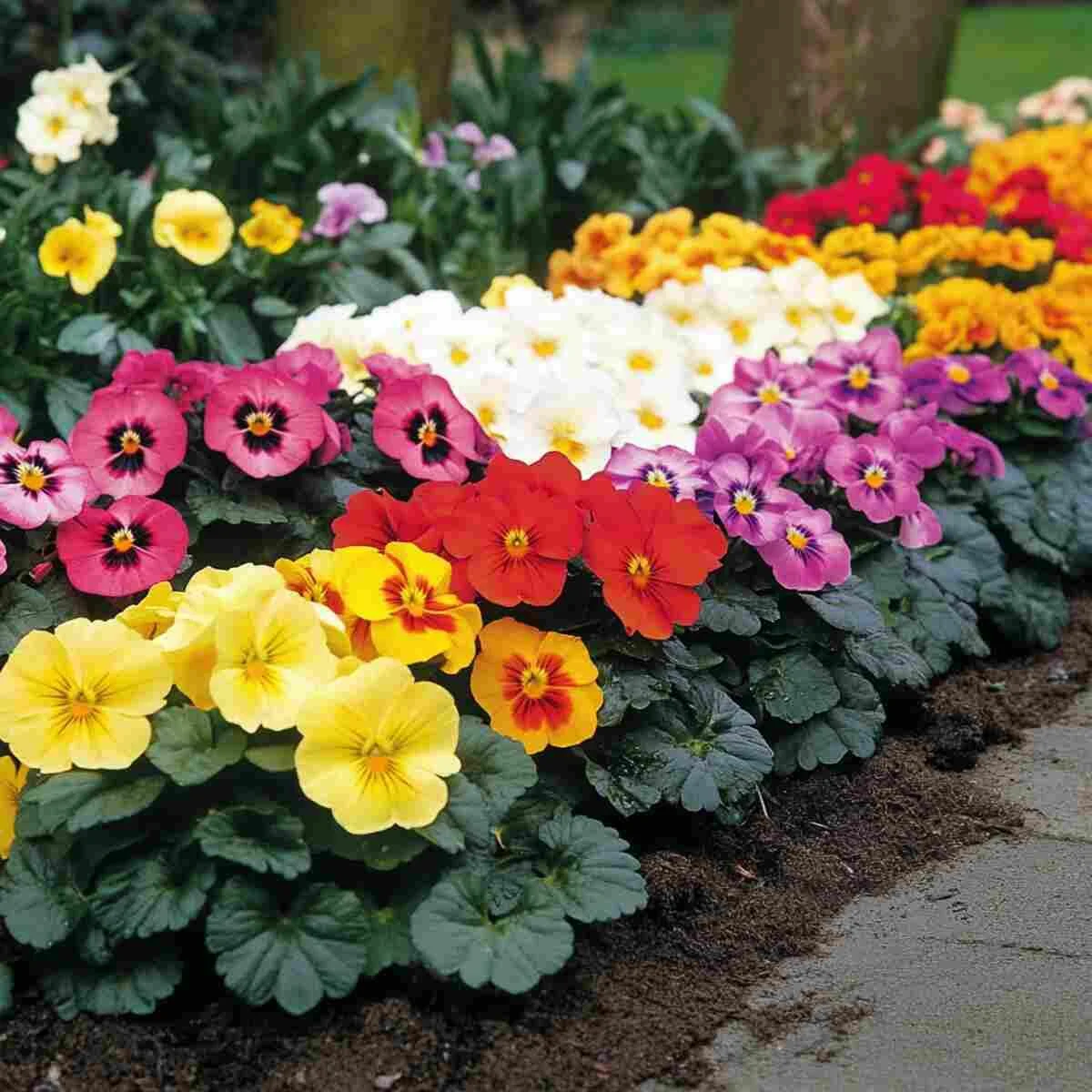
Primroses are useful when the garden needs quick brightness without much complexity. Their compact size and wide color range make them a natural fit for path edges, border fronts, and narrow planting strips that need lifting after winter.
Because the flowers sit low, they are best placed near eye level or close to where people walk past. A ribbon of color at the edge of a bed often has more impact than scattering them through a large border.
Grape Hyacinth Pathway Edge Ideas
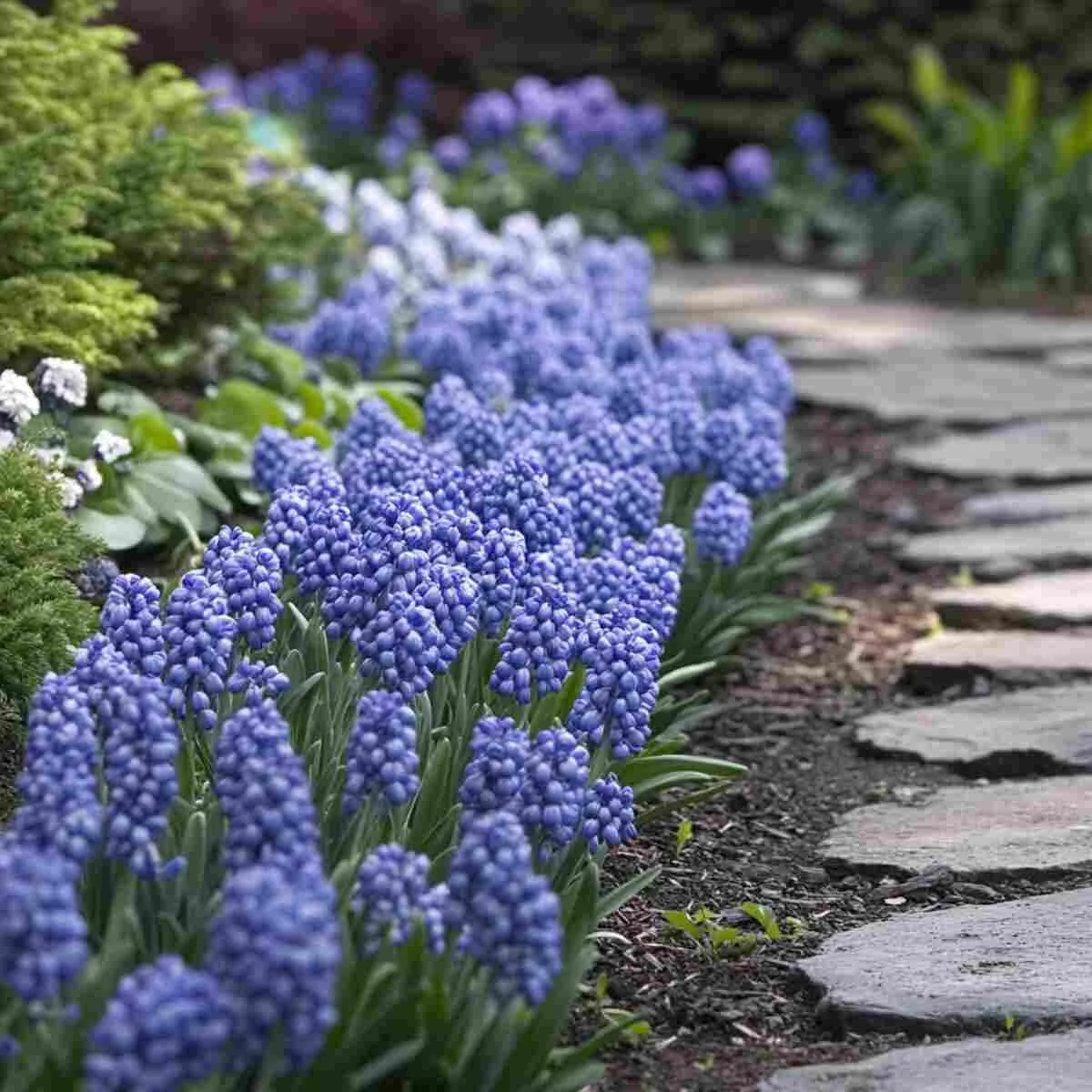
Grape hyacinths bring order to a path without looking rigid. Their small, bell-shaped flowers form a neat edging that feels tidy but still natural, especially when planted in repeated clumps rather than a strict unbroken line.
This is one of the best early-spring ideas for creating structure before taller perennials emerge. The blue-violet tones also pair especially well with stone, brick, and pale gravel paths.
- Use along narrow paths where the flowers can be appreciated close up.
- Repeat in pockets to avoid an overly formal look.
- Allow foliage to die back naturally for reliable return growth.
Winter Aconite Woodland Ideas Under Trees
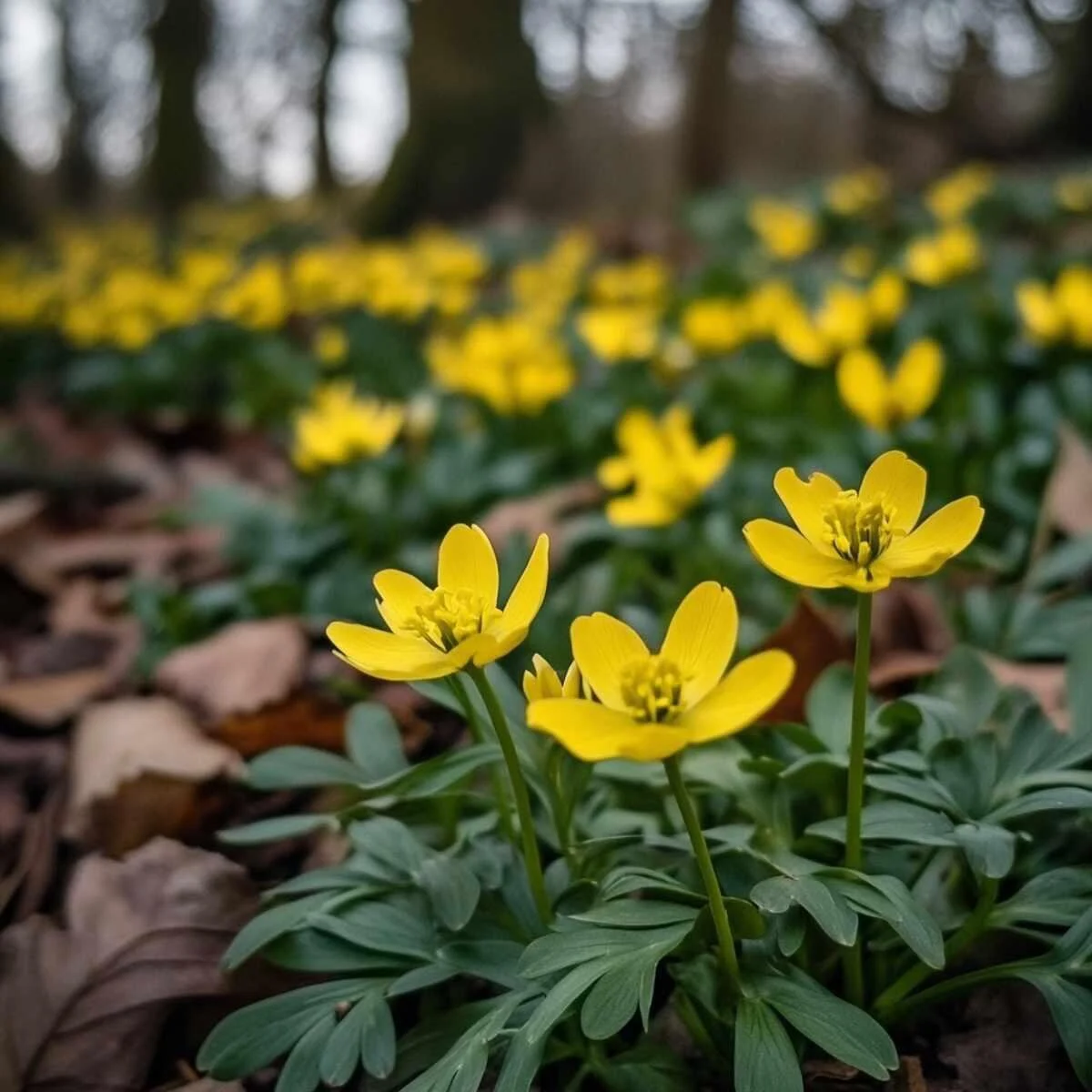
Winter aconites are among the most uplifting flowers in the very early season. Their bright yellow blooms light up woodland areas, especially beneath deciduous trees where the spring sun still reaches the ground.
They are at their best when planted generously, creating a low golden carpet that feels spontaneous and established. In a more formal garden, they can soften the edges of shrubs or the base of a tree with very little effort.
Early Iris Patch Ideas for a More Refined Spring Bed
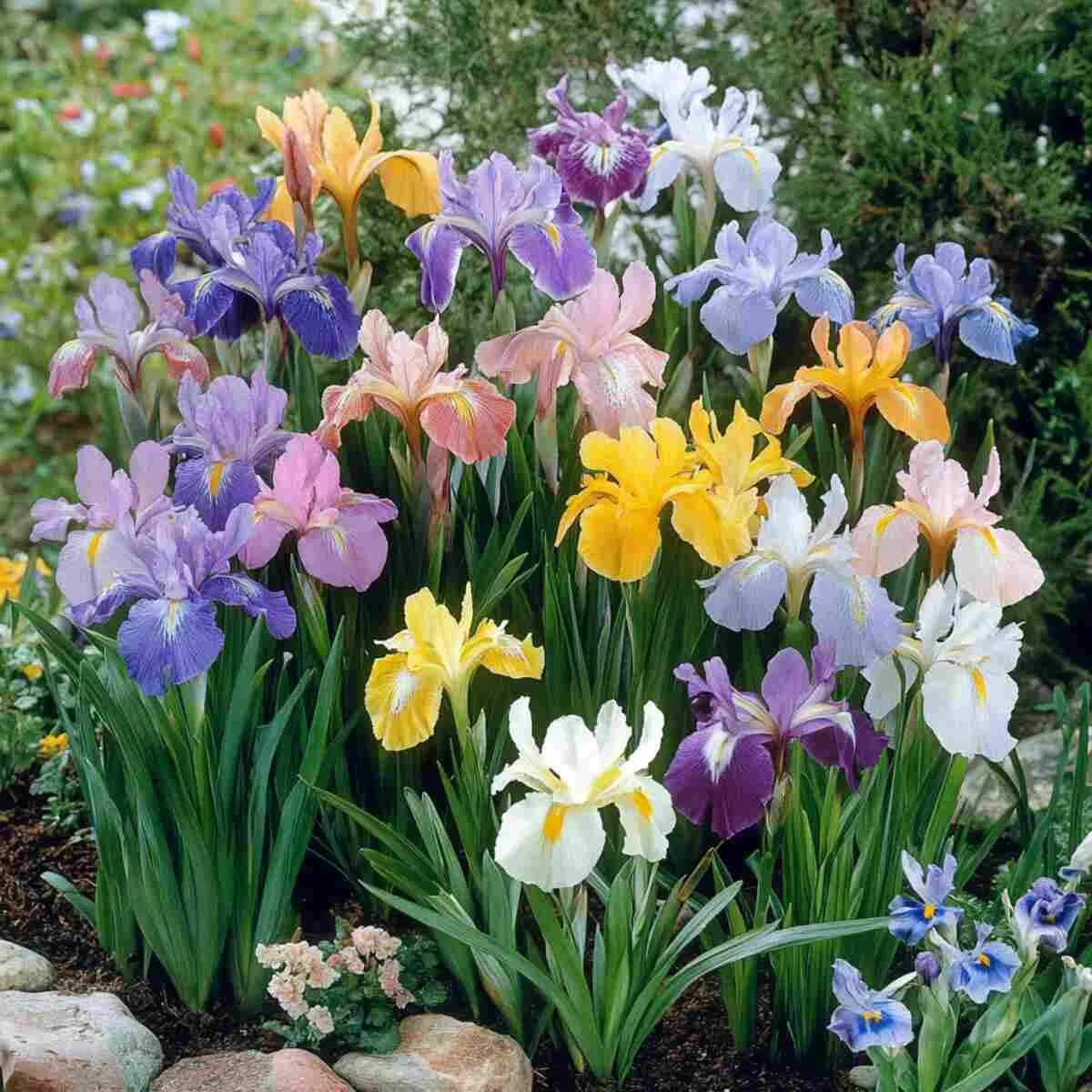
Early irises bring a sharper silhouette than many spring flowers. Their upright form and patterned petals introduce elegance at a time when most beds still rely on rounded or low-growing blooms.
They suit gardeners who want spring planting to feel deliberate and slightly more tailored. A mixed patch can work well, though limiting the palette keeps the planting from becoming too busy.
Place them where the flowers can be seen clearly rather than tucked behind broader foliage.
Pansy and Viola Pot Ideas for Doorsteps and Small Gardens
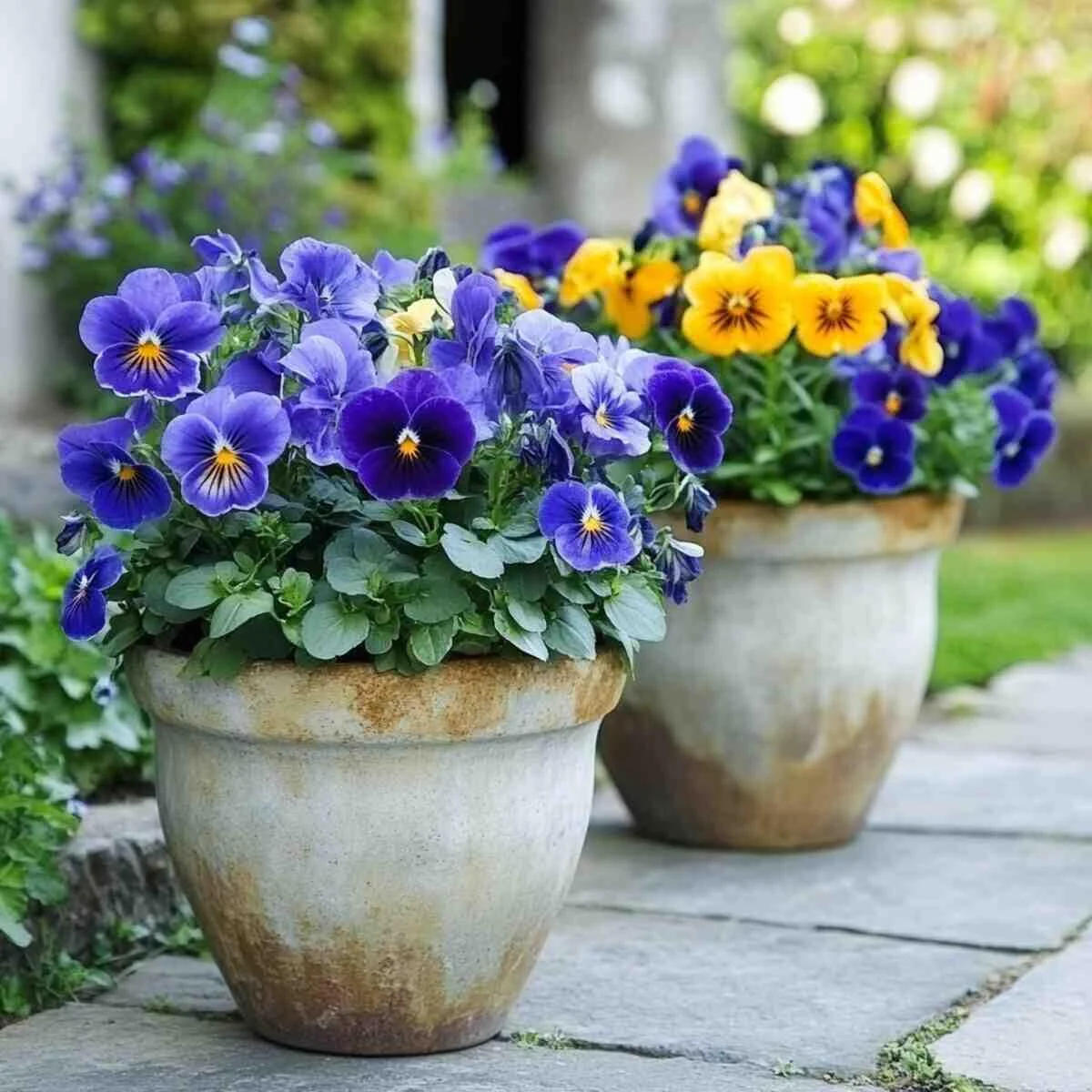
Pansies and violas are among the easiest ways to make a space feel seasonal fast. They tolerate cool weather well and provide reliable color when many other plants are still waiting for warmth.
They are especially useful in containers because they fill out quickly and create a finished look without needing a large planting area. This makes them ideal for balconies, front steps, patios, and courtyard gardens.
- Use wider pots rather than deep narrow ones for a fuller display.
- Choose a restrained color mix if you want the arrangement to feel less busy.
- Deadhead regularly to keep plants fresh-looking for longer.
Anemone Drift Ideas for a Softer, Meadow-Like Look
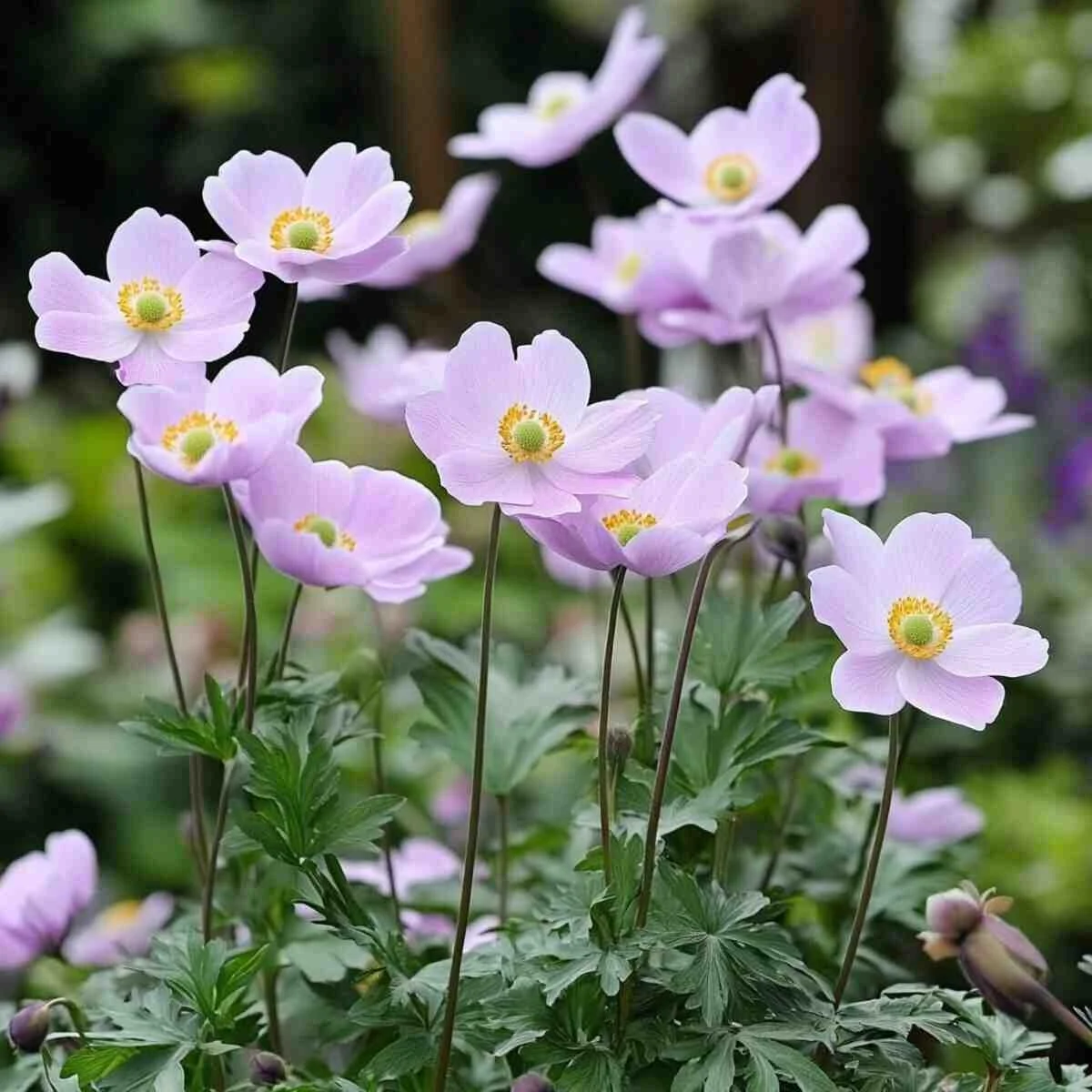
Anemones introduce movement into an early spring garden. Their lighter, more relaxed habit suits informal planting schemes, especially where you want the garden to feel airy rather than tightly arranged.
They work well in gentle drifts through borders, at the edge of lawns, or among other low spring flowers. Because the effect is softer, they are best used in numbers rather than as isolated plants.
Scilla Under-Tree Planting Ideas for Naturalized Blue Color
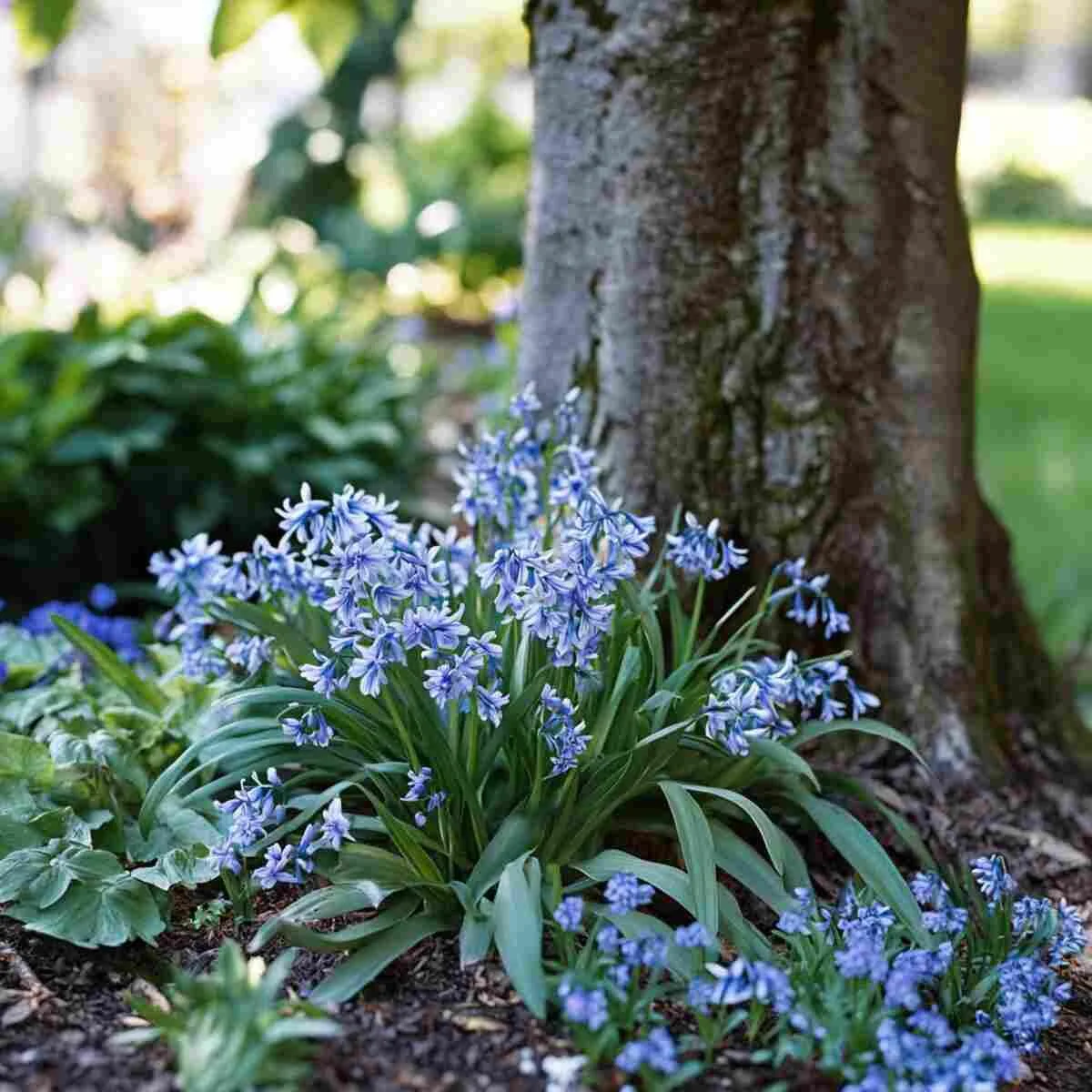
Scilla is one of the most useful plants for bringing color to ground that would otherwise stay dull until late spring. Under deciduous trees, its blue flowers create a cool-toned carpet that feels natural rather than decorative.
It is especially effective in larger gardens where small individual flowers need to be repeated in quantity to register well. Once established, it can give the impression that the garden has been maturing there for years.
Forsythia Accent Ideas for Bright Early Focal Points
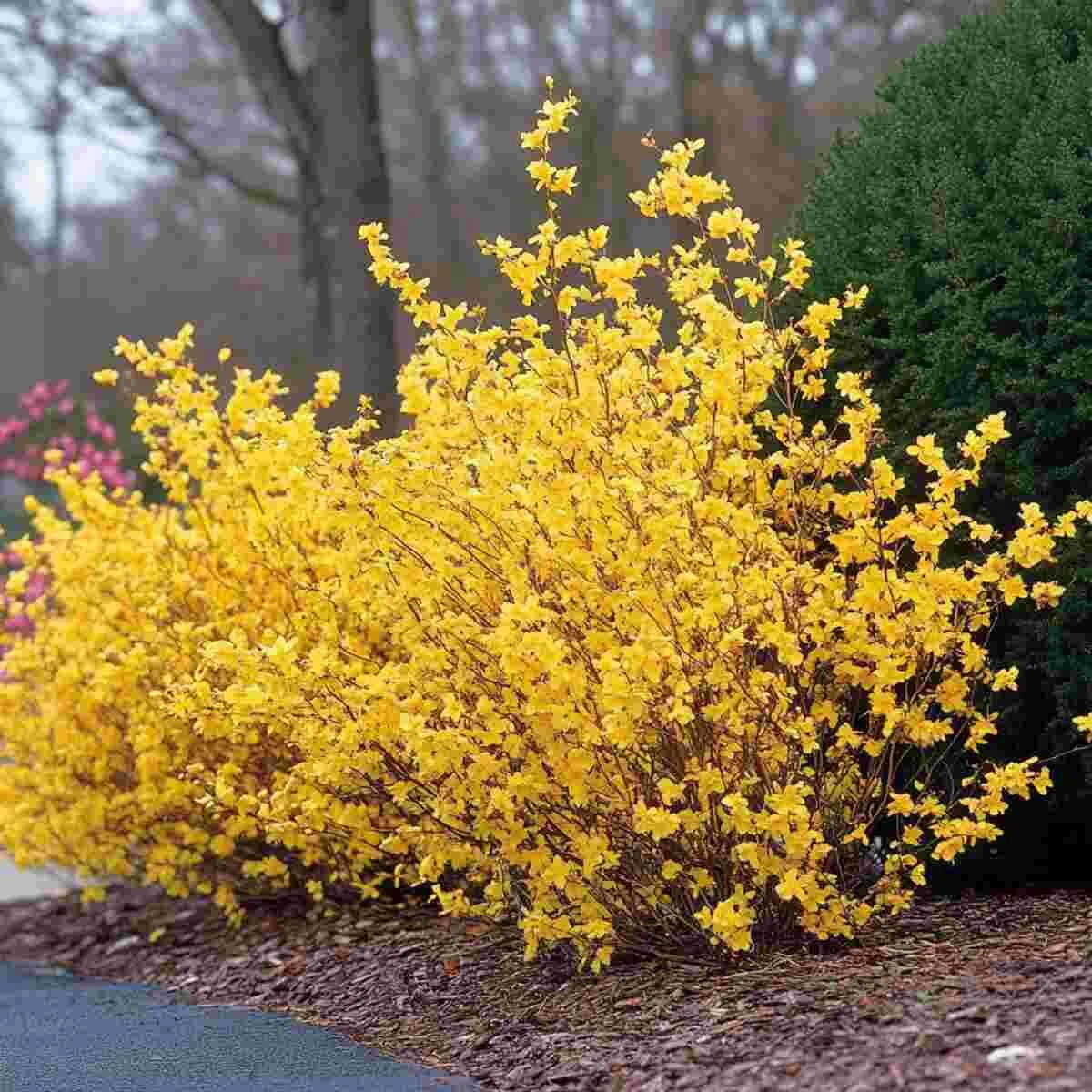
Forsythia is one of the boldest ways to announce spring. Its bright yellow branches are visible from a distance, which makes it a strong choice for front gardens, boundary planting, or any area that needs a clear seasonal focal point.
Because the display is so vivid, it helps to position it carefully. One well-placed shrub often has more impact than several scattered through a small space. Give it enough room so the branch shape can be appreciated when it comes into bloom.
Lungwort Garden Ideas for Early Pollinator Support
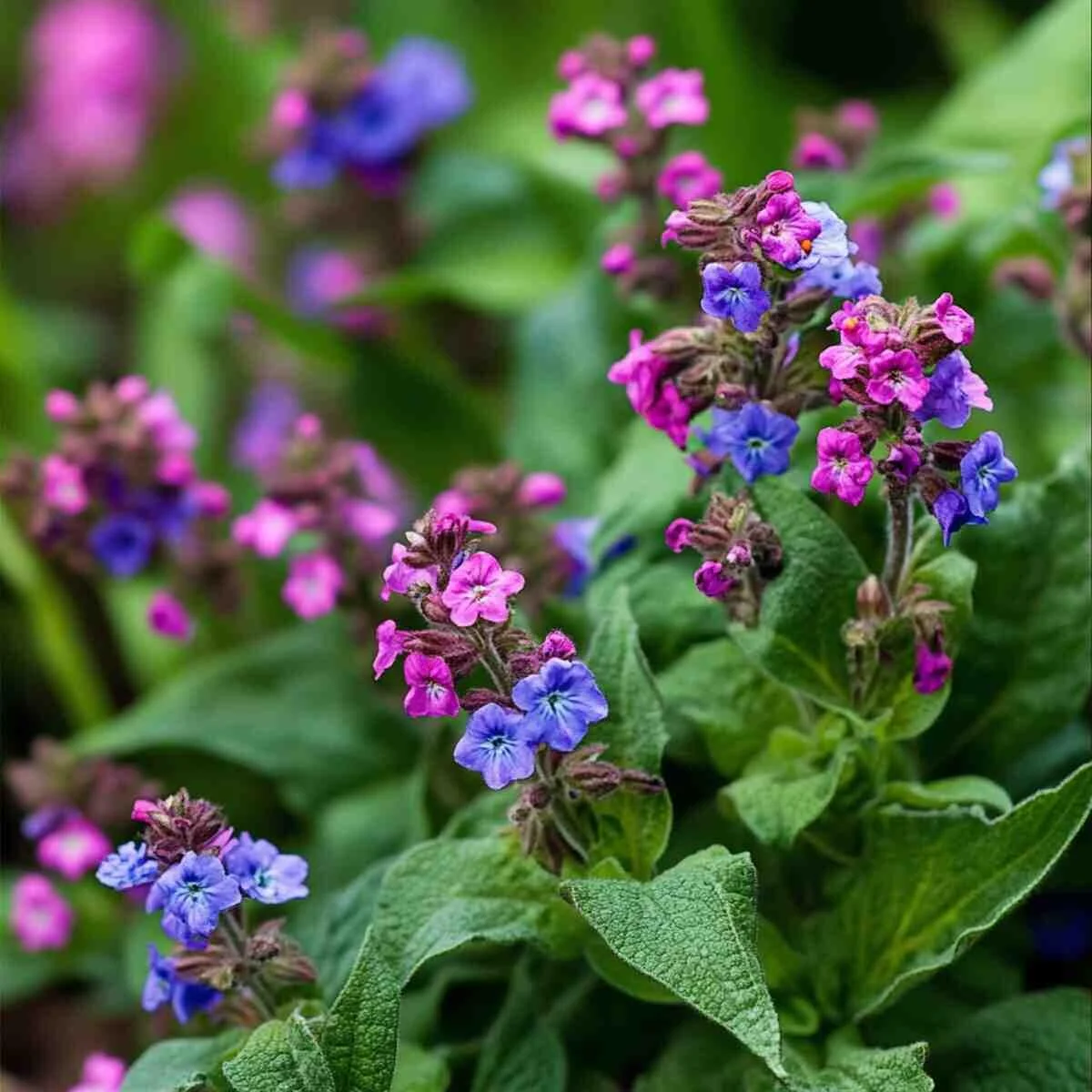
Lungwort is one of those early spring plants that earns its keep in several ways at once. The flowers are useful to pollinators, while the speckled foliage keeps the plant attractive after bloom.
It fits naturally into semi-shaded borders and woodland gardens, particularly near paths where the leaf pattern can be appreciated. This is a good option for gardeners who want their early display to feel decorative while still supporting wildlife.
Glory-of-the-Snow Lawn Pocket Ideas
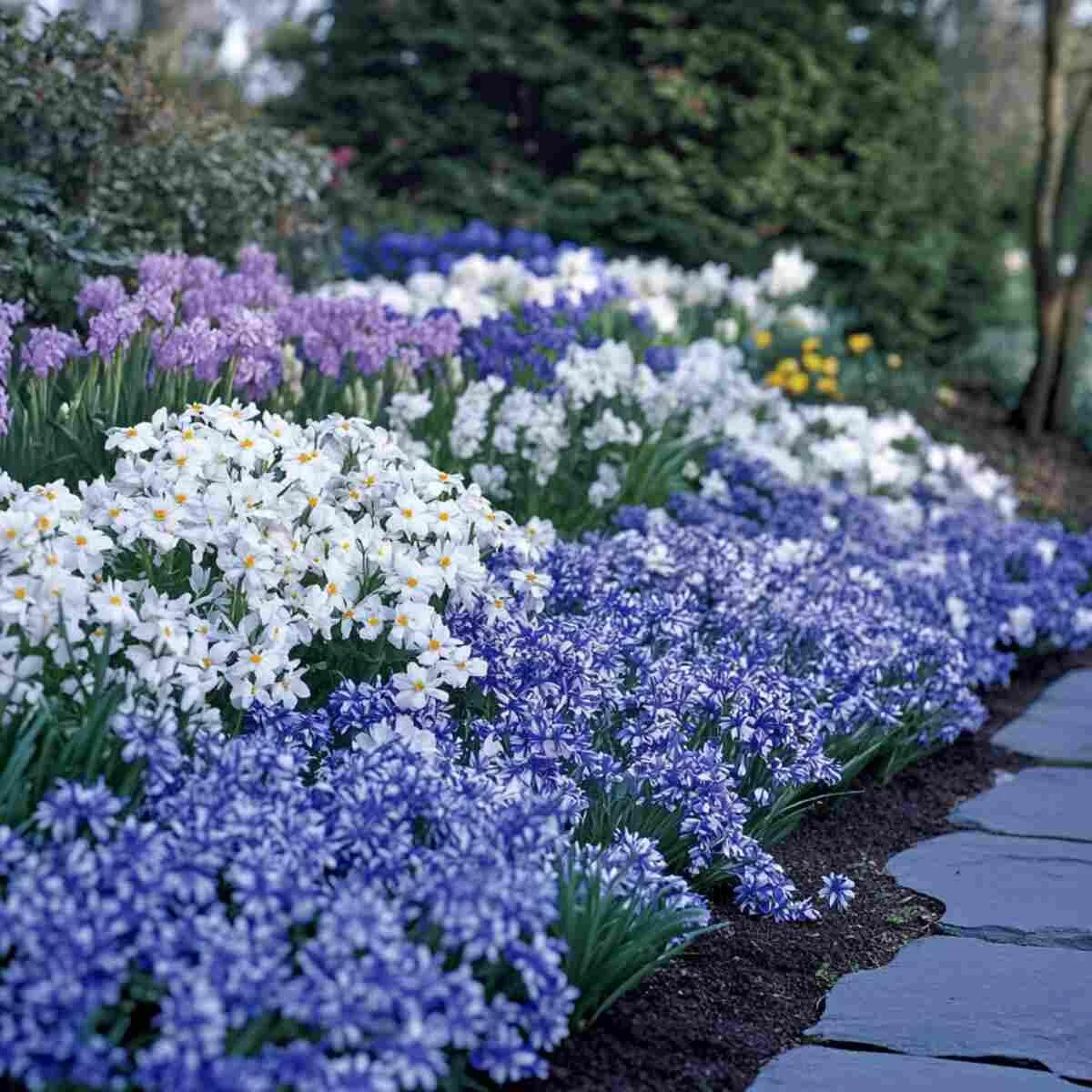
Glory-of-the-snow has a light, sparkling quality that works beautifully in lawn pockets and open ground near paths. The small star-shaped flowers appear very early and give the impression that the garden is waking in scattered flashes.
This style is best where mowing can be delayed until the foliage has faded. The more casually the bulbs are planted, the more convincing the effect becomes.
- Best for informal lawns and orchard-style spaces.
- Plant in loose drifts instead of straight lines.
- Avoid areas that need constant early-season mowing.
Bergenia Clump Ideas for Gardens That Need Structure
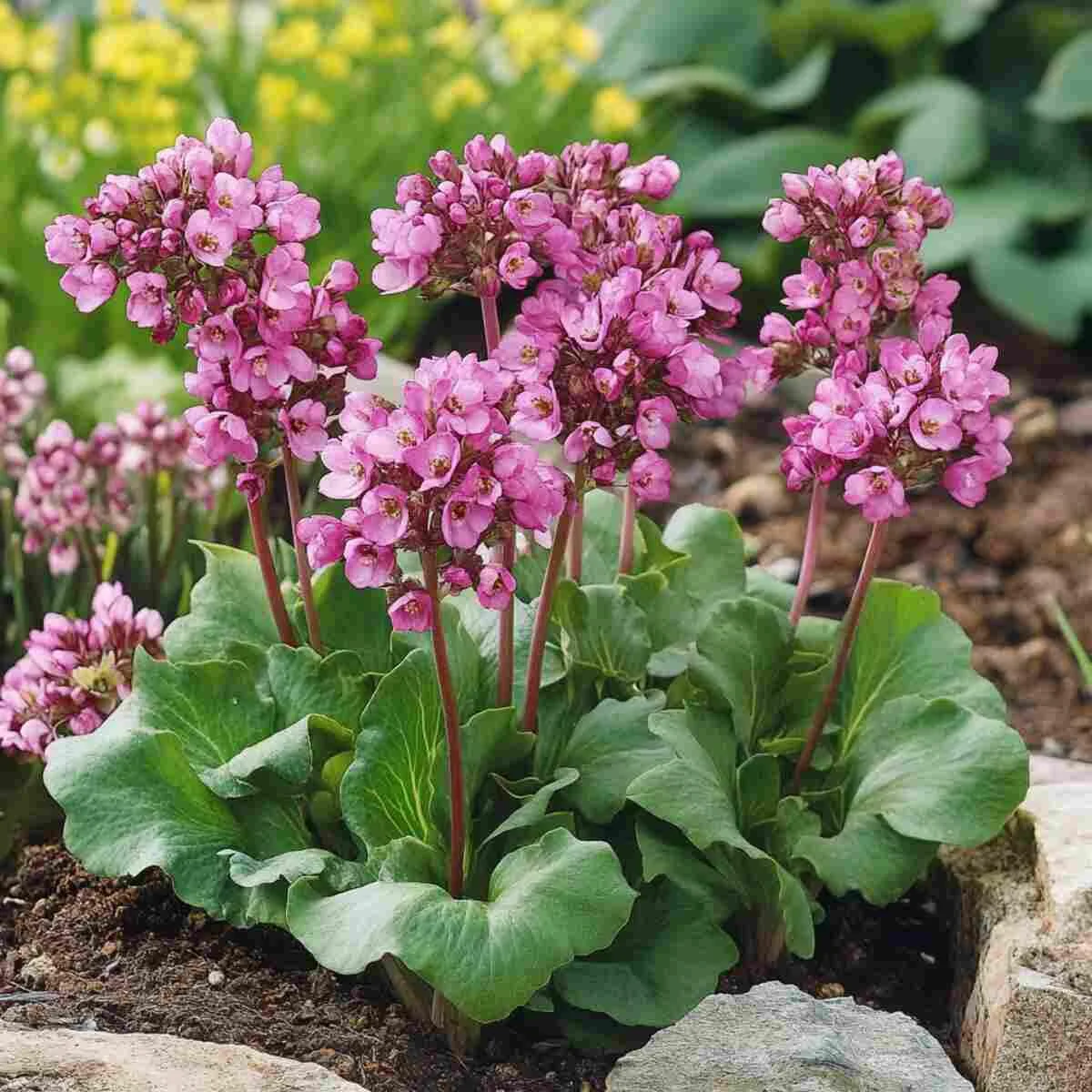
Bergenia brings substance to early spring beds. The flower clusters are useful, but the real strength of the plant is its broad evergreen foliage, which gives form through much of the year.
It is a strong choice for gardeners who want spring flowers without losing structure once the bloom period passes. Use it at the edge of borders, beside paths, or in mixed planting where larger leaves help anchor finer textures around them.
Witch Hazel Feature Plant Ideas for Late-Winter Interest
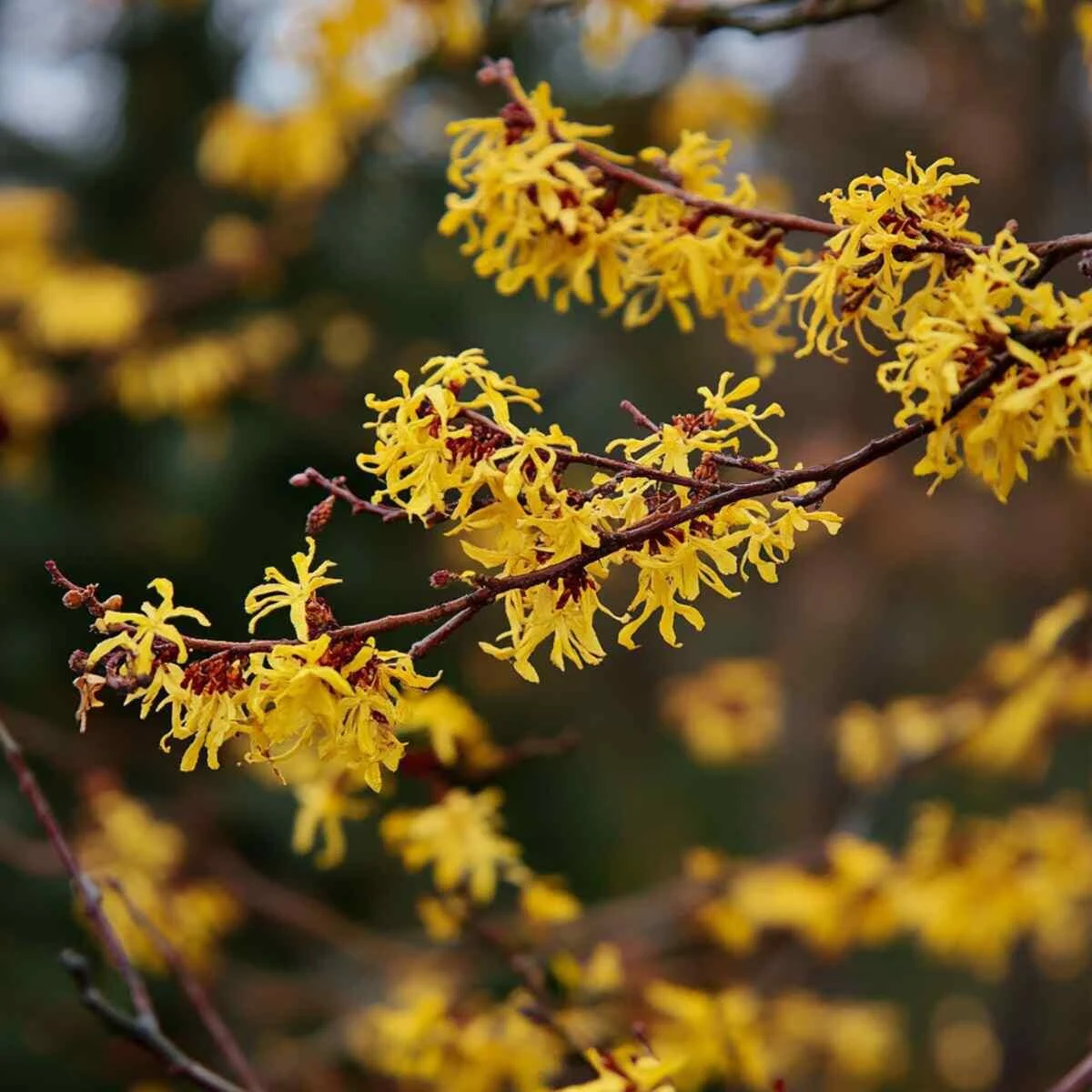
Witch hazel offers something different from the usual early spring palette. Its ribbon-like flowers appear in late winter to very early spring, often before much else is happening, and that makes it an excellent feature plant in a quiet garden.
Because the bloom detail is unusual rather than bold, it works best where it can be viewed at a moderate distance, near an entrance path or from a window. Give it a setting where its branching habit can remain part of the display.
Early Flowering Heather Ideas for Long-Lasting Ground Cover
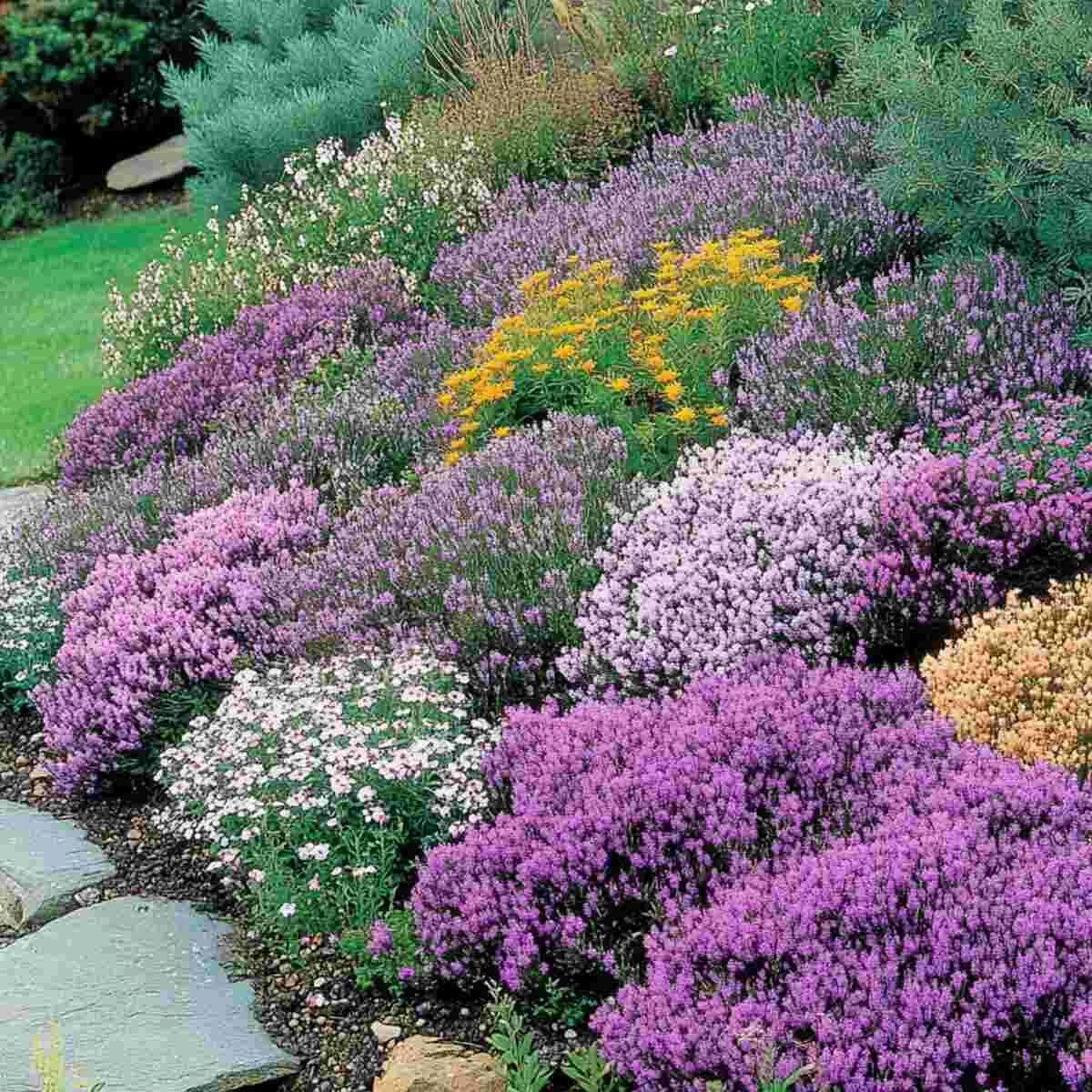
Heather brings long-lasting color and texture at a time of year when many beds still look flat. Its mounded shape is especially useful in sloping gardens, gravel areas, and low-maintenance borders where structure matters just as much as flower color.
It also suits gardeners working with poorer soil, provided drainage is good. Rather than using it as a single specimen, repeat it in low sweeps so the garden feels cohesive.
Frequently Asked Questions
Which early spring flowers bloom first?
Snowdrops, winter aconites, witch hazel, and glory-of-the-snow are often among the earliest, sometimes appearing while winter weather is still lingering. The exact timing depends on climate, exposure, and soil warmth.
What early spring flowers work best in shade?
Hellebores, snowdrops, lungwort, winter aconites, and scilla are especially useful in lightly shaded gardens, particularly under deciduous trees where there is more light before the canopy fills out.
Are early spring flowers good for containers?
Yes. Mini daffodils, pansies, violas, and some smaller bulbs do especially well in pots and planters. They are useful for patios, steps, and balconies where beds may not be available.
How do you make early spring flowers look more intentional?
Plant in repeated drifts or grouped clusters instead of scattering single plants throughout the garden. Keeping the flowers close to paths, doorways, or visible border edges also helps the display feel considered rather than random.
Final Thoughts
The most successful early spring gardens do not rely on one flower alone. They combine bulbs, perennials, and shrubs in the places where their timing and character make the most sense. A shaded patch, a front path, a planter by the door, or a lawn edge can all carry the season forward weeks earlier than expected when planted with care.
Written by the Zeeshe Home Editorial Team, a blog focused on practical home décor ideas and inspiration.


