
If mowing your lawn feels like a constant chore, you’re not alone. Many homeowners are now rethinking traditional grass lawns and replacing them with ground covers that look just as lush—without the ongoing maintenance.
A no-mow lawn isn’t just about saving time. It also reduces water usage, limits the need for fertilizers, and creates a more natural, eco-friendly outdoor space. With the right ground cover, you can achieve a soft, green landscape that stays attractive across seasons with minimal effort.

The key is choosing a ground cover that matches your climate, sunlight, and how much foot traffic the area gets. Some options are better for pathways, others for shaded corners, and some can handle light use like a traditional lawn.
Low-Maintenance Ground Cover Ideas for a No-Mow Lawn
1. Creeping Thyme for Fragrant, Colorful Coverage
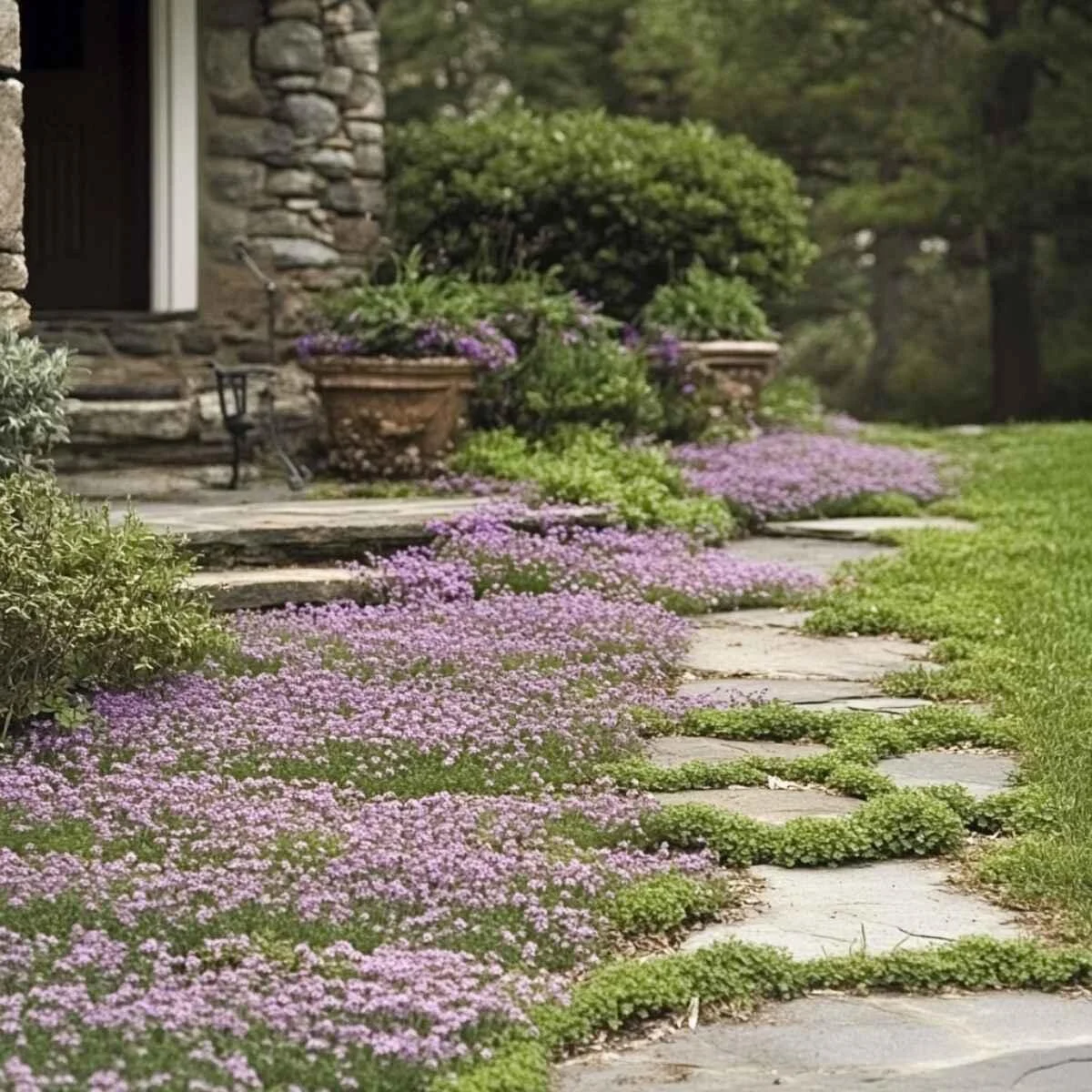
Creeping thyme creates a dense, low-growing mat that bursts into soft purple blooms during warmer months. It’s especially effective along pathways and stepping stones where its light fragrance is released when walked on.
This option works best in full sun with well-drained soil. Once established, it handles drought well and rarely needs attention beyond occasional trimming.
2. Clover for a Soft, Resilient Lawn Alternative
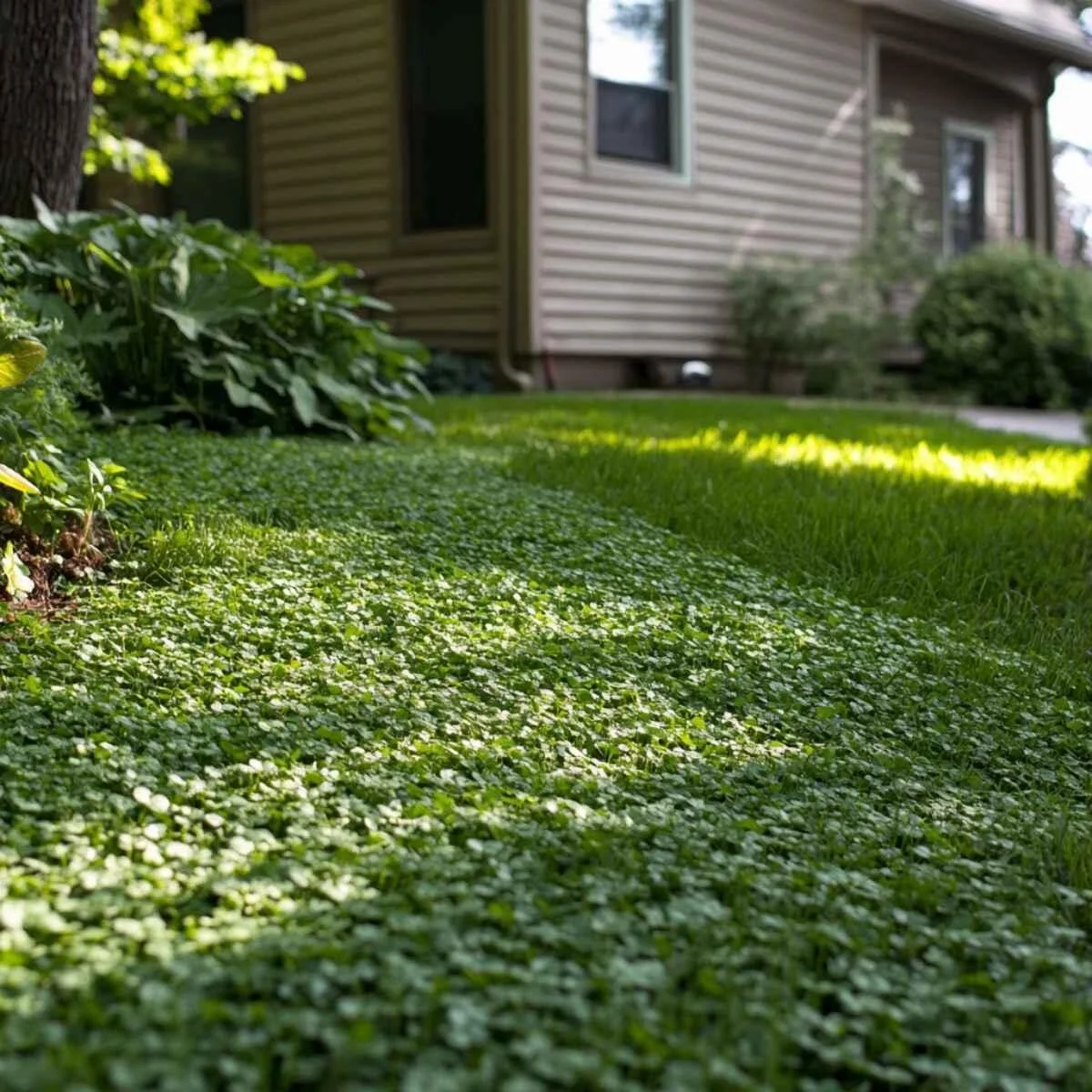
Clover forms a thick, green carpet that stays vibrant even in less-than-ideal conditions. Unlike traditional grass, it improves soil health by naturally adding nitrogen, reducing the need for fertilizers.
It’s a practical choice for larger areas where you still want a lawn-like appearance without frequent mowing or watering.
3. Corsican Mint for Shaded, Sensory Spaces
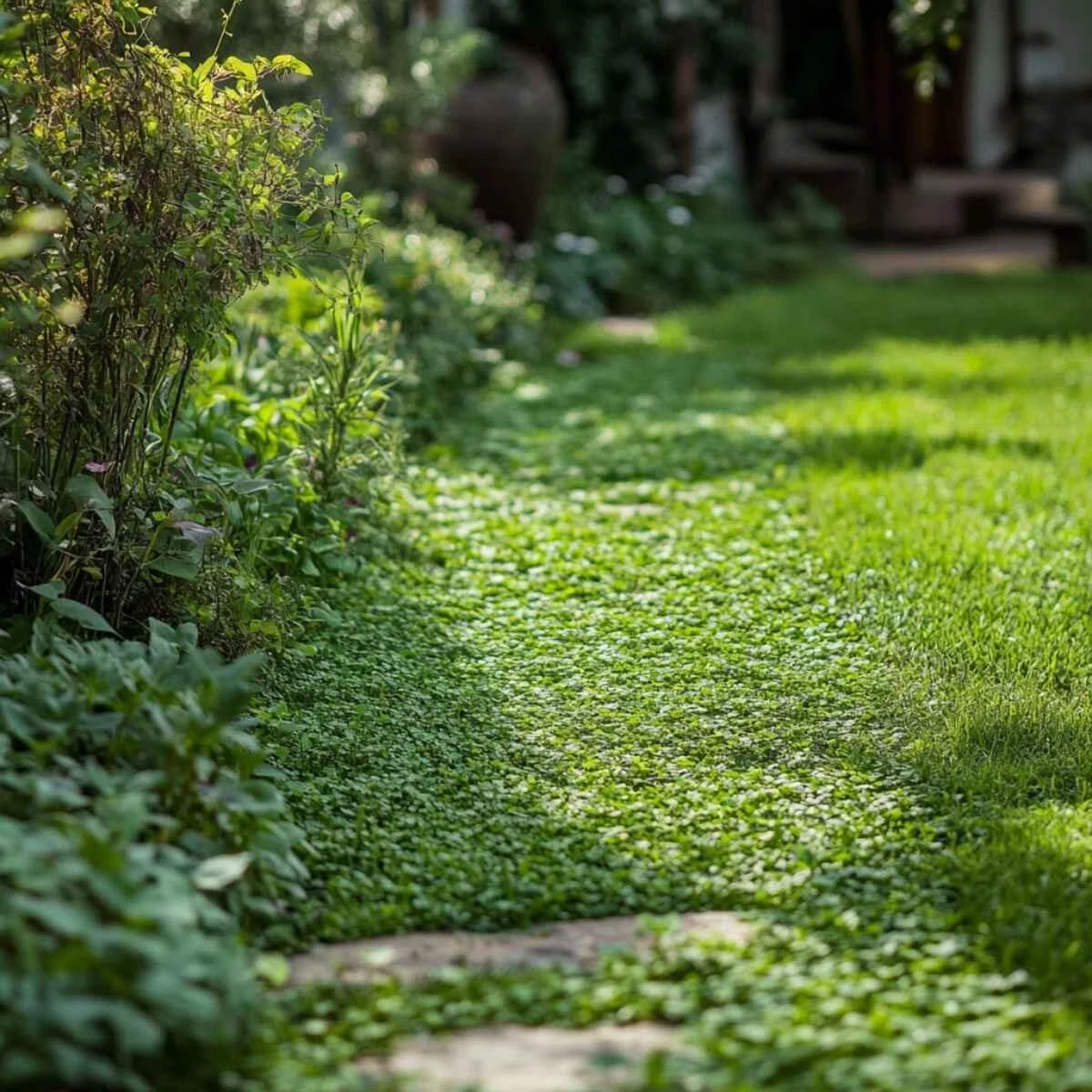
Corsican mint creates a fine, bright green surface that feels soft underfoot and releases a light mint scent when disturbed. It’s best suited to shaded or partially shaded areas where other ground covers struggle.
This plant prefers consistent moisture, so it works well in cooler climates or protected garden corners.
4. Dichondra for a Smooth, Modern Lawn Look
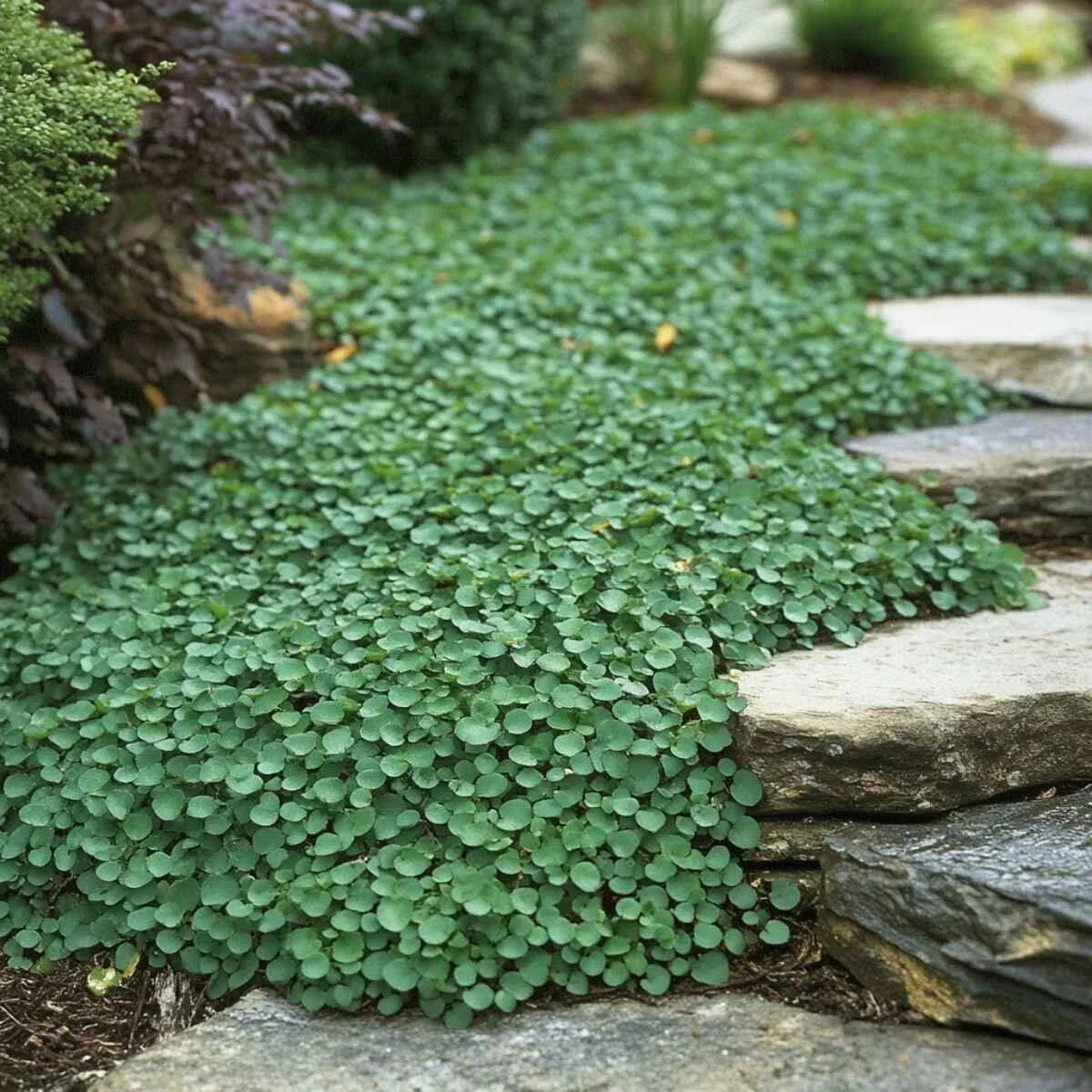
Dichondra offers a clean, uniform appearance with its small, rounded leaves forming a velvety surface. It’s often used in modern landscapes where a minimal, polished look is preferred.
Best for warm climates, it thrives in sunny conditions but is better suited for low-traffic areas rather than active lawns.
5. Moss for Deep Shade and Woodland Gardens
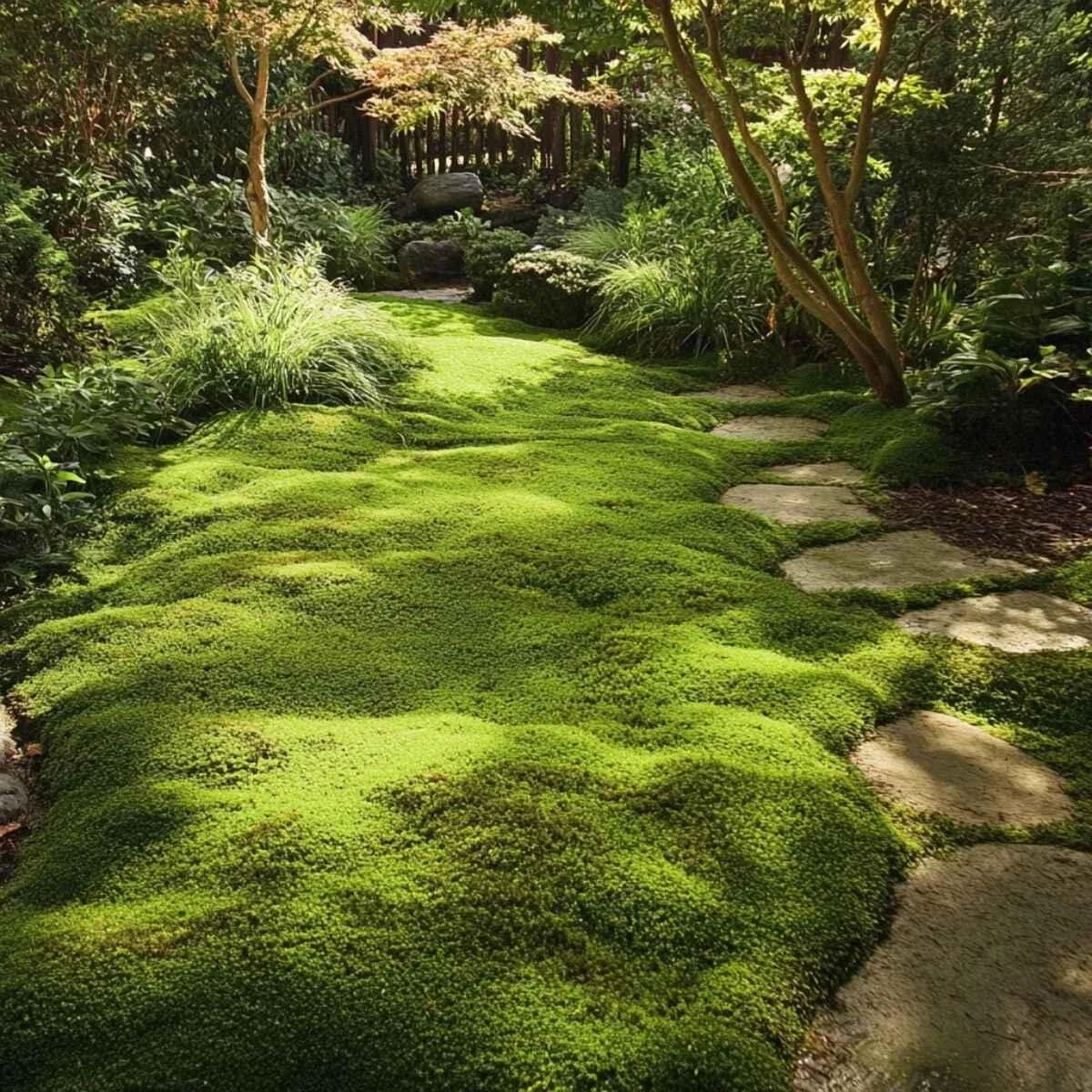
Moss is one of the easiest solutions for shaded spaces where grass won’t grow. It forms a dense, cushion-like layer that requires no mowing and very little maintenance.
It’s ideal for damp, low-light areas and pairs well with stone paths and natural garden designs.
6. Creeping Jenny for Bright, Fast Coverage
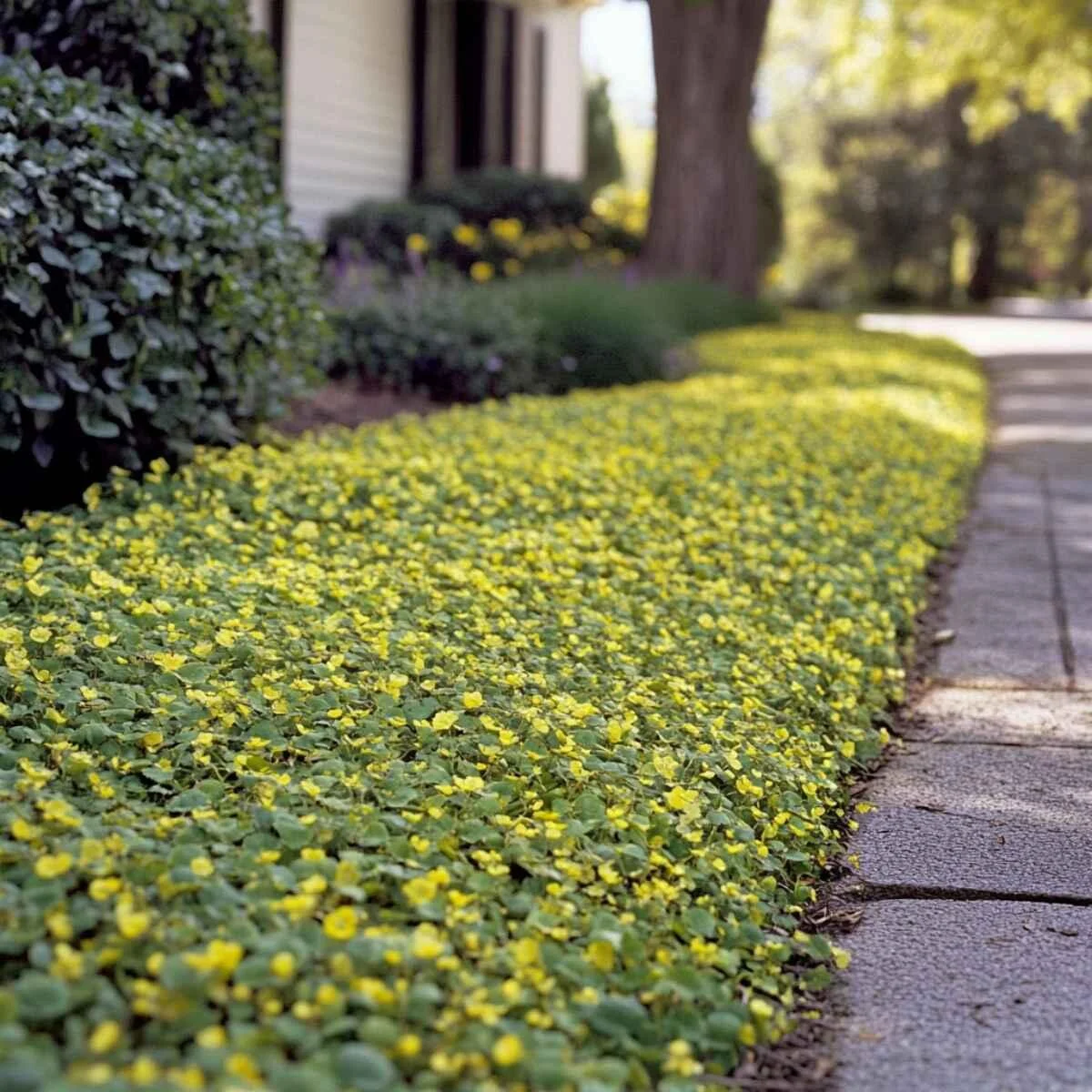
Creeping Jenny stands out with its vibrant yellow-green foliage that quickly fills empty spaces. It’s often used to soften edges along pathways or garden borders.
This plant spreads rapidly, so it’s best used where you want full coverage without gaps.
7. Sedum for Dry, Sunny Areas
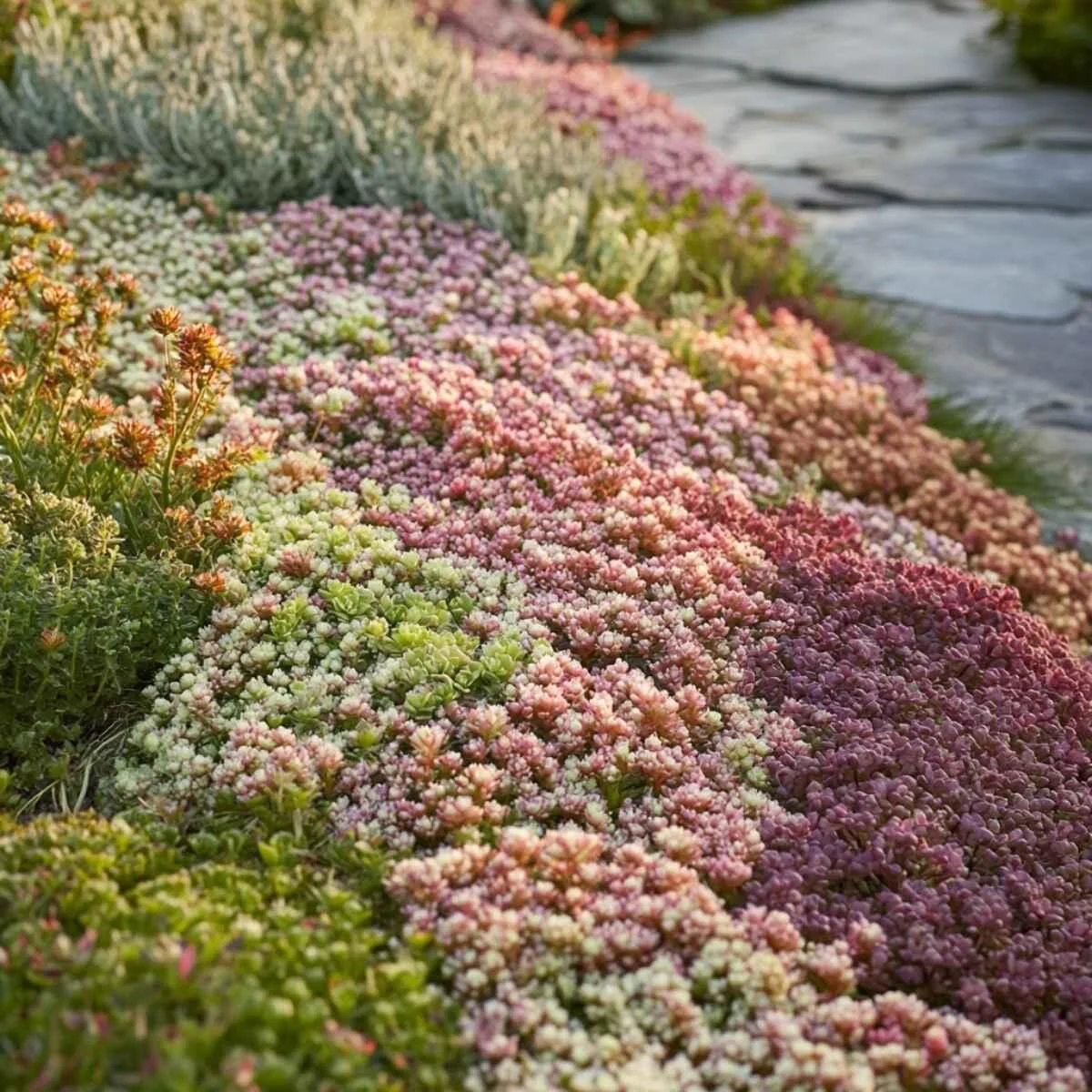
Sedum is a hardy, drought-tolerant option that thrives in hot, sunny conditions. Its succulent leaves store moisture, allowing it to survive with minimal watering.
It works particularly well in rock gardens, slopes, and areas where traditional lawns struggle to survive.
8. Chamomile for a Soft, Cottage-Style Lawn
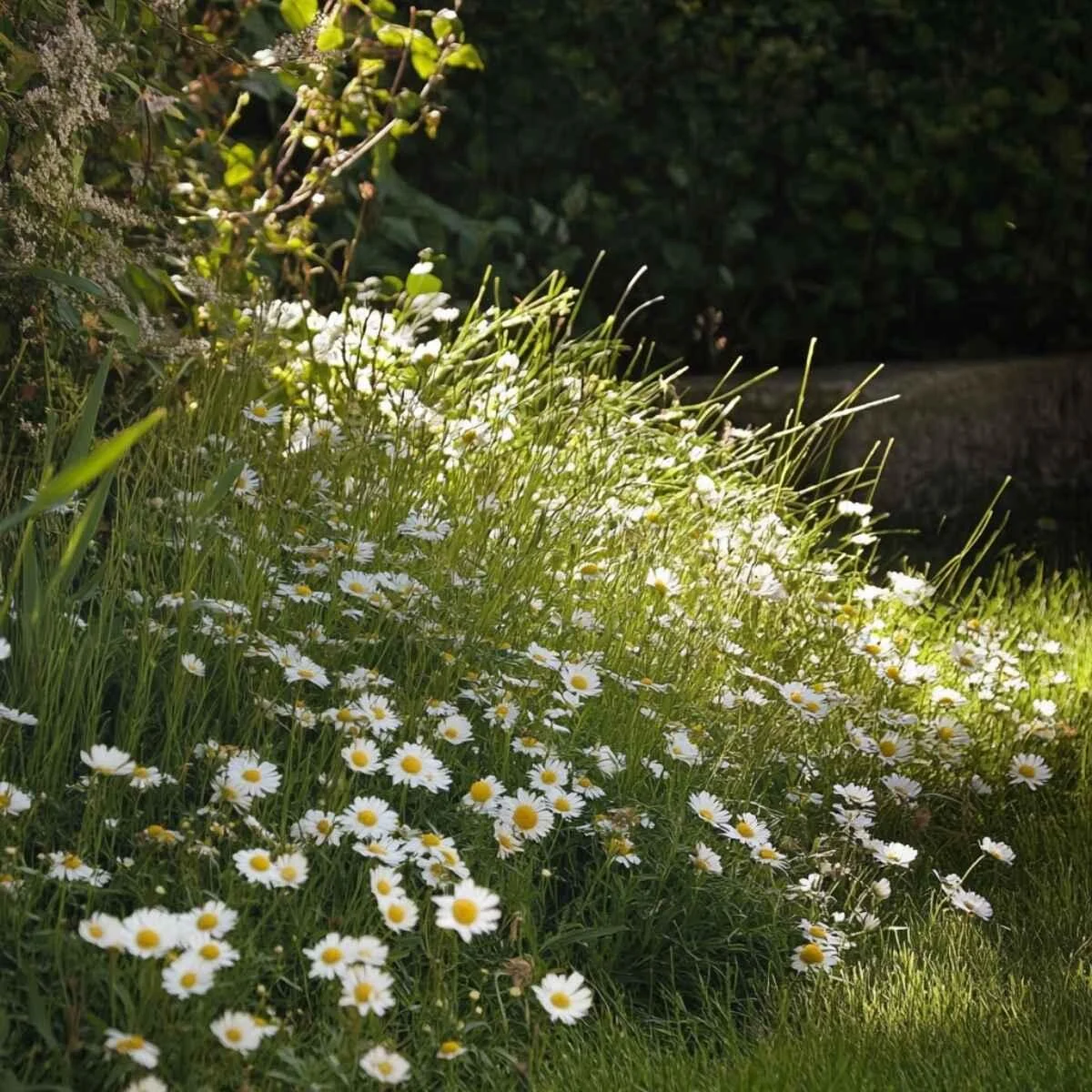
Chamomile creates a gentle, informal lawn with small white flowers and a subtle fragrance. It’s a good choice for relaxed garden designs or areas where you want a softer, more natural feel.
It handles light foot traffic and performs best in sunny locations with moderate watering.
9. Ajuga (Bugleweed) for Shaded Color and Coverage
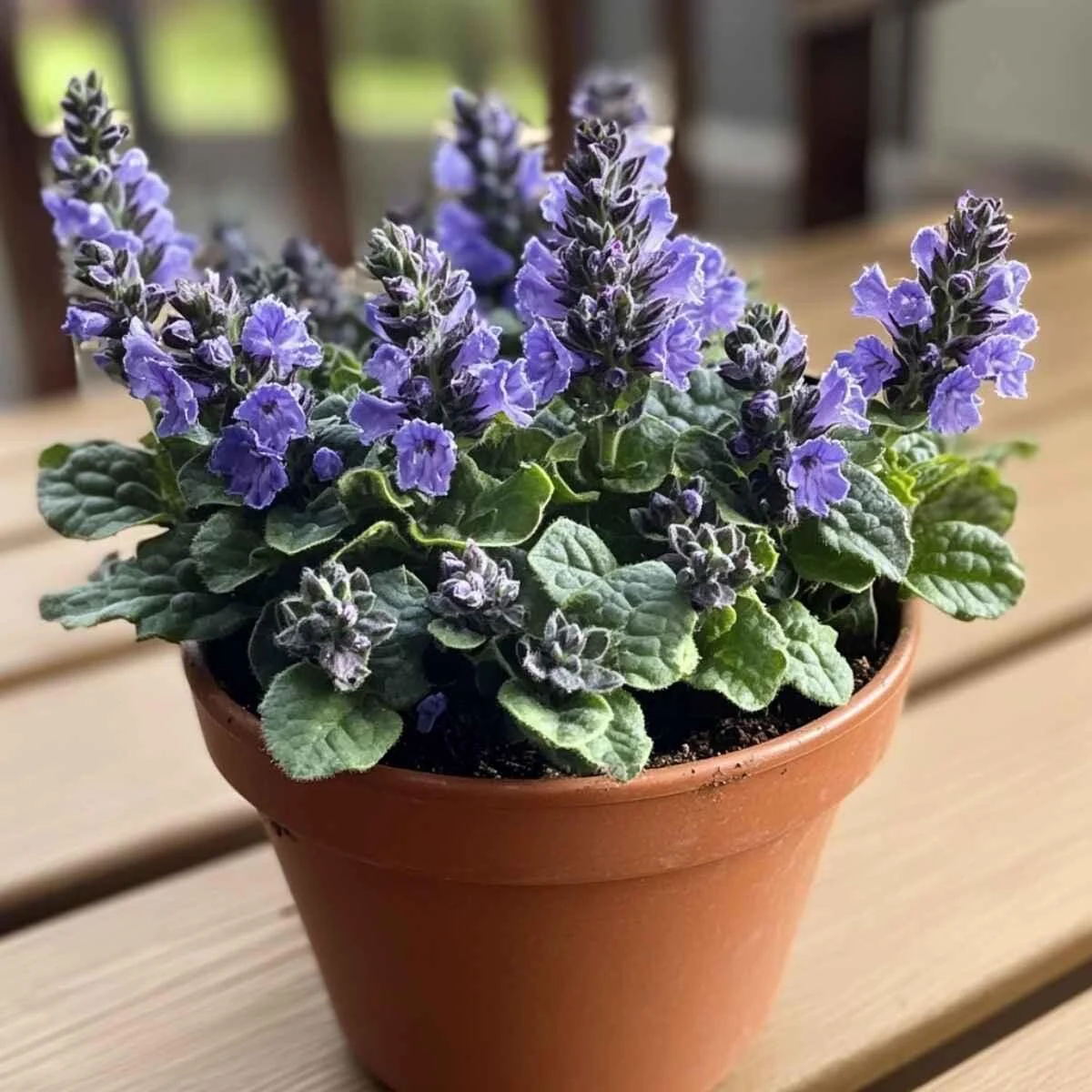
Ajuga is ideal for filling shaded areas with dense foliage and seasonal purple blooms. It spreads quickly, helping suppress weeds and reduce maintenance over time.
It’s particularly useful along borders or under trees where grass tends to thin out.
10. Blue Star Creeper for Light Foot Traffic Areas
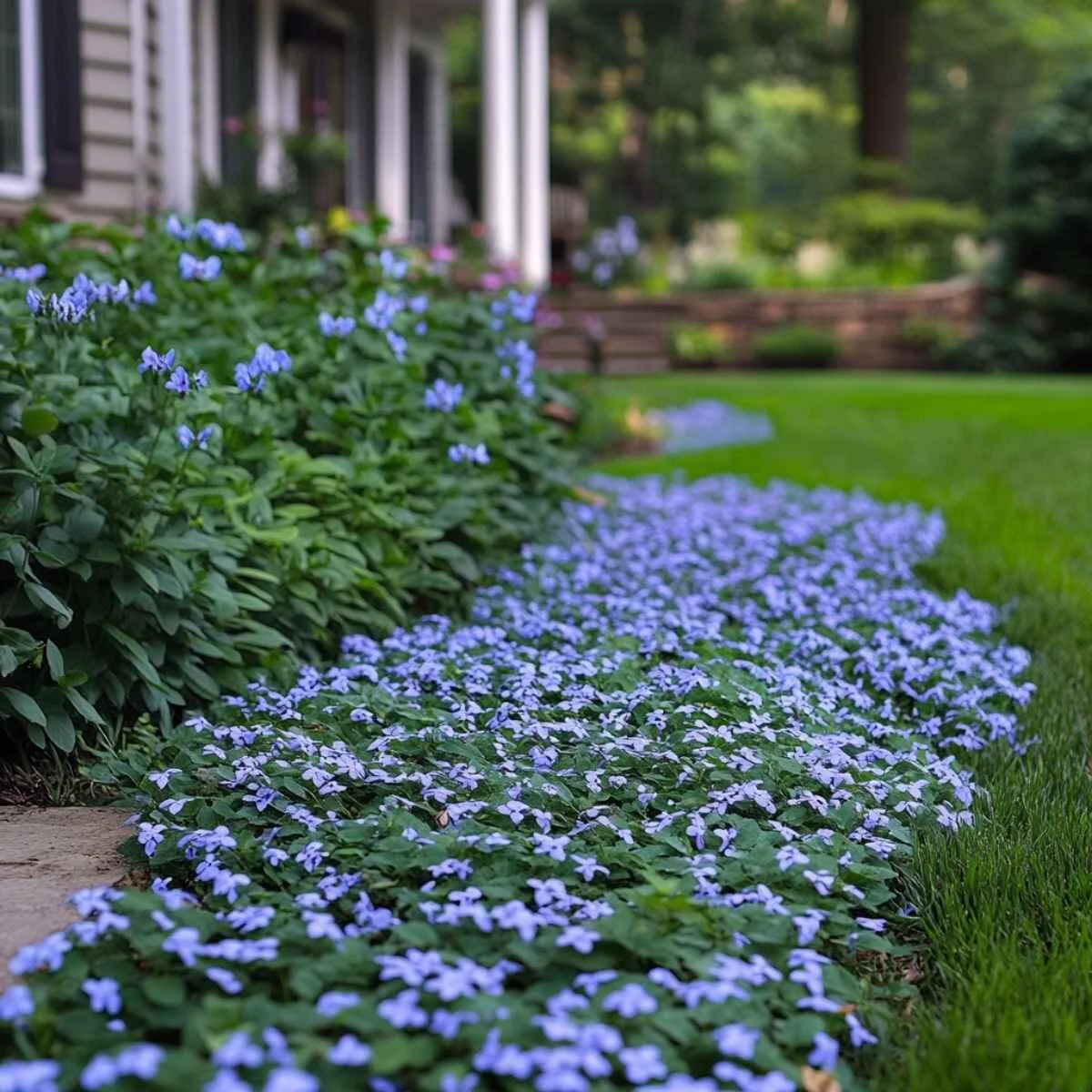
Blue Star Creeper forms a low, spreading mat dotted with small blue flowers. It’s one of the few ground covers that can handle occasional foot traffic, making it suitable for pathways or stepping areas.
It grows best in full sun to partial shade and benefits from regular watering during establishment.
How to Choose the Right No-Mow Lawn Ground Cover
- Full sun areas: Creeping thyme, sedum, chamomile
- Shaded spaces: Moss, ajuga, Corsican mint
- Light foot traffic: Clover, blue star creeper
- Dry conditions: Sedum, creeping thyme
- Decorative borders: Creeping Jenny, dichondra
Frequently Asked Questions
Are no-mow lawns completely maintenance-free?
Not entirely, but they require significantly less work than traditional grass. Most only need occasional watering, trimming, or cleanup.
Can you walk on ground cover lawns?
Some varieties like clover and blue star creeper can handle light foot traffic, while others are better left undisturbed.
Do ground covers use less water than grass?
Yes. Many ground covers are drought-tolerant and require far less watering once established.
Will ground covers spread too much?
Some fast-growing types can spread quickly, so it’s important to choose the right plant for your space and maintain boundaries if needed.
Can I mix different ground covers?
Yes. Mixing varieties can create visual interest and help you adapt to different conditions across your yard.
Final Thoughts
A no-mow lawn is one of the simplest ways to create a low-maintenance yard that still feels full and inviting. By choosing the right ground cover for each area, you can reduce upkeep while improving the overall look and function of your outdoor space.
Start small, test what works best in your conditions, and gradually replace high-maintenance areas. Over time, your lawn becomes easier to manage—and far more enjoyable to live with.
Written by the Zeeshe Home Editorial Team, a blog focused on practical home décor ideas and inspiration.


