
Bulb layering is one of the simplest ways to make a flower bed work harder without making it look crowded. By planting bulbs at different depths, you create a sequence of blooms that rise and fade in stages rather than all at once.
The result is a bed that evolves over weeks instead of peaking for a few days. Early flowers finish just as the next layer takes over, giving the impression of a constantly refreshed garden with no extra planting space required.

The combinations below are designed to help you think in layers: early, mid, and late bloomers arranged by depth, height, and timing. When done well, the soil stays productive and the display feels intentional rather than crowded. :contentReference[oaicite:0]{index=0}
Tulips, Daffodils, and Crocus Layering for Long Spring Coverage
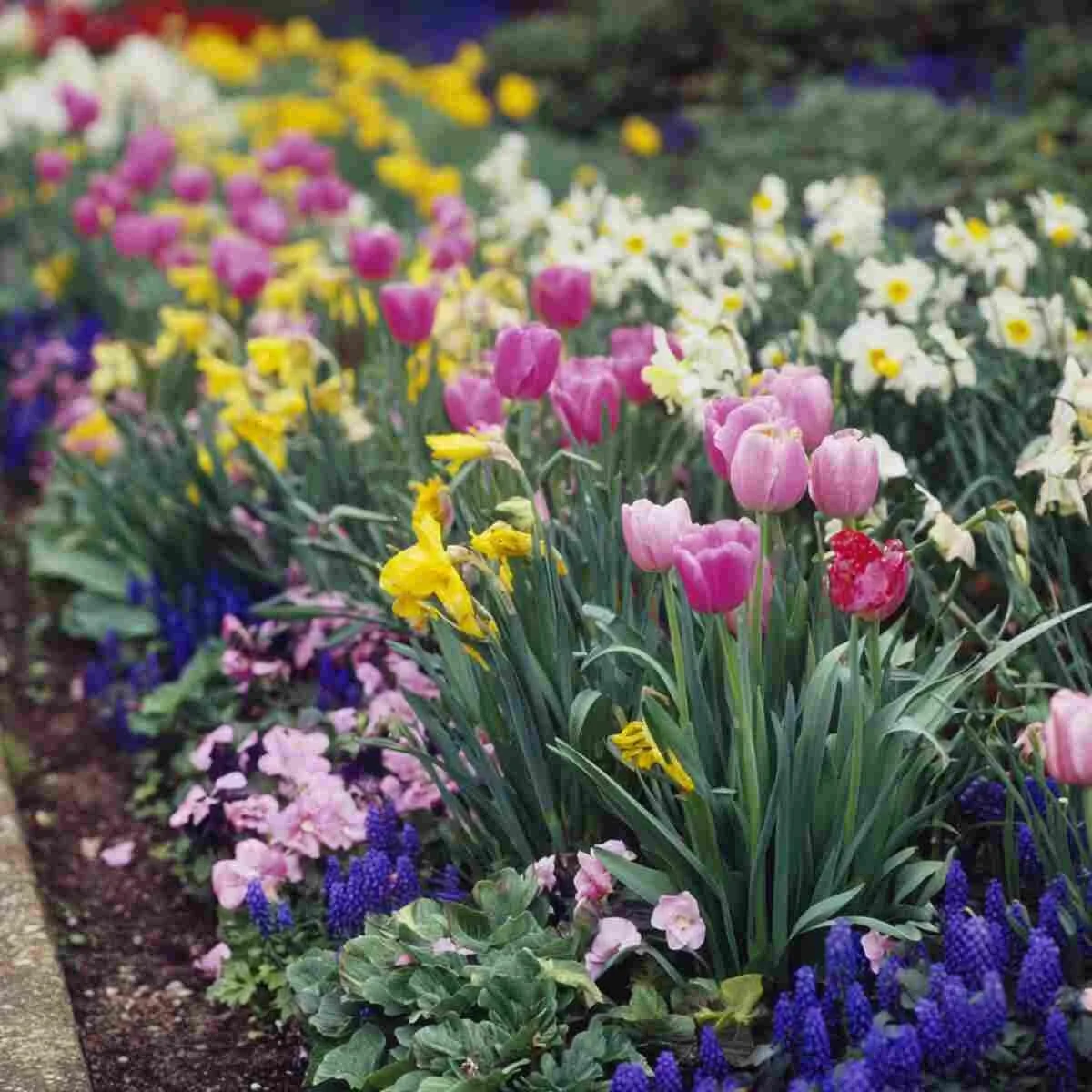
This is one of the most reliable layering combinations because each bulb naturally occupies a different level in both soil and season. Crocuses appear first, low and early, followed by daffodils, with tulips arriving last to carry the display forward.
It works especially well in front gardens or central beds where you want steady color over several weeks. The key is spacing bulbs generously within each layer so the effect reads as full rather than compressed.
- Plant crocuses closest to the surface, tulips deepest.
- Use repeating color groups instead of mixing everything randomly.
- Works well in both borders and large containers.
Hyacinths and Grape Hyacinths for Fragrance and Texture
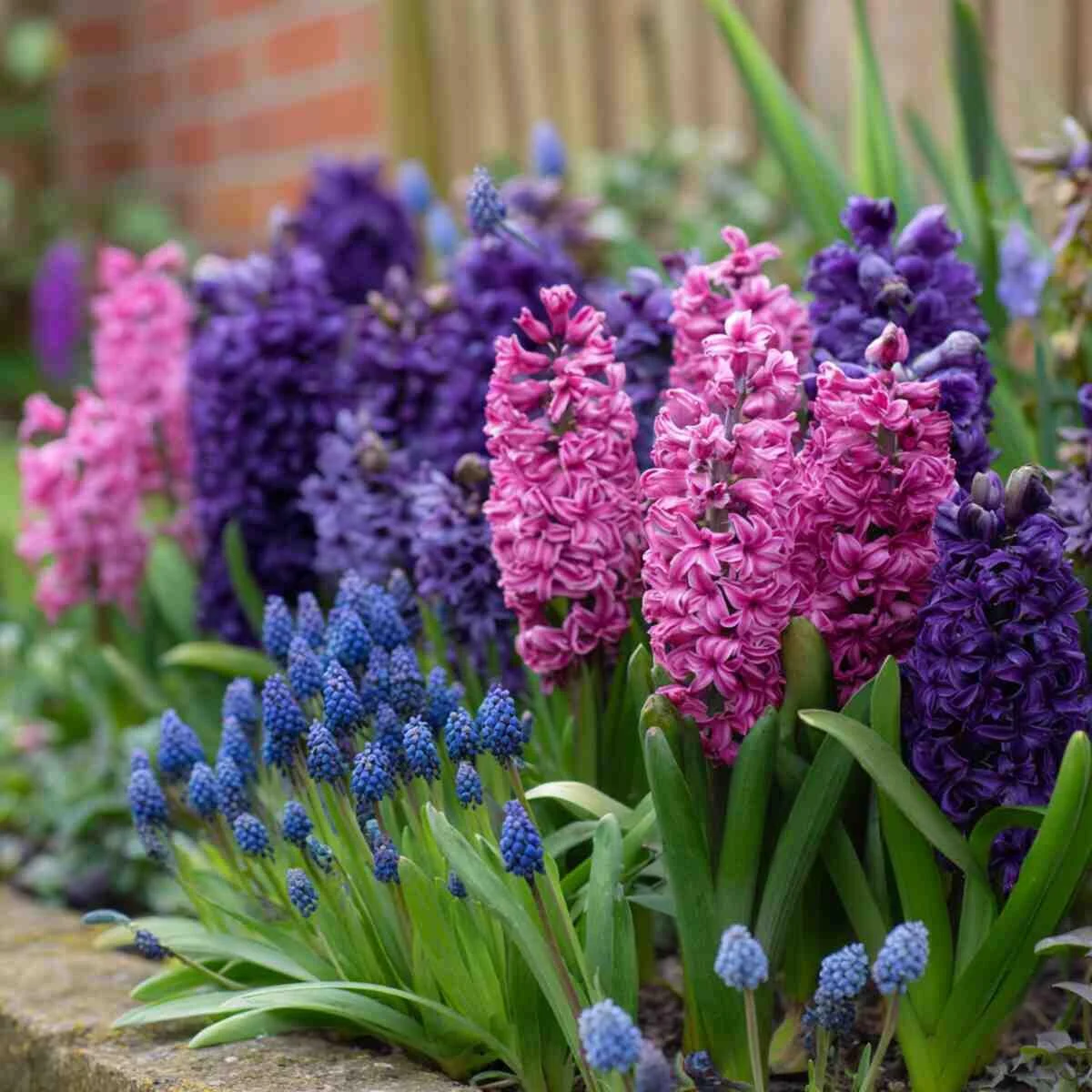
This pairing adds another layer of interest by combining scent and scale. Grape hyacinths form a dense, low carpet early on, while larger hyacinths rise above them slightly later with stronger fragrance and more defined structure.
The contrast in size keeps the display from feeling flat. It works best in smaller beds, along paths, or near seating areas where the scent can be appreciated.
Repeating one or two colors instead of using a full mix helps keep the arrangement from feeling overly busy.
Alliums Layered Over Muscari for Vertical Contrast
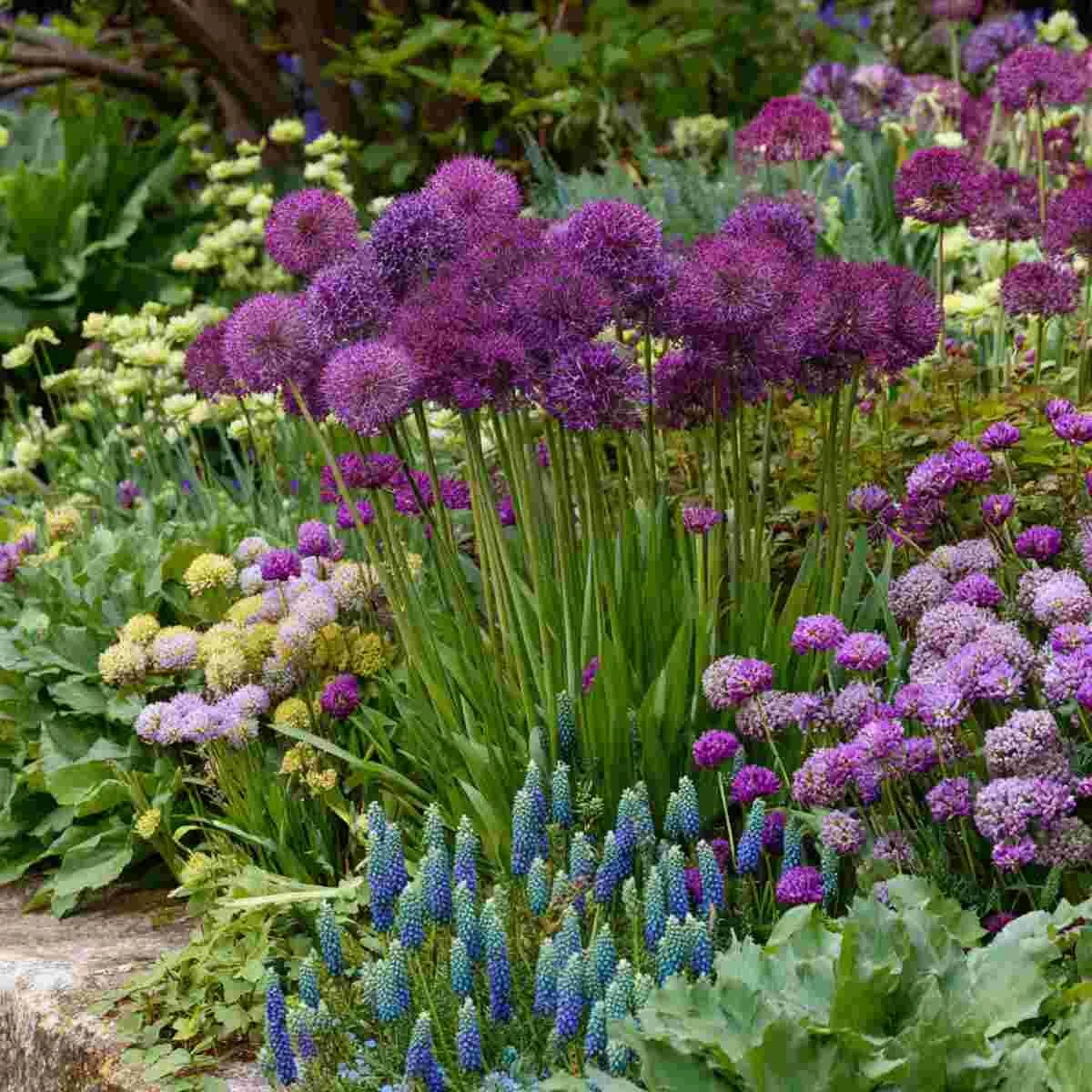
This combination shifts the focus from timing alone to structure. Muscari provide early ground coverage, while alliums rise later with tall stems and rounded flower heads that add height and definition.
It is particularly effective in larger borders where vertical rhythm matters. The lower layer fills gaps early in the season, and the taller blooms prevent the bed from flattening visually as spring progresses.
- Space alliums so each flower head can stand clearly.
- Allow muscari to spread naturally for a fuller base layer.
- Ideal for mixed perennial borders.
Tulips and Snowdrops for Early-to-Mid Season Transition
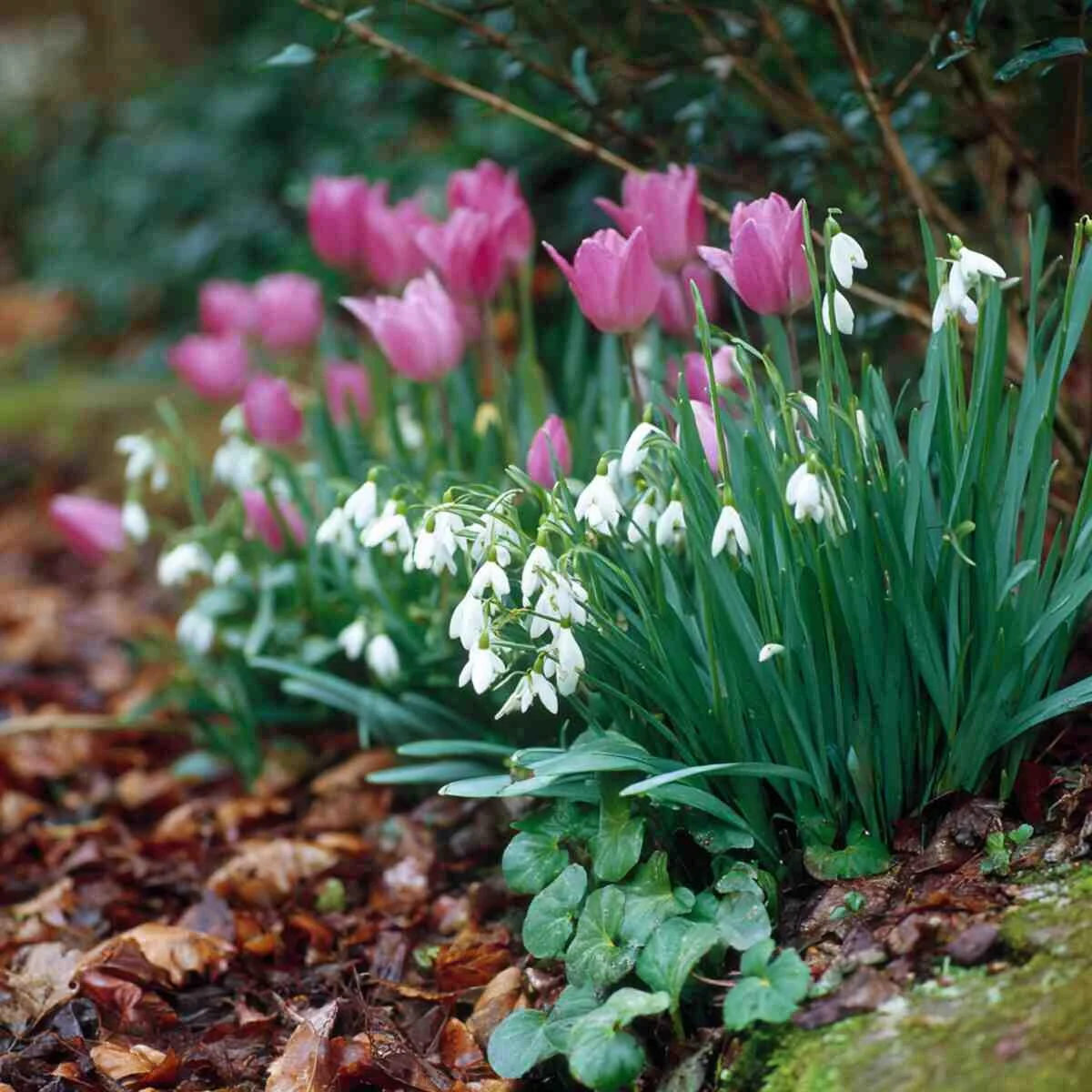
Snowdrops are among the first to appear, often before the rest of the garden has started moving. Tulips follow later with stronger color and height, making this a simple two-stage transition that works in almost any garden style.
This pairing is especially useful along paths or near entrances, where even subtle early blooms can be appreciated. As the snowdrops fade, tulips take over without leaving a visual gap.
Daffodils, Iris Reticulata, and Scilla for Multi-Layered Color
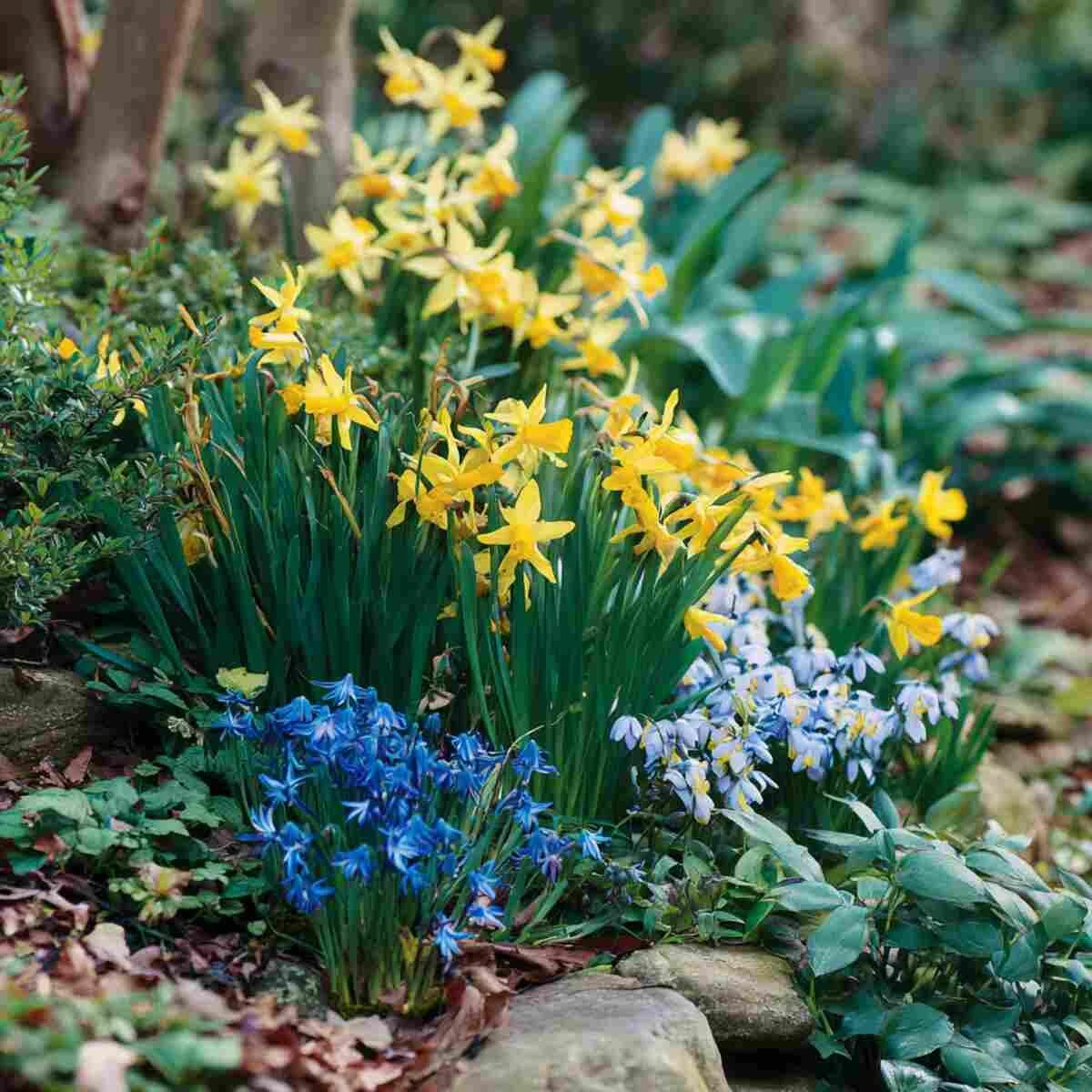
This trio offers a more complex layering effect, combining different shapes, heights, and bloom timings. Scilla and iris reticulata provide early detail near the surface, while daffodils rise later with broader form and brighter color.
It works well in beds that are viewed up close, where the variation in flower shape adds interest. Because there are multiple layers, keeping the color palette somewhat controlled helps avoid visual clutter.
Crocuses with Early Tulips for Compact Beds
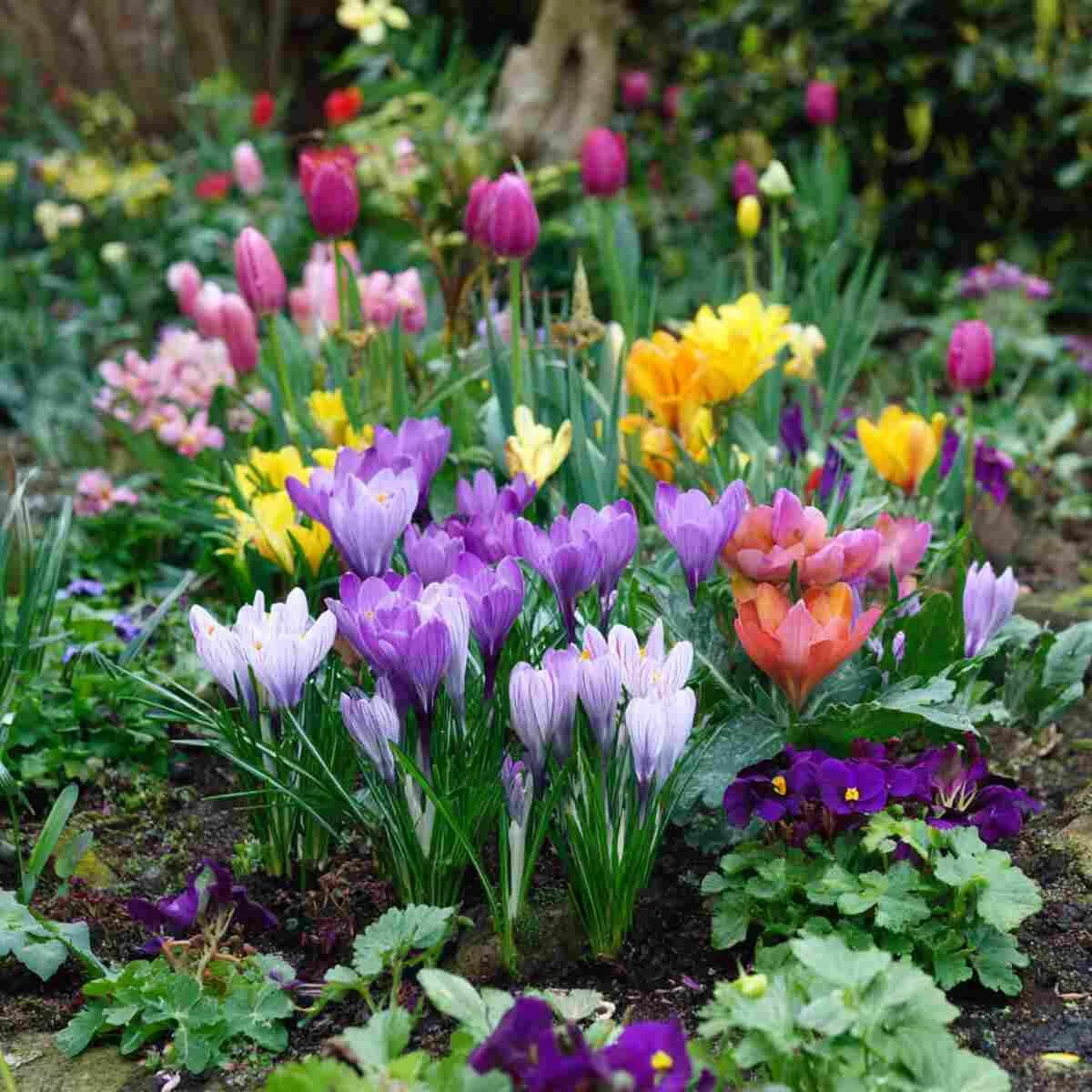
In smaller spaces, this pairing delivers a clear sequence without overwhelming the bed. Crocuses provide the first flush of color, and early tulips extend the display without requiring additional planting space.
This is particularly effective in narrow borders, raised beds, or containers where depth is limited but visual continuity still matters.
- Choose early tulip varieties for smoother timing.
- Keep crocus groupings dense for stronger impact.
- Suitable for balcony planters and compact gardens.
Lilies and Narcissus for Spring into Summer Transition
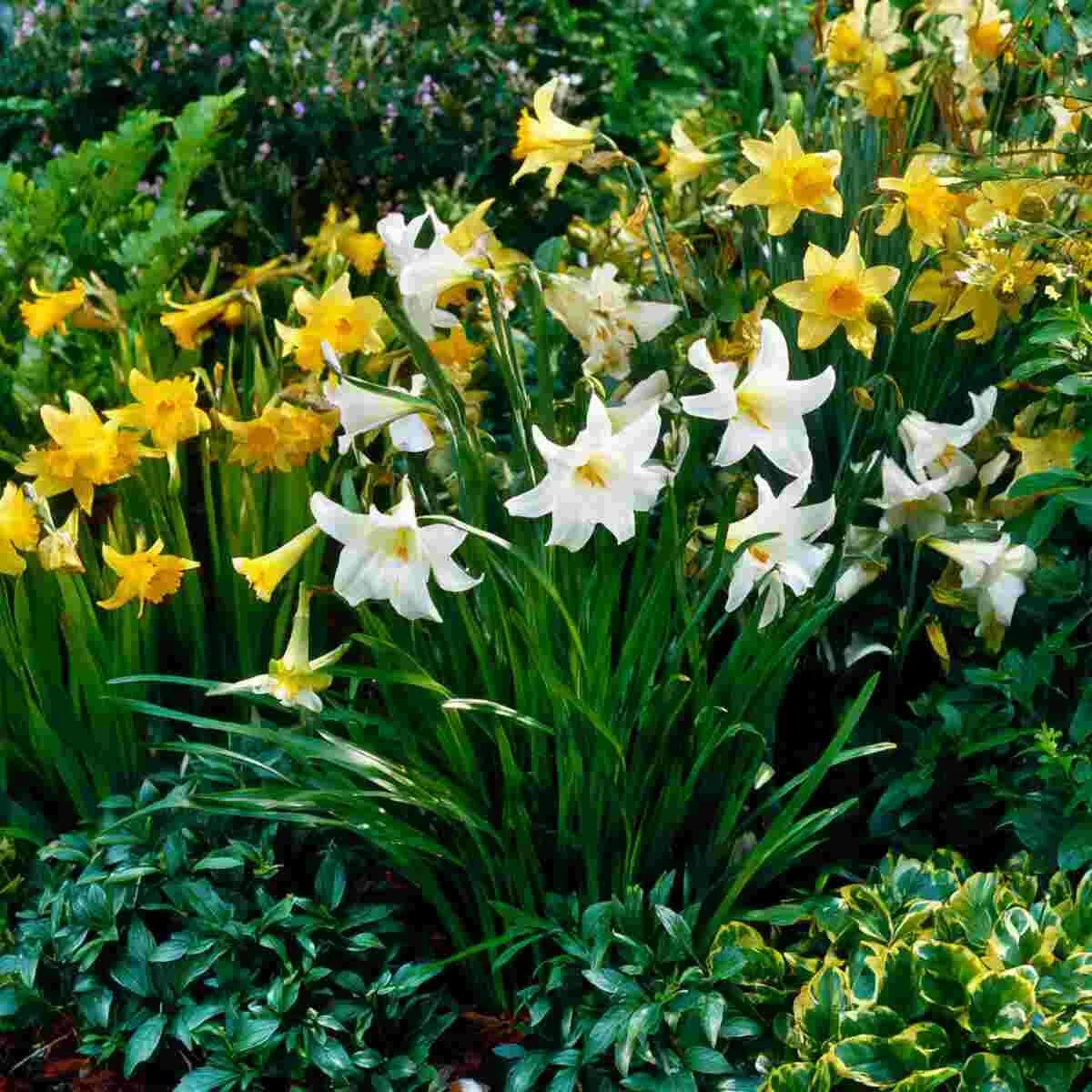
This combination extends layering beyond spring. Narcissus (daffodils) provide early-season color, while lilies emerge later to carry the bed into early summer.
It is a practical solution for gardeners who want continuity without replanting. The deeper lily bulbs stay dormant while spring bulbs perform, then take over once the earlier flowers fade.
This works best in deeper beds where root space is not limited.
Tulips, Hyacinths, and Anemones for Full Layered Depth
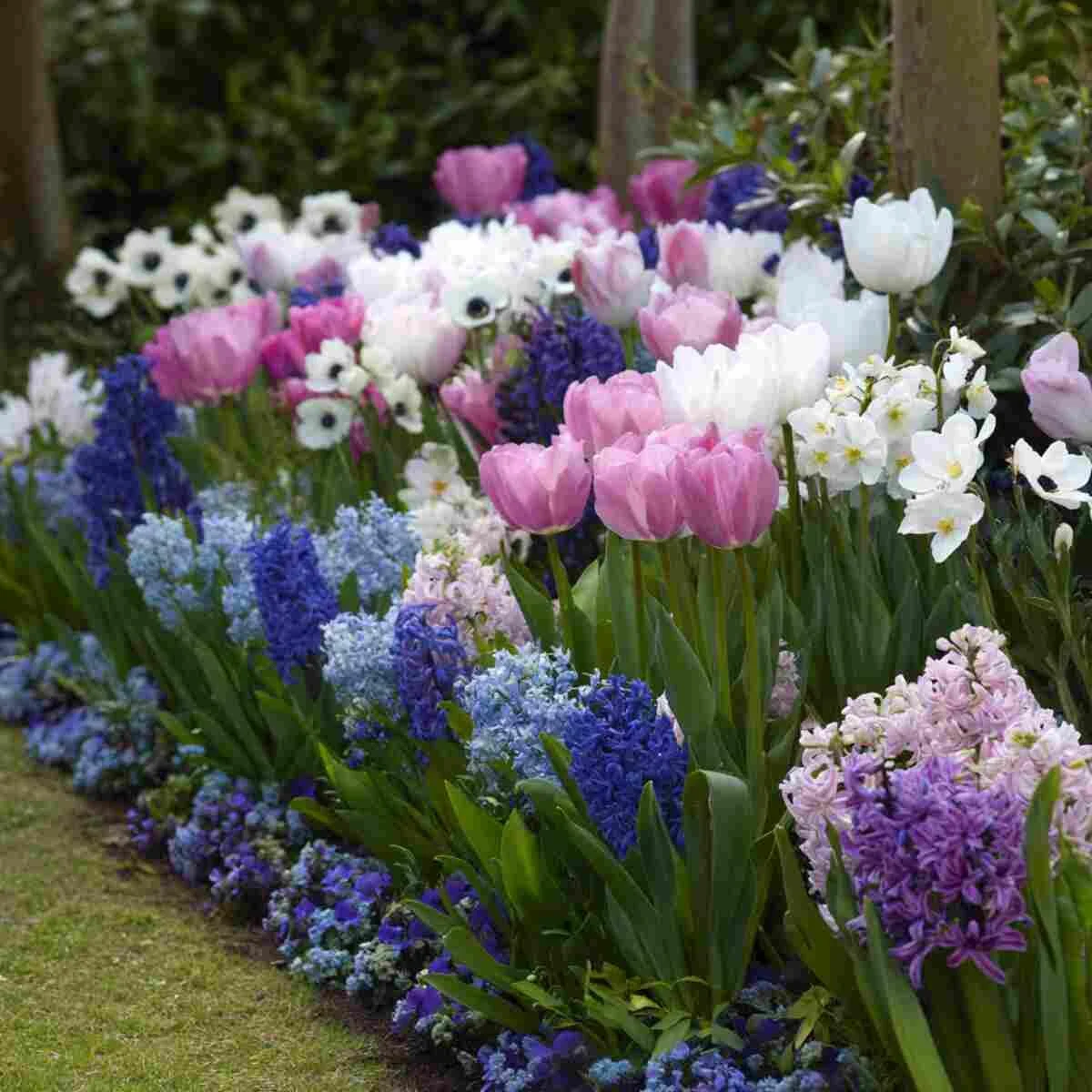
This three-tier combination creates a full, layered effect from ground level upward. Anemones spread across the surface, hyacinths fill the middle with dense blooms, and tulips rise above with height and structure.
Because the display is richer, it works best in beds that can accommodate multiple layers without feeling crowded. Keeping the color palette coordinated helps maintain a balanced look.
Alliums with Tulipa Tarda for Height and Ground Cover
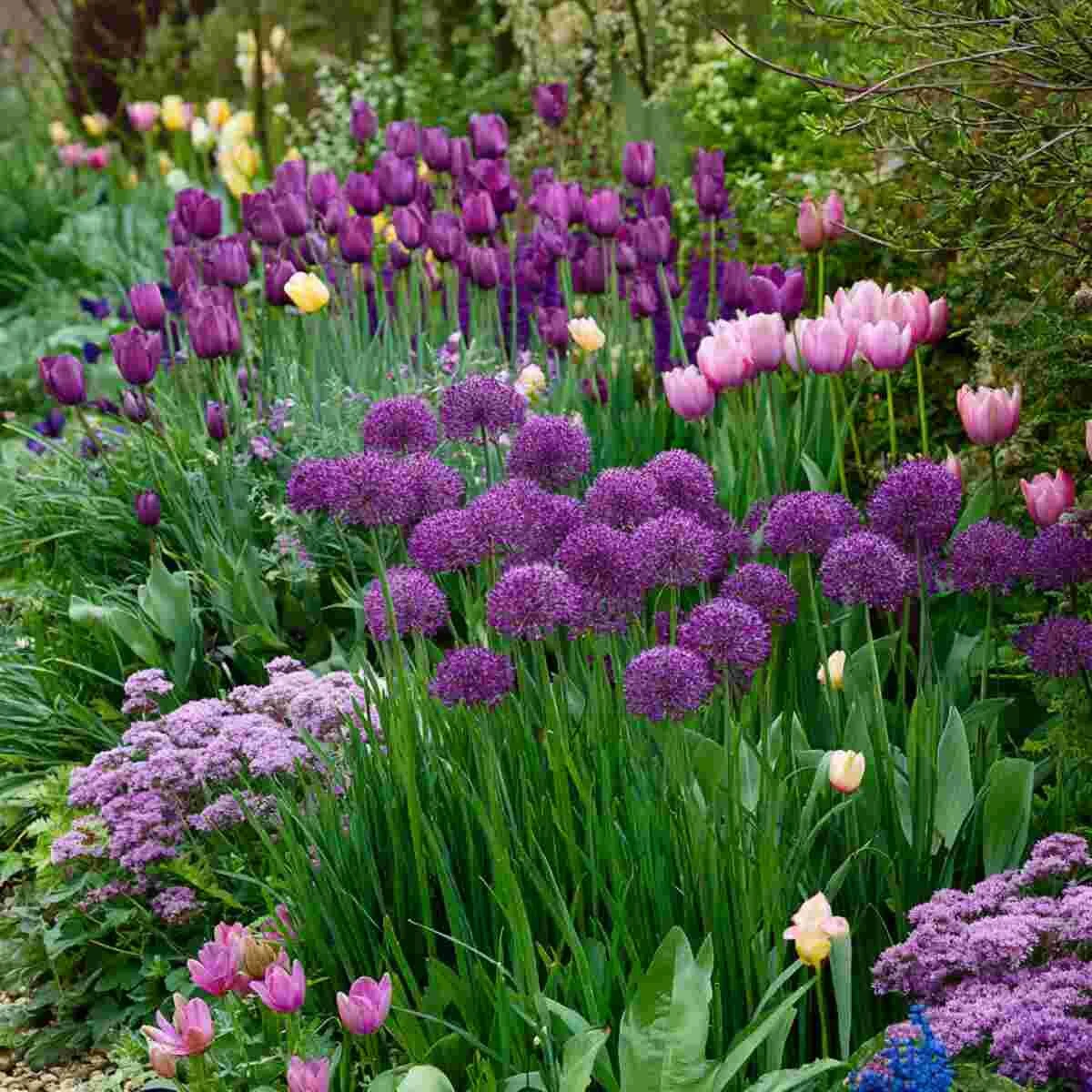
Tulipa tarda forms a low, star-shaped carpet, while alliums provide a later vertical element. This pairing is useful for gardeners who want contrast without relying on heavy planting density.
The lower tulips keep the bed active early, and the alliums extend interest upward as the season progresses. It works particularly well in modern or minimalist planting schemes where fewer plant types are used more deliberately.
Snowdrops and Chionodoxa for Soft Early Layers
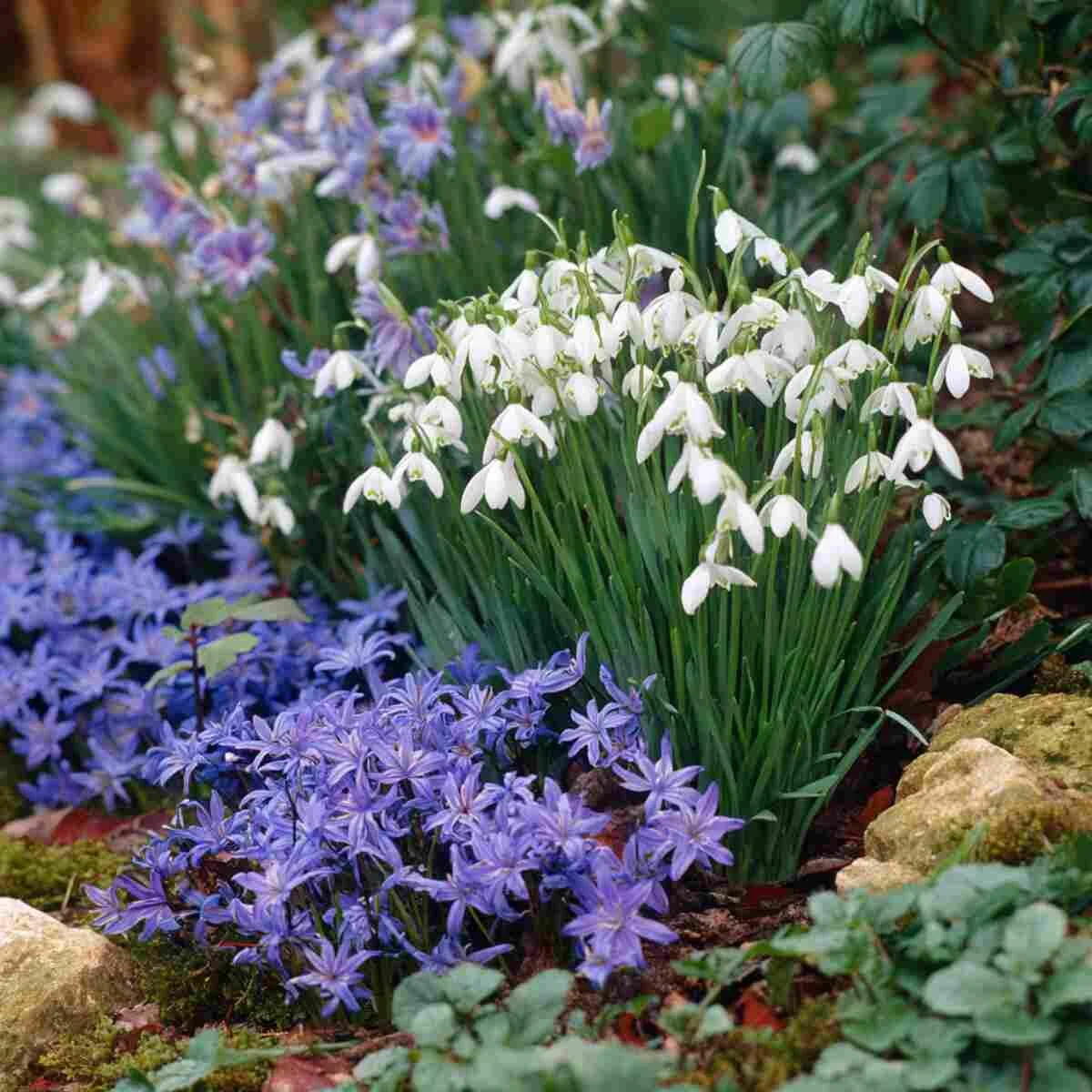
This pairing focuses on subtlety rather than bold contrast. Snowdrops open first, followed closely by chionodoxa, creating a gentle transition of white into soft blue tones.
It is best suited to woodland gardens, shaded borders, or naturalized areas where a quieter early-season display feels more appropriate than strong color blocks.
- Plant in loose drifts for a natural look.
- Works well beneath deciduous trees.
- Allow bulbs to multiply for a fuller display over time.
Frequently Asked Questions
What is bulb layering in simple terms?
It means planting bulbs at different depths in the same space so they bloom one after another instead of all at once, creating a longer-lasting display.
Can bulb layering be done in pots?
Yes, it works especially well in containers. Use a deep pot and plant larger bulbs at the bottom, medium bulbs in the middle, and smaller ones near the top.
How deep should each layer be planted?
As a general guide, larger bulbs go deeper and smaller ones closer to the surface. Always follow the recommended planting depth for each type rather than guessing.
Do layered bulbs compete with each other?
Not significantly if spaced properly. Each bulb uses a different level of soil and grows at a different time, which reduces direct competition.
Final Thoughts
Bulb layering is less about cramming more plants into one space and more about timing and structure. When the sequence is planned well, a single bed can carry color from the first signs of spring into early summer without ever feeling overcrowded.
Written by the Zeeshe Home Editorial Team, a blog focused on practical home décor ideas and inspiration.


